CSCS
CSCS


The Václav Havel Library is set to hold an international conference, subtitled Artists in Oppression, in honour of the laureate at the Technology Center of the Academy of Arts, Architecture and Design in Prague on Wednesday 1 October. In addition to the laureate and finalists of the 2025 Václav Havel Human Rights Prize or their representatives, the guests of honour will include Belarusian writer and journalist Sasha Filipenko; Russian artist Aleksandra Skochilenko; artist and journalist Samantha Jirón from Nicaragua; Azerbaijani rapper and activist Jamal Ali; and Natalia Matskevich, who will introduce One of Us, a documentary about Sergey Tihanovski. All of these individuals live in exile as they have faced persecution and been jailed by the political regimes in their countries.Further programme details are available HERETo attend the conference, registration, free of charge, is required HEREMore
Meeting in Prague, the panel – made up of independent figures from the world of human rights1 and chaired by the President of the Parliamentary Assembly of the Council of Europe (PACE) Theodoros Rousopoulos – decided to shortlistthe following three nominees, in alphabetical order:More
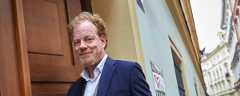
“I’m proud that I have been given the trust to develop and cultivate the legacy of Václav Havel and that I can join the Library’s great team. I intend to put all my energies into building a world-class platform that will face forward and be attractive to the new generation of people who care about the spirit of Europe. I would like to bring Havel-style optimism and values back to the public sphere. That is desperately needed right now, and that too is why I regard my new role as a major commitment,” Tomáš Sedláček said in connection with his appointment as director of the Vaclav Havel Library today.More
Today, Wednesday 23 October 2024, Milan Babík decided to resign from the post of director of the Václav Havel Library for personal reasons. The Board of Trustees have accepted his explanation with understanding: “Milan Babík has done a great deal of work. Since June, when he took over, he has succeeded in enriching the Library’s activities, including the launch of projects that should culminate in 2026 in connection with the 90th anniversary of Václav Havel’s birth,” said the chairman of the Board of Trustees, Gabriel Eichler. Until a successor to Milan Babík is chosen, the Board of Trustees, as the statutory body, will assume some of his responsibilities, working closely with the Václav Havel Library team.
entry-free

“There’s no time to wait – we’ve got to act now. Otherwise we will face a demographic catastrophe,” warns Ladislav Dušek, Czechia’s head of health statistics. Data clearly shows that the country is approaching a point where the number of incapacitated seniors in the population will increase dramatically. However, there is not enough time to build enough facilities where seniors could be cared for by professionals. So what are the possible solutions? Has the state already started to take action? How much will it cost Czechia? And how will it affect, for instance, the labour market?
The guests of Aktuálně.cz editors Veronika Rodriguez and Aleš Vojíř will be Ladislav Dušek, director of Czechia’s Institute of Health Information and Statistics, Aleš Juchelka, minister of labour and social affairs, Marian Jurečka, former minister of labour and social affairs, and Lenka Mikletičová, regional aid coordinator, Department of Social Affairs of the Vysočina Region.

A three-day Václav Havel Library marathon of culture reflecting the living legacy of Václav Havel and featuring workshops, talks, film screenings and more.

Jan Litomiský's friends describe him as an exceptional person: educated, cheerful and kind, hospitable, a deeply religious Evangelical with a tenacious character. He was not broken by either State Security investigators or the guards at Bory prison, where he served three years in the early 1980s. Jan Litomiský signed Charter 77 and became a member of the Committee for the Defence of the Unjustly Prosecuted.
How does he see the world today? What does he consider the most serious threats? What does he think about the current Czech government, the US, Ukraine, and Russia?
Mikuláš Kroupa of Memory of Nations will tell Litomiský’s story and conduct an interview with the one-time dissident.

Czechia has a new government that is beginning to act in a strikingly similar manner to the governments of Fico and Orbán on the international stage. The legendary Slovak sociologist, diplomat and politician Magda Vášáryová will discuss the fate of Central Europe, which is simultaneously experiencing a crisis of democracy, the rise of authoritarians and an existential threat from Russia – and much more with journalist Petr Šabata.

A discussion featuring editors from the weekly Respekt and their guests. For more details visit www.vaclavhavel.cz prior to the event.

Prague’s Cimrman English Theatre has been performing English-language versions of plays from the much-loved Divadlo Járy Cimrmana for over a decade. But does the idiosyncratic, and very Czech, humour really translate into English? And how accurate are comparisons with the UK’s Monty Python comic troupe, which also dates back to the late 1960s? These questions and more will be answered by three core members of the Cimrman English Theatre:Brian Stewart,Adam Stewart andPeter Hosking.
In Conversation With… is an occasional series of discussions in English hosted byIan Willoughby of Radio Prague International.

The Václav Havel Library and the Faculty of Architecture at the Czech Technical University in Prague have decided to commemorate the unique period of architectural change at Prague Castle, and the return of culture to the complex, during the presidency of Václav Havel. Guests in this series of discussions will include notable figures who participated in these changes to varying degrees and can comment on them at the expert level. The opening discussion will feature architect Miroslav Masák, art historian Eliška Fučíková and photographer Tomki Němec. Moderated byMartin Vidlák.

Premiere of a theatre production by DAMU students and graduates
In 1977, Vašek was arrested for the first time in his life. He carefully recorded his days and thoughts, but ironically, after returning home, hid his notes so carefully that he never found them again. In the play Havel77, we read from his notes on his behalf, going beyond his image as a hero and showing him as a man who made mistakes and ultimately perhaps even lost. So, here we go again, Vašek?
Cast: Viktorie Hrachovcová, Kristýna Zinková
Director: Ondřej Kulhavý
Writers: Kristýna Zinková, Viktorie Hrachovcová, Petr Maršál, Ondřej Kulhavý
Consultant: Petr Novotný

Where is the line between personal responsibility for our financial situation and systemic problems? How can we maintain faith in the future when we are unable to afford our own homes? And why are we so unhappy, even though we are better off than our parents and grandparents? We invite you to a debate about young people and the challenges brought about by periods of prosperity. The discussion will be moderated by Deník N economics editor Karolína Blažková.

Why did Canadian Prime Minister Mark Carney emphasize the need for coalitions for the survival of the democratic world? How can the ideas of Václav Havel inspire today's world leaders in their next steps and decisions? Ambassador of Canada to the Czech Republic Emily McLaughlin will discuss with Director of the Václav Havel Library Tomáš Sedláček about issues that affect Canada as much as Europe and the Czech Republic. The event will take place in English without interpretation.

Petr Koubský is a Czech journalist, information and communication media analyst and educator. He has written and translated a number of books on IT and taught at the University of Economics and Charles University. He began as a programmer before working at media outlet Softwarové noviny. He later served as editor-in-chief ofInside magazine, was director of iCollege and published the web magazine067. Since 2018, Koubský has been working at Deník N as a science and technology editor, while he also comments on Czech Radio’s Plus station.

How have environmental activism and its methods changed since the fall of communism and the rise of online platforms? How has globalisation affected public perception of the environment and the climate crisis? Can pre-revolutionary approaches enrich the current endeavours of environmentalists?
A debate with environmentalists from the pre -1989 and contemporary periods on the urgency of the climate crisis and the role of environmental criticism in times of the changing government.
Guests: Terezie Hradilková (Prague Mothers, Unity for Deinstitutionalization),Anna Hradilková (Prague Mothers) andAnna Smyslová (Young Greens).
Moderated by Tereza Koubková (greenfluencer, Respekt weekly).

From the killing of civilians and targeted attacks on hospitals and schools to the forced re-education of Ukrainian children and the destruction of cultural heritage, Russia’s war against Ukraine represents a horrific attempt to erase an entire nation. Four years after Russia launched its full-scale invasion of Ukraine, most of these crimes remain unpunished. The Kremlin has, in fact, honoured military units accused of some of the worst atrocities. Moreover, under a US-backed peace plan, Ukraine is being strong-armed towards negotiations on Moscow’s terms, including a proposed amnesty for Russian combatants.
The panel will bring together Kateryna Chuyeva, former Deputy Minister of Culture of Ukraine and a cultural heritage scholar, Valeriya Korablyova, a sociologist and Head of the Ukraine in a Changing Europe Research Centre at Charles University, and Vladimír Dzuro, a criminal investigator with the International Criminal Tribunal for the former Yugoslavia.

How does the misty “future” become something that can be used to make decisions today?
Foresight is neither fortune-telling nor science fiction; it is a practical tool for navigating times of uncertainty: what to watch, what to prepare for and where it makes sense to be bold.
Together with Pavlína Louženská, a leading Czech expert on trends and foresight, we will focus on what may shape the year 2026: key trends and subtle micro-trends that often start in marginal communities, niche industries or subcultures and only then spill over into the mainstream. We will discuss how to recognize these signs of change, how to read them in a broader context and how to think about the future in a way that makes sense not only in politics, but also in business, technology, education and everyday life.
The evening will be complemented by the presentation of a unique zine with predictions for 2026, created by Czech men and women from various fields. The texts were written in the fall of 2025 and follow up on a summer foresight workshop helmed by Pavlína Louženská and Lukas Zumbrunn (researcher, University of St. Gallen). The result is a colourful map of possible futures, not as a definitive answer, but as an invitation to ask better questions.

This event will shed light on one of the still-neglected impacts of political imprisonment in Czechoslovakia from the 1950s to the 1980s: the stories and experiences of the loved ones of political prisoners who remained “free” and were forced to cope with the imprisonment of their partners, parents, grandparents, children and friends. The evening will feature excerpts from memoirs, letters and other sources. It will be hosted by literary historiansPetra Loučová and Barbora Švýcarská from the Institute of Czech Literature at the Czech Academy of Sciences.
Held as part of the Mene Tekel Festival.

Although Stalin’s reign of terror was condemned in the Soviet Union itself immediately after the death of one of the worst totalitarian leaders in history, Putin’s Russia today refers to it in numerous ways and directly continues Stalin’s imperial policy.
Three leading experts on Russia will discuss the legacy of Stalinism in relation to a new book by exiled Russian writer Boris Akunin: translator and journalistLibor Dvořák, commentator Alexandr Mitrofanov and editor-in-chief ofVoxpot Vojtěch Boháč.
Havel Channel je audiovizuální projekt Knihovny Václava Havla, jehož cílem je šířit myšlenkový, literární a politický odkaz Václava Havla, bez ohledu na vzdálenost, zeměpisné hranice či nouzové stavy. Jeho páteř tvoří debaty, vzdělávací projekty a rozhovory. Velký prostor je věnován též konferencím, autorským čtením, záznamům divadelních inscenací a koncertům. Audiovizuální projekt Knihovny Václava Havla Havel Channel se uskutečňuje díky laskavé podpoře Karel Komárek Family Foundation.
The central focus of the Library’s publishing programme is the life and work of Václav Havel, his family and close collaborators and friends. For clarity, the programme is divided into six series: Václav Havel Library Notebooks, Václav Havel Library Editions, Student Line, Talks from Lány, Václav Havel Documents, Works of Pavel Juráček and Václav Havel Library Conferences. Titles that cannot be incorporated into any of the given series but which are nonetheless important for the Library’s publishing activities are issued independently, outside the series framework.
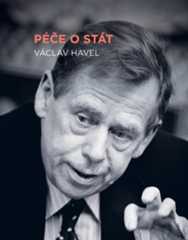
229,- CZK
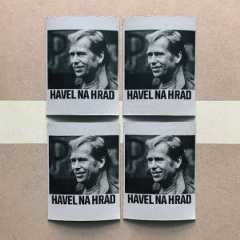
60,- CZK
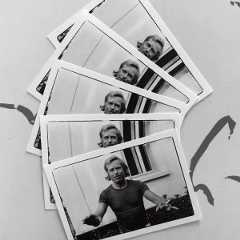
15,- CZK

The Václav Havel European Dialogues is an international project that aims to initiate and stimulate a discussion about issues determining the direction of contemporary Europe while referring to the European spiritual legacy of Václav Havel. This idea takes its main inspiration from Václav Havel’s essay “Power of the Powerless”. More than other similarly focused projects, the Václav Havel European Dialogues aims to offer the “powerless” a platform to express themselves and in so doing to boost their position within Europe.
The Václav Havel European Dialogues is planned as a long-term project and involves cooperation with other organisations in various European cities. Individual meetings, which take the form of a conference, are targeted primarily at secondary and third-level students, as well as specialists and members of the public interested in European issues.
Olomouc Prague 2023Warszawa 2022Prague 2022PragueMnichov 2020Brussels 2020Prague 2019Brussels 2019Prague 2018Brussels 2018Europe at the Crossroads (e-book)Prague 2017Brussels 2017Prague 2016Brussels 2016Prague 2015Brussels 2015Brussels 2014Berlin 2014Prague 2014 - J. GauckBruges 2014Prague 2014
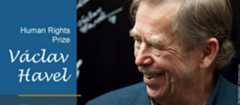
The Václav Havel Human Rights Prize is awarded each year by the Parliamentary Assembly of the Council of Europe (PACE) in partnership with the Václav Havel Library and the Charta 77 Foundation to reward outstanding civil society action in the defence of human rights in Europe and beyond.
12th Year of the Prize (2024)13th Year of the Prize (2025)11th Year of the Prize (2023)10th Year of the Prize (2022)9th Year of the Prize (2021)8th Year of the Prize (2020)7th Year of the Prize (2019)6th Year of the Prize (2018)5th Year of the Prize (2017)4th Year of the Prize (2016)3rd Year of the Prize (2015)2nd Year of the Prize (2014)1st Year of the Prize (2013)History of the prize
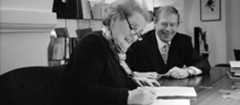
Since the first Václav Havel Transatlantic Dialogues at GLOBSEC and FORUM 2000 conferences last year, we have lost another stalwart advocate of the transatlantic bond and of the need to face threats to democracy and international order together on both sides of the Atlantic, the former US Secretary of StateMadeleine Albright.In view of the close bond between Václav Havel and Madeleine Albright and, after Havel's death, between the Secretary and the Library, the Václav Havel Library, with the approval of Madeleine Albright's family, renamed and rebranded the program asThe Havel-Albright Transatlantic Dialogues (HATD), after the two major figures with roots in Central Europe who have personified the bond. Together, Václav Havel and Madeleine Albright symbolize the transatlantic relationship and the fundamental values underpinning it perhaps better than any other two people in recent history. The upcoming Dialogues“The Indispensable Woman: The Legacy of Madeleine K. Albright”, at the FORUM 2000 conference on September 1, and at the“Havel and our Crisis” conference at Colby College, ME, on September 28, will thus become venues for a well-deserved tribute to the pair we all respected and admired.
Transatlantic Dialogues 2021Transatlantic Dialogues 2022HATD 2022 Prague
Václav Havel
* 5. 10. 1936 Praha
† 18. 12. 2011 Hrádeček u Trutnova


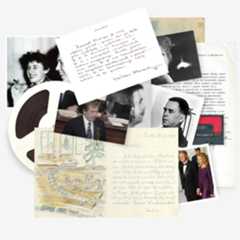
The Václav Havel Library is gradually gathering, digitizing, and making accessible written materials, photographs, sound recordings and other materials linked to the person of Václav Havel.
Access to the database of the VHL’s archives is free and possible afterregistering as a user. Accessing archival materials that exist in an unreadable form is only possible at the reading room of the Václav Havel Library, Ostrovní 13, 110 00 Prague 1, every Tuesday (except state holidays) from 9:00 to 17:00, or by prior appointment.
We will be glad to answer your queries atarchiv@vaclavhavel-library.org.
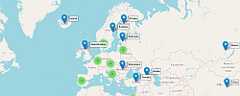
The virtual exhibition Václav Havel in a Nutshell places the life story of Václav Havel in the broader cultural and historic context in four chronologically distinct chapters with rich visual accompaniment. The exhibition is supplemented bythe interactive map Flying the World with Václav Havel, which captures in physical form Havel’s global “footprint”.

The Gallery of Key Figures of Oldřich Škácha presents unique and previously unknown photographs of Ludvík Vaculík, Jan Werich, Milan Kundera, Marta Kubišová and many other important personalities as an authentic and original source of knowledge about our modern history.
Collage of recollections, images and sound recordings from Vladimír Hanzel, President Václav Havel’s personal secretary, bringing the feverish atmosphere of the Velvet Revolution to life.

A database of all accessible interviews given to print media outlets by the dramatist, writer and political activist Václav Havel between the 1960s and 1989. The resulting collection documents the extraordinary life story of an individual, as well as capturing a specific picture of modern Czechoslovak history at a time when being a free-thinker was more likely to lead to jail than an official public post.
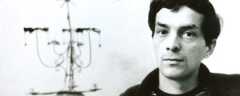
The Pavel Juráček Archive arose in February 2014 when his son Marek Juráček handed over six banana boxes and a typewriter case from his father’s estate to the Václav Havel Library. Thousands of pages of manuscripts, typescripts, photographs, documents and personal and official correspondence are gradually being classified and digitalised. The result of this work should be not only to map the life and work of one of the key figures of the New Wave of Czechoslovak film in the 1960s, but also to make his literary works accessible in the book series The Works of Pavel Juráček.
The aim of the Václav Havel Library is to ensure that Pavel Juráček finds a place in the broader cultural consciousness and to notionally build on the deep friendship he shared with Václav Havel. Soon after Juráček’s death in 1989 Havel said of him: “Pavel was a friend of mine whom I liked very much. He was one of the most sensitive and gentle people I have known – that’s why I cannot write more about him.”
The Václav Havel Library works to preserve the legacy of Václav Havel, literary, theatrical and also political, in particular his struggle for freedom, democracy and the defence of human rights. It supports research and education on the life, values and times of Václav Havel as well as the enduring significance of his ideas for both the present and future.
The Václav Havel Library also strives to develop civil society and active civic life, serving as a platform for discussion on issues related to the support and defence of liberty and democracy, both in the Czech Republic and internationally.
The main aims of the Václav Havel Library include
We are well aware that freedom and democracy must be nurtured. Here at Ostrovní 13, but also on the audiovisual platform Havel Channel, we strive to do so through our own educational programmes, talks, discussion meetings, books, exhibitions, concerts, theatre performances. We honour Václav Havel's legacy and wish that the Library be a living organism and open to all. That is why our programme is free of charge for everyone. This would not be possible without regular financial support from our supporters. Become one of them...

Does our work make sense to you and do you want to support the activities of the Vaclav Havel Library?
You can easily make a one-time payment by scanning the QR code.
Would you like to contribute regularly? Then we invite you to become a member of the Vaclav Havel Library Friends Club. What are the benefits of membership? Find out more.
The Vaclav Havel Library manages an archive of writings, documents, photographs, video recordings and other materials related to the life and work of Vaclav Havel. This archive is predominantly in digital form. If you or someone close to you owns any original texts, correspondence, photographs, speeches or any other work by Vaclav Havel, we would be grateful if you could contact us.
Supporting a specific charitable or public benefit organization whose activities you appreciate or have been supporting for a long time is also possible through a will. This form of donation is quite common abroad, but in the Czech Republic this tradition is only just taking root.
The Vaclav Havel Library is open to media and promotional cooperation, mutual sharing of links, publishing our banners or information about our events.
For more information, please contact us.
At the Vaclav Havel Library, we uphold a transparent, responsible and ethical way of dealing with all those who contribute to fulfilling our purpose and implementing our strategy. Our code of ethics summarizes the basic rules of donations.
Would you like to get involved as a volunteer? That's great. We welcome anyone who wants to help our work.