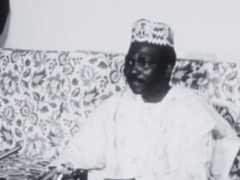


On Sunday, April 2, 1972, Nigeria ditched the British-styled right-hand drive to the left-hand drive common among the French, German, and Americans. The terms right and left-hand drive refers to the position of the driver in the vehicle and are the reverse of the terms right and left-hand traffic.
Major-General Yakubu Gowon was the country’s Head of State at the time. But why did the government part ways with the British system of driving by changing from the Right-Hand to the Left-Hand Drive?
Origin of the Right-Hand Drive
In time past, almost everyone travelled on the left side of the road because that was the most sensible option for primitive societies. Howbeit, most people were right-handed and swordsmen preferred to keep to the left in order to have their right arm nearer to an opponent and their scabbard further from him.
Also, a swordsman finds it easier to mount a horse from the left side of the horse, and it would be very difficult to do otherwise if wearing a sword (which would be worn on the left). It is safer to mount and dismount towards the side of the road, rather than in the middle of traffic, so if one mounts on the left, then the horse should be ridden on the left side of the road.
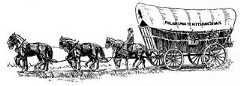
However, in the late 18th century, haulers in France and the United States began moving farm products in big wagons pulled by several pairs of horses. These wagons had no driver’s seat; instead the driver sat on the left rear horse, so he could keep his right arm free to lash the team. Since he was sitting on the left, he naturally wanted everybody to pass on the left so he could look down and make sure he kept clear of the oncoming wagon’s wheels. Therefore he kept to the right side of the road.
The French Revolution of 1789 gave huge popularity to right-hand drive in Europe. The fact is, before the Revolution, the upper classes travelled on the left of the road, forcing the lower classes over to the right, but after the Revolution, to save themselves from the guillotine (an execution method in France), they kept a low profile and joined the lower classes on the right.
Therefore, the right-hand-drive became an unwritten rule in France. Nevertheless, an official keep-right rule was eventually introduced in Paris in 1794.
Traffic in the 19th Century
In the early 1800s, the French Emperor,Napoleon Bonaparte conquered much of Europe (Belgium, the Netherlands, Luxembourg, Switzerland, Germany, Poland, and many parts of Spain and Italy) and enforced the new rule there. However, Britain, the Austro-Hungarian Empire, and Portugal resisted Napoleon and maintained the left side.
With the expansion of travel and road building in the 1800s, traffic regulations were made in every country. The British made right-hand driving obligatory in 1835 and British colonies which were part of the British Empire followed suit.

This is why to this very day, India, Australia, New Zealand, and former British colonies in Africa, mainly East and Southern Africa, navigate left. Though Japan was never part of the British Empire, its traffic also goes to the left. However, it did not become a law until 1924. That is why all Japanese cars are originally built as right-hand drives.
Left-Hand Drive in America
In the New World, the early years of English colonisation of North America continued with the English driving customs and the colonies drove on the left.
After gaining independence in 1776, the United States was anxious to cast off all remaining links with their British colonial past and gradually changed to right-hand driving. This was also made possible through the influence of other European immigrants, especially the French.
In the U.S., the first law requiring drivers to keep right was passed in Pennsylvania in 1792, New York in 1804, New Jersey in 1813, and Massachusetts in 1821.
Left-Hand Drive in Europe
In Europe, the remaining left-hand drive countries switched one by one to the right-hand drive except for Sweden, the odd one out in mainland Europe.
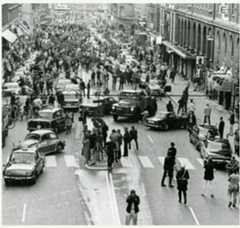
However, in 1955, the Swedish government held a referendum on the introduction of right-hand driving. Although no less than 82.9% voted “no” to the plebiscite, the Swedish parliament passed a law on the conversion to right-hand driving in 1963.
Finally, the change took place on Sunday, September 3, 1967, at 5 o’clock in the morning. The day was referred to asDagen H or, in English,H-Day. TheH stands forHögertrafik, the Swedish word forright-hand traffic or left-hand drive. After Sweden’s successful changeover, Iceland changed the following year, in 1968.
Meanwhile, the power of the right-hand drive kept growing steadily. American cars were designed to be driven on the right by locating the drivers’ controls on the vehicle’s left side. With the mass production of reliable and economical cars in the United States, initial exports used the same design, and out of necessity many countries changed their rule of the road.
Nigeria, Africa, and Asia
In Asia, China changed to right-hand traffic in 1946. Korea now drives right, but only because it passed directly from Japanese colonial rule to American and Russian influence at the end of the Second World War. As stated before, Japan maintains the right-hand drive.
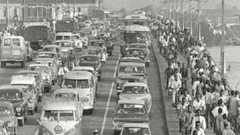
In fact, in 1973, it attempted to officially rename Lagos, then federal capital with the nomenclature of Portuguese origin, to Eko (an indigenous word the city is also called) but the change was shunned among its citizens.
Proponents of Nigeria’s change to the left-hand drive have argued that it was to break ties with its colonial master, the story runs deeper than that. In the same vein, antagonists and critics of the policy believe it was because of Western imperialism. To a layman, both stories would be easily believed.
But why did Nigeria change from the Right-Hand to the Left-Hand drive?
First, Nigeria was surrounded by countries with French colonial history that had always been on the right-hand drive; the Republic of Benin, Cameroon, Niger, and Chad.
Then, their drivers used Nigeria’s ports and borders while Nigerian drivers delivered goods to those countries with much confusion. It made much sense to make that change.
So, if you wanted to drive from Lagos (Nigeria) to Lome (Togo), you had to learn to drive on the opposite side of the road. Changing to the left simply made the journey easy. That was why Ghana had to change as well. The entire West African region is dominated by the Francophone countries and the need for a seamless transportation and business flow triggered the change.
Second, most cheap and affordable cars in vogue then were made in France (Renault, Peugeot) and Germany (Volkswagen) which were designed for right-hand drive roads. It would be an expensive process to convert them. Though Japanese cars are built for left-hand drive roads, they were not popular in Nigeria in the ‘70s.
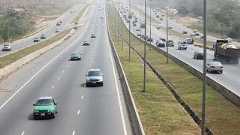
Third, in reference to the table below, more countries use on the left-hand drive side than the right. Most of whom are giant automobile manufacturers. The left-hand drive is used in 165 countries and territories, with the remaining 74 countries and territories using the right-hand drive. Countries that use the left-hand drive account for about a sixth of the world’s area and a quarter of its roads.
| S/N | Left-Hand Drive Countries | S/N | Right-Hand Drive Countries |
| 1 | Afghanistan | 1 | Anguilla |
| 2 | Albania | 2 | Antigua and Barbuda |
| 3 | Algeria | 3 | Australia |
| 4 | American Samoa | 4 | Bahamas |
| 5 | Andorra | 5 | Bangladesh |
| 6 | Angola | 6 | Barbados |
| 7 | Argentina | 7 | Bermuda |
| 8 | Armenia | 8 | Bhutan |
| 9 | Aruba | 9 | Botswana |
| 10 | Austria | 10 | Brunei |
| 11 | Azerbaijan | 11 | Cayman Islands |
| 12 | Bahrain | 12 | Christmas Island (Australia) |
| 13 | Belarus | 13 | Cook Islands |
| 14 | Belgium | 14 | Cyprus |
| 15 | Belize | 15 | Dominica |
| 16 | Benin | 16 | East Timor |
| 17 | Bolivia | 17 | Falkland Islands |
| 18 | Bosnia and Herzegovina | 18 | Fiji |
| 19 | Brazil | 19 | Grenada |
| 20 | British Indian Ocean Territory(Diego García) | 20 | Guernsey (Channel Islands) |
| 21 | Bulgaria | 21 | Guyana |
| 22 | Burkina Faso | 22 | Hong Kong |
| 23 | Burundi | 23 | India |
| 24 | Cambodia | 24 | Indonesia |
| 25 | Cameroon | 25 | Ireland |
| 26 | Canada | 26 | Isle of Man |
| 27 | Cape Verde | 27 | Jamaica |
| 28 | Central African Republic | 28 | Japan |
| 29 | Chad | 29 | Jersey (Channel Islands) |
| 30 | Chile | 30 | Kenya |
| 31 | China, People’s Republic of(Mainland China) | 31 | Kiribati |
| 32 | Colombia | 32 | Cocos (Keeling) Islands (Australia) |
| 33 | Comoros | 33 | Lesotho |
| 34 | Congo | 34 | Macau |
| 35 | Congo (former Republic of Zaire) | 35 | Malawi |
| 36 | Costa Rica | 36 | Malaysia |
| 37 | Croatia | 37 | Maldives |
| 38 | Cuba | 38 | Malta |
| 39 | Czech Republic | 39 | Mauritius |
| 40 | Denmark | 40 | Montserrat |
| 41 | Djibouti | 41 | Mozambique |
| 42 | Dominican Republic | 42 | Namibia |
| 43 | Ecuador | 43 | Nauru |
| 44 | Egypt | 44 | Nepal |
| 45 | El Salvador | 45 | New Zealand |
| 46 | Equatorial Guinea | 46 | Niue |
| 47 | Eritrea | 47 | Norfolk Island (Australia) |
| 48 | Estonia | 48 | Pakistan |
| 49 | Ethiopia | 49 | Papua New Guinea |
| 50 | Faroe Islands (Denmark) | 50 | Pitcairn Islands (Britain) |
| 51 | Finland | 51 | Saint Helena |
| 52 | France | 52 | Saint Kitts and Nevis |
| 53 | French Guiana | 53 | Saint Lucia |
| 54 | French Polynesia | 54 | Saint Vincent and the Grenadines |
| 55 | Gabon | 55 | Seychelles |
| 56 | Gambia, The | 56 | Singapore |
| 57 | Gaza Strip | 57 | Solomon Islands |
| 58 | Georgia | 58 | South Africa |
| 59 | Germany | 59 | Sri Lanka |
| 60 | Ghana | 60 | Suriname |
| 61 | Gibraltar | 61 | Swaziland |
| 62 | Greece | 62 | Tanzania |
| 63 | Greenland | 63 | Thailand |
| 64 | Guadeloupe (French West Indies) | 64 | Tokelau (New Zealand) |
| 65 | Guam | 65 | Tonga |
| 66 | Guatemala | 66 | Trinidad and Tobago |
| 67 | Guinea | 67 | Turks and Caicos Islands |
| 68 | Guinea-Bissau | 68 | Tuvalu |
| 69 | Haiti | 69 | Uganda |
| 70 | Honduras | 70 | United Kingdom (England, Wales,Scotland and Northern Ireland) |
| 71 | Hungary | 71 | Virgin Islands (British) |
| 72 | Iceland | 72 | Virgin Islands (US) |
| 73 | Iran | 73 | Zambia |
| 74 | Iraq | 74 | Zimbabwe |
| 75 | Israel | ||
| 76 | Italy | ||
| 77 | Ivory Coast | ||
| 78 | Jordan | ||
| 79 | Kazakhstan | ||
| 80 | Korea, Democratic People’s Republicof (North Korea) | ||
| 81 | Korea, Republic of (South Korea) | ||
| 82 | Kuwait | ||
| 83 | Kyrgyzstan | ||
| 84 | Laos | ||
| 85 | Latvia | ||
| 86 | Lebanon | ||
| 87 | Liberia | ||
| 88 | Libya | ||
| 89 | Liechtenstein | ||
| 90 | Lithuania | ||
| 91 | Luxembourg | ||
| 92 | Macedonia | ||
| 93 | Madagascar | ||
| 94 | Mali | ||
| 95 | Marshall Islands | ||
| 96 | Martinique (French West Indies) | ||
| 97 | Mauritania | ||
| 98 | Mayotte (France) | ||
| 99 | Mexico | ||
| 100 | Micronesia, Federated States of | ||
| 101 | Midway Islands (USA) | ||
| 102 | Moldova | ||
| 103 | Monaco | ||
| 104 | Mongolia | ||
| 105 | Morocco | ||
| 106 | Myanmar (formerly Burma) | ||
| 107 | Netherlands | ||
| 108 | Netherlands Antilles (Curaçao, St.Maarten, St. Eustatius, Saba) | ||
| 109 | New Caledonia | ||
| 110 | Nicaragua | ||
| 111 | Niger | ||
| 112 | Nigeria | ||
| 113 | Northern Mariana Islands | ||
| 114 | Norway | ||
| 115 | Oman | ||
| 116 | Palau | ||
| 117 | Panama | ||
| 118 | Paraguay | ||
| 119 | Peru | ||
| 120 | Philippines | ||
| 121 | Poland | ||
| 122 | Portugal | ||
| 123 | Puerto Rico | ||
| 124 | Qatar | ||
| 125 | Réunion | ||
| 126 | Romania | ||
| 127 | Russia | ||
| 128 | Rwanda | ||
| 129 | Saint Barthélemy (French WestIndies) | ||
| 130 | Saint Martin (French West Indies) | ||
| 131 | Saint Pierre and Miquelon (France) | ||
| 132 | Samoa | ||
| 133 | San Marino | ||
| 134 | Sao Tome and Principe | ||
| 135 | Saudi Arabia | ||
| 136 | Senegal | ||
| 137 | Serbia and Montenegro | ||
| 138 | Sierra Leone | ||
| 139 | Slovakia | ||
| 140 | Slovenia | ||
| 141 | Somalia | ||
| 142 | Spain | ||
| 143 | Sudan | ||
| 144 | Svalbard (Norway) | ||
| 145 | Sweden | ||
| 146 | Switzerland | ||
| 147 | Syria | ||
| 148 | Taiwan | ||
| 149 | Tajikistan | ||
| 150 | Togo | ||
| 151 | Tunisia | ||
| 152 | Turkey | ||
| 153 | Turkmenistan | ||
| 154 | Ukraine | ||
| 155 | United Arab Emirates | ||
| 156 | United States | ||
| 157 | Uruguay | ||
| 158 | Uzbekistan | ||
| 159 | Vanuatu | ||
| 160 | Venezuela | ||
| 161 | Vietnam | ||
| 162 | Wake Island (USA) | ||
| 163 | Wallis and Futuna Islands (France) | ||
| 164 | Western Sahara | ||
| 165 | Yemen |
Do you think Nigeria should have maintained the right-hand drive instead of the left-hand drive? You can share your thoughts in the comment box below…
We always have more stories to tell, so make sure you aresubscribed to our YouTube Channel and have pressed the bell button for interesting historical videos.Don’t hesitate tofollow us on all our social media handles and to as well share this article with your friends.