

Story: Urban Māori
The movement of Māori from their traditional homelands to the cities was among the fastest of any population. In 1926, 84% were living in rural, tribal settlements. By 1986, just under 80% were in urban centres. Such a dramatic displacement into a strange new world led to isolation and a sense of loss. But with the revival of their language and culture from the 1970s, urban Māori have forged a new and vibrant pan-tribal identity.
Story by Paul Meredith
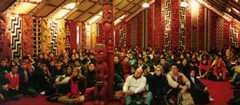
Main image: Interior of Te Herenga Waka Marae


Story summary
Moving to the cities
Before the Second World War, most Māori lived with other members of their tribes in rural areas. During the 1940s, many young Māori not eligible for military service worked in industries in the cities. From the 1950s, there was a growing demand for labour in the cities, and by 2013, 84% of Māori were living in towns or cities.
Reasons for moving
Most headed to the cities in search of work, but they were also hoping for money, fun and adventure. Initially somePākehā resisted the migration of Māori, but over time, friendships developed and intermarriage increased. The government encouraged Māori to leave rural areas, and to adapt to European society. By the 1960s, there was a generation of young Māori who had been born in the cities. Many did not know about their tribal roots.
Challenges
Towns and cities offered better paid work and more opportunities, which many Māori enjoyed. But there were also difficulties. The first arrivals mainly found unskilled manual work, which was vulnerable in times of economic downturn. Māori often faced discrimination when looking for a place to live, so hostels and state housing were built for them. Māori communities developed in some suburbs, such as Porirua and Ōtara. But some Māori found it difficult to cope living far from their home communities, without the support of their extended family. Often they became lonely, had money troubles, or drifted into crime. Being cut off from traditional ways of life meant that the children of these migrants often lacked a sense of Māori identity.
Group support
Māori in the cities banded together to form clubs, social committees and cultural groups, such as the Ngāti Pōneke Young Māori Club in Wellington. Some tribes formed groups to support their members in the cities, and protest groups developed from the 1970s.
Urban marae
Far from their home regions, people missed themarae, the place where they would gather and mark important social events such as birthdays, weddings and tangi (funerals). In the 1960s projects to build urbanmarae began. Now there are urbanmarae in major cities. They provide a place where urban Māori of different tribes feel they belong.
Urban Māori groups
Since the 1980s there have been urban Māori organisations, such as TeWhānau o Waipareira Trust of West Auckland. They say that Māori living in the towns and cities are like a separate tribe, with their own interests and problems. The groups have fought for the right to manage social welfare and education programmes for their members, and to receive the benefits from Treaty of Waitangi claims. This development has challenged old ideas about the tribal basis of Māori society.
How to cite this page
Paul Meredith, Urban Māori, Te Ara – the Encyclopedia of New Zealand, https://teara.govt.nz/en/urban-maori (accessed 17 February 2026).
Story by Paul Meredith, published 22 September 2012, updated 17 February 2015.