

Story: Poetry
New Zealand’s first poets writing in English arrived in the mid-19th century, and tried to find ways of writing about their new land. Their efforts were generally derided by later generations, who preferred modernism to Victorianism. In the 2010s New Zealand’s poets were more diverse than in the past, with more women, Māori and Pacific poets being published.
Story by John Newton
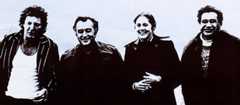
Main image: Poets Sam Hunt, Alistair Campbell, Jan Kemp and Hone Tuwhare on tour, 1979


Story summary
Colonial poetry
The first people to write poetry in English in New Zealand brought a Romantic style with them from Victorian Britain. One such poet isThomas Bracken, who wrote the national anthem, ‘God defend New Zealand’. Most poetry from this period is not generally considered to be very good.
Early 20th century
Poets of the early 20th century whose work is still valued includeBlanche Baughan andUrsula Bethell. Both were from England and wrote poetry that engaged with their new country.
Poetry became more modern in this period.R. A. K. Mason’s poetry was very much influenced by British realists.
Allen Curnow and literary nationalism
The literary nationalists were a group of writers who emerged in the 1930s. They thought their audience and subject matter ought to be found in New Zealand, rather than overseas. PoetAllen Curnow was a key figure in this group, and his anthologies of New Zealand poetry were very influential in setting the style for generations.
Other significant nationalist poets includedA. R. D. Fairburn,Denis Glover (who also ran the Caxton Press, which published many of their collections) andCharles Brasch (who foundedLandfall, a literary magazine).
Robin Hyde was an important woman poet of this period.
Poets of the 1950s and 1960s
James K. Baxter is probably New Zealand’s best-loved poet. His first collection was published when he was only a teenager, and he had a high public profile. Baxter was connected with the younger ‘Wellington group’ of poets, which includedAlistair Campbell and Fleur Adcock. There was some tension between them and the older ‘Auckland group’, which included Curnow,Kendrick Smithyman and C. K. Stead.
Hone Tuwhare was the first Māori poet to be published in English.
Poetry in the 1970s
New Zealand poetry came to be influenced by poetry from the United States and the counter-culture movement. Two major poets of this period were Ian Wedde and Bill Manhire. Female poets who emerged includedLauris Edmond, Fiona Kidman and Elizabeth Smither. Performing poetry became more popular, and poets such as Cilla McQueen, Alan Brunton and Sam Hunt gained a following.
Diversity since 1985
In the past published poets were mainly white males, but more diverse voices have emerged since the 1980s. More female, Māori and Pacific poets have been published and included in anthologies.
Writing courses became common, the most influential being at Victoria University of Wellington’s International Institute of Modern Letters. Many cities and towns have regular poetry readings and there are poetry websites on the internet.
How to cite this page
John Newton, Poetry, Te Ara – the Encyclopedia of New Zealand, https://teara.govt.nz/en/poetry (accessed 17 February 2026).
Story by John Newton, published 12 September 2014.