

Story: Māori humor – te whakakata
Humour has always been an important part of Māori culture and features in myths, speeches and songs. Many of New Zealand’s best-known comedians, such as Billy T. James, have been Māori and included a Māori sensibility in their work.
Story by Mark Derby
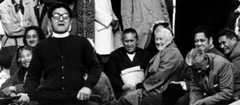
Main image: Taranaki orator Ruka Broughton using humour in a formal whaikōrero (speech) on a marae


Story summary
Humour in traditional stories
Humour features in traditional Māori myths and stories. One example is the story of Kahungunu, ancestor of Ngāti Kahungunuiwi, who wanted to marry Rongomaiwahine. He caused a fight between her and her husband by farting. The couple blamed each other for the bad smell.
Humour in speech-making and song
Humour is often used inwhaikōrero (speeches), partly to hold the audience’s attention. Sometimes speeches attangihanga are funny. Many traditional songs have comic elements.
Māori humour in the 20th century
In the early 20th century mostPākehā had little to do with Māori, who mostly lived in rural areas. A stereotype of the simple-minded but good-natured Māori developed in somePākehā books and cartoons. Despite its racist overtones, this stereotype was an influence on the routines of Māori show bands, which were popular during the 1950s and 1960s.
Some well-known performers came out of the show bands, including singer Howard Morrison and comedian Billy T. James. Other well-known Māori comedians who emerged in the later 20th century included Mike King and Pio Terei.
Māori humour in the 2000s
It is common for Māori to tell jokes and funny stories to each other while working in kāuta – the cooking house atmarae, where food is prepared. In the early 2000sTe kāuta, hosted by Kingi Biddle, aimed to recreate this atmosphere in a Māori-language television chat show. Humour also features in literature and art, for example in the artworks of Michael Parekowhai.
One study of humour in the workplace has shown that Māori humour is different toPākehā humour, in both content and style.
How to cite this page
Mark Derby, Māori humor – te whakakata, Te Ara – the Encyclopedia of New Zealand, https://teara.govt.nz/en/maori-humor-te-whakakata (accessed 17 February 2026).
Story by Mark Derby, published 14 July 2017.