
Victory pose

Avictory pose is a short animation that any character or team characters does after winning a match, while the losers stand in the background or in a separate window, applauding. Typically, every character will have three different poses that will be performed randomly at the end of a match. Theresults screen will then appear after the victory poses are finished.
Each installment of the game has its own screen transitions into the victory screen upon the completion of amatch, where the victor performs their victory pose.
Lists of victory poses[edit]
For most characters, the victory poses are generally the same in each game, although there are exceptions.
Choosing a pose[edit]
The victory poses are picked randomly. However, if the player is holding down on a specific button during the match's end, it will force the character to use a specific animation.
InMelee, holding down B, Y, or X determines the victory pose that will occur.
InBrawl, the game follows a mechanic similar to its predecessor. The B, Y and X buttons, (or up, left, and right on the D-Pad) on the GameCube controller can be held down before the victory screen to choose a pose.
InSSB4 andUltimate, the victory pose can be chosen by pressing the D-pad up, right, or left. Holding directionally down on the D-pad will not determine anything, and the pose will be chosen randomly. Also, the held pose might be changed to a different one inreplays. InTeam Battles, holding any direction does nothing.
Overview[edit]
InSuper Smash Bros., a transition animation plays before transferring to a black screen. Among these are by falling apart in a checkerboard pattern and folding into a paper plane before flying away. After this animation, the victor'sseries symbol appears before zooming out into the background of a tinted stage (in the color of the victor'sdamage meter), with the stage consisting of a checkerboard floor and clouds in the distance. The victor performs their victory pose while confetti falls down the screen, with the losers standing beside the victor, clapping. The losers' position in the background depends on their standings in the match: the lower they rank, the further away they appear.
InSuper Smash Bros. Melee, the game immediately transitions to a black background, with the same zoom-out animation for the series symbol. The losers instead clap in a window within the results screen overlay. In ateam battle, characters stand in different elevations when doing a victory pose. This can make them apparently float beside their teammates after they win a team battle, which is unique within the series.
InSuper Smash Bros. Brawl, there is no transition animation and the screen immediately turns black with the series symbol zooming out after filling the screen, like inMelee. However, the camera is slightly more dynamic, zooming out in different ways while the victor performs their victory pose. This game's backdrop features a cloudy sunset backdrop with sand-colored ground, with all players once again sharing the screen using their full models, losers applauding for the victor. Also similarly toSmash 64, losers appear closer or further depending on their final match ranking.
InSuper Smash Bros. 4, screen transitions much like the ones fromSSB64 return, alongside camera angles fromBrawl. However, they are visually more intense and dynamic compared to all previous installations, with screen transitions including a slash across the screen or a glass-shattering effect, and camera angles being considerably more fluid. While the game still features a similar sunset backdrop asBrawl (though with the addition of several monuments in the distance), an additional spotlight in the shape of theSmash Bros. logo focuses on the victor as their animation plays. Once theannouncer calls out the victor's name, the screen will dramatically shift to the shade of the victor's player color (either red, blue, yellow, green, orange, cyan, purple, or slate for human players, grey forCPU players, or mauve foramiibo). This lasts for the entire results screen on the 3DS version, but quickly reverts to the normal background if playing on the Wii U. The losers clap off-screen in a separate "results" window like inMelee, although they do not clap on the results screen inSuper Smash Bros. for Nintendo 3DS or in team battles in either version ofSSB4.
InSSB4's team battles, only the leading character animates their victory pose. In a timed match, this is the fighter with the best score; in astock match, the one with the most stocks/least amount of damage. Their teammates play their after-pose idle animations the whole time instead. In addition, victors will only use a single, fixed victory animation instead of randomly choosing from their existing ones. Some characters will use one of two poses depending on if they were in the lead or not.
InSuper Smash Bros. Ultimate, the victory screens are similar to that ofSmash 4, though with considerable aesthetic upgrades. There are new screen transitions along with returning ones fromSSB4, and just like in theWii U version, the screen will shade in the victor's player color before turning back to normal. The victory screens now take place on a detailed platform similar toBattlefield rather than sandy ground, and many characters move around more rather than remaining static. Additionally, team battles now have every character animate rather than just the leader (with the one who landed the final hit being placed up front), with some victory poses having some alterations (for example,Doc Louis will not appear duringLittle Mac's team poses).
Joker has two completely unique victory screens based on the results screen fromPersona 5. Normally, he constantly runs to the left with a panning red background and jagged lines surrounding him. The jagged lines use his port color in matches with three or more players or team color if in a team battle. The announcer does not call out his name and the crowd does not clap for him; instead, the Phantom Thieves chime in with their own comments. If Joker lands the finishing blow withAll-Out Attack, the final splash art will remain as the victory screen, as inPersona 5, undulating over time. If the match was played onMementos, the victory screen's aesthetic and music will change to match the stage, overriding team or port settings. In addition, the transition to the victory screen will always be the animated cloud fromPersona 5, rather than being randomized, but the other fighters' applause windows still appear.
Sephiroth also has a unique victory screen, based on his appearance during the Nibelheim Incident inFinal Fantasy VII, where he glares at the screen accompanied by a field of flames. The standard results theme is replaced by a single droning note, as well as the ambient sound of burning fire. All other aspects of the regular victory screen appear, including the announcer calling his name and the other fighters' applause windows.
In all installments exceptMelee, canceling a game and going into the "No Contest" screen will show all characters standing and clapping onscreen. Characters inMelee simply clap in their respective "results" windows instead.
Clapping animations[edit]
.png)
.png)
- A majority of characters will applaud for the victor, but some stipulations apply:
- While most characters who wield weapons sheathe them while clapping, or their weapons do not appear,Pit (inBrawl),King Dedede,Meta Knight (infor Nintendo 3DS), andRosalina are the only fighters who keep their weapons while clapping.Ike uniquely plants his sword into the ground while clapping inBrawl andSSB4 (only visible during a No Contest in the latter, no longer present inUltimate).
- Jigglypuff cannot clap due to its short arms—instead, it simply bobs its head left and right endlessly. InSmash 64, it only moves its head right and left once and then stops.
- TheIce Climbers don't clap and instead cry while wiping their faces, referencing the screen seen when failing a bonus stage inIce Climber.
- Mewtwo simply stands with its arms crossed, looking away in disappointment.
- InBrawl,Diddy Kong takes off his cap and looks down at the ground with a confused expression on his face, scratching his head, as a reference to his idle pose in the originalDonkey Kong Country. He applauds normally inSSB4 andUltimate.
- InBrawl,Pokémon Trainer will pull his hat down, cover his face with his hand, and hang his head in disappointment, in reference to thePokémon Stadium games; while the last Pokémon he had out applauds instead. InUltimate, the Trainer claps alone, and no Pokémon appear.
- NoPikmin accompanyOlimar; he claps alone. A similar case applies toLuma for Rosalina.
- Wario claps, but he will stop clapping every few seconds to open his mouth and call out towards the victor.
- Only the dog claps whenDuck Hunt applauds. In contrast,Banjo andKazooie both clap.
- BecauseSamus,Dark Samus, andMii Gunner have arm cannons, they will instead pat it in an attempt to mimic clapping. BecauseMega Man is able to convert his Mega Buster into a regular hand, this does not apply to him, and he applauds normally.
- Many characters appear to be sized differently relative to other fighters compared to their size difference in actual gameplay. This is possibly done to make everyone fit within the screen at the same camera distance.
Trivia[edit]
- Luigi (inSmash 64), Wolf (inBrawl), Lucas (inSSB4 andUltimate), and Richter are the only characters who share their clapping animations with another character. All of them are clone or echo characters and use the animation of the character on whom they are based.
- InUltimate, Wolf still uses Fox's clapping animation fromBrawl, while Fox's has been slightly updated since then.
- This makesMelee the only game where no characters share a clapping animation with another character.
- In Team Battles, Joker is the only character to have the camera move continuously after his victory poses finish.
- InUltimate, the characters furthest in the back in a team consisting of either six or seven characters will have certain visual effects absent during their victory animations (e.g. the dark energy radiating on Mewtwo's palm, the beam on Shulk's Monado, the beam on Mega Man's entrance, the landing smoke effects for most characters, etc.). This was possibly done in order to reduce the strain on the game's rendering engine.
- Byleth is the only character with victory poses that completely differ depending on whichalternate costume is being used.Pokémon Trainer andInkling also have slight alterations in several of their victory animations.
- Robin andPiranha Plant are the only characters with victory poses where another fighter appears (in these cases,Chrom andMario, respectively).
- Meta Knight andSephiroth are the only characters to completely leave the screen in one of their victory poses.
- Kirby only has two victory poses inSmash 64, marking the only instance in the entire series when a character has less than the usual three victory poses. However, Kirby would have three victory poses fromMelee onwards.
Gallery[edit]

One ofPikachu's victory poses inSuper Smash Bros.

One ofFox's victory poses inSuper Smash Bros. Melee.

One ofMeta Knight's victory poses inSuper Smash Bros. Brawl.

One ofLuigi's victory poses inSuper Smash Bros. 3DS.

One ofBayonetta's victory poses inSuper Smash Bros. Wii U.

One ofSteve's victory screens inSuper Smash Bros. Ultimate.
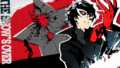
Joker's special victory screen inSuper Smash Bros. Ultimate after usingAll-Out Attack.

Sephiroth's unique victory screen inSuper Smash Bros. Ultimate.


