


Super Smash Bros. 4
| “ | SETTLE IT IN SMASH! | ” |
| —North American commercial | ||
| Super Smash Bros. 4 (unofficial title) | |
|---|---|
 Collective logo for the game. | |
| Developer(s) | Bandai Namco Sora Ltd. |
| Publisher(s) | Nintendo |
| Designer(s) | Masahiro Sakurai |
| Engine | Havok |
| Released | Nintendo 3DS September 13, 2014  October 2, 2014  October 3, 2014   October 4, 2014  July 24, 2015   September 10, 2015  Wii U |
| Genre(s) | Fighting Platforming |
| Mode(s) | Single player, Multiplayer, Online multiplayer |
| Ratings | CERO: A ESRB: E10+[1] OFLC: PG[2] PEGI: 12+ |
| Platform(s) | Wii U,Nintendo 3DS |

Super Smash Bros. 4 (also referred to by shorthands such asSmash 4,SSB4,for (スマブラfor), or more informallySm4sh, and officially asSuper Smash Bros. for Nintendo 3DS / Wii U) is a conjectural term used to collectively refer toSuper Smash Bros. for Nintendo 3DS andSuper Smash Bros. for Wii U, two games in theSuper Smash Bros. series created byBandai Namco[3] andSora Ltd.Masahiro Sakurai stated in an interview with Kotaku that he considers the3DS version the fourth installment and theWii U version the fifth installment.[4] The games feature mostly identical gameplay and the exact same character rosters, but with several large differences in other areas. The 3DS version is the first game of the series to be released on a handheld console, while the Wii U version was the first to release on an HD console.
The 3DS version launched in Japan on September 13th, 2014, and in most other parts of the world on October 3rd, 2014. It was released in stores one day earlier in Germany on October 2nd, 2014 to avoid coinciding withGerman Unity Day, and was released one day later in Australia on October 4th, 2014 because of time zone differences. Hong Kong and Taiwan received a release of the game over ten months later, on July 24th, 2015, while South Korea got its release on September 10th, 2015, nearly a full year after the game's initial launch in Japan. The Wii U version was released in North America on November 21st, 2014, and was released on November 28th, 2014 in Europe, November 29th, 2014 in Australia, and on December 6th, 2014 in Japan.
Online support for theNintendo 3DS andWii U has ended as of April 8th, 2024, making it impossible to officially playSuper Smash Bros. 4 online.
Both versions have received positive reviews; critics applauded the fine-tuning of existing gameplay elements but criticized some issues with online play.
Opening movie[edit]
Theopening movie exclusive toSuper Smash Bros. for Wii U is composed of footage from both gameplay and the variouscharacter introduction trailers shown since the game's reveal, barring the trailer forDuck Hunt.
Fighters[edit]


Both games feature identicalplayable character rosters. In total, 51 characters are playable in the base game and 58 characters are playable overall, 34 of which return fromSuper Smash Bros. Brawl, 3 of which return after being cut in the transition fromSuper Smash Bros. Melee toBrawl (Dr. Mario,Mewtwo, andRoy), and 21 of which are new to the series. Of these 58, 39 arestarter characters in both versions and eight areunlockable characters in both versions, while four characters are unlockable in the 3DS version but starters in the Wii U version. Additionally, seven characters appear asdownloadable content. A further twelve "characters" exist as alternate costumes for other preexisting characters:Alph as a palette swap ofOlimar; each of the sevenKoopalings as palette swaps ofBowser Jr., and alternate genders forVillager,Wii Fit Trainer,Robin, andCorrin.
Five characters do not return fromBrawl:Star Fox'sWolf,Pokémon'sSquirtle andIvysaur (alongside thePokémon Trainer himself), two-time veteranIce Climber'sIce Climbers, andMetal Gear'sSnake.Lucas initially did not return in the base roster, but he would later return through DLC. Additionally,The Legend of Zelda'sYoung Link andPokémon'sPichu do not return fromMelee.
As for the new characters for already represented franchises, two newcomers come from theMario universe being Bowser Jr. andRosalina &Luma,Greninja for thePokémon universe,Kid Icarus introducesPalutena andDark Pit and finallyFire Emblem introducesLucina, Robin and, asDLC, Corrin.
New characters slots are given to the Villager asAnimal Crossing's first playable character, the Wii Fit Trainer from theWii Fit series,Punch-Out's very ownLittle Mac who first appeared as anAssist Trophy fromBrawl,Shulk, who introduced theXenoblade Chronicles series, andDuck Hunt consisting of a dog and duck from theirseries of the same name. In addition, theMiis, the custom avatars from the Nintendo Wii appear as playable characters. They appear inBrawler,Swordfighter, andGunner variants, and are labelled asSmash-original characters.
Sonic the Hedgehog returns as a third-party character, now joined byMega Man andPac-Man, as well asRyu,Cloud Strife, andBayonetta through DLC.


Bold denotesunlockable characters in both versions.
Bolded italics denoteunlockable characters in the 3DS version only.
Stages[edit]


The two games feature considerably different stage selections, which is one of the primary differences between the two games. The 3DS version features a total of 42 stages (34 excluding DLC) with seven unlockable stages and eight DLC stages, 30 of which are new and 12 of which are familiar. The Wii U version features a total of 55 stages (46 excluding DLC) with six unlockable stages and nine DLC stages, consisting of 34 new stages and 21 familiar ones. Only 13 stages are shared between the two versions, seven of which are DLC.
In general, the 3DS version's new stages are based more on handheld console games, while the Wii U version's new stages are based more on home console games, though there are several exceptions to this in both games.
Past Stages in both games are now known as "Familiar Stages." Only three Familiar Stages are shared between the two games, all of which are DLC.
The Wii U version also has an option to create custom stages with theStage Builder.
3DS version[edit]


Bold denotesunlockable stages.
Wii U version[edit]


Bold denotesunlockable stages.
Modes[edit]
Multiplayer[edit]
- VS Mode
- 8-Player Smash (for Wii U exclusive): In this mode, up to eight players can play in Smash battles, compared to the standard limit of four. Due to technical limitations, some stages have their behavior modified while in this mode, while other stages are not available at all.
- Special Smash (for Wii U exclusive): The successor toSpecial Brawl, players in this mode can create custom battles by changing a variety of options, such as making all the fightersmetal. Up to four players can play in this mode. This mode does not affect records and stats.
- Smash Run (for Nintendo 3DS exclusive): In this mode, up to four players have five minutes to traverse a large dungeon-like environment, collecting various power-ups and facing enemies from multiple games. After the time limit, the players fight in a battle utilizing their boosted powers, and can then do subsequent matches with those power-ups. Sakurai mentioned in the April 2014 Nintendo Direct video that it took inspiration fromKirby Air Ride'sCity Trial mode, which has a similar premise.
- Players are also able to have items set to their characters viacharacter customization.
- Smash Tour (for Wii U exclusive): Players take control of Miis moving along a game board, collecting characters and power-ups to win the final match, with each fighter obtained acting as one stock.
- Tournament Mode (for Wii U exclusive): A competitive elimination mode returning fromMelee andBrawl, which was released as a downloadable online feature.
Single Player[edit]
- Classic Mode
- All-Star Mode
- Home-Run Contest
- Trophy Rush
- Target Blast
- Multi-Man Mode
- Training Mode
- StreetSmash (for Nintendo 3DS exclusive)
- Event Mode (for Wii U exclusive)
- Special Orders (for Wii U exclusive)
- Trophy Box (for Wii U exclusive)
Development[edit]
During the official unveiling of the Wii U atE3 2011, then Nintendo president Satoru Iwata remarked that a new game in theSuper Smash Bros. series would be made for the system. No further information was provided at this time since the game would not enter production until sometime after October 2011, after the completion of Sakurai's other project,Kid Icarus: Uprising.[5] He had stated, in response to a fan asking him about whether a "child Link" would be in the game, that he had not at the time decided on which characters would appear. However, he had also said that he "can't say that it's entirely out of the realm of possibility that someCapcom character could appear in the nextSmash Bros."[6]
Development of the game began in early 2012.[7] Sakurai and his companySora Ltd. returned as director, withBandai Namco being contracted as lead developer.[8] The reason for announcing this information so early was to prevent the inevitable shock and scandal of Masahiro Sakurai being spotted at the Bandai Namco offices.[9] The game went unmentioned during E3 2012, something which many fans were disappointed about despite the known extremely early state of the game; the "first step of the process" was taken shortly after in mid-June. Sakurai expressed disappointment that fans would be waiting for longer than expected for the game to be released due to the earliness of the initial announcement.[10] Shortly afterward, it was revealed during a Nintendo Direct that Namco Bandai (as Bandai Namco was previously named) was the primary developer alongsideSora Ltd., and had already completed a working prototype.[3] This is notably the first game Masahiro Sakurai has directed where the parameters were programmed by anyone other than himself. He has admitted that this development model should have never happened, but he wanted to do everything himself for previous titles in order to create his vision perfectly. He finally relaxed this position withSmash 4, which gave other members more freedom in how the game is built and created a more efficient work culture.[11]

On July 2nd, 2012, Sakurai posted a whiteboard drawing on Twitter which was drawn by the game's staff. It depictsDonkey Kong,Fox, aHeart Container,Kirby,Link,Luigi,Mario,Marth,Meta Knight,Mr. Game & Watch, aMr. Saturn,Pikachu, aPikmin,Pit,Sandbag,Wario, andZero Suit Samus; some argue that the curved lines in the background form the shape ofMaster Hand. The sketch also has what appears to be large block letters hidden below the visible area. While the post came with no explicit confirmation of any of these characters or elements as reappearing, it did show that they were in some sense acknowledged by the staff; everything depicted would, in fact, appear in the final game. The image itself was later removed from the original Twitter post.[12]
Sakurai remarked the 3DS title was intended to offer a new experience for veteranSmash Bros. fans, and that neither the 3DS game nor the Wii U game would simply be sequels likeMelee andBrawl were, and that they would do more than just add characters and stages. It had also been revealed that they were looking towards co-operative play for the Wii U title. Official Nintendo Magazine said, "there is merit in having skilled and unskilled players play together, so one emphasis will be on elements of players helping one-another." They also stated that the graphics would be significantly stepped up, as the Wii U can handle high-quality graphics, dynamic effects and smooth character movements in HD at 60 frames per second.[13] Sakurai was also quoted as claiming that the new game was unlikely to emphasize new playable characters, focusing instead on gameplay balance and distinctiveness of its characters.[14] Indeed,SSB4 initially introduced fewer newcomers thanBrawl did.
The development teams decided to make unique content for each version based on the strengths of each respective console. Only one player can use a Nintendo 3DS at a time and the system can be played anywhere, leading to a focus on single player content and a pick up and play element to game modes that can be completed in a short amount of time. The Wii U can be played with multiple people and is designed to be played in a home, leading to a focus on multiplayer content and more substantial game modes that take a significant amount of time to complete.
While both versions could not play cross-platform due to unique content causing logistical issues, Sakurai had remarked that one feature of the 3DSSmash Bros. title would be that players can improve their character through battles and rewards, then transfer them to the Wii USmash title to play against friends; such a function was ultimately made possible throughcharacter customization. The Nintendo 3DS hardware proved difficult to work with for the team, which led to several compromises to both versions. The system's inability to load multiple fighters to the same player meant transformations and multi-character fighters were not possible. Since both versions were required to have the exact same roster, characters had to be greatly altered, likeSheik andZelda being split into unique characters that could not swap with each other, or cut entirely, likeIce Climbers. The team also had issues implementing the Circle Pad Pro, which meant all mechanics involving theC-stick were inaccessible, though still in the game code. The small screen of the Nintendo 3DS also caused issues with readability, so elements like knockback were made even slower than inBrawl, which carried over to the Wii U version.[15]
After over a year of silence, the game's first trailer, as well as its first official gameplay, would be shown at E3 2013. The game's two versions were revealed to be unique games and were projected to launch in 2014. The trailer confirmedVillager as the first new fighter for the game, with Capcom'sMega Man also confirmed as playable towards the end of the trailer as Sakurai teased years earlier. Later in the day, a special trailer forWii Fit Trainer was revealed on the E3 show floor. Shortly after the initialE3 2013 trailers, Sakurai said there would be a single-player story mode included in the newSmash Bros.[16], but that it would be different fromBrawl'sSubspace Emissary in that there would be no cutscenes, since he did not want them to be uploaded to the Internet. However, he would later recant this and announce that he decided to cut any story mode altogether[17].
After the first reveal, new information was regularly released throughout the rest of 2013 and into 2014. Sakurai opened theDirector's Room onMiiverse, where he posted screenshots of the game on a regular basis, as well as periodically reveal several returning characters. New characters were revealed inNintendo Directs and other presentations in the form of high budget trailers with prerendered animation meant to maintain hype and interest in the game leading up to its release. A dedicatedNintendo Direct for the game aired on April 8, 2014. Highlights included that both versions would have different stages, with 3DS focusing on handheld console games and Wii U focusing on home console games; that both versions would receive unique single-player content, with the 3DS version receivingSmash Run; and that there would be a rework ofonline play fromBrawl, with the mode being split intoFor Fun, which would be more casual-oriented and focus more on items and stage gimmicks, andFor Glory, which would focus more on competition by disabling items, restricting character customization, and limiting the stage selection toFinal Destination and the newly introduced "Ω forms", which give every stage a layout similar to that of Final Destination.Global Smash Power was also introduced as the game's online ranking system, with 1 being the floor and higher numbers increasing in skill level; this value would be used for the game's random matchmaking. The 3DS version was given a release window of Summer 2014, while the Wii U version was given a window of Winter 2014. The large gap between their releases was to give each version dedicated time for quality assurance and polish.
Two trailers for the game were shown in the Nintendo Direct at E3 2014. The first featured Satoru Iwata and Reggie Fils-Aimé, then the president of Nintendo of America, engaging in a choreographed and stylized fight, before transitioning into a reveal forMii Fighters as playable characters.Miis were initially considered to be playable inBrawl as a way for players to play as any character they wanted, but were excluded due to Sakurai finding Miis out of place in a fighting game. Mii Fighters would not be usable online in an effort to combat bullying and game imbalance. The second trailer revealedPalutena, whilst also hinting at aDark Pit reveal.Pac-Man would also be revealed at theSuper Smash Bros. roundtable hosted later that day. The Wii U version would also be compatible with Nintendo's new amiibo figure line, introducingFigure Players that would learn from their opponents and could be saved to amiibo figures. The 3DS version of the game was given a release date of September 13, 2014 in Japan, and would release in October 2014 for most of the world. A demo of the Wii U version of the game featuring 20 characters was featured at booths in E3 2014.
Sakurai had stated that there were no plans to implement downloadable content or touch screen controls of any variety. However, he also said that once the game was released DLC was something they would take into consideration.[18]
In August 2014, a collection of screenshots and videos showcasing what appeared to be the entire base roster, in addition to several details about the game, was leaked onto 4chan. Dubbed theESRB leak, it was eventually confirmed to be real despite initial skepticism from the community.
AfterSuper Smash Bros. for Nintendo 3DS officially released world wide, marketing pivoted to focus onSuper Smash Bros. for Wii U. This included a special presentation on October 23, 2014 titled theSuper Smash Bros. for Wii U: 50-Fact Extravaganza. Highlights included several stage reveals, the reveal ofBowser Jr., and Wii U exclusive modes likeSpecial Orders andSmash Tour.Mewtwo was also revealed as the first piece ofdownloadable content for the entire series, scheduled for release in Spring 2015.Club Nintendo offered a limited-time deal in which Mewtwo could be downloaded for free as long as both versions of the game were registered on the same account before March 31, 2015. Registering both games to Club Nintendo before January 13, 2015 also allowed account owners to receiveSuper Smash Bros. for Nintendo 3DS / Wii U: A Smashing Soundtrack for free.Duck Hunt was formally revealed in a Nintendo Direct on November 5, thereby formally revealing the entire base roster.
For the first time in the series,SSB4 received software updates due to the process now being possible. Generally, these were content adjustment updates, including character balance adjustments, the introduction of amiibo functionality on the 3DS version, C-stick functionality on the New Nintendo 3DS,Tourney mode andYouTube integration for the Wii U version, and theShare function for both versions. Additional content would also often be released alongside these updates, introducing several additional fighters, stages, and costumes for Mii Fighters. The Nintendo Direct on April 1, 2015 gave Mewtwo a formal reveal trailer (albeit one that was lower budget and used very little prerendered animation, a trend that would continue with eachSSB4 DLC fighter reveal), as well as a release date of April 15. The Direct also revealedLucas would be added sometime in June. Nintendo launched theSmash Bros. Fighter Ballot the same day, allowing players to vote on characters they wanted to see in the series. The ballot ran until October 3 of that year.
ASuper Smash Bros. presentation on June 14, 2015 would revealRoy andRyu as playable characters, complete with severalStreet Fighter music tracks for the latter;Dream Land (64), andSuzaku Castle as new paid stages,Miiverse as a free stage exclusive to Wii U; and several Mii costumes and trophies. All content announced during the presentation would release right after the presentation aired, along with Lucas. A Mii Costume based onK.K. Slider was made available between June 19 and July 11 in Japan as part of a promotion with 7-Eleven. The costume was released worldwide on July 31 alongsidePeach's Castle (64),Hyrule Castle (64), and a wave of Mii costumes.Super Mario Maker, a stage based on the game of the same name, complete with a remix of its music, was added as paid content to both versions on September 30, alongside another wave of Mii costumes and the release of theBrawl stagePirate Ship exclusively on Wii U. TheDuck Hunt stage, which was formerly exclusive to the Wii U version, was made available on the 3DS version for free with this update as well.
AfterCloud was revealed as a playable character in a Nintendo Direct on November 14, 2015, a special broadcast for the game was announced for December 2015, later revealed to be the game's final video presentation which would air on December 15, 2015. During the presentation,Corrin andBayonetta were announced as the final two downloadable characters, the latter being the winner the Fighter Ballot among "realizable and negotiable characters" (Sakurai would reveal years later that the actual winner of the ballot wasSora, hence the disclaimer). Cloud released shortly after the presentation aired, alongsideMidgar with twoFinal Fantasy music tracks, aChocobo hat, aGeno costume, and several trophies.
Corrin and Bayonetta were released on February 3, 2016 alongside the music trackLost in Thoughts all Alone in both original and remixed form,Umbra Clock Tower with severalBayonetta music tracks, a wave of Mii costumes, and several trophies. A number of updates would release afterward, including one dedicated exclusively to Bayonetta nerfs, as well as one that disabled Miiverse support following its shutdown, before the game's development would officially cease.
Version history[edit]
Smash 4 is the first game in the series to receive regular update patches post-launch.Super Smash Bros. for Nintendo 3DS received several updates beforeSuper Smash Bros. for Wii U released, a few introduced while the game was still exclusive to Japan with the rest of the world never officially experiencing. After both games released, they received the same updates on the same day, despite occasionally having different changes within those updates. This means that there were no more major gameplay differences between regions; everyone gets the same experience barring languages and minor presentation differences. A unique issue caused by updates isreplays being rendered unusable due to gameplay altering changes affecting the real-time recreation of a match. Nintendo's solution was to make replays created in older updates inaccessible, though uploading replays throughShare mode or uploading them toYouTube would circumvent this issue. Nintendo often announced an update well before the official rollout and gave a warning about replays, giving players ample time to prepare if they wish to keep what they have.
Super Smash Bros. 4 adopted a simple incremental versioning system (i.e. version 1.0.0), with every update increasing the third number by one, rolling over the second number every tenth update. This caused some inconsistencies, such asSuper Smash Bros. for Wii U jumping from version 1.0.2 to 1.0.6 to match the version ofSuper Smash Bros. for Nintendo 3DS. In this versioning scheme, all updates were treated equally regardless of if they introduced new characters or stages, or simply fixed minor bugs. The last update released forSmash 4 was version 1.1.7, which added amiibo functionality for Cloud, Corrin and Bayonetta.
Changes fromSuper Smash Bros. Brawl[edit]
Gameplay[edit]


- In an attempt to appeal to both casual and hardcore gamers,Smash 4’s gameplay strikes a balance betweenMelee’s faster, more technical gameplay andBrawl’s slower, more relaxed gameplay.
- This is most easily apparent inSmash 4’s game speed: most veterans fromBrawl have fasterdashing,falling, andair speeds, and additionallytraction andgravity stats were also generally increased, though the game speed is still noticeably slower and floatier thanMelee.
- The differences in size across the cast are now more pronounced, withBowser now standing much taller thanMario, compared to being only slightly taller in previous games. Larger characters likeDonkey Kong are thus easier to hit but benefit from longer reach, while smaller characters likeKirby are harder to hit while hindered by shorter range.
- The differences in range across the cast have been overall toned down, with melee-oriented characters likeDiddy Kong having more elastic limbs, while sword-wielders have shorter range either through the improvements in range to the rest of the cast (e.g.,Marth) or direct nerfs to their range (eg.Meta Knight).
- Random tripping has been removed, making extendeddash-dancing a viable movement option.
- Pivoting, a movement technique previously possible inSuper Smash Bros. 64 andMelee has been reintroduced, generating more flexible mobility than inBrawl.
- Mid-match character transformations have been removed.Sheik,Zelda,Zero Suit Samus,Samus, are all now completely separate characters, whileCharizard returns as a standalone fighter in place of the Pokémon Trainer. These changes are partially due to hardware limitations on the 3DS and Sakurai’s own wish for both versions of the game to feature the same roster.
- Edge-hogging has been removed entirely, as attempting to grab aledge that someone else has already grabbed onto will now gently remove them from the ledge and "steal" it, a mechanic known as "ledge trumping".
- Ledge trumping itself can be used as an edgeguard, as it leaves the recovering opponent vulnerable.
- No intangibility at all will be granted if a character grabs the ledge twice without touching the ground or being hit, making them more open to edgeguarding.
- The length ofintangibility given by grabbing the ledge is now affected by air time and current damage, and does not carry over if the character drops from the ledge.
- The difference between fast and slow edge options based on current damage has been removed.
- Characters cannot grab the ledge after going throughhitstun for at least 55 frames.
- Recoveries in general have been improved, with many of them traveling farther and having better protection while benefiting from the faster air speeds and new ledge mechanics; these changes weren't entirely consistent across the cast, however, and recoveries are overall more polarized than in previous games.
- Meteor canceling has been removed, makingmeteor smashes functionally equivalent to spikes and thus much deadlier edge-guarding moves.
- To compensate, several meteor smashes are now weaker, with a few requiring more specific hitboxes (such asIke's down aerial).
- Characters that are meteor smashed onto a floor will now bounce back up at a fraction of their current knockback speed.
- All characters are granted 70 frames of invulnerability to allgrabs andcommand grabs after being released from a grab orthrown, making it impossible to performchain grabs.
- Stale-move negation has been weakened, making it harder for characters to abuse the above mechanic which allows for moves to combo for longer; at the same time, characters do not have to worry about preserving their KO moves as much as they did inBrawl, though still more than inMelee.
- Hitstun canceling, a controversial mechanic introduced inBrawl that allowed characters to escape combos with ease, has been toned down. Characters can now air dodge or use an aerial attack to cancel hitstun after 40 or 45 frames respectively, compared toBrawl’s 13/25 frames, with the window being pushed back when a character sustains 69 or more frames of hitstun, due to a limit being set on how fast a fighter's current launch speed can be when attempting to cancel hitstun.
- As a result, truecombos at low and mid percents are much more prevalent. However, with the increased knockback growth on many throws, moderate falling speeds,gravity increasing vertical knockback, the continued lack of advanced techniques such aswavedashing andL-cancelling, and the retained ability to cancel hitstun, true combos inSmash 4 are generally shorter and less varied compared to the ones inMelee andSmash 64, especially at high percents.
- Additionally, many of the faster, more combo-oriented fighters, such asSheik,Fox, Meta Knight, and Diddy Kong have had their damage outputs reduced, likely to compensate for their improved combo abilities or to balance them out with the slow, heavy characters.
- The changes to hitstun prevents characters from immediately performing moves toslow their momentum, reducing their ability to survive powerful attacks.
- Directional influence works differently. The angle deviation is less significant than in previous games, while a submechanic known aslaunch speed influence (LSI for short) has been introduced, which increases characters'launch speed the more thecontrol stick is held upward, and decreases it the more it is held downward. As of update1.0.4, moves with too vertical angles are only affected by DI, not LSI. These changes make it harder to carry out horizontal combos, especially at higher percents since opponents will often be sent too far for follow-ups.
- In turn, this indirectly benefits characters who possess vertical-launching moves, notably Mario, Meta Knight, Zero Suit Samus, andRyu, as it is now comparatively easier to combo and KO with attacks that deal vertical knockback.
- The effects ofsmash directional influence have been drastically weakened, which is most easily visible with multi-hit attacks, making it much harder to escape them than in earlier games.
- Movement speed when carrying heavy items has been increased among the entire cast, but Donkey Kong remains as the only character who can jump and fall with them.
- A new mechanic, unofficially known as "rage", has been implemented. Characters receive a steady increase to the knockback (and therefore hitstun) of their attacks as their damage rises starting at 35%, with the effect capping out at 150%. Rage becomes more visible when a character reaches 100%, as they begin to flash red and emit steam.
- Shields now take 19% more damage from attacks, rather than 30% less. As of update1.1.1,shield stun has been significantly increased, makingout of shield options less reliable; thus, shields are much more fragile than inBrawl.
- Much like inSSB andMelee, when having their shields broken, fighters are now intangible until they hit the ground and enter theirstunned animation. This slightly narrows the window in which a fighter can be attacked when their shield is broken, as well as making it impossible to use windboxes to push opponents offstage while falling to the ground to be stunned. However, it also prevents players from saving teammates who are tumbling to their death due to being forced over the ledge when their shield broke.
- When a fighter's shield is hit when they are right on the ledge, they are no longer guaranteed to bepushed off the ledge and put intotumble, and instead the attack must be sufficiently strong enough to push the shielding player with enough force to trigger a ledge slip.
- Attempting to land with anair dodge now results in high landing lag (21 frames), but air dodges in general are faster, having decreased intangibility durations, but also lower ending lag (roughly 5 frames, down from 10 to 30 inBrawl), making air dodges safer for aerial combat but riskier when done close to the ground.
- Sidesteps androlls have slightly less ending lag but offer fewer intangibility frames, which makes rolls overall safer for quick repositioning.
- Careening has been removed, meaning that fighters experiencing knockback can no longer hit other victims during hitstun.
- When a character is KO'd over the topblast line, aStar orScreen KO is no longer guaranteed, as a normal blast KO is now possible at random.
- They no longer occur near the end of atimed match (unless characters are launched to the upper blast line whenEnd of Day is active, the only known exception to this) orSudden Death; being instead replaced by regular blast KOs. In addition, they also will not occur when a character is launched at a fast enough speed.
- Team battles now make teams spawn as symmetrically as possible on each stage, in an AABBCCDD formation.
Game modes[edit]
- In a similar appeal to both casual and hardcore gamers, there are now two distinct type ofWith AnyoneWi-Fi modes; one calledFor Fun which is similar to the previous game's casual-styledBasic Brawl, and one calledFor Glory, a mode explicitly catered to competitive-styled play. Additionally, every stage now has an "Ω Form," where the stage's layout is altered into that of Final Destination. These forms cannot be played on in the For Fun mode, while they are the only forms available in the For Glory mode.
- All stages now have aΩ form, which is a Final Destination-like layout consisting of a single flat platform with all stage hazards removed.
- In the More Rules section, the player may set how many points a player loses upon self-destructing in a Timed match.
- "Multi-Man Brawl" is now referred to as "Multi-Man Smash". Additionally, the Fighting Alloy Team have been replaced by the Fighting Mii Team, consisting on Mii Fighters wearing black jumpsuits with a white "M" letter printed on its anterior and two white "i" letters around their limbs.
- An additional game mode has been added known asRival Smash, replacing 15-Minute Smash fromBrawl. It involves the player competing for KOs against a CPU-controlled copy of their character.
- Tips has been added, which appear on multiple loading screens and is their own specialized menu in theVault.
- Classic Mode has been reworked depending on the version:
 : In the Wii U version, it's a seven-round tournament-style elimination where the player can choose which opponents they face.
 : In the 3DS version, the player is given a choice of a set series of paths to choose from.
- All fighters now have a trophy based on one of theiralternate costumes (with the exception ofBowser Jr.), similar to the "Smash" fighter trophies fromMelee, which can be obtained by clearing All-Star mode (replacing theFinal Smash trophies fromBrawl), or purchased at the Trophy Shop for 1000G after clearing Classic mode; unlike them, each fighter have only one "(Alt.)" trophy as opposed to two. TheAlph andKoopaling trophies can also be obtained at the Trophy Shop after clearing Classic mode. In the Wii U version, clearing the All-Star mode instead gives the Final Smash trophies like inBrawl, making all fighters once again having three trophies in total (not counting Alph and the Koopalings).
Aesthetic and sound changes[edit]
.PNG)
.jpg)
- In general, the game is much more stylized and visually intense than previous entries, with the colors being bolder and brighter, sound effects being more cartoonish (though generally quieter) and many elements having been redone to stand out more.
- The characters' design styles are more distinct from each other and more in-line with their home series, in contrast toBrawl which gave the characters a more unified realistic look. For example, characters from cartoony franchises such as theMario andKirby series are much closer to their native styles, while those from more realistic-looking franchises such asThe Legend of Zelda (with the exception of Toon Link) andMetroid series maintain more realistic appearances.
- Some characters will always stand to face the screen regardless of which direction they turn, with the intent of having them face the screen more often.
- Damage percentage numbers now rise through yellow shades before turning red. In the Wii U version, the numbers are also displayed with a metallic gradient.
- Several visual effects are significantly bolder and brighter:
- Attacks' visual effects (such as motion blurs) are in general more pronounced, with bright saturated blurs replacing the previous game's subtle ones.
- Most spherical, energy-based projectiles (such asCharge Shot,Aura Sphere andShadow Ball) now appear less smoothly designed and significantly spikier, alongside being more visually intense.
- Many attacks have bright motion trails, making their range more obvious.
- Smoke trails of struck characters are now thick trails of light, which become more prominent with higher amounts of knockback and are colored according to which player would be credited with a potentialKO. Should the KO occur, the attacker will flash with an aura of their own color.
- In the Wii U version, the attacker's damage meter will also show a brief burst of flame when a KO occurs.
- Screen KOs have a new animation in which a fighter flies towards the screen and hits it face-first, staying in place briefly before sliding down. The overall animation has been lengthened to last a few frames longer than the Star KO animation.
- The victim no longer uses their light knockback voice clip when colliding with the screen, being replaced by a sound effect.
- The echo effect used forFinal Smashes,Star KOs and theannouncer,Master Hand andCrazy Hand's voice clips are smoother (with the exception of maleWii Fit Trainer when usingWii Fit), in contrast toBrawl where they had a heavy reverberating effect.
- A new visual effect is introduced, referred to asDeadly Blow by the game; hits that deal enough knockback to KO the character before they can act produce a red-and-black lightning effect during hitlag if they are close enough to the blast line. However, the effect is not always consistent, as it does not factor in DI or other obstructions, and does not always appear at an attack's minimum KO threshold. Attacks that causefreezing never produce the visual effect, instead, the screen briefly flashes white. Meteor smashes do not produce it until high percentages.
- Certain items such as theBumper andHome-Run Bat have been given new, more striking designs. For example, the Home-Run Bat is more ornate and is now colored to match the new high-knockback lightning effect.
- A successful meteor smash that deals highknockback will play a distinct sound effect.
- Characters now have team colored outlines inTeam Battles, and can select a color normally.
- Revival platforms now have a section that changes color based on the time remaining before the platform disappears. This section starts out yellow before fading between orange and then turning red before disappearing.
- Characters with over 100% of damage now flash red and emit steam, as part of the newrage game mechanic. The effect intensifies as their damage raises.
- In the 3DS version, players can tap on a character's icon on the bottom screen to place a marker on that character on the top screen, in order to more easily follow their movements.
- Magic andPK attacks no longer haveelectrical properties and produce sparkle sounds if they hit.
- Victory scenes seem to be a cross between all of the previous three games. Like inSmash 64, the screen has different animations that transition to the scene, instead of just cutting to it, while only the winner is shown in the main area like inMelee, with the others applauding in small windows on the screen on the Wii U version. However, instead of a featureless black screen, the winner's area is an environment similar to that inBrawl’svictory screen. Additionally, after the winner has been announced and thevictory theme has finished playing, a remix of the character select music fromSmash 64 will play (with the exception ofCloud, as his victory theme loops rather than finishing).
- The Stock Icons for Stock Matches are now akin to those inMelee, in which they appeared as the character's head, as opposed toBrawl, where they were merely small circles colored depending on the player. Additionally, the stock icons are placed below the HUD that contains the character's damage percentage rather than on it.
- Assist trophies and Poké Ball Pokémon now come with a marker above them, in order to indicate which player summoned them.
- Additionally, certain items come with white triangular markers above them to make them more noticeable, like inSSB64.
- Some of the more realistic sound effects fromBrawl have been eschewed in favor of sound effects which are inspired by the characters' home franchises, such as the one that plays when Kirby usesInhale.
- Like in the previous games, each character has a voice clip for whenever they take a fair amount of knockback. Though now, it plays right as they receive the blow, like in the originalSuper Smash Bros. andMelee, and not during the knockback itself, like inBrawl. InSSB4, damage noises are no longer based purely on the amount of knockback taken, unlike inSSB64 andMelee, where characters had damage noises for medium damage and hard damage specifically. This means that certain attacks and items that repeatedly launch the character can make them repeat the voice clips constantly, such as theDrill.
- Most flash/tint effects (such as flashing white while invincible) do not display while the game is paused.
- On the Wii U version, most stages have constant subtle ambient noise in the background, such as wind (Onett and Mushroom Kingdom U) or animal sounds (Kongo Jungle 64). This is a new addition to most returning stages.
- Many characters are much more expressive than inBrawl; for example, Wario now scowls when performing an attack, and in the Wii U version, Wario's mustache and eyebrows now stretch and grow to fit the situation.
- Each character's expressions are different between versions, mainly due to processor limitations on the 3DS version. An example can be seen during victory scenes: for example, if Marth were to win a match, he would keep a serious face onfor Nintendo 3DS, while he would slightly smile and look at the screen onfor Wii U.
Item changes[edit]
- Fighters under the effects of a Timer will be shown with a swirling graphical effect.
- Pressing the attack button on a shooting item with no ammunition now has the fighter throw it instead of firing an empty shot.
Console differences[edit]
The Wii U and 3DS versions of the game were shown to have distinct art styles from one another in that the 3DS version uses flatter shading and optional black outlines to make characters easier to see at a distance, a graphical style reminiscent of other 3DS games such asFire Emblem Awakening andPokémon X & Y. These outlines are customizable as Sakurai stated players can change the size of the outlines or get rid of them completely. As stated before, many of the stages are version specific, with the 3DS version having more stages based on handheld console games, and the Wii U having more stages based on home console games.[19] There is no cross-platform gameplay between the Wii U and 3DS versions due to the exclusive stages to each version;[20] however, one can create customized fighters in the 3DS version using the character customization feature and send them to the Wii U version. In addition to this, by connecting the two games (or usinga special downloadable application), the 3DS can be used as a controller on the Wii U version. However, this doesn't apply vice-versa, as none of the Wii U's peripherals can act as a controller on 3DS hardware.
As in previous entries in the series, both versions allow for up to four fighters to battle simultaneously on any stage; however, in a series first, the Wii U version also allows for up to eight players at once on a limited selection of stages.
Trophies are different between the two versions, with the trophies in the 3DS version being mainly from handheld games, while the trophies in the Wii U being primarily from console games.[21]
Each stage on the 3DS version has only two music tracks available, as was the case inMelee. On the other hand, the Wii U version sees the return ofBrawl’sMy Music option, with a large selection of tracks available for each stage.
Reception[edit]
The 3DS version received positive reviews, with a current rating of 85/100 on Metacritic[22] and 86.1% on GameRankings.[23] The game has been praised for its large and diverse character roster, its improvements to game mechanics, and its variety of multiplayer options. Some criticisms include a lack of single player modes and issues concerning the 3DS hardware, such as the size of characters on the smaller screen when zoomed out and latency issues during both local and online multiplayer. There were also reports of players damaging their 3DS Circle Pads while playing the game excessively, and to an extent, the circle pad can easily fall off. The 3DS version sold over a million copies in its first weekend on sale in Japan and had sold more than 9.65 million copies worldwide as of March 31, 2024.[24] The 3DS version was nominated for both Best Fighting Game and Best Handheld/Mobile Game atThe Game Awards 2014, but lost to the Wii U version andBlizzard Entertainment'sHearthstone: Heroes of Warcraft, respectively.
The Wii U version received critical acclaim, with a Metacritic score of 92/100[25] and a GameRankings score of 92.39%,[26] being among the highest rated games of 2014, is also awarded the Metacritic's Game of the Year and the second-highest rated game of the series afterBrawl. The 2014 Video Game Awards even awarded the Wii U version with the "Best Fighting Game" award. The game was lauded for improving everything the 3DS version offered and significantly improving the online experience. The game has sold more than 5.38 million units as of September 30th, 2023.[27]
Super Smash Bros. 4 won "favorite video game" at the 2016 People's Choice Awards. As of February 2016, the Wii U version is the 5th best selling Wii U game, whereas the 3DS version is the 7th best selling Nintendo 3DS game.
Trailers[edit]
E3 2013[edit]
E3 2014[edit]
Gallery[edit]
Miscellaneous[edit]

3DS version logo.

Wii U version logo.

3DS version Boxart.

Wii U version Boxart.

Transparent version of the 3DS version's group artwork.

The Wii U version's group artwork.

Complete Wii U version group artwork.

Miiverse Community image.

3DS version title screen.

Wii U version title screen.

A three-way battle.

New KO ownership trails.

An image showing the new visual indication of an especially powerful blow.

The "finishing move" of Fox's consecutive jab.

The first three confirmed newcomers.

The difference between outlines being set off and on in the 3DS version.

The new Team Battle outlines.


Characters[edit]

Official illustration of Villager.

Official illustration of Mega Man.

Official illustration of Wii Fit Trainer.

Official illustration of Rosalina & Luma.

Official illustration of Little Mac.

Official illustration of Greninja.
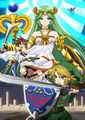
Official illustration of Palutena and Dark Pit.

Official illustration of Pac-Man.

Official illustration of Robin and Lucina.

Official illustration of Shulk.

Official illustration of Bowser Jr.

Official illustration of Duck Hunt.

Official illustration of Ryu.

Official illustration of Cloud.

Official illustration of Corrin.

Official illustration of Bayonetta.

Splash art of Zero Suit Samus.

Splash art of Sheik.

Splash art of Yoshi.

Splash art of Charizard.

Splash art of Villager.

Splash art of Mega Man.

Splash art of Wii Fit Trainer.

Splash art of Rosalina & Luma.

Splash art of Little Mac.

Splash art of Greninja.

Splash art of Palutena.

Splash art of Pac-Man.

Splash art of Lucina.

Splash art of Robin.

Splash art of Shulk.

Splash art of Bowser Jr.

Splash art of Duck Hunt.

Mewtwo teaser.

Splash art of Mewtwo.
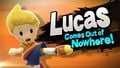
Splash art of Lucas.

Splash art of Roy.

Splash art of Ryu.

Splash art of Cloud.

Splash art of Corrin.

Splash art of Bayonetta.

Splash art of a Mii Gunner, based onAbraham Lincoln.

Splash art of a Mii Swordfighter, based onElijah Wood.

English splash art of a Mii Brawler, based onIce-T.

Japanese splash art of a Mii Brawler, based onShinya Arino.

Japanese splash art of a Mii Brawler, based onMayu Watanabe of AKB48.

Japanese splash art of a Mii Swordfighter, based onYuki Kashiwagi of AKB48.

Japanese splash art of a Mii Gunner, based onMinami Takahashi of AKB48.

Splash art of theGeno Mii Gunner costume.

Characters from theAKB48 trailer.


Trivia[edit]
- Super Smash Bros. 4 introduces theMii Fighters, making it the first game in the series to have normally playable characters representing theSuper Smash Bros. universe.
- Super Smash Bros. 4 is the only game in the series to:
- Not feature a form of bonus game in the 1P Game/Classic Mode.
- Cut all playable characters within a universe, cutting both theIce Climbers andSnake, fromIce Climber andMetal Gear, respectively.
- Super Smash Bros. 4 is the first game in the series:
- To be released on two different consoles, theNintendo 3DS andWii U.
- Sincethe original to not have a unique Adventure Mode.
- Super Smash Bros. 4 introduces 10 new universes with playable characters, tied withthe first game andUltimate for the most of any entry in theSuper Smash Bros. series.
- Super Smash Bros. 4 marks the first time in the series where long-running veteransLuigi andMarth are starter characters.Jigglypuff andGanondorf also have this distinction, though only in the Wii U version.
- Super Smash Bros. 4 marks the first ever playable appearance forWii Fit Trainer,Palutena, and theDuck Hunt dog.
- Super Smash Bros. 4 is the second collaboration betweenBandai Namco,Capcom, andSega, the first beingProject X Zone and the third being its sequelProject X Zone 2. One ofProject X Zone's co-developers,Monolith Soft, was involved inBrawl andSSB4.
- Ryu from theStreet Fighter series,X andZero from theMega Man series,Akira Yuki from theVirtua Fighter series, andHeihachi Mishima from theTekken series, all appear in bothProject X Zone andProject X Zone 2.
- Lucina,Chrom andTiki fromFire Emblem series andFiora andMetal Face fromXenoblade Chronicles, appeared inProject X Zone 2.
- Super Smash Bros. 4 is the first game in the series to receive "E10+" ESRB rating and a "Mild Suggestive Themes" content descriptor.
- The 3DS version was released in South Korea while the Wii U version wasn't, as the Wii U console was never officially released in South Korea.
References[edit]
- ^Nintendo.com's page for the 3DS version
- ^http://www.classification.gov.au/Pages/View.aspx?sid=baAYDzOrSLTJS31kqfUnSQ%253d%253d&ncdctx=kY4ZcmxpzFiR75%252faQboRyhefdrcxUukb9ZDwrHw7sGSByd%252fNX2SA4QwXLhHqWtIb
- ^abIGN: "Namco Bandai Developing Next Smash Bros."
- ^An In-Depth Chat With The Genius BehindSuper Smash Bros.Kotaku. Published 21 June 2013. Accessed 14 July 2025.
- ^Andriasang.com: "Smash Bros. U & 3DS development appears to be very early"
- ^Nintendo Everything: "Sakurai: Capcom character could appear in next Smash Bros."
- ^Cubed3: "Sakurai Begins Work on New Smash Bros for Wii U and 3DS"
- ^Bandai Namco revealed as lead developer
- ^Super Smash Bros. for 3DS / Wii U [Game Concepts]
- ^Nintendo Everything: "Next Smash Bros. in “first step of the process”, Sakurai worried about long wait"
- ^Super Smash Bros. for 3DS / Wii U [Game Concepts]
- ^Jul 2, 2012 Tweet by Sora_Sakurai (Masahiro Sakurai)
- ^Official Nintendo Magazine: "Smash Bros Wii U/3DS: How they'll work together"
- ^Official Nintendo Magazine: "Smash Bros Wii U may not feature more characters"
- ^Super Smash Bros. for 3DS / Wii U [Game Concepts]
- ^My Nintendo News: "Smash Bros Wii U And 3DS Story Mode Won’t Be Like Brawl"
- ^http://kotaku.com/the-next-super-smash-bros-wont-have-a-story-mode-or-c-906856304
- ^Gamnesia: "No Plans for DLC or Touch Controls in the New Smash Bros., Tripping is Removed"
- ^Nintendo's YouTube channel: "Wii U & Nintendo 3DS Developer Direct - Super Smash Bros. for Nintendo 3DS and Wii U @E3 2013"
- ^Joystiq: "No cross-platform play for Smash Bros on 3DS and Wii U"
- ^http://miiverse.nintendo.net/posts/AYMHAAACAADRUqFpGGYsgQ
- ^http://www.metacritic.com/game/3ds/super-smash-bros-for-nintendo-3ds
- ^http://www.gamerankings.com/3ds/632937-super-smash-bros-for-nintendo-3ds/index.html
- ^IR Information:Top Selling Nintendo 3DS Title Sales Unit. Nintendo. Retrieved on 2023-07-05.
- ^http://www.metacritic.com/game/wii-u/super-smash-bros-for-wii-u
- ^http://www.gamerankings.com/wii-u/633202-super-smash-bros-for-wii-u/index.html
- ^IR Information:Top Selling Wii U Title Sales Unit. Nintendo. Retrieved on 2023-07-05.
External links[edit]
| Super Smash Bros. series | |
|---|---|
| Super Smash Bros. ·Super Smash Bros. Melee ·Super Smash Bros. Brawl ·Super Smash Bros. 4 (for Nintendo 3DS ·for Wii U) ·Super Smash Bros. Ultimate |

