




The summer solstice: What is it and when does it occur?
The summer solstice marks the longest day of the year and is celebrated around the world.
When you purchase through links on our site, we may earn an affiliate commission.Here’s how it works.

Breaking space news, the latest updates on rocket launches, skywatching events and more!
You are now subscribed
Your newsletter sign-up was successful
Want to add more newsletters?

Delivered daily
Daily Newsletter
Breaking space news, the latest updates on rocket launches, skywatching events and more!

Once a month
Watch This Space
Sign up to our monthly entertainment newsletter to keep up with all our coverage of the latest sci-fi and space movies, tv shows, games and books.

Once a week
Night Sky This Week
Discover this week's must-see night sky events, moon phases, and stunning astrophotos. Sign up for our skywatching newsletter and explore the universe with us!

Twice a month
Strange New Words
Space.com's Sci-Fi Reader's Club. Read a sci-fi short story every month and join a virtual community of fellow science fiction fans!
When is the summer solstice?
The nextsummer solstice for theNorthern Hemisphere occurs onJune 21, 2026, at 4:24 a.m. EDT (0824 GMT), and the summer solstice for theSouthern Hemisphereoccurs onDec. 21, 2026, at 3:00 a.m. EST (2030 GMT).
The summer solstice marks the official start of astronomical summer and the longest day of the year.
The summer solstice and subsequent longest day of the year are celebrated by many cultures around the world with numerous traditions, holidays and festivals. From sunrise gatherings to midsummer festivals, summer solstice celebrations certainly blow the winter cobwebs away.


Related:Stonehenge's summer solstice orientation is seen in monuments all over the UK in amazing photos
Summer solstice FAQs answered by an expert
We asked meteorologist Joe Rao, a few commonly asked questions about the summer solstice.

Joe Rao is Space.com's skywatching columnist, as well as a veteran meteorologist and eclipse chaser who also serves as an instructor and guest lecturer at New York's Hayden Planetarium.
What is the summer solstice?
It marks that moment when the sun reaches that point when it is positioned farthest north — 23.5 degrees from the celestial equator. This point on the Earth is known as the Tropic of Cancer. The word solstice literally means "sun standing still." It is derived from combining the Latin words sol for "sun" and sistere for “To Stand Still”.
For the previous six months, the sun has appeared to migrate on a northerly course in the sky. At the moment of the solstice, that motion stops and then the sun will begin to move south. A motion that will continue for six months until the sun drops to its lowest point below the equator and then stop — another solstice point — marking the beginning of winter.
How many hours of daylight do we get on the summer solstice?
In the Northern Hemisphere, the length of daylight varies depending on the latitude. At the equator, the time from sunrise to sunset is about 12 hours. At temperate or mid-northern latitudes (approximately 40 degrees north) the length of daylight lasts about 15 hours. And for those who are north of the Arctic Circle (66.5 degrees north) the sun remains above the horizon for 24 hours.
Is summer solstice the first day of summer?
For most of the world, this is true. But for other parts of the world, the solstice is looked upon not as the start of summer, but rather as midsummer. If, for example, you were to pay a visit to Sweden or Norway at this time of year, you would find the local inhabitants celebrating a local holiday known as Midsummer's Day, which by ancient custom falls on June 24, a day also linked with the name of St. John the Baptist. At night, fires are lit in the mountains in other parts of Europe. In northern Scandinavia, above the Arctic Circle, the phenomenon of the midnight sun at solstice time is a seasonal clock that seems to divide summer, if not the entire year into two distinct parts. It is that time of the year that the sun, having spent the previous six months plodding steadily northward has reached the pinnacle of its migration.
What causes the summer solstice?

- Earth's axial tilt: Tilted at about 23.4 degrees relative to its orbit
- Orbital position: One hemisphere receives the most direct sunlight
- Opposite hemispheres: Summer solstice in one means winter solstice in the other
We haveEarth's tilt to thank for the seasons, and without it both hemispheres would receive equal light throughout the year.
As Earth orbitsthe sun, the axis of rotation of Earth is slightly tilted at 23.44° according to theRoyal Museums Greenwich. This means that as Earth orbits the sun, the Northern Hemisphere is tilted towards the sun during one half of the year. During the other half of the year, the Southern Hemisphere tilts towards it.
Breaking space news, the latest updates on rocket launches, skywatching events and more!
When the Northern or Southern Hemisphere is most tilted towards the sun, it experiences the summer solstice; when it is most tilted away, it experiences thewinter solstice.
The solstices also do not land on the same calendar day every year because the astronomical year is 365.25 days long. As such, the summer solstice for the Northern Hemisphere — also known as the June solstice — currently shifts between June 20, 21 and 22. The summer solstice does, however, occur at the sametime for every country independently of which side of Earth is facing the sun. This means the exact moment of the summer solstice can occur in the middle of the night for some people and the middle of the day for others.
What is the meaning of solstice?
- Latin origin: From solstitium, meaning "sun stands still"
- Sun's apparent motion: North–south movement pauses before reversing
- Seasonal turning points: Marks midsummer and midwinter
The word solstice is derived from the Latin word solstitium which translates to "sun stands still." This is due to the apparent movement of the sun to the north or south stops before changing direction, according toDictionary.com.
You may like

While the sun always rises in the east and sets in the west, it appears higher or lower in the sky throughout the year, depending on the season. Around the solstices, the sun reaches its apparent highest and lowest point in the sky. These correspond to midsummer and midwinter respectively, which are the turning points in the sun's journey.
Once the sun reaches its zenith at the summer solstice, it will begin its journey toward the horizon, culminating in the winter solstice at its lowest point. In the weeks before these solstice turning points, the sun appears to move very little, earning it the name "sun standstill."
If you were to map the sun's midday position every day for a year, it would make a lopsided figure eight, called ananalemma. The point at which the curves of the figure eight intersect is theequinox, which is when day and night are roughly equal in length.

Summer solstice celebrations

- Ancient monuments: Sites like Stonehenge align with solstice sunrises
- Global traditions: Celebrated with festivals, rituals, and gatherings
- Northern Europe: Midsummer festivals with dancing and feasts
- Modern observances: Sunrise events, yoga sessions, and cultural festivals
Humans have been observing the sun's position in the sky for thousands of years, and monuments such as Stonehenge in England,Karnak in Egypt, andChankillo in Peru stand as a testament to our fascination with our nearest star. Solstices have also influenced many traditions and celebrations around the world.
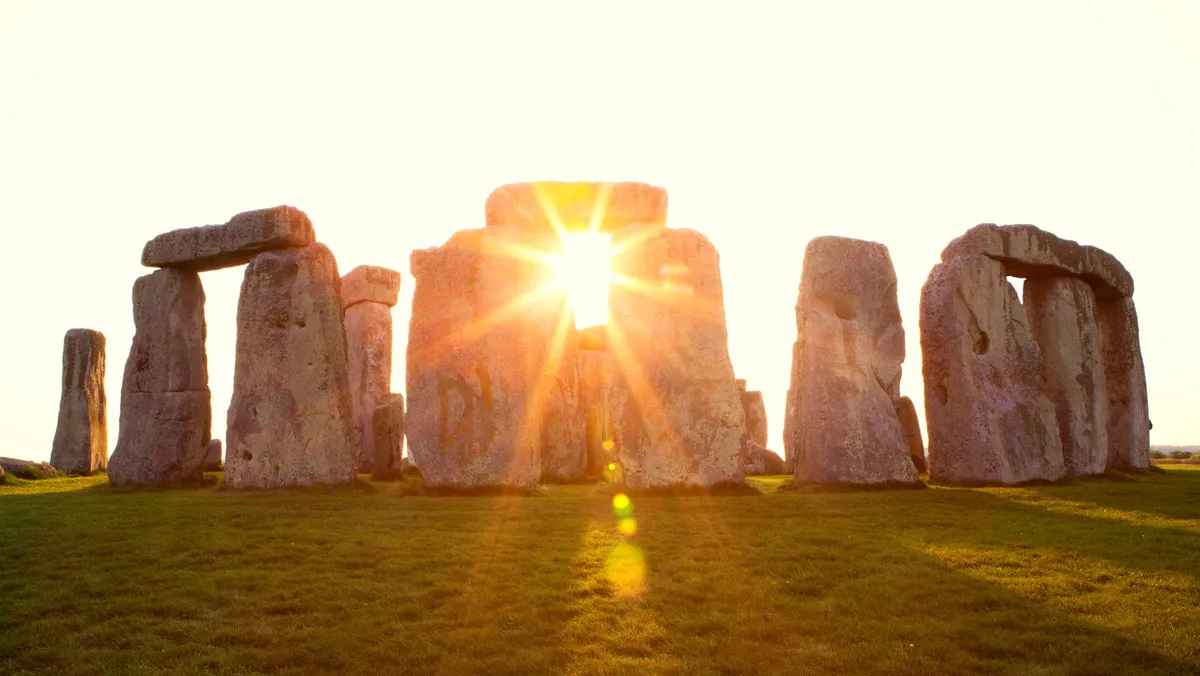
At Stonehenge in the U.K., the sun rises behind the ancient entrance to a stone circle and "the sunlight is channeled into the center of the monument,"the BBC reported. Researchers believe that solstices have been celebrated at Stonehenge for thousands of years. The stone circle is particularly important to pagans and druids.
According to some ancient Greek calendars, the summer solstice heralded the beginning of the new year and marked the one-month countdown to the start of the Olympic Games, according toSt Neots Museum in the U.K.
In Sweden, midsummer celebrations rooted in paganism are the highlight of the year for many. The weekend surrounding the solstice is filled with food, drink and plenty of singing, according toLonely Planet. Flower-wreath-wearing revelers take part in maypole and folk dances such as the traditional "Små grodorna".
In the U.S., some Native American tribes living in the plains and the Rocky Mountains performa Sun Dance to celebrate the summer solstice. In Fairbanks, Alaska, a baseball game known as the "Midnight Sun Game" traditionally starts at 10:30 p.m. and takes a brief pause close to midnight for everyone to sing the Alaska Flag Song.
In the Wiccan religion, people celebrateYule at the winter solstice to herald the return of the sun and warmer months.
Additional resources
Explore the difference between the equinox and solstice with theUK Met Office. Learn how to make your own solstice and equinox "suntrack" season model withNASA and the Stanford Solar Center. Discover 11 interesting June solstice facts withTime and Date.
Bibliography
Bland, A. (2012, December 20). The best places to see and celebrate the Winter Solstice. Smithsonian Magazine. Retrieved September 26, 2022, from https://www.smithsonianmag.com/travel/the-best-places-to-see-and-celebrate-the-winter-solstice-169694017/
Chankillo Archaeoastronomical Complex. World Monuments Fund. (2021, July 1). Retrieved September 26, 2022, from https://www.wmf.org/project/chankillo-archaeoastronomical-complex
Midnight Sun Game. Alaska Goldpanners of Fairbanks - Pointstreak Sites. Retrieved September 26, 2022, from http://goldpanners.pointstreaksites.com/view/goldpanners/june-21-2023-midnight-sun-game-tickets-go-on-sale-in-november-2022-stay-tuned
National Institutes of Health. Cheyenne Indians at a sun dance, by Edward S. Curtis, circa 1910. U.S. National Library of Medicine. Retrieved September 26, 2022, from https://www.nlm.nih.gov/nativevoices/exhibition/healing-ways/medicine-ways/key-role-of-ceremony/images/ob1410.html
Why do we celebrate the summer solstice? St Neots Museum. Retrieved September 26, 2022, from https://www.stneotsmuseum.org.uk/articles/why-do-we-celebrate-the-summer-solstice/
Salisbury, V. (2020, June 18). Top 8 summer solstice celebrations from around the World – Lonely Planet. Lonely Planet. Retrieved September 26, 2022, from https://www.lonelyplanet.com/articles/summer-solstice-celebrations
Sunrise and Sunset Times today: The old farmer's almanac. Almanac.com. Retrieved September 26, 2022, from https://www.almanac.com/astronomy/sun-rise-and-set
When is the summer solstice? Royal Museums Greenwich. Retrieved September 26, 2022, from https://www.rmg.co.uk/stories/topics/summer-solstice

Daisy Dobrijevic joinedSpace.com in February 2022 having previously worked for our sister publicationAll About Space magazine as a staff writer. Before joining us, Daisy completed an editorial internship with the BBC Sky at Night Magazine and worked at theNational Space Centre in Leicester, U.K., where she enjoyed communicating space science to the public. In 2021, Daisy completed a PhD in plant physiology and also holds a Master's in Environmental Science, she is currently based in Nottingham, U.K. Daisy is passionate about all things space, with a penchant for solar activity and space weather. She has a strong interest in astrotourism and loves nothing more than a good northern lights chase!
You must confirm your public display name before commenting
Please logout and then login again, you will then be prompted to enter your display name.


