Songfacts is a searchable database of song information where you can find out the stories behind the songs, get the lyrics, and watch the videos. We hope using this site will help you better understand and enjoy the songs you listen to, and invite you to share your thoughts about the songs in the comments section. We provide the album, year the song was released, highest US and UK chart position, and Songfacts® about each song. The Songfacts® are interesting tidbits like what the song is about, who wrote it, and what makes it different. Songfacts is free.
At the top of every page, you'll see a window where you can enter your search. Just type in what you're looking for and wait for the list to auto-populate with results. The results will include songs in our database, artists, and blog entries, which include our interviews.
No. We had a registration system in place for a long time, but removed it after making functions like adding comments available to unregistered users. If you've previously registered, know that you can still do everything you did before, just without logging in.
With millions of songs out there, it is quite possible that yours is not in the database. We do our best to cover songs that are popular or interesting, but we can't get to all of them.
Our
forums launched in 2003 but are now closed to new users. You'll find some great discussions in the archives.
On the song and and artist entries, under the Songfacts® and Artistfacts® you will see a box where you can leave a comment. These don't get posted until they're reviewed and approved by a moderator.
Songfacts® are bits of information about specific songs. The Artistfacts® are information about the performers. "Money For Nothing was the first song played on MTV Europe" is a Songfact. "Dire Straits took their name because it described their financial state at the time" is an Artistfact. If we have Artistfacts for an artist, you'll see a tab on the pages where you can view the Songfacts and lyrics. You can leave comments about the artist in this section if you're registered.
When possible, we interview the songwriters. Many of these interviews are posted in full form in the
Songwriter Interviews section. Other sources include books, magazines, newspaper articles, liner notes, reference materials and publicity releases.
Yes, we do screw up. If you notice a mistake, please send an email to
feedback@songfacts.com and let us know. This helps keep Songfacts as accurate as possible.
The number for Chart Position is the highest position the song reached on the US Hot 100 and UK Official Chart. If there is no entry, it means the song did not chart, or we have not yet entered the chart information for it. Many newer songs will not have a position entered because they are still moving on the charts.
It started around 1997 as a database of song information for a few disc jockeys in Hartford, Connecticut. This was just before the big, bad corporations came in and gutted radio stations, stripping them of their souls. But at the time, the studios were a treasure trove of song information, just horribly disorganized.

What would become Songfacts was a database where that information was entered. In 1999, the database went online with about 400 songs, and it gathered a small following, including some non-radio types who just liked music. The database grew quickly, and in 2002 Songfacts was named a Yahoo! Pick, making it clear that people really do want to find out the stories behind the songs. (This was when Yahoo! was the most popular search engine. Getting this honor was a pretty big deal.)
We started hearing from the folks who made the songs: Michael Sembello writing in to tell us about "
Maniac," Janis Ian sitting down to explain "
At Seventeen," two members of Devo checking in on "
Whip It." We found that many songs had pretty elaborate and sometimes fascinating stories that were not covered in our radio materials. For instance, we heard the story of the president of Foreigner's record company crying when he first heard "
I Want to Know What Love Is," but
Mick Jones explained that it was the legendary Ahmet Ertegun, and what a huge deal it was to impress the man responsible for so much of Atlantic Records' success. We knew "
Aqualung" used a telephone effect, but
Ian Anderson told us why. This stuff makes us hear the songs in a whole new way and gives us a greater appreciation for them. Art is like that.
A bunch of writers and researchers who love music. Find out who
at our writers page.
Yes. We don't do anything nefarious like sell or share your information. Here is the
Privacy Policy.
If you'd like to advertise on Songfacts, please
contact us.
We welcome your comments and suggestions. Contact us at
feedback@songfacts.com.
More Songfacts Pages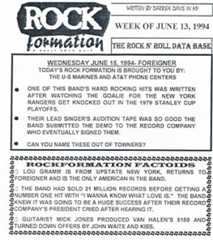 What would become Songfacts was a database where that information was entered. In 1999, the database went online with about 400 songs, and it gathered a small following, including some non-radio types who just liked music. The database grew quickly, and in 2002 Songfacts was named a Yahoo! Pick, making it clear that people really do want to find out the stories behind the songs. (This was when Yahoo! was the most popular search engine. Getting this honor was a pretty big deal.)