Chinese Travel on the Silk RoadDr Uday Dokras
The establishment of Buddhism in China
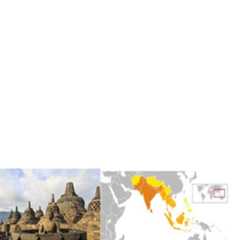
The 9th century Borobudur Buddhiststupa in Central Java / HistoricIndosphere cultural infuence zone oGreater India or transmission o elements o Indian elements such asthehonoric tles,naming o people, naming o places,linguisc borrowings, moos o organisaons and educaonalinstutes as well as adopon oHinduism,Buddhism,Indian architecture,maral arts,Indian music and dance,tradionalIndian clothing, andIndian cuisine, a process which has been also aided by the ongoing historic expansion oIndian diaspora.
Southeast Asia was in theIndian sphere ofcultural influence from 290 BCE to the 15th centuryCE, whenHindu-Buddhist influences were incorporated into local political systems. Kingdomsin the southeast coast of theIndian subcontinent had established trade, cultural and politicalrelations withSoutheastAsian kingdomsinBurma,Bhutan,Thailand, theSunda Islands,MalayPeninsula,Philippines,Cambodia,Laos,andChampa.ThisledtotheIndianisation andSanskritisation of Southeast Asia within theIndosphere, Southeast Asianpolities were the Indianised Hindu-BuddhistMandala (polities, city states and confederacies).
Indian culture itself arose from various distinct cultures and peoples, also including earlySoutheastAsian,specificallyAustroasiatic influenceontoearlyIndians.
A reason for theacceptanceofIndiancultureandreligioustraditionsinSoutheastAsia wasbecauseIndianculture already had similarities to indigenous cultures of Southeast Asia, which can be explainedbyearlierSoutheastAsian(specificallyAustroasiatic,suchasearlyMunda andMonKhmer groups), as well as later Himalayan (Tibetic) cultural and linguistic influence ontovarious Indian groups. Several scholars, such as Professor Przyluski, Jules Bloch, and Lévi,among others, concluded that thereis asignificant cultural, linguistic, andpoliticalMon-Khmer(Austroasiatic) influence on earlyIndian culture and traditions.India is seen a melting pot ofwestern,easternandindigenoustraditions.ThisdistinctlyIndian cultural system was lateradoptedandassimilatedintotheindigenoussocialconstructandstatehoodofSoutheastAsian regional polity, which rulers gained power and stability, transforming small chieftains intoregional powers.
1
Unlike the other kingdoms which existed on the Indian subcontinent, thePallava empire whichruled the southeastern coast of theIndian peninsula did not impose cultural restrictions on peoplewho wished to cross the sea.
TheChola empire, which executed theSouth-East Asian campaignof Rajendra Chola I and theChola invasion of Srivijaya, profoundly impactedSoutheast Asia.ThisimpactledtomoreexchangeswithSoutheastAsia onthesearoutes.WhereasBuddhism thrived and became the main religion in many countries ofSoutheast Asia, itbecame a minority religion inIndia.ThepeoplesofmaritimeSoutheastAsia —present-dayMalaysia,Indonesia andthePhilippines — arethought to have migrated southward fromSouth China sometime between2500and1500BC.TheinfluenceofthecivilizationwhichexistedontheIndianSubcontinent gradually became predominant among them, and it also became predominantamong the peoples which lived on theSoutheast Asian mainland.Southern Indian traders, adventurers, teachers and priests continued to be the dominatinginfluences inSoutheast Asiauntil about 1500 CE.Hinduism andBuddhism both spread to thesestates from India and for many centuries, they existed there with mutual toleration. Eventuallythe states of the mainland mainly became Buddhist.
Drivers of the Indianization of Southeast Asia
The key drivers of theIndianisation of Southeast Asia were theAustronesian andIndianmaritime trade especially theSpice trade and theMaritimeSilk Road, the emissaries ofAshoka,and theBuddhist missions ofEmperor Ashoka the Great.
Indian maritime trade with Southeast Asia
Austronesian proto-historic andhistoric maritime trade network in the Indian Ocean
Indian shipon lead coin ofVasisthiputra SriPulamavi, testimony to the naval, seafaring and tradingcapabilities of the Satavahanas during the 1st–2nd century CE.Austronesian sailors fromIsland Southeast Asia first established contact and trade withSouthernIndia andSri Lanka as early as 500 BCE. This resulted in the introduction of Southeast Asianmaterial culture andcultigens to South Asia; aswell as connecting the material cultures of India
2
andChina. These early Austronesian trade routes linking Island Southeast Asia with India alsobecame the maritime aspect of the widerspicetrade network, which were later also usedbyTamil andArab maritime trade. The sustained contact between Southeast Asia and SouthAsia resulted in cultural exchange, in addition to the exchange of commodities.The first clear mention of a navy occurs in themythological epic the
. Historically,however, the first attested attempt to organise a navy in India, as described byMegasthenes (c.350—290 BCE), is attributed toChandraguptaMaurya (reign 322—298 BCE).
TheMauryanempire (322–185 BCE) navy continued till thetimes of emperorAshoka (reign 273—232 BCE),whousedittosendmassivediplomaticmissionstoGreece,Syria,Egypt,Cyrene,Macedonia andEpirus. Following nomadic interference inSiberia —oneofthesources for India's bullion—India diverted its attention to theMalay Peninsula, which became itsnew source for gold and was soon exposed to the world via a series of maritimetrade routes. Theperiod under the Mauryan empire also witnessed various other regions of the world engageincreasingly in the Indian Ocean maritime voyages.
Buddhist missions
In the Sri Lankan tradition,Moggaliputta-Tissa – who is patronised by Ashoka – sends out nineBuddhist missions to spread Buddhism in the "border areas" in c. 250 BCE. This tradition doesnot credit Ashoka directly with sending these missions. Each mission comprises five monks, andis headed by an elder. To Sri Lanka, he sent his own son Mahinda, accompanied by four otherTheras – Itthiya, Uttiya, Sambala and Bhaddasala. Next, with Moggaliputta-Tissa's help, Ashokasent Buddhist missionaries to distant regions such as Kashmir, Gandhara, Himalayas, the land ofthe Yonas (Greeks), Maharashtra, Suvannabhumi, and Sri Lanka.The Sri Lankan tradition dates these missions to Ashoka's 18th regnal year, naming the followingmissionaries:
Mahinda to Sri Lanka
Majjhantika to Kashmir and Gandhara
Mahadeva to Mahisa-mandala (possibly modern Mysore region)
Rakkhita to Vanavasa
Dhammarakkhita the Greek to Aparantaka (western India)
Maha-dhamma-rakkhita to Maharashtra
Maharakkhita to the Greek country
Majjhima to the Himalayas
Soṇa and Uttara to Suvaṇṇabhūmi (possibly Lower Burma and Thailand)The tradition adds that during his 19th regnal year, Ashoka's daughter Sanghamitta went to SriLanka to establish an order of nuns, taking a sapling of the sacred Bodhi Tree with her. Somehistorians argue that Buddhism became a major religion because of Ashoka's royal patronage.
Buddhism in Southeast Asia
includes a variety of traditions of Buddhism including two maintraditions:MahāyānaBuddhism andTheravāda Buddhism.Historically,Mahāyānahadaprominent position in the region, but in modern times, most countries follow the Theravādatradition.SoutheastAsiancountries withaTheravādaBuddhistmajority
3