
Also known as“Why I Hate a Genre Most People Love.”
When Idiscussed Fatal Frame Vthe other week, I pointed out my lack of nervousness about the game being described as “open.” During E3, I mentioned I was excited for Dragon Age: Inquisition even though it’s open world. Later on, I expressed my uncertainty about an “open” Zelda game. I’m not sure I ever explained it beyond, “I don’t like open world!” though.

Still better than open world games.
It might be my least popular gaming opinion, and I’m a person who liked Amy, enjoyedBanjo-Kazooie: Nuts & Bolts, and disliked the Half-Life series. I’m not a big fan of Ace Attorney’s Godot, either.
But anyway, this has nothing to do with vehicle-based sequels to platformers or coffee-drinking prosecutors.
Open world games are so popular, I sometimes feel like I’m the only one who cringes when an upcoming game is revealed to be such. Everyone else is going, “Yeah, open world!” Worse yet, there are some people who thinkevery game in the future should be open world, like linear and semi-linear games are outdated and should be eliminated. Or at least, every action game, every RPG…
I hope that isn’t the future of games.
Now, sometimes you’ll hear me complain about linearity in games. It often comes up in reference to Final Fantasy XIII or the newer Resident Evil games. However, I don’t want them to be completely open instead. I like semi-linearity–games where I have choices, but also boundaries. In fact, I often completely exploreeverythingI can access before proceeding with the plot. Open world games aren’t built with that sort of gameplay in mind.
In contrast, let’s take a look at one of my favorite genres: survival horror. When I discussthe definition of survival horror, I tend to babble about unlocking things. You gotta unlock things! Backtrack and unlock things! Solve puzzles and unlock more things!
People who choose not to babble have dubbed thisRecursive Unlocking, a design where “the player travels through the map in a very non-linear fashion, moving back and forth between rooms as items are collected and puzzles are solved, and eventually passing into areas with entirely new rooms. The map opens itself up like a spiral shell.”
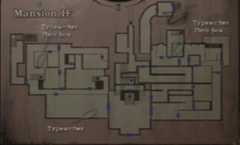
Resident Evil
When you enter an area, you’ll only be able to access some of the rooms. These rooms will give you the tools you need to access new rooms. By the end of the game, you’ve opened up the entire map.
Ilike that. It appeals to my obsessive-compulsive side. There is something incredibly satisfying about gradually opening up more and more of the map, one piece at a time.
An open world game is the exact opposite of that. It’s open. You can go anywhere. There are no boundaries to find. No satisfaction from expanding your access.
Survival horror is an easy example, because it fits so well, but other genres work, too. In RPGs, I like being bound to a specific area until the plot or gameplay expands to allow me to reach a new area. I like seeing things I can’t reach yet. “Metroidvania” games are excellent. Open world… the very idea disturbs that obsessive-compulsive part of me.
So no, I don’t want my games to be open!
On the other hand, people often point out to me that because the idea repels me, I haven’tplayed open world games, so I can’t really judge them. Fair enough. I try not to judge things I’m unfamiliar with. For various reasons, I’ve ended up buying a few open world games, and I intend to play them so I can give a solid opinion of the genre.
First up is Batman: Arkham City, which I’ve been playing for a while now. And you know what?
I like it. It’s a fun game.
…Just not as much fun as Arkham Asylum, which has a much more closed, Metroidvania-esque, not-quite-recursive-unlocking structure. Asylum made it on my list ofthe top 5 games I played last year. Iloved it. And I like Arkham City, but I don’t think it’ll be one of the best 5 games I play this year.
So far, it’s softened my impression of open world games from “I hate them!” to “They’re not so bad, just not my favorite.” We’ll see what happens as I try others…
An interesting thing happened earlier this week. I’d just gotten another rejection forAgent of the Relari, my YA fantasy novel. My dad mentioned that I always talk about that book and asked if there are any others I send out query letters for. The short answer was no, but I went through each of my WIPs and explained why. When I finished, I felt like I was missing something. Didn’t I have more novels?

No, nother.
A couple days later, I decided to take a break from querying aboutAgent of the Relari to have beta readers look at it. One of my friends offered to read it and asked if it was the same book of mine he’d read part of before.
No. That wasSunrider.
Every now and then, people will ask me about “my book,” and it always takes me a few minutes to remember that they knewSunrider as my major project. Back when it was my only WIP, there was no need to clarify which book they meant.
Sometimes people ask me what happened to it. Why didn’t it take precedence overAgent of the Relari? Why do I forget it when I think about my novels? In short, why haven’t I edited it yet?
Here you go–the top 5 reasons why I haven’t editedSunrider.
5. Not Enough Time
This is the simplest of the reasons. I just don’t have enough time to edit it right now. I have new stories to work on, my thesis, the rest of my graduate work, my freelance writing–there isn’t a lot of time in there to edit an old novel. Of course, that still doesn’t answer the question of why I’ve devoted so much time to other editing projects instead…
4. It’s a Monstrosity
You want to know the top reason why, back in 2009, I shelvedSunrider for a while so I could work on other novels? I read a fantasy novel called Talion: Revenant by Michael A. Stackpole. He mentioned in a note that it was actually his first novel, even though it wasn’t the first he had published. Publishers weren’t willing to take a chance on a 175,000-word novel from a new author.
I took that to mean there was a pretty good chance I couldn’t just appear out of nowhere with a massive fantasy novel. I needed to work on shorter things–short stories, and yes, shorter novels.
Since then, I’ve learned more about word counts. It feels like 80,000 is an average word count for novels, although fantasy genres tend to be longer, and veer closer to numbers like Stackpole’s 175,000.

I just checked to be sure.Sunrider sits at around 260,000 words. That isn’t as huge as I was afraid it might be, but it’s nowhere near reasonable, either. But hey, word count rules can be flexible, as long as the book is good enough…
3. I Wrote It as a Teenager
There’s a reason people tend to think of it as “my book.” I startedSunrider when I was 13 and finished it when I was 18. Yes, I basically wrote it during high school, and I know what my writing looked like back then. I’ve learned a lot through experience, classes, and especially my graduate program. I look back on my older writing… and laugh.Sunriderwould probably make my professors throw things at me.
So I wouldn’t just be editing a novel. I’d be editing 260,000 words of a badly-written novel.
On the other hand, maybe the story–
2. The Main Plot is Cliché
A young man learns he’s the Chosen One and sets out to save the world from demons. It doesn’t get much more basic than that.
Every book needs to have something to make it stand out from the rest, so a generic fantasy plot isn’t a good idea. Whenever I actually decide to edit it, I’ll need to seriously ask myself, “What makes this book different than the rest?”
Oh, but maybe I do have an answer.Sunriderisn’t just about a hero fighting demons…
1. It’s About EVERYTHING!
Yes, we’ve reached the #1 reason I haven’t edited this book yet. I wroteSunrider between the ages of 13 and 18. Just about every single thing a teenage Sam thought was cool found its way into the plot. As a result we have:

This is what you’d expect
in a fantasy novel, right?
- A prophecy and a Chosen One
- A rebellious noblewoman who wishes she was a commoner
- A comic relief emperor…
- …and the maid in love with him…
- …and his cyborg army
- Pirates!
- Demons!
- Sorcerers!
- Faeries!
- Wicked devil-worshiping tyrants…
- …and the brave rebels…
- …who happen to be a percussion ensemble
- Assassins!
- Mobsters!
- …and their laser guns
- An army of heroes who have become worse than their enemies, in a quickly-forgotten subplot
- Vaguely Judeo-Christian religions (and their antithesis, as the devil-worshipers are organized enough to be counted as a major religion)
- Heavy-handed political commentary
- Mad scientists!
- Probably even more stuff, like zombies. I can’t remember if the zombie scene made it in or not.
Let me put it this way. At one point I considered sending the hero into space to request help from elves. Even I realized that was a bit much.
One continent has medieval technology, magic, and bans anything modern/futuristic. Another continent has futuristic technology and bans magic. So of course, the emperor with the cyborg army is in charge of the magic land, and the sorcerer duke is in charge of the futuristic land. In fact, he’s decided to make it more like the other continent, but to do gradually so as not to upset people–hence the 1920s-era weapons becoming popular, as people gradually switch from laser guns to swords (“The Weapon of the Future!” as we see displayed in one scene).
By the final scene, we’ve got sword fights, gun fights, magic fights, cyborgs fighting on top of airplanes, percussionists blocking bullets with their drums, and I don’t even know what else.
Someday, I’ll editSunrider.
But I’m not ready to face it just yet.
Don’t get too excited. I don’t have a video game, a prototype, or a good idea of what I’m doing.
A while ago, I played a downloadable game called Choice of the Dragon, which can be downloaded on iTunes andKindle, among others. I liked it a lot. It was simple, just a text-based adventure game, but I enjoyed making choices and seeing their results. It was like a Choose Your Own Adventure book, except as a game. Plus, you played as a dragon.

Then, just a few days ago, I had a question about video game writing.Symantha Reagor came to my aid, and one of the things she mentioned was that you can make games forChoice of Games. When I was to see who this company was–it turned out to be the company behind Choice of the Dragon!
It’s possible to become a writer for them and be paid for writing official games under the Choice of Games label. That is awesome, and of course I’m interested in it. I’m not quite ready to submit my credentials to them yet, though. I’d like a little more experience, first.
Their other option involves creating games they won’t pay you for (except royalties from any ad revenue, and stuff like that1) usingChoiceScript, their simple programming language. If you made one of these games, you could submit it to be hosted and made available for people to play. That’s also very cool, if not quite as awesome as the first option. After I read about it, I decided to download ChoiceScript yesterday, just to play around.
I got hooked.
I spent the rest of the evening trying to understand ChoiceScript so I could start a little text-based game of my own. I thought about it all night long. I thought about it as soon as I woke up.
And I devoted today to editing and doing other important things, so I haven’t made any more progress.
It was still a lot of fun. Once I get some more free time, I’ll be back at it. Who knows, maybe one of these days, I’ll have an adventure game to show you.
1 Update: Choice of Games actually contacted me to let me know that although authors of Hosted Games don’t receive an advance, the 25% royalties still result in a decent amount of revenue.

Disclosure
Items purchased through links from this site might give me a commission at no additional cost to you.
I am a participant in the Amazon Services LLC Associates Program, an affiliate advertising program designed to provide a means for sites to earn advertising fees by advertising and linking to amazon.com.
I’m also a participant in the Play-Asia Affiliate Program, which allows sites to earn fees by advertising and linking to Play-Asia.
I also invest in companies I like and have faith in.
None of these things affect the integrity of this site. All reviews are honest, and I only include affiliate links to products I recommend.
Archives
2026
- – February (6)
- New .hack Game Announced!
- Highlights from the (Surprisingly Good) State of Play
- Yakuza Kiwami 3 Marks the Start of a New Game Line? What?
- State of Play Announced for February 12
- Let’s Talk About Yesterday’s Nintendo Direct
- Nintendo Direct Partner Showcase Announced for Tomorrow
- Falcom to Announce Another 2026 Title in February
- + January (14)