


Pathfinder Village History | |
This summary of the history of Pathfinder Village was kindlyprovided by long-term resident Ron Wilson who built up aremarkable history over the years and which contains much more detail than can be found here. This was based on the "official history" written from old records, talks with the two Horton brothers who beganthe park in 1932, and from newspaper cuttings. The original sitefor the village was on land formally owned by the church. The father of thetwo lads that started the village was the Reverend Horton, possibly a relative. The "Lillybrook" stream Through the village runs a stream called the"Lillybrook". It is mentioned in records going back to the year 739 AD and also mentioned in the"Domesday BOOK". It is oneof the earliest charted rivers in the United Kingdom. Small Beginnings
Tony was joined by hisbrother Gerry the following year. They then introduced the availability ofcaravan hire. 1934 saw the start of the villageproper but only for holidays, not for permanent residence. A road was built called Heatherfield, handbuilt by one labourer usingstone on the site at a cost of £400 and there was enough left over to start building therestaurant/ dining room which was later named the "Red Indian" restaurant, and later stillthe "Log Cabin". In 1936 the caravan hire fleet was increased but as business wasnot always constant the brothers cut and sold logs to tide them over. An old railway carriage wasadded to the accommodation. A rough and ready collection of sheds were built as workshops. The War Years
No business was possible during the war years. The Log Cabin was let for the duration. Post War Years Immediately after hostilities, a house was built behind the restaurant and occupied for some yearsby the two brothers and their families. At this time there were only the two brothers, asecretary and one man in the workshop to sell and hire out caravans,forge towing brackets, and make and serve meals in the restaurant.
In 1947 three more men were employed in the workshops. A little church was made available by converting the old mess building at the side of the restaurant. The building (now demolished) was still in use until 1980 when the new church was built in theWorkhops and used from 1981 onwards after consecration by the Bishop of Crediton. In 1954 it was realised that residential caravanning was here to stay so they set aboutplanning, providing and connecting all mod cons including central heating to all the caravans.This was one of the very first Parks in the country to do so. A 30-pitch touring caravan site was established at the opposite end of thebowling green and opposite to the Village Hall. The Pathfinder Company (now known as 'Avondale') sold "up market" caravans such as Carlight and Royales. The workshops by this time had 5 star status forrepairing touring caravans.
Mains water was connected instead of the water being pumped aroundthe site from 6 wells. 1956 sawthe connection of mains electricity and until then a limited supply to eachvan was supplied by the site from three Lister Diesel generators. 1957 saw the erection of the Village Hall. Opposite the Village Hall was thebowling green - which was built over and is now part of Six Acres. Then in 1958 another milestone, the first 32' by 10' built tothe brothers' own design. This first true Mobile Homecaused quite a stir in the trade. Other manufacturers of large caravans continued to beused on site until, in 1969, manufacture was then started here in the village. The basicunit was 50'x 10'4" and the largest almost double this size. (50' X 20') In Summary From the very start all main services were included, including central heating.Heated air was blown through ducts in the floor. Laterthe "Donair" system was used as it could alsoprovide hot water. In 1965 Pathfinder Village came second in the National Britain in Bloomcompetition. Quite an achievement for what was a comparatively "young"village. In 1967/8 Pathfinder Village won the South West cup for towns andvillages with a population of less than 7000. In 1989Ordnance Survey recognised Pathfinder as a Village in its own rightand it has been included on their maps ever since.The only Park Home Village in the UK to be so recognised. In 1988 the Horton brothers retired and sold the whole village to Avondalewhose touring caravans are well known. The Workshops were finally demolished in April 2008.
| |
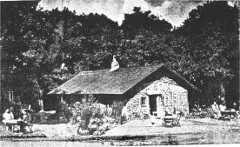 The Site proper (known later as Pathfinders) was first set up by Tony Hortonin 1932 but only to hire out caravans for self towing.
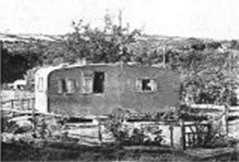 Tony Horton volunteered for the RAF and Gerry was called up into the army. By aremarkable coincidence both brothers were demobilised on the 10th June 1946.Tony was awarded the DFC for his exploits as a pilot.
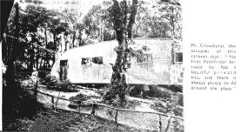 Due to a national shortage of houses, residential caravanning began. There were fewregulations and customers who bought a caravan, could stayon site. No services were offered.
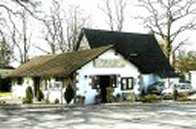 Today the Log Cabin restaurantis the present site office. The village later had its own shop and Sub-Post Office.
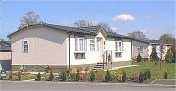 These days most units at Pathfinder Villageare 40 to 60 foot in length and 20 foot wide and areinstalled on good sized plots among the trees. Trees are felled as a last resort only if they prove dangerous near a property.
[8]ページ先頭