How America’s Relationship With Cuba Will Change
President Obama announced in 2014 the re-establishment of diplomatic relations with Cuba and a series of actions aimed at easing travel and trade restrictions rooted in a 1963 law. On April 11, 2015, Mr. Obama and President Raúl Castro of Cuba met in the first face-to-face discussion between leaders of the two countries in a half-century.
- Diplomatic Relations
- There have been no diplomatic relations with Cuba since the early 1960s, after Fidel Castro and his Communist government came to power.
- Relations will be re-established, with an American embassy in Havana.
- State-Sponsored Terror List
- In 1982, Cuba was designated astate sponsor of terrorism.
- Secretary of State John Kerry will review the designation.
- Travel Restrictions
- Citizens and permanent residents of the United States are not permitted to travel to Cuba, with some exceptions. General licenses, which require no special permission, are authorized for:
- Persons visiting a “close relative” who is a Cuban national and "persons traveling with them who share a common dwelling as a family with them.”
- Obamaauthorized this in 2009.
- Government business.
- Journalists regularly employed at a news organization.
- Certain researchers and professionals.
- Certain college faculty and students or others participating in educational activities.
- Certain religious activities.
- Telecommunications providers.
- Obamaauthorized telecommunications providers to pursue licensing agreements in 2009.
- Producers or distributors of agricultural or medical goods.
- Other specific licenses to travel are granted on a case-by-case basis.
- Obama will open up general licenses to travel for these reasons, which previously required approval on a case-by-case basis:
- Public performances, workshops and athletic competitions.
- Support for the Cuban people, including human rights work.
- Humanitarian work.
- Private foundations and institutes.
- Information dissemination.
- Travel related to export of authorized products.
- Lifting all restrictions on travel, including for tourism, would require congressional action.
- Banking and Trade Embargo
- No transactions involving the property of a Cuban national (including purchasing Cuban cigars in third countries or signing a Cuba-related contract with a foreign firm).
- United States institutions will be able to open accounts at Cuban financial institutions.
- Travelers to Cuba will be allowed to use American credit and debit cards.
- United States entities in third countries will be allowed to engage in transactions and meetings with Cuban individuals in third countries.
- No imports or exports (with certain exceptions like humanitarian gifts).
- Certain items that support the Cuban private sector will be allowed for export, including certain building materials and agricultural equipment.
- Certain items that support telecommunications in Cuba will be allowed for export, and companies will be allowed to establish related infrastructure.
- Licensed American travelers will be able to import $400 worth of goods (including up to $100 in tobacco and alcohol).
- Congress would need to act to lift the embargo entirely.
- Transfer of Money
- Authorized travelers are now permitted to carry $3,000 in remittances to Cuba. There are no limits on remittances to religious organizations.
- No limits on sending remittances to close relatives.
- Obamaauthorized this in 2009.
- Remittances of up to $500 per quarter may be made to any Cuban national for humanitarian needs.
- That limit will be raised to $2,000 a quarter.
- License requirements for people who provide remittance forwarding services (other than depository institutions).
- Licenses will no longer be required.
U.S. to Restore Full Relations With Cuba, Erasing a Last Trace of Cold War Hostility
The U.S. will open an embassy in Havana for the first time in more than a half century after the release of an American contractor held in prison for five years, officials said.
Pope Francis Is Credited With a Crucial Role in U.S.-Cuba Agreement
Francis helped bridge the divide by first sending letters to President Obama and President Raúl Castro of Cuba, and then having the Vatican host a meeting between them in October.
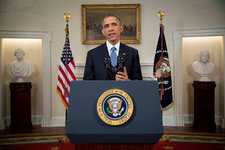
Obama on Change to U.S.-Cuba Relations
Obama Meets Raúl Castro, Making History
President Obama came to the Summit of the Americas in Panama determined to defuse a generations-old regional dispute over Cuba’s exclusion from the meeting.
Advertisement