
Japan
Country Spotlight
The 1945 atomic bombings of Japan by the United States left an indelible impression on Japanese society. Japan does not possess any programs for the development of weapons of mass destruction (WMD), but it is the only non-nuclear weapon state in possession of a full nuclear fuel cycle and has advanced WMD-relevant industries.
See Japan's performance in
Region East Asia and the Pacific
~700,000 Chemical weapons abandoned in China after World War II
3 Non-nuclear principles: Japan shall not possess, produce, or base nuclear weapons
8.5% Electricity from nuclear power
4th Largest commercial chemical industry in the world
Nuclear
- “Atomic Energy Basic Law” prohibits all non-peaceful nuclear activities
- OnlyNPT non-nuclear weapon state in possession of full-scale nuclear fuel cycle facilities
- Following the 2011 Fukushima Daiichi accident, Japan’s Nuclear Regulation Authority (NRA) established new regulatory requirements in 2013
- In February 2025, Japan announced in their 7th Strategic Energy Plan that they aim to achieve 20% nuclear power by 2040
- Hibakusha, survivors of the 1945 nuclear attacks, have spearheaded strong nuclear disarmament movement
Biological
- Extensive use of biological weapons during WWII, including widespread attacks on civilians and crops
- Signed the Biological and Toxin Weapons Convention (BWC) in 1972 and ratified it in 1982
- Established the Biological and Chemical Weapons Conventions Division within the Ministry of Foreign Affairs of Japan in 1972 as a contact point for BTWC concerns
- Member of theAustralia Group and maintains comprehensive export controls
Missile
- Does not have a ballistic missile program, but is pursuing the acquisition of counterstrike capabilities using cruise missiles to address perceived regional threats
- Purchasing 400 Tomahawk cruise missiles, as well as upgraded Type-12 surface-to-ship missiles, from the US
- In Between August 2024 to January 2025, Japan performed four test launches of a “Hyper-Velocity Gliding Projectile (HVGP)”
- Member of the Missile Technology Control Regime(MTCR) and was involved in drafting the Hague Code of Conduct Against Ballistic Missile Proliferation(HCOC)
- Deploys a multi-layer missile defense system consisting of both sea-based midcourse defense and ground-based terminal defense systems
Chemical
- Used chemical weapons against Chinese troops and civilians during WWII
- Working with China under the Chemical Weapons Convention (CWC) to destroy more than 700,000 Japanese chemical weapons abandoned in Chinese territory
- Between September 2000 and March 2023, Japan successfully destroyed 88,155 declared abandoned chemical weapons (ACWs) in China
- In cooperation with the Chinese government, Japan plans to complete the destruction of ACWs in China by 2027
- Ratified the CWC in September 1995
Treaties and Regimes Memberships
The NPT is a treaty aimed at limiting the spread of nuclear weapons through the three pillars of non-proliferation, disarmament, and peaceful use of nuclear energy.
The BTWC mandates the elimination of existing biological weapons and prohibits developing, stockpiling, or using biological and toxin weapons.
The Comprehensive Nuclear-Test-Ban Treaty bans all nuclear explosion tests on Earth. It needs eight key countries to ratify before entry into force.
The Chemical Weapons Convention (CWC) requires countries to destroy all chemical weapons and prohibits developing, stockpiling, or using chemical weapons.
Analysis
on Japan
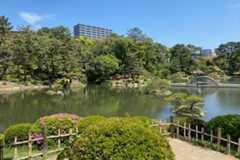
Reflections on My First Visit to Hiroshima
"Visiting Hiroshima imparted to me a deep sense of responsibility as well as a renewed energy to work towards a world without nuclear weapons," writes Program Officer Ananya Agustin Malhotra.
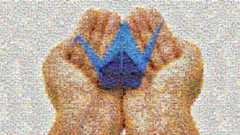
Paper Cranes, Messages of Peace Shared to Mark Anniversary of Atomic Bombings in Japan as Tokyo Olympics Close
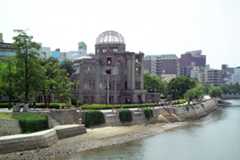

Education Center
Extensive resources on nuclear policy, biological threats, radiological security, cyber threats and more.
My Resources
Subscribe to NTI
Sign up for regular updates on innovative, real-world solutions to existential threats.