The Nobel Peace Prize
Malala Yousafzai – awarded the 2014 Nobel Peace Prize – donated this scarf to the Nobel Prize Museum which she wore when she argued for all children's right to education at the United Nations headquarters in 2013.
Photo: Nobel Prize Museum
About the prize
“The said interest shall be divided into five equal parts, which shall be apportioned as follows: /- – -/ one part to the person who shall have done the most or the best work for fraternity between nations, the abolition or reduction of standing armies and for the holding and promotion of peace congresses.” (Excerpt from the will of Alfred Nobel)
Alfred Nobel showed a big interest in social issues and was engaged in the peace movement. His acquaintance with Bertha von Suttner, who was a driving force in the international peace movement in Europe and later awarded the peace prize, influenced his views on peace. Peace was the fifth and final prize area that Nobel mentioned in his will. The Nobel Peace Prize is awarded by a committee elected by the Norwegian Parliament (Stortinget).
Seeall peace laureates or learn aboutthe nomination process.
Quick facts
- Peace prizes: 106
- Peace laureates: 143
- Awarded women: 20
- Youngest laureate: 17
- Oldest laureate: 86
Nobel Peace Prize 2025

Maria Corina Machado
Nobel Peace Prize 2025for her tireless work promoting democratic rights for the people of Venezuela and for her struggle to achieve a just and peaceful transition from dictatorship to democracy.
The Nobel Peace Prize for 2025 goes to a brave and committed champion of peace – to a woman who keeps the flame of democracy burning amid a growing darkness. As the leader of the democracy movement in Venezuela, Maria Corina Machado is one of the most extraordinary examples of civilian courage in Latin America in recent times.
Ms Machado has been a key, unifying figure in a political opposition that was once deeply divided – an opposition that found common ground in the demand for free elections and representative government.
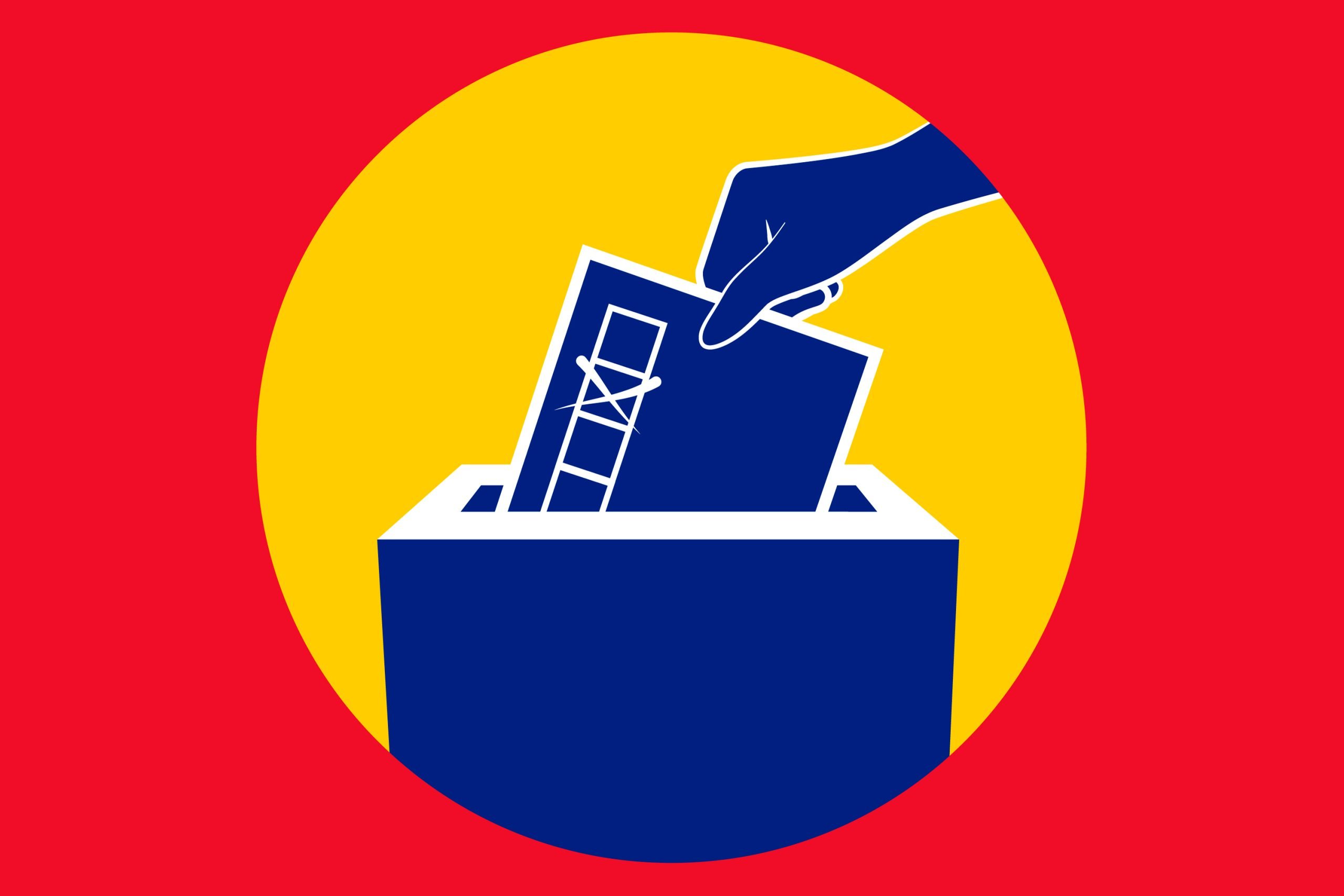
Ill. Niklas Elmehed © Nobel Prize Outreach
Behind the scenes
Questions and answers
Can anyone be nominated for the Nobel Peace Prize?
Listen to the Chair of the Norwegian Nobel Committee Jørgen Watne Frydnes on the nomination process of the peace prize.
Nobel Prize nominations
Nobel Peace Prize 2025
The Norwegian Nobel Committee received a total of 338 candidates for the 2025 Nobel Peace Prize. 94 of these are organisations.

Nobel Peace Prize award ceremony 2021 in the Oslo City Hall in Norway.
© Nobel Prize Outreach. Photo: Geir Anders Rybakken Ørslien.
Q&A
Did you know that there is no public list of the current year’s nominees for the peace prize? The complete list of nominees of any year’s prizes is not disclosed for 50 years. The same goes for all the prize categories. Learn more about the nomination process in this Q&A.

The nomination process for Nobel Peace Prize laureates.
© Nobel Media. Ill. Niklas Elmehed
Who did what?
Can you match the right peace laureate with the right accomplishment? Have a try!

Questions and answers
No, it is not possible to nominate someone for a posthumous Nobel Prize. Find out more in the FAQ.

The Nobel Peace Prize award ceremony at Oslo City Hall, Norway, on 10 December 1993.
© Knudsens fotosenter/Dextra Photo, Norsk Teknisk Museum.
Nobel Prizes and laureates
The traditional costume Kailash Satyarthi wore when he received the Nobel Peace Prize in Oslo in 2014.
Photo: Nobel Prize Museum
Articles in peace
Connect with us
Featured laureates

Jane Addams
Nobel Peace Prize 1931for their assiduous effort to revive the ideal of peace and to rekindle the spirit of peace in their own nation and in the whole of mankind.

Rigoberta Menchú Tum
Nobel Peace Prize 1992for her struggle for social justice and ethno-cultural reconciliation based on respect for the rights of indigenous peoples.

Desmond Mpilo Tutu
Nobel Peace Prize 1984for his role as a unifying leader figure in the non-violent campaign to resolve the problem of apartheid in South Africa.

Narges Mohammadi
Nobel Peace Prize 2023for her fight against the oppression of women in Iran and her fight to promote human rights and freedom for all.

Liu Xiaobo
Nobel Peace Prize 2010for his long and non-violent struggle for fundamental human rights in China.

Mairead Corrigan
Nobel Peace Prize 1976for the courageous efforts in founding a movement to put an end to the violent conflict in Northern Ireland.
Discover more
A number of Nobel Prize laureates have been lauded for their opposition to the deadly arsenals that jeopardise our very existence.
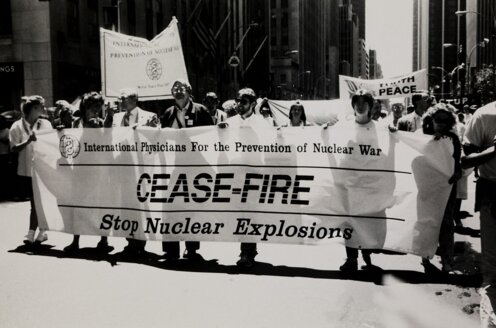
IPPNW Cease-fire campaign, 1989.
Wellcome Images, CC BY 4.0 , via Wikimedia Commons
The Red Cross has been awarded three times – read about their work.

Armlet for the Red Cross.
Photo: Nobel Prize Museum
Watch Malala Yousafzai’s Nobel Prize lecture about the work done for children’s education.

Photo: Ken Opprann
Leymah Gbowee worked for the safety of women and for women’s rights to full participation in peace-building work.

Leymah Gbowee gave a lecture at Stockholm university on 27 March 2025. “Peace is not the absence of war. Peace is the presence of conditions that give dignity to all,” Leymah said.
© Nobel Prize Outreach. Photo: Nanaka Adachi
Martin Luther King Jr. was awarded the Nobel Peace Prize for his non-violent struggle for civil rights in the United States.

Martin Luther King Jr.
Photo: Library of Congress.
Nelson Mandela and F. W. de Klerk brought a peaceful end to the apartheid regime, laying the foundations for a new democratic South Africa.

On 11 February 1990 Nelson Mandela became a free man after spending 27 years in prison. Here he is celebrating his freedom with his wife Winnie Mandela.
Photo by Allan Tannenbaum/Getty Images
Five documentaries inspired by the Nobel Peace Prize
Follow Hana Khider and her all-female team of Yazidi deminers attempting to clear their land of mines. Their job involves painstakingly searching for booby traps in bombed out buildings and fields, where one wrong move means certain death. Watch all five documentaries inspired by the Nobel Peace Prize.

Delve deeper
Mohandas Gandhi (1869-1948) has become the strongest symbol of non-violence in the 20th century. It is widely held – in retrospect – that the Indian national leader should have been selected for the Nobel Peace Prize. He was nominated several times, but was never awarded the prize. Why?

Mahatma Gandhi laughing.
Photo: Public domain.
Sign up for the monthly newsletter
Join thousands of global subscribers enjoying the free monthly Nobel Prize highlights, trivia and up-to-date information.