The Nobel Prize in Physiology or Medicine
Randy Schekman bought his first microscope at the age of 12. In 2013, he became a medicine laureate.
© Nobel Prize Outreach. Photo: Alexander Mahmoud
About the prize
“The said interest shall be divided into five equal parts, which shall be apportioned as follows: /- – -/ one part to the person who shall have made the most important discovery within the domain of physiology or medicine …” (Excerpt from the will of Alfred Nobel)
Alfred Nobel had an active interest in medical research. Through Karolinska Institutet, he came into contact with Swedish physiologist Jöns Johansson around 1890. Johansson worked in Nobel’s laboratory in Sevran, France during a brief period the same year. Physiology or medicine was the third prize area Nobel mentioned in his will.
The Nobel Prize in Physiology or Medicine is awarded by theNobel Assembly at Karolinska Institutet, Stockholm, Sweden.
Seeall medicine laureates or learn more aboutthe nomination process.
Quick facts
- Medicine prizes: 116
- Medicine laureates: 232
- Awarded women: 14
- Youngest laureate: 31
- Oldest laureate: 87
Nobel Prize in Physiology or Medicine 2025


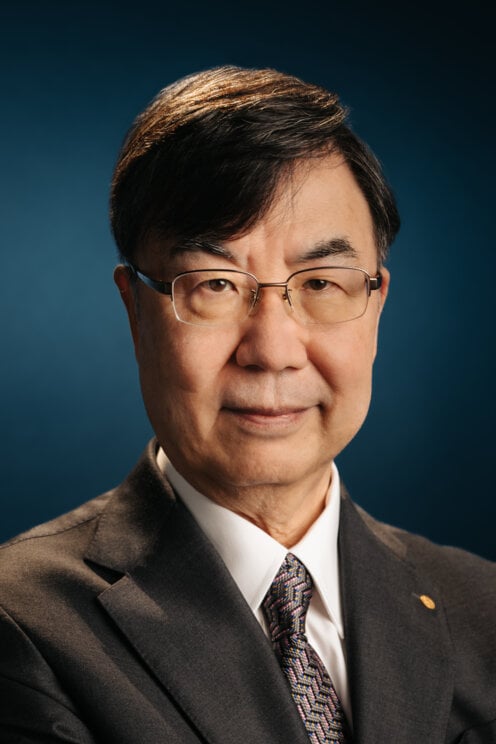
The body’s powerful immune system must be regulated, or it may attack our own organs. Mary E. Brunkow, Fred Ramsdell and Shimon Sakaguchi made groundbreaking discoveries concerning peripheral immune tolerance that prevents the immune system from harming the body. Their discoveries have laid the foundation for a new field of research and spurred the development of new treatments, for example for cancer and autoimmune diseases.
Press release
Popular information: They understood how the immune system is kept in check
Scientific background: Immune tolerance: The identification of regulatory T cells and FOXP3
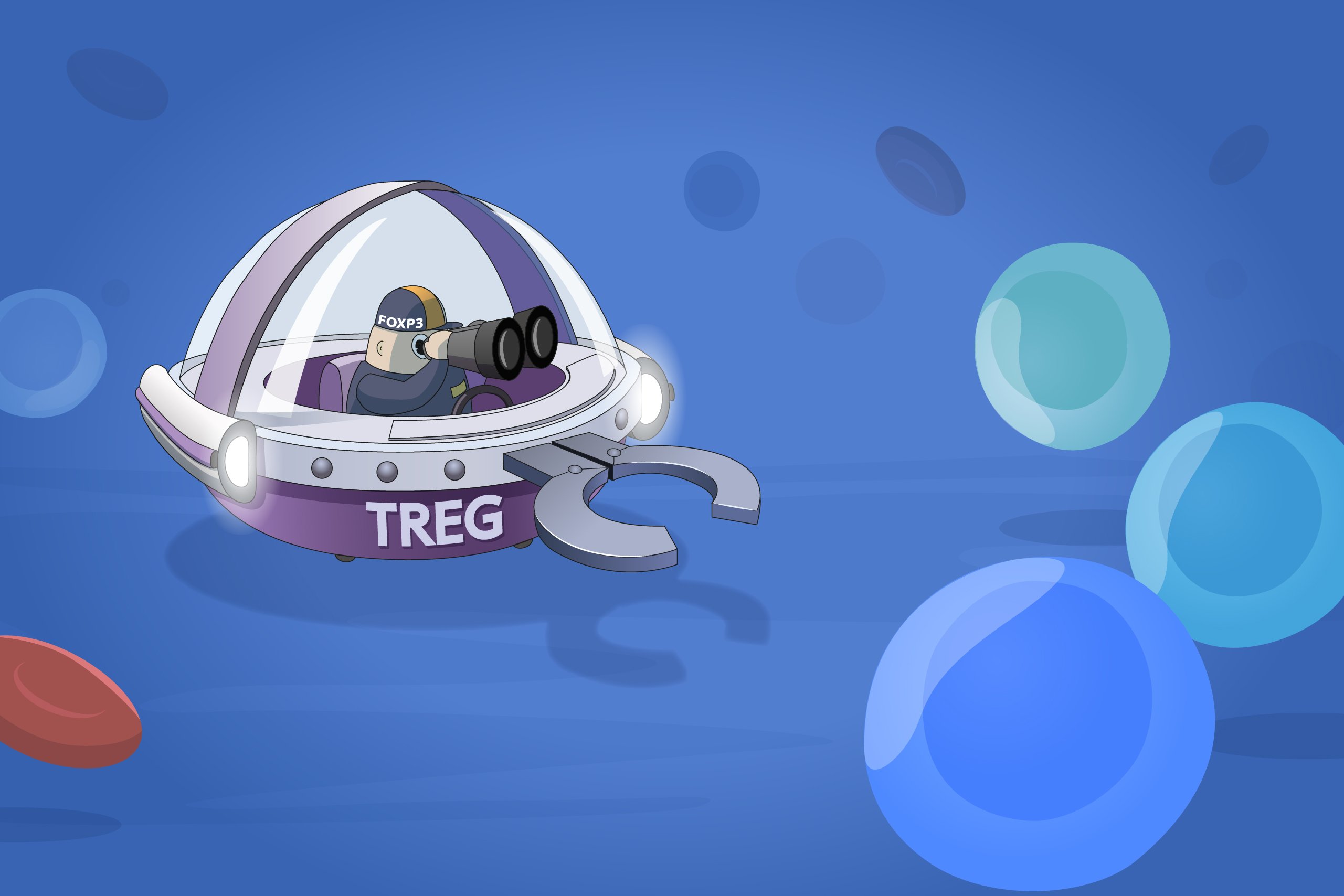
© The Nobel Committee for Physiology or Medicine. Ill. Mattias Karlén
Explore prizes and laureates

3 discoveries that changed medicine
Françoise Barré-Sinoussi and Luc Montagnier discovered the human immunodeficiency virus (HIV) in patients with swollen lymph glands, radically improving treatment methods for people with AIDS.

Scanning electron micrograph of HIV particles infecting a human H9 T cell.
NIAID/NIH, Public domain, via Wikimedia Commons
Katalin Karikó and Drew Weissman developed mRNA vaccines against COVID-19, contributing to the unprecedented rate of vaccine development during the pandemic.

Katalin Karikó and Drew Weissman.
Courtesy of Penn Medicine, Photography: Peggy Peterson
Barry Marshall and Robin Warren worked together to discover that stomach ulcers are an infectious disease caused by a bacteria called helicobacter pylori.
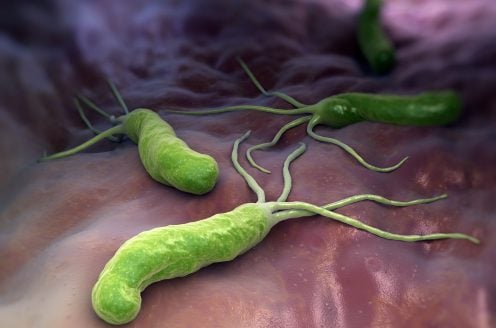
An illustration of helicobacter pylori.
iLexx via Getty Images
Medicine prize Q&A
Learn more about how the Nobel Prize in Physiology or Medicine is decided and awarded in this interview with medicine prize awarder Juleen Zierath.
Juleen Zierath, professor of physiology
© Nobel Prize Outreach. Photo: Andrew Hart
Who did what?
Can you match the right medicine laureate with the right discovery? Have a try!

Questions and answers
The Nobel Prize categories are physics, chemistry, physiology or medicine, literature and peace and were laid out in the will of Alfred Nobel. Find out more in the FAQ.

The Nobel Prize medal.
© Nobel Prize Outreach. Photo: Clément Morin.
Nobel Prizes and laureates
The microscope that medicine laureate Ralph Steinman used daily.
© Nobel Media. Photo: Alexander Mahmoud
Articles in medicine
Explore and learn
Connect with us
Featured laureates

Robert Koch
Nobel Prize in Physiology or Medicine 1905for his investigations and discoveries in relation to tuberculosis.

Barbara McClintock
Nobel Prize in Physiology or Medicine 1983for her discovery of mobile genetic elements.

Ardem Patapoutian
Nobel Prize in Physiology or Medicine 2021for their discoveries of receptors for temperature and touch.

Craig C. Mello
Nobel Prize in Physiology or Medicine 2006for their discovery of RNA interference – gene silencing by double-stranded RNA.

Tu Youyou
Nobel Prize in Physiology or Medicine 2015for her discoveries concerning a novel therapy against Malaria.

Discover more
How do we know where we are? How can we find the way from one place to another? Thanks to the discovery of the brain’s “inner GPS” we now have a better understanding for how we manage to orient ourselves in space.

Laureate May-Britt Moser in the laboratory
Photo: Geir Mo
Tu Youyou scoured ancient literature on herbal medicine in her quest to develop novel malaria therapies. A key insight into how to preserve the active ingredient during processing led to the discovery of artemisinin, which has saved many lives.
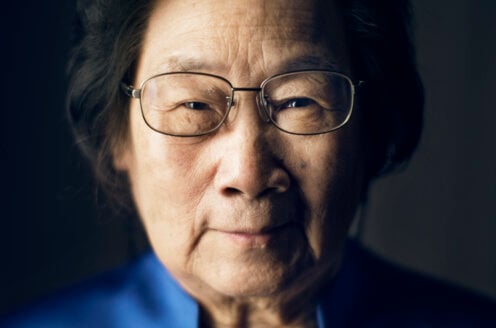
Tu Youyou, Nobel Prize in Physiology or Medicine 2015.
© Nobel Prize Outreach. Photo: Alexander Mahmoud
Follow how the discoveries Yoshinori Ohsumi made in baker’s yeast led to a new understanding of how our own cells recycle their contents. Autophagy, or ‘self-eating’ refers to the way our cells can degrade and then re-use their own contents.

Illustration depicting autophagy
Image: The Nobel Assembly at Karolinska Institutet
Sign up for the monthly newsletter
Join thousands of global subscribers enjoying the free monthly Nobel Prize highlights, trivia and up-to-date information.