The Sveriges Riksbank Prize in Economic Sciences in Memory of Alfred Nobel
For Angus Deaton – awarded the Prize in Economic Sciences 2015 – fly fishing has helped him think in new and creative ways
© Nobel Media. Photo: Alexander Mahmoud
About the prize
In 1968, Sveriges Riksbank (Sweden’s central bank) established the Sveriges Riksbank Prize in Economic Sciences in Memory of Alfred Nobel. The prize is based on a donation received by the Nobel Foundation in 1968 from Sveriges Riksbank on the occasion of the bank’s 300th anniversary. The prize amount is the same as for the Nobel Prizes and is paid by the Riksbank. The first prize in economic sciences was awarded to Ragnar Frisch and Jan Tinbergen in 1969.
The prize in economic sciences is awarded by theRoyal Swedish Academy of Sciences, Stockholm, Sweden, according to the same principles as for the Nobel Prizes that have been awarded since 1901.
See all economic sciences laureates orlearn about the nomination process.
Quick facts
- Economic sciences prizes: 57
- Economic sciences laureates: 99
- Awarded women: 3
- Youngest laureate: 46
- Oldest laureate: 90
Sveriges Riksbank Prize in Economic Sciences in Memory of Alfred Nobel 2025
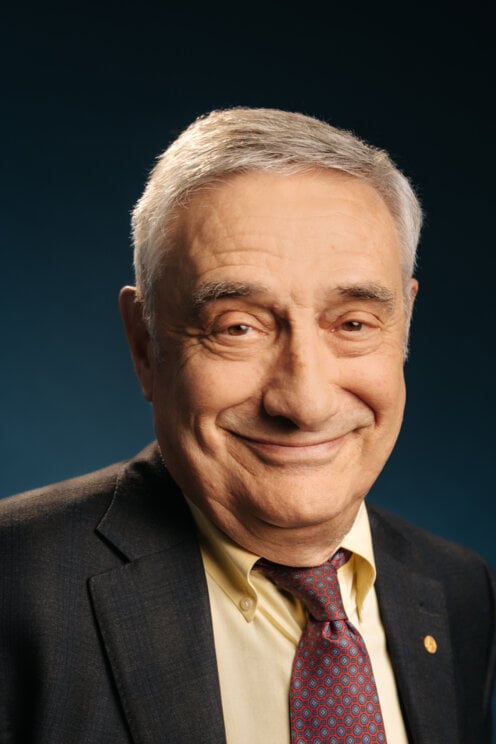
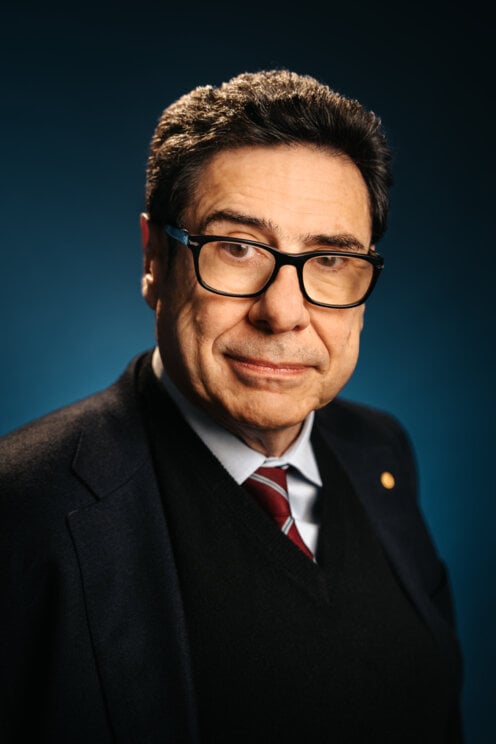
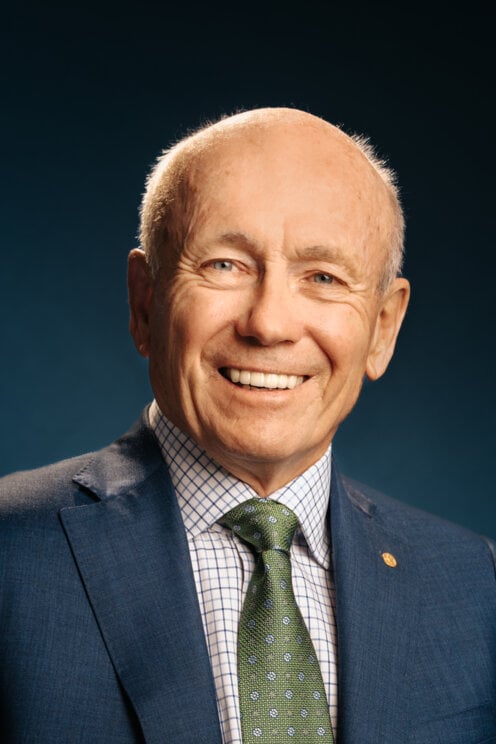
Over the last two centuries, for the first time in history, the world has seen sustained economic growth. This has lifted vast numbers of people out of poverty and laid the foundation of our prosperity. This year’s laureates in economic sciences, Joel Mokyr, Philippe Aghion and Peter Howitt, explain how innovation provides the impetus for further progress.
The laureates have taught us that sustained growth cannot be taken for granted. Economic stagnation, not growth, has been the norm for most of human history. Their work shows that we must be aware of, and counteract, threats to continued growth.
Press release
Popular information: From stagnation to sustained growth
Scientific background to the Sveriges Riksbank Prize in Economic Sciences in Memory of Alfred Nobel 2025

©Johan Jarnestad/The Royal Swedish Academy of Sciences
Watch the economics seminar
The forces behind progress
In this seminar, 2025 economic sciences laureates Joel Mokyr and Philippe Aghion reveal the forces behind progress, and discover how ideas, innovation and a touch of creative destruction sparked the greatest boom in human history.
Explore prizes and laureates

Who did what?
Can you match the right research field to the right laureate? Have a try!

Questions and answers
The Nobel Prize categories are physics, chemistry, physiology or medicine, literature and peace and were laid out in the will of Alfred Nobel. Find out more in the FAQ.

The Nobel Prize medal.
© Nobel Prize Outreach. Photo: Clément Morin.
Nobel Prizes and laureates
Laureate in economic sciences Bengt Holmström likes the Chinese board game GO, which begins with simple rules but gets difficult as one progresses.
Photo: Nobel Prize Museum
Articles in economic sciences
Connect with us
Featured laureates

Daron Acemoglu
Sveriges Riksbank Prize in Economic Sciences in Memory of Alfred Nobel 2024for studies of how institutions are formed and affect prosperity.

Daniel Kahneman
Sveriges Riksbank Prize in Economic Sciences in Memory of Alfred Nobel 2002for having integrated insights from psychological research into economic science, especially concerning human judgment and decision-making under uncertainty.

Amartya Sen
Sveriges Riksbank Prize in Economic Sciences in Memory of Alfred Nobel 1998for his contributions to welfare economics.

Elinor Ostrom
Sveriges Riksbank Prize in Economic Sciences in Memory of Alfred Nobel 2009for her analysis of economic governance, especially the commons.

Esther Duflo
Sveriges Riksbank Prize in Economic Sciences in Memory of Alfred Nobel 2019for their experimental approach to alleviating global poverty.

Ragnar Frisch
Sveriges Riksbank Prize in Economic Sciences in Memory of Alfred Nobel 1969for having developed and applied dynamic models for the analysis of economic processes.
Discover more
Angus Deaton employed theory, data collection and statistics together to see how consumption, poverty, and welfare are related. His conclusion? We need to understand individual consumption choices before we can design economic policy that promotes welfare and reduces poverty.

Angus Deaton visiting the Vasa Museum in Stockholm during Nobel Week.
© Nobel Media. Photo: Pi Frisk
Watch this interview with Dr. John Nash, who received the Prize in Economic Sciences in 1994. He talks about the impact the prize has had on his life, his talent for mathematics as a child and about the movie about his life, ‘A Beautiful Mind’.
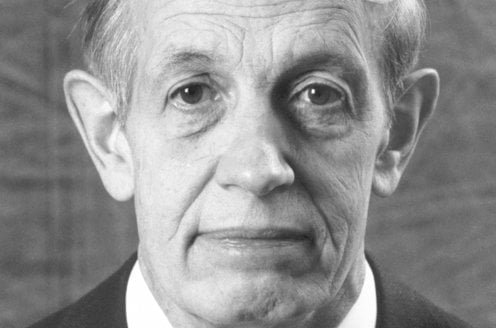
John F. Nash Jr., awarded the 1994 Prize in Economic Sciences.
Photo: Nobel Foundation archive
Read how ‘innumerable contracts’ hold modern economies together. The recipients of the 2016 Prize in Economic Sciences created theoretical tools for understanding real-life contracts and institutions, as well as potential pitfalls in contract design.

Oliver Hart (left) and Bengt Holmström autograph a chair at the Nobel Museum.
Photo: Jonas Ekströmer/TT
Economic sciences prize 2023
Claudia Goldin demonstrated how and why gender differences in earnings and employment rates have changed over time in the United States.

Claudia Goldin after receiving her prize from H.M. King Carl XVI Gustaf of Sweden at Konserthuset Stockholm on 10 December 2023.
© Nobel Prize Outreach. Photo: Nanaka Adachi
Economic sciences prize 2017
Richard Thaler has paid special attention to three psychological factors: the tendency to not behave completely rationally, notions of fairness and reasonableness, and lack of self-control.

Richard Thaler was awarded the 2017 prize in economic sciences.
Photo: iStock
Sign up for the monthly newsletter
Join thousands of global subscribers enjoying the free monthly Nobel Prize highlights, trivia and up-to-date information.