Movatterモバイル変換


[0]ホーム

URL:


Skip to main content
U.S. flag

An official website of the United States government

Official websites use .gov
A.gov website belongs to an official government organization in the United States.

Secure .gov websites use HTTPS
Alock (LockA locked padlock) orhttps:// means you’ve safely connected to the .gov website. Share sensitive information only on official, secure websites.

https://www.nist.gov/pml/sensor-science

National Institute of Standards and Technology
Physical Measurement Laboratory

Sensor Science Division

The Division advances the measurement science, standards, and applications for dimensional, optical radiation, and thermodynamic quantities to support U.S. industry and trade. We maintain and disseminate standards for three of the seven SI base units: the kelvin (temperature), the meter (length), and the candela (luminous intensity).

Welcome to the Sensor Science Division

The Sensor Science Division (SSD) is based in Gaithersburg, Maryland, and operates within the Physical Measurement Laboratory at NIST.

Our Vision is to be the primary driver of innovation in SI-traceable measurements for dimensional, thermodynamic, optical radiation, and fluid flow. Through our work, we enable the next generation of equitable standards that promote U.S. economic growth, technological leadership, and national security.

Our Mission is to advance the next generation of SI-traceable measurements in dimensional metrology, thermodynamics, optical radiation, and fluid flow. The Sensor Science Division delivers world-class calibrations, standards, and innovative measurement solutions that empower U.S. industry to compete globally, promote economic security, and enhance societal well-being.

SSD has institutional responsibility for the realization and dissemination of 3 of the 7 base units of the International System of Units (SI): the meter, the kelvin, and the candela. To promote world-wide standardization, SSD staff engage with the Consultative Committees for Length (CCL), for Mass and Related Quantities (CCM), for Photometry and Radiometry (CCPR), and for Thermometry (CCT) under the International Committee for Weights and Measures (CIPM). This participation helps ensure the international comparability and international recognition of the SI-based measurements and standards disseminated by the Division. As pictured below, the division is divided into 3 technical areas which align with these 3 base SI units.

sensor science division flowchart

The division provides measurement science, reference materials, reference data, and technologies to foster innovation and confidence in measurements needed to advance these fields. In partnership with U.S. industry, government agencies, and scientific institutions, SSD performs fundamental and applied research on the measurement of length; temperature; infrared-to-extreme-ultraviolet radiation; pressure and vacuum; surface and interface optical and dimensional properties; gas and liquid flow; liquid volume; and humidity.

Focus Areas

News and Updates

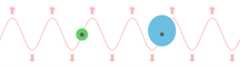
atom comparison illustration

Research Under Pressure: NIST Scientists Make Definitive Measurement of the Optical Pascal

Researchers at the National Institute of Standards and Technology (NIST) and their colleagues have overcome a key obstacle to measuring gas pressure with a
ER-2 taking off

NIST Moonlight Data Will Help Satellites Get a More Accurate Look at Earth

Reliable measurements of the light from our planet can help industries from agriculture to meteorology to mining.
View through a circular opening into a dark interior. A red dot floats in the darkness.

New Atom-Based Thermometer Measures Temperature More Accurately

This atomic thermometer provides accurate measurements “out of the box” because it relies on the basic principles of quantum physics.
Johnny Jiménez

NIST Offers New Calibration Service for Wavemeters

For more than three decades, the National Institute of Standards and Technology (NIST) has calibrated the wavelengths of lasers used in industry, academia, and

Awards

Stephen Eckel

2024 PECASE - Stephen Eckel

Stephen Eckel is recognized for his pioneering work in applying cold-atom physics to solve real-world measurement problems, investigating
Nikolai Klimov

2024 PECASE - Nikolai Klimov

Nikolai Klimov is recognized for transformational research in photonic sensors for thermometry, dosimetry, humidity, and vacuum and for

2024 - Bronze Medal Award---Adam Biacchi, Thinh Bui, Cindi Dennis, Michael Donahue, Angela Hight Walker, Thomas Moffat, Eric Rus, Weston Tew, Solomon Woods

For the development of three-dimensional, high-resolution temperature measurement and imaging of materials using embedded magnetic nanoparticles.
Headshot of Yoon and Khromchenko Bronze award winner

2023 - Edward Bennett Rosa Award---Howard Yoon, Vladimir Khromchenko

For the development of novel infrared radiometers and radiation thermometers to support critical calibration needs of the U.S. Air Force and Army.

2023 - Gold Medal Award---John Jones II, Karen Reczek, Allison Getz, Donna Sirk, Barbara Guttman, Marcela Najarro, Alan Zheng, Will Guthrie, John Butler

For extraordinary national leadership in improving the scientific quality of forensic science practices through standards development.

Press Coverage

ER-2 taking off

A new lunar benchmark: NIST’s moonlight data brings satellites into focus

NextGov
NIST is releasing the first set of what it’s calling the Moonlight Radiometric Reference Dataset, a trove of data so precise that it could change the way we see
Noah Schlossberger wears dark safety glasses as he stands in front of a complicated electronic device in the lab. The device has wires coming out and is partially wrapped in aluminum foil.

Thermometer uses Rydberg atoms to make calibration-free measurements

Physics World
A new way to measure the temperatures of objects by studying the effect of their black-body radiation on Rydberg atoms has been demonstrated by researchers at
Noah Schlossberger wears dark safety glasses as he stands in front of a complicated electronic device in the lab. The device has wires coming out and is partially wrapped in aluminum foil.

NIST Scientists Develop Rydberg Atoms-Based Thermometer That Measures Temperature More Accurately

Eureka! Magazine (UK)
NIST scientists have developed a new method for measuring temperature extremely accurately by using giant “Rydberg atoms.”
Four researchers pose standing in a lab, smiling and wearing safety glasses, surrouded by wires and other electronics.

Cold atoms used to create reliable pressure gauge for ultrahigh vacuum

Physics World
An effect that normally gets in the way of the magnetic trapping of atoms has been harnessed to create a new method for measuring pressure in ultrahigh vacuum

Patents

One embodiment of the invention.

Mueller Matrix Ellipsometer

NIST Inventors
Thomas A. Germer
A multi-mirror polarization state generator is combined with a multi-mirror polarization state analyzer and a detector to realize a Mueller matrix ellipsometer. It is found that grazing incidence reflection from a number of materials provides sufficient optical phase retardance to make this possible

Photonic Bolometer And Performing Broadband High-Absorption Photonic Bolometry

NIST Inventors
Nikolai Klimov, Nathan A Tomlin and Chris Yung
A photonic bolometer includes: a photonic chip; a weak thermal link; a thermally-isolated member, and the weak thermal link thermally isolates the thermally-isolated member from the photonic chip; a photonic temperature sensor; a chip waveguide in optical communication with the photonic temperature

Non-Nulling Gas Velocity Measurement Apparatus And Performing Non-Nulling Measurement Of Gas Velocity Parameters

NIST Inventors
Iosif Isaakovich Shinder and Aaron Johnson
A non-nulling gas velocity measurement apparatus performs a non-nulling measurement of gas velocity parameters and includes: a non-nulling pitot probe; gas valves in fluid communication with a different entrant aperture of the non-nulling pitot probe via a different pressure channel; receives

Self-Referenced Ambient Radiation Thermometer

NIST Inventors
Howard W. Yoon
In this work, we describe the construction and characterization of an Ambient-Radiation Thermometer (ART) which can measure non-contact temperatures from -50 deg C to 150 deg C. To increase the long-term stability of the responsivity, optical components within the field-of-view of the detector and

Products and Services

Facilities

Contacts

Division Chief

Office Manager

Was this page helpful?

[8]ページ先頭

©2009-2026 Movatter.jp