



Transcranial magnetic stimulation (TMS) for schizophrenia
Nadine Dougall
Nicola Maayan
Karla Soares‐Weiser
Lisa M McDermott
Andrew McIntosh
Corresponding author.
Collection date 2015.
Abstract
Background
People with schizophrenia often experience symptoms which fail to fully respond to antipsychotic medication. Transcranial magnetic stimulation (TMS) has been proposed as a new treatment for people with schizophrenia, especially those who experience persistent auditory hallucinations.
Objectives
To estimate the effects of TMS alone, compared with sham TMS or with 'standard management' and any other comparison interventions in reducing psychotic symptoms associated with schizophrenia.
Search methods
We searched the Cochrane Schizophrenia Group Trials Register (June 2006, June 2008, April 2013). This register is compiled by methodical searches of MEDLINE, EMBASE, BIOSIS, CINAHL, Dissertation abstracts, LILACS, PSYNDEX, PsycINFO, RUSSMED, and Sociofile, and is supplemented with handsearching of relevant journals and numerous conference proceedings.
Selection criteria
We included all randomised controlled trials recruiting at least five participants and comparing TMS with sham TMS or any other treatment for people with schizophrenia.
Data collection and analysis
We extracted data independently. For dichotomous data we calculated relative risks (RRs) and their 95% confidence intervals (CIs). For continuous data, we calculated mean differences (MD) and 95% CI. We used a fixed‐effect model. We assessed overall quality of the evidence using the GRADE approach.
Main results
We included 41 studies with 1473 participants in the review. We found significant differences in favour of temporoparietal TMS compared to sham TMS for global state measured on the CGI scale (7 RCTs, n = 224, MD ‐0.5, 95% CI ‐0.76 to ‐0.23,very low‐quality evidence) and positive symptoms measured on the PANSS scale (5 RCTs, n = 127, MD ‐6.09, 95% CI ‐10.95 to ‐1.22,very low‐quality evidence). Participants experienced significantly more headaches in the temporoparietal TMS group (10 RCTs, n = 392, RR 2.65, 95% CI 1.56 to 4.50,very low‐quality evidence). However, no more participants left the study early from the TMS group than from the sham group (very low‐quality evidence). Cognitive state was assessed using 39 different measures, and all were equivocal (very low‐quality evidence).
We included only two trials which compared temporoparietal TMS with standard treatment. In both trials the participants received first‐ and second‐generation antipsychotic medication in both treatment groups, therefore TMS was used an adjunctive therapy to medication. We found no significant differences in the number of participants that showed clinical improvement in global state (1 RCT, n = 100, RR 1.19, 95% CI 0.91 to 1.57) or left the study early (2 RCTs, n = 140, RR 0.33, 95% CI 0.08 to 1.46) (bothvery low‐quality evidence). No studies reported on global state score, mental state, cognitive state and adverse effects.
For prefrontal TMS compared to sham TMS, global state was measured on three different scales, all of which presented equivocal results (very low quality evidence). We could not pool data for mental state on the PANSS scale due to high heterogeneity. Cognitive state was assessed using 19 different measures, with 15/19 being equivocal (very low‐quality evidence). Prefrontal TMS caused more headaches (6 RCTs, n = 164, RR 2.77, 95% CI 1.22 to 6.26,very low‐quality evidence) but there was no difference in the number of participants leaving the study early (very low‐quality evidence). No studies reported data for clinical improvement.
We found a significant difference in favour of prefrontal theta burst stimulation TMS compared to sham TMS for mental state on the PANNS scale (3 RCTs, n = 108, MD ‐5.71, 95% CI ‐9.32 to ‐2.10,very low evidence). We found no difference for clinical improvement, cognitive state, number of headaches, and leaving the study early (very low‐quality evidence).
None of the included studies reported satisfaction with care.
Authors' conclusions
Based on this review, there is insufficient evidence to support or refute the use of TMS to treat symptoms of schizophrenia. Although some evidence suggests that TMS, and in particular temporoparietal TMS, may improve certain symptoms (such as auditory hallucinations and positive symptoms of schizophrenia) compared to sham TMS, the results were not robust enough to be unequivocal across the assessment measures used. There was insufficient evidence to suggest any added benefit with TMS used as an adjunctive therapy to antipsychotic medication.
The overall quality of evidence was graded asvery low due to risk of bias, and this was accompanied by an imprecision in estimates due to the relatively small number of participants in the studies. Thus, consideration is required in improving the quality of trial processes, as well as the quality of reporting of ongoing and future TMS trials, so as to facilitate accurate future judgements in assessing risk of bias. Differences in TMS techniques in relation to stimulation intensity, stimulation length, brain areas stimulated and variations in the design of sham TMS all contributed to the heterogeneity of study findings and limited the interpretation and applicability of the results. In addition, the trials assessed their outcomes with a variety of scales, and usable data were limited. Therefore, to better evaluate the treatment effects of TMS in people with schizophrenia, we favour the use of standardised treatment protocols and outcome measures.
Plain language summary
Transcranial magnetic stimulation (TMS) for the treatment of schizophrenia
Review Question Is transcranial magnetic stimulation (TMS) useful in treating people with schizophrenia?
Background
Transcranial magnetic stimulation is a relatively new and sophisticated device‐based therapy. TMS involves the skilful application of a strong magnetic field close to the surface of the scalp. The TMS device delivers strong and very brief magnetic pulses that stimulate the brain and its network of neurons. TMS is a relatively painless and non‐invasive technique that stimulates parts of the brain (the cerebral cortex). Brain activity has been shown to differ in people with schizophrenia compared to other people.
People with schizophrenia often experience symptoms, such as hearing voices or seeing things (hallucinations), which fail to fully respond to medication. TMS has been proposed as a new treatment for people with schizophrenia, especially those who experience persistent auditory hallucinations. Antipsychotic medication also often has debilitating side effects, such as weight gain, apathy or lack or drive, and shaking. TMS could be an alternative treatment for people who do not cope well with standard medication.
Description of Studies
A search for trials was run in 2013 and 41 randomised controlled studies are now included in this review. The studies included people diagnosed with schizophrenia and randomised participants to receive either temporoparietal TMS, prefrontal TMS, sham TMS or standard care.
Results
At this time, there is not strong evidence to support the use of TMS to treat schizophrenia. Some very low‐quality evidence appears to tentatively indicate that TMS may improve global state and certain symptoms such as hearing voices, compared to sham TMS. However, the research at present is not robust, consistent and standardised enough to support any firm conclusions about using TMS for schizophrenia.
There was no evidence to indicate TMS may improve symptoms of schizophrenia when used alongside the standard treatment of antipsychotic medication. There were also limitations related to differing TMS techniques. It was difficult to compare the results of studies in this review, as there were various different TMS procedures used, different symptom measures of schizophrenia, and data were limited. More robust and consistent research is therefore required. The authors of the review suggest that in the future, with more research, there is the possibility that TMS may be useful for treating some of the symptoms of schizophrenia.
Summary of findings
Background
Description of the condition
People with schizophrenia typically experience auditory hallucinations (hearing voices) or delusions (false beliefs) during acute episodes. Although several effective treatments are available, many patients have intractable symptoms that do not recover between acute episodes. In addition, motivation and social behaviour may also be adversely affected (negative symptoms). Relatively high numbers of people with schizophrenia have persistent symptoms in spite of apparently adequate drug treatment. In some cases treatment failure is associated with non‐adherence, although it is understood that many people have enduring symptoms in spite of adequate treatment. Transcranial magnetic stimulation (TMS) could prove an alternative treatment for patients who do not cope well with standard medication.
Description of the intervention
Transcranial magnetic stimulation is a relatively new sophisticated device‐based therapy which involves the skilful application of a strong magnetic field close to the surface of the scalp. The procedure is a non‐invasive and relatively painless technique for stimulating the cerebral cortex and altering neuronal function (Chouinard 2003). The device uses specifically‐designed insulated wire coils which deliver strong and very brief magnetic pulses, passing from carefully chosen surface landmarks without hindrance into underlying brain regions. The magnetic field then induces small transient electrical currents in the neural circuitry of treated individuals. By varying the intensity, duration and frequency of the magnetic field, the neuronal systems may be excited or inhibited for as long as the current pulses in the coil (Barker 2002).
How the intervention might work
Brain activity has been shown to differ in people with schizophrenia compared to the brain activity of people who do not have this condition. Whereas activity in the temporoparietal cortex (TPC) appears to increase in people with schizophrenia experiencing auditory hallucinations (Shergill 2000), activity in the dorsolateral prefrontal cortex (DLPFC) appears to be reduced in people with schizophrenia (Weinberger 1996). Reduced activity also appears to be correlated with negative symptoms (e.g. decreased motivation and social function) experienced by the patient. It is possible that by normalising activity in these brain regions, auditory hallucinations and negative symptoms would also improve.
Transcranial magnetic stimulation has been applied in several trials in two main paradigms: high‐frequency TMS and low‐frequency TMS. Low‐frequency TMS (1 Hz) is typically applied to the left TPC of patients, aiming to decrease brain activity and reduce auditory hallucinations. High‐frequency TMS is applied to left DLPFC in an attempt to increase activity and reduce negative symptoms. Low‐frequency TMS is considered to inhibit cortical activity (Chen 1997) and high‐frequency TMS generally increases cortical activity in stimulated areas (Pascual‐Leone 1998). Positive (Hoffman 2005) and negative (McIntosh 2004) controlled studies have been published using both treatment approaches, and it is unclear whether TMS represents a significant treatment advance.
In schizophrenia, there is evidence of both decreased and increased cortical activity compared to unaffected controls, and in some cases the altered activity correlates with the presence of a known symptom of cognitive deficit. Studies have demonstrated an association between temporal lobe activity and auditory hallucinations in people with schizophrenia (D'Alfonso 2002;Hoffman 2000;Lee 2005;Poulet 2005). Active stimulation has been found to significantly reduce hallucinations in comparison to sham stimulation (Hoffman 2000). Not all attempts at replication have unequivocally supported Hoffman's findings (McIntosh 2004;Saba 2006b).
Why it is important to do this review
Placebo arms of TMS trials often use sham treatments. There are limitations to this approach; no satisfactory placebo condition has been established and individuals may not have identical expectations of real or sham TMS. Placebo or sham TMS should result in scalp and noise sensation identical to active TMS, without the cortical stimulation. Although noise sensation can be mimicked, generating the scalp sensation may also produce a therapeutic cortical stimulation. Avoiding the confounding of cortical stimulation with sham TMS yields a control arm of the trial which typically controls for noise sensation but not for scalp sensation. In trials which implement sham TMS, double‐blinding of observer and participant is not guaranteed and estimated efficacy rates of TMS will possibly be confounded if participants are aware which treatment arm they are in.
Bearing in mind the limitations of the trial methodology and in the absence of an entirely inactive sham condition that mimics real TMS, this systematic review aims to evaluate the current evidence base of TMS in the treatment for schizophrenia. We wish to ascertain the efficacy and safety of TMS, explore sources of heterogeneity that might explain contradictory positive and negative effects, investigate whether pooled effect sizes can be derived and whether they are statistically robust, and lastly, provide recommendations where possible for future research.
Objectives
To estimate the effects of TMS alone compared with sham TMS or with 'standard management' and any other comparison interventions in reducing psychotic symptoms associated with schizophrenia.
Methods
Criteria for considering studies for this review
Types of studies
All relevant randomised controlled trials with group sizes of at least five. Where a trial was described as 'double‐blind' but it implied that the study is randomised and the demographic details of each group are similar, we included it. We excluded quasi‐randomised studies, such as those allocated by using alternate days of the week.
Types of participants
People with schizophrenia and related affective psychoses, diagnosed according to standardised operational criteria, irrespective of age and sex.
Types of interventions
1. Transcranial magnetic stimulation: at any stimulus voltage, frequency or charge, administered to the head at any location
2. Sham TMS: TMS administered using fake instruments or with the coil applied at an oblique angle, greater than or equal to 45 degrees, to the skull
3. Standard treatment: any treatment (including antipsychotic medication) provided as part of routine care, however defined
4. Any other pharmacological or non‐pharmacological treatments given as part of an experimental intervention. Examples might include electroconvulsive therapy (ECT) and cognitive behaviour therapy (CBT).
Types of outcome measures
We classified outcomes in the eight categories detailed below:
Primary outcomes
1. Global state
1.1 Clinical improvement in global state (as defined by individual studies) 1.2 Mean endpoint global state score 1.3 Mean change in global state scores
Secondary outcomes
2. Mental state
2.1 Clinical improvement in general mental state (as defined by individual studies) 2.2 Mean endpoint general mental state score 2.3 Mean change in general mental state scores 2.4 No clinically important change in specific symptoms 2.5 Mean endpoint‐specific symptom score 2.6 Mean change in specific symptom scores
3. Cognitive state
3.1 Clinical improvement in cognitive state (as defined by individual studies) 3.2 Mean endpoint cognitive state score 3.3 Mean change in cognitive state scores 3.4 Mean endpoint‐specific cognitive state score 3.5 Mean change in specific cognitive state scores
4. Adverse effects
4.1 Incidence of adverse effects, general or specific 4.2 Leaving the study early 4.3 Measured acceptance of treatment 4.4 Use of antiparkinsonian treatment 4.5 Sudden and unexpected death
5. Hospital and service outcomes
5.1 Hospitalisation of people in the community 5.2 Duration of hospital stay 5.3 Severity of symptoms when discharged from hospital 5.4 Changes in hospital status (for example, changes from informal care to formal detention in care, changes of level of observation by ward staff and use of secluded nursing environment) 5.5 Changes in services provided by community teams
6. Satisfaction with care
6.1 Recipient of care 6.2 Informal care givers 6.3 Professional carers
7. Economic outcomes
8. Quality of Life
8.1 Clinical improvement in quality of life (as defined by individual studies) 8.2 Mean endpoint quality of life score 8.3 Mean change in quality of life scores
'Summary of findings' table
We used the GRADE approach to interpret findings (Schünemann 2008) and used GRADE profiler to import data from Review Manager 5 (RevMan) to create 'Summary of findings' tables. These tables provide outcome‐specific information concerning the overall quality of evidence from each included study in the comparison, the magnitude of effect of the interventions examined, and the sum of available data on all outcomes we rated as important to participant care and decision making. We included the following short‐ or medium‐term outcomes in 'Summary of findings' tables:
1. Global state
1.1 Clinical improvement in global state 1.2 Mean endpoint score
2. Mental state
2.1 Mean endpoint score
3. Cognitive state
3.1 Mean change score
4. Adverse effects
4.1 Incidence of adverse effects, general or specific 4.2 Leaving the study early
5. Satisfaction with care
5.1 Recipient of care
Search methods for identification of studies
Electronic searches
1. The Cochrane Schizophrenia Group's Trials Register
We searched this in June 2006, June 2008 and April 2013 using the phrase:
[((*TMS* OR *transcranial* OR *trans‐cranial* OR *magnetic *) in REFERENCE) and (magn* in STUDY)]
This register is compiled by systematic searches of major databases, handsearches and conference proceedings (see Group Module).
We applied no language restriction for the searching.
2. Requests for additional data
We contacted Magstim Company Ltd., the company who markets TMS machines in the UK, for published and unpublished data on the treatment (Table 5).
1. Magstim Company Limited.
| Contact details |
| Mr John H Starzewski Managing Director Magstim Limited Spring Gardens Whitland SA34 0HR UK Telephone: +44 1994 241093 URL: http://www.magstim.com/index.html |
Searching other resources
1. Reference lists
We retrospectively searched reference lists of included and excluded studies for additional relevant studies, and contacted authors of relevant studies to enquire about other sources of relevant information. We prospectively searched for studies which cited included relevant studies up to April 2013
Data collection and analysis
Selection of studies
Two review authors (ND, AM for the 2006 and 2008 searches, and two members of the Enhance Reviews team (NM and KSW) for the 2013 update search) independently inspected all abstracts of studies identified as above and identified potentially relevant reports. Where disagreement occurred we resolved it by discussion, or where there was still doubt, we acquired the full article for further inspection. Jun Xia screened Chinese language studies. We acquired the full articles of relevant reports for reassessment and carefully inspected them for a final decision on inclusion (seeCriteria for considering studies for this review). The review authors were not blinded to the names of the authors, institutions or journal of publication. Where difficulties or disputes arose, we added these studies to those awaiting assessment and contacted the authors of the papers for clarification.
Data extraction and management
1. Data extraction
Review authors ND and AM extracted data independently from included studies resulting from the 2006 and 2008 searches, and two members of the Enhance Reviews team (NM and KSW) extracted data independently for the included studies from the 2013 search. Again, we discussed any disagreement, documented decisions and, if necessary, contacted authors of studies for clarification. JX extracted data for all Chinese studies. We extracted data presented only in graphs and figures whenever possible, but only included them if two review authors independently had the same result. Where possible, we extracted data relevant to each component centre of multicentre studies separately.
2. Management
2.1 Forms
We extracted data onto standard, simple forms.
2.2 Scale‐derived data
We included continuous data from rating scales only if: a) the psychometric properties of the measuring instrument have been described in a peer‐reviewed journal (Marshall 2000); and b) the measuring instrument is not written or modified by one of the trialists for that particular trial. Ideally the measuring instrument should either be a self report or completed by an independent rater or relative (not the therapist).
2.3 Endpoint versus change data
There are advantages of both endpoint and change data. Change data can remove a component of between‐person variability from the analysis. On the other hand, calculation of change needs two assessments (baseline and endpoint) which can be difficult in unstable and difficult‐to‐measure conditions such as schizophrenia. We decided to primarily use endpoint data and only use change data if the former were not available. We combined endpoint and change data in the analysis as we used weighted mean differences rather than standardised mean differences throughout (Higgins 2011b, chapter 9.4.5.2). All data in the analyses are endpoint data unless specifically noted as change data in the footnote of the analysis.
2.4 Skewed data
Continuous data on clinical and social outcomes are often not normally distributed. To avoid the pitfall of applying parametric tests to non‐parametric data, we applied the following standards to all data before inclusion: a) standard deviations (SDs) and means were reported in the paper or obtainable from the authors; b) when a scale starts from the finite number zero, the standard deviation, when multiplied by two, was less than the mean (as otherwise the mean is unlikely to be an appropriate measure of the centre of the distribution, (Altman 1996); c) if a scale started from a positive value (such as the positive and negative syndrome scale (PANSS) which can have values from 30 to 210) we modified the calculation described above to take the scale starting point into account. In these cases skew is present if 2SD > (S ‐ S min), where S is the mean score and S min is the minimum score. Endpoint scores on scales often have a finite start and endpoint and these rules can be applied. When continuous data were presented on a scale that includes a possibility of negative values (such as change data), it is difficult to tell whether data were skewed or not. We entered skewed data from studies of fewer than 200 participants in additional tables rather than into an analysis. Skewed data pose less of a problem when looking at means if the sample size is large, and we entered them into syntheses.
2.5 Common measure
To facilitate comparison between trials, we intended to convert variables that can be reported in different metrics, such as days in hospital (mean days per year, per week or per month) to a common metric (e.g. mean days per month).
2.6 Conversion of continuous to binary
Where possible, we tried to convert outcome measures to dichotomous data. This could be done by identifying cut‐off points on rating scales and dividing participants accordingly into 'clinically improved' or 'not clinically improved'. We generally assumed that if there had been a 50% reduction in a scale‐derived score such as the Brief Psychiatric Rating Scale (BPRS,Overall 1962) or the Positive and Negative Syndrome Scale (PANSS,Kay 1986), we could consider this as a clinically significant response (Leucht 2005a;Leucht 2005b). Data based on these thresholds were not available, so we used the primary cut‐off presented by the original authors.
2.7 Direction of graphs
We extracted and entered data into RevMan in such a way that the area to the left of the line of no effect indicated a 'favourable' outcome for TMS. For some outcomes this was not possible, and we reported data where the left of the line indicates an unfavourable outcome. We have noted this in the relevant graphs.
Assessment of risk of bias in included studies
ND and AM independently allocated trials from the 2006 and 2008 searches to Categories A or B in the review. When upgraded criteria for risk of bias became available, LMcD correspondingly upgraded the trial quality assessments using criteria described in the Cochrane Handbook (Higgins 2011b). Two members of the Enhance Reviews team assessed the risk of bias of studies included from the 2013 search, also using the upgraded criteria. This set of criteria is based on evidence of associations between overestimate of effect and high risk of bias of the article, such as sequence generation, allocation concealment, blinding, incomplete outcome data and selective reporting. When the raters disagreed, they made the final rating by consensus, with the involvement of another member of the review team. When there were inadequate details of randomisation and other characteristics of trials, we contacted authors of the studies in order to obtain further information. We reported non‐concurrence in quality assessment, but if disputes arose as to the appropriate category to which a trial should be allocated, we resolved the matter by discussion. We noted the level of risk of bias in both the text of the review and in the 'Summary of findings' tables.
Measures of treatment effect
1. Binary data
For binary outcomes we calculated a standard estimation of the risk ratio (RR) and its 95% confidence interval (CI). It has been shown that the RR is more intuitive (Boissel 1999) than the odds ratios and that odds ratios tend to be interpreted as RRs by clinicians (Deeks 2000).
2. Continuous data
For continuous outcomes we estimated the mean difference (MD) between groups with 95% CIs.
Unit of analysis issues
1. Cluster trials
Studies increasingly employ 'cluster randomisation' (such as randomisation by clinician or practice) but analysis and pooling of clustered data pose problems. Firstly, authors often fail to account for intra‐class correlation in clustered studies, leading to a 'unit of analysis' error (Divine 1992) whereby P values are spuriously low, confidence intervals unduly narrow and statistical significance overestimated. This causes type I errors (Bland 1997;Gulliford 1999).
None of the included studies was cluster‐randomised. Measures to deal with cluster RCTs that we would have employed, and that we shall use for updates of this review for such designs, are described in the sectionDifferences between protocol and review.
2. Cross‐over trials
A major concern of cross‐over trials is the carry‐over effect. It occurs if an effect (e.g. physiological or pharmacological) of the treatment in the first phase is carried over to the second phase. As a consequence, on entry to the second phase the participants can differ systematically from their initial state, despite a wash‐out phase. For the same reason cross‐over trials are not appropriate if the condition of interest is unstable (Elbourne 2002). As both effects are very likely in schizophrenia, we only used data from the first phase of cross‐over studies.
3. Studies with multiple treatment groups
When a study involved more than two treatment arms, if relevant, we presented the additional treatment arms in comparisons. If data were binary these were simply added and combined within the two‐by‐two table. If data were continuous, we combined data using the RevMan calculator. Where the additional treatment arms were not relevant, we did not reproduce these data.
Dealing with missing data
1. Overall loss of credibility
To some degree, loss of follow‐up data must lose credibility (Xia 2009). We choose that, for any particular outcome, if more than 50% of data were unaccounted for, we did not reproduce these data or use them within analyses. If more than 50% of those in one arm of a study were lost, but the total loss was less than 50%, we would have flagged such data with an asterisk (*) to indicate that such a result may well be prone to bias.
2. Binary
All analyses have been conducted per number analysed in the studies. For the primary outcome 'clinical improvement in global state', if there was attrition, we compared in sensitivity analyses the results per number analysed with results of all the participants randomised (an intention‐to‐treat analysis). For the intention‐to‐treat analysis, we assumed that those leaving the study early all have the same rates of negative outcome as those who completed the trial.
3. Continuous
3.1 Attrition
In the case where attrition for a continuous outcome is between 0 and 50% and completer‐only data were reported, we have reproduced these.
3.2 Standard deviations
We first tried to obtain the missing values from the authors. When these were not available, we did not add the data to the analysis.
Measures to deal with missing SDs that we shall use for updates of this review are described in the sectionDifferences between protocol and review.
3.3 Last observation carried forward
We anticipated that in some studies the method of last observation carried forward (LOCF) would be employed within the study report. As with all methods of imputation to deal with missing data, LOCF introduces uncertainty about the reliability of the results (Leucht 2007). Therefore, where LOCF data had been used in the trial, if less than 50% of the data had been assumed, we reproduced these data and indicated that they are the product of LOCF assumptions.
Assessment of heterogeneity
1. Clinical heterogeneity
We considered all included studies initially, without seeing comparison data, to judge clinical heterogeneity. We simply inspected all studies for clearly outlying situations or people which we had not predicted would arise. When such situations or participant groups arose, we discussed them fully.
2. Methodological heterogeneity
We considered all included studies initially, without seeing comparison data, to judge methodological heterogeneity. We simply inspected all studies for clearly outlying methods which we had not predicted would arise. When such methodological outliers arose, we discussed them fully.
3. Statistical heterogeneity
3.1 Visual inspection
We visually inspected graphs to investigate the possibility of statistical heterogeneity.
3.2 Employing the I² statistic
We investigated heterogeneity between studies by considering the I² method alongside the Chi² P value. The I² provides an estimate of the percentage of inconsistency thought to be due to chance (Higgins 2003). The importance of the observed value of I² depends on: a) magnitude and direction of effects, and b) strength of evidence for heterogeneity (e.g. P value from Chi² test, or a confidence interval for I²). An I² estimate greater than or equal to 50% accompanied by a statistically significant Chi² statistic, we interpreted as possibly evidence of substantial levels of heterogeneity (Section 9.5.2 ‐Deeks 2011). When we found substantial levels of heterogeneity in the primary outcome measure, we cautiously explored reasons for heterogeneity (Subgroup analysis and investigation of heterogeneity).
Assessment of reporting biases
Reporting biases arise when the dissemination of research findings is influenced by the nature and direction of results (Egger 1997). These are described in Chapter 8 of the Cochrane Handbook (Higgins 2011a). We are aware that funnel plots may be useful in investigating reporting biases, but are of limited power to detect small‐study effects. We did not use funnel plots for any outcomes as there were 10 or fewer studies, or where all studies were of similar sizes; in the case of the adverse effect headache, we did not produce a funnel plot, as this outcome was not systematically reported by all studies. Had we used funnel plots, we would have sought statistical advice in their interpretation.
Data synthesis
We understand that there is no closed argument for preference use of fixed‐effect or random‐effects models. The fixed‐effect model assumes each trial makes an estimate of a common effect size of the same population. The random‐effects method incorporates an assumption that the different studies are estimating different, yet related, intervention effects. The random‐effects model takes into account differences between studies even if there is no statistically significant heterogeneity. There is, however, a disadvantage to the random‐effects model. It puts added weight onto small studies, which are often the most biased ones. Depending on the direction of effect, these studies can either inflate or deflate the effect size. For this reason we favoured using fixed‐effect models, employing random‐effects only when investigating heterogeneity.
Subgroup analysis and investigation of heterogeneity
1. Subgroup analysis
We planned no subgroup analyses for this review. We knew the literature would yield sparse amounts of data and that any subgroup analysis would most likely be inadequately powered for us to draw any conclusions.
2. Investigation of heterogeneity
If inconsistency was high, we reported it. First we investigated whether data had been entered correctly. Second, where data were correct, we visually inspected the graph, and successively removed outlying studies, to see if heterogeneity remained. For this review, we decided that should this occur with data contributing to the summary finding no more than around 10% of the total weighting, we would present the data. If not, we did not pool data, but discussed the issues. We know of no supporting research for this 10% cut‐off but are investigating the use of prediction intervals as an alternative to this unsatisfactory state. When unanticipated clinical or methodological heterogeneity was obvious, we simply stated hypotheses regarding these for future reviews or versions of this review. We did not undertake analyses relating to these.
Sensitivity analysis
1. Implication of randomisation
We planned to include trials in a sensitivity analysis if they were described in some way as to imply randomisation. All studies were reported as randomised, so we did not undertake any sensitivity analysis related to implication of randomisation.
2. High attrition rates
We planned a sensitivity analysis to test how prone results were to change when we compared 'completer' data only to the imputed data, using the above assumption. If there had been a substantial difference, we would have reported results and discussed them but continued to employ our assumption. However, we did not make any assumptions about lost binary data and undertook no sensitivity analysis.
Results
Description of studies
For a full description of studies please see:Characteristics of included studies andCharacteristics of excluded studies.
Results of the search
The search strategy identified 99 reports that were potentially relevant. Agreement about which reports may have been randomised was 100%. In total, we included 41 studies in the review and in the analysis (seeFigure 1). One study (Jin 2012) met the inclusion criteria but did not report data in a usable way, and is in the excluded studies table.
1.
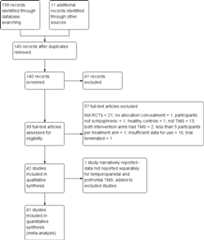
Study flow diagram.
Included studies
1. Length of studies
The duration of trials ranged from four days (McIntosh 2004) to 10 weeks (Wing 2012); 26 trials were short (from five days to two weeks), 12 were medium length (three to six weeks) and four trials were long (eight weeks or longer).
2. Design
All but two included studies presented a parallel longitudinal design and two studies had a cross‐over design (McIntosh 2004;Poulet 2005).
3. Participants
Most studies included participants with schizophrenia or schizoaffective disorder according to the DSM‐IV. Of those that did not use DSM‐IV, seven studies diagnosed schizophrenia according to the CCMD‐3 (Gao 2009a;Gao 2009b;Gao 2010;Hao 2008;Liu 2008;Xu 2011;Zheng 2012).Rosenberg 2012 diagnosed according to DSM‐IV‐TR.Bagati 2009,Guse 2013, andPrikryl 2007 used ICD‐10, andDe Jesus 2011 OPCRIT 4.0. In total, 1473 participants are included in the review, and the number of people included in individual studies ranged from 10 (Poulet 2005) to 100 (Liu 2011).
4. Settings
Eleven studies included inpatients (Chen 2011;Cordes 2010;Gao 2009a;Hao 2008;Holi 2004;Klein 1999;Liu 2008;Poulet 2005;Prikryl 2007;Saba 2006a;Zheng 2012), five studies included outpatients (Fitzgerald 2005;Fitzgerald 2008;Mogg 2005;Schneider 2008;Wing 2012) and five studies included both inpatients and outpatients (Bagati 2009;Guse 2013;Novak 2006;Rosenberg 2012;Vercammen 2009a). In 22 studies the setting was either unclear or not reported.
Fourteen studies were carried out in China (Chen 2011;Gao 2009a;Gao 2009b;Gao 2009c;Gao 2010;Hao 2008;Liu 2008;Liu 2011;Ren 2010;Ren 2011;Xu 2011;Yu 2010;Zhang 2010;Zheng 2012), 13 in Europe, including three in the Czech Republic (Klirova 2010;Novak 2006;Prikryl 2007), three in France (Brunelin 2006;Poulet 2005;Saba 2006a), two in Germany (Cordes 2010;Guse 2013), two in the Netherlands (Slotema 2011;Vercammen 2009a), two in the UK (McIntosh 2004;Mogg 2005), and one in Finland (Holi 2004). Of the remainder, six were conducted in the USA (Hoffman 2005;NCT00308997;Schneider 2008) or Canada (Barr 2013;Blumberger 2012;Wing 2012), two in Australia (Fitzgerald 2005;Fitzgerald 2008), two in Brazil (De Jesus 2011;Rosa 2007), two in Israel (Klein 1999;Rosenberg 2012), one in India (Bagati 2009), and one in Korea (Lee 2005).
5. Interventions
5.1 Temporoparietal TMS
Twenty‐two studies used temporoparietal TMS, most using the left temporoparietal region,Lee 2005 also using right temporoparietal TMS, andNCT00308997 using Wernicke's area and right homologous area. Most studies used low‐frequency TMS with 1 Hz at 80 to 110% motor threshold;Hao 2008 andLiu 2008 both used 10 Hz at 110% motor threshold,Saba 2006a used 1 Hz at 20% of motor threshold andKlirova 2010 used 0.9 Hz at 100% motor threshold.Blumberger 2012 included two TMS groups, one with priming TMS of 6 Hz at 90% motor threshold.
In regards to length of TMS stimulations, a wide variety were reported across studies, ranging from five sessions of one minute, with one minute gaps (Saba 2006a) to 12 sessions of 20 minutes each a day (Vercammen 2009a).Blumberger 2012 used MRI‐targeted TMS, andKlirova 2010 andSlotema 2011 both included an MRI‐targeted TMS arm and a non‐targeted TMS arm.De Jesus 2011,Hoffman 2005, andMcIntosh 2004 reported using the 10 ‐ 20 EEG electrode position system.Rosenberg 2012 used deep H1 coil TMS with single pulse stimulation, which allows stimulation of deeper brain areas.
5.2 Prefrontal TMS
Nineteen studies used prefrontal TMS, with most using left prefrontal TMS or left dorsolateral prefrontal cortex TMS.Klein 1999 reported using right prefrontal TMS andBarr 2013;Fitzgerald 2008;Ren 2010;Ren 2011 andWing 2012 reported using bilateral prefrontal TMS. Various stimulations of TMS were administered. Seven studies reported using 10 Hz at 90 to 110% motor threshold,Gao 2009c used 15 Hz at 90% motor threshold, three studies used 20 Hz at 90% motor threshold (Barr 2013;Novak 2006;Wing 2012). Klein used low‐frequency TMS with 1 Hz at 10% above threshold. Two studies (Chen 2011;Zhang 2010) used theta burst stimulation (TBS) TMS, in which 50 Hz are applied in bursts, andZheng 2012 used three arms of TMS 10 Hz, 20 Hz and TBS (50 Hz).
In terms of stimulation length for each session of TMS, there was much variation reported across the studies. TMS ranged from two trains of one minute with a three‐minute gap (Klein 1999), to 40 trains of 2.5 seconds with a 30‐second gap (Novak 2006).Barr 2013 used MRI‐targeted TMS andGuse 2013 andPoulet 2005 reported using the 10 ‐ 20 EEG electrode position system.
5.3 Sham TMS
For the sham TMS condition a variety of techniques were used. Seventeen studies described using the same stimulation as for active TMS but with the edge resting at a 90 degree angle to the scalp, six studies used a 45 degree angle (De Jesus 2011;Fitzgerald 2005;Gao 2009b;Guse 2013;Hoffman 2005;McIntosh 2004) and two at 180 degrees (Hao 2008,Liu 2008).Zhang 2010 andZheng 2012 used the reverse side of the coil plane to the scalp.NCT00308997 used placebo stimulation, which feels similar to real rTMS but does not produce direct brain effects,Vercammen 2009a used sham designed to produce an identical sound,Wing 2012 administered sham in the single‐wing tilt position. Additionally, some studies described further sham methods which included using the same stimulation as for active TMS but with a sham coil designed to produce identical sound (Brunelin 2006;Chen 2011;Cordes 2010;Mogg 2005;Poulet 2005;Rosa 2007;Rosenberg 2012;Saba 2006a), and a sham treatment which used a magnetically non‐translucent headpiece (Schneider 2008).Bagati 2009 andLiu 2008 did not use sham but compared TMS to antipsychotics only.
5.4 Standard treatment
Two studies (Bagati 2009;Liu 2011) compared temporoparietal TMS to standard treatment, which was treatment with antipsychotics. In both trials, participants in the TMS group also received antipsychotics. We found no studies that compared prefrontal TMS to standard treatment.
6. Use of antipsychotics
In 10 studies participants in both treatment groups received first‐generation and second‐generation antipsychotics (Bagati 2009;Barr 2013;Blumberger 2012;Chen 2011;Cordes 2010;Liu 2011;McIntosh 2004;Mogg 2005;Ren 2011;Slotema 2011), although inMcIntosh 2004 participants on clozapine were excluded from the trial. In 12 studies participants used second‐generation antipsychotics: inDe Jesus 2011 andRosa 2007 all participants took clozapine; inFitzgerald 2005 a significant number in each treatment group used clozapine; inGao 2009b andYu 2010 participants received risperidone; and in three studies all participants used second‐generation antipsychotics apart from one participant in the TMS group who used first‐generation antipsychotics (Holi 2004;Novak 2006;Fitzgerald 2008). Six studies did not report whether antipsychotics were used in the study (Brunelin 2006;Lee 2005;NCT00308997;Wing 2012;Xu 2011;Zhang 2010) and in the remaining studies all participants received antipsychotics, but the type was not reported.
7. Outcomes
A variety of scales, used to assess clinical response and cognitive performance, are described inAppendix 1. They assessed global state, mental state, cognitive state, adverse events and quality of life.
8. Missing outcomes
No usable data were available for a number of outcomes, including adverse events, hospital and service outcomes, satisfaction with care, and economic outcomes.
Excluded studies
We excluded 58 studies. Reasons for exclusion were that 20 studies were not randomised controlled trials; one study was not randomised and the number of participants was less than five (Hoffman 1999); one study used no allocation concealment (Jandl 2006); one study included participants with depression and not schizophrenia (Hasey 2000); one study used healthy controls (NCT01620086); for 12 studies the intervention was transcranial direct current stimulation and not TMS (ACTRN12611000731998;ACTRN12612000217808;ACTRN12612001112853;Brunelin 2012;Mattai 2011;NCT00757497;NCT00870909;NCT01378078;NCT01607840;NCT01623726;Rushby 2010;Weickert 2010); for one study the intervention was an antidepressant plus fMRI and not TMS (NCT01041274); for two studies both intervention and comparison arms included TMS (NCT01595503;Slotema 2012); for one study the number of participants in each arm of the trial was less than five (Schonfeldt‐Lecuona 2004); 16 studies provided insufficient data for use (Alva 2001;Arends 2005;Benitez 2005;Cordes 2008;Daskalakis 2007;Grenier 2008;Hajak 2004;Hasan 2010;Hoffman 2000;Hoffman 2003;Jin 2003;Jin 2006;Loo 2010;Mobascher 2005;Potkin 2000;Rollnik 2000;Schneider 2001); and one study was terminated as they were unable to recruit participants (NCT00517075). We excludedJin 2012 as data were not reported separately for temporoparietal and prefrontal TMS
Awaiting assessment
There is one study,Mohr 2006, awaiting assessment because we could not find the full article. SeeCharacteristics of studies awaiting classification for more details.
Ongoing studies
We identified 18 ongoing studies, with 790 planned participants. One trial out of the 18 ongoing trials compares TMS with treatment as usual, and the remaining studies compare TMS with sham TMS, although one trial (NCT01370291) plans to compare both treatments with and without the use of risperidone. Three studies use high‐frequency prefrontal TMS, five use low‐frequency temporoparietal TMS, but a further nine studies use other TMS procedures (deep‐coil TMS in one study, high‐frequency temporoparietal TMS in another, and theta burst stimulation TBS in seven). SeeCharacteristics of ongoing studies for details of each study.
Risk of bias in included studies
SeeCharacteristics of included studies for our judgements and motivation for risk of bias for each study,Figure 2 for an overview of our judgements of risk of bias for each study andFigure 3 for an overview of percentages of low, unclear and high risk of bias for each category.
2.
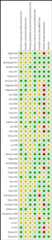
Risk of bias summary: review authors' judgements about each risk of bias item for each included study.
3.
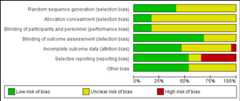
Risk of bias graph: review authors' judgements about each risk of bias item presented as percentages across all included studies.
Allocation
All included studies were reported as randomised. Seventeen studies adequately described the method of sequence generation (Bagati 2009;Chen 2011;De Jesus 2011;Fitzgerald 2008;Gao 2009a;Gao 2009b;Guse 2013;Hao 2008;Hoffman 2005;Liu 2008;Liu 2011;McIntosh 2004;Prikryl 2007;Slotema 2011;Yu 2010;Zhang 2010;Zheng 2012) and thus had a low risk of selection bias; the remaining studies did not provide details and were at unclear risk of selection bias. Seven studies were rated at low risk of bias as they had adequate allocation concealment (De Jesus 2011;Fitzgerald 2005;Fitzgerald 2008;Holi 2004;McIntosh 2004;Mogg 2005;Slotema 2011). However, most studies had unclear allocation concealment.
Blinding
Only seven studies adequately described the blinding of participants and personnel (Brunelin 2006;Hoffman 2005;Poulet 2005;Prikryl 2007;Rosenberg 2012;Saba 2006a;Schneider 2008) and had a low risk of performance bias, and 34 studies had unclear risk of performance bias as the method of blinding participants and personnel was not adequately described. Most studies had a low risk of detection bias as the raters were adequately blinded, but with 13 studies at unclear risk of detection bias as they did not adequately describe blinding of outcome assessment (Gao 2009a;Gao 2009c;Gao 2010;Hao 2008;Klirova 2010;Liu 2008;Liu 2011;Ren 2010;Ren 2011;Wing 2012;Xu 2011;Yu 2010;Zhang 2010).
Incomplete outcome data
Most studies had an unclear risk of attrition bias because reasons for loss to follow‐up were not consistently indicated or were unreported. Nineteen studies had a low risk of attrition bias: three studies were analysed on an intention‐to‐treat basis (Blumberger 2012;Hoffman 2005;Mogg 2005), seven studies adequately reported and dealt with attrition (Barr 2013;Chen 2011;Cordes 2010;Liu 2008;NCT00308997;Zhang 2010;Zheng 2012) and nine studies reported no losses to follow‐up (Gao 2009b;Gao 2009c;Liu 2011;McIntosh 2004;Poulet 2005;Ren 2010;Ren 2011;Xu 2011;Yu 2010). Two studies had a high risk of attrition bias. ForWing 2012, losses to follow‐up were not balanced between treatment groups, andRosenberg 2012 had a very high (44%) attrition rate.
Selective reporting
Most studies had a low risk of reporting bias as they fully reported all stated outcomes. In five studies we considered the risk of reporting bias to be unclear (De Jesus 2011;Klirova 2010;Poulet 2005;Prikryl 2007;Wing 2012). In 14 studies we considered the risk of reporting bias to be high, as some stated outcomes were not adequately reported (Bagati 2009;Fitzgerald 2005;Fitzgerald 2008;Gao 2009a;Gao 2009c;Guse 2013;Holi 2004;Klein 1999;Liu 2011;McIntosh 2004;Novak 2006;Schneider 2008;Yu 2010;Zhang 2010). We attempted to obtain any data which were not reported in published literature by contacting the authors.
Other potential sources of bias
We rated 22 studies at low risk of bias, as we detected no other potential sources of bias. The remaining 19 had an unclear risk of bias as there was insufficient information to make a judgement.
Effects of interventions
See:Table 1;Table 2;Table 3;Table 4
Summary of findings for the main comparison. TEMPOROPARIETAL TMS compared to SHAM TMS for schizophrenia.
| TEMPOROPARIETAL TMS compared to SHAM TMS for schizophrenia | ||||||
| Patient or population: people with schizophrenia Settings: inpatients and outpatients Intervention: TEMPOROPARIETAL TMS Comparison: SHAM TMS | ||||||
| Outcomes | Illustrative comparative risks* (95% CI) | Relative effect (95% CI) | No of Participants (studies) | Quality of the evidence (GRADE) | Comments | |
| Assumed risk | Corresponding risk | |||||
| SHAM TMS | TEMPOROPARIETAL TMS | |||||
| Clinical improvement in global state CGI Follow‐up: after treatment | 0 per 1000 | 0 per 1000 (0 to 0) | RR 7 (0.38 to 128.33) | 46 (1 study) | ⊕⊝⊝⊝ verylow1,2 | |
| Global state score CGI Follow‐up: after treatment to 30 days | The mean scores for the sham TMS group ranged from 2.4 to 5.1 | The mean global state score in the intervention groups was 0.5 lower (0.76 to 0.23 lower) | 224 (7 studies) | ⊕⊕⊝⊝ low3 | ||
| Mental state PANSS Follow‐up: after treatment to 30 days | The mean mental state scores in the sham TMS group ranged from 63.92 to 85.8 | The mean mental state in the intervention groups was 6.09 lower (10.95 to 1.22 lower) | 127 (5 studies) | ⊕⊕⊝⊝ low4,5 | ||
| Cognitive state Various measures Follow‐up: after treatment | See comment | See comment | Not estimable | 82 (3 studies) | ⊕⊕⊝⊝ low6 | Cognitive state was reported in 3 studies using 39 different measures. Results were equivocal for all measures |
| Adverse effects: general or specific Follow‐up: after treatment to 30 days | See comment | See comment | Not estimable | 442 (11 studies) | ⊕⊕⊝⊝ low5,7 | There were more headaches and jaw and facial contraction in the TMS group. Results for other adverse events ‐ concentration problems, earache, lightheadedness, mild amnesia, restless legs, somatic discomfort, tingling sensation in the arm, worsening hallucinations ‐ were equivocal |
| Adverse effects: Leaving the study early | 152 per 1000 | 118 per 1000 (70 to 200) | RR 0.78 (0.46 to 1.32) | 320 (8 studies) | ⊕⊝⊝⊝ low5,8 | |
| Satisfaction with care ‐ not reported | See comment | See comment | Not estimable | ‐ | See comment | No studies reported on this outcome |
| *The basis for theassumed risk is the median control group risk across studies for pooled data and the control group risk for single studies. Thecorresponding risk (and its 95% confidence interval) is based on the assumed risk in the comparison group and therelative effect of the intervention (and its 95% CI). CI: Confidence interval;RR: Risk ratio; | ||||||
| GRADE Working Group grades of evidence High quality: Further research is very unlikely to change our confidence in the estimate of effect. Moderate quality: Further research is likely to have an important impact on our confidence in the estimate of effect and may change the estimate. Low quality: Further research is very likely to have an important impact on our confidence in the estimate of effect and is likely to change the estimate. Very low quality: We are very uncertain about the estimate. | ||||||
1Risk of bias: serious ‐ this study had an unclear risk of bias for randomisation, allocation concealment, blinding and incomplete outcome data. Downgraded one level. 2Imprecision: very serious ‐ there were very few participants and very few events; there are wide confidence intervals that include both appreciable benefit and appreciable harm. Downgraded two levels 3Risk of bias: very serious ‐ five studies had an unclear risk of bias for randomisation, six for allocation concealment, four studies for blinding of participants and four blinding of outcome assessors. One study had a high risk of bias for incomplete outcome data. Downgraded two levels. 4Risk of bias: serious ‐ four studies had an unclear risk of bias for randomisation, five for allocation concealment, four for blinding of participants and two for blinding of outcome assessors. Three studies also had an unclear risk for incomplete outcome data. Downgraded one level. 5Imprecision: serious ‐ there are wide confidence intervals for this outcome that include appreciable and non‐appreciable benefit. Downgraded one level. 6Imprecision: very serious ‐ different scales were used to measure this outcome, all had wide confidence intervals. Downgraded two levels. 7Risk of bias: serious ‐ six studies had an unclear risk of bias for randomisation and nine for allocation concealment. All studies had an unclear risk of bias for blinding of participants and three for blinding of outcome assessors. Six studies also had an unclear risk for incomplete outcome data. Downgraded one level. 8Risk of bias: serious ‐ six studies had an unclear risk of bias for randomisation, five for allocation concealment, five studies for blinding of participants and four for blinding of outcome assessment. One study had a high risk of bias for incomplete outcome data. Downgraded one level. 9Imprecision: very serious ‐ there are wide confidence intervals for this outcome that include appreciable benefit and appreciable harm. Downgraded two levels.
Summary of findings 2. TEMPOROPARIETAL TMS compared to STANDARD TREATMENT for schizophrenia.
| TEMPOROPARIETAL TMS compared to STANDARD TREATMENT for schizophrenia | ||||||
| Patient or population: people with schizophrenia Settings: inpatients and outpatients Intervention: TEMPOROPARIETAL TMS1 Comparison: STANDARD TREATMENT1 | ||||||
| Outcomes | Illustrative comparative risks* (95% CI) | Relative effect (95% CI) | No of Participants (studies) | Quality of the evidence (GRADE) | Comments | |
| Assumed risk | Corresponding risk | |||||
| STANDARD TREATMENT | TEMPOROPARIETAL TMS | |||||
| Clinical improvement in global state CGI Follow‐up: after treatment | 620 per 1000 | 738 per 1000 (564 to 973) | RR 1.19 (0.91 to 1.57) | 100 (1 study) | ⊕⊕⊝⊝ low2,3 | |
| Global state score ‐ not reported | See comment | See comment | Not estimable | ‐ | See comment | No studies reported data for this outcome |
| Mental state ‐ not reported | See comment | See comment | Not estimable | ‐ | See comment | No studies reported data for this outcome |
| Cognitive state ‐ not reported | See comment | See comment | Not estimable | ‐ | See comment | No studies reported data for this outcome |
| Adverse effects: general or specific ‐ not reported | See comment | See comment | Not estimable | ‐ | See comment | No studies reported data for this outcome |
| Adverse effects: Leaving the study early Follow‐up: after treatment | 86 per 1000 | 28 per 1000 (7 to 125) | RR 0.33 (0.08 to 1.46) | 140 (2 studies) | ⊕⊝⊝⊝ very low4,5 | |
| Satisfaction with care ‐ not reported | See comment | See comment | Not estimable | ‐ | See comment | No studies reported data for this outcome |
| *The basis for theassumed risk is the median control group risk across studies) is provided in footnotes. Thecorresponding risk (and its 95% confidence interval) is based on the assumed risk in the comparison group and therelative effect of the intervention (and its 95% CI). CI: Confidence interval;RR: Risk ratio; | ||||||
| GRADE Working Group grades of evidence High quality: Further research is very unlikely to change our confidence in the estimate of effect. Moderate quality: Further research is likely to have an important impact on our confidence in the estimate of effect and may change the estimate. Low quality: Further research is very likely to have an important impact on our confidence in the estimate of effect and is likely to change the estimate. Very low quality: We are very uncertain about the estimate. | ||||||
1Participants received first and second generation antipsychotics in both treatment groups 2Risk of bias: serious ‐ this study had an unclear risk of bias for allocation concealment and blinding of participants and outcome assessors 3Imprecision: serious ‐ the confidence intervals are wide and include both benefit and harm 4Risk of bias: serious ‐ one study had an unclear risk of bias for randomisation and both studies for allocation concealment. One study had a unclear risk of bias for blinding of participants 5Imprecision: very serious ‐ there were few participants and very few events; there are wide confidence intervals.
Summary of findings 3. PREFRONTAL TMS compared to SHAM TMS for schizophrenia.
| PREFRONTAL TMS compared to SHAM TMS for schizophrenia | ||||||
| Patient or population: people with schizophrenia Settings: inpatients and outpatients Intervention: PREFRONTAL TMS Comparison: SHAM TMS | ||||||
| Outcomes | Illustrative comparative risks* (95% CI) | Relative effect (95% CI) | No of Participants (studies) | Quality of the evidence (GRADE) | Comments | |
| Assumed risk | Corresponding risk | |||||
| SHAM TMS | PREFRONTAL TMS | |||||
| Clinical improvement in global state ‐ not reported | See comment | See comment | Not estimable | ‐ | See comment | No studies reported data for this outcome |
| Global state score Various scales Follow‐up: after treatment | See comment | See comment | Not estimable | 85 (3) | See comment | 3 small studies measured global state on the CGI, CGI‐S, GAF and SCL‐90, none of which showed a significant treatment effect |
| Mental state PANSS Follow‐up: after treatment | See comment | See comment | Not estimable | 188 (6 studies) | ⊕⊝⊝⊝ very low1,2 | There was very high heterogeneity for this outcome, so we did not pool the data |
| Cognitive state Various measures Follow‐up: after treatment to 6 weeks | See comment | See comment | Not estimable | 138 (4 studies) | ⊕⊕⊝⊝ low3,4 | Cognitive state was reported in 4 studies using 19 different measures. Results were equivocal for all measures apart from 4 |
| Adverse effects: general or specific Follow‐up: after treatment | See comment | See comment | Not estimable | 199 (7 studies) | ⊕⊕⊝⊝ low5 | There were more headaches and TMS‐related site discomfort or pain in the TMS group. Results for other adverse effects ‐ cognitive difficulties, facial twitching, worsening of pre‐existing akathisia and OCD ‐ were equivocal |
| Adverse effects: Leaving the study early Follow‐up: after treatment to 2 weeks | 106 per 1000 | 126 per 1000 (59 to 265) | RR 1.19 (0.56 to 2.5) | 174 (8 studies) | ⊕⊕⊝⊝ low6,7 | |
| Satisfaction with care ‐ not reported | See comment | See comment | Not estimable | ‐ | See comment | No studies reported data for this outcome |
| *The basis for theassumed risk (e.g. the median control group risk across studies) is provided in footnotes. Thecorresponding risk (and its 95% confidence interval) is based on the assumed risk in the comparison group and therelative effect of the intervention (and its 95% CI). CI: Confidence interval;RR: Risk ratio; | ||||||
| GRADE Working Group grades of evidence High quality: Further research is very unlikely to change our confidence in the estimate of effect. Moderate quality: Further research is likely to have an important impact on our confidence in the estimate of effect and may change the estimate. Low quality: Further research is very likely to have an important impact on our confidence in the estimate of effect and is likely to change the estimate. Very low quality: We are very uncertain about the estimate. | ||||||
1Risk of bias: serious ‐ two studies had an unclear risk of bias for randomisation and five for allocation concealment. Five studies had an unclear risk for blinding of participants and two for blinding of outcome assessors and incomplete outcome data. 2Incosistency: very serious ‐ there was a very high heterogeneity for this outcome and we did not pool results 3Risk of bias: serious ‐ two studies had an unclear risk of bias for randomisation and three for allocation concealment. All studies had an unclear risk for blinding of participants and two studies had an unclear risk for incomplete outcome data 4Imprecision: serious ‐ different scales were used to measure this outcome, the majority had wide confidence intervals 5Risk of bias: very serious ‐ five studies had an unclear risk of bias for randomisation and allocation concealment. All had an unclear risk for blinding of participants, and two for blinding of outcome assessors. Four had an unclear risk for incomplete outcome data 6Imprecision: serious: there are wide confidence intervals 7Risk of bias: serious ‐ seven studies had an unclear risk of bias for randomisation and five for allocation concealment. All had an unclear risk for blinding of participants, and three were unclear for blinding of outcome assessors. Four had a high or unclear risk for incomplete outcome data
Summary of findings 4. PREFRONTAL TBS TMS compared to SHAM TMS for schizophrenia.
| PREFRONTAL TBS TMS compared to SHAM TMS for schizophrenia | ||||||
| Patient or population: people with schizophrenia Settings: inpatients and outpatients Intervention: PREFRONTAL TBS TMS Comparison: SHAM TMS | ||||||
| Outcomes | Illustrative comparative risks* (95% CI) | Relative effect (95% CI) | No of Participants (studies) | Quality of the evidence (GRADE) | Comments | |
| Assumed risk | Corresponding risk | |||||
| SHAM TMS | PREFRONTAL TBS TMS | |||||
| Clinical improvement in global state Follow‐up: after treatment | 0 per 1000 | 0 per 1000 (0 to 0) | RR 4.06 (0.21 to 77.37) | 27 (1 study) | ⊕⊝⊝⊝ very low1,2 | |
| Global state score ‐ not reported | See comment | See comment | Not estimable | ‐ | See comment | No studies reported data for this outcome |
| Mental state PANSS Follow‐up: after treatment | The mean scores for the sham TMS group ranged from 67.6 to 68.4 | The mean mental state in the intervention groups was 5.71 lower (9.32 to 2.1 lower) | 108 (3 studies) | ⊕⊕⊝⊝ low1,3 | ||
| Cognitive state Various measures Follow‐up: after treatment | See comment | See comment | Not estimable | 39 (1 study) | ⊕⊕⊝⊝ low1,4 | This was measured on 2 scale, both showed equivocal results |
| Adverse effects: general or specific Follow‐up: after treatment | See comment | See comment | Not estimable | 27 (1 study) | ⊕⊕⊝⊝ low1,3 | No differences in headaches and sleep disorders |
| Adverse effects: Leaving the study early | 139 per 1000 | 50 per 1000 (10 to 242) | RR 0.36 (0.07 to 1.74) | 76 (2 studies) | ⊕⊕⊝⊝ low1,2 | |
| Satisfaction with care ‐ not reported | See comment | See comment | Not estimable | ‐ | See comment | No studies reported data for this outcome |
| *The basis for theassumed risk (e.g. the median control group risk across studies) is provided in footnotes. Thecorresponding risk (and its 95% confidence interval) is based on the assumed risk in the comparison group and therelative effect of the intervention (and its 95% CI). CI: Confidence interval;RR: Risk ratio; | ||||||
| GRADE Working Group grades of evidence High quality: Further research is very unlikely to change our confidence in the estimate of effect. Moderate quality: Further research is likely to have an important impact on our confidence in the estimate of effect and may change the estimate. Low quality: Further research is very likely to have an important impact on our confidence in the estimate of effect and is likely to change the estimate. Very low quality: We are very uncertain about the estimate. | ||||||
1Risk of bias: serious ‐ there was an unclear risk of bias for allocation concealment and blinding 2Imprecision: serious ‐ there were very few participants and very few events; the confidence intervals are wide 3Imprecision: serious ‐ there are wide confidence intervals 4Imprecision: serious ‐ this was measured on two scales by one study, both of which had wide confidence intervals
COMPARISON 1: TEMPOROPARIETAL TMS vs SHAM TMS
Twenty trials randomised 692 participants and compared TEMPOROPARIETAL TMS (n = 399) vs SHAM TMS (n = 293) (Blumberger 2012;Brunelin 2006;De Jesus 2011;Fitzgerald 2005;Gao 2009a;Gao 2010;Hao 2008;Hoffman 2005;Klirova 2010;Lee 2005;Liu 2008;McIntosh 2004;NCT00308997;Rosa 2007;Rosenberg 2012;Saba 2006a;Slotema 2011;Vercammen 2009a;Xu 2011;Yu 2010).
1.1 Global state
a. Clinical improvement (CGI)
One study (Gao 2009a) found that the number of participants with a clinical improvement in global state did not differ between temporoparietal TMS and sham TMS when measured on the CGI scale; however they did not report the response criteria used to define clinical improvement (Analysis 1.1; 46 participants).
1.1. Analysis.
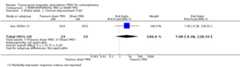
Comparison 1 TEMPOROPARIETAL TMS vs SHAM TMS, Outcome 1 Global state: 1. Clinical improvement (CGI).
b. Average scores for clinical improvement (CGI, high = poor)
Seven studies reported global state measured on the CGI scale and found a clear difference in favour of temporoparietal TMS (7 RCTs, n = 224, MD ‐0.50, 95% CI ‐0.76 to ‐0.23,Analysis 1.2).
1.2. Analysis.
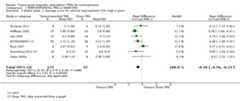
Comparison 1 TEMPOROPARIETAL TMS vs SHAM TMS, Outcome 2 Global state: 2. Average score for clinical improvement (CGI, high = poor).
1.2 Mental state
a. General
i. Clinical improvement (PANSS > 30% reduction)
Blumberger 2012 reported clinical improvement in mental state, defined as more than a 30% reduction in total PANSS score; the proportion of participants that had a clinical improvement in mental state did not differ between the treatment groups (Analysis 1.3; 51 participants).
1.3. Analysis.
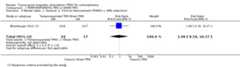
Comparison 1 TEMPOROPARIETAL TMS vs SHAM TMS, Outcome 3 Mental state: 1. General: a. Clinical improvement (PANSS > 30% reduction).
ii. Average total score (various scales)
Mental state was measured on the BPRS byDe Jesus 2011 (17 participants), which found no clear difference in scores between treatment groups. In contrast, total PANSS scores were clearly lower in the temporoparietal TMS group than the sham TMS group (5 RCTs, n = 127, MD ‐6.09, 95% CI ‐10.95 to ‐1.22,Analysis 1.4).
1.4. Analysis.
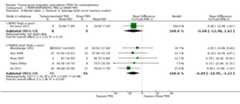
Comparison 1 TEMPOROPARIETAL TMS vs SHAM TMS, Outcome 4 Mental state: 1. General: b. Average total score (various scales).
iii. Average general psychopathology score (PANSS general)
Four studies provided data regarding general psychopathology measured on the PANSS general subscale. There was no significant difference in scores between temporoparietal TMS and sham TMS (Analysis 1.5; 87 participants).
1.5. Analysis.
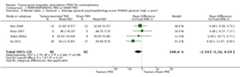
Comparison 1 TEMPOROPARIETAL TMS vs SHAM TMS, Outcome 5 Mental state: 1. General: c. Average general psychopathology score (PANSS general, high = poor).
b. Specific
i. Average depression score (various scales)
Hao 2008 found that participants showed significantly less depression when measured on the SDS (1 RCT, n = 25, MD ‐5.59, 95% CI ‐11.57 to 0.39,Analysis 1.6) , but results were equivocal when measured on the HAMD by the same small study.De Jesus 2011 also reported data for depression and excitement factor on the BPRS, but these data were skewed so we have not presented them in analyses (seeTable 6).
1.6. Analysis.
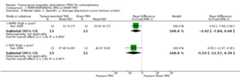
Comparison 1 TEMPOROPARIETAL TMS vs SHAM TMS, Outcome 6 Mental state: 2. Specific: a. Average depression score (various scales).
2. Skewed data ‐ Temporoparietal TMS vs Sham TMS.
| Study | Outcome | TMS Mean | TMS SD | TMS N | Sham TMS Mean | Sham TMS SD | Sham TMS N |
| De Jesus 2011 | Mental state: specific – BPRS depressive factor (high = poor) | 2.25 | 2.18 | 8 | 3.56 | 3.24 | 9 |
| Mental state: specific – BPRS excitement factor (high = poor) | 1.25 | 1.28 | 8 | 3.89 | 4.79 | 9 | |
| Poulet 2005 | Mental state: Specific ‐ positive symptoms (SAPS, high = poor) | 51.2 | 13.5 | 5 | 47.8 | 25.2 | 5 |
| Mental state: Specific ‐ hallucinations (AHRS, high = poor) | 14.6 | 12.1 | 5 | 20.8 | 3.4 | 5 | |
| Rosenberg 2012 | Mental state: Specific ‐ positive symptoms (SAPS, high = poor) | 26 | 20 | 10 | 37 | 16 | 10 |
| Mental state: Specific ‐ negative symptoms (SANS, high = poor) | 32 | 27 | 10 | 39 | 23 | 10 | |
| Xu 2011 | Cognitive state: CPT false items | 1.94 | 2.04 | 18 | 1.41 | 2.12 | 17 |
| Cognitive state: CPT missed items | 6.28 | 4.5 | 18 | 7.59 | 6.68 | 17 |
AHRS ‐ Auditory Hallucination Rating Scale BPRS ‐ Brief Psychiatric Rating Scale CPT ‐ Continuous Performance Test SANS ‐ Scale for Assessment of Negative Symptoms SAPS ‐ Scale for the Assessment of Positive Symptoms
ii. Hallucinations ‐ clinical improvement (various scales)
Significantly more participants that received temporoparietal TMS showed a clinical improvement in hallucinations when defined as an HCS score of 5 or less (3 RCTs, n = 133, RR 2.26, 95% CI 1.18 to 4.35) or more than a 30% decrease on the AHRS (3 RCTs, n = 120, RR 2.99, 95% CI 1.12 to 7.98,Analysis 1.7). However, AHRS pooled data showed moderate heterogeneity (I² = 55%) and when we applied the random‐effects model the results became non‐significant.Rosa 2007 reported “Reality” and “Attentional Salience” scores from the AHRS in figures, which showed a significant group effect (P = 0.0493 and P = 0.0360, respectively).
1.7. Analysis.
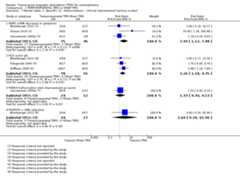
Comparison 1 TEMPOROPARIETAL TMS vs SHAM TMS, Outcome 7 Mental state: 2. Specific: b.i. Hallucinations ‐ clinical improvement (various scales).
We found no clear difference for clinical improvement in hallucinations when defined as improvement of one or more points on the PANSS hallucination item score, or more than a 30% reduction on the PSYRATS score.
iii. Average hallucinations score (various scales)
Hallucinations scores were significantly lower in the temporoparietal TMS when measured on the HCS (3 RCTs, n = 162, MD ‐1.64, 95% CI ‐2.80 to ‐0.48) and by the PANSS hallucination item (4 RCTs, n = 125, MD ‐1.01, 95% CI ‐1.97 to ‐0.04,Analysis 1.8). However, the PANSS hallucination item data were highly heterogenous (I² = 81%), with no obvious clinical or methodological reason for the heterogeneity. Removal of the outlying study,Gao 2010, reduced the heterogeneity (I² = 30%).
1.8. Analysis.
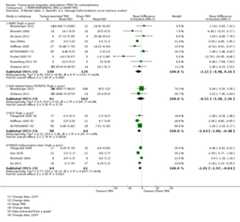
Comparison 1 TEMPOROPARIETAL TMS vs SHAM TMS, Outcome 8 Mental state: 2. Specific: b.ii. Average hallucinations score (various scales).
In contrast, when hallucinations were measured using AVH‐related items from the PSYRATS and the AHRS, there was no significant difference in hallucination scores between treatment groups. However, the latter showed high levels of heterogeneity (I² = 62%), which we could not explain by differences in the treatment as all used low frequency (1 Hz). Furthermore, when we removedRosenberg 2012, which used deep temporoparietal TMS, the heterogeneity was unchanged. However, when we removed change data from the analysis (NCT00308997;Poulet 2005) the heterogeneity was reduced (I² = 20%).
Poulet 2005 also reported endpoint data for hallucinations on the AHRS, but these data were skewed so we have not presented them in analyses (seeTable 6).
iv. Average negative symptom scores (various scales)
Negative symptoms were measured using the BPRS, PANSS negative and SANS scales. We found no significant difference in scores on the BPRS and PANSS; however one small study,Hao 2008, which used high‐frequency temporoparietal TMS (10 Hz) showed a significant difference favouring temporoparietal TMS (1 RCT, n = 25, MD ‐23.58, 95% CI ‐37.06 to ‐10.1,Analysis 1.9).Rosenberg 2012 also reported data for negative symptoms on the SANS, but these data were skewed so we have not presented them in analyses (seeTable 6).
1.9. Analysis.
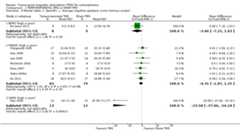
Comparison 1 TEMPOROPARIETAL TMS vs SHAM TMS, Outcome 9 Mental state: 2. Specific: c. Average negative symptom score (various scales).
v. Positive symptoms ‐ clinical improvement (PANSS > 30% reduction)
Blumberger 2012 found no difference in clinical improvement of positive symptoms, which was defined as more than a 30% reduction in PANSS positive subscale score (Analysis 1.10; 51 participants).
1.10. Analysis.
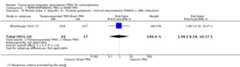
Comparison 1 TEMPOROPARIETAL TMS vs SHAM TMS, Outcome 10 Mental state: 2. Specific: d.i. Positive symptoms ‐ clinical improvement (PANSS > 30% reduction).
vi. Average positive symptom score (various scales)
Positive symptom scores were significantly lower in the temporoparietal TMS group than in the sham TMS group when measured on the PANSS positive subscale (11 RCTs, n = 333, MD ‐2.14, 95% CI ‐3.15 to ‐1.14,Analysis 1.11), but not significantly different when measured on the BPRS in one study (De Jesus 2011; 17 participants) or the SAPS used byBrunelin 2006 andHao 2008.Poulet 2005 andRosenberg 2012 also reported data for positive symptoms on the SAPS, but these data were skewed so we have not presented them in analyses (seeTable 6).
1.11. Analysis.
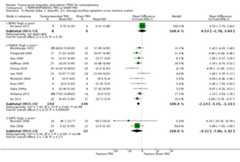
Comparison 1 TEMPOROPARIETAL TMS vs SHAM TMS, Outcome 11 Mental state: 2. Specific: d.ii. Average positive symptom score (various scales).
1.3 Cognitive state
Cognitive state was reported in three studies (Hoffman 2005;Liu 2008;Xu 2011) using 39 different measures. These data are reported inTable 7. Results were equivocal for all measures.Xu 2011 also reported cognitive data on the CPT, but these data were skewed so we did not present them inTable 7 (seeTable 6).
3. Cognitive outcomes ‐ Temporoparietal TMS vs Sham TMS.
| Outcome | Change / endpoint data | Study | TMS | Sham TMS | Mean difference [95% CI] | ||||
| Mean | SD | N | Mean | SD | N | ||||
| Animal naming | Change | Hoffman 2005 | ‐0.77 | 4.41 | 26 | 0.9 | 4.17 | 21 | ‐1.67 [‐4.13 to 0.79] |
| CPT reaction time (ms) | Endpoint | Xu 2011 | 926.22 | 126.2 | 18 | 959 | 109.35 | 17 | ‐32.78 [‐110.89 to 45.33] |
| Controlled oral word association | Change | Hoffman 2005 | 2.57 | 7.07 | 26 | 2.53 | 0.91 | 21 | 0.04 [‐2.71 to 2.79] |
| CVLT 1 score | Change | Hoffman 2005 | 0.88 | 6.61 | 26 | ‐0.19 | 1.69 | 21 | 1.07 [‐1.57 to 3.71] |
| CVLT B score | Change | Hoffman 2005 | 0.15 | 1.76 | 26 | 0.48 | 3.1 | 21 | ‐0.33 [‐1.82 to 1.16] |
| CVLT Long‐delay free recall | Change | Hoffman 2005 | ‐1.69 | 2.28 | 26 | ‐1.48 | 3.1 | 21 | ‐0.21 [‐1.80 to 1.38] |
| CVLT Recognition discriminative ability | Change | Hoffman 2005 | ‐0.007 | 0.08 | 26 | ‐0.014 | 0.088 | 21 | 0.01 [‐0.04 to 0.06] |
| CVLT Short‐delay free recall | Change | Hoffman 2005 | ‐0.92 | 2.15 | 26 | ‐0.71 | 3 | 21 | ‐0.21 [‐1.74 to 1.32] |
| CVLT1‐5 Total score | Change | Hoffman 2005 | ‐3.42 | 7.08 | 26 | ‐3.14 | 8.21 | 21 | ‐0.28 [‐4.72 to 4.16] |
| Digit recall (distraction) | Change | Hoffman 2005 | 0.61 | 3.93 | 26 | ‐0.9 | 4.77 | 21 | 1.51 [‐1.03 to 4.05] |
| Digit recall (non‐distraction) | Change | Hoffman 2005 | ‐0.12 | 4.66 | 26 | 1.19 | 4.08 | 21 | ‐1.31 [‐3.81 to 1.19] |
| Digit symbol | Change | Hoffman 2005 | 3.15 | 7.76 | 26 | 2.95 | 7.72 | 21 | 0.20 [‐4.25 to 4.65] |
| Grooved pegboard, dominant | Change | Hoffman 2005 | 4.65 | 15.1 | 26 | 5.57 | 48.8 | 21 | ‐0.92 [‐22.58 to 20.74] |
| Grooved pegboard, nondominant | Change | Hoffman 2005 | 6.46 | 15.5 | 26 | 12 | 31.5 | 21 | ‐5.54 [‐20.27 to 9.19] |
| Temporal orientation | Change | Hoffman 2005 | ‐0.154 | 1.82 | 26 | ‐0.35 | 2.39 | 21 | 0.20 [‐1.04 to 1.43] |
| Trail Making A | Change | Hoffman 2005 | 2.58 | 12.6 | 26 | ‐0.42 | 8.23 | 21 | 3.00 [‐2.99 to 8.99] |
| Trail Making B | Change | Hoffman 2005 | 19.5 | 48.3 | 26 | 25.3 | 50.4 | 21 | ‐5.80 [‐34.25 to 22.65] |
| WCST completed categories | Endpoint | Xu 2011 | 2.17 | 2.23 | 18 | 2.82 | 2.32 | 17 | ‐0.65 [‐2.16 to 0.86] |
| WCST completed categories | Endpoint | Liu 2008 | 5.3 | 1 | 11 | 4.5 | 1.4 | 10 | 0.80 [‐0.25 to 1.85] |
| WCST conceptualisation level | Endpoint | Xu 2011 | 61 | 24.13 | 18 | 64.12 | 24.93 | 17 | ‐3.12 [‐19.39 to 13.15] |
| WCST CR | Endpoint | Liu 2008 | 54 | 9 | 11 | 49 | 11 | 10 | 5.00 [‐3.65 to 13.65] |
| WCST FM | Endpoint | Liu 2008 | 13.6 | 7.3 | 11 | 9.8 | 11.2 | 10 | 3.80 [‐4.37 to 11.97] |
| WCST NPE | Endpoint | Liu 2008 | 17.2 | 7.6 | 11 | 20.9 | 5.6 | 10 | ‐3.70 [‐9.38 to 1.98] |
| WCST PCLR | Endpoint | Liu 2008 | 60.5 | 19.2 | 11 | 45.9 | 18.6 | 10 | 14.60 [‐1.58 to 30.78] |
| WCST PE | Endpoint | Liu 2008 | 45.3 | 23.6 | 11 | 50.8 | 22.3 | 10 | ‐5.50 [‐25.14 to 14.14] |
| WCST PNPE | Endpoint | Liu 2008 | 31.3 | 13.8 | 11 | 32.4 | 14.5 | 10 | ‐1.10 [‐13.24 to 11.04] |
| WCST PPE | Endpoint | Liu 2008 | 68.7 | 13.8 | 11 | 67.6 | 14.6 | 10 | 1.10 [‐11.08 to 13.28] |
| WCST PR | Endpoint | Liu 2008 | 41 | 13.3 | 11 | 34.2 | 15 | 10 | 6.80 [‐5.37 to 18.97] |
| WCST Ra | Endpoint | Xu 2011 | 122.67 | 15.18 | 18 | 126.06 | 5.02 | 17 | ‐3.39 [‐10.80 to 4.02] |
| WCST Re | Endpoint | Xu 2011 | 56.11 | 22.99 | 18 | 53.88 | 16.14 | 17 | 2.23 [‐10.87 to 15.33] |
| WCST Rp | Endpoint | Xu 2011 | 45.72 | 20.18 | 18 | 60.12 | 19.23 | 17 | ‐14.40 [‐27.46 to ‐1.34] |
| WCST TA | Endpoint | Liu 2008 | 117 | 18 | 11 | 121 | 10 | 10 | ‐4.00 [‐16.31 to 8.31] |
| WCST TCFC | Endpoint | Liu 2008 | 21.7 | 14 | 11 | 29.0 | 13.4 | 10 | ‐7.30 [‐19.02 to 4.42] |
| WCST TE | Endpoint | Liu 2008 | 63 | 24 | 11 | 72 | 20 | 10 | ‐9.00 [‐27.84 to 9.84] |
| WCST time (sec) | Endpoint | Liu 2008 | 405 | 174 | 11 | 411 | 177 | 10 | ‐6.00 [‐156.36 to 144.36] |
| WCST selective error rate (%) | Endpoint | Liu 2008 | 51.6 | 15.3 | 11 | 58.4 | 12.3 | 10 | ‐6.80 [‐18.63 to 5.03] |
| WCST correct thinking time (sec) | Endpoint | Liu 2008 | 172 | 67 | 11 | 160 | 96 | 10 | 12.00 [‐59.47 to 83.47] |
| WCST error thinking time (sec) | Endpoint | Liu 2008 | 233 | 128 | 11 | 251 | 100 | 10 | ‐18.00 [‐115.79 to 79.79] |
| WRAT‐R | Change | Hoffman 2005 | 0.19 | 2.54 | 26 | 0.33 | 2.81 | 21 | 6.80 [‐5.37 to 18.97] |
CPT ‐ Continuous performance test CVLT ‐ California verbal learning test WCST ‐ Wisconsin card sorting test WRAT‐R ‐ wide range achievement test – reading
1.4 Adverse effects
a. General
i. Serious
NCT00308997 andVercammen 2009a reported that there were no serious adverse events in either treatment group (Analysis 1.12; 130 participants).
1.12. Analysis.
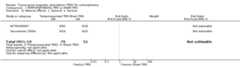
Comparison 1 TEMPOROPARIETAL TMS vs SHAM TMS, Outcome 12 Adverse effects: 1. General: a. Serious.
ii. Leaving the study early
The number of participants leaving the study early did not differ significantly between treatment groups (Analysis 1.13; 8 studies, 320 participants).
1.13. Analysis.
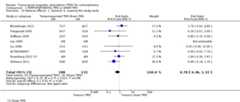
Comparison 1 TEMPOROPARIETAL TMS vs SHAM TMS, Outcome 13 Adverse effects: 1. General: b. Leaving the study early.
b. Specific
Participants receiving temporoparietal TMS clearly experienced more headaches (10 RCTs, n = 392, RR 2.65, 95% CI 1.56 to 4.50) and jaw and facial contraction (2 RCTs, n = 70, RR 8.32, 95% CI 1.13 to 61.17,Analysis 1.14) than those receiving sham TMS. Other adverse events ‐ concentration problems, earache, lightheadedness/dizziness, mild memory impairment/amnesia, restless legs, somatic discomfort, tingling sensation in the arm, worsening hallucinations/audible thoughts ‐ were not clearly different between treatment groups.
1.14. Analysis.
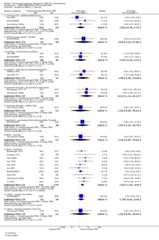
Comparison 1 TEMPOROPARIETAL TMS vs SHAM TMS, Outcome 14 Adverse effects: 2. Specific.
1.5 Quality of life
a. Average score (Q‐LES‐Q, low = poor)
Rosenberg 2012 measured quality of life on the Q‐LES‐Q and found no clear difference between deep temporoparietal TMS and sham TMS (Analysis 1.15; 20 participants).
1.15. Analysis.
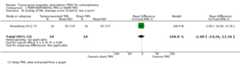
Comparison 1 TEMPOROPARIETAL TMS vs SHAM TMS, Outcome 15 Quality of life: Average score (Q‐LES‐Q, low = poor).
COMPARISON 2: TEMPOROPARIETAL TMS vs STANDARD TREATMENT
Two trials randomised 140 participants and compared TEMPOROPARIETAL TMS (n = 70) versus STANDARD TREATMENT (n = 70) (Bagati 2009;Liu 2011). In both studies the participants received first‐ and second‐generation antipsychotics in both treatment groups.
2.1 Global state
a. Clinical improvement (CGI ≤2)
Liu 2011 found that there was no clear difference in the number of participants experiencing clinical improvement when temporoparietal TMS and antipsychotics were compared to antipsychotic treatment alone (Analysis 2.1; 100 participants).
2.1. Analysis.
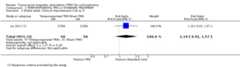
Comparison 2 TEMPOROPARIETAL TMS vs STANDARD TREATMENT, Outcome 1 Global state: Clinical improvement (CGI ≤ 2).
2.2 Mental state
a. Average hallucinations score (AHRS)
Bagati 2009 reported data for hallucinations on the AHRS, but these data were skewed so we have not presented them in analyses (seeTable 8).
4. Skewed data ‐ Temporoparietal TMS vs standard treatment.
| Study | Outcome | TMS Mean | TMS SD | TMS N | Sham TMS Mean | Sham TMS SD | Sham TMS N |
| Bagati 2009 | Mental state: Specific ‐ hallucinations (AHRS, high = poor) | 6.7 | 8.64 | 20 | 27.95 | 7.51 | 20 |
AHRS ‐ Auditory Hallucination Rating Scale
2.3 Adverse effects
a. General ‐ leaving the study early
The number of participants leaving the study early was not clearly different between temporoparietal TMS and antipsychotics alone (Analysis 2.2; 140 participants).
2.2. Analysis.
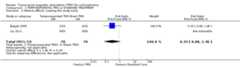
Comparison 2 TEMPOROPARIETAL TMS vs STANDARD TREATMENT, Outcome 2 Adverse effects: Leaving the study early.
COMPARISON 3: PREFRONTAL TMS vs SHAM TMS
Seventeen trials randomised 502 participants and compared PREFRONTAL TMS (n = 266) versus SHAM TMS (n = 236) (Barr 2013;Cordes 2010;Fitzgerald 2008;Gao 2009b;Gao 2009c;Guse 2013;Holi 2004;Klein 1999;Mogg 2005;Novak 2006;Poulet 2005;Prikryl 2007;Ren 2010;Ren 2011;Schneider 2008;Wing 2012;Zheng 2012).
3.1 Global state
a. Average scores (various scales)
Three small studies (Guse 2013;Holi 2004;Klein 1999) measured global state on the CGI, CGI‐S, GAF and SCL‐90, none of which showed a significant effect between prefrontal TMS and sham TMS (Analysis 3.1; 85 participants).
3.1. Analysis.
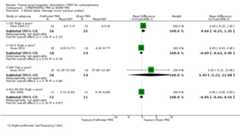
Comparison 3 PREFRONTAL TMS vs SHAM TMS, Outcome 1 Global state: Average score (various scales).
3.2 Mental state
a. General
i. Clinical improvement (> 20% decrease in total PANSS score)
Results from one small trial (Holi 2004) show that more participants in the prefrontal TMS group had a clinical improvement in mental state than those that received sham TMS (1 RCT, n = 22, RR 0.14, 95% CI 0.02 to 0.98,Analysis 3.2).
3.2. Analysis.
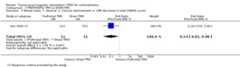
Comparison 3 PREFRONTAL TMS vs SHAM TMS, Outcome 2 Mental state: 1. General: a. Clinical improvement (> 20% decrease in total PANSS score).
ii. Average total score (various scales)
Mental state was measured using the BPRS and PANSS scales. We found no clear difference in participants' mental state between treatment groups on either scale (Analysis 3.3; 219 participants). However, the pooled data for the PANSS scale were heterogeneous (I² = 68%). When we removed the low‐frequency trial (Ren 2010), the heterogeneity remained. Removing outlying trials,Fitzgerald 2008 andGao 2009b, eliminated the heterogeneity, but the studies account for more than 40% of the weight for this outcome and we therefore did not pool the data.
3.3. Analysis.
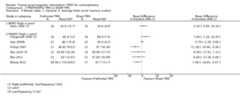
Comparison 3 PREFRONTAL TMS vs SHAM TMS, Outcome 3 Mental state: 1. General: b. Average total score (various scales).
iii. Average general psychopathology score (PANSS, high=poor)
Six studies reported data on general psychopathology of participants, measured on the PANSS scale. The pooled data were highly heterogenous (I² = 81%) and removal of the two low‐frequency trials (Klein 1999;Ren 2010) did not reduce the heterogeneity. Removal of the outlying trials,Gao 2009b andKlein 1999, eliminated the heterogeneity, but as these trials accounted for 36% of the weighting, we did not pool the data (Analysis 3.4; 199 participants).
3.4. Analysis.
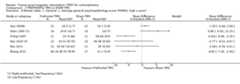
Comparison 3 PREFRONTAL TMS vs SHAM TMS, Outcome 4 Mental state: 1. General: c. Average general psychopathology score (PANSS, high = poor).
b. Specific
i. Average depression score (various scales)
Depression was reported on four scales by four different studies. There were no significant differences on the HDRS and SCL‐90 DEP subscale, whereas, when measured on the HAMD‐17 (1 RCT, n = 43, MD ‐2.40, 95% CI ‐3.88 to ‐0.92) and MADRS (1 RCT, n = 22, MD ‐4.36 95% CI ‐7.05 to ‐1.67), prefrontal TMS was efficacious when compared to sham TMS (Analysis 3.5).Barr 2013 andFitzgerald 2008 also reported data for depression on the Calgary depression scale (CDS) and Calgary depression rating scale (CDRS) respectively, but as these data are skewed we have not presented them in analyses (seeTable 9).
3.5. Analysis.
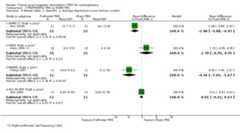
Comparison 3 PREFRONTAL TMS vs SHAM TMS, Outcome 5 Mental state: 2. Specific: a. Average depression score (various scales).
5. Skewed data ‐ Prefrontal TMS vs Sham TMS.
| Study | Outcome | TMS Mean | TMS SD | TMS N | Sham TMS Mean | Sham TMS SD | Sham TMS N |
| Barr 2013 | Mental state: Specific ‐ negative symptoms (PANSS, high = poor) | 26.15 | 13.45 | 13 | 31.42 | 13.19 | 12 |
| Mental state: Specific – depressive symptoms (CDS, high = poor ) | 2.38 | 2.06 | 13 | 1.67 | 1.92 | 12 | |
| Fitzgerald 2008 | Mental state: Specific ‐ positive symptoms (PANSS, high = poor) (LOCF) | 10.8 | 7.0 | 10 | 7.3 | 2.9 | 10 |
| Mental state: Depression (CDRS, high = poor) (LOCF) | 7.2 | 5.9 | 10 | 3.5 | 3.8 | 10 |
CDRS ‐ Calgary depression rating scale CDS ‐ Calgary depression scale PANSS ‐ positive and negative symptoms scale LOCF ‐ last observation carried forward
CDRS ‐ Calgary depression rating scale CDS ‐ Calgary depression scale
ii. Average hallucinations score (PANSS)
Ren 2010 found no difference in hallucinations between treatment groups (1 RCT, n = 25, MD ‐0.68, 95% CI ‐1.68 to 0.32,Analysis 3.6).
3.6. Analysis.
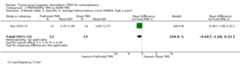
Comparison 3 PREFRONTAL TMS vs SHAM TMS, Outcome 6 Mental state: 2. Specific: b. Average hallucinations score (PANSS, high = poor).
iii. Negative symptoms ‐ clinical improvement (> 20% decrease in PANSS negative)
One small study (Novak 2006) found no difference in the number of participants that experienced a clinical improvement in negative symptoms (Analysis 3.7; 16 participants).
3.7. Analysis.
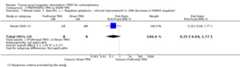
Comparison 3 PREFRONTAL TMS vs SHAM TMS, Outcome 7 Mental state: 2. Specific: c. i. Negative symptoms ‐ clinical improvement (> 20% decrease in PANSS negative).
iv. Average negative symptom score (various scales)
Pooled data for 10 studies that reported negative symptoms on the PANSS positive subscale were highly heterogeneous. Removing the low‐frequency studies (Fitzgerald 2008;Klein 1999) did not reduce the heterogeneity. Removal of the outlying trials (Gao 2009b;Gao 2009c) reduced the heterogeneity (I² = 16%), and results show no significant difference between treatment groups. When measured on the SANS, three small studies found that participants receiving prefrontal TMS had a significant improvement compared to sham TMS (3 RCTs, n = 71, MD ‐12.68, 95% CI ‐18.60 to ‐6.77,Analysis 3.8).Barr 2013 also reported data for negative symptoms on the PANSS, but these data were skewed so we have not presented them in analyses (seeTable 9).
3.8. Analysis.
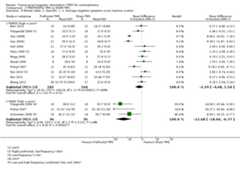
Comparison 3 PREFRONTAL TMS vs SHAM TMS, Outcome 8 Mental state: 2. Specific: c. ii. Average negative symptom score (various scales).
v. Average positive symptom score (various scales)
Positive symptoms were not significantly different between treatment groups for 10 studies (279 participants) that used the PANSS positive subscale and one small study (Prikryl 2007; 22 participants) on the SAPS (Analysis 3.9).Fitzgerald 2008 also reported data for positive symptoms on the PANSS, but these data were skewed so we have not presented them in analyses (seeTable 9).
3.9. Analysis.
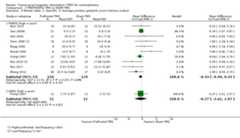
Comparison 3 PREFRONTAL TMS vs SHAM TMS, Outcome 9 Mental state: 2. Specific: d. Average positive symptom score (various scales).
vi. Average psychotism score (SCL‐90 PSY)
Holi 2004 also found no difference in psychotism measured on the SCL‐90 PSY subscale between prefrontal TMS and sham TMS (Analysis 3.10; 22 participants).
3.10. Analysis.
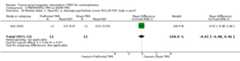
Comparison 3 PREFRONTAL TMS vs SHAM TMS, Outcome 10 Mental state: 2. Specific: e. Average psychotism score (SCL‐90 PSY, high = poor).
3.3 Cognitive state
Cognitive effects were reported in four studies (Guse 2013;Mogg 2005;Novak 2006;Zheng 2012), using 19 different measures. These data are reported inTable 10. Results were equivocal for most of the outcome measures, with limited evidence to suggest a beneficial effect of TMS for five cognitive test scores. One study (Mogg 2005) reported significantly increased cognitive test scores on average in the TMS arm compared with the control arm for four outcomes: Hopkins verbal learning test (HVLT)‐delayed recall (after two weeks follow‐up), controlled oral word association test (COWAT) (two weeks after TMS), and the Stroop test (within 24 hours of treatment and at two weeks follow‐up) . A second study (Guse 2013) reported significantly increased scores for Wisconsin card sorting test (WCST) categories (for people with WCST categories pre‐treatment median ≤ 4). More trials are needed to confirm or refute the beneficial effects of these cognitive test outcomes.
6. Cognitive outcomes ‐ Prefrontal TMS vs Sham TMS.
| Outcome | Change / endpoint | Study | TMS | Sham TMS | Mean difference [95% CI] | ||||
| Mean | SD | N | Mean | SD | N | ||||
| AVLT (low = poor) | Endpoint | Novak 2006 | 45.6 | 6.8 | 8 | 44.9 | 8 | 8 | 0.70 [‐6.58 to 7.98] |
| COWAT (within 24 hours of TMS) | Endpoint | Mogg 2005 | 11.6 | 5.3 | 8 | 10.9 | 5.0 | 9 | 0.70 [‐4.22 to 5.62] |
| COWAT (2 weeks after TMS) | Endpoint | Mogg 2005 | 14.2 | 5.7 | 8 | 9.1 | 2.7 | 9 | 5.10 [0.77 to 9.43] |
| Digit span test | Endpoint | Zheng 2012 | 10.5 | 3.5763 | 38 | 9.5 | 4 | 17 | 1.00 [‐15.70 to 17.70] |
| Grooved pegboard (seconds to completion) (within 24 hours of TMS) | Endpoint | Mogg 2005 | 117.1 | 32.0 | 8 | 108.6 | 41.2 | 9 | 8.50 [‐26.37 to 43.37] |
| Grooved pegboard (seconds to completion) (2 weeks after TMS) | Endpoint | Mogg 2005 | 109 | 29.5 | 8 | 98.5 | 16 | 9 | 10.50 [‐12.46 to 33.46] |
| HVLT‐ delayed recall (within 24 hours of TMS) | Endpoint | Mogg 2005 | 4.4 | 2.3 | 8 | 4.4 | 1.1 | 9 | 0.00 [‐1.75 to 1.75] |
| HVLT‐ delayed recall (2 weeks after TMS) | Endpoint | Mogg 2005 | 5.4 | 2.7 | 8 | 3.3 | 1.0 | 9 | 2.10 [0.12 to 4.08] |
| HVLT‐ immediate recall (within 24 hours of TMS) | Endpoint | Mogg 2005 | 6.3 | 2.0 | 8 | 5.6 | 1.1 | 9 | 0.70 [‐0.86 to 2.26] |
| HVLT‐ immediate recall (2 weeks after TMS) | Endpoint | Mogg 2005 | 7.4 | 2.8 | 8 | 5 | 0.8 | 9 | 2.40 [0.39 to 4.41] |
| Stroop test (within 24 hours of TMS) | Endpoint | Mogg 2005 | 77.4 | 20.3 | 8 | 51.4 | 14.9 | 9 | 26.00 [8.89 to 43.11] |
| Stroop test (2 weeks after TMS) | Endpoint | Mogg 2005 | 88.2 | 12.3 | 8 | 60.8 | 6.4 | 9 | 27.40 [17.91 to 36.89] |
| Trail making test A | Change | Guse 2013 | 0.64 | 15.08 | 14 | ‐11.92 | 29.27 | 12 | 12.56 [‐5.79 to 30.91] |
| Trail making test B | Change | Guse 2013 | ‐0.54 | 28.41 | 13 | ‐5.64 | 20.31 | 11 | 5.10 [‐14.46 to 24.66] |
| Verbal fluency test (high = poor) | Endpoint | Zheng 2012 | 24.2 | 9.2542 | 38 | 24.5 | 6.6 | 17 | ‐0.30 [‐4.60 to 4.00] |
| WCST categories | Change | Guse 2013 | 1.58 | 22.2 | 12 | ‐0.27 | 1.95 | 11 | 1.85 [‐10.76 to 14.46] |
| WCST categories for participants with WCST categories pre < median (= 4) | Change | Guse 2013 | 3.33 | 2.58 | 6 | 0.4 | 2.07 | 5 | 2.93 [0.18 to 5.68] |
| WCST perseverative answers | Change | Guse 2013 | ‐9 | 11.65 | 12 | ‐19.18 | 27.76 | 11 | 10.18 [‐7.50 to 27.86] |
| WCST perseverative mistakes | Change | Guse 2013 | ‐8.17 | 9.81 | 12 | ‐11.27 | 17.51 | 11 | 3.10 [‐8.64 to 14.84] |
AVTL ‐ auditory verbal learning test COWAT ‐ controlled oral word association test HVLT ‐ Hopkins verbal learning test WCST ‐ Wisconsin card sorting test
3.4 Adverse effects
a. General
i. Leaving the study early
The number of participants leaving the study was reported in eight studies and did not differ significantly between treatment groups (8 RCTs, n = 174, RR 1.19, 95% CI 0.56 to 2.50,Analysis 3.12).
3.12. Analysis.
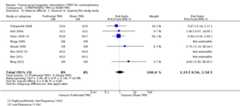
Comparison 3 PREFRONTAL TMS vs SHAM TMS, Outcome 12 Adverse effects: 1. General: b. Leaving the study early.
b. Specific
i. Various
Participants in the prefrontal TMS group experienced more headaches than those in the sham TMS group (6 RCTs, n = 164, RR 2.77, 95% CI 1.22 to 6.26), and more TMS‐related site discomfort or pain (2 RCTs, n = 42, RR 8.33, 95% CI 1.68 to 41.27,Analysis 3.13).Cordes 2010 reported no adverse events measured on the UKU side effect rating scale andKlein 1999 reported no cognitive difficulties in either treatment group.Klein 1999 also found no significant difference in facial twitching and worsening of pre‐existing akathisia and OCD.
3.13. Analysis.
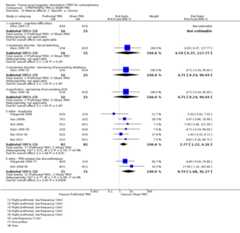
Comparison 3 PREFRONTAL TMS vs SHAM TMS, Outcome 13 Adverse effects: 2. Specific: a. Various.
ii. Average scores (CSSES)
Mogg 2005 measured subjective side effects and cognitive complaints on the CSSES and found no significant differences between prefrontal TMS and sham TMS (Analysis 3.14; 17 participants).
3.14. Analysis.
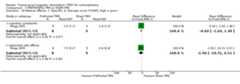
Comparison 3 PREFRONTAL TMS vs SHAM TMS, Outcome 14 Adverse effects: 2. Specific: b. Average score (CSSES, high = poor).
COMPARISON 4: PREFRONTAL TBS TMS vs SHAM TMS
Three trials randomised 115 participants and compared PREFRONTALTBS TMS (n = 59) versus SHAM TMS (n = 56) (Chen 2011;Zhang 2010;Zheng 2012).
4.1 Global state
a. Clinical improvement
Zhang 2010 found no difference in the number of participants showing a clinical improvement in global state between prefrontal TBS TMS and sham TMS (Analysis 4.1; 27 participants).
4.1. Analysis.
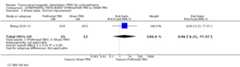
Comparison 4 PREFRONTAL THETA BURST STIMULATION TMS vs SHAM TMS, Outcome 1 Global state: Clinical improvement.
4.2 Mental state
a. General
i. Average total score (PANSS, high = poor)
Three studies (Chen 2011;Zhang 2010;Zheng 2012) reported data for mental state on the PANSS scale and found that prefrontal TBS TMS was efficacious when compared to sham TMS (3 RCTs, n = 108, MD ‐5.71, 95% CI ‐9.32 to ‐2.10,Analysis 4.2).
4.2. Analysis.
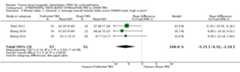
Comparison 4 PREFRONTAL THETA BURST STIMULATION TMS vs SHAM TMS, Outcome 2 Mental state: 1. General: a. Average overall mental state score (PANSS total, high = poor).
ii. Average general psychopathology score (PANSS, high = poor)
General psychopathology was also significantly better in the prefrontal TBS TMS group (3 RCTs, n = 108, MD ‐2.47, 95% CI ‐4.21 to ‐0.73,Analysis 4.3).
4.3. Analysis.
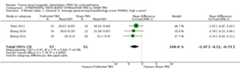
Comparison 4 PREFRONTAL THETA BURST STIMULATION TMS vs SHAM TMS, Outcome 3 Mental state: 1. General: b. Average general psychopathology score (PANSS, high = poor).
b. Specific
i. Average negative symptom score (PANSS, high = poor)
Negative symptoms were significantly lower in the prefrontal TBS TMS group than in the sham TMS group when measured on the PANSS (3 RCTs, n = 108, MD ‐2.67, 95% CI ‐4.25 to ‐1.09) and the SANS (1 RCT, n = 27, MD ‐11.55, 95% CI ‐21.90 to ‐1.2,Analysis 4.4).
4.4. Analysis.
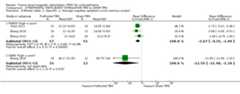
Comparison 4 PREFRONTAL THETA BURST STIMULATION TMS vs SHAM TMS, Outcome 4 Mental state: 2. Specific: a. Average negative symptom score (various scales).
ii. Average positive symptom score (PANSS, high = poor)
Positive symptoms were not significantly different between treatment groups (Analysis 4.5; 108 participants).
4.5. Analysis.
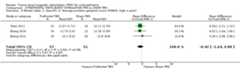
Comparison 4 PREFRONTAL THETA BURST STIMULATION TMS vs SHAM TMS, Outcome 5 Mental state: 2. Specific: b. Average positive symptom score (PANSS, high = poor).
4.3 Cognitive state
a. Average scores on various measures
We found no difference in cognitive state between treatment groups when measured using the digit span test and the verbal fluency test in one small study (Zheng 2012) (Analysis 4.6; 39 participants).
4.6. Analysis.
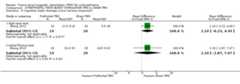
Comparison 4 PREFRONTAL THETA BURST STIMULATION TMS vs SHAM TMS, Outcome 6 Cognitive state: Average score (various measures).
4.4 Adverse effects
a. General ‐ Leaving the study early
The number of participants leaving the study early did not differ between the treatment groups (Analysis 4.7; 2 RCTs, 76 participants).
4.7. Analysis.
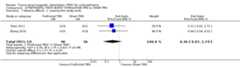
Comparison 4 PREFRONTAL THETA BURST STIMULATION TMS vs SHAM TMS, Outcome 7 Adverse effects: 1. Leaving the study early.
b. Specific
Participants did not experience significantly different numbers of adverse events (headaches or sleep disorder) between prefrontal TBS TMS and sham TMS (Analysis 4.8; 1 RCT, 27 participants).
4.8. Analysis.
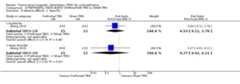
Comparison 4 PREFRONTAL THETA BURST STIMULATION TMS vs SHAM TMS, Outcome 8 Adverse effects: 2. Specific.
Unusable data
Jin 2012 reported data for clinical improvement combined for the two TMS groups (frontal and parietal) in the study, and so could not be added to any of the comparisons on the analyses. Clinical improvement was defined as at least a 30% improvement in PANSS score; 17 of 41 patients responded to the TMS (42%), whereas three of 24 responded to sham TMS (12%).
Sensitivity analysis
There were no losses to follow‐up for the outcome 'clinical improvement in global state' for temporoparietal TMS compared to sham TMS or standard treatment, and no studies reported on this outcome when prefrontal TMS was compared with sham TMS. For prefrontal TBS TMS versus sham TMS there were no differences when completer‐only data were compared with all randomised in an intention‐to‐treat analysis.
Discussion
Overall the quality of the evidence was rated asvery low based on the 'Summary of findings' tables (Table 1;Table 2;Table 3;Table 4).
Summary of main results
COMPARISON 1: TEMPOROPARIETAL TMS VERSUS SHAM
Very low‐quality evidence from one small trial showed no evidence of effect of temporoparietal TMS compared to sham TMS for clinically improving global state. However, there is some very low‐quality evidence to show that global state scores on the CGI scale are superior with temporoparietal TMS. There is also very low‐quality evidence from the PANSS scale that temporoparietal TMS is superior to sham TMS in improving mental state. While there may be some benefits with TMS over sham TMS, the clinical significance of some of the scale‐driven data is unclear. Very low‐quality evidence shows that temporoparietal TMS does not affect cognitive state; however, participants receiving temporoparietal TMS experienced more headaches than those in the sham TMS group. No more participants left the study early in the temporoparietal TMS than the sham TMS group, but again, this is very low‐quality evidence. No studies reported whether participants were satisfied with their care.
COMPARISON 2: TEMPOROPARIETAL TMS VERSUS STANDARD CARE
Limited low‐quality evidence shows that temporoparietal TMS is not superior to standard treatment (first‐ and second‐generation antipsychotic medication) in clinically improving global state, and the number of participants leaving the study early does not differ between temporoparietal TMS and standard treatment. No studies reported on participants' mental state and cognitive state, experience of adverse effects and whether they were satisfied with their care.
COMPARISON 3: PREFRONTAL TMS VERSUS SHAM
We found no evidence that prefrontal TMS is superior to sham TMS in improving global state, mental state and cognitive state, although the quality of the evidence is very low. Prefrontal TMS does not cause more headaches than sham TMS, and the number of participants leaving the study early did not differ between treatment groups, but again the evidence is of very low quality. No studies reported whether participants were satisfied with their care.
COMPARISON 4: PREFRONTAL TBS TMS VERSUS SHAM
Prefrontal TBS TMS is not superior to sham TMS in improving global state and cognitive state, but there is some evidence that it improves mental state, although the evidence is of very low quality. Prefrontal TBS TMS does not cause participants to experience more headaches or to leave the study earlier than sham TMS, but again this is from very low‐quality evidence. No studies reported whether participants were satisfied with their care.
Overall completeness and applicability of evidence
1. Duration
Studies reported substantial differences in the length of trials, which ranged from four days (McIntosh 2004) to 10 weeks (Wing 2012). This issue is therefore potentially problematic for comparison, and caution should be considered in relation to any conclusions. Difference in study length may arise from the nature of the population samples in terms of the associated high attrition rates. The lack of consistency across studies in relation to study length may also reflect the novel aspect of the intervention and the lack of a standardised procedure. We did not stratify the data by the different time periods specified inTypes of outcome measures in the protocol, as there were not enough data (seeDifferences between protocol and review).
2. Participants
Participants were consistently classified with schizophrenia or schizoaffective disorder, with most studies using a diagnosis according to the DMS‐IV.Prikryl 2007 reported the ICD‐10, andSchneider 2008 reported the use of both a diagnosis of schizophrenia with at least one year prior hospitalisation. The sample groups included for review were therefore well matched.
3. Control condition
A wide variety of sham TMS techniques were reported across the included studies. Although most studies reported use of the same stimulation as for active TMS, additional descriptions of this procedure varied from the edge of the coil resting at a 45 degree angle, a 90 degree angle, with one wing touching or with both wings touching. In addition further descriptions included a sham coil which produced identical sounds to the active TMS, and a sham coil which had a magnetically non‐translucent headpiece. Drawing a comparison across results and the interpretation of findings is therefore hindered.
Surprisingly, there is very little information on TMS compared to other treatments for schizophrenia. No studies compared TMS with other physical methods of treatment such as electroconvulsive therapy (ECT), and two (out of 41 included) studies compared TMS with standard treatment. The standard treatment in these studies (Bagati 2009;Liu 2011) was antipsychotics, although those given TMS also received them.
One trial out of the 18 ongoing trials compares TMS with treatment as usual, and the remaining studies compare TMS with sham TMS, although one trial (NCT01370291) plans to compare both treatments with and without the use of risperidone. This indicates that the evidence base for TMS is still being studied against sham TMS, before comparisons with active treatments can be envisaged.
4. Intervention
The active TMS intervention in both the prefrontal and temporoparietal conditions varied substantially across studies in terms of stimulation intensity, length of stimulation, and location of TMS. Studies which conducted prefrontal TMS reported the greatest variations. Stimulation intensity included ranges of 1 Hz, 10% above threshold to 20 Hz at 80% motor threshold, and three studies used TBS of 50 Hz. Length of stimulation for prefrontal TMS studies ranged from two trains of one minute with a three‐minute gap (Klein 1999), to 40 trains of 2.5 seconds with a 30‐second gap (Novak 2006) with a number of different variations across studies. Location of prefrontal TMS stimulation also differed, with reports of left prefrontal TMS, left dorsolateral prefrontal cortex TMS, right prefrontal TMS, and bilateral prefrontal TMS. For studies which used temporoparietal TMS, there was some consistency in that all but two studies reported using TMS stimulations of 1 Hz. However the level of motor threshold did vary, with reports of 20% below motor threshold to 100% motor threshold. As with the prefrontal TMS studies, in the case of temporoparietal TMS a wide variety of stimulation length was reported, which ranged from five sessions of one minute with one‐minute gaps (Saba 2006a) to two session of 20 minutes each a day (Vercammen 2009a).There was also more consistency with studies of temporoparietal TMS in regards to location, as all but one study reported left temporoparietal TMS, with the exception ofLee 2005 which reported also using right temporoparietal TMS. Comparing data within each intervention is therefore problematic, particularly for the prefrontal TMS for which the procedure varied more widely.
5. Outcomes
Of the seven categories of predefined outcomes, six were addressed in both the prefrontal TMS and temporoparietal TMS interventions. No data were available for analysis in the categories of hospital and service outcomes, satisfaction with care, and economic outcomes. There was a lack of data for quality of life, with only one study reporting this outcome for temporoparietal TMS. Future trials should consider including mechanisms for collecting these additional data; however, the authors acknowledge the tension between doing limited good‐quality data collection at the expense of quantity.
Quality of the evidence
This review includes 41 studies with 1473 participants. Although all studies were reported as randomised, most studies reported unclear allocation concealment (Figure 2 andFigure 3). There is therefore a risk of selection bias due to a possible lack of good methods to conceal the allocation. Overall, only seven papers reported adequate allocation concealment. Most studies included in the review were described as double‐blind. However, only seven studies reported an adequate blinding procedure. This can influence both performance and attrition bias, and is of particular importance in such study designs, due to the use of subjective measures. In many studies data were not fully reported and we had to contact authors in order to obtain both means and standard deviations for individual measures.
Overall, we judged the quality of the evidence to be low to very low. In general, the results were consistent, although scale data results for mental state showed some heterogeneity. We downgraded the evidence in the 'Summary of findings' tables mostly because of the risks of bias in the studies mentioned above, and the imprecision of the results due to wide confidence intervals.
Potential biases in the review process
We tried to identify all relevant trials in our search strategy. It is, however, possible that we may not have identified all studies. We are also aware the search date is old at time of publication and there may be new studies available.
The extraction of data and the risk of bias assessments for the Chinese language studies were completed by only one review author. There is the possibility that this may have introduced some bias into the results, as it was not possible to cross‐check these data.
Agreements and disagreements with other studies or reviews
Previous research has found that TMS can significantly reduce symptoms of schizophrenia. However, not all studies have subsequently replicated these findings. This was also reflected in the findings of the current review, as although there was some evidence to support the benefit of TMS in schizophrenia, findings were inconsistent across measures.
This review concluded that there was limited evidence for temporoparietal TMS as superior to sham TMS in improving auditory hallucinations; two meta‐analyses of sham‐controlled studies are in agreement with this finding, both concluding that there was a large and significant effect size for improving auditory hallucinations (Freitas 2009;Matheson 2010a). This review found limited evidence that temporoparietal TMS is superior to sham TMS for improving positive symptoms when measured on the PANSS scale; a meta‐analysis of sham‐controlled studies was in agreement, finding a large and significant effect size (Freitas 2009).
Limited evidence that prefrontal TMS is superior to sham in improving negative symptoms has also been reported elsewhere in two meta‐analyses (Dlabac‐de Lange 2010;Freitas 2009), the former finding a statistically significant improvement in an analysis of both PANSS and SANS, and the latter finding a non‐significant small effect size for negative symptoms. Further agreement that prefrontal TMS can be effective in improving negative symptoms has been reached in a follow‐up communication to a review (Matheson 2010b).
Authors' conclusions
Implications for practice.
1. For people with schizophrenia
At present there is not strong evidence to support the use of TMS (temporoparietal or prefrontal) to treat or manage symptoms of schizophrenia. There was some evidence that TMS may help reduce some symptoms (such as auditory hallucinations and negative symptoms, which include apathy), compared to sham TMS, although the results were unclear and the findings were not the same across all of the small studies identified in the review. Moreover, very few studies compared TMS with standard treatments, including antipsychotic drugs such as clozapine that are often used when troublesome symptoms persist. However, in the future once more high‐quality studies have been conducted, there is a possibility that TMS may be useful for treating and managing some symptoms of schizophrenia in addition to usual care.
2. For clinicians
Based on this review, we can make no recommendations for the use of TMS to treat symptoms of schizophrenia. The review found that temporoparietal TMS may help reduce auditory hallucinations and positive symptoms of schizophrenia, and that prefrontal TMS helps to reduce some negative symptoms of schizophrenia. However, any significant results were not consistent across various symptom measures, and there were a limited number of studies for each finding. Although the evidence does not support the use of TMS as a treatment option at present, further research with consistent protocols may lead to the development of an effective procedure for its use in future practice.
3. For managers/policy makers
Findings from this review do not provide robust data to support the use of TMS in clinical practice for schizophrenia. However there was a suggestion that TMS may improve some symptoms of schizophrenia, although this was equivocal. Future research that uses routine protocols for both TMS and sham treatment procedures should therefore be supported where possible.
Implications for research.
1. General
There are 18 studies currently ongoing, which plan to include 790 participants, and all but one compare TMS to sham TMS. Future studies should aim to adhere to more standardised procedures for both TMS and sham protocols. However, given the range of procedures in the included and ongoing studies, it appears that we are still at an exploratory stage and no clear evidence‐based protocol has emerged. Research should aim for the use of standardised outcomes and measures with which to analyse findings, with publication of analysis protocols before completion of the study itself. This would improve comparability of results across studies and provide a clearer insight into the potential benefits of TMS.
2. Specific
2.1 More studies
In order to clarify some of the findings presented in this review, we require further research to investigate the possibility of TMS as a viable treatment option for schizophrenia. Research should specifically aim to identify which symptoms would benefit from the technique and which methods could be most effective. This will need both more high‐quality studies and the recruitment of samples with sufficient statistical power to address the primary questions posed by the research teams.
2.2 Duration
There should be standardised procedures in terms of study duration in order to improve compatibility of findings. Although we acknowledge that there are difficulties about adherence for the participant group, research should aim to be more consistent to allow a greater basis for comparison and to extend the clinical data collection period beyond the duration of the treatment phase itself, so as to assess the sustainability of any observed effect.
2.3 Sham protocol
The protocol for sham treatment should be standardised to reduce variation and ensure that the control condition refers to a similar procedure across research. Efforts should be made to ensure that the experience of the treatment procedure using the sham protocol is indistinguishable from the active intervention, to improve blinding of participants and their carers.
2.4 Intervention protocol
For both temporoparietal and prefrontal TMS, a consistent protocol in relation to stimulation intensity, length of stimulation, and location of treatment should be developed. This would reduce the large variation in procedures and greatly improve the comparability of findings.
2.5 Randomisation
There should be clear reporting of study design, in particular the methods to guarantee allocation concealment and double‐blinding, to provide comprehensive information on study procedures which can be compared. There should be good‐quality blinding at allocation, to reduce any risk of selection bias.
2.6 Outcome measures
Research should aim to provide consistency of outcome measures for both the type of measure (e.g. endpoint or change score) and the scales used. Comparison of findings is greatly hindered by differences in outcome measures, and consistency in this area would provide a stronger basis for informed conclusions.
Acknowledgements
We would like to thank the editorial base of the Cochrane Schizophrenia Group for their support, and Enhance Reviews for helping us with the final push with screening the 2013 search results. We gratefully acknowledge the financial support of the Gordon Small charitable trust. ND would like to thank the support of the Chief Scientist Office of the Scottish Government‐funded NMAHP Research Unit, University of Stirling.
We thank Prathap Tharyan for his feedback and recommendations as editor of this review and Dr Sudheer Lankappa for peer reviewing it.
Thank you to Jun Xia for screening and data extraction of Chinese papers.
Thank you to Prof Klaus Ebmeier for his help. Klaus was involved in the review up until 2010; resolved conflicts between authors; performed data extraction and helped draft the review.
Appendices
Appendix 1. Outcome scales
1. Global functioning
1.1 Clinical Global Impression Scale ‐ CGI (Guy 1976), inDe Jesus 2011;Gao 2009a;Guse 2013;Hoffman 2005;Klein 1999;Lee 2005;Liu 2011;NCT00308997;Rosenberg 2012;Saba 2006a. A rating scale which measures severity of illness and clinical improvement based on a seven‐point scoring system. A low score indicates overall improvement and reduced illness severity.
1.2 Global Assessment of Functioning ‐ GAF (APA 1987) inGuse 2013. This scale measures the level of psychological, social, and occupational functioning of psychiatric patients. Possible scores range from 1 to 90. High scores indicate better functioning.
2. Mental State
2.1 Positive and Negative Syndrome Scale ‐ PANSS (Kay 1986), in most (27) of the studies. A measure of schizophrenia with three subscales, which include severity of general psychopathology, positive symptoms, and negative symptoms. The scale is scored from 30 to 210, with each item rated on a seven‐point scale ranging from absent (1) to severe (7). Higher scores indicate more severe symptoms.
2.2 Auditory Hallucinations Rating Scale ‐ AHRS (Hoffman 2005), inBlumberger 2012;Brunelin 2006;De Jesus 2011;Gao 2009a;Hoffman 2005;Klirova 2010;NCT00308997;Poulet 2005;Rosenberg 2012;Slotema 2011;Vercammen 2009a. A descriptive measure of the specific characteristics of auditory hallucinations. The scale consists of seven items, which include frequency, reality, loudness, number of voices, length, attentional salience, and distress level. Higher scores indicate more severe symptoms.
2.3 Scale for Assessment of Negative Symptoms ‐ SANS (Andreasen 1983), inFitzgerald 2008;Hao 2008;Prikryl 2007;Schneider 2008;Zhang 2010. An instrument to measure change of clinical outcomes in the negative symptoms of schizophrenia. A six‐point rating system is used, ranging from absent (0) to severe (5) on measures of alogia, affective blunting, avolition apathy, anhedonia‐associality, and attention impairment. Higher scores indicate greater severity of symptoms.
2.4 Scale for Assessment of Positive Symptoms ‐ SAPS (Andreasen 1984), inBrunelin 2006;Hao 2008;Prikryl 2007. A rating tool designed to measure change of clinical outcomes in the positive symptoms of schizophrenia. Severity is rated from questionable (0) to severe (5). Symptoms are divided into four main categories of hallucinations, delusions, bizarre behaviour and positive formal thought disorder. Higher scores indicate greater severity of symptoms.
2.5 Brief Psychiatric Rating Scale ‐ BPRS (Overall 1962), inDe Jesus 2011;Klein 1999. A clinical instrument which is used to quantify the severity of various psychiatric symptoms. The scale consists of 18 items, each of which is rated on a seven‐point scale from not present (1) to extremely severe (7). Scores range from 18 to 126, with higher scores indicating greater severity.
2.6 Hamilton Rating Scale for Depression ‐ HDRS/HAMD (Hamilton 1967), inGao 2009b;Hao 2008;Klein 1999. A depression rating scale for use in people who have already been diagnosed with a depressive disorder. Scores are based on the interviewer's assessment of 17 items which include depressed mood, suicide, work, loss of interest, agitation, general somatic symptoms, and loss of insight. Higher scores indicate greater severity of depression.
2.7 Psychotic Symptoms Rating Scale ‐ PSYRATS (Haddock 1999), inBlumberger 2012;Slotema 2011. This consists of two scales, which assess delusional beliefs and auditory hallucinations. There are 11 items in the auditory hallucinations scale, including frequency, duration, level of distress, controllability, loudness, location and beliefs about origin of voices. The delusional beliefs scale has six items, including preoccupation, intensity of distress, conviction and disruption. Each item is rated on a five‐point scale with higher scores indicating greater severity.
2.8 Hallucination Change Scale ‐ HCS (Hoffman 1999) inBlumberger 2012;Fitzgerald 2005;Hoffman 2005;NCT00308997. This scale consists of a single rating from 0 (no voices) to 20 (greatest severity) of hallucination severity. At baseline, the rating is set to 10 with each patient providing an individual description of the severity of his/her voices.
2.9 Self‐rating Depression Scale ‐ SDS (Zung 1965) inHao 2008. This is a short self‐administered survey to quantify the depressed status of a patient. There are 20 items on the scale that rate the four common characteristics of depression: the pervasive effect, the physiological equivalents, other disturbances, and psychomotor activities. A higher score indicates more severe depression.
2.10 Symptom Checklist ‐ SCL‐90 (Derogatis 1973) inHoli 2004. This self‐report questionnaire helps evaluate a broad range of psychological problems and symptoms of psychopathology. The test helps measure nine primary symptom dimensions (somatisation, obsessive‐compulsive, interpersonal sensitivity, depression, anxiety, hostility, phobic anxiety, paranoid ideation, psychoticism and a category of "additional items") and is designed to provide an overview of a patient's symptoms and their intensity at a specific point in time.The Global Severity Index (GSI) can be used as a summary of the test and is designed to measure overall psychological distress. High scores indicate more severe symptoms.
2.11 Montgomery‐Asberg Depression Rating Scale ‐ MADRS (Montgomery 1979) inPrikryl 2007. This scale was developed using a 65‐item psychopathology scale to identify the 17 most commonly occurring symptoms in primary depressive illness. The maximum score is 30, and a higher score indicates more severe psychopathology.
3. Cognitive State
3.1 Auditory Verbal Learning Test ‐ AVLT (Rey 1964,Rosenberg 1984,Geffen 1994) inNovak 2006. A tool used to assess competence in various memory domains, which include immediate memory span, recognition, retroactive and proactive interference. The test involves the verbal presentation of 15 words which must be remembered in subsequent consecutive learning trials. Higher scores indicate better memory performance.
4. Adverse effects
4.1 Columbia ECT Subjective Side Effects Schedule ‐ CSSES (Sackeim 1987) inMogg 2005. A 32‐item schedule administered after electroconvulsive therapy to assess subjective side effects reflecting physical complaints, perceived cognitive impairment, and mood‐related side effects. A high score indicates more severe side effects.
4.2 Udvalg for Kliniske Undersøgelser Side Effect Rating Scale ‐ UKU (Lingjaerde 1987) inCordes 2010. A comprehensive, clinician‐rated scale, designed to assess the side effects in people treated with psychotropic medications. The UKU consists of 48 questions. Zero indicates normal; one indicates mild symptoms; two indicates moderate symptoms; and three indicates severe symptoms.
5. Quality of Life
5.1 Q‐LES‐Q (Endicott 1993) inRosenberg 2012. This is a self‐report measure designed to enable investigators to easily obtain sensitive measures of the degree of enjoyment and satisfaction experienced by subjects in various areas of daily functioning. A low score indicates poor satisfaction.
Data and analyses
Comparison 1. TEMPOROPARIETAL TMS vs SHAM TMS.
| Outcome or subgroup title | No. of studies | No. of participants | Statistical method | Effect size |
|---|---|---|---|---|
| 1 Global state: 1. Clinical improvement (CGI) | 1 | 46 | Risk Ratio (M‐H, Fixed, 95% CI) | 7.0 [0.38, 128.33] |
| 2 Global state: 2. Average score for clinical improvement (CGI, high = poor) | 7 | 224 | Mean Difference (IV, Fixed, 95% CI) | ‐0.50 [‐0.76, ‐0.23] |
| 3 Mental state: 1. General: a. Clinical improvement (PANSS > 30% reduction) | 1 | 51 | Risk Ratio (M‐H, Fixed, 95% CI) | 1.0 [0.10, 10.27] |
| 4 Mental state: 1. General: b. Average total score (various scales) | 6 | Mean Difference (IV, Fixed, 95% CI) | Subtotals only | |
| 4.1 BPRS (high = poor) | 1 | 17 | Mean Difference (IV, Fixed, 95% CI) | ‐5.68 [‐12.98, 1.62] |
| 4.2 PANSS total (high = poor) | 5 | 127 | Mean Difference (IV, Fixed, 95% CI) | ‐6.09 [‐10.95, ‐1.22] |
| 5 Mental state: 1. General: c. Average general psychopathology score (PANSS general, high = poor) | 4 | 87 | Mean Difference (IV, Fixed, 95% CI) | ‐2.34 [‐5.26, 0.59] |
| 6 Mental state: 2. Specific: a. Average depression score (various scales) | 1 | Mean Difference (IV, Fixed, 95% CI) | Subtotals only | |
| 6.1 HAMD (high = poor) | 1 | 25 | Mean Difference (IV, Fixed, 95% CI) | ‐3.92 [‐7.84, ‐0.00] |
| 6.2 SDS (high = poor) | 1 | 25 | Mean Difference (IV, Fixed, 95% CI) | ‐5.59 [‐11.57, 0.39] |
| 7 Mental state: 2. Specific: b.i. Hallucinations ‐ clinical improvement (various scales) | 5 | Risk Ratio (M‐H, Fixed, 95% CI) | Subtotals only | |
| 7.1 AHRS >30% decrease in symptoms | 3 | 120 | Risk Ratio (M‐H, Fixed, 95% CI) | 2.99 [1.12, 7.98] |
| 7.2 HCS score ≤5 | 3 | 133 | Risk Ratio (M‐H, Fixed, 95% CI) | 2.26 [1.18, 4.35] |
| 7.3 PANSS hallucination item improvement ≥1 point | 1 | 36 | Risk Ratio (M‐H, Fixed, 95% CI) | 1.33 [0.43, 4.13] |
| 7.4 PSYRATS > 30% reduction | 1 | 51 | Risk Ratio (M‐H, Fixed, 95% CI) | 3.6 [0.20, 65.96] |
| 8 Mental state: 2. Specific: b.ii. Average hallucinations score (various scales) | 13 | Mean Difference (IV, Random, 95% CI) | Subtotals only | |
| 8.1 AHRS (high = poor) | 9 | 327 | Mean Difference (IV, Random, 95% CI) | ‐2.11 [‐4.38, 0.16] |
| 8.2 AVH‐related items PSYRATS (high = poor) | 2 | 624 | Mean Difference (IV, Random, 95% CI) | ‐0.51 [‐3.38, 2.36] |
| 8.3 HCS (high = poor) | 3 | 162 | Mean Difference (IV, Random, 95% CI) | ‐1.64 [‐2.80, ‐0.48] |
| 8.4 PANSS hallucination item (high = poor) | 4 | 125 | Mean Difference (IV, Random, 95% CI) | ‐1.01 [‐1.97, ‐0.04] |
| 9 Mental state: 2. Specific: c. Average negative symptom score (various scales) | 8 | Mean Difference (IV, Fixed, 95% CI) | Subtotals only | |
| 9.1 BPRS (high = poor) | 1 | 17 | Mean Difference (IV, Fixed, 95% CI) | ‐3.06 [‐7.15, 1.03] |
| 9.2 PANSS (high = poor) | 7 | 162 | Mean Difference (IV, Fixed, 95% CI) | ‐0.31 [‐1.87, 1.25] |
| 9.3 SANS (high = poor) | 1 | 25 | Mean Difference (IV, Fixed, 95% CI) | ‐23.58 [‐37.06, ‐10.10] |
| 10 Mental state: 2. Specific: d.i. Positive symptoms ‐ clinical improvement (PANSS > 30% reduction) | 1 | 51 | Risk Ratio (M‐H, Fixed, 95% CI) | 1.0 [0.10, 10.27] |
| 11 Mental state: 2. Specific: d.ii. Average positive symptom score (various scales) | 13 | Mean Difference (IV, Fixed, 95% CI) | Subtotals only | |
| 11.1 BPRS (high = poor) | 1 | 17 | Mean Difference (IV, Fixed, 95% CI) | 0.53 [‐2.78, 3.84] |
| 11.2 PANSS (high = poor) | 11 | 333 | Mean Difference (IV, Fixed, 95% CI) | ‐2.14 [‐3.15, ‐1.14] |
| 11.3 SAPS (high = poor) | 2 | 49 | Mean Difference (IV, Fixed, 95% CI) | ‐3.22 [‐7.86, 1.42] |
| 12 Adverse effects: 1. General: a. Serious | 2 | 130 | Risk Ratio (M‐H, Fixed, 95% CI) | 0.0 [0.0, 0.0] |
| 13 Adverse effects: 1. General: b. Leaving the study early | 8 | 320 | Risk Ratio (M‐H, Fixed, 95% CI) | 0.78 [0.46, 1.32] |
| 14 Adverse effects: 2. Specific | 11 | Risk Ratio (M‐H, Fixed, 95% CI) | Subtotals only | |
| 14.1 cardiovascular ‐ lightheaded/Dizziness | 3 | 158 | Risk Ratio (M‐H, Fixed, 95% CI) | 1.60 [0.45, 5.75] |
| 14.2 central nervous system ‐ tinnitus | 1 | 83 | Risk Ratio (M‐H, Fixed, 95% CI) | 3.63 [0.19, 67.82] |
| 14.3 cognitive ‐ concentration problems | 2 | 122 | Risk Ratio (M‐H, Fixed, 95% CI) | 1.59 [0.26, 9.73] |
| 14.4 cognitive ‐ mild memory impairment/amnesia | 2 | 89 | Risk Ratio (M‐H, Fixed, 95% CI) | 2.90 [0.35, 24.18] |
| 14.5 movement disorder ‐ jaw and facial contraction | 2 | 70 | Risk Ratio (M‐H, Fixed, 95% CI) | 8.32 [1.13, 61.17] |
| 14.6 movement disorder ‐ restless legs | 1 | 36 | Risk Ratio (M‐H, Fixed, 95% CI) | 1.56 [0.07, 35.67] |
| 14.7 psychiatric ‐ worsening hallucinations/audible Thoughts | 1 | 83 | Risk Ratio (M‐H, Fixed, 95% CI) | 2.55 [0.31, 20.75] |
| 14.8 others ‐ earache | 1 | 36 | Risk Ratio (M‐H, Fixed, 95% CI) | 1.56 [0.07, 35.67] |
| 14.9 others ‐ headache | 10 | 392 | Risk Ratio (M‐H, Fixed, 95% CI) | 2.65 [1.56, 4.50] |
| 14.10 others ‐ somatic discomfort | 1 | 83 | Risk Ratio (M‐H, Fixed, 95% CI) | 1.78 [0.65, 4.91] |
| 14.11 others ‐ tingling sensation in the arm | 1 | 36 | Risk Ratio (M‐H, Fixed, 95% CI) | 1.56 [0.07, 35.67] |
| 15 Quality of life: Average score (Q‐LES‐Q, low = poor) | 1 | 20 | Mean Difference (IV, Fixed, 95% CI) | ‐1.0 [‐14.26, 12.26] |
Comparison 2. TEMPOROPARIETAL TMS vs STANDARD TREATMENT.
| Outcome or subgroup title | No. of studies | No. of participants | Statistical method | Effect size |
|---|---|---|---|---|
| 1 Global state: Clinical improvement (CGI ≤ 2) | 1 | 100 | Risk Ratio (M‐H, Fixed, 95% CI) | 1.19 [0.91, 1.57] |
| 2 Adverse effects: Leaving the study early | 2 | 140 | Risk Ratio (M‐H, Fixed, 95% CI) | 0.33 [0.08, 1.46] |
Comparison 3. PREFRONTAL TMS vs SHAM TMS.
| Outcome or subgroup title | No. of studies | No. of participants | Statistical method | Effect size |
|---|---|---|---|---|
| 1 Global state: Average score (various scales) | 3 | Mean Difference (IV, Fixed, 95% CI) | Subtotals only | |
| 1.1 CGI (high = poor) | 1 | 31 | Mean Difference (IV, Fixed, 95% CI) | 0.60 [‐0.15, 1.35] |
| 1.2 CGI‐S (high = poor) | 1 | 32 | Mean Difference (IV, Fixed, 95% CI) | ‐0.09 [‐0.63, 0.45] |
| 1.3 GAF (low = poor) | 1 | 32 | Mean Difference (IV, Fixed, 95% CI) | 3.43 [‐5.22, 12.08] |
| 1.4 SCL‐90 GSI (high = poor) | 1 | 22 | Mean Difference (IV, Fixed, 95% CI) | ‐0.05 [‐0.66, 0.56] |
| 2 Mental state: 1. General: a. Clinical improvement (> 20% decrease in total PANSS score) | 1 | 22 | Risk Ratio (M‐H, Fixed, 95% CI) | 0.14 [0.02, 0.98] |
| 3 Mental state: 1. General: b. Average total score (various scales) | 7 | Mean Difference (IV, Random, 95% CI) | Totals not selected | |
| 3.1 BPRS (high = poor) | 1 | Mean Difference (IV, Random, 95% CI) | 0.0 [0.0, 0.0] | |
| 3.2 PANSS (high = poor) | 6 | Mean Difference (IV, Random, 95% CI) | 0.0 [0.0, 0.0] | |
| 4 Mental state: 1. General: c. Average general psychopathology score (PANSS, high = poor) | 6 | Mean Difference (IV, Random, 95% CI) | Subtotals only | |
| 5 Mental state: 2. Specific: a. Average depression score (various scales) | 4 | Mean Difference (IV, Fixed, 95% CI) | Subtotals only | |
| 5.1 HAMD‐17 (high = poor) | 1 | 43 | Mean Difference (IV, Fixed, 95% CI) | ‐2.40 [‐3.88, ‐0.92] |
| 5.2 HDRS (high = poor) | 1 | 31 | Mean Difference (IV, Fixed, 95% CI) | 1.70 [‐0.95, 4.35] |
| 5.3 MADRS (high = poor) | 1 | 22 | Mean Difference (IV, Fixed, 95% CI) | ‐4.36 [‐7.05, ‐1.67] |
| 5.4 SCL‐90 DEP (high = poor) | 1 | 22 | Mean Difference (IV, Fixed, 95% CI) | 0.01 [‐0.61, 0.63] |
| 6 Mental state: 2. Specific: b. Average hallucinations score (PANSS, high = poor) | 1 | 25 | Mean Difference (IV, Fixed, 95% CI) | ‐0.68 [‐1.68, 0.32] |
| 7 Mental state: 2. Specific: c. i. Negative symptoms ‐ clinical improvement (> 20% decrease in PANSS negative) | 1 | 16 | Risk Ratio (M‐H, Fixed, 95% CI) | 0.25 [0.04, 1.77] |
| 8 Mental state: 2. Specific: c. ii. Average negative symptom score (various scales) | 13 | Mean Difference (IV, Random, 95% CI) | Subtotals only | |
| 8.1 PANSS (high = poor) | 12 | 341 | Mean Difference (IV, Random, 95% CI) | ‐1.59 [‐4.68, 1.50] |
| 8.2 SANS (high = poor) | 3 | 71 | Mean Difference (IV, Random, 95% CI) | ‐12.68 [‐18.60, ‐6.77] |
| 9 Mental state: 2. Specific: d. Average positive symptom score (various scales) | 10 | Mean Difference (IV, Fixed, 95% CI) | Subtotals only | |
| 9.1 PANSS (high = poor) | 10 | 279 | Mean Difference (IV, Fixed, 95% CI) | ‐0.33 [‐0.99, 0.33] |
| 9.2 SAPS (high = poor) | 1 | 22 | Mean Difference (IV, Fixed, 95% CI) | ‐0.27 [‐2.61, 2.07] |
| 10 Mental state: 2. Specific: e. Average psychotism score (SCL‐90 PSY, high = poor) | 1 | 22 | Mean Difference (IV, Fixed, 95% CI) | ‐0.01 [‐0.48, 0.46] |
| 11 Adverse effects: 1. General: a. Adverse events (UKU) | 1 | 35 | Risk Ratio (M‐H, Fixed, 95% CI) | 0.0 [0.0, 0.0] |
| 12 Adverse effects: 1. General: b. Leaving the study early | 8 | 174 | Risk Ratio (M‐H, Fixed, 95% CI) | 1.19 [0.56, 2.50] |
| 13 Adverse effects: 2. Specific: a. Various | 6 | Risk Ratio (M‐H, Fixed, 95% CI) | Subtotals only | |
| 13.1 cognition ‐ cognitive difficulties | 1 | 31 | Risk Ratio (M‐H, Fixed, 95% CI) | 0.0 [0.0, 0.0] |
| 13.2 movement disorder ‐ facial twitching | 1 | 31 | Risk Ratio (M‐H, Fixed, 95% CI) | 6.59 [0.37, 117.77] |
| 13.3 movement disorder ‐ worsening of pre‐existing akathesia | 1 | 31 | Risk Ratio (M‐H, Fixed, 95% CI) | 4.71 [0.24, 90.69] |
| 13.4 psychiatric ‐ worsening of pre‐existing OCD | 1 | 31 | Risk Ratio (M‐H, Fixed, 95% CI) | 4.71 [0.24, 90.69] |
| 13.5 other ‐ headache | 6 | 164 | Risk Ratio (M‐H, Fixed, 95% CI) | 2.77 [1.22, 6.26] |
| 13.6 other ‐ TMS‐related site discomfort/pain | 2 | 42 | Risk Ratio (M‐H, Fixed, 95% CI) | 8.33 [1.68, 41.27] |
| 14 Adverse effects: 2. Specific: b. Average score (CSSES, high = poor) | 1 | Mean Difference (IV, Fixed, 95% CI) | Subtotals only | |
| 14.1 cognitive complaints | 1 | 17 | Mean Difference (IV, Fixed, 95% CI) | ‐0.6 [‐2.69, 1.49] |
| 14.2 subjective side effects | 1 | 17 | Mean Difference (IV, Fixed, 95% CI) | ‐1.90 [‐10.31, 6.51] |
3.11. Analysis.
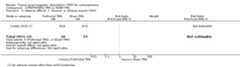
Comparison 3 PREFRONTAL TMS vs SHAM TMS, Outcome 11 Adverse effects: 1. General: a. Adverse events (UKU).
Comparison 4. PREFRONTAL THETA BURST STIMULATION TMS vs SHAM TMS.
| Outcome or subgroup title | No. of studies | No. of participants | Statistical method | Effect size |
|---|---|---|---|---|
| 1 Global state: Clinical improvement | 1 | 27 | Risk Ratio (M‐H, Fixed, 95% CI) | 4.06 [0.21, 77.37] |
| 2 Mental state: 1. General: a. Average overall mental state score (PANSS total, high = poor) | 3 | 108 | Mean Difference (IV, Fixed, 95% CI) | ‐5.71 [‐9.32, ‐2.10] |
| 3 Mental state: 1. General: b. Average general psychopathology score (PANSS, high = poor) | 3 | 108 | Mean Difference (IV, Fixed, 95% CI) | ‐2.47 [‐4.21, ‐0.73] |
| 4 Mental state: 2. Specific: a. Average negative symptom score (various scales) | 3 | Mean Difference (IV, Fixed, 95% CI) | Subtotals only | |
| 4.1 PANSS (high = poor) | 3 | 108 | Mean Difference (IV, Fixed, 95% CI) | ‐2.67 [‐4.25, ‐1.09] |
| 4.2 SANS (high = poor) | 1 | 27 | Mean Difference (IV, Fixed, 95% CI) | ‐11.55 [‐21.90, ‐1.20] |
| 5 Mental state: 2. Specific: b. Average positive symptom score (PANSS, high = poor) | 3 | 108 | Mean Difference (IV, Fixed, 95% CI) | ‐0.42 [‐1.64, 0.80] |
| 6 Cognitive state: Average score (various measures) | 1 | Mean Difference (IV, Fixed, 95% CI) | Subtotals only | |
| 6.1 digit span test | 1 | 39 | Mean Difference (IV, Fixed, 95% CI) | 2.10 [‐0.23, 4.43] |
| 6.2 verbal fluency test | 1 | 39 | Mean Difference (IV, Fixed, 95% CI) | 2.10 [‐2.87, 7.07] |
| 7 Adverse effects: 1. Leaving the study early | 2 | 76 | Risk Ratio (M‐H, Fixed, 95% CI) | 0.36 [0.07, 1.74] |
| 8 Adverse effects: 2. Specific | 1 | Risk Ratio (M‐H, Fixed, 95% CI) | Subtotals only | |
| 8.1 headache | 1 | 27 | Risk Ratio (M‐H, Fixed, 95% CI) | 0.53 [0.11, 2.70] |
| 8.2 sleep disorder | 1 | 27 | Risk Ratio (M‐H, Fixed, 95% CI) | 0.27 [0.01, 6.11] |
Comparison 5. SENSITIVITY ANALYSIS: PREFRONTAL THETA BURST STIMULATION TMS vs SHAM TMS.
| Outcome or subgroup title | No. of studies | No. of participants | Statistical method | Effect size |
|---|---|---|---|---|
| 1 Global state: Clinical improvement | 1 | Risk Ratio (M‐H, Fixed, 95% CI) | Subtotals only | |
| 1.1 including only people who completed the studies | 1 | 27 | Risk Ratio (M‐H, Fixed, 95% CI) | 4.06 [0.21, 77.37] |
| 1.2 Intention‐to‐treat analysis | 1 | 30 | Risk Ratio (M‐H, Fixed, 95% CI) | 4.41 [0.23, 84.79] |
5.1. Analysis.
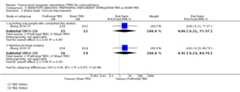
Comparison 5 SENSITIVITY ANALYSIS: PREFRONTAL THETA BURST STIMULATION TMS vs SHAM TMS, Outcome 1 Global state: Clinical improvement.
Characteristics of studies
Characteristics of included studies [ordered by study ID]
Bagati 2009.
| Methods | Allocation: randomised Blinding: assessor blind Duration: 2 weeks Design: parallel Setting: inpatients and outpatients Country: India | |
| Participants | Diagnosis: schizophrenia (ICD‐10 criteria) N = 40 Age: rTMS group mean 29.40 years (SD = 7.32); control group mean 7.25 years (SD = 9.79) Sex: M 36, F 4 History: Auditory Hallucinations Rating Scale (AHRS) score > 20, duration of illness in the active group 5.36 years and in the control group, 4.35 years | |
| Interventions | 1. TMS: Low‐frequency rTMS to the left temporoparietal region at the centre of T3T4, 1 Hz and 90% motor threshold, 10 sessions 5 days per week for 2 weeks, 2400 pulses/sessions, 60 trains, 2 sec stimulation, 28 sec inter‐train interval. Add on to conventional antipsychotic treatment (N = 20) 2. Control: Antipsychotics only (N = 20) Both groups received FGAs and SGAs | |
| Outcomes | Adverse events: leaving the study early Unable to use ‐ Global state: CGI (no data reported) Mental state: PANSS (no data reported), AHSR (skewed data) | |
| Notes | Source of funding: not reported | |
| Risk of bias | ||
| Bias | Authors' judgement | Support for judgement |
| Random sequence generation (selection bias) | Low risk | Allocation by coin‐toss method |
| Allocation concealment (selection bias) | Unclear risk | Allocation concealment procedures not reported |
| Blinding of participants and personnel (performance bias) All outcomes | Unclear risk | "The patients receiving rTMS were not blind to the procedure", blinding of personnel not reported |
| Blinding of outcome assessment (detection bias) All outcomes | Low risk | "The rater was blind to the procedure. The ratings and the rTMS application were done by different individuals so as to prevent the bias" |
| Incomplete outcome data (attrition bias) All outcomes | Unclear risk | Number lost to follow‐up not reported |
| Selective reporting (reporting bias) | High risk | The study does not report all outcomes: PANSS, CGI |
| Other bias | Unclear risk | Insufficient information. Source of funding not reported |
Barr 2013.
| Methods | Allocation: randomised Blinding: double‐blind Duration: 6 weeks Design: parallel Setting: not reported Country: Canada | |
| Participants | Diagnosis: schizophrenia or schizoaffective disorder (DSM‐IV) N = 33 (25 completed) Age: TMS group mean 41.15 (SD 12.01); sham group mean 49 (SD 12.42) Sex: M 17, F 8* History: score of 85 or below on the Repeated Battery for the assessment of Neuropsychological Status | |
| Interventions | 1. TMS: bilateral MRI‐guided rTMS in the dorsolateral prefrontal cortex (DLPFC) at 20 Hz, 90% resting motor threshold for 25 trains, 30 pulses/train, inter‐train interval of 30 sec, 20 sessions (5 days/week for 4 weeks) (N = 16) 2. Sham: at the same parameters with the coil held in a single wing‐tilt position at 90º to induce similar somatic sensations as in the active stimulation with minimal direct brain effects (N = 17) Both groups received FGAs and SGAs | |
| Outcomes | Mental state: PANSS, SANS, CDS Unable to use ‐ Cognitive state: n‐back performance (skewed data) | |
| Notes | The randomised clinical trial is ongoing, only pilot data reported
N is different for Mental state and Cognitive state outcomes as the trial was at an earlier stage when the mental state outcomes were reported (N = 31) Source of funding: Canadian Institutes of Health Research (CIHR) CIHR Operating Grant, CIHR Post‐Doctoral Award, Operating and Studentship Award from the Ontario Mental Health Foundation, National Health and Medical Research Council (NHMRC) Practitioner Fellowship (PBF), Brain and Behaviour Research Foundation Young Investigator award, the Grant Family through the Centre for Addiction and Mental Health (CAMH) Foundation | |
| Risk of bias | ||
| Bias | Authors' judgement | Support for judgement |
| Random sequence generation (selection bias) | Unclear risk | "Randomly assigned", "computer‐generated random number sequence" |
| Allocation concealment (selection bias) | Unclear risk | No information reported |
| Blinding of participants and personnel (performance bias) All outcomes | Unclear risk | "Double‐blind", no further details reported |
| Blinding of outcome assessment (detection bias) All outcomes | Low risk | Outcome assessors "were blind to treatment" |
| Incomplete outcome data (attrition bias) All outcomes | Low risk | 6 schizophrenic participants did not complete the study (3 in the active and 3 in the sham group) |
| Selective reporting (reporting bias) | Low risk | All outcomes are reported |
| Other bias | Low risk | None detected |
Blumberger 2012.
| Methods | Allocation: randomised Blinding: double‐blind Duration: 8 weeks Design: parallel Setting: not reported Country: Canada | |
| Participants | Diagnosis: schizophrenia or schizoaffective disorder (DSM‐IV criteria) N = 51 Age: rTMS group mean 36.6 (SD 8.2); priming group mean 43.8 (SD11.7); sham group mean 40.8 (SD12.1) Sex: not reported History: moderate severity on item 3 of the positive subscale of PANSS, medication resistance defined as daily auditory hallucinations | |
| Interventions | 1. TMS: MRI‐guided left‐sided rTMS (LFL) to the temporoparietal cortex (TPC), at an intensity of 115% RMT for 20 min, 20 trains with an inter‐train interval of 25 secs. 20 sessions (5 days/week for 4 weeks) (N = 17) 2. Priming TMS: (6 Hz followed by 1 Hz rTMS), 10 min of 6 Hz (20 5 second trains with 25 second inter‐train interval) at 90% RMT followed by 10 min of 1 Hz stimulation at 115% RMT, a total of 20 min of stimulation, 20 sessions (5 days/week for 4 weeks) (N = 17) 3. Sham: identical parameters to those for the LFL condition but with the coil angled at 90º off the scalp in a single wing‐tilt position, 1 Hz for 20 min, 20 sessions (5 days/week for 4 weeks) (N = 17) Stimulation site: Heschl’s gyrus Both groups received FGAs and SGAs | |
| Outcomes | Mental state: PSYRATS hallucinations subscale, PSYRATS, PANSS, HCS, AHRS Cognitive state: RBANS | |
| Notes | Data from the 2 TMS groups were combined in the analyses
N not reported for RBANS data ‐ assumed to be 14 for rTMS, 13 for priming TMS and 13 for sham TMS Source of funding: Ontario Mental Health Foundation (OMHF), Canadian Institutes of Health Research (CIHR) Clinician Scientist Award, CIHR Fellowship, by a National Health and Medical Research Council (NHMRC) Practitioner Fellowship and by Constance and Stephen Lieber through a National Alliance for Research on Schizophrenia and Depression (NARSAD) Lieber Young Investigator award | |
| Risk of bias | ||
| Bias | Authors' judgement | Support for judgement |
| Random sequence generation (selection bias) | Unclear risk | “Randomised” no further details reported |
| Allocation concealment (selection bias) | Unclear risk | “Randomised” no further details reported |
| Blinding of participants and personnel (performance bias) All outcomes | Unclear risk | “Subjects ... were blind to randomization group.” |
| Blinding of outcome assessment (detection bias) All outcomes | Low risk | “Clinical raters were blind to randomization group.” |
| Incomplete outcome data (attrition bias) All outcomes | Low risk | “The analysis was conducted on an intention‐to‐treat basis. A completer analysis was also conducted.” There were 3 losses to follow‐up in the rTMS group, 4 in the priming group and 4 in the sham control group. “Subjects reported lack of perceived benefit and inability to attend appointments as reasons for discontinuation. One subject was hospitalised due to hyponatremia and could not complete the study protocol.” |
| Selective reporting (reporting bias) | Low risk | All outcomes were reported |
| Other bias | Low risk | None detected |
Brunelin 2006.
| Methods | Allocation: randomised Blindness: double‐blind Duration: 5 days Design: parallel Setting: not reported Country: France | |
| Participants | Diagnosis: schizophrenia (DSM‐IV) N = 24 Age: average 34.5 years Sex: not reported History: antipsychotic medication‐resistant auditory hallucinations | |
| Interventions | 1. TMS: left temporoparietal rTMS, 1 Hz at 90% of motor threshold, 10 sessions over 5 days (2 treatments of 1000 stimulations per day) (N = 14) 2. Sham: Simulation was as for active TMS but with a sham coil designed to produce an identical sound. (N = 10) Not reported whether antipsychotics were used | |
| Outcomes | Mental state: AHRS, SAPS Cognitive state: Source memory task | |
| Notes | Source of funding: Conseil Scientifique de la Recherche, CH "Le Vinatier" | |
| Risk of bias | ||
| Bias | Authors' judgement | Support for judgement |
| Random sequence generation (selection bias) | Unclear risk | "Randomly allocated" ‐ no further details provided |
| Allocation concealment (selection bias) | Unclear risk | No details provided |
| Blinding of participants and personnel (performance bias) All outcomes | Low risk | "The protocol was carried out under double blind condition." "Ten patients received sham rTMS stimulations given at the same location, strength and frequency with a placebo‐coil indistinguishable to the active coil. The placebo coil and its active counterpart look identical and produce an identical sound without superficial scalp stimulation." |
| Blinding of outcome assessment (detection bias) All outcomes | Low risk | "Cognitive and clinical evaluations were assessed by a blinded investigator." |
| Incomplete outcome data (attrition bias) All outcomes | Unclear risk | The study did not report on losses to follow‐up |
| Selective reporting (reporting bias) | Low risk | All outcomes reported |
| Other bias | Unclear risk | None detected |
Chen 2011.
| Methods | Allocation: randomised Blinding: double‐blind Duration: 4 weeks Design: parallel Setting: inpatients Country: China | |
| Participants | Diagnosis: schizophrenia (DSM‐IV) N = 46 Age: 23 ‐ 55, mean 37.4 (SD 1.8) Sex: M 27, F 15 (Gender is reported only for completed patients. 42 patients completed the trial: Intervention N = 23, control N = 19) History: PANSS negative subscale score ≥ 20; stable medication regimen | |
| Interventions | 1. TMS: left DLPFC rTMS, intermittent theta burst stimulation pattern 50 Hz at 80% of motor threshold, 2400 pulses over 22 minutes. 4 weeks, 5 days/week, total 20 sessions (N = 24) 2. Sham: Simulation was as for active TMS but coil designed to produce an identical sound without magnets being activated (N = 22) Both groups received FGAs and SGAs | |
| Outcomes | Mental state: PANSS Not used in the review ‐ EEM (Exploratory Eye Movements): Number of eye fixations, Responsive search score, Discriminant (D) score | |
| Notes | Source of funding: National High Tech Research and Development (863 Program of China; the Natural Science Foundation of China; the Janssen Science Foundation; and the Shanghai Science Committee Foundation | |
| Risk of bias | ||
| Bias | Authors' judgement | Support for judgement |
| Random sequence generation (selection bias) | Low risk | "Eligible subjects were randomized to rTMS therapy or sham rTMS therapy based on a computerized algorithm" |
| Allocation concealment (selection bias) | Unclear risk | "Provided to the rTMS technician the first time the patient entered the rTMS treatment room." |
| Blinding of participants and personnel (performance bias) All outcomes | Unclear risk | "Double‐blind", details not reported |
| Blinding of outcome assessment (detection bias) All outcomes | Low risk | "The technician who conducted the EEM tests was blind to the treatment status of the patients." "The evaluating researchers were blind to the treatment status and EEM results of the subject they evaluated" |
| Incomplete outcome data (attrition bias) All outcomes | Low risk | "Four subjects dropped out in the first week of the trial : 1 patient from the intervention group refused to continue rTMS because of transient headaches during the treatment sessions, 2 control group subjects were discharged from the hospital by the ir family members for reasons unrelated to the rTMS treatment and one control group subject stopped because of an exacerbation of hallucinations and delusions that required changing his medication regimen." |
| Selective reporting (reporting bias) | Low risk | All outcomes have been reported |
| Other bias | Low risk | None detected |
Cordes 2010.
| Methods | Allocation: randomised Blinding: double‐blind Duration: 2 weeks Design: parallel Setting: inpatients Country: Germany | |
| Participants | Diagnosis: schizophrenia (DSM‐IV) N = 32 Age: TMS group mean 34.3 (SD 9.7); sham group mean 34.4 (SD 10.5) Sex: M 25, F 7 History: at least 3 episodes documented in their medical history | |
| Interventions | 1. TMS: 10 Hz rTMS applied over the left dorsolateral prefrontal cortex (LDPC) for 10 times during 2 weeks (5 days/week for 2 weeks), 1000 stimuli applied at a frequency of 10 Hz during 20 trains, 5sec/train, stimulation intensity 110% of the motor threshold (N = 18) 2. Sham: conducted in a similar manner by using a sham coil system without induction of a magnetic field (N = 14) Both groups received FGAs and SGAs | |
| Outcomes | Global state: CGI
Mental state: PANSS
General functioning: GAF
Adverse events: UKU side effect rating scale Unable to use ‐ Adverse events: headaches (not reported) | |
| Notes | Source of funding: Technical support was provided by MedTronic | |
| Risk of bias | ||
| Bias | Authors' judgement | Support for judgement |
| Random sequence generation (selection bias) | Unclear risk | "Block‐wise randomisation (active rTMS to sham group relation 4:3)", further details not reported |
| Allocation concealment (selection bias) | Unclear risk | Details not reported |
| Blinding of participants and personnel (performance bias) All outcomes | Unclear risk | "Study participants...and all personnel responsible for the clinical care of the patients remained blind to the allocated treatment conditions." Details of blinding procedure not reported |
| Blinding of outcome assessment (detection bias) All outcomes | Low risk | "Clinical raters ... remained blind to the allocated treatment conditions" |
| Incomplete outcome data (attrition bias) All outcomes | Low risk | 35 participants were randomised, 3 (2 in the TMS group and 1 in the sham group) refused to participate after randomisation. All participants receiving allocated intervention completed the study and were analysed |
| Selective reporting (reporting bias) | Low risk | All outcomes are reported |
| Other bias | Low risk | "The funding source had no involvement in study design, in collection, analysis, interpretation of data, writing of the report and in the decision to submit the paper for publication" |
De Jesus 2011.
| Methods | Allocation: randomised Blinding: double blind Duration: 4 weeks Design: parallel Setting: not reported Country: Brazil | |
| Participants | Diagnosis: schizophrenia (OPCRIT 4.0 criteria) N = 17 Age: TMS group mean 46 (SD 9.84); sham group mean 36.5 (SD 6.36) Sex: M 12, F 5 History: Refractory schizophrenia with daily AHs at least 5 times/day despite treatment with a stable dose of ≥ 400 mg/day of clozapine for a period longer than 4 months and ≥ 2 adequate trials of antipsychotic medications in the past, including ≥ 1 SGA drug other than clozapine, BPRS score of ≥ 27 | |
| Interventions | 1. TMS: stimulation administered to the LTPC using 10 – 20 EEG electrode position system, 1 Hz at 90% of the motor threshold, 8 min of stimulation on day 1, 16 min on day 2, and 20 min for the next 18 days, a total of 20 sessions, (5 sessions/week for 4 weeks (N = 8) 2. Sham: using the same coil at 45° angle with stimulation intensity reduced to 80% of MT (N = 9) Both groups also received clozapine | |
| Outcomes | Global state: CGI, FAST Mental state: BPRS, AHRS Quality of life: QLS | |
| Notes | After the completion of the study, participants randomised to the sham condition were offered active rTMS utilising the same parameters Source of funding: Fundo de Incentivo a Pesquisa (FIPE) from Hospital de Clinicas de Porto Alegre, UFRGS (Project No. 06382), Neuro‐MS magnetic stimulator donated by Gerdau S.A. | |
| Risk of bias | ||
| Bias | Authors' judgement | Support for judgement |
| Random sequence generation (selection bias) | Low risk | “Randomly allocated”, allocation concealment method reported, assume that the randomisation procedure is adequate. |
| Allocation concealment (selection bias) | Low risk | “Sequentially‐Numbered, Opaque, Sealed Envelopes (SNOSE)” |
| Blinding of participants and personnel (performance bias) All outcomes | Unclear risk | “Study participants ... and all personnel responsible for the clinical care of the patient remained masked to allocated condition and allocation parameters.” |
| Blinding of outcome assessment (detection bias) All outcomes | Low risk | “Clinical raters ... remained masked to allocated condition and allocation parameters.” |
| Incomplete outcome data (attrition bias) All outcomes | Unclear risk | Number of participants randomised and number lost to follow‐up not reported |
| Selective reporting (reporting bias) | Unclear risk | Not all outcomes reported: mean and SD not reported for QLS and FAST. Outcomes covered benefit and harm |
| Other bias | Low risk | None detected |
Fitzgerald 2005.
| Methods | Allocation: randomised Blindness: double‐blind Duration: 2 weeks Design: parallel Setting: patients from 2 mental health services and several referring psychiatrists Country: Australia | |
| Participants | Diagnosis: schizophrenia or schizoaffective disorder (DSM‐IV) N = 33 Age: not reported Sex: not reported History: failed to respond to a minimum of 2 adequate trials of antipsychotic medication, experiencing auditory hallucinations | |
| Interventions | 1. TMS: left temporoparietal TMS, 15 minutes at 1Hz, 90% above motor threshold, 10 sessions over 2 weeks (daily basis 5 days each week) (N = 17) 2. Sham: Simulation was as for active TMS but with the coil angled away at 45º from 1 side of 1 wing of the coil (N = 16) Both groups received FGAs and SGAs | |
| Outcomes | Mental state: HCS, PANSS positive and hallucinations
Adverse events: leaving the study early Unable to use ‐ Mental state: PSYRATS hallucination sub‐scale (total scores not reported) Global state: GAF (no mean and SD) Cognitive state: Hopkins Verbal Learning Test immediate recall (no mean and SD) | |
| Notes | Source of funding: The Stanley Medical Research Institute and by Constance and Stephen Lieber through a NARSAD Lieber Young Investigator award (PF) | |
| Risk of bias | ||
| Bias | Authors' judgement | Support for judgement |
| Random sequence generation (selection bias) | Unclear risk | Randomised, no further details given |
| Allocation concealment (selection bias) | Low risk | Sealed envelope |
| Blinding of participants and personnel (performance bias) All outcomes | Unclear risk | "The patients and raters were blind to treatment but the clinician administering rTMS was aware of the treatment group", "Sham stimulation was provided with the coil angled away from the scalp at 45 degrees from the side of one wing of the coil" |
| Blinding of outcome assessment (detection bias) All outcomes | Low risk | Raters were blinded |
| Incomplete outcome data (attrition bias) All outcomes | Unclear risk | "One patient withdrew consent prior to commencement of treatment. Thirty of the 32 subjects completed 2 weeks of double‐blind treatment: 2 patients (both in the sham group) were withdrawn in the second week due to a deterioration in mental state, one who stopped antipsychotic medication after 7 days of the trial. Both received an assessment after 5 days of treatment and these data were carried forward in the analysis." |
| Selective reporting (reporting bias) | High risk | Not all outcomes fully reported |
| Other bias | Low risk | None detected. |
Fitzgerald 2008.
| Methods | Allocation: randomised Blindness: double‐blind Duration: 3 weeks Design: parallel Setting: outpatients from 2 public area mental health services and referral from private psychiatrists Country: Australia | |
| Participants | Diagnosis: schizophrenia or schizoaffective disorder (DSM‐IV) N = 20 Age: average 35.6 years Sex: M 16, F 4 History: failed to respond to a minimum of 2 adequate trials of antipsychotic medication + persistent negative symptoms of moderate‐to‐severe intensity (SANS total score > 50) | |
| Interventions | 1. TMS: bilateral prefrontal rTMS, 10 Hz, 110% above motor threshold, 20 trains to each hemisphere of 5 seconds each with 25 second gap (1000 stimulations per hemisphere per day, 20 trains/hemisphere, 5 sec/train, inter‐train interval 55 sec), left‐sided stimulation always provided first, 15 sessions of treatment on daily basis 5 days per week (N = 10) 2. Sham: stimulation as for active TMS but with side edge resting on scalp at 90º (N = 10) Both groups received SGAs, except one participant in the TMS group who received FGA | |
| Outcomes | Mental state: PANSS negative, SANS
Adverse effects: headache, TMS‐related sit discomfort, leaving the study early Unable to use ‐ Mental state: PANSS positive, CDRS (skewed data) Cognitive state: Stroop test, the controlled oral word association test, and trail making A&B (no data reported) | |
| Notes | Source of funding: Practitioner Fellowship grant from the National Health and Medical Research Council (NHMRC), by NARSAD Young Investigator awards, a grant from the Marian & E. H. Flack Trust, a NHMRC project grant (436710), and the Neurosciences Australia Clinical Neurobiology of Psychiatry Platform. Also received support for research conducted with Neuronetics Inc, a TMS equipment manufacturer. | |
| Risk of bias | ||
| Bias | Authors' judgement | Support for judgement |
| Random sequence generation (selection bias) | Low risk | Randomised using random number sequence |
| Allocation concealment (selection bias) | Low risk | Sealed envelopes |
| Blinding of participants and personnel (performance bias) All outcomes | Unclear risk | "The patients and raters were blind to treatment, but the clinician administering rTMS was aware of the treatment group." "Sham stimulation was provided at the site of active treatment but with only the side edge resting on the scalp at 90 degrees." |
| Blinding of outcome assessment (detection bias) All outcomes | Low risk | "All assessments were performed by a blinded rater." |
| Incomplete outcome data (attrition bias) All outcomes | Unclear risk | "All analyses were conducted on an intention to treat basis with the last observation carried forward." |
| Selective reporting (reporting bias) | High risk | Not all outcomes reported ‐ no data for cognitive measures |
| Other bias | Unclear risk | Role of Neuronetics Inc in design, conduct, reporting of study is not clear |
Gao 2009a.
| Methods | Allocation: randomised Blindness: double‐blind Duration: 2 weeks Design: parallel Setting: inpatients Country: China | |
| Participants | Diagnosis: schizophrenia (CCMD‐3) N = 46 Age: TMS mean 36.1 years (SD 13), Sham group mean 35 years (SD 12) Sex: M 39, F 7 History: length of illness 2 to 30 years, accepted at least 2 kinds of antipsychotic drugs with sufficient dose treatment, consistent dose of antipsychotic medication use for more than 4 weeks at present, hallucinations for more than 6 months | |
| Interventions | 1. TMS: left temporal and parietal lobes rTMS, 1 Hz at 80% motor threshold, stimulating for 90 sec, 30 sec interval, repeat for 10 times/day, 5 times/week for 2 weeks (N = 23) 2. Sham: coil plane 90º to the scalp, stimulation as for active TMS (N = 23) All received antipsychotics, type not reported | |
| Outcomes | Global state: CGI
Adverse events: TESS, headache Unable to use ‐ Mental state: PANSS (no mean and SD) | |
| Notes | In Chinese Source of funding: not reported | |
| Risk of bias | ||
| Bias | Authors' judgement | Support for judgement |
| Random sequence generation (selection bias) | Low risk | Random number table |
| Allocation concealment (selection bias) | Unclear risk | Not reported |
| Blinding of participants and personnel (performance bias) All outcomes | Unclear risk | Double‐blind, but untested |
| Blinding of outcome assessment (detection bias) All outcomes | Unclear risk | Double‐ blind, but untested |
| Incomplete outcome data (attrition bias) All outcomes | Unclear risk | Losses to follow‐up not reported |
| Selective reporting (reporting bias) | High risk | Detailed results of PANSS is not reported except P > 0.05 |
| Other bias | Unclear risk | Insufficient information. Source of funding not reported |
Gao 2009b.
| Methods | Allocation: randomised Blinding: assessor blind Duration: 5 days Design: parallel Setting: not reported Country: China | |
| Participants | Diagnosis: schizophrenia (CCMD‐3) N = 43 Age: 19 ‐ 65, mean ˜34.5 Sex: M 43 History: duration of illness 2 ‐ 20 years | |
| Interventions | 1. TMS: left DLPFC rTMS, 10 Hz at 100% motor threshold, 20 sequential stimulation/day, stimulation for 5 sec, 35 sec interval, total 1000/day. 5 sessions for 5 days (N = 21) 2. Sham: coil plane 45º to the scalp (N = 22) All participants received risperidone | |
| Outcomes | Mental state: PANSS, HAMD
Adverse events Not used in review ‐ Prolactin, event‐related potential P300, EEG | |
| Notes | In Chinese Source of funding: not reported | |
| Risk of bias | ||
| Bias | Authors' judgement | Support for judgement |
| Random sequence generation (selection bias) | Low risk | Random number table used |
| Allocation concealment (selection bias) | Unclear risk | Allocation concealment method not reported |
| Blinding of participants and personnel (performance bias) All outcomes | Unclear risk | Not reported |
| Blinding of outcome assessment (detection bias) All outcomes | Low risk | Assessor blind |
| Incomplete outcome data (attrition bias) All outcomes | Low risk | There were no losses to follow‐up |
| Selective reporting (reporting bias) | Low risk | All measured outcomes were reported |
| Other bias | Unclear risk | Insufficient information. Source of funding not reported |
Gao 2009c.
| Methods | Allocation: randomised Blinding: double‐blind Duration: 4 weeks Design: parallel Setting: not reported Country: China | |
| Participants | Diagnosis: schizophrenia N = 42 Age: 36 ± 6 years Sex: M 37, F 5 History: chronic auditory hallucinations | |
| Interventions | 1. TMS: left prefrontal dorsolateral area rTMS, 15 Hz at 90% motor threshold, pulse count 2 sec/train, 28 sec interval, 60 train/day, 5 times/week for 4 weeks (N = 21) 2. Sham: coil plane 90º to the scalp (N = 21) All participants received a consistent dose of antipsychotics, type not reported | |
| Outcomes | Mental state: PANSS negative, HAMD‐17
Adverse events: TESS Unable to use ‐ Mental state: other PANSS subscales, HAMD‐17 (no mean and SD) | |
| Notes | In Chinese Source of funding: not reported | |
| Risk of bias | ||
| Bias | Authors' judgement | Support for judgement |
| Random sequence generation (selection bias) | Unclear risk | Randomised, no further details |
| Allocation concealment (selection bias) | Unclear risk | Allocation concealment method not reported |
| Blinding of participants and personnel (performance bias) All outcomes | Unclear risk | Double‐blind, no further details |
| Blinding of outcome assessment (detection bias) All outcomes | Unclear risk | Double‐blind, no further details |
| Incomplete outcome data (attrition bias) All outcomes | Low risk | There were no losses to follow‐up |
| Selective reporting (reporting bias) | High risk | PANSS subscale score and HAMD17 were measured, but only reported P value > 0.05 (5) |
| Other bias | Unclear risk | Insufficient information. Source of funding not reported |
Gao 2010.
| Methods | Allocation: randomised Blinding: double‐blind Duration: 2 weeks Design: parallel Setting: not reported Country: China | |
| Participants | Diagnosis: schizophrenia (CCMD‐3) N = 42 Age: 29 ± 5 years Sex: M 38, F 4 History: refractory auditory hallucinations | |
| Interventions | 1. TMS: left temporal and parietal lobes rTMS, 1 Hz at 80% motor threshold, pulse count 90 sec/train, 30 sec interval, 10 train/day, 10 times for 2 weeks (N=21) 2. Sham: coil plane 90º to the scalp (N = 21) All participants received a consistent dose of antipsychotics, type not reported | |
| Outcomes | Mental state: PANSS Adverse events: headache | |
| Notes | In Chinese Source of funding: not reported | |
| Risk of bias | ||
| Bias | Authors' judgement | Support for judgement |
| Random sequence generation (selection bias) | Unclear risk | Randomised, no further detail |
| Allocation concealment (selection bias) | Unclear risk | Allocation concealment method not reported |
| Blinding of participants and personnel (performance bias) All outcomes | Unclear risk | Double‐blind, no further detail |
| Blinding of outcome assessment (detection bias) All outcomes | Unclear risk | Double‐blind, no further detail |
| Incomplete outcome data (attrition bias) All outcomes | Unclear risk | It is unclear if all participants completed treatment. |
| Selective reporting (reporting bias) | Low risk | All the outcomes were fully reported |
| Other bias | Unclear risk | Insufficient information. Source of funding not reported |
Guse 2013.
| Methods | Allocation: randomised Blinding: double‐blind Duration: 15 weeks (3 weeks with verum or sham rTMS, and a 12‐week follow‐up phase) Design: parallel Setting: inpatients and outpatients Country: Germany | |
| Participants | Diagnosis: schizophrenia (ICD 10) N = 25 Age: mean 36 years, range 20 ‐ 58 Sex: M 19, F 6 History: predominant negative symptoms (> 20 PANSS) | |
| Interventions | 1. rTMS: 3 weeks treatment with 5 sessions per week of the left DLPFC (LDLPFC), 10 Hz rTMS, stimulation intensity 110% related to the individual resting motor threshold, 1000 stimuli per session, inter‐train interval 30 sec, in total 15,000 stimuli per participant, coil position guided by the 10 – 20 EEG system over (N = 13) 2. Sham: 3 weeks treatment with 5 sessions per week, stimulation parameters identical to the treatment group but magnetic coil 45º away from the skull (N = 12) All participants received SGAs | |
| Outcomes | Global state: CGI, GAF
Cogntive state: n‐back working memory tasks, Trail Making Test (TMT‐A/B), Tabinger Aufmerksamkeitsprung (TAP), WCST Unable to use‐ Mental state: PANSS, MADRS, CDSS (data not reported) | |
| Notes | Trial registration: clinicaltrials.govNCT00783120 Source of funding: German Research Foundation (DFG: grant FA 241/10‐1) | |
| Risk of bias | ||
| Bias | Authors' judgement | Support for judgement |
| Random sequence generation (selection bias) | Low risk | "Computer‐generated multi‐block randomization schedule generated at the coordination centre for clinical trials" |
| Allocation concealment (selection bias) | Unclear risk | No details reported |
| Blinding of participants and personnel (performance bias) All outcomes | Unclear risk | "Rater, investigators and patients were blind across all parts of the study", sham coil at same position with"one wing angulated 45º away from the skull" |
| Blinding of outcome assessment (detection bias) All outcomes | Low risk | "Rater, investigators and patients were blind across all parts of the study." |
| Incomplete outcome data (attrition bias) All outcomes | Unclear risk | Losses to follow‐up not reported |
| Selective reporting (reporting bias) | High risk | Data for mental state outcomes not reported |
| Other bias | Low risk | None detected |
Hao 2008.
| Methods | Allocation: randomised Blinding: double‐blind Duration: 4 weeks Design: parallel Setting: inpatients Country: China | |
| Participants | Diagnosis: schizophrenia (CCMD‐3) N = 25 Age: TMS group mean 34.46 (SD 12.99) years, control group mean 32.42 years (SD 8.18) Sex: M 20, F 5 History: mean length of illness TMS group ˜5years, control group ˜8years | |
| Interventions | 1. TMS: left temporal and parietal lobes rTMS, 10 Hz at 110% motor threshold; pulse count: 30, 5 sec/pulse, 30 sec interval, total 1500, 20 min/day; for 4 weeks ,5 treatments/week, total 20 times (N = 13) 2. Sham: coil plane 180º to the scalp (N = 12) All participants received SGAs | |
| Outcomes | Mental state: PANSS, SANS, SAPS, HAMD, SDS Adverse events: TESS | |
| Notes | Article in Chinese Source of funding: not reported | |
| Risk of bias | ||
| Bias | Authors' judgement | Support for judgement |
| Random sequence generation (selection bias) | Low risk | Random number table |
| Allocation concealment (selection bias) | Unclear risk | Allocation concealment method not reported |
| Blinding of participants and personnel (performance bias) All outcomes | Unclear risk | Double‐blind, no further details |
| Blinding of outcome assessment (detection bias) All outcomes | Unclear risk | Double‐blind, no further details |
| Incomplete outcome data (attrition bias) All outcomes | Unclear risk | 2 participants refused intervention because of headache and dizziness, not reported from which group |
| Selective reporting (reporting bias) | Low risk | All outcomes reported |
| Other bias | Unclear risk | Insufficient information. Source of funding not reported |
Hoffman 2005.
| Methods | Allocation: randomised Blindness: double‐blind Duration: 9 days Design: parallel Setting: unclear Country: USA | |
| Participants | Diagnosis: schizophrenia or schizoaffective disorder N = 24 Age: average 35.4 years Sex: M 13, F 11 History: medication resistant auditory hallucinations | |
| Interventions | 1. TMS: left temporoparietal rTMS using 10 – 20 EEG electrode position system, 1 Hz, 90% above motor threshold, 10 second gaps between stimulations, 8 minutes on day 1, 12 on Day 2, 16 minutes for next 7 days (N = 12) 2. Sham: as for active treatment but sham stimulation at 45º single‐wing tilt (N = 12) Participants received steady psychotropic medication for duration of trial, details not reported | |
| Outcomes | Global state: CGI Mental state: PANSS positive and negative Adverse effects: headaches, lightheadedness, cognitive difficulties | |
| Notes | Source of funding: grant RR00125 from the National institutes of Health, National Center for Research Resources, General Clinical Research Centers Program, Bethesda, Md | |
| Risk of bias | ||
| Bias | Authors' judgement | Support for judgement |
| Random sequence generation (selection bias) | Low risk | Randomised using coin toss |
| Allocation concealment (selection bias) | Unclear risk | No details provided |
| Blinding of participants and personnel (performance bias) All outcomes | Low risk | "Sham simulation was administered at the same location, strength, and frequency with the coil angled 45 degrees away from the skull in a single‐wing tilt position. This method reproduces sound and some somatic sensations (e.g., contraction of scalp muscles) similar to those of active simulation with minimal brain effects." "Knowledge of intervention type was exclusive to the psychiatrists administering rTMS and a research technician assisting the procedure. Their interactions with the patients once the trial was underway was limited to administration of rTMS and assessment of safety and tolerability of the procedure. Study participants, clinical raters, and all personnel responsible for the clinical care of the participants remained blind to allocated condition and allocation parameters." |
| Blinding of outcome assessment (detection bias) All outcomes | Low risk | Raters were blind |
| Incomplete outcome data (attrition bias) All outcomes | Low risk | "A patient in the sham group withdrew from the study because of absence of clinical improvement, and second patient in the sham group was removed by clinical staff because of clinical worsening. A patient in the active double‐blind group was removed from the study because of ischemic chest pain." Data were analysed using an intention‐to‐treat‐analysis |
| Selective reporting (reporting bias) | Low risk | All outcomes reported |
| Other bias | Low risk | None detected |
Holi 2004.
| Methods | Allocation: randomised Blindness: double‐blind Duration: 2 weeks Design: parallel Setting: inpatients Country: Finland | |
| Participants | Diagnosis: schizophrenia (DSM‐IV) N = 22 Age: average 36.7 years Sex: M 19, F 3 History: chronic inpatients, mean duration of current hospitalisation 4.4 years, mean duration of illness 13.2 years | |
| Interventions | 1. TMS: left prefrontal rTMS, 10 Hz, 100% of motor threshold, 20 trains of 5 seconds each with 30 seconds gap, sessions over 10 days, treatment given over 2 weeks in 10 separate treatment sessions (N = 11) 2. Sham: as for active treatment but with coil held at 90º to scalp with both wings touching (N = 11) Both groups received SGAs, except 1 participant in the TMS group who received FGA | |
| Outcomes | Global state: SCL‐90 GSI
Mental state: PANSS positive, negative, total, SCL‐90 DEP (depression) and PSY (psychoticism)
Adverse events: headache, pain, leaving the study early Unable to use ‐ Cognitive function: MMSE (no data reported) | |
| Notes | Source of funding: not reported | |
| Risk of bias | ||
| Bias | Authors' judgement | Support for judgement |
| Random sequence generation (selection bias) | Unclear risk | "Randomised" ‐ no further details provided |
| Allocation concealment (selection bias) | Low risk | Sealed envelopes |
| Blinding of participants and personnel (performance bias) All outcomes | Unclear risk | "Double‐blind" "In the sham condition, the coil was held at 90 degrees to the scalp with both wings touching the scalp" |
| Blinding of outcome assessment (detection bias) All outcomes | Low risk | "Psychiatrists blind to the treatment groups assessed symptoms at baseline and at the end of 2 weeks' rTMS" |
| Incomplete outcome data (attrition bias) All outcomes | Unclear risk | "One patient dropped out because of paranoid thoughts about the treatment. The sham group dropout had received 5 days of treatment and could be rated at the end of the 2‐week period, whereas the rTMS dropout stopped the trial during the first session and refused further ratings" "Intention to treat analysis was used" |
| Selective reporting (reporting bias) | High risk | Not all outcomes reported ‐ no data for MMSE |
| Other bias | Unclear risk | Source of funding not reported |
Klein 1999.
| Methods | Allocation: randomised Blindness: double‐blind Duration: 2 weeks Design: parallel Setting: inpatients Country: Israel | |
| Participants | Diagnosis: schizophrenia or schizoaffective disorder (DSM‐IV) N = 35 Age: average 29.9 years Sex: M 22, F 13 History: non‐chronic (mean number of 1.7 hospitalisations) with no history of treatment refractoriness, mean duration of illness 7.9 years | |
| Interventions | 1. TMS: right prefrontal rTMS, 1 Hz, 10% above threshold, 10 sessions over 10 days, each included 2 x 1 min treatments with 3 min gap (N = 18) 2. Sham TMS: coil perpendicular to scalp, otherwise identical to active TMS (N = 17) All participants were on antipsychotic medications prior to entering the study, did not change their medications for the duration of the trial, type not reported | |
| Outcomes | Global state: CGI Mental state: PANSS, BPRS, HDRS Adverse effects: facial twitches, headache, akathisia, worsening of OCD, subjective cognitive complaints, AIMS | |
| Notes | Source of funding: Stanley Foundation, NAMI | |
| Risk of bias | ||
| Bias | Authors' judgement | Support for judgement |
| Random sequence generation (selection bias) | Unclear risk | "Randomised" ‐ no further details provided |
| Allocation concealment (selection bias) | Unclear risk | No details provided |
| Blinding of participants and personnel (performance bias) All outcomes | Unclear risk | "Stimulation parameters for the sham treatment group were the same except that the stimulation coil was placed perpendicular to the scalp surface, thus minimizing current flow into the skull" |
| Blinding of outcome assessment (detection bias) All outcomes | Low risk | "The ratings were performed by a psychiatrist who was blind to the nature of treatment and who avoided asking the patients questions that could disclose their group assignment." |
| Incomplete outcome data (attrition bias) All outcomes | Unclear risk | "Thirty‐one patients (16 rTMS and 15 sham) completed the 2‐week treatment protocol. Four patients (2 rTMS and 2 sham) withdrew after three to five sessions for clinical reasons. Twenty‐five (13 rTMS and 12 sham) of these 31 subjects were available for follow‐up assessment 1 and 4 weeks after treatment completion." |
| Selective reporting (reporting bias) | High risk | CGI reported in results but not mentioned in methods. Data measured at 1 week, 2 weeks (end of treatment) and 4 weeks, but only reported for end of treatment |
| Other bias | Low risk | None detected |
Klirova 2010.
| Methods | Allocation: randomised Blinding: double‐blind Duration: 2 weeks Design: parallel Setting: not reported Country: Czech Republic | |
| Participants | Diagnosis: schizophrenia (DSM‐IV) N = 30 Age: not reported Sex: not reported History: paranoid schizophrenia, medication‐resistant auditory hallucinations, stable on antipsychotic medication ≥ 4 weeks | |
| Interventions | 1. Neuronavigated TMS: rTMS coil focused over the highest contrast of metabolic activity in the left temporoparietal area (according to the SPM analysed 18FDG PET data), at 0.9 Hz of 100% motor threshold, 10 sessions over 2 weeks, 1080 pulses/each session (N = 10) 2. TMS: rTMS coil administered over the left temporoparietal region using 10/20 EEG electrode system, at 0.9 Hz of 100% motor threshold, 10 sessions over 2 weeks, 1080 pulses/each session (N = 10) 3. Sham: coil angled 90º away from the skull (N = 10) Patients were on a stable dose of antipsychotic medication for at least 4 weeks, type not reported | |
| Outcomes | Mental state: PANSS, AHRS | |
| Notes | Data were combined for theTMS groups Source of funding: "Supported by the CNPS, VZ 00 216 208 16,CNS, MZCR MZPCP2005 and MSMT 1M0517" | |
| Risk of bias | ||
| Bias | Authors' judgement | Support for judgement |
| Random sequence generation (selection bias) | Unclear risk | "Randomised", details of method not reported |
| Allocation concealment (selection bias) | Unclear risk | Method not reported |
| Blinding of participants and personnel (performance bias) All outcomes | Unclear risk | "double blind". Details not reported |
| Blinding of outcome assessment (detection bias) All outcomes | Unclear risk | "double blind". Details not reported |
| Incomplete outcome data (attrition bias) All outcomes | Unclear risk | Number lost to follow‐up not reported |
| Selective reporting (reporting bias) | Unclear risk | Outcome data for AHRS not fully reported |
| Other bias | Unclear risk | Role of the funding source was unclear |
Lee 2005.
| Methods | Allocation: randomised Blindness: double‐blind Duration: 10 days Design: parallel Setting: unclear Country: Korea | |
| Participants | Diagnosis: schizophrenia (DSM‐IV) N = 39 Age: average 40.3 years Sex: M 16, F 23 History: medication resistant auditory hallucinations, mean number previous hospitalisations 4 | |
| Interventions | 1. TMS: left temporoparietal rTMS, 1 Hz, at motor threshold, 10 sessions over 10 days, each of 20 minutes duration (N = 13) 2. TMS: right temporoparietal rTMS delivered using same parameters but to midpoint between T4 and P4 (N = 12) 3. Sham: coil perpendicular to scalp with 1 wing touching, otherwise identical to active TMS (N = 14) Not reported whether antipsychotics were used | |
| Outcomes | Global state: CGI
Mental state: PANSS
Adverse effects: twitches, headache, amnesia Unable to use ‐ Mental state: AHRS (total scores not reported) | |
| Notes | Data were combined for the 2 TMS groups: "either temporoparietal cortex significantly reduces the symptoms in
patients with schizophrenia who are having refractory auditory hallucinations, but the left sided rTMS is not superior to right or sham rTMS" Source of funding: grant No. R01‐2003‐000‐10432‐0 from the Basic Research Program of the Korea Science & Engineering Foundation | |
| Risk of bias | ||
| Bias | Authors' judgement | Support for judgement |
| Random sequence generation (selection bias) | Unclear risk | "Randomised" ‐ no further details provided |
| Allocation concealment (selection bias) | Unclear risk | No details provided |
| Blinding of participants and personnel (performance bias) All outcomes | Unclear risk | "The sham group received identical rTMS treatment as the group receiving real rTMS, but we raised the lateral wing of the coil 90 degrees off the head with the edge of the medial wing of the coil still touching the scalp" "rTMS was administered each day by a trained psychiatrist who purposefully had very limited verbal interaction with the subject" |
| Blinding of outcome assessment (detection bias) All outcomes | Low risk | "Clinical assessments were conducted by an independent investigator who was blind to the stimulation condition" |
| Incomplete outcome data (attrition bias) All outcomes | Unclear risk | The study does not address this outcome |
| Selective reporting (reporting bias) | Low risk | All outcomes reported |
| Other bias | Low risk | None detected |
Liu 2008.
| Methods | Allocation: randomised Blinding: not reported Duration: 4 weeks Design: parallel Setting: inpatients Country: China | |
| Participants | Diagnosis: schizophrenia (CCMD‐3) N = 23 Age: mean ˜34 years Sex: M 18, F 5 History: mean length of illness ˜6 years | |
| Interventions | 1. TMS: left temporal and parietal lobe rTMS, 10 Hz at 110% motor threshold, pulse count 30, 5 sec/pulse, 30 sec interval, total 1500, 20 min/day, 5 treatments/week for 4 weeks (N = 12)
2. Sham: coil plane 180º to the scalp (N = 11) Both groups received SGAs | |
| Outcomes | Cognitive state: ANT, WCST Adverse events: leaving the study early, headache | |
| Notes | Article in Chinese Source of funding: not reported | |
| Risk of bias | ||
| Bias | Authors' judgement | Support for judgement |
| Random sequence generation (selection bias) | Low risk | Randomised using random number table |
| Allocation concealment (selection bias) | Unclear risk | Allocation concealment method not reported |
| Blinding of participants and personnel (performance bias) All outcomes | Unclear risk | Blinding not reported |
| Blinding of outcome assessment (detection bias) All outcomes | Unclear risk | Blinding not reported |
| Incomplete outcome data (attrition bias) All outcomes | Low risk | 2 patients (1 in rTMS group,1 in sham rTMS group) refused intervention because of headache. They were excluded from the final analysis |
| Selective reporting (reporting bias) | Low risk | All the outcomes were reported |
| Other bias | Unclear risk | Insufficient information. Source of funding not reported |
Liu 2011.
| Methods | Allocation: randomised Blinding: not reported Duration: 6 weeks Design: parallel Setting: not reported Country: China | |
| Participants | Diagnosis: schizophrenia (DSM‐IV) N = 100 Age: 18 ‐ 56, mean 32.84 (SD 7.3) Sex: M 51, F 49 History: length of illness mean 8.44 years (SD 6.6) | |
| Interventions | 1. TMS: with 1st generation antipsychotics, rTMS to the left temporal and parietal lobes, 1 Hz at 80% motor frequency, pulse count 30, 20 sec interval, repeat for 40 times, total 1200/day, for 6 weeks 5 treatments/week for 0 ‐ 2 weeks and 5 ‐ 6 weeks, no therapy during 3 ‐ 4 weeks (N = 25) 2. TMS: with 2nd generation antipsychotics, rTMS to the left temporal and parietal lobes, 1Hz at 80% motor frequency, pulse count 30, 20 sec interval, repeat for 40 times, total 1200/day, for 6 weeks 5 tre atments/week for 0 ‐ 2 weeks and 5 ‐ 6 weeks, no therapy during 3 ‐ 4 weeks (N = 25) 3. 2nd generation antipsychotic drugs (N = 25) 4. 1st generation antipsychotic drugs (N = 25) Not used ‐ TMS: Healthy controls (N = 25) | |
| Outcomes | Global state: improvement on CGI Unable to use ‐ Mental state: PANSS, adaption of the Miller auditory hallucinations scale (data not reported) | |
| Notes | In Chinese 5 groups were included in the study: we combined data for the TMS groups and the antipsychotics groups, and did not use data from healthy controls Source of funding: not reported | |
| Risk of bias | ||
| Bias | Authors' judgement | Support for judgement |
| Random sequence generation (selection bias) | Low risk | Random number table used |
| Allocation concealment (selection bias) | Unclear risk | Allocation concealment method not reported |
| Blinding of participants and personnel (performance bias) All outcomes | Unclear risk | Not reported |
| Blinding of outcome assessment (detection bias) All outcomes | Unclear risk | Not reported |
| Incomplete outcome data (attrition bias) All outcomes | Low risk | No dropouts, the number of participants were reported and fully accounted for with all assessments |
| Selective reporting (reporting bias) | High risk | PANSS, CGI‐GI were measured, but no score provided |
| Other bias | Unclear risk | Insufficient information. Source of funding not reported |
McIntosh 2004.
| Methods | Allocation: randomised Blindness: double‐blind Duration: 4 days Design: cross‐over Setting: psychiatric hospital Country: UK | |
| Participants | Diagnosis: schizophrenia and related disorders (DSM‐IV) N = 16 Age: average 35.9 years Sex: M 7, F 9 History: inpatients and outpatients, medication‐resistant auditory hallucinations of at least 3 months duration | |
| Interventions | 1. TMS: left temporoparietal TMS using the 10 – 20 electrode placement system, 1 Hz, at 80% motor threshold. For 4 days, duration: 4 mins on day 1, 8 mins day 2, 12 mins day 3, 16 mins day 4, 15 sec gap between each sequential minute of treatment (N = 8) 2. Sham TMS: same as TMS, but with coil tilted by 45º (N = 8) Both groups received FGAs and SGAs, people on clozapine excluded from trial | |
| Outcomes | Mental state: PANSS total, positive; visual analogue scale for hallucinations
Cognitive state: AVLT Unable to use ‐ Mental state: PANSS negative, depressive and hallucinations (data skewed, median and IQR reported) | |
| Notes | Data were used only for the 1st period of the cross‐over; data provided by the authors Source of funding: Stanley Medical Research Institute | |
| Risk of bias | ||
| Bias | Authors' judgement | Support for judgement |
| Random sequence generation (selection bias) | Low risk | Randomised using computer‐generated random numbers |
| Allocation concealment (selection bias) | Low risk | The randomisation code was held by a single researcher with no clinical responsibilities for the referred patients on his person or in a locked filing cabinet |
| Blinding of participants and personnel (performance bias) All outcomes | Unclear risk | "Sham TMS was administered over the same point, tilting the coil to an angle of 45 degrees away from the skull." "Patients, their clinicians and nursing staff were unaware of the group to which they had been randomised." No details provided as to whether personnel administering the TMS were blinded |
| Blinding of outcome assessment (detection bias) All outcomes | Low risk | "The investigators rating treatment response were also blind to group allocation" |
| Incomplete outcome data (attrition bias) All outcomes | Low risk | "No patient dropped out of the study" |
| Selective reporting (reporting bias) | High risk | Median and IQR reported for PANSS negative, depressive and hallucinations |
| Other bias | Low risk | None detected |
Mogg 2005.
| Methods | Allocation: randomised Blindness: double‐blind Duration: 10 days over consecutive weekdays Design: parallel Setting: patients attending for treatment in South London hospital Country: UK | |
| Participants | Diagnosis: schizophrenia (DSM‐IV) N = 17 Age: average 41.7 years Sex: M 16, F 1 History: prominent negative symptoms (> 19 on PANSS scale) and at least 3 months of stable drug treatment | |
| Interventions | 1. TMS: 10 Hz left prefrontal (DLPFC) rTMS at 110% motor threshold for 20 x 10‐second trains separated by 50 sec gaps (10 days) 4.15 sec gap between each sequential minute of treatment (N = 8) 2. Sham: same as TMS, but with sham coil with identical appearance (N = 9) Both groups received FGAs and SGAs | |
| Outcomes | Mental state: PANSS general, positive, negative
Cognitive state: Controlled oral word association test, Stroop, Hopkins Verbal Learning Test, Grooved pegboard test
Adverse effects: CSSES, leaving the study early Unable to use ‐ Mental state: HADS anxiety, depression (skewed data) Quality of life: Schizophrenia Quality of Life Scale (skewed data) | |
| Notes | Source of funding: 2003 Ritter independent Investigator Award from the National Alliance for research on Schizophrenia and Depression, the Guy's and St Thomas' Charitable Foundation (R01126), the NHS R&D National Coordinating Centre for Health Technology Assessment (NCCHTA) (98/11/04), and the Psychiatry Research Trust | |
| Risk of bias | ||
| Bias | Authors' judgement | Support for judgement |
| Random sequence generation (selection bias) | Unclear risk | "Randomised" ‐ no further details provided |
| Allocation concealment (selection bias) | Low risk | "Allocation concealment was achieved by using sequentially numbered sealed opaque envelopes, opened just before the first treatment session" |
| Blinding of participants and personnel (performance bias) All outcomes | Unclear risk | "Sham rTMS was similarly given but using a purpose‐built sham coil that is identical in appearance to the real coil and makes the same noise but does not deliver a substantial stimulus" "Only the research physicians administering rTMS knew whether real or sham treatment was being delivered while both patients and rater were blind to treatment" |
| Blinding of outcome assessment (detection bias) All outcomes | Low risk | Raters were blinded |
| Incomplete outcome data (attrition bias) All outcomes | Low risk | "Outcomes were analysed on an intention‐to‐treat basis" |
| Selective reporting (reporting bias) | Low risk | All outcomes reported |
| Other bias | Low risk | None detected |
NCT00308997.
| Methods | Allocation: randomised Blinding: double‐blind Duration: 3 weeks Design: parallel Setting: not reported Country: USA | |
| Participants | Diagnosis: Schizophrenia or schizoaffective disorder N = 85 (83 completed) Age: mean 35.8 (SD 10.7) Sex: M 39, F 44 History: auditory hallucinations that occur ≥ 5 times/day on average | |
| Interventions | 1. TMS: Wernicke's area and right homologous area MRI‐guided rTMS, 1 Hz, 16 min/day for 5 days, for week 1, same for week 2 with switch from right to left or left to right, and 5 more stimulation sessions (16 minutes per session) to the side producing greater benefit for week 3. (N = 56) 2. Sham: placebo stimulation, which feels similar to real rTMS but does not produce direct brain effects (N = 29) Not reported whether antipsychotics were used | |
| Outcomes | Global state: CGI Mental state: HCS, HCS‐right, HCS‐left, AHRS, change in hallucination frequency | |
| Notes | Results posted on clinical trials website clinicaltrials.gov/NCT00308997
NCT00567281 is an extension study ofNCT00308997 Source of funding: not reported | |
| Risk of bias | ||
| Bias | Authors' judgement | Support for judgement |
| Random sequence generation (selection bias) | Unclear risk | "Randomised", details not reported |
| Allocation concealment (selection bias) | Unclear risk | Details not reported |
| Blinding of participants and personnel (performance bias) All outcomes | Unclear risk | "Double‐blind", details not reported |
| Blinding of outcome assessment (detection bias) All outcomes | Low risk | "Double‐blind", outcome assessors blind |
| Incomplete outcome data (attrition bias) All outcomes | Low risk | 1 participant (1/56) in the TMS arm left the study early; the reason given was "unable to tolerate intervention" and 1 participant (1/29) in the sham TMS arm did not complete the trial due to "subject feigned clinical data" |
| Selective reporting (reporting bias) | Low risk | All outcomes fully reported |
| Other bias | Unclear risk | Insufficient information |
Novak 2006.
| Methods | Allocation: randomised Blindness: double‐blind Duration: 8 weeks Design: parallel Setting: psychiatric inpatients and outpatients Country: Czech Republic | |
| Participants | Diagnosis: schizophrenia (DSM‐IV) N = 16 Age: average 34 years Sex: M 12, F 4 History: predominantly negative symptoms on stable antipsychotic medication | |
| Interventions | 1. TMS: left prefrontal rTMS 20 Hz at 90% motor threshold, 10 daily sessions, duration: 40 trains of 2.5 seconds each, 30 second gap (N = 8) 2. Sham: same as TMS, but with coil tilted by 90º with both coil wings in contact with scalp (N = 8) Both groups received SGAs, except one participant in the TMS group who received FGA | |
| Outcomes | Mental state: non‐responders (20% decrease in negative PANSS score)
Adverse events: leaving the study early Unable to use ‐ Global state: CGI (reported as median and IQR) Mental state: PANSS Positive and Negative, MADRS (reported as median and IQR) Cognitive state: AVLT, CPT, ROCF, TMT (reported as median and IQR) | |
| Notes | Source of funding: grant of IGA Ministry of Health of Czech Republic No.7578‐3 | |
| Risk of bias | ||
| Bias | Authors' judgement | Support for judgement |
| Random sequence generation (selection bias) | Unclear risk | "Randomised", no further details provided |
| Allocation concealment (selection bias) | Unclear risk | No details provided |
| Blinding of participants and personnel (performance bias) All outcomes | Unclear risk | "Double‐blind" "The coil was tangential to the scalp for real treatment and at 90° (both wings touching) for sham treatment" |
| Blinding of outcome assessment (detection bias) All outcomes | Low risk | "An experienced psychiatrist blinded to the rTMS condition performed the rating" |
| Incomplete outcome data (attrition bias) All outcomes | Unclear risk | "One patient randomized to the sham group dropped out immediately after enrolment and one patient from the active group concluded the study after the second session because of discomfort during stimulation" |
| Selective reporting (reporting bias) | High risk | No data for means and standard deviations of outcome measures |
| Other bias | Low risk | None detected |
Poulet 2005.
| Methods | Allocation: randomised Blindness: double‐blind Duration: 5 working days (phase 1), 1 week wash‐out, 5 working days (phase 2) Design: cross‐over Setting: psychiatric inpatients Country: France | |
| Participants | Diagnosis: schizophrenia (DSM‐IV) N = 10 Age: average 34.9 years Sex: M 7, F 3 History: right‐handed patients with DSM‐IV diagnosis of schizophrenia and antipsychotic‐medication‐resistant auditory verbal hallucinations. All participants were on antipsychotic medication for at least 3 months without changes in doses and remained on treatment throughout study period. Average illness duration 10.6 years | |
| Interventions | 1. TMS: left DLPFC based on 10 ‐ 20 placement system, rTMS at 1 Hz at 90% of motor threshold, 10 sessions over 5 consecutive days, 2 per day with 1000 stimulations each session, (N = 5) 2. Sham: sham placebo coil which looks and sounds the same as the active coil and produces the same sound but without the superficial scalp stimulation, (N = 5) All participants were on antipsychotic medications prior to entering the study, did not change their medications for the duration of the trial, type not reported | |
| Outcomes | Mental state: SAPS, AHRS | |
| Notes | Only data for the 1st phase of the cross‐over used, provided by the authors Source of funding: grant from Conseil Scientifique de la Recherche, CH “Le Vinatier.” | |
| Risk of bias | ||
| Bias | Authors' judgement | Support for judgement |
| Random sequence generation (selection bias) | Unclear risk | "Patients randomly received", no further details reported |
| Allocation concealment (selection bias) | Unclear risk | No details provided |
| Blinding of participants and personnel (performance bias) All outcomes | Low risk | "Both patients and evaluators were blind of the attributed sequence" "Sham stimulation was given at the same location, strength, and frequency with a placebo coil being indistinguishable to the active coil. The placebo coil looks identical to its active counterpart and produces the same sound, but there is no superficial scalp stimulation, and neither the operator nor the patient knew which coil is the active" |
| Blinding of outcome assessment (detection bias) All outcomes | Low risk | "Both patients and evaluators were blind of the attributed sequence" |
| Incomplete outcome data (attrition bias) All outcomes | Low risk | "All patients performed the entire protocol" |
| Selective reporting (reporting bias) | Unclear risk | No data for means and standard deviations of outcome measures for first phase of cross‐over study, unpublished data provided by the authors |
| Other bias | Low risk | None detected |
Prikryl 2007.
| Methods | Allocation: random‐number generated Blindness: double‐blind Duration: 15 consecutive days Design: parallel Setting: psychiatric inpatients Country: Czech republic | |
| Participants | Diagnosis: schizophrenia (ICD‐10) N = 22 Age: average 33.9 years Sex: M 22 History: significant negative symptoms without other psychiatric comorbidity such as mood, anxiety or personal disorders | |
| Interventions | 1. TMS: left DLPFC rTMS at 10 Hz at 110% of motor threshold, each session consisted of 15 applications of 10 second duration with 30‐second intervals, treatments given over 15 consecutive days (N = 11) 2. Sham: stimulation coil rotated to an angle of 90º to scalp, given using same protocol as for active treatment group (N = 11) Participants were stabilised long‐term (for at least 6 weeks) on antipsychotics, type not reported | |
| Outcomes | Mental state: PANSS positive, negative, MADRS, CDSS, SANS, SAPS
Adverse effects: headache Unable to use ‐ Mental state CDSS (mean and SD of TMS group reported as 0 and 0, respectively) | |
| Notes | Data taken from primary reference and erratum Source of funding: Internal Grant Agency of the Ministry of Health (Project No. 7986‐3) and by the Ministry of Education Czech Republic (Project MSM 0021622404) | |
| Risk of bias | ||
| Bias | Authors' judgement | Support for judgement |
| Random sequence generation (selection bias) | Low risk | Random‐number generator |
| Allocation concealment (selection bias) | Unclear risk | No details provided |
| Blinding of participants and personnel (performance bias) All outcomes | Low risk | "The ineffectiveness of the sham rTMS was ensured by adjusting the location of the stimulation coil. It formed an angle of 90° against the surface of the head, which was sufficient to prevent stimulation of the brain cortex" "Blinding of patients was also ensured using a background sound that occurs during the real stimulation" |
| Blinding of outcome assessment (detection bias) All outcomes | Low risk | "Evaluation of the severity of the clinical status and performance of rTMS was mutually blinded. It means that the assessor of the clinical status did not know whether the patients were treated with the real or sham stimulation" |
| Incomplete outcome data (attrition bias) All outcomes | Unclear risk | Losses to follow‐up not reported |
| Selective reporting (reporting bias) | Unclear risk | All outcomes reported, mean and SD reported as 0 for TMS group for CDSS. |
| Other bias | Low risk | None detected |
Ren 2010.
| Methods | Allocation: randomised Blinding: not reported Duration: 10 days Design: parallel Setting: not reported Country: China | |
| Participants | Diagnosis: schizophrenia (DSM‐IV) N = 25 Age: 19 ‐ 55 years, mean (32 ± 7 years) Sex: M 11, F 14 History: duration of illness 5.1 ± 4.2 years, auditory hallucinations with stable antipsychotic drugs | |
| Interventions | 1. TMS: dorsolateral prefrontal cortex, both sides (F3, F4), rTMS 1 Hz at 80% motor threshold, frequency 40/min, repeat for 20 minutes/day, total 800/day for 10 days (N = 12) 2. Sham : coil plane 90º to the scalp (N = 13) All participants received a consistent dose of antipsychotics, type not reported | |
| Outcomes | Mental state: PANSS
Adverse events: TESS Not used in the review ‐ biochemical test, blood routine examination, ECG, EEG | |
| Notes | Article in Chinese Source of funding: not reported | |
| Risk of bias | ||
| Bias | Authors' judgement | Support for judgement |
| Random sequence generation (selection bias) | Unclear risk | Randomised, no further details |
| Allocation concealment (selection bias) | Unclear risk | Allocation method not reported |
| Blinding of participants and personnel (performance bias) All outcomes | Unclear risk | Blinding not reported |
| Blinding of outcome assessment (detection bias) All outcomes | Unclear risk | Blinding not reported |
| Incomplete outcome data (attrition bias) All outcomes | Low risk | There were no losses to follow‐up |
| Selective reporting (reporting bias) | Low risk | All the outcomes were reported |
| Other bias | Unclear risk | Insufficient information: source of funding not reported |
Ren 2011.
| Methods | Allocation: randomised Blindness: double‐blind Duration: 10 days Design: parallel Setting: not reported Country: China | |
| Participants | Diagnosis: schizophrenia (DSM‐IV) N = 23 Age: TMS group mean 31 years (SD 7), sham group mean 37.7 years (SD 12.3) Sex: M 19, F 4 History: length of illness mean 8.2 (SD 3.8) years, 2 or more antipsychotic drugs use with a fixed dose for more than 2 months, with unchanged negative symptoms, PANSS negative symptoms score ≥ 19,auditory hallucinations < 4 | |
| Interventions | 1. TMS: double dorsolateral prefrontal at F3 and F4, rTMS 20 Hz at 80% of motor threshold, repeat for 40 times/min, 20min/day for 10 days (N = 12) 10HZ:
2. Sham: coil plane 90º to the scalp, given using same protocol as for active treatment group (N = 11) Both groups received FGAs and SGAs | |
| Outcomes | Mental state: PANSS Adverse events: TESS, leaving the study early Not used in the review ‐ Blood routine examination, blood biochemistry, ECG, EEG | |
| Notes | Article in Chinese Source of funding: Beijing Science and Technology Commission Foundation | |
| Risk of bias | ||
| Bias | Authors' judgement | Support for judgement |
| Random sequence generation (selection bias) | Unclear risk | Randomised: no further detail |
| Allocation concealment (selection bias) | Unclear risk | Not reported |
| Blinding of participants and personnel (performance bias) All outcomes | Unclear risk | Double‐blind, but untested |
| Blinding of outcome assessment (detection bias) All outcomes | Unclear risk | Double‐blind, but untested |
| Incomplete outcome data (attrition bias) All outcomes | Low risk | No incomplete outcome data |
| Selective reporting (reporting bias) | Low risk | All measured outcomes are reported |
| Other bias | Low risk | None detected |
Rosa 2007.
| Methods | Allocation: randomised Blinding: double‐blind Duration: 10 days Design: parallel Setting: not reported Country: Brazil | |
| Participants | Diagnosis: paranoid schizophrenia (DSM‐IV) N = 11 Age: TMS group mean 29.83 (SD 8.40); sham group mean 33.00 (SD 12.08) Sex: M 6, F 5 History: Auditory hallucinations, treated with ≥ 350 mg/d clozapine for ≥ 6 m, treatment failed ≥ 2 adequate trials with standard antipsychotic medication from 2 different pharmacologic groups with a minimum dose of 1000 mg chlorpromazine equivalents | |
| Interventions | 1. TMS: left temporoparietal cortex using the international 10 ‐ 20 placement system, rTMS 1 Hz at 90% of motor threshold, 10 sessions, 16 min/session, total 9600 pulses in 10 days (5 days/week for 2 weeks) (N = 6) 2. Sham: same procedure with placebo coil supplied by manufacturer, magnetic field reduced by 95% (N = 5) Both groups received clozapine | |
| Outcomes | Global state: CGI Mental state: PANSS, AHRS Not used in review ‐ Subjective characteristics change: VAS | |
| Notes | Source of funding: not reported | |
| Risk of bias | ||
| Bias | Authors' judgement | Support for judgement |
| Random sequence generation (selection bias) | Unclear risk | "Randomly assigned", details of method not reported. |
| Allocation concealment (selection bias) | Unclear risk | Details of method not reported. |
| Blinding of participants and personnel (performance bias) All outcomes | Unclear risk | "Patients were blinded to treatment". "Placebo coil (produced by the manufacturer)" |
| Blinding of outcome assessment (detection bias) All outcomes | Low risk | "Rater blinded to treatment" |
| Incomplete outcome data (attrition bias) All outcomes | Unclear risk | Number lost to follow‐up not reported. |
| Selective reporting (reporting bias) | Low risk | Data not reported for VAS, other outcomes fully reported |
| Other bias | Low risk | "The authors report no financial or other relationships relevant to the subject of this article" |
Rosenberg 2012.
| Methods | Allocation: randomised Blinding: double‐blind Duration: 10 days Design: parallel Setting: outpatients and inpatients Country: Israel | |
| Participants | Diagnosis: schizophrenia (DSM‐IV‐TR) N = 18 Age: TMS group mean 40.8 (SD 16.6); sham group mean: 38.4 (SD 12.6) Sex: M 14, F 4 History: Auditory hallucinations ≥ 5 times/day, stable on antipsychotic medication for ≥ 1 month prior to enrolment | |
| Interventions | 1. TMS: left temporoparietal cortex, 1 Hz at 110% of motor threshold. Deep H1 coil, single pulse stimulation, 10 min/day, 10 sessions (1 session/day for 10 days) (N = 9) 2. Sham: same stimulation as for active but with sham coil (n = 9) All participants were on antipsychotic medication during the study, with medication dosage kept stable throughout the study, type not reported | |
| Outcomes | Global state: CGI
Mental state: AHRS (hallucinations)
Quality of Life: Q‐LES‐Q
Adverse events Unable to use ‐ Mental state: SANS, SAPS (skewed data) | |
| Notes | Source of funding: educational grant from the Brainsway Company | |
| Risk of bias | ||
| Bias | Authors' judgement | Support for judgement |
| Random sequence generation (selection bias) | Unclear risk | "Randomised", details of method not reported |
| Allocation concealment (selection bias) | Unclear risk | Method not reported. |
| Blinding of participants and personnel (performance bias) All outcomes | Low risk | "Placebo stimulation was performed with a sham coil placed in the same helmet encasing the active TMS coil. An electronic system controlled which of the two coils was connected to the stimulator in a certain session. This operation was carried out by a magnetic card specific to each patient so that both the patient and the operator remained blind to the operation mode" |
| Blinding of outcome assessment (detection bias) All outcomes | Low risk | "Raters were blind to the type of treatment being given" |
| Incomplete outcome data (attrition bias) All outcomes | High risk | "Out of 18 patients, 10 (5 from each group) completed the study." "The dropout rate was 44% in both the real and sham groups." "Patients that dropped out of either group were excluded from analysis." |
| Selective reporting (reporting bias) | Low risk | All stated outcomes are reported |
| Other bias | Unclear risk | 4 of the 6 authors have conflict of interest. "PD and OR received an unrestricted educational grant for deep TMS treatment research from the Brainsway Company. RG is a scientific consultant of the Brainsway Company. AZ serves as a research consultant and has financial interest in the Brainsway Company" |
Saba 2006a.
| Methods | Allocation: randomised
Blindness: double‐blind
Duration: 2 weeks Design: parallel Setting: inpatient adult psychiatric unit Country: France | |
| Participants | Diagnosis: schizophrenia (DSM‐IV) N = 16 Age: average 30.6 years (SD 8) Sex: M 13, F 3 History: experiencing delusions and auditory hallucinations, mean hospitalisations 3.5, mean duration of illness 8 years | |
| Interventions | 1. TMS: left temporoparietal rTMS, 1 Hz, 20% below motor threshold, 14 daily sessions over 2 weeks, each included 5 x 1 min treatments with 1 min gap (N = 8) 2. Sham: Sham coil designed to produce a similar noise administered at the same location on the scalp (N = 8) All participants were maintained under antipsychotics medication at steady dosages, type not reported | |
| Outcomes | Global state: CGI Mental state: PANSS positive, negative, total, general | |
| Notes | Source of funding: not reported | |
| Risk of bias | ||
| Bias | Authors' judgement | Support for judgement |
| Random sequence generation (selection bias) | Unclear risk | "Randomised" ‐ no further details provided |
| Allocation concealment (selection bias) | Unclear risk | No details provided |
| Blinding of participants and personnel (performance bias) All outcomes | Low risk | "Double‐blind" "Sham stimulation was administered at the same location using a sham coil that produces sound similar to the active stimulation" |
| Blinding of outcome assessment (detection bias) All outcomes | Low risk | "The ratings were performed by a psychiatrist who was blind to the nature of rTMS treatment" |
| Incomplete outcome data (attrition bias) All outcomes | Unclear risk | "Two patients withdrew their consent before beginning the session", not reported which group they were from |
| Selective reporting (reporting bias) | Low risk | All outcomes reported |
| Other bias | Unclear risk | Insufficient information. Source of funding not reported |
Schneider 2008.
| Methods | Allocation: randomised Blindness: double‐blind Duration: 4 weeks Design: parallel Setting: outpatient clinical practices and board & care facilities Country: USA | |
| Participants | Diagnosis: schizophrenia N = 51 Age: average 41.1 years Sex: M 17, F 34 History: SANS score of ≥ 35 with a minimum score of ≥ 2 on items 5, 9, 14, 16 and 22, mean duration of illness 18 years, diagnosis of schizophrenia of > 5 years with > 1 prior psychiatric hospitalisation | |
| Interventions | 1. TMS: left prefrontal cortex rTMS, 1 Hz at 110% of motor threshold (100 pulses per day, 52,000 total), 5 second treatment with 15 second inter‐train intervals, 20 trains each weekday (Monday ‐ Friday) over 4 weeks (N = 17) 2. TMS: left prefrontal cortex rTMS, 10Hz at 110% of motor threshold ((1000 pulses per day, 520,000 total), 5 second treatment with 15 second inter‐train intervals, 20 trains each weekday (Monday ‐ Friday) over 4 weeks (N = 17) 3.Sham: stimulation parameters as for 10 Hz active treatment using a magnetically non‐translucent headpiece (N = 17) All participants received SGAs | |
| Outcomes | Mental state: SANS Unable to use ‐ Global state: CGI, SF‐36 (no SDs) Cognitive state: WCST (no SDs) | |
| Notes | Not reported the number randomised to each group Only data from the 10 Hz TMS group used in the analysis Unpublished data regarding SANS received from authors Source of funding: Stanley Medical Research Institute | |
| Risk of bias | ||
| Bias | Authors' judgement | Support for judgement |
| Random sequence generation (selection bias) | Unclear risk | "Randomised" ‐ no further details provided |
| Allocation concealment (selection bias) | Unclear risk | No details provided |
| Blinding of participants and personnel (performance bias) All outcomes | Low risk | "After localization of motor threshold [...] the investigator left the treatment room. Then a research associate fitted one of two head covers on the magnet (one allowing transmission of the magnetic field and one blocking it) with magnetic field strength previously measured for both. This resulted in blinding of the investigator and subject to the nature of the 10 Hz treatment (real or sham)" |
| Blinding of outcome assessment (detection bias) All outcomes | Low risk | "To maintain appropriate blinding the investigator and rater (two different individuals) were both blinded as to the nature of treatment rendered. Only the research associate remained unblinded as to the actual treatment each subject received" |
| Incomplete outcome data (attrition bias) All outcomes | Unclear risk | "Group A (sham) had 15 completers, group B (1 Hz) had 17 completers, and group C (10 Hz) had 16 completers. Three subjects withdrew consent at baseline and were not included in the analysis. Seven subjects were lost to follow‐up" |
| Selective reporting (reporting bias) | High risk | Not all outcomes fully reported, no SDs reported |
| Other bias | Low risk | None obvious |
Slotema 2011.
| Methods | Allocation: randomised Blinding: double‐blind Duration: 3 weeks Design: parallel Setting: not reported Country: The Netherlands | |
| Participants | Diagnosis: schizophrenia, schizoaffective disorder, bipolar disorder, psychotic disorder NOS (criteria not reported) N = 62 Age: fMRI guided group mean 36 (SD 10.0), left TP group mean 38 (SD 9.6), sham group mean 41 (SD 10.3) Sex: M 36, F 26 History: AVH more frequently than once/hour, medication‐resistant AVH (i.e. insufficient response to ≥ 2 antipsychotic agents, administered at adequate dosages for ≥ 6 weeks); stable dosage of antipsychotic medication since a month before inclusion, an fMRI scan showing significant hallucinatory activity in at ≥ 1 superficially located brain area | |
| Interventions | 1. fMRI guided TMS: rTMS targeted at the area of maximal hallucinatory activation calculated for fMRI scans,1 Hz at 90% of the individual motor threshold, 15 sessions of 20 min each (5 days/week for 3 weeks) (N = 20) 2. TMS: left temporoparietal rTMS,1 Hz at 90% of the individual motor threshold, 15 sessions of 20 min each (5 days/week for 3 weeks) (N = 22) 3. Sham: coil tilted away from the scalp at an angle of 90° (N = 20) All groups received FGAs and SGAs | |
| Outcomes | Mental state: PANSS, PSYRATS Unable to use ‐ Mental state: AHRS (total score not reported) | |
| Notes | Symptoms were monitored during treatment and 3 m follow‐up
Also did a LOCF analysis, which did not change the results
Data were combined for the 2 TMS groups Source of funding: grants from NWO ZonMW (Dutch Scientific Research Foundation‐Dutch National Institute of Health Research) and Stichting tot Steun (Dutch Support Foundation) | |
| Risk of bias | ||
| Bias | Authors' judgement | Support for judgement |
| Random sequence generation (selection bias) | Low risk | "The randomization was performed with the aid of www.randomizer.org/form.htm", a random generator |
| Allocation concealment (selection bias) | Low risk | "The three treatment conditions were assigned in a random order by a psychologist who was not involved in the study" |
| Blinding of participants and personnel (performance bias) All outcomes | Unclear risk | "Double‐blind" "coil titled away from the scalp at an angle of 90 degrees" "Participants were notified of the treatment condition after the last follow‐up assessment." "This outcome confirms that patients were actually blind for their treatment conditions, because the vast majority of patients in all three groups expected to have had active rTMS treatment." |
| Blinding of outcome assessment (detection bias) All outcomes | Low risk | "Treatment conditions were unknown to ...raters." |
| Incomplete outcome data (attrition bias) All outcomes | Unclear risk | Losses were not balanced across intervention groups: in the fMRI guided rTMS group 2/20 left the study early, in the standard rTMS group 3/22 left early, and 6/20 in the sham group. |
| Selective reporting (reporting bias) | Low risk | All stated outcomes reported |
| Other bias | Low risk | None detected |
Vercammen 2009a.
| Methods | Allocation: randomised Blinding: double‐blind Duration: 6 days Design: parallel Setting: inpatients and outpatients Country: The Netherlands | |
| Participants | Diagnosis: schizophrenia (DSM‐IV) N = 36 Age: left TP group mean 33.75 (SD 14.21); bilateral TP group mean 33.83 (SD 9.27); sham group mean 36.50 (SD 12.92) Sex: M 18, F18 History: Frequent medication‐resistant AVH (the daily AVH occurring in ≥ 2 adequate trials of antipsychotic medications; treated with stable doses of antipsychotic medication for ≥ 4 weeks prior to study inclusion) | |
| Interventions | 1. TMS: left temporoparietal rTMS using 10 ‐ 20 placement system, 1 Hz at 90% of motor threshold,12 sessions, each lasting 20 mins with a minimum 5 hour delay between subsequent sessions (total of 14,400 pulses) (N = 12) 2. TMS: bilateral temporoparietal rTMS, 1Hz at 90% of motor threshold,12 sessions, each lasting 20 mins with a minimum 5 hour delay in between subsequent sessions (total of 14,400 pulses) (N = 12) 3. Sham: on the same location as the left‐sided stimulation designed to produce an identical sound (N = 12) All participants were maintained under antipsychotics at steady dosages, type not reported | |
| Outcomes | Mental state: PANSS, AHRS, PANAS | |
| Notes | Duration: 6 working days with a 2‐day weekend delay after day 3
36 completed participants
Data were combined for the 2 TMS groups Source of funding: Ubbo Emmius Grant (180/800514) of the University of Groningen | |
| Risk of bias | ||
| Bias | Authors' judgement | Support for judgement |
| Random sequence generation (selection bias) | Unclear risk | "randomised", method not reported |
| Allocation concealment (selection bias) | Unclear risk | Method not reported |
| Blinding of participants and personnel (performance bias) All outcomes | Unclear risk | "Participants... all personnel responsible for the clinical care of the patients were blind to the allocated condition.", details not reported |
| Blinding of outcome assessment (detection bias) All outcomes | Low risk | "Clinical raters were blind to the allocated condition." "Sham stimulation was performed... with the use of a Magstim sham coil, which does not deliver a measurable magnetic field, but does produce the same clearly audible clicking sound, at the same frequency of 1 Hz." |
| Incomplete outcome data (attrition bias) All outcomes | Unclear risk | "One subject withdrew from the study, during the first week of treatment, due to exacerbation of psychotic symptoms ... ascribed to personal circumstances... A second subject was excluded, because she failed to comply with the medication requirement". Unclear to which the intervention group these participants had been assigned |
| Selective reporting (reporting bias) | Low risk | All outcomes stated have been reported |
| Other bias | Low risk | None detected |
Wing 2012.
| Methods | Allocation: randomised Blinding: double‐blind Duration: 10 weeks Design: parallel Setting: outpatients Country: Canada | |
| Participants | Diagnosis: schizophrenia or schizoaffective disorder (DSM‐IV) N = 15 Age: not reported Sex: not reported History: smoking ≥ cigarettes/day, CO levels ≥ 10 ppm, Fagerstrom test of Nicotine Dependence score ≥ 4, motivated to quit within a month | |
| Interventions | 1. TMS: bilateral DLPFC rTMS, 20 Hz at 90% of the resting motor threshold for 25 trains (30 pulses/train; 30 sec inter‐train interval; 750 pulses/hemisphere), 20 sessions, 5 treatments/week in weeks 1 – 4 as an adjunctive to weekly group therapy and transdermal nicotine (TN; 21 mg) provided in weeks 3 – 9 (N = 6) 2. Sham: administered in the single‐wing tilt position (N = 9) Not reported whether antipsychotics were used | |
| Outcomes | Mental state: PANSS Not used in the review ‐ Smoking: self report and breath carbon monoxide [CO] levels Cravings: TQSU Withdrawal: Minnesota Nicotine Withdrawal Scale | |
| Notes | Source of funding: Idea Grant (#19588) from the Canadian Institute for Health Research and Canadian Tobacco Control Research Initiative, Chair in Addiction Psychiatry from the University of Toronto, Fellowship Award from the Centre for Addiction and Mental Health (CAMH) | |
| Risk of bias | ||
| Bias | Authors' judgement | Support for judgement |
| Random sequence generation (selection bias) | Unclear risk | "Randomised", details of method not reported |
| Allocation concealment (selection bias) | Unclear risk | Method not reported |
| Blinding of participants and personnel (performance bias) All outcomes | Unclear risk | "Double‐blind", details not reported |
| Blinding of outcome assessment (detection bias) All outcomes | Unclear risk | "Double‐blind", details not reported |
| Incomplete outcome data (attrition bias) All outcomes | High risk | "6/9 participants in the sham group and 6/6 in the active group completed the trial." Reasons for losses not reported. Losses not balanced across intervention groups. |
| Selective reporting (reporting bias) | Unclear risk | PANSS not reported. |
| Other bias | Low risk | None detected |
Xu 2011.
| Methods | Allocation: randomised Blinding: double‐blind Duration 2 weeks Design: parallel Setting: not reported Country: China | |
| Participants | Diagnosis: schizophrenia (CCMD‐3) N = 35 Age: mean ˜ 32 years Sex: M 24, F 11 History: duration of illness ˜ 7.5 years, refractory hallucinations | |
| Interventions | 1. TMS: left temporoparietal region, 1 Hz at 80% motor threshold, pulse count 10 for 10 sec, 5 sec interval, repeat for 20 minutes/day, total 800/day,10 times for 2 weeks (N = 18)
2. Sham TMS: coil plane 90º to the scalp (N = 17) Not reported whether antipsychotics were used | |
| Outcomes | Mental state: PANSS
Cognitive state: WCST, CPT reaction time Unable to use ‐ Cognitive state: Continuous Performance Test (CPT) false items and missing items (skewed data) | |
| Notes | In Chinese Source of funding: not reported | |
| Risk of bias | ||
| Bias | Authors' judgement | Support for judgement |
| Random sequence generation (selection bias) | Unclear risk | Randomised, no further details |
| Allocation concealment (selection bias) | Unclear risk | Allocation concealment method not reported |
| Blinding of participants and personnel (performance bias) All outcomes | Unclear risk | Double‐blind, no further details |
| Blinding of outcome assessment (detection bias) All outcomes | Unclear risk | Double‐blind, no further details |
| Incomplete outcome data (attrition bias) All outcomes | Low risk | All the participants complete the treatment |
| Selective reporting (reporting bias) | Low risk | All the outcomes were reported |
| Other bias | Unclear risk | Insufficient information. Source of funding not reported |
Yu 2010.
| Methods | Allocation: randomised Blinding: double‐blind Duration: 10 days Design: parallel Setting: not reported Country: China | |
| Participants | Diagnosis: schizophrenia N = 61 Age: mean ˜ 27.5 years Sex: M 46, F 15 History: chronic schizophrenia with hyperprolactinemia by risperidone | |
| Interventions | 1. TMS: left temporal and parietal lobes rTMS, 1 Hz at 100% motor threshold, stimulating for 200 sec,10 sec interval, repeat for 5 times/day, total 1000/day, for 10 days (N = 31) 2. Sham: coil placed 90º to the scalp (N = 30) Participants were given risperidone (2 ‐ 6 mg/day) treatment | |
| Outcomes | Adverse events: headache Unable to use ‐ Mental state: PANSS, HAMD‐17 (no mean and SD) Not used in the review ‐ EEG, prolactin | |
| Notes | Article in Chinese Source of funding: not reported | |
| Risk of bias | ||
| Bias | Authors' judgement | Support for judgement |
| Random sequence generation (selection bias) | Low risk | Random‐number table was used |
| Allocation concealment (selection bias) | Unclear risk | Allocation concealment not reported |
| Blinding of participants and personnel (performance bias) All outcomes | Unclear risk | Double‐blind, no details reported |
| Blinding of outcome assessment (detection bias) All outcomes | Unclear risk | Double‐blind, no details reported |
| Incomplete outcome data (attrition bias) All outcomes | Low risk | There were no losses to follow‐up |
| Selective reporting (reporting bias) | High risk | PANSS and HAMD‐17 score were measured, but not reported |
| Other bias | Unclear risk | Insufficient information. Source of funding not reported |
Zhang 2010.
| Methods | Randomised: randomised (random number table) Blinding: double‐blind Duration: 4 weeks Design: parallel Setting: not reported Country: China | |
| Participants | Diagnosis: schizophrenia (DSM‐IV) N = 30 Age: TMS group mean 28 ± 8 years, sham group 27 ± 8 years Sex: M 19, F 11 History: length of illness median 16 years TMS group and 12 years sham group, negative symptoms last for more than 6 weeks | |
| Interventions | 1. TBS TMS: rTMS to the left DLPFC, 80% motor threshold TBS mode, base sequence of 5 Hz, stimulating for 200 ms with 3 single pulses of 50 Hz for 20 minutes, total 2400/day. 20 sessions (5 times/week for 4 weeks) (N = 15) 2. Sham: sham rTMS reverse side of coil plane to the scalp (N = 15) Not reported whether antipsychotics were used | |
| Outcomes | Global state: clinical improvement
Mental state: PANSS, SANS, HAMD
Adverse events: sleep disorder, headache, leaving the study early Unable to use ‐ Mental state: HAMD (no data) | |
| Notes | Source of funding: not reported | |
| Risk of bias | ||
| Bias | Authors' judgement | Support for judgement |
| Random sequence generation (selection bias) | Low risk | Random‐number table |
| Allocation concealment (selection bias) | Unclear risk | Allocation concealment method not reported |
| Blinding of participants and personnel (performance bias) All outcomes | Unclear risk | Double‐blind, no further details |
| Blinding of outcome assessment (detection bias) All outcomes | Unclear risk | Double‐blind, no further details |
| Incomplete outcome data (attrition bias) All outcomes | Low risk | 2 participants left the study early in the sham group due to early discharge and 1 the TMS group due to headache during rTMS treatment. They were not included in the final analysis |
| Selective reporting (reporting bias) | High risk | Data not reported for the HAMD |
| Other bias | Unclear risk | Insufficient information. Source of funding not reported |
Zheng 2012.
| Methods | Allocation: randomised Blinding: double‐blind (participants and assessor blind) Duration: 5 days Design: parallel Setting: inpatients Country: China | |
| Participants | Diagnosis: schizophrenia (CCMD‐3) N = 80 Age: mean ˜ 56 years Sex: M 80 History: length of illness mean ˜ 32 years | |
| Interventions | 1. TMS 10 Hz: DLPFC,10 Hz at 80% motor threshold, pulse count 40, 15 sec interval, 30 series of stimulus for 10 mins, total 1200/day for 5 days (N = 20) 2. TMS 20 Hz: DLPFC, 20 Hz at 80% motor threshold, pulse count: 40, 28 sec interval, 30 series of stimulus for 15 min, total 1200/day for 5 days (N = 21) 3. TBS TMS 50 Hz: TBS to the DLPFC, base sequence for 5 Hz every 200 ms, 3 single pulses of 50 Hz at 80% motor threshold (N = 19) 4. Sham: reverse side of coil plane to the scalp, stimulation as for active TMS (N = 20) All participants received antipsychotics, type not reported | |
| Outcomes | Mental state: PANSS Cogntive state: Digit Span Test, verbal fluency test | |
| Notes | Data combined in the analysis for the 10 Hz and 20 Hz groups In Chinese Source of funding: Shanghai Committee of Science and Technology,China and the National Natural Science Foundation | |
| Risk of bias | ||
| Bias | Authors' judgement | Support for judgement |
| Random sequence generation (selection bias) | Low risk | Randomised, using computer‐generated (SAS software) random numbers |
| Allocation concealment (selection bias) | Unclear risk | Not reported |
| Blinding of participants and personnel (performance bias) All outcomes | Unclear risk | Double‐blind. Assessors and participants were blinded to the allocation and detail of rTMS therapy (but, trialists are aware of the allocation) |
| Blinding of outcome assessment (detection bias) All outcomes | Low risk | Assessors were not allowed to enter the intervention room and were blinded to the allocation and detail of intervention |
| Incomplete outcome data (attrition bias) All outcomes | Low risk | 7 people left the study early. Although reasons for dropout were given, these 7 people were not included in the final analysis |
| Selective reporting (reporting bias) | Low risk | All measured outcomes were reported |
| Other bias | Low risk | None detected |
Diagnostic Manuals DSM ‐ Diagnosic and Statistical Manual of Mental Disorders (American Psychiatric Association) ICD ‐ International Classification of Diseases
General ECG: electrocardiogram EEG ‐ electro‐encephalogram IM ‐ intramuscular Ht ‐ haematocrit Hb ‐ haemoglobin RBC ‐ red blood cell WBC ‐ white blood cell ESR ‐ erithrocyte sedimentation rate IV ‐ intravenous injection LOCF ‐ last observation carried forward M ‐ male F ‐ female FGA ‐ first generation antipsychotics SD ‐ standard deviation SGA ‐ second generation antipsychotics
Scales AHRS ‐ auditory hallucination rating scale ANT ‐ attentional networking test AVLT ‐ Auditory‐Verbal Learning Test BPRS ‐ brief psychiatric rating scale CDRS ‐ Calgary depression rating cale CDS ‐ Calgary depression scale CGI ‐ clinical global impression CPT ‐ continuous performance test CVLT ‐ California verbal learning test CSSES ‐ Columbia ECT subjective side effects schedule GSI ‐ global severity index HCS ‐ Hoffman hallucination change scale MADRS ‐ Montgomery‐Asberg depression rating scale PANSS ‐ positive and negative symptoms scale ROCF ‐ Rey‐Osterrieth Complex Figure Test PRSS ‐ psychiatric rating scale for schizophrenia SANS ‐ scale for assessment of negative symptoms SAPS ‐ scale for the assessment of positive symptoms SF‐36 ‐ short form TPT ‐ Tactile Performance Test UKU ‐ udvalg for kliniske undersøgelser VAS ‐ visual analogue scale WCST ‐ Wisconsin card sorting test WRAT‐R ‐ wide range achievement test – reading
Characteristics of excluded studies [ordered by study ID]
| Study | Reason for exclusion |
|---|---|
| ACTRN12611000731998 | Allocation: randomised Participants: people with schizophrenia Interventions: Transcranial Direct Current Stimulation (tDCS) vs sham treatment |
| ACTRN12612000217808 | Allocation: randomised Participants: people with schizophrenia Interventions: Transcranial Direct Current Stimulation (tDCS) vs sham treatment |
| ACTRN12612001112853 | Allocation: randomised Participants: people with schizophrenia Interventions: Transcranial Direct Current Stimulation (tDCS) vs sham treatment |
| Alva 2001 | Allocation: not randomised Outcome data: insufficient data for use (conference abstract) |
| Arends 2005 | Allocation: randomised Participants: people with schizophrenia Interventions: Left dorsolateral prefrontal high‐frequency repetitive TMS vs unknown Outcome data: insufficient data for use (conference abstract) |
| Benitez 2005 | Allocation: randomised Participants: people with schizophrenia and treatment‐resistant auditory hallucinations Interventions: TMS, 1 Hz at 90% of resting motor threshold for 15 minutes, 10 consecutive week days vs sham TMS Outcome data: insufficient data for use, no outcome measures given (conference abstract) |
| Brunelin 2012 | Allocation: randomised Participants: people with schizophrenia Interventions: Transcranial Direct Current Stimulation (tDCS) vs sham treatment |
| Chibbaro 2005 | Allocation: not randomised |
| Cohen 1999 | Allocation: not randomised |
| Cordes 2008 | Allocation: randomised Participants: people with schizophrenia Interventions: TMS vs sham TMS Outcome data: insufficient data for use, no outcome measures given (conference abstract) |
| D'Alfonso 2002 | Allocation: not randomised |
| Daskalakis 2003 | Allocation: not randomised |
| Daskalakis 2007 | Allocation: randomised Participants: people with schizophrenia Interventions: TMS versus sham TMS Outcome data: no usable data reported (conference proceeding) |
| Davey 1997 | Allocation: not randomised |
| Feinsod 1998 | Allocation: not randomised |
| Fitzgerald 2003 | Allocation: not randomised |
| Geller 1997 | Allocation: not randomised |
| Goyal 2007 | Allocation: not randomised |
| Grenier 2008 | Allocation: randomised Participants: people with schizophrenia Interventions: TMS versus placebo (not reported whether sham TMS) Outcome data: no usable data reported |
| Hajak 2004 | Allocation: randomised Participants: people with schizophrenia Interventions: Left dorsolateral prefrontal high‐frequency repetitive TMS vs sham Outcome data: insufficient data for use, wrote to author to request unpublished means and standard deviations for phase one of the cross‐over study with no reply |
| Hasan 2010 | Allocation: randomised Participants: people with schizophrenia Interventions: TMS versus sham TMS Outcome data: no usable data reported |
| Hasey 2000 | Allocation: randomised Participants: people with severe depression |
| Hoffman 1999 | Allocation: not randomised Participants: people with schizophrenia. The number of included participants was less than 5 |
| Hoffman 2000 | Allocation: randomised Participants: people with schizophrenia Interventions: TMS vs sham TMS Outcome data: insufficient data for use; results of the 1st phase of the cross‐over trial not reported |
| Hoffman 2003 | Allocation: randomised Outcome data: insufficient data for use (conference abstract) |
| Hoffman 2007 | Allocation: not randomised |
| Jandl 2005 | Allocation: not randomised |
| Jandl 2006 | Allocation: randomised, no allocation concealment Participants: people with schizophrenia but not on long‐term stable antipsychotic medication ( 1 week before randomisation) |
| Jandl 2010 | Allocation: not randomised |
| Jin 2003 | Allocation: randomisation unclear Participants: people with schizophrenia Interventions: TMS versus sham TMS Outcome data: insufficient data for use (conference abstract), mean scores on outcome measures are not provided |
| Jin 2006 | Allocation: randomised Participants: people with schizophrenia Interventions: TMS vs sham TMS Outcome data: insufficient data for use; wrote to author to request unpublished means and standard deviations for phase one of the cross‐over study with no reply |
| Jin 2012 | Allocation: randomised
Participants: people with schizophrenia. Interventions: 1. TMS: Bilateral frontal (BF) αTMS 2. TMS: Bilateral parietal (BP) αTMS 3. TMS: Sham Outcomes: unable to use any data Mental state: MADRS, CDS (mean and SD not reported), PANSS (N not reported, % change and SE reported graphically) Adverse events: BARS, SAS (mean and SD not reported) |
| Levit‐Binnun 2007 | Allocation: not randomised |
| Lifshitz 1968 | Allocation: not randomised |
| Loo 2010 | Allocation: randomised Participants: people with schizophrenia Interventions: TMS vs sham TMS Outcome data: insufficient data, does not report phase 1 of the cross‐over study |
| Luber 2007 | Allocation: not randomised |
| Mattai 2011 | Allocation: randomised Participants: people with childhood onset schizophrenia Interventions: Transcranial Direct Current Stimulation (tDCS) vs sham treatment |
| Mobascher 2005 | Allocation: randomised Participants: people with schizophrenia Interventions: TMS versus sham TMS Outcome data: no usable data reported (conference proceeding) |
| NCT00517075 | Allocation: randomised Participants: people with schizophrenia Intervention: TMS vs sham TMS Study terminated as unable to adequately recruit participants |
| NCT00757497 | Allocation: randomised Participants: people with schizophrenia Interventions: Transcranial Direct Current Stimulation (tDCS) vs sham treatment |
| NCT00870909 | Allocation: randomised Participants: people with schizophrenia Interventions: Transcranial Direct Current Stimulation (tDCS) vs sham treatment |
| NCT01041274 | Allocation: randomised Participants: people with schizophrenia Interventions: citalopram plus standardized psychoeducation, CBT and fMRI vs placebo plus standardized psychoeducation, CBT and fMRI |
| NCT01378078 | Allocation: randomised Participants: people with schizophrenia Interventions: Transcranial Direct Current Stimulation (tDCS) vs sham treatment |
| NCT01595503 | Allocation: randomised Participants: people with schizophrenia Interventions: rTMS with fMRI‐based targeting vs rTMS with landmark‐based targeting |
| NCT01607840 | Allocation: randomised Participants: people with schizophrenia Interventions: Transcranial Direct Current Stimulation (tDCS) vs sham treatment |
| NCT01620086 | Allocation: randomised Participants: people with schizophrenia and healthy controls Intervention: TMS for people with schizophrenia vs fMRI for healthy controls |
| NCT01623726 | Allocation: randomised Participants: people with schizophrenia Interventions: Transcranial Direct Current Stimulation (tDCS) vs sham treatment |
| Potkin 2000 | Allocation: randomised Participants: people with schizophrenia Interventions: TMS versus sham TMS Outcome data: no usable data reported |
| Puri 1996 | Allocation: not randomised |
| Rollnik 2000 | Allocation: randomised Participants: people with schizophrenia Interventions: TMS versus sham TMS Outcome data: no usable data reported, data for 1st phase of the cross‐over not reported |
| Rushby 2010 | Allocation: randomised Participants: people with schizophrenia Interventions: Transcranial Direct Current Stimulation (tDCS) vs sham treatment |
| Sachdev 2005 | Allocation: not randomised. |
| Schneider 2001 | Allocation: randomised Participants: people with schizophrenia Intervention: TMS vs sham TMS Outcome data: insufficient data ‐ no Ns and SDs reported. Number of completers per group reported but 7 participants were lost to follow‐up and it was not reported from which groups and whether an intention‐to‐treat or LOCF analysis was performed |
| Schonfeldt‐Lecuona 2004 | Allocation: randomised Participants: people with schizophrenia Intervention: low‐ frequency rTMS with fMRI‐based targeting (superior temporal gyrus) vs sham rTMS and low‐ frequency rTMS with stereotaxic navigation targeting (Broca’s area) vs sham rTMS (cross‐over trial). The number of participants in each phase 1 arm was less than 5 |
| Slotema 2012 | Allocation: randomised Participants: people with schizophrenia Intervention: low‐frequency rTMS versus low‐ frequency rTMS preceeded by priming rTMS |
| Weickert 2010 | Allocation: randomised Participants: people with schizophrenia Interventions: Transcranial Direct Current Stimulation (tDCS) vs sham treatment |
| Xu 2006 | Allocation: not randomised |
| Yu 2002 | Allocation: not randomised |
IM ‐ intramuscular injection LOCF: last observation carried forward RCT ‐ randomised controlled trial SD: standard deviation
Characteristics of studies awaiting assessment [ordered by study ID]
Mohr 2006.
| Methods | Randomised, double‐blind, placebo‐controlled, parallel group |
| Participants | Schizophrenia (DSM‐IV criteria) patients treated with 2nd‐generation antipsychotics (except clozapine) N = 16 |
| Interventions | 1. TMS: details not reported; N = 8 2. Sham: details not reported; N = 8 |
| Outcomes | Change in cognition |
| Notes | This is part of a larger study (N = 34) investigating the efficacy of computer‐assisted cognitive training in improving cognitive deficits in schizophrenia. TMS vs sham was applied to the study participants. All participated in an 8‐week computer‐based cognitive training programme Missing PDF of full article ‐ not available at British Library |
Characteristics of ongoing studies [ordered by study ID]
Dlabac‐de 2008.
| Trial name or title | Effect of high frequency transcranial magnetic stimulation on negative symptoms and cognitive functioning in schizophrenia: a combined treatment and neuroimaging study |
| Methods | Randomised, double‐blind placebo‐control, parallel assignment Inclusion criteria: ≥ 18 years of age; diagnosed with schizophrenia; prominent negative symptoms with a PANSS negative subscore ≥ 15 Exclusion criteria: rTMS and MRI contraindications (e.g. a personal or family history of epileptic seizures, history of brain surgery, intracerebral or pacemaker implants, inner ear prosthesis or other metal prosthetics/implants; neurological disorders; history of head injury with loss of consciousness; substance dependency within the previous 6 months; previous treatment with rTMS; severe behavioural disorders; claustrophobia; pregnancy). N = 32 |
| Participants | People with schizophrenia, with prominent negative symptoms |
| Interventions | 1. TMS: bilateral DLPFC, high‐frequency rTMS stimulation during 15 days, 2 sessions/day. N = 16 2. Sham: sham stimulation during 15 days, 2 sessions /day. Details not reported. N = 16 |
| Outcomes | Primary outcome:
Mental state: significant decline of negative symptoms (measure not reported, presumably PANSS negative subscale); cognitive dysfunctioning (measure not reported) Secondary outcome: Increased cortical activation in the DLPFC: fMRI |
| Starting date | May 1, 2008 |
| Contact information | Prof. Dr. A. Aleman University Medical Center Groningen (UMCG) Additional contact information not provided |
| Notes | Planned closing date 1 May 2012 |
Ebmeier 2001.
| Trial name or title | TMS and auditory hallucination in schizophrenia |
| Methods | RCT |
| Participants | Treatment‐resistant auditory hallucinations in people with schizophrenia, schizophreniform disorder and schizoaffective disorder. N = 16 |
| Interventions | 1. rTMS: left temporoparietal cortex, 1 Hz 2. Sham |
| Outcomes | Hallucinations; other positive and negative symptoms of schizophrenia (scale not reported; presumably PANSS) |
| Starting date | 1 June 2000 |
| Contact information | Professor KP Ebmeier Kennedy Tower Royal Edinburgh Hospital Morningside Park Edinburgh EH10 5HF |
| Notes | Study has been completed |
Hunter 2003.
| Trial name or title | A double‐blind randomised controlled trial of repetitive Transcranial Magnetic Stimulation (rTMS) in the treatment of persistent auditory hallucinations in schizophrenia |
| Methods | Randomised, double‐blind, factorial |
| Participants | Inclusion criteria:
1. Men and women, aged 18 to 65
2. DSM‐IV diagnostic criteria for schizophrenia
3. Experience auditory hallucinations defined as a score of ˃ 2 on the auditory hallucinations subscale of the SAPS for ˃ 6 weeks despite standard clinical treatment Exclusion criteria: 1. Organic brain disorder 2. Previous documented unconsciousness 3. Unstable coronary heart disease 4. Contra‐indications to rTMS, e.g. history of fits, recent cerebrovascular accident, history of epileptic seizures, metal implants, cardiac pacemakers Total N = 126 |
| Interventions | 1. Left only: rTMS at a frequency of 1 Hz and amplitude 100% MT applied to left temporal cortex for 20 minutes, 10 working days 2. Right only: rTMS at a frequency of 1 Hz and amplitude 100% MT applied to right temporal cortex for 20 minutes, 10 working days 3. Left and right: rTMS at a frequency of 1 Hz and amplitude 100% MT applied to left temporal cortex for 10 minutes followed by right temporal cortex for 10 minutes, 10 working days 4. Sham (placebo) stimulation, using a modified coil, which produces no magnetic field but has an acoustic signature similar to that of an active coil,applied to left temporal cortex for 20 minutes, 10 working days |
| Outcomes | Primary:
Mental state (auditory hallucinations): Change from baseline in auditory hallucinations score according to a visual analogue measure of current intensity; change from baseline in the auditory hallucinations subscale score (SAPS) Secondary: Mental state: total schizophrenic symptoms (SAPS, SANS) Depression: HAMD Psychological and social functioning: SF‐36 Neuropsychological and audiometric tests (details not reported) |
| Starting date | 1st December 2001 |
| Contact information | Dr Michael Hunter Academic Department of Psychiatry The Longley Centre Norwood Grange Drive Sheffield United Kingdom S5 7JT phone: +44 (0)114 2716231 email: m.d.hunter@shef.ac.uk |
| Notes | Trial status: completed ISRCTN72210184 |
IRCT138903254191N1.
| Trial name or title | The comparison of effectiveness of repetitive TMS and iTBS on negative symptoms and cognition in patients with schizophrenia: a study randomized and double blind |
| Methods | Randomised, double‐blind placebo‐control, parallel assignment Inclusion criteria: male and female outpatients 18 ‐ 50 years of age; DSM‐IV‐TR diagnosis of schizophrenia; stable symptoms (not requiring a change in antipsychotic medication for ≥ 4 weeks or ≥ 2 weeks for psychotropic agents) Exclusion criteria: history of rTMS treatment; intracranial implant and other ferromagnetic materials close to the head; cardiac pacemaker; drug pumps; acute heart attack; risk of seizures; high intracranial pressure; history of epilepsy or seizure in first relatives; brain trauma, history of loss of consciousness for ˃ 5 minutes, pregnancy, breastfeeding, drug dependency, high risk of suicide, significant positive symptoms N = 30 |
| Participants | Male and female schizophrenia outpatients |
| Interventions | 1. TMS: 15 Hz rTMS, 20 sessions of 20‐ ‐ 30‐minute duration 2. iTBS: 50 Hz theta burst, 20 sessions of 5‐ ‐ 10‐minute duration 3. Sham: Sham coil 20 sessions |
| Outcomes | Primary outcomes:
Mental state: PANSS negative symptoms
Cognitive state: Neuropsychology Battery Tests (tests are not specified) Secondary outcomes: Depression: CDSS Quality of life: SQLS Social functioning: SOFAS |
| Starting date | May 1, 2011 |
| Contact information | Dr. Reza Rostami (sponsor) Atieh comprehensive psyche and nerve centre 23 No., Valinezhad St., Valiasr Ave., Tehran, Iran phone: 009802184012000 e‐mail: rrostami@ut.ac.ir |
| Notes | Recruitment complete |
ISRCTN61109178.
| Trial name or title | Transcranial magnetic stimulation (TMS) treatment study in auditory verbal hallucinations: a randomised controlled trial |
| Methods | Randomised controlled trial Inclusion criteria: age 18 ‐ 65 years; diagnosis of schizophrenia or schizoaffective disorder according to ICD‐10; medication‐resistant auditory verbal hallucinations; right‐handed; therapy refractoriness (non response to ≥ 2 antipsychotic treatments in common dosages, each administered for ≥ 8 weeks) Exclusion criteria: history of epileptic seizures; signs of elevated neuronal activity by EEG; MR contraindications; medical disorders other than schizophrenia or schizoaffective disorder N = 30 ‐ 45 |
| Participants | People with treatment‐resistant schizophrenic or schizoaffective disorder with auditory verbal hallucinations |
| Interventions | 1. Theta burst transcranial magnetic stimulation (TBS)
2. 1 Hz transcranial magnetic stimulation (TMS) at 90% of the motor threshold
3. Control: treatment as usual Duration: 10 days |
| Outcomes | Mental state (psychopathology): PANSS, PSYRATS, AHRS; Cerebral blood flow: MRI; EEG |
| Starting date | 15th December 2008 |
| Contact information | Dr Jochen Kindler University Hospital of Psychiatry, University of Bern phone #: +41 31 930 9111 email: jochen.kindler@puk.unibe.ch |
| Notes | Status of trial: completed |
Lee 2007.
| Trial name or title | Pilot study for a new treatment of schizophrenia: a double‐blind crossover transcranial magnetic stimulation |
| Methods | Randomised, double‐blind, cross‐over trial |
| Participants | Diagnosis: schizophrenia N = 12 Age: 18 ‐ 55 years History: severe negative symptoms |
| Interventions | 1. TMS: Prefrontal stimulation TBS 2. TMS: Cerebellar stimulation TBS 3. Sham TMS |
| Outcomes | Regional functional brain response measured with fMRI A variety of standardised psychiatric ratings and neuropsychological tests will be used as secondary outcome measures |
| Starting date | 15 May 2006 |
| Contact information | Dr Kwang Hyuk Lee Academic Department of Psychiatry Longley Centre Norwood Grange Drive Sheffield S5 7JT United Kingdom +44 (0)114 226 1511 md4khl@shef.ac.uk |
| Notes | Sponsor: Department of Health ISRCTN93378085 Status of trial: completed |
NCT00186771.
| Trial name or title | Transcranial magnetic stimulation used to treat auditory hallucinations in schizophrenia |
| Methods | Randomised, double‐blind placebo‐control, parallel assignment Inclusion criteria: schizophrenia; auditory hallucinations occurring ˃ 5 times/day; adequate (6 wks) trial of antipsychotic medication including ≥ 1 atypical antipsychotic medication; medication stable for 4 wks prior to commencement of the study Exclusion criteria: history of seizure disorder in patient or first degree relative; recent head injury; acute suicidality; alcohol or substance abuse; implanted pacemaker or metal in head or neck; pregnancy N = 10 |
| Participants | Men and women with schizophrenia, with auditory hallucinations. Age: 18 ‐ 65 |
| Interventions | 1. TMS: temporoparietal cortex rTMS 2. Sham |
| Outcomes | Primary outcome:
Mental state (hallucinations): Hoffman auditory hallucination scale Secondary outcome: Mental state: PANSS |
| Starting date | November 2004 |
| Contact information | Rose Marie Mueller, RN
phone: 9055221155 ext 36629
email: rmueller@stjoes.ca Sandra Chalmers, RN phone: 9055221155 ext 35442 email: schalmer@stjoes.ca |
| Notes | Estimated study completion date: January 2015 |
NCT00685321.
| Trial name or title | A double‐blind randomized controlled trial to explore the tolerability, safety and efficacy of the H‐coil deep transcranial magnetic stimulation (TMS) in subjects with negative symptoms and cognitive deficits of schizophrenia |
| Methods | Randomised, double‐blind placebo‐control, parallel assignment
Inclusion criteria: age 18 ‐ 65 years; diagnosed in the past as suffering from schizophrenia; diagnosis reaffirmed according to ICD criteria; right hand dominant; PANSS negative ≥ 21; negative answers on safety screening questionnaire for TMS; stable on the same antipsychotic medication for ≥ 2 months prior to entering the study; negative answers to all questions in the TMS safety Exclusion criteria: suffering from another axis 1 disorder; PANSS positive score ˃ 24; history of epilepsy within first‐degree relatives; history of: epilepsy, seizure, or hot spasm, head injuries, metal in the head, surgery including metal implant, migraines, hearing loss (not due to aging) or cochlear implants, drug or alcohol abuse during the last year; pregnancy or not using a reliable method of birth control; suicide attempt in the year prior to treatment or suicide risk; custodians N = 45 |
| Participants | Men and women with schizophrenia, currently suffering mainly from negative symptoms |
| Interventions | 1. H‐Coil deep TMS 2. Sham |
| Outcomes | Primary outcome: Mental state: SANS Secondary outcome: General functioning: SOFAS |
| Starting date | June 2008 |
| Contact information | Liron Rabani Shalvata Mental Health Center, Israel phone #: 972‐ 97478644 lironrab@clalit.org.il PI: Yechiel Levkovitz MD |
| Notes | Estimated study completion date: January 2013 |
NCT00763841.
| Trial name or title | A pilot study using transcranial agnetic stimulation (TMS) to investigate the role of the temporal cortex in schizophrenic patients with auditory hallucinations |
| Methods | Randomised, double‐blind, placebo‐control, cross‐over assignment Inclusion Criteria: age ˃ 18; DSM‐IV diagnosis of schizophrenia and auditory hallucinations of clear external origins, refractory to pharmacotherapy and occurring at ≥ 5 times/day Exclusion criteria: contraindications to TMS (e.g. epilepsy, pacemaker) or an unacceptably high risk (e.g. suicide risk) N = 18 |
| Participants | Men and women with schizophrenia |
| Interventions | 1. Temporal cortex TMS 2. Sham TMS |
| Outcomes | Daily voices ratings |
| Starting date | September 1999 |
| Contact information | Colleen Loo, MBBS, FRANZCP. MD The University of New South Wales, Australia (phone, e‐mail not provided) |
| Notes | This study has been completed. Results have not been posted at the NIH site |
NCT00875498.
| Trial name or title | Intermittent theta burst stimulation (iTBS) for the treatment of negative symptoms in schizophrenia |
| Methods | Randomised, double‐blind placebo‐control, parallel assignment Inclusion criteria: DSM‐IV diagnosis of schizophrenia; negative symptoms for ≥ 6 weeks; medication resistance; age 18 ‐ 50 years Exclusion criteria: contraindication to TMS; pregnancy N = 80 |
| Participants | Men and women with schizophrenia with persistent negative symptoms |
| Interventions | 1. rTMS: Left dorsolateral prefrontal cortex iTBS at 80% motor threshold, 20 sessions of 6 minutes, 2/day 2. sham: procedure as active iTBS with sham coil |
| Outcomes | Primary outcome:
Mental state (negative symptoms (SANS)) Secondary outcomes: Neurochemical impact: 1H‐MRS, DTI and resting MRI |
| Starting date | November 2008 |
| Contact information | Emmanuel Poulet, MD,PhD Hopital Le Vinatier phone: 33437915100 e‐mail: emmanuel.poulet@ch‐levinatier.fr |
| Notes | Estimated study completion date: June 2011 The recruitment status of this study is unknown because the information has not been verified recently |
NCT01015001.
| Trial name or title | A pilot double‐blind sham‐controlled trial of repetitive transcranial magnetic stimulation for patients with refractory schizophrenia treated with clozapine |
| Methods | Randomised, double‐blind, placebo‐control, parallel assignment Inclusion criteria: DSM‐IV‐TR diagnosis of schizophrenia with treatment‐resistant auditory hallucinations; treated by ≥ 400mg/day of clozapine; age 18 ‐ 65 years; BPRS score ≥ 27 Exclusion criteria: suicide risk; epilepsy, brain surgery and/or head trauma in the past, use of cardiac pacemaker or metallic clip in the head; substance abuse/dependence; severe uncontrolled organic disease N = 20 |
| Participants | Men and women with schizophrenia, with treatment‐resistant auditory hallucinations |
| Interventions | 1. rTMS: LTPC rTMS, low frequency (1 Hz), 20 sessions of 20 minutes each 2. Sham: same coil, same number of pulses but using an angled coil (90º) over the frontotemporal region |
| Outcomes | Primary outcome:
Quality of life; general functioning (measurement scales not reported) Secondary outcome: Mental state: severity of hallucinations; general psychopathology (measurement scales not reported) |
| Starting date | May 2008 |
| Contact information | PI: Danilo Jesus, MD Hospital de Clinicas de Porto Alegre Study Director: Paulo B Abreu, PhD HCPorto Alegre (phone, email not provided) |
| Notes | Updated title at the NIH site. The study has been completed, results not posted |
NCT01022489.
| Trial name or title | Evaluation of repetitive transcranial magnetic stimulation (rTMS) at high frequency with neuronavigation in the treatment of auditory hallucinations : a randomized multicentric controlled study |
| Methods | Randomised, double‐blind placebo‐control, parallel assignment Inclusion criteria: schizophrenic disorders; age from 16 ‐ 65 years; auditory hallucinations (score AHRS > 10) undergoing antipsychotic treatments; clinically stabilised (no antipsychotic treatments modifications for ≥ 2 months) Exclusion criteria: pregnancy or breastfeeding; brain tumour; history of epilepsy; already treated once by rTMS; counter‐indication to MRI or to rTMS N = 72 |
| Participants | Male and femaleen and women with schizophrenia or schizoaffective disorder with auditory hallucinations. |
| Interventions | 1. TMS: rTMS, 20 Hz, at 80% of rest motor threshold, 4 sessions of 13 minutes, with 2 sessions a day 2. Sham: placebo coil |
| Outcomes | Mental state (hallucinations): AHRS |
| Starting date | August 2009 |
| Contact information | Sonia Dollfus, MD, PhD phone: + 33 2 31 06 44 38 e‐mail: dollfuss@chucaen.fr |
| Notes | Estimated study completion date: March 2013 Study still recruiting participants |
NCT01315587.
| Trial name or title | Repetitive transcranial magnetic stimulation and intermittent theta burst (iTBS) in schizophrenia |
| Methods | Randomised, double‐blind, active and placebo‐control, parallel assignment Inclusion criteria: 18 ‐ 50 years of age; diagnosis of schizophrenia according to DSM‐IV‐TR; stable symptoms (not requiring a change in antipsychotic medication for ≥ 4 weeks or ≥ 2 weeks for psychotropic agents prior to entering the study) Exclusion criteria: history of rTMS treatment; intracranial implant and other ferromagnetic materials close to the head; cardiac pacemaker; drug pumps; acute heart attack; risk of seizure; high intracranial pressure; history of epilepsy or seizure in the first relatives; brain trauma; history of loss of consciousness for more than 5 minutes; pregnancy; breastfeeding; drug dependency; high risk of suicide; significant positive symptoms N = 30 |
| Participants | Schizophrenia (DSM‐IV criteria) outpatients |
| Interventions | 1. rTMS: LDLPFC, 15 Hz at 110% of motor threshold 2. iTBS: TMS 3 pulses,50 Hz repeated each 200 ms for 2 seconds at 80% motor threshold 3. Sham: sham coil Duration: 20 sessions |
| Outcomes | Primary outcome:
Mental state: PANSS negative symptoms (primary outcome) Secondary outcomes: Depression: CDSS; Quality of life: SQLS; Social and occupational functioning: SOFAS; Neuropsychological state: Digit Span in WAIS, Rey Auditory Verbal‐learning Test, Stroop, Iowa Gambling Task, Trail Making Test A/B, Verbal (word) Fluency Test, WCST, Wechsler Memory Scale (R‐III); Brainwaves patterns: QEEG and LORETA |
| Starting date | January 2011 |
| Contact information | Reza Kazemi, MA
Atieh comprehensive psyche and nerve centre, Tehran,Iran
phone: +9802184012128
e‐mail:rezakazemi@ut.ac.ir PI: Reza Rostami, MD phone: +9802184012101 email: rrostami@ut.ac.ir |
| Notes | Estimated study completion date: January 2017 |
NCT01370291.
| Trial name or title | Repetitive transcranial magnetic stimulation (rTMS) for first‐episode schizophrenia patients: a double‐blinded, randomized and functional magnetic resonance imaging (fMRI) study |
| Methods | Randomised, double‐blind, placebo‐control, parallel assignment Inclusion criteria: age 16 ‐ 45 years; diagnosis of schizophrenia according to DSM‐IV criteria; PANSS ≥ 60; 1st episode; have not been treated with any antipsychotic drugs Exclusion criteria: suicide risk; substance abuse/dependence; severe uncontrolled organic disease; contraindication to TMS (implanted pacemaker, medication pump, vagal stimulator, deep brain stimulator, metallic hardware in the head or scalp, signs of increased intracranial pressure); pregnancy or lactating; estimated IQ ˂ 80; have a sibling or parent with epilepsy N = 60 |
| Participants | Men and women with first‐episode schizophrenia (DSM‐IV criteria) |
| Interventions | 1. Active rTMS and sham risperidone: a. auditory hallucinations: LTPC rTMS, 1 Hz; b. negative symptoms: LTPC rTMS, 10 Hz 2. Active risperidone and active rTMS (active comparator): same rTMS procedures + active risperidone. 3. Sham rTMS and active risperidone (sham comparator) |
| Outcomes | Primary outcomes: Mental state (PANSS); fMRI Secondary outcomes: Mental state: AHRS; Depression: HAMD Clinical global impression: CGI |
| Starting date | August 2011 |
| Contact information | Yunchun Chen, Ph.D
phone: +086‐13720582601
email: Yunchunchen@163.com Shufang Feng, Ph.D phone:+086‐13227807801 email: fangshuan1984@yahoo.com.cn |
| Notes | Study title updated at the NIH site Estimated study completion date: December 2013 |
NCT01512290.
| Trial name or title | Theta burst transcranial magnetic stimulation as treatment for auditory verbal hallucinations; a placebo‐controlled trial |
| Methods | Randomised, double‐blind placebo‐control, parallel assignment Inclusion criteria: diagnosis of schizophrenia, schizophreniform disorder, schizoaffective disorder or psychosis NOS; age 18+ years; frequent auditory verbal hallucinations (> once an hour) Exclusion criteria: Metal objects in or around the head that cannot be removed; history of seizures; increased intracranial pressure; history of eye trauma with a metal object or professional metal workers; coercively treated; represented by a legal ward or under legal custody; pregnancy; changes in the prescribed medication in a period of 2 weeks prior to participation N = 60 |
| Participants | Men and women with schizophrenia, schizophreniform disorder, schizoaffective disorder or psychosis NOS, with frequent auditory hallucinations |
| Interventions | 1. TMS: left temporoparietal theta burst transcranial magnetic stimulation (TBS); 5 pulses at 50 Hz repeated at 5 Hz for 60 seconds with a total of 900 pulses per treatment; 10 treatments (5 days, 2 treatments/day) 2. Sham |
| Outcomes | Primary outcomes:
Mental state (severity and frequency of hallucinations): AHAS; PSYRATS; PANSS (total hallucinations subscore) Secondary outcome: Adverse events |
| Starting date | March 2012 |
| Contact information | Anne Lotte Meijering
phone: +31887559046
e‐mail: A.L.Meijering@hotmail.nl Iris Sommer, Prof, dr. phone: +3188755370 e‐mail:I.Sommer@umcutrecht.nl |
| Notes | Estimated study completion date: February 2014 |
NCT01523730.
| Trial name or title | Effects of repetitive transcranial magnetic stimulation on cigarette smoking and cognitive function in smokers with and without schizophrenia |
| Methods | Randomised, double‐blind placebo‐control, cross‐over assignment Inclusion criteria: 1. For all participants: Full scale IQ ≥ 80 as determined by the Shipley‐2; non‐treatment‐seeking smokers; a score ˃ 5 on the FTND; smoking of ≥ 10 cigarettes/day; expired breath CO level > 10 ppm 2. For people with schizophrenia: DSM‐IV criteria for schizophrenia or schizoaffective disorder; stable remission from positive symptoms of psychosis, psychiatric evaluation and a PANSS total score < 70; stable dose of antipsychotic mediation(s) for ≥ 1 month 3. For healthy controls: not meet DSM‐IV criteria for any current or past psychiatric disorder except for past major depression if it has been in remission for a minimum of 1 year; not taking any psychotropic medications General Exclusion Criteria: abuse or dependence of alcohol or illicit substances within the past 3 months; use of nicotine replacement or tobacco products other than cigarettes; concomitant medical illness that may compromise study participation or neurological illness (history of seizures or a first‐degree relative with a history of a seizure disorder); pregnancy; metallic implants N = 50 |
| Participants | Men and women with schizophrenia and schizoaffective disorder, and healthy volunteers; age 18 ‐ 55 years |
| Interventions | 1. TMS: dorsolateral prefrontal cortex rTMS, 20 Hz at 90% resting motor threshold (25 stimulation trains of 30 stimuli each with an inter‐train interval of 30 sec), 2 weeks (twice daily, 2 days/week) 2. Sham: Same stimulation parameters and site as active condition but with a single‐wing tilt rTMS coil position producing somatic sensation and minimal brain effects Participants will undergo 2 testing weeks (active and sham rTMS treatment), washout period ≥ 1 month between the testing weeks |
| Outcomes | Primary outcome:
Cigarette craving: TQSU Secondary outcomes: Cigarette withdrawal: MNWS Expired breath carbon monoxide (CO) levels Plasma nicotine/cotinine levels Sustained attention and response inhibition: CPT‐X Working memory: N‐back; EEG recording during performance of N‐back task Visuospatial working memory: SDR Verbal learning and memory: HVLT‐R Smoking Topography Spontaneous smoking |
| Starting date | February 2012 |
| Contact information | Centre for Addiction and Mental Health
Toronto, Ontario, Canada Vicky C Wing, Ph.D. phone: 416‐5358501 ext 4882 e‐mail: vicky_wing@camh.net Caroline E Wass, Ph.D phone: 416‐5358501 ext 6225 e.mail: Caroline_Wass@camh.net |
| Notes | Estimated study completion date: March 2014 |
NCT01551979.
| Trial name or title | Therapeutic efficacy of cerebellar repetitive transcranial magnetic stimulation in patients with schizophrenia |
| Methods | Randomised, double‐blind, placebo‐control, parallel assignment Inclusion criteria: age 18 ‐ 65 years; diagnosis of schizophrenia according to DSM‐IV criteria Exclusion Criteria: pre‐existing or progressive neurological disorders; prior neurological procedures; previous head injury; change in antipsychotic medication during the last 4 weeks; inpatient in a psychiatry clinic within the last month; any other axis 1 diagnosis; unable to undergo a brain MRI; unstable medical condition; history of seizures, diagnosis of epilepsy, history of abnormal EEG, or family history of treatment‐resistant epilepsy; possible pregnancy; metal in the brain, skull; medical devices (i.e.. cardiac pacemaker, deep brain stimulator, medication infusion pump, cochlear implant, vagal nerve stimulator); substance abuse or dependence within the past 6 months N = 36 |
| Participants | Men and women with schizophrenia (DSM‐IV criteria). Age: 18 ‐ 65 years |
| Interventions | 1. rTMS: High‐frequency rTMS stimulation of the vermis (lobule VII) of the cerebellum intermittent theta burst (iTBS) pattern (20 trains of 10 bursts given with 8 sec intervals) at 80% of active motor threshold. 600 pulses per session 2. Sham |
| Outcomes | Primary outcomes:
Mental state: PANSS
Clinical improvement: CGI Secondary outcomes: Mood: POMS Depression: CDSS Subjective assessment of change: VAS |
| Starting date | February 2012 |
| Contact information | Andrea Pousada‐Casal, Ph.D. Beth Israel Deaconess Medical Center, Boston USA phone:617‐724‐1622 e‐mail: apousada@partners.org PI: Alvaro Pascual‐Leone, M.D., Ph.D |
| Notes | Estimated study completion date: November 2013 |
Vercammen 2009b.
| Trial name or title | Mechanism and efficacy of low frequency rTMS treatment in schizophrenic patients with auditory hallucinations: an fMRI study |
| Methods | Randomised, double‐blind placebo‐control, parallel assignment Inclusion criteria: Inpatients and outpatients; meet diagnostic criteria for schizophrenia or schizoaffective disorder; report frequent auditory hallucinations (≥ 1 time/day); meet the criteria for medication resistance (persistent auditory hallucinations occurring during treatment ≥ 2 adequate trials of antipsychotic medication) Exclusion criteria: rTMS contraindications (e.g. a personal or family history of epileptic seizures, past neurosurgical procedures, intracerebral or pacemaker implants, inner ear prosthesis or other metal prosthetics/implants); neurological disorders; history of significant head trauma; severe behavioural disorders; current substance abuse; pregnancy; active psychosis N = 48 |
| Participants | Schizophrenia or schizoaffective disorder with auditory hallucinations |
| Interventions | 1. TMS: bilateral rTMS, 1 Hz at 90% of resting motor threshold, 12 sessions of 20 minutes, over 6 consecutive working days 2. Placebo: Details not reported |
| Outcomes | Primary:
Mental state (hallucinations): AHRS Secondary: Mood: PANAS; Mental state: PANSS; Participant's beliefs about auditory hallucinations: (BAVQ) |
| Starting date | September 1, 2006 |
| Contact information | Prof. Dr. A. Aleman Department of Neuroscience University of Groningen & University Medical Center Groningen. Nehterlands Other contact information not provided. |
| Notes | Estimated trial completion date: not reported on trial register website NTR1813 |
AHRS: Auditory hallucination rating scale BAVQ: Beliefs About Voices Questionnaire BPRS: brief psychiatric rating scale CDSS: Calgary Depression Rating Scale for Schizophrenia CPT‐X: Continuous performance test‐X DLPFC: dorsolateral prefrontal cortex EEG: electro‐encephalogram fMRI: functional magnetic resonance imaging FTND: Fagerström test for nicotine dependence HAMD: Hamilton Depression Rating Scale HVLT‐R: Hopkins verbal learning test revised iTBS: intermittent theta burst stimulation LDLPFC: left dorsolateral prefrontal cortex MNWS: Minnesota nicotine withdrawal scale PANAS: Positive and Negative Affect SchedulePANSS: positive and negative symptoms scale POMS: profile of mood states PSYRATS: Psychotic symptom rating scale rTMS: repetitive transcranial magnetic stimulation SAPS: scale for the assessment of positive symptoms SANS: scale for the assessment of negative symptoms SDR: Spatial delayed response SOFAS: social and occupational functioning assessment scale SQLS: Self‐report quality of life measure for people with schizophrenia TQSU: Tiffany questionnaire for smoking urges VAS: visual analogue scale
Differences between protocol and review
Three new review authors were added to the review (LM, NM, KSW) and one (KPE) was withdrawn.
The protocol was prepared in RevMan 4 with the review converted to RevMan 5 format. There is no substantive difference in the text itself between the protocol and review. However the text was reconfigured to fit under the RevMan 5 sub‐headings.
We have updated the sections onSelection of studies,Contributions of authors andAcknowledgements.
'Risk of bias' tables and 'Summary of findings' tables: These were introduced as standard for Cochrane reviews after this protocol was published, seeData extraction and management andAssessment of risk of bias in included studies for the methods used.
Types of outcome measures: The outcome measures published in the protocol were classified into seven categories and made no distinction between primary and secondary outcome measures; primary outcomes were determined by measures of Global state and all other categories were designated secondary outcomes.
We have added 'Quality of life' as an outcome.
We had planned in the protocol to divide outcomes into immediate (within two hours), short‐term (greater than two hours and up to 24 hours) and medium‐term (greater than 24 hours and up to two weeks). However, the majority of studies reported only that outcomes were measured after treatment and did not specify exactly how long after treatment, and so we did not classify the data this way.
Measures of treatment effect: For statistically significant results we had planned to calculate the number needed to treat for an additional beneficial outcome/harmful outcome statistic (NNTB/H), and its 95% confidence interval (CI) using Visual Rx (www.nntonline.net/), taking account of the event rate in the control group. This, however, has been superseded by the 'Summary of findings' tables and calculations therein, and hence we did not estimate this statistic.
Had there been cluster‐randomised trials in which clustering was not accounted for in primary studies, we would have presented data in a table, with a (*) symbol to indicate the presence of a probable unit of analysis error. In subsequent versions of this review we will seek to contact first authors of studies to obtain intra‐class correlation coefficients (ICCs) for their clustered data and to adjust for this by using accepted methods (Gulliford 1999). Where clustering had been incorporated into the analysis of primary studies, we would have presented these data as if from a non‐cluster randomised study, but adjusted for the clustering effect.
We have sought statistical advice and have been advised that the binary data as presented in a report should be divided by a 'design effect'. This is calculated using the mean number of participants per cluster (m) and the intra‐class correlation coefficient [Design effect = 1 + (m ‐ 1) * ICC] (Donner 2002). If the ICC is not reported we will assume it to be 0.1 (Ukoumunne 1999).
If cluster studies had appropriately analysed their data, taking into account ICCs and relevant data documented in the report, synthesis with other studies would have been possible using the generic inverse variance technique.
Standard deviations: Where there are missing measures of variance for continuous data but an exact standard error (SE) and confidence interval are available for group means, and either the P value or t value are available for differences in means, we will calculate them according to the rules described in the Cochrane Handbook (Higgins 2011). When only the standard error is reported, standard deviations (SDs) can be calculated by the formula SD = SE * √(n). Chapters 7.7.3 and 16.1.3 of the Cochrane Handbook (Higgins 2011b) present detailed formulae for estimating SDs from P values, t or F values, confidence intervals, and ranges or other statistics. If these formulae do not apply, we will calculate SDs according to a validated imputation method which is based on the SDs of the other included studies (Furukawa 2006). Some of these imputation strategies can introduce error. The alternative would be to exclude a given study’s outcome and thus to lose information. We will nevertheless examine the validity of the imputations in a sensitivity analysis excluding imputed values.
Contributions of authors
Nadine Dougall ‐ read abstracts, study selection, quality assessment for studies from the 2006 and 2008 searches, wrote to authors with missing data queries, data extraction, data entry into RevMan, wrote the protocol, edited and updated the review to Version 5 of RevMan, and edited the final review to incorporate peer‐reviewer comments.
Lisa McDermott ‐ converted the protocol to RevMan 5, conducted additional data entry, updated the quality assessments, and helped write the review.
Karla Soares‐Weiser and Nicola Maayan ‐ screened studies, quality assessment, data extraction and results for studies included from the 2013 search, 'Summary of findings' tables, and edited the review to incorporate the findings from the 2013 search.
Andrew McIntosh ‐ read abstracts, study selection, quality assessment for studies from 2006 and 2008 searches, wrote to authors with missing data queries, data extraction, data entry into RevMan, and co‐wrote the protocol.
Sources of support
Internal sources
No sources of support supplied
External sources
Gordon Small Charitable Trust for Research in Old Age Psychiatry, UK.
Declarations of interest
Nadine Dougall ‐ no conflict of interest to declare.
Lisa McDermott ‐ no conflict of interest to declare.
Karla Soares‐Weiser ‐ currently works for Enhance Reviews Ltd, a company that carries out systematic reviews mostly for the public sector. It currently does not provide services for the pharmaceutical industry.
Nicola Maayan ‐ currently works for Enhance Reviews Ltd, a company that carries out systematic reviews mostly for the public sector. It currently does not provide services for the pharmaceutical industry.
Andrew McIntosh ‐ has received research support from Pfizer, Eli Lilly and Janssen, however he has no conflicts of interest to declare in relation to the subject of this review.
New
References
References to studies included in this review
Bagati 2009 {published data only}
- Bagati D, Nizamie SH, Prakash R. Effect of augmentatory repetitive transcranial magnetic stimulation on auditory hallucinations in schizophrenia: randomized controlled study. Australian and New Zealand Journal of Psychiatry 2009;43(4):386‐92. [MEDLINE: ] [DOI] [PubMed] [Google Scholar]
Barr 2013 {published data only}
- Barr MS, Farzan F, Rajji TK, Voineskos AN, Blumberger DM, Arenovich T, et al. Can repetitive magnetic stimulation improve cognition in schizophrenia? Pilot data from a randomized controlled trial. Biological Psychiatry 2013;73(6):510‐7. [DOI] [PubMed] [Google Scholar]
- Barr MS, Farzan F, Tran LC, Fitzgerald PB, Daskalakis ZJ. A randomized controlled trial of sequentially bilateral prefrontal cortex repetitive transcranial magnetic stimulation in the treatment of negative symptoms in schizophrenia. Brain Stimulation 2011;3(5):337‐46. [DOI] [PubMed] [Google Scholar]
- NCT01494623. The effect of repetitive transcranial magnetic stimulation (rtms) on working memory. ClinicalTrials.gov/show/NCT01494623 2011 (accessed 25th July 2015).
Blumberger 2012 {published data only}
- Blumberger DM, Christensen BK, Zipursky RB, Moller B, Chen R, Fitzgerald PB, et al. MRI‐targeted repetitive transcranial magnetic stimulation of Heschl's gyrus for refractory auditory hallucinations. Brain Stimulation 2012;5(4):577‐85. [DOI] [PubMed] [Google Scholar]
- NCT01386918. Repetitive transcranial magnetic stimulation for refractory auditory hallucinations in schizophrenia. clinicaltrials.gov/ct2/show/NCT01386918 2011 (accessed 25th July 2015).
Brunelin 2006 {published data only}
- Brunelin J, Poulet E, Bediou B, Kallel L, Dalery J, D'amato T, et al. Low frequency repetitive transcranial magnetic stimulation improves source monitoring deficit in hallucinating patients with schizophrenia. Schizophrenia Research 2006;81(1):41‐5. [EMBASE 2005578713] [DOI] [PubMed] [Google Scholar]
Chen 2011 {published data only}
- 陈海莹, 张志娟, 王继军, 陈月敏, 项志清, 施慎逊, et al. Repetitive transcranial magnetic stimulation in the adjuvant treatment of patients with schizophrenia to explore the influence of eye movements and negative symptoms: a randomized, double‐blind, pseudo‐stimulus‐control study [重复经颅磁刺激辅助治疗对精神分裂症患者探索性眼球运动和阴性症状的影响:随机、双盲、伪刺激对照研究(英文)]. 上海精神医学 2011; Vol. 23, issue 04:200‐6.
Cordes 2010 {published data only}
- Cordes J, Thunker J, Agelink MW, Arends M, Mobascher A, Wobrock T, et al. Effects of 10 hz repetitive transcranial magnetic stimulation (rtms) on clinical global impression in chronic schizophrenia. Psychiatry Research 2010;177(1‐2):32‐6. [MEDLINE: ] [DOI] [PubMed] [Google Scholar]
- Mittrach M, Thunker J, Winterer G, Agelink MW, Regenbrecht G, Arends M, et al. The tolerability of rtms treatment in schizophrenia with respect to cognitive function. Pharmacopsychiatry 2010;43(3):110‐7. [DOI] [PubMed] [Google Scholar]
- NCT00169689. Therapeutic and biological effects of high frequency repetitive transcranial magnetic stimulation (rTMS) in schizophrenia. www.clinicaltrials.gov 2005 (accessed 25th July 2015).
De Jesus 2011 {published data only}
- Jesus DR, Gil A, Barbosa L, Lobato MI, Silva Magalhaes PV, Souza Favalli GP, et al. A pilot double‐blind sham‐controlled trial of repetitive transcranial magnetic stimulation for patients with refractory schizophrenia treated with clozapine. Psychiatry Research 2011;188(2):203‐7. [MEDLINE: ] [DOI] [PubMed] [Google Scholar]
Fitzgerald 2005 {published and unpublished data}
- Fitzgerald PB, Benitez J, Daskalakis JZ, Brown TL, Marston NA, Castella A, et al. A double‐blind sham‐controlled trial of repetitive transcranial magnetic stimulation in the treatment of refractory auditory hallucinations. Journal of Clinical Psychopharmacology 2005;25(4):358‐62. [DOI] [PubMed] [Google Scholar]
Fitzgerald 2008 {published data only}
- Fitzgerald PB, Herring S, Hoy K, McQueen S, Segrave R, Kulkarni J, et L. A study of the effectiveness of bilateral transcranial magnetic stimulation in the treatment of the negative symptoms of schizophrenia. Brain Stimulation 2008;1(1):27‐32. [DOI] [PubMed] [Google Scholar]
- Fitzgerald PB, Hoy K, Herring S, McQueen S, Karpinski A, Daskalakis ZZ. The use of rtms and tdcs in the treatment of the positive, negative and cognitive symptoms of schizophrenia. Australian and New Zealand Journal of Psychiatry 2010;1:16. [Google Scholar]
Gao 2009a {published data only}
- 高志勤, 余海鹰, 崔雪莲, 金梅, 邱旭萍. [Low‐frequency repetitive transcranial magnetic stimulation treatment of schizophrenia and the effect of chronic auditory hallucinations follow‐up study] Google Translate [低频重复经颅磁刺激治疗精神分裂症慢性幻听的疗效及随访研究]. Shandong Archives of Psychiatry [山东精神医学] 2009;22(4):257‐8. [Google Scholar]
Gao 2009b {published data only}
- 高志勤, 余海鹰, 孙剑, 邱旭萍, 钟爱芳, 祝育青, et al. The effect of repetitive transcranial magnetic stimulation on serum prolactin levels and event‐related potential P300 [重复经颅磁刺激对催乳素及事件相关电位P300的影响]. Linchuang Jingshen Yixue Zazhi [临床精神医学杂志] 2009;19(2):84‐7. [Google Scholar]
Gao 2009c {published data only}
- 高志勤, 余海鹰, 金梅, 邱旭萍. [Repetitive transcranial magnetic stimulation on the negative symptoms of chronic schizophrenia soldiers and the efficacy of cognitive function] Google Translate [重复经颅磁刺激对军人慢性精神分裂症患者阴性症状及认知功能的疗效分析]. Sichuan Mental Health [四川精神卫生] 2009;22(4):193‐5. [Google Scholar]
Gao 2010 {published data only}
- 高志勤, 余海鹰, 崔雪莲, 邱旭萍. Low‐frequency repetitive transcranial magnetic stimulation treatment of chronic auditory hallucinations of schizophrenia efficacy soldiers] Google Translate [低频重复经颅磁刺激治疗军人精神分裂症慢性幻听疗效观察 []. People's Military Surgeon [人民军医] 2010;53(1):5‐6. [Google Scholar]
Guse 2013 {published data only}
- Cordes J, Falkai P, Guse B, Hasan A, Schneider‐Axmann T, Arends M, et al. Repetitive transcranial magnetic stimulation for the treatment of negative symptoms in residual schizophrenia: rationale and design of a sham‐controlled, randomized multicenter study. European Archives of Psychiatry and Clinical Neuroscience 2009;259(Suppl 2):189‐97. [MEDLINE: ] [DOI] [PubMed] [Google Scholar]
- Guse B, Falkai P, Gruber O, Whalley H, Gibson L, Hasan A, et al. The effect of long‐term high frequency repetitive transcranial magnetic stimulation on working memory in schizophrenia and healthy controls‐a randomized placebo‐controlled, double‐blind fmri study. Behavioural Brain Research 2013;237(1):300‐7. [DOI] [PubMed] [Google Scholar]
- NCT00783120. Repetitive transcranial magnetic stimulation (rTMS) for the treatment of negative symptoms in schizophrenia. www.clinicaltrials.gov 2008 (accessed 25th July 2015).
Hao 2008 {published data only}
- Hao L, Hui L, Rui L, Jijun W. The analysis of curative effect of negative symptoms in schizophrenic patients after the treatment of repetitive transcranial magnetic stimulation (rTMS) [重复经颅磁刺激治疗精神分裂症阴性症状的疗效分析]. Journal of Modern Electrophysiology [现代电生理学杂志] 2008;15(3):134‐7. [Google Scholar]
Hoffman 2005 {published and unpublished data}
- Hoffman RE, Gueorguieva R, Hawkins KA, Varanko M, Boutros NN, Wu Y, et al. Temporoparietal transcranial magnetic stimulation for auditory hallucinations: safety, efficacy and moderators in a fifty patient sample. Biological Psychiatry 2005;58(2):97‐104. [DOI] [PubMed] [Google Scholar]
- Hoffman RE, Hawkins KA, Gueorguieva R, Boutros NN, Rachid F, Carroll K, et al. Transcranial magnetic stimulation of left temporoparietal cortex and medication‐resistant auditory hallucinations. Archives of General Psychiatry 2003;60(1):49‐56. [MEDLINE: ; 12511172] [DOI] [PubMed] [Google Scholar]
- NCT00004980. Randomized study of repetitive magnetic stimulation of speech processing brain areas in schizophrenic patients who hear "voices". www.clinicaltrials.gov 2000 (accessed 25th July 2015).
- NCT00042159. TMS intervention development for auditory hallucinations. www.clinicaltrials.gov 2002 (accessed 25th July 2015).
Holi 2004 {published data only}
- Holi MM, Eronen M, Toivonen K, Toivonen P, Marttunen M, Naukkarinen H. Left prefrontal rTMS in schizophrenia. Nordic Journal of Psychiatry 2002; Vol. 56:19.
- Holi MM, Eronen M, Toivonen K, Toivonen P, Marttunen M, Naukkarinen H. Left prefrontal repetitive transcranial magnetic stimulation in schizophrenia. Schizophrenia Bulletin 2004;30(2):429‐34. [MEDLINE: ; EMBASE 2004274074] [DOI] [PubMed] [Google Scholar]
Klein 1999 {published data only}
- Klein E, Kolsky Y, Puyerovsky M, Koren D, Chistyakov A, Feinsod M. Right prefrontal slow repetitive transcranial magnetic stimulation in schizophrenia: a double blind sham controlled pilot study. Biological Psychiatry 1999;46(10):1451‐4. [MEDLINE: ; EMBASE 1999401053] [DOI] [PubMed] [Google Scholar]
Klirova 2010 {published data only}
- Klirova M, Horacek J, Novak T, Cermak J, Tislerova B, Tintera J. Clinical response of neuronavigated repetitive‐tms in the treatment of auditory hallucinations. European Neuropsychopharmacology 2010;1:304‐5. [Google Scholar]
- Klirova M, Horek J, Ermk J, Novk T, Tilerov B. Clinical response of neuronavigated rtms in the treatment of auditory hallucinations. Proceedings of the 17th European Psychiatric Association, EPA Congress; 2009 Jan 24‐28; Lisbon Portugal. 2009:S773.
Lee 2005 {published and unpublished data}
- Lee S‐H, Kim W, Chung Y‐C, Jung K‐H, Bahk W‐M, Jun T‐Y, et al. A double blind study showing that two weeks of daily repetitive TMS over the left or right temporoparietal cortex reduces symptoms in patients with schizophrenia who are having treatment‐refractory auditory hallucinations. Neuroscience Letters 2005;376(3):177‐81. [MEDLINE: ; EMBASE 2005083871] [DOI] [PubMed] [Google Scholar]
Liu 2008 {published data only}
- Liu R, Wang J, Liu H, Li H. Comparative study for influence of rTMS on cognitive function in schizophrenia [重复经颅磁刺激治疗对精神分裂症认知功能影响的对照研究]. Shanghai Archives of Psychiatry [上海精神医学] [上海精神醫學] 2008;20(5):257‐60, 307. [Google Scholar]
Liu 2011 {published data only}
- 刘晓军. Low‐frequency repetitive transcranial magnetic stimulation bdnf control of the level of impact on the sera of patients with schizophrenia [低频重复经颅磁刺激对精神分裂症患者血清bdnf水平影响的对照研究]. 精神医学杂志 2011;24(03):196‐9. [Google Scholar]
McIntosh 2004 {published and unpublished data}
- McIntosh AM, Semple D, Tasker K, Harrison LK, Owens DGC, Johnstone EC, et al. Transcranial magnetic stimulation for auditory hallucinations in schizophrenia. Psychiatry Research 2004;127(1‐2):9‐17. [DOI] [PubMed] [Google Scholar]
Mogg 2005 {published data only}
- McLoughlin D. Clinical effectiveness of repetitive transcranial magnetic stimulation (rTMS) for auditory hallucinations in schizophrenia‐ a randomised controlled trial. Unpublished report. 1994. [7th World Congress of Biological Psychiatry [CD‐ROM]: Conifer, Excerpta Medica Medical Communications BV, 2001 S019‐05]
- McLoughlin DM, Mogg A, Purvis R, Eranti S, Brown R, Contell F, et al. Transcranial magnetic stimulation for negative symptoms in schizophrenia; a randomised pilot study. Biological Psychiatry 2006;59(8 Suppl):34S. [DOI] [PubMed] [Google Scholar]
- McLoughlin DM, Mogg A, Purvis R, Eranti S, Brown R, Contell F, et al. Transcranial magnetic stimulation for negative symptoms in schizophrenia; a randomised pilot study. Proceedings of the 61st Annual Convention of the Society of Biological Psychiatry; 2006 May 18‐20; Toronto, Canada. Toronto, CANADA: Elsevier Science Inc, 2006:110.
- Mogg A, Purvis R, Eranti S, Contell F, Taylor JP, Nicholson T, et al. Repetitive transcranial magnetic stimulation for negative symptoms of schizophrenia: A randomized controlled pilot study. Schizophrenia Research 2005;93(1‐3):221‐8. [DOI] [PubMed] [Google Scholar]
NCT00308997 {published data only}
- NCT00308997. Transcranial magnetic stimulation guided by neuroimaging for patients with persistent "voices". www.clinicaltrials.gov 2006 (accessed 25th July 2015).
- NCT00567281. (Re‐enrollment) Bilateral repetitive transcranial magnetic stimulation trial for auditory hallucinations. www.clinicaltrials.gov 2007 (accessed 25th July 2015).
Novak 2006 {published and unpublished data}
- Novak T, Horacek J, Mohr P, Kopecek M, Rodriguez M, Spaniel F, et al. The double‐blind sham‐controlled study of high‐frequency rTMS (20Hz) fro negative symptoms in schizophrenia: a negative results. Neuroendocrinology Letters 2006;27(1‐2):101‐5. [PubMed] [Google Scholar]
Poulet 2005 {published and unpublished data}
- Poulet E, Brunelin J, Bediou B, Bation R, Forgeard L, Dalery J, et al. Slow transcranial magnetic stimulation can rapidly reduce resistant auditory hallucinations in schizophrenia. Biological Psychiatry 2005;57(2):188‐91. [MEDLINE: ; CN‐00513935] [DOI] [PubMed] [Google Scholar]
Prikryl 2007 {published data only}
- Prikryl R, Kasparek T, Skotakova S, Ustohal L, Kucerova H, Ceskova E. Erratum to "Treatment of negative symptoms of schizophrenia using repetitive transcranial magnetic stimulation in a double‐blind, randomized controlled study" [Schizophrenia Research 95 (1‐3) (2007) 151‐157] (DOI:101016/jschres200706019). Schizophrenia Research 2008;99:380‐1. [DOI] [PubMed] [Google Scholar]
- Prikryl R, Kasparek T, Skotakova S, Ustohal L, Kucerova H, Ceskova E. Treatment of negative symptoms of schizophrenia using repetitive transcranial magnetic stimulation in a double‐blind, randomized controlled study. Schizophrenia Research 2007;95(1‐3):151‐7. [DOI] [PubMed] [Google Scholar]
- Prikryl R, Kasperek T, Kucerova H, Ustohal L, Venclikova S, Ceskova E, et al. Has high frequency repetitive transcranial magnetic stimulation therapeutic potential in schizophrenia?. 26th Collegium Internationale Neuro‐Psychopharmacologicum Congress (CINP). 2008; Vol. 11:91.
- Prikryl R, Ustohal L, Kasparek T, Kucerova H, Ceskova E, Skotakova S. Influencing negative symptoms of schizophrenia with repetitive transcranial magnetic stimulation: a pilot study. European Neuropsychopharmacology. Amsterdam: Elsevier, 2006; Vol. 16 Suppl.4:S444‐5.
Ren 2010 {published data only}
- 任艳萍, 周东丰, 蔡焯基, 黄青, 卢苓, 陈琦. Low‐frequency repetitive transcranial magnetic stimulation in the treatment of refractory auditory hallucinations of schizophrenia randomized double‐blind controlled study Google Translate [低频重复经颅磁刺激治疗精神分裂症顽固性幻听的随机双盲对照研究]. Chinese Mental Health Journal [中国心理卫生杂志] 2010;24(3):195‐7, 205. [Google Scholar]
Ren 2011 {published data only}
- Ren Y‐P, Zhou D‐F, Cai Z‐J, Huang Q, Lu L, Chen Q. Effects of high frequency repetitive transcranial magnetic stimulation on refractory negative symptom of schizophrenia: A double blind, randomized controlled trial. Chinese Mental Health Journal [中国心理卫生杂志] 2011;25(2):89‐92. [Google Scholar]
Rosa 2007 {published data only}
Rosenberg 2012 {published data only}
- Rosenberg O, Gersner R, Klein LD, Kotler M, Zangen A, Dannon P. Deep transcranial magnetic stimulation add‐on for the treatment of auditory hallucinations: A double‐blind study. Annals of General Psychiatry 2012;11:13. [DOI] [PMC free article] [PubMed] [Google Scholar]
Saba 2006a {published data only}
- Saba G, Verdon CM, Kalalou K, Rocamora JF, Dumortier G, Benadhira R, et al. Transcranial magnetic stimulation in the treatment of schizophrenic symptoms: a double blind sham controlled study. Journal of Psychiatric Research 2006;40(2):147‐52. [DOI] [PubMed] [Google Scholar]
Schneider 2008 {published and unpublished data}
- Schneider A, Schneider T, Stark H. Repetitive transcranial magnetic stimulation (rTMS) as an augmentation treatment for the negative symptoms of schizophrenia: A 4‐week randomized placebo controlled study. Brain Stimulation 2008;1(2):106‐11. [DOI] [PubMed] [Google Scholar]
Slotema 2011 {published data only}
- Slotema CC, Blom JD, Hoek HW, Kahn RS, Sommer IE. The efficacy of low‐frequency repetitive transcranial magnetic stimulation treatment for auditory verbal hallucinations may be low. Proceedings of the 163rd Annual Meeting of the American Psychiatric Association; 2010 May 22‐26; New Orleans, LA. 2010.
- Slotema CW, Blom JD, Weijer AD, Diederen KM, Goekoop R, Looijestijn J, et al. Can low‐frequency repetitive transcranial magnetic stimulation really relieve medication‐resistant auditory verbal hallucinations? Negative results from a large randomized controlled trial. Biological Psychiatry 2011;69(5):450‐6. [MEDLINE: ] [DOI] [PubMed] [Google Scholar]
- Slotema CW, Blom JD, Hoek HW, Kahn RS, Sommer IE. Can low‐frequency rtms really relieve medication‐resistant auditory verbal hallucinations? Negative results from a large rct. Schizophrenia Research 2010;117(2‐3):534. [MEDLINE: ] [Google Scholar]
Vercammen 2009a {published data only}
- Vercammen A, Knegtering H, Bruggeman R, Westenbroek HM, Jenner JA, Slooff CJ, et al. Effects of bilateral repetitive transcranial magnetic stimulation on treatment resistant auditory‐verbal hallucinations in schizophrenia: A randomized controlled trial. Australian and New Zealand Journal of Psychiatry 2010;1(1):15. [DOI] [PubMed] [Google Scholar]
- Vercammen A, Knegtering H, Bruggeman R, Westenbroek Hanneke M, Jenner JA, Slooff CJ, et al. Effects of bilateral repetitive transcranial magnetic stimulation on treatment resistant auditory‐verbal hallucinations in schizophrenia: a randomized controlled trial. Schizophrenia Research 2009;114(1‐3):172‐9. [MEDLINE: ] [DOI] [PubMed] [Google Scholar]
- Vercammen A, Knegtering H, Liemburg EJ, Boer JA, Aleman A. Functional connectivity of the temporo‐parietal region in schizophrenia: Effects of rtms treatment of auditory hallucinations. Journal of Psychiatric Research 2010;44(11):725‐31. [MEDLINE: ] [DOI] [PubMed] [Google Scholar]
Wing 2012 {published data only}
- NCT00736710. rTMS effects on smoking cessation and cognition in schizophrenia. www.clinicaltrials.gov 2008 (accessed 25th July 2015).
- Wing VC, Bacher I, Daskalakis ZJ, George T. A preliminary study of repetitive transcranial magnetic stimulation for smoking cessation in schizophrenia. Neuropsychopharmacology 2010;35:S163. [Google Scholar]
- Wing VC, Bacher I, Daskalakis ZJ, George T. A preliminary study of repetitive transcranial magnetic stimulation for smoking cessation in schizophrenia. Proceedings of the 49th Annual Meeting of the American College of Neuropsychopharmacology; 2010 Dec 5‐9; Miami, Florida. 2010.
- Wing VC, Bacher I, Wu BS, Daskalakis ZJ, George TP. High frequency repetitive transcranial magnetic stimulation reduces tobacco craving in schizophrenia. Schizophrenia Research 2012;139(1‐3):264‐6. [DOI] [PubMed] [Google Scholar]
Xu 2011 {published data only}
- 徐亚秋, 谢世平, 杜经纶. Clinical study of the treatment of schizophrenia refractory auditory hallucinations low frequency repetitive transcranial magnetic stimulation [低频重复经颅磁刺激治疗精神分裂症顽固性幻听的临床研究]. 临床精神医学杂志 2011; Vol. 21, issue 03:177‐80.
Yu 2010 {published data only}
- 余海鹰, 高志勤, 金梅, 孙剑, 丁松柏, 赵彬, et al. Transcranial magnetic stimulation on prolactin levels in patients with schizophrenia [经颅磁刺激对精神分裂症患者催乳素水平的影响]. 东南国防医药 2010; Vol. 12, issue 06:512‐4.
- 高志勤, 余海鹰, 金梅, 孙剑, 杨春, 丁松柏, et al. Low‐frequency repetitive transcranial magnetic stimulation on serum prolactin levels in patients with chronic schizophrenia [低频重复经颅磁刺激对慢性精神分裂症患者血清催乳素水平的影响]. 精神医学杂志 2011;24(03):192‐5. [Google Scholar]
Zhang 2010 {published data only}
- 张志娟, 张新凯, 李惠, 钟晓莲, 成祖伟, 廖力维, et al. Randomized, double‐blind study of repetitive transcranial magnetic stimulation treatment of negative symptoms of schizophrenia [重复经颅磁刺激治疗精神分裂症阴性症状的随机双盲研究]. 上海精神医学 2010;22(05):262‐5. [Google Scholar]
Zheng 2012 {published data only}
- Zheng LN, Guo Q, Li H, Li C B, Wang JJ. Effects of repetitive transcranial magnetic stimulation with different paradigms on the cognitive function and psychotic symptoms of schizophrenia patients. Beijing Da Xue Xue Bao 2012;44:732‐6. [PubMed] [Google Scholar]
References to studies excluded from this review
ACTRN12611000731998 {published data only}
- ACTRN12611000731998. Transcranial direct current stimulation (tdcs) treatment for auditory hallucinations and thinking problems in schizophrenia. www.anzctr.org.au 2010 (accessed 25th July 2015).
ACTRN12612000217808 {published data only}
- ACTRN12612000217808. Non‐invasive brain stimulation and working memory enhancement in schizophrenia and healthy controls: Investigating transcranial direct current stimulation (tdcs) and transcranial alternating current stimulation (tacs). www.anzctr.org.au/ACTRN12612000217808.aspx 2012 (accessed 25th July 2015).
ACTRN12612001112853 {published data only}
- ACTRN12612001112853. Using transcranial direct current stimulation (tdcs) to improve working memory in schizophrenia and healthy controls: Investigating the role of current strength at three time points post stimulation. www.anzctr.org.au/ACTRN12612001112853.aspx 2012 (accessed 25th July 2015).
Alva 2001 {published data only}
- Alva G, Cohen E, Jin Y, Highum DM, Fleming K, Bunney WE, et al. Differential effects of high and low frequency RTMS in schizophrenia. Schizophrenia Research 2001;49(2, Suppl 1):219. [Google Scholar]
Arends 2005 {published data only}
- Arends M, Mobascher A, Kratz J, Brinkmeyer J, Jänner M, Agelink MW, et al. Left dorsolateral prefrontal high frequency repetitive transcranial magnetic stimulation (rtms) and cognition in schizophrenic patients. XIII World Congress of Psychiatry; 2005 10‐15th Sept; Cairo, Egypt. 2005. [P11.P065]
Benitez 2005 {published data only}
- Benitez J, Fitzgerald PB, Marston N, Castella AR, Kulkarni J. A double‐blind sham controlled trial of repetitive transcranial magnetic stimulation in the treatment of refractory auditory hallucinations. Schizophrenia Bulletin 2005;31:509. [116185] [DOI] [PubMed] [Google Scholar]
Brunelin 2012 {published data only}
- Brunelin J, Mondino M, Gassab L, Haesebaert F, Gaha L, Suaud‐Chagny M‐F, et al. Examining transcranial direct‐current stimulation (tdcs) as a treatment for hallucinations in schizophrenia. American Journal of Psychiatry 2012;169(7):719‐24. [MEDLINE: ] [DOI] [PubMed] [Google Scholar]
Chibbaro 2005 {published data only}
- Chibbaro G, Daniele M, Alagona G, Pasquale C, Cannavo M, Rapisarda V, et al. Repetitive transcranial magnetic stimulation in schizophrenic patients reporting auditory hallucinations. Neuroscience Letters 2005;383(1‐2):54‐7. [EMBASE: 2005252385] [DOI] [PubMed] [Google Scholar]
Cohen 1999 {published data only}
- Cohen E, Bernardo M, Masana J, Arrufat FJ, Navarro V, Valls‐Sole J, et al. Repetitive transcranial magnetic stimulation in the treatment of chronic negative schizophrenia: a pilot study. Journal of Neurology, Neurosurgery, and Psychiatry 1999;67(1):129‐30. [DOI] [PMC free article] [PubMed] [Google Scholar]
Cordes 2008 {published data only}
- Cordes J, Mittrach M, Kotrotsios G, Arends M, Wölwer W, Winterer G, et al. Effect of a treatment with 10 hz repetitive transcranial magnetic stimulation (rTMS) on the EEG alpha activity of schizophrenic patients. Proceedings of the 161st Annual Meeting of the American Psychiatric Association; 2008 May 3‐8; Washington DC, USA. 2008.
D'Alfonso 2002 {published data only}
- D'Alfonso AA, Aleman A, Kessels RP, Schouten EA, Postma A, Linden JA, et al. Transcranial magnetic stimulation of left auditory cortex in patients with schizophrenia: effects on hallucinations and neurocognition. Journal of Neuropsychiatry and Clinical Neuroscience 2002;14(1):77‐9. [DOI] [PubMed] [Google Scholar]
Daskalakis 2003 {published data only}
- Daskalakis ZJ, Christensen BK, Chen R, Fitzgerald PB, Zipursky RB, Kapur S. Effect of antipsychotics on cortical inhibiition using transcranial magnetic stimulation. Psychopharmacology 2003;170(3):255‐62. [DOI] [PubMed] [Google Scholar]
Daskalakis 2007 {published data only}
- Daskalakis Z. Repetitive transcranial magnetic stimulation (RTMS) in the neurophysiology and treatment of schizophrenia. Schizophrenia Bulletin 2007;33:402. [Google Scholar]
Davey 1997 {published data only}
- Davey NJ, Puri BK, Lewis HS, Lewis SW, Ellaway PH. Effects of antipsychotic medication on electromyographic responses to transcranial magnetic stimulation of the motor cortex in schizophrenia. Journal of Neurology, Neurosurgery, and Psychiatry 1997;63(4):468‐73. [DOI] [PMC free article] [PubMed] [Google Scholar]
Feinsod 1998 {published data only}
- Feinsod M, Kreinin B, Chistyakov A, Klein E. Preliminary evidence for a beneficial effect of low‐frequency, repetitive transcranial magnetic stimulation in patients with major depression and schizophrenia. Depression and Anxiety 1998;7(2):65‐8. [PubMed] [Google Scholar]
Fitzgerald 2003 {published data only}
- Fitzgerald PB, Brown TL, Marston NA, Oxley TJ, Castella A, Daskalakis ZJ, et al. A transcranial magnetic stimulation study of abnormal cortical inhibition in schizophrenia. Psychiatry Research 2003;118(3):197‐207. [DOI] [PubMed] [Google Scholar]
Geller 1997 {published data only}
- Geller V, Grisaru N, Abarbanel JM, Lemberg T, Belmaker RH. Slow magnetic stimulation of prefrontal cortex in depression and schizophrenia. Progressive Neuro‐Psychopharmacology & Biological Psychiatry 1997;21(1):105‐10. [DOI] [PubMed] [Google Scholar]
Goyal 2007 {published data only}
- Goyal N, Nizamie SH, Desarker P. Efficacy of adjuvant high frequency repetitive transcranial magnetic stimulation on negative and positive symptoms of schizophrenia: preliminary results of a double‐blind sham‐controlled study. Journal of Neuropsychiatry and Clinical Neuroscience 2007;19(4):464‐7. [DOI] [PubMed] [Google Scholar]
Grenier 2008 {published data only}
- Grenier S, Fouldrin G, Allio G, Opolczynski G, Thibaut F. Repetitive transcranial magnetic stimulation efficiency in treatment‐resistant auditory hallucinations. Schizophrenia Research 2008;98:56. [Google Scholar]
Hajak 2004 {published data only (unpublished sought but not used)}
- Hajak G, Marienhagen J, Langguth B, Werner S, Binder H, Eichhammer P. High‐frequency repetitive transcranial magnetic stimulation in schizophrenia: a combined treatment and neuroimaging study. Psychological Medicine 2004;34(7):1157‐63. [DOI] [PubMed] [Google Scholar]
Hasan 2010 {published data only}
- Hasan A, Guse B, Heine Y, Heyer S, Schneider‐Axmann T, Falkai P, et al. Effects of long‐term prefrontal repetitive transcranial magnetic stimulation on motor‐cortical excitability. European Archives of Psychiatry and Clinical Neuroscience 2010;1:52. [Google Scholar]
Hasey 2000 {published data only}
- Hasey G. Repeated transcranial magnetic stimulation (rTMS) for severe depression. Stanley Foundation Research Programs 2000.
Hoffman 1999 {published data only}
- Hoffman RE, Berman RM, Roessler E, Belger A, Krystal JH, Charney DS. Low‐frequency transcranial magnetic stimulation in patients reporting voices. 152nd Annual Meeting of the American Psychiatric Association; 1999 May 15‐20; Washington DC, USA. 1999. [MEDLINE: ]
Hoffman 2000 {published data only}
- Hoffman R, Boutros N, Preda A, Rachid F, Krystal J. One hertz repetitive transcranial magnetic stimulation reduces auditory hallucinations in patients with schizophrenia. Proceedings of the 7th World Congress of Biological Psychiatry. 2001 Jul 1‐6; Berlin, Germany.
- Hoffman RE, Boutros NN, Hu S, Berman RM, Krystal JH, Charney‐DS. Transcranial magnetic stimulation and auditory hallucinations in schizophrenia. Lancet 2000;355(9209):1073‐5. [MEDLINE: ] [DOI] [PubMed] [Google Scholar]
Hoffman 2003 {published data only}
- Hoffman RE, Hawkins KA, Anderson AW, Buchanan R, Wu K, Hampson M, et al. One hertz repetitive transcranial magnetic stimulation delivered to brain areas underlying speech perception reduces persistent auditory hallucinations. Schizophrenia Research 2003;60(1, Suppl 1):285‐6. [MEDLINE: ; 12511172] [Google Scholar]
Hoffman 2007 {published data only}
- Hoffman RE, Hampson M, Wu K, Anderson AW, Gore JC, Buchanan RJ, et al. Proving the pathophysiology of auditory/verbal hallucinations by combining functional magnetic resonance imaging and transcranial magnetic stimulation. Cerebral Cortex 2007;17(11):2733‐43. [DOI] [PMC free article] [PubMed] [Google Scholar]
Jandl 2005 {published data only}
- Jandl M, Bittner R, Sack A, Weber B, Gunther T, Pieschl D, et al. Changes in negative symptoms and EEG in schizophrenic patients after repetitive transcranial magnetic stimulation (rTMS): an open‐label pilot study. Journal of Neural Transmission 2005;112(7):955‐67. [DOI] [PubMed] [Google Scholar]
Jandl 2006 {published and unpublished data}
- Jandl M, Steyer J, Weber M, Linden DE, Rothmeier J, Maurer K, et al. Treating auditory hallucination by transcranial magnetic stimulation: a randomized controlled cross‐over trial. Neuropsychobiology 2006;53(2):63‐9. [DOI] [PubMed] [Google Scholar]
Jandl 2010 {published data only}
- Jandl M, Kaschka WP. Treatment of therapy‐resistant auditory verbal hallucinations in schizophrenia patients by repetitive transcranial magnetic stimulation. In: Elkis H, Meltzer H editor(s). Therapy‐Resistant Schizophrenia. Basel: Karger, 2010:177‐94. [Google Scholar]
Jin 2003 {published data only}
- Jin Y, Potkin SG, Huerta S, Alva G, Kang P, Bunney WE. EEG‐guided RTMS improves negative symptoms in schizophrenia. Schizophrenia Research 2003;60(1, Suppl 1):287‐8. [DOI: ; MEDLINE: ] [Google Scholar]
Jin 2006 {published data only}
- Jin Y, Potkin SG, Kemp AS, Huerta ST, Alva G, Thai TM, et al. Therapeutic effects of individualized alpha frequency transcranial magnetic stimulation (TMS) on the negative symptoms of schizophrenia. Schizophrenia Bulletin 2006;32(3):556‐61. [DOI] [PMC free article] [PubMed] [Google Scholar]
Jin 2012 {published data only}
- Jin Y, Kemp AS, Huang Y, Thai TM, Liu Z, Xu W, et al. Alpha EEG guided TMS in schizophrenia. Brain Stimulation 2012;5(4):560‐8. [DOI] [PubMed] [Google Scholar]
Levit‐Binnun 2007 {published data only}
- Levit‐Binnun N, Handzy NZ, Moses E, Modai I, Peled A. Transcranial Magnetic Stimulation at M1 disrupts cognitive networks in schizophrenia. Schizophrenia Research 2007;93(1‐3):334‐44. [DOI] [PubMed] [Google Scholar]
Lifshitz 1968 {published data only}
- Lifshitz K, Harper P. A trial of transcranial polarization in chronic schizophrenics. British Journal of Psychiatry 1968;114(510):635‐7. [MEDLINE: ] [DOI] [PubMed] [Google Scholar]
Loo 2010 {published data only}
- Loo CK, Sainsbury K, Mitchell P, Hadzi‐Pavlovic D, Sachdev PS. A sham‐controlled trial of left and right temporal rTMS for the treatment of auditory hallucinations. Psychological Medicine 2010;40(4):541‐6. [MEDLINE: ] [DOI] [PubMed] [Google Scholar]
Luber 2007 {published data only}
- Luber B, Stanford AD, Malaspina D, Lisanby SH. Revisiting the backward masking deficit in schizophrenia: individual differences in performance and modeling with transcranial magnetic stimulation. Biological Psychiatry 2007;62(7):793‐9. [DOI] [PMC free article] [PubMed] [Google Scholar]
Mattai 2011 {published data only}
- Mattai A, Miller R, Weisinger B, Greenstein D, Bakalar J, Tossell J, et al. Tolerability of transcranial direct current stimulation in childhood‐onset schizophrenia. Brain Stimulation 2011;4(4):275‐80. [MEDLINE: ] [DOI] [PMC free article] [PubMed] [Google Scholar]
Mobascher 2005 {published data only}
- Mobascher A, Agelink MW, Arends M, Brinkmeyer J, Jaenner M, Henning U, et al. Influence of high frequency repetitive transcranial magnetic stimulation (rTMS) on cardiovagal modulation and monoaminergic activity in schizophrenia. Schizophrenia Bulletin 2005;31:514. [Google Scholar]
NCT00517075 {published data only}
- NCT00517075. Treatment of negative symptoms of schizophrenia with transcranial magnetic stimulation (TMS). www.clinicaltrials.gov 2007 (accessed 25th July 2015).
NCT00757497 {published data only}
- NCT00757497. Transcranial direct current brain stimulation to treat patients with childhood‐onset schizophrenia. www.clinicaltrials.gov 2008 (accessed 25th July 2015).
NCT00870909 {published data only}
- NCT00870909. Transcranial direct current stimulation (tDCS) and hallucinations in schizophrenia. www.clinicaltrials.gov 2009 (accessed 25th July 2015).
NCT01041274 {published data only}
- NCT01041274. DECIFER: DEpression and Citalopram In First Episode Recovery. www.clinicaltrials.gov 2009 (accessed 25th July 2015).
NCT01378078 {published data only}
- NCT01378078. Transcranial direct current stimulation (tdcs) for treatment of negative syndrome in patients with schizophrenia. ClinicalTrials.gov/show/NCT01378078 2011 (accessed 25th July 2015).
NCT01595503 {published data only}
- NCT01595503. Transcranial magnetic stimulation for the treatment of auditory hallucinations in schizophrenia. ClinicalTrials.gov/show/NCT01595503 2012 (accessed 25th July 2015).
NCT01607840 {published data only}
- NCT01607840. Effects of transcranial direct current stimulation in individuals with schizophrenia. ClinicalTrials.gov/show/NCT01607840 2012 (accessed 25th July 2015).
NCT01620086 {published data only}
- NCT01620086. Effect of repetitive transcranial magnetic stimulation on resting state brain activity in schizophrenia. ClinicalTrials.gov/show/NCT01620086 2012 (accessed 25th July 2015).
NCT01623726 {published data only}
- NCT01623726. Transcranial direct current stimulation (tdcs) as therapeutical strategy for negative symptoms in schizophrenia. ClinicalTrials.gov/show/NCT01623726 2012 (accessed 25th July 2015).
Potkin 2000 {published data only}
- Potkin S. A randomized, sham‐controlled trial of repetitive transcranial magnetic stimulation in schizophrenia. Stanley Foundation Research Programs 2000.
Puri 1996 {published data only}
- Puri BK, Davey NJ, Lewis SW. The effects of antipsychotic medication on electromyographic responses to transcranial magnetic stimulation of the motor cortex in schizophrenic patients. Schizophrenia Research 1996;18(2):234. [DOI] [PMC free article] [PubMed] [Google Scholar]
Rollnik 2000 {published data only}
- Huber TJ, Schneider U, Rollnik J. Gender differences in the effect of repetitive transcranial magnetic stimulation in schizophrenia. Psychiatry Research 2003;120(1):103‐5. [DOI] [PubMed] [Google Scholar]
- Rollnik JD, Huber TJ, Mogk H, Siggelkow S, Kropp S, Dengler R, et al. High frequency repetitive transcranial magnetic stimulation (rTMS) of the dorsolateral prefrontal cortex in schizophrenic patients. Neuroreport 2000;11(18):4013‐5. [Biological Abstracts 00073700] [DOI] [PubMed] [Google Scholar]
Rushby 2010 {published data only}
- Rushby JA, Loo C, Weickert CS, Weickert TW. Effects of transcranial direct current stimulation on probabilistic feedback learning in people with schizophrenia. Schizophrenia Research 2010;117(2‐3):177. [DOI] [PubMed] [Google Scholar]
Sachdev 2005 {published data only}
- Sachdev P, Loo C, Mitchell P, Malhi G. Transcranial Magnetic Stimulation for the deficit syndrome of schizophrenia: A pilot investigation. Psychiatry and Clinical Neurosciences 2005;59(3):354‐7. [DOI] [PubMed] [Google Scholar]
Schneider 2001 {published data only}
- Schneider A. A 2‐week double‐blind, randomized controlled trial of repetitive transcranial magnetic stimulation in schizophrenia. Stanley Foundation Research Programs 2001.
Schonfeldt‐Lecuona 2004 {published data only}
- Schonfeldt‐Lecuona C, Gron G, Walter H, Buchler N, Wunderlich A, Spitzer M, et al. Stereotaxic rTMS for the treatment of auditory hallucinations in schizophrenia. Neuroreport 2004;15(10):1669‐73. [CN‐00516247] [DOI] [PubMed] [Google Scholar]
Slotema 2012 {published data only}
- Slotema CW, Blom JD, Weijer AD, Hoek HW, Sommer IE. Priming does not enhance the efficacy of 1 hertz repetitive transcranial magnetic stimulation for the treatment of auditory verbal hallucinations: results of a randomized controlled study. Brain Stimulation 2012;5(4):554‐9. [DOI] [PubMed] [Google Scholar]
Weickert 2010 {published data only}
- Weickert TW, Rushby JA, Vercammen A, Weickert CS, Loo CK. Effects of transcranial direct current stimulation on probabilistic feedback learning in people with schizophrenia. Australian and New Zealand Journal of Psychiatry 2010;1(1):16‐7. [Google Scholar]
Xu 2006 {published data only}
- Xu W‐J, Jin YO, Huang Y, Liu Z, He H, Jin C. Double‐blind control trial of alpha electroencephalogram‐guided transcranial magnetic stimulation treatment for schizophrenia. Chinese Journal of Clinical Rehabilitation 2006;10(46):22‐4. [Google Scholar]
Yu 2002 {published data only}
- Yu H‐C, Liao K‐K, Chang T‐J, Tsai S‐J. Transcranial magnetic stimulation in schizophrenia. Americal Journal of Psychiatry 2002;159(3):494‐5. [DOI] [PubMed] [Google Scholar]
References to studies awaiting assessment
Mohr 2006 {published data only}
- Mohr P, Rodriguez M, Novak T, Kopecek M, Horacek J, Hendrychova Y, et al. Repetitive transcranial magnetic stimulation and rehabilitation of cognitive functions in schizophrenia. European Psychiatry 2007;22:S127. [Google Scholar]
- Mohr P, Rodriguez M, Novak T, Kopecek M, Horacek J, Hendrychova Y, et al. Repetitive transcranial magnetic stimulation and rehabilitation of cognitive functions in schizophrenia. Psychiatrie (Stuttgart, Germany) 2006;10:7‐15. [Google Scholar]
References to ongoing studies
Dlabac‐de 2008 {published data only}
- Dlabac‐de Lange J, Aleman A. Effect of high frequency rTMS on negative symptoms and cognitive functioning in schizophrenia. www.trialregister.nl/trialreg/index.asp 2008 (accessed 25th July 2015).
Ebmeier 2001 {published data only}
- Ebmeier K. TMS and auditory hallucination in schizophrenia. National Research Register 2001.
Hunter 2003 {published data only}
- Hunter M. A double‐blind randomised controlled trial of repetitive transcranial magnetic stimulation (rTMS) in the treatment of persistent auditory hallucinations in schizophrenia. www.controlled‐trials.com 2003 (accessed 25th July 2015).
IRCT138903254191N1 {published data only}
- IRCT138903254191N1. The comparison of effectiveness of repetitive tms and itbs on negative symptoms and cognition in patients with schizophrenia:A study randomized and double blind. www.irct.ir/ 2011 (accessed 25th July 2015).
ISRCTN61109178 {published data only}
- ISRCTN61109178. Transcranial magnetic stimulation (tms) treatment study in auditory verbal hallucinations: A randomised controlled trial. isrctn.org/ISRCTN61109178 2012 (accessed 25th July 2015).
Lee 2007 {published data only}
- Lee KH. Pilot study for a new treatment of schizophrenia: a double‐blind crossover transcranial magnetic stimulation. www.controlled‐trials.com 2007 (accessed 25th July 2015).
NCT00186771 {published data only}
- NCT00186771. Transcranial magnetic stimulation used to treat auditory hallucinations in schizophrenia. www.clinicaltrials.gov 2005 (accessed 25th July 2015).
NCT00685321 {published data only}
- NCT00685321. Tolerability, safety and efficacy of the h1‐coil deep transcranial magnetic stimulation in subjects with negative symptoms and cognitive deficits of schizophrenia. www.clinicaltrials.gov 2008 (accessed 25th July 2015).
NCT00763841 {published data only}
- NCT00763841. Transcranial magnetic stimulation (TMS) for treatment of auditory hallucinations. www.clinicaltrials.gov 2008 (accessed 25th July 2015).
NCT00875498 {published data only}
- NCT00875498. Intermittent theta burst stimulation (iTBS) for the treatment of negative symptoms in schizophrenia. www.clinicaltrials.gov 2009 (accessed 25th July 2015).
NCT01015001 {published data only}
- NCT01015001. Effects of low frequency repetitive transcranial magnetic stimulation (rTMS) over temporoparietal cortex on the quality of life of refractory schizophrenic patients with auditory hallucinations. www.clinicaltrials.gov 2009 (accessed 25th July 2015).
NCT01022489 {published data only}
- NCT01022489. High frequency repetitive transcranial magnetic stimulation (rTMS) in schizophrenia: a randomized controlled study. www.clinicaltrials.gov 2009 (accessed 25th July 2015).
NCT01315587 {published data only}
- NCT01315587. Repetitive transcranial magnetic stimulation and intermittent theta burst (itbs) in schizophrenia. ClinicalTrials.gov/show/NCT01315587 2011 (accessed 25th July 2015).
NCT01370291 {published data only}
- NCT01370291. Repetitive transcranial magnetic stimulation for first‐episode schizophrenia patients. ClinicalTrials.gov/show/NCT01370291 2011 (accessed 25th July 2015).
NCT01512290 {published data only}
- NCT01512290. Theta burst transcranial magnetic stimulation as treatment for auditory verbal hallucinations. ClinicalTrials.gov/show/NCT01512290 2012 (accessed 25th July 2015).
NCT01523730 {published data only}
- NCT01523730. Effects of rtms on cigarette smoking and cognition in schizophrenia. ClinicalTrials.gov/show/NCT01523730 2012 (accessed 25th July 2015).
NCT01551979 {published data only}
- NCT01551979. Therapeutic efficacy of transcranial magnetic stimulation in schizophrenia. ClinicalTrials.gov/show/NCT01551979 2012 (accessed 25th July 2015).
Vercammen 2009b {published data only}
- Vercammen A, Aleman A. Treatment of hallucinated "voices" with repetitive transcranial magnetic stimulation: mechanism and efficacy. www.trialregister.nl/trialreg/index.asp 2009 (accessed 25th July 2015).
Additional references
Altman 1996
- Altman DG, Bland JM. Statistics notes: detecting skewness from summary information. BMJ 1996;313(7066):1200. [DOI] [PMC free article] [PubMed] [Google Scholar]
Andreasen 1983
- Andreasen NC. The Scale for the Assessment of Negative Symptoms (SANS). Iowa City, Iowa: University of Iowa, 1983. [Google Scholar]
Andreasen 1984
- Andreasen NC. The Scale for the Assessment of Positive Symptoms (SAPS). Iowa City, Iowa: Univ. of Iowa, 1984. [Google Scholar]
APA 1987
- American Psychiatric Association. Global assessment of functioning. American Psychiatric Association Diagnostic and Statistical Manual of Mental Disorders. 3rd Edition. Washington, DC: American Psychiatric Association, 1987. [Google Scholar]
Barker 2002
- Barker AT. The history and basic principles of magnetic nerve stimulation. In: Pascual‐Leone A, Davey N, Rothwell J, Wassermann EM, Puri BK editor(s). Handbook of Transcranial Magnetic Stimulation. 1st Edition. New York: Oxford University Press, 2002:3‐17. [Google Scholar]
Bland 1997
- Bland JM. Statistics notes. Trials randomised in clusters. BMJ 1997;315:600. [DOI] [PMC free article] [PubMed] [Google Scholar]
Boissel 1999
- Boissel JP, Cucherat M, Li W, Chatellier G, Gueyffier F, Buyse M, et al. The problem of therapeutic efficacy indices. 3. Comparison of the indices and their use. Therapie 1999;54(4):405‐11. [PubMed] [Google Scholar]
Chen 1997
- Chen R, Classen J, Gerloff C, Celnik P, Wassermann EM, Hallett M, et al. Depression of motor cortex excitability by low‐frequency transcranial magnetic stimulation. Neurology 1997;48(5):1398‐403. [DOI] [PubMed] [Google Scholar]
Chouinard 2003
- Chouinard PA, Werf YD, Leonard G, Paus T. Modulating neural networks with transcranial magnetic stimulation applied over the dorsal premotor and primary motor cortices. Journal of Neurophysiology 2003;90(2):1071‐83. [DOI] [PubMed] [Google Scholar]
Deeks 2000
- Deeks J. Issues in the selection for meta‐analyses of binary data. Proceedings of the 8th International Cochrane Colloquium; 2000 Oct 25‐28th; Cape Town, South Africa. 2000.
Deeks 2011
- Deeks JJ, Higgins JPT, Altman DG (editors). Chapter 9: Analysing data and undertaking meta‐analyses. in: Higgins JPT, Green S (editors). Cochrane Handbook for Systematic Reviews of Interventions Version 5.1.0 (updated March 2011). The Cochrane Collaboration, 2011. Available from www.cochrane‐handbook.org.
Derogatis 1973
- Derogatis LR, Lipman RS, Covi L. SCL‐90: an outpatient psychiatric rating scale‐‐preliminary report. Psychopharmacol Bulletin 1973;9(1):13‐28. [PubMed] [Google Scholar]
Divine 1992
- Divine GW, Brown JT, Frazier LM. The unit of analysis error in studies about physicians' patient care behavior. Journal of General Internal Medicine 1992;7(6):623‐9. [DOI] [PubMed] [Google Scholar]
Dlabac‐de Lange 2010
- Dlabac‐de Lange J, Knegtering R, Aleman A. Repetitive transcranial magnetic stimulatoin for negative symptoms of schizophrenia: review and meta‐Analysis. Journal of Clinical Psychiatry 2010;71(4):411‐8. [DOI] [PubMed] [Google Scholar]
Donner 2002
- Donner A, Klar N. Issues in the meta‐analysis of cluster randomized trials. Statistics in Medicine 2002;21(19):2971‐80. [DOI] [PubMed] [Google Scholar]
Egger 1997
- Egger M, Smith GD, Schneider M, Minder C. Bias in meta‐analysis detected by a simple, graphical test. BMJ 1997;315(7109):629‐34. [DOI] [PMC free article] [PubMed] [Google Scholar]
Elbourne 2002
- Elbourne DR, Altman DG, Higgins JP, Curtin F, Worthington HV, Vail A. Meta‐analyses involving cross‐over trials:methodological issues. International Journal of Epidemiology 2002;31(1):140‐9. [PUBMED: 11914310] [DOI] [PubMed] [Google Scholar]
Endicott 1993
- Endicott J, Nee J, Harrison W, Blumenthal R. Quality of Life Enjoyment and Satisfaction Questionnaire: a new measure. Psychopharmacology Bulletin 1993;29(2):321‐6. [PubMed] [Google Scholar]
Freitas 2009
- Freitas C, Fregni F, Pascual‐Leone A. Meta‐analysis of the effects of repetitive transcranial magnetic stimulation (rTMS) on negative and positive symptoms in schizophrenia. Schizophrenia Research 2009;108(1‐3):11‐24. [DOI] [PMC free article] [PubMed] [Google Scholar]
Furukawa 2006
- Furukawa TA, Barbui C, Cipriani A, Brambilla P, Watanabe N. Imputing missing standard deviations in meta‐analyses can provide accurate results. Journal of Clinical Epidemiology 2006;59(1):7‐10. [DOI] [PubMed] [Google Scholar]
Geffen 1994
- Geffen GM, Butterworth P, Forrester GM, Geffen LB. Auditory verbal learning test components as measures of the severity of closed‐head injury. Brain Injury 1994;8(5):405‐11. [DOI] [PubMed] [Google Scholar]
Gulliford 1999
- Gulliford MC, Ukoumunne OC, Chinn S. Components of variance and intraclass correlations for the design of community‐based surveys and intervention studies: data from the Health Survey for England 1994. American Journal of Epidemiology 1999;149(9):876‐83. [DOI] [PubMed] [Google Scholar]
Guy 1976
- Guy U. Early Clinical Drug Evaluation (ECDEU) Assessment Manual for Psychopharmacology. National Institute of Mental Health, 1976. [Google Scholar]
Haddock 1999
- Haddock G, McCarron J, Tarrier N, Faragher EB. Scales to measure dimensions of hallucinations and delusions: the psychotic symptom rating scales (PSYRATS). Psychological Medicine 1999;29(4):879‐89. [DOI] [PubMed] [Google Scholar]
Hamilton 1967
- Hamilton M. Development of a rating scale for primary depressive illness. British Journal of Social and Clinical Psychology 1967;6(4):278‐96. [DOI] [PubMed] [Google Scholar]
Higgins 2003
- Higgins JP, Thompson SG, Deeks JJ, Altman DG. Measuring inconsistency in meta‐analyses. BMJ 2003;327(7414):557‐60. [DOI] [PMC free article] [PubMed] [Google Scholar]
Higgins 2011a
- Higgins JPT, Altman DG, Sterne JAC (editors). Chapter 8: Assessing risk of bias in included studies. In: Higgins JPT, Green S (editors). Cochrane Handbook for Systematic Reviews of Interventions Version 5.1.0 (updated March 2011). The Cochrane Collaboration, 2011. Available from www.cochrane‐handbook.org. [Google Scholar]
Higgins 2011b
- Higgins JPT, Green S (editors). Cochrane Handbook for Systematic Reviews of Interventions Version 5.1.0 [updated March 2011]. The Cochrane Collaboration, 2011. Available from www.cochrane‐handbook.org.
Kay 1986
- Kay SR, Opler LA, Fiszbein A.Positive and negative syndrome scale (PANSS) manual. Positive and negative syndrome scale (PANSS) manual. North Tonawanda, NY: Multi‐Health Systems, 1986. [Google Scholar]
Leucht 2005a
- Leucht S, Kane JM, Kissling W, Hamann J, Etschel E, Engel R. Clinical implications of Brief Psychiatric Rating Scale scores. British Journal of Psychiatry 2005;187:366‐71. [PUBMED: 16199797] [DOI] [PubMed] [Google Scholar]
Leucht 2005b
- Leucht S, Kane JM, Kissling W, Hamann J, Etschel E, Engel RR. What does the PANSS mean?. Schizophrenia Research 2005;79(2‐3):231‐8. [PUBMED: 15982856] [DOI] [PubMed] [Google Scholar]
Leucht 2007
- Leucht S, Engel RR, Bauml J, Davis JM. Is the superior efficacy of new generation antipsychotics an artifact of LOCF?. Schizophrenia Bulletin 2007;33(1):183‐91. [PUBMED: 16905632] [DOI] [PMC free article] [PubMed] [Google Scholar]
Lingjaerde 1987
- Lingjaerde O, Ahlfors UG, Bech P, Dencker SJ, Elgen K. The UKU side effect rating scale. A new comprehensive rating scale for psychotropic drugs and across‐sectional study of side effects in neuroleptic‐treated patients. Acta Psychiatrica Scandinavica. Supplementum 1987;334:1‐100. [DOI] [PubMed] [Google Scholar]
Marshall 2000
- Marshall M, Lockwood A, Bradley C, Adams C, Joy C, Fenton M. Unpublished rating scales: a major source of bias in randomised controlled trials of treatments for schizophrenia. British Journal of Psychiatry 2000;176:249‐52. [PUBMED: 8932886] [DOI] [PubMed] [Google Scholar]
Matheson 2010a
- Matheson SL, Green MJ, Loo C, Carr VJ. Quality assessment and comparison of evidence for electroconvulsive therapy and repetitive transcranial magnetic stimulation for schizophrenia: a systematic meta‐review. Schizophrenia Research 2010;118(1‐3):201‐10. [DOI] [PubMed] [Google Scholar]
Matheson 2010b
- Matheson SL, Green MJ, Loo C, Carr VJ. A change in the conclusions of a recent systematic meta‐review: Repetitive transcranial magnetic stimulation is effective for the negative symptoms of schizophrenia. Schizophrenia Research 2010;122(1‐3):276‐7. [DOI] [PubMed] [Google Scholar]
Montgomery 1979
- Montgomery SA, Asberg M. A new depression scale designed to be sensitive to change. British Journal of Psychiatry 1979;134:382‐89. [DOI] [PubMed] [Google Scholar]
Overall 1962
- Overall J, Gorham D. The Brief Psychiatric Rating Scale. Psychological Reports 1962;10:799‐812. [Google Scholar]
Pascual‐Leone 1998
- Pascual‐Leone A, Tormos JM, Keenan J, Tarazona F, Canete C, Catala MD. Study and modulation of human cortical excitability with transcranial magnetic stimulation. Journal of Clinical Neurophysiology 1998;15(4):333‐4. [DOI] [PubMed] [Google Scholar]
Rey 1964
- Rey A. L’Examen Clinique en Psychologie. Paris: Presses Universitaires de France, 1964. [Google Scholar]
Rosenberg 1984
- Rosenberg SJ, Ryan JJ, Prifitera A. Rey Auditory‐Verbal Learning Test performance of patients with and without memory impairment. Journal of Clinical Psychology 1984;40(3):785‐7. [DOI] [PubMed] [Google Scholar]
Saba 2006b
- Saba G, Verdon CM, Kalalou K, Rocamora JF, Dumortier G, Benadhira R, Stamatiadis L, Vicaut E, Lipski H, Januel D. Transcranial magnetic stimulation in the treatment of schizophrenic symptoms: A double blind sham controlled study. Journal of Psychiatric Research 2006;40(2):147‐52. [DOI] [PubMed] [Google Scholar]
Sackeim 1987
- Sackeim HA, Ross FR, Hopkins N, Calev L, Devanand DP. Subjective side effects acutely following ECT: associations with treatment modality and clinical response. Convulsive Therapy 1987;3(2):100–110. [PubMed] [Google Scholar]
Schünemann 2008
- Schünemann HJ, Oxman AD, Vist GE, Higgins JPT, Deeks JJ, Glasziou P, Guyatt GH. Chapter 12: Interpreting results and drawing conclusions. In: Higgins JPT, Green S (editors). Cochrane Handbook for Systematic Reviews of Interventions Version 5.1.0 [updated March 2011]. The Cochrane Collaboration, 2011. Available from www.cochrane‐handbook.org. Chichester: John Wiley & Son.
Shergill 2000
- Shergill SS, Brammer MJ, Williams SC, Murray RM, McGuire PK. Mapping auditory hallucinations in schizophrenia using functional magnetic resonance imaging. Archives of General Psychiatry 2000;57:1033‐8. [DOI] [PubMed] [Google Scholar]
Ukoumunne 1999
- Ukoumunne OC, Gulliford MC, Chinn S, Sterne JA, Burney PG. Methods for evaluating area‐wide and organistation‐based intervention in health and health care: a systematic review. Health Technology Assessment 1999;3(5):1‐75. [PubMed] [Google Scholar]
Weinberger 1996
- Weinberger DR, Berman KF. Prefrontal function in schizophrenia: confounds and controversies. Philosophical Transactions of the Royal Society of London. Series B, Biological Sciences 1996;351(1346):1495‐503. [DOI] [PubMed] [Google Scholar]
Xia 2009
- Xia J, Adams CE, Bhagat N, Bhagat V, Bhoopathi P, El‐Sayeh H, et al. Loss to outcomes stakeholder survey: the LOSS study. Psychiatric Bulletin 2009;33(7):254‐7. [Google Scholar]
Zung 1965
- Zung WW. A self‐rating depression scale. Arch Gen Psychiatry 1965;12:63‐70. [DOI] [PubMed] [Google Scholar]