



Gait Training Interventions for Lower Extremity Amputees:ASystematic Literature Review
M Jason Highsmith
Casey R Andrews
Claire Millman
Ashley Fuller
Jason T Kahle
Tyler D Klenow
Katherine L Lewis
Rachel C Bradley
John J Orriola
Address correspondence to M. Jason Highsmith, Extremity Trauma &Amputation Center of Excellence (EACE), 8900 Grand Oak Circle (151R), Tampa, FL33637-1022, USA. Tel: +1 (813) 558-3936; Fax: +1 (813) 558-3990;michael.highsmith@va.gov
Issue date 2016 Sep.
Abstract
Lower extremity (LE) amputation patients who use prostheses have gait asymmetriesand altered limb loading and movement strategies when ambulating. Subsequent secondaryconditions are believed to be associated with gait deviations and lead to long-termcomplications that impact function and quality of life as a result. The purpose of thisstudy was to systematically review the literature to determine the strength of evidencesupporting gait training interventions and to formulate evidence statements to guidepractice and research related to therapeutic gait training for lower extremity amputees. Asystematic review of three databases was conducted followed by evaluation of evidence andsynthesis of empirical evidence statements (EES). Eighteen manuscripts were included inthe review, which covered two areas of gait training interventions: 1) overground and 2)treadmill-based. Eight EESs were synthesized. Four addressed overground gait training, onecovered treadmill training, and three statements addressed both forms of therapy. Due tothe gait asymmetries, altered biomechanics, and related secondary consequences associatedwith LE amputation, gait training interventions are needed along with study of theirefficacy. Overground training with verbal or other auditory, manual, and psychologicalawareness interventions was found to be effective at improving gait. Similarly,treadmill-based training was found to be effective: 1) as a supplement to overgroundtraining; 2) independently when augmented with visual feedback and/or body weight support;or 3) as part of a home exercise plan. Gait training approaches studied improved multipleareas of gait, including sagittal and coronal biomechanics, spatiotemporal measures, anddistance walked.
Keywords: Amputee, Physical therapy, Prosthesis, Rehabilitation, Therapeutic exercise, Trans-femoral, Transtibial, Treadmill
Introduction
In 2005, there were 1.6 million Americans with limb amputation(s) (1-3). Annually, 185,000people experience upper or lower extremity (LE) limb loss for many reasons, includingdiabetic and vascular complications, trauma, and malignancy (1). Lower limb amputations represent ≈86% of all limb amputations,and ≈357,000 individuals experienced amputation at the transfemoral level (2). Ninety-five percent of transfemoral amputations (TFA)are attributable to vascular disease, and the remaining five percent are due to trauma,malignancy, and congenital limb deficiencies (2).Further, non-white males, specifically African Americans, Hispanics, and Native Americans,have increased risk of LE amputation (1,3). From 1979 to 1996, there were reportedly 70% more TFApatients and 46% more transtibial amputations (TTA) in males than females (4). Moreover, those older than 65 years of age experience6.5 and 2.7 times the number of TFAs and TTAs, respectively, compared to those younger than65 (4). By 2050, the number of Americans withamputations is expected to increase from 1.6 million to 3.6 million (1,3).
An individual with LE amputation may face increased mortality and morbidity rates,decreased quality of life, and impaired function (5).Impaired function may include gait problems such as movement asymmetry (6). Amputee gait impairments have been objectively documented inmultiple domains, including spatiotemporal and biomechanical parameters as well as in termsof bioenergetics (7-9). Gait parameters potentially altered in LE amputees include changes inmagnitude and symmetry of forces and joint moments, event duration, and others (6). These deviations may contribute to decreased balanceand increased metabolic costs as well as more insidious chronic issues, potentiallyincluding degenerative joint disease for example (6).TFA patients are impaired relative to non-amputees due to the lack of muscles controllingtheir knees. TFA patients depend on a prosthetic knee joint that, despite technologicaladvancements and functional improvements, limits function to some degree (10). The TFA gait pattern is described as having shorter stance andlonger swing phases on the prosthetic side. Additionally, their gait speed and ability tochange speed are also impaired (7,11). Gait patterns of LE amputees may also include lateral trunkflexion toward the prosthetic side secondary to weak hip abductors or decreased balancecaused by socket instability and discomfort. Moreover, the TFA gait pattern may also includevaulting to assure prosthetic limb clearance during swing phase. The abnormalities oflateral trunk flexion and forces from vaulting may be contributing factors in thedevelopment of back pain, osteoarthritis, or other chronic overuse conditions (5,6,12,13). As previouslymentioned, LE amputee gait impairments also include significantly increased ambulatoryenergy requirements, which may impact overall activity and participation (8,12,14).
Interventions to mitigate gait deviations and improve quality of life for LEamputees include prescribing the proper componentry and participating in physical therapyfor gait training. For example, to manage TFA patients with gait deviations, an appropriateprosthesis needs to be prescribed. This includes the choice of socket type (15); knee type, such as non-microprocessor or microprocessor kneesystems (MPK); and foot type to maximally benefit user lifestyle, budget, function, andquality of life. If patients frequently ascend and descend stairs in their homes and at workfor instance, then perhaps an MPK that facilitates stair ambulation should be considered(16-18).There are numerous factors to consider when formulating the prosthetic prescription,including patient age, medical history, activity level, goals (e.g., functional,occupational, recreational, etc.), amputation length and level, strength, environments (e.g.home, work, recreational, etc.), aesthetic preference, and more. In addition to propercomponentry, participation in physical therapy, including therapeutic exercise,neuromuscular re-education, and gait training, is beneficial for LE amputees to improvefunction and quality of life. Specifically, gait training reportedly improves spatiotemporalparameters, joint kinematics, and bioenergetic efficiency during gait for LE amputees (16,17,19). The purpose of this study was to systematicallyreview the literature to determine the strength of evidence supporting gait traininginterventions and to formulate evidence statements to guide practice and research related totherapeutic gait training for LE amputees.
Methods
A multidisciplinary review team planned methodology in accordance with that usedpreviously in prosthetic research (8) in addition tostandards established by the Prisma Statement (20,21). Reviewers had graduate education orprofessional healthcare training in physical therapy or prosthetics. The team met on threeoccasions and outlined search methodology to include multiple databases and key search terms(primary and secondary) that would assure identification of available evidence to addressgait training interventions for those with LE amputation. Search methodology was based upona broad view of LE amputations with regard to gait training intervention. Preliminary testsearches were conducted and outcomes previewed at pre-search meetings to assure adequateinclusion of key articles in terms of both quantity and quality within the topic ofinterest. The search statement was planned to be sensitive to include patients with LEamputation and gait training interventions. The search term sets sought to combine alllevels of LE amputation with all forms of clinical gait training. Complete search term setsare listed inTable 1.
Table 1. Search Term Sets and Databases.
| Database | MEDLINE | CINAHL | Web of Science |
|---|---|---|---|
| General Search Term Set | Gait[mesh] OR gait[tiab]OR gait[ot] OR stride[tiab] ORstride[ot] OR treadmill* ORwalk*[tiab] OR running OR step[tiab] ORsteps[tiab] OR stair* OR ramp[tiab] ORambulat* OR balance[tiab] OR balance[ot] ORclimb* OR slope OR “functional training” | (MH “Walking+”) OR gait OR step ORwalk OR running OR stair* OR (MH “Stair Climbing”) OR ramp ORambulat* OR balance OR climb* OR slope OR (MH “FunctionalTraining”) | Gait OR stride OR treadmill* OR walk* ORrunning OR step OR steps OR stair*OR ramp OR ambulat* OR balance ORclimb* OR slope OR “functional training” |
| Amput* String | (((((“LowerExtremity”[Mesh] OR lowerextrem*[TIAB] OR lower extrem*[OT] ORlower limb*[TIAB] OR lower limb*[OT]OR leg[TIAB] OR leg[OT] OR legs[TIAB]OR legs[OT] OR hip[TIAB] OR hip[OT] ORhips[TIAB] OR hips[OT] ORthigh*[TIAB] OR thigh*[OT] ORfoot[TIAB] OR foot[OT] OR feet[TIAB]OR feet[OT] OR “Knee Joint”[Mesh] ORknee[TIAB] OR knee[OT] OR knees[TIAB]OR knees[OT] OR “Ankle Joint”[Mesh] ORankle*[TIAB] OR ankle*[OT] OR“Femur”[Mesh] OR femur*[TIAB]OR femur*[OT] OR transfemoral[TIAB] ORtransfemoral[OT] OR transfemoral[TIAB] ORtransfemoral[OT] OR “Tibia”[Mesh] ORtibia*[TIAB] OR tibia*[OT] ORtranstibial[TIAB] OR transtibial[OT] ORtrans-tibial[TIAB] OR trans-tibial[OT] ORtranspelvic[TIAB] OR transpelvic[OT] ORtrans-pelvic[TIAB] OR trans-pelvic[OT] ORsyme's[TIAB] OR syme's[OT] ORsymes[TIAB] ORsymes[OT]))) AND ((“Amputation”[Mesh]OR amput*[TIAB] OR amput*[OT] ORdisarticulat*[TIAB] ORdisarticulat*[OT] ORhemipelvectom*[TIAB] ORhemipelvectom*[OT] OR“Amputees”[Mesh] OR “AmputationStumps”[Mesh] OR “ArtificialLimbs”[Mesh] OR artificial limb*[TIAB]OR artificial limb*[OT] OR “Amputation,Traumatic”[Mesh] OR “Prostheses andlmplants”[Mesh:noexp] OR residuallimb*[TIAB] OR residual limb*[OT] ORlimb loss*[TIAB] OR limb loss*[OT] ORprosthe*[TIAB] OR prosthe*[OT] ORstump*[TIAB] OR stump*[OT])))) | ((MH “Lower Extremity+”) OR (Tllower extrem* OR AB lower extrem*) OR (Tl lower limb* OR ABlower limb*) OR (Tl leg OR AB leg) OR (Tl legs OR AB legs) OR (Tl hip OR ABhip) OR (Tl hips OR AB hips) OR (Tl foot OR AB foot) OR (Tl feet OR AB feet) OR (MH“Knee Joint+”) OR (Tl knee OR AB knee) OR (Tl knees OR ABknees) OR (MH “Ankle Joint”) OR (Tl ankle* OR ABankle*) OR (MH “Femur+”) OR (Tl femur* OR ABfemur*) OR (Tl transfemoral OR AB transfemoral) OR (Tl trans-femoral OR ABtrans-femoral) OR (MH “Tibia”) OR (Tl tibia* OR ABtibia*) OR (Tl transtibial OR AB transtibial) OR (Tl trans-tibial OR ABtrans-tibial) OR (Tl transpelvic OR AB transpelvic) OR (Tl trans-pelvic OR ABtrans-pelvic) OR (Tl syme's OR AB syme's) OR (Tl symes OR AB symes) OR(Tl thigh* OR AB thigh*)) AND ((MH“Amputation+”) OR (Tl amput* OR AB amput*) OR(Tl disarticulat* OR AB disarticulat*) OR (Tl hemipelvectom*OR AB hemipelvectom*) OR (MH “Amputees”) OR (MH“Amputation, Traumatic”) OR (MH “Limb Prosthesis”) OR(Tl prosthe* OR AB prosthe*) OR (Tl artificial limb* OR ABartificial limb*) OR (Tl limb loss OR AB limb loss) OR (Tl residuallimb* OR AB residual limb*) OR (Tl stump* OR ABstump*) OR (MH “Prostheses and Implants”)) | (Lower AND (extremit* OR limb*)) OR leg ORlegs OR hip OR hips OR foot OR feet OR thigh* OR knee OR knees ORankle* OR femur OR transfemoral OR trans-femoral OR tibia* ORtranstibial OR trans-tibial OR transpelvic OR transpelvic OR syme's ORsymes AND amput* OR disarticulat* ORhemipelvectom* OR artificial Limb* OR residual limb* ORprosthe* OR stump* |
On December 15, 2014, the following databases were searched: 1.) MEDLINE (Pubmed),2.) the Cumulative Index to Nursing and Allied Health Literature (CINAHL)(Ovid), and 3.) Webof Science. The following date limits were implemented as part of the database searchparameters: 2000 Jan 1 to 2014 Dec 14. One month after the initial search, the search wasrepeated by a pair of separate information scientists.
Article Screening
Resulting references were exported to EndNote (vX6, Thompson, CA, USA) referencemanagement software. Duplicate references were eliminated. Remaining articles werepreliminarily sorted by article type. Exclusion criteria were selected to eliminatemanuscripts that did not include gait training for adults with LE amputation who usedprostheses. Foreign language articles were eliminated relative to prohibitive costsassociated with translation. Manuscripts were screened for exclusion using the followinginitial criteria within EndNote:
Foreign language (i.e., non-English language)
Non-human subject (i.e., materials science, finite element studies)
Pediatric studies
Following the EndNote search using the aforementioned exclusion criteria,remaining intervention articles were divided up equally between reviewers. Each articlewas assigned a primary and secondary reviewer. The reviewers independently screenedreferences according to inclusion/exclusion criteria and classified them as either: 1)pertinent, 2) not pertinent or 3) uncertain pertinence. Full-text articles were reviewedfor all citations classified as pertinent or uncertain pertinence. Disagreement regardingcitations of uncertain pertinence were resolved by discussion at weekly follow-up meetingswith the two other reviewers. Review of full-text articles and associated discussion ledto group consensus and ultimate inclusion/exclusion. Exclusion criteria applied during theEndNote search were applied at this stage of screening. Inclusion criteria applied were:
Peer-reviewed manuscript
Gait training intervention for LE Amputees
Published within the aforementioned timeline
Quality Assessment
Evaluation of Internal and External Validity
Methodological quality of included publications was independently assessed bytwo reviewers according to the American Academy of Orthotists and Prosthetists (AAOP)State-of-the-Science Evidence Report Guidelines protocol (22). The AAOP Study Design Classification Scale was used todescribe the design type of included studies (22). The State of the Science Conference (SSC) Quality Assessment Form was usedto rate the methodological quality of studies classified as experimental (E1 to E5) orobservational (O1 to O6) (22). The formidentifies 18 potential threats to internal validity, with the first four threats notapplicable for study classifications E3 to E5 and the first five threats not applicablefor classifications O1 to O6. Threats to validity were evaluated and tabulated. Theinternal and external validity of each study was then subjectively rated as“high,” “moderate,” or “low” based onthe quantity and importance of threats present. For internal validity, 0 to 3 threatswas rated “high,” 4 to 6 threats as “moderate,” and 7 to13 or 14 threats as “low.” For external validity, the form identifieseight threats. For this study, 0 to 2 threats to external validity was rated“high,” 3 to 5 threats as “moderate,” and 6 to 8 threatsas “low.” Each study was then given an overall quality of evidence of“high,” “moderate,” or “low” as outlinedby the AAOP State-of-the-Science Evidence Report Guidelines (22).
Following the quality assessment of each study, key data (e.g., demographic,anthropometric, outcomes, etc.) were extracted to assist in describing the studiedsubjects, interventions, and their relative effects. Overall ratings from the AAOPState-of-the-Science Evidence Report Guidelines were used to assign the level ofconfidence for the developed empirical evidence statements (EES) described in thefollowing section.
Empirical Evidence Statements
Based on results from the included publications, EESs were developed thatdescribed study findings related to gait training interventions for LE amputees.Reviewers rated the level of confidence of each EES as “high,”“moderate,” “low,” or “insufficient”based on the number of publications contributing to the statement, the methodologicalquality of those studies, and whether the contributing findings were confirmatory orconflicting as similarly outlined by others (23).These levels of evidence were somewhat adjustable in accordance with study quality,effect size, and other factors.
Analysis
Data pooling (i.e., meta-analyses) was conducted when homogeneous data wereavailable. When data pooling was possible, mean difference with 95% confidenceinterval was calculated and significance determineda priori to bep ≤ 0.05 (24).
Sorting by Topic
Following procedures for screening and eligibility determination, full-textarticles were sorted by reviewers into sub-topical areas.
Results
Literature Search, Sub-topics, and Study Designs
The search yielded 11,118 total manuscripts (Figure 1). Following screening, 11,100 manuscripts were eliminated, leaving 18articles that met eligibility criteria. The 18 remaining articles, published from 2001 to2014, were divided into two topical areas:
Figure 1.
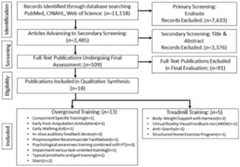
Study flow diagram.
The two most represented journals wereProsthetics and OrthoticsInternational (six publications) and theJournal of Prosthetics andOrthotics (three publications). All other journals had a single publication,and the group included a dissertation.
In terms of study design (22), the casestudy was most represented (n = 5). There were 11 experimentalstudies and two expert opinion manuscripts (Table2). None of the included studies had an economic analytic component.
Table 2. Distribution of Included Studies by Study Design.
| Study Design | Number of Publications |
|---|---|
| Meta-Analysis (S1) | 0 |
| Systematic Review (S2) | 0 |
| Randomized Control Trial (E1) | 3 |
| Controlled Trial (E2) | 1 |
| Interrupted Time Series Trial (E3) | 3 |
| Single Subject Trial (E4) | 0 |
| Controlled Before and After Trial (E5) | 4 |
| Cohort Study (O1) | 0 |
| Case-Control Study (O2) | 0 |
| Cross Sectional Study (O3) | 0 |
| Qualitative Study (O4) | 0 |
| Case Series (O5) | 0 |
| Case Study (O6) | 5 |
| Group Consensus (X1) | 0 |
| Expert Opinion (X2) | 2 |
| Total | 18 |
Funding
Eight of the 18 included studies (40%) were unfunded. Local governmentsupported four (20%) of the studies. Industry and the U.S. National Institutes ofHealth each funded 10% of this research. The remaining studies were sponsored by auniversity, a hospital system, a non-profit organization, or the U.S. Department ofDefense. Bias risk from a research funding perspective was considered low given that only10% of the research was funded by industry, with the majority being eitherunfunded or government sponsored.
Study Demographics, Interventions, and Outcome Measures
Conclusions from this systematic review are drawn from 229 subjects (Table 3). Some subjects represent single projects inmultiple manuscripts (11,27,28). A total of 145persons with lower limb amputation served as experimental subjects. Their mean(interquartile range (IQR), range) age, height, and mass were: 48.2 years (29.5, 31 to85), 1.7 m (0.04, 1.7 to 1.8), and 80.6 kg (10.3, 67.4 to 99.3). There were 66 amputeeswho served as control subjects. Their mean (IQR, range) age, height, and body mass were:48.7 years (27.8, 28 to 66), 1.7 m (0.03, 1.7 to 1.76), and 73.2 kg (5.4, 68 to 82).Eighteen lower limb amputee subjects served as their own controls in cross-over designstudies. Finally, an additional 18 non-amputees served as controls with a mean age of 35.8years, height of 1.7 m, and mass of 72.5 kg. The etiology for amputation was comparablebetween traumatic and dysvascular cases and included some malignancy cases. In terms oflevel of amputation, 57% of the sample had TFA level amputation, 21% hadTTA, 21% were mixed lower extremity samples, and 1% were bilaterallyinvolved. Time since amputation was 5.9 years (9.2, 0.3 to 25.5). The median (mean, IQR,range) sample size wasn = 9 (14, 20, 1 to 50).
Table 3. Extracted Study Data.
| Author (Yr) | N | Treatment (Independent Variables) | Treatment Duration | Conclusions |
|---|---|---|---|---|
| Agrawal et al.(2013) | 10 | SACH, SAFE, Talux, Proprio; Foot type specifictraining | 1-4 h × 10-14 d accommodation period/foot | SEW improved in K2 amputees trained to use K3prosthetic feet. |
| Barnett et al.(2009) | 15 | Pneumatic Post-Amputation Aid; Amputee MobilityAide | Individual need; Rehab duration 78.1 ± 25.3(40–126) d | Gait adaptation occurred w/ functional prosthesis.Unclear benefit at d/c after using either EWA. |
| Black et al.(2006)‡ | 1 | 50-60% BWSTT at 1.0-1.6m ph | 2×/wk × 8 sessions × 4.5wks | Partial BWSTT improved speed & gaitpattern. |
| Darter et al.(2013)‡ | 8 | 30 min home-based TM training | 3×/wk × 8 wks | Home TM training improved TFA gait. Consider use afterinitial rehab. |
| Darter et al.(2011)‡ | 1 | Visual feedback via CAREN VR system & verbal PTfeedback | 12 × 30 min sessions × 3 wks | 12 sessions w/ real-time feedback improved TFA gait.Clinically important changes in biomechanics & VO2. |
| Isakov et al. (2006) | 42 | In-shoe BW measurement w/ audio feedback; PT feedbackfor FWB | 4 × 30 m in sessions × 14 d | Pts improved WB thru PL w/ auditory feedbackdevice. |
| Lamberg et al.(2014)*‡ | 8 | BWSTT (30% BWS), gradually ↓ by5% intervals; TM w/out support | 12 × 30 min sessions; 3×/wk | TM training maximizing walk time improved functionyears post-amputation regardless of training mode. |
| Mikami et al. (2014)‡ | 1 | Anti-gravity TM training | 20-40 min; 3×/wk × 2 wks | Anti-gravity TM useful for TTA rehab. |
| Sjodahl et al.(2001) | 9 | Psychological awareness training &PT | 1×/wk × 10 mos (range7-14) | Combined psychological & PT improved TFAgait. |
| Sjodahl et al.(2002) | 27 | Training improved gait speed, pattern, symmetry. Intactknee flex/loading differed from reference side. | ||
| Sjodahl et al.(2003) | 27 | Pts w/ >2 y prosthetic use improved gait(emphasized prox. muscle strength & stability; balance & coord. | ||
| Yang et al.(2012) | 3 | In-shoe audio feedback device | 6 × 30 min sessions × 3 wks | LEAFS improved trunk sway & gait symmetry. |
| Cole et al.(2003) | 1 | Typical gait training pgm w/verbal tactile cues,varying surfaces | 12 sessions | Gait training improves functional independence& community integration. |
| Faucher et al.(2005) | 1 | WB & amb on post-op day 1 | 10d | Trauma teams should remain aware of this option. |
| Highsmith et al.(2012) | 19 | Reciprocal stair descent training for stance yieldingknees | NR | Training may improve stumble recovery, STS &loading response. |
| Hyland et al.(2009)* | 22 | Grps: Impairment vs. Task Oriented | 10d | Both strategies equally improve TTA mobility. Functionimproved in 10 d protocol. |
| Yigiter et al.(2002) | 50 | PNF; Traditional training | 30 min/d ×10 sessions | PNF improved LEA balance, weight acceptance &gait. |
| Highsmith et al.(2014) | 20 | Genium knee stair ascent/ramp training | NR | Ramp/stair training may improve overall function& safety. |
High overall quality score. All other studies were Moderate quality.
Denotes a treadmill training study.
All other studies used overground gait training. BWSTT: body weight supported treadmilltraining. BWS: body weight support. BW: body weight. NR: not reported. EWA: early walkaid. FWB: full weight bearing. LEA: lower extremity amputee. MPH: miles/hour. TM:treadmill. CAREN: computer assisted rehabilitation environment. WB: weight bearing. PT:physical therapy. Amb: ambulation. LEAFs: lower extremity feedback system. Grp: group.PNF: proprioceptive neuromuscular facilitation. SEW: symmetry of external work. SSWS:self-selected walking speed. STS: sit to stand. TTA: transtibial amputee.
Outcome measures assessed included symmetry of external work, spatiotemporalmeasures, biomechanical and bioenergetic outcomes, level of assist with functional tasks(i.e., sit to stand, stair climbing ability), walking test performance, ambulatory weightbearing, clinical performance measures (i.e., timed up and go test), perceptive measures(i.e., Activities-specific Balance Confidence Scale, general self-efficacy scale), andperformance against patient goals. Due to the varied levels of amputation, methods of datacollection, training, and other factors, aggregation of data and meta-analysis were notpossible.
Internal and External Validity
Threats to internal validity included lack of intervention blinding,inadequate reporting of eligibility criteria, and failure to include statisticalanalyses (i.e., expert opinions, editorials) (Table4). Ten studies had low, six had moderate, and two had high internal validity.Conversely, sixteen studies had high and two had moderate external validity according tothe AAOP rating tool (Table 5).
Table 4. Internal Validity Assessment of Included Manuscripts.
| Year | Author | Study Classification | Control group used | Randomization | Groups comparable at baseline | Similar group treatment | Comparison Group appropriate | Interventions blinded | Inclusion criteria appropriate | Exclusion criteria appropriate | Addresses fatigue & learning | Accommodation & washout | Attrition explained &<20% | Attrition equal | Outcome measures reliable | Proper statistical analysis | Effect size reported | Statistical significance | Statistical power adequate | Free from conflicts of interest | Total # threats | Overall assessment |
|---|---|---|---|---|---|---|---|---|---|---|---|---|---|---|---|---|---|---|---|---|---|---|
| 2001 | Sjodahl et al. | E5 | • | • | • | • | • | • | 8 | Low | ||||||||||||
| 2002 | Sjodahl et al. | E5 | • | • | • | • | • | • | • | • | • | 5 | Mod | |||||||||
| 2002 | Yigiter et al. | E1 | • | • | • | • | • | • | • | • | • | • | • | • | • | 4 | Mod | |||||
| 2003 | Sjodahl et al. | E5 | • | • | • | • | • | • | • | • | • | • | 4 | Mod | ||||||||
| 2003 | Cole et al. | O6 | • | • | • | • | • | 7 | Low | |||||||||||||
| 2005 | Faucher et al. | O6 | • | • | • | • | • | 7 | Low | |||||||||||||
| 2006 | Black et al. | O6 | • | • | • | • | 9 | Low | ||||||||||||||
| 2006 | Isakov et al. | E1 | • | • | • | • | • | • | • | 1 | Low | |||||||||||
| 2009 | Barnett et al. | E3 | • | • | • | • | • | • | • | • | • | • | • | 5 | Mod | |||||||
| 2009 | Hyland et al. | E1 | • | • | • | • | • | • | • | • | • | • | • | • | • | • | • | 2 | High | |||
| 2011 | Darter et al. | O6 | • | • | • | • | • | • | 7 | Low | ||||||||||||
| 2012 | Yang et al. | E5 | • | • | • | 11 | Low | |||||||||||||||
| 2012 | Highsmith et al. | X2 | • | • | 11 | Low | ||||||||||||||||
| 2013 | Agrawal et al. | E3 | • | • | • | • | • | • | • | • | • | • | • | 3 | Mod | |||||||
| 2013 | Darter et al. | E3 | • | • | • | • | • | • | • | • | • | • | 4 | Mod | ||||||||
| 2014 | Lamberg et al. | E2 | • | • | • | • | • | • | • | • | • | • | • | • | • | • | • | 2 | High | |||
| 2014 | Mikami et al. | O6 | • | • | • | 6 | Low | |||||||||||||||
| 2014 | Highsmith et al. | X2 | • | • | • | 1 | Low |
Boxes that are blacked out are not applicable for the specific study design and thus donot count as threats to validity. A dot in the box indicates the criteria was identifiedby reviewers whereas a blank box represents a criteria not identified
Table 5. External Validity Assessment of Included Manuscripts.
| Year | Author | Study Classification | Sample adequately described | Sample representative | Outcomes adequately described | Outcomes valid for the study | Intervention adequately described | Findings clinically significant | Conclusion placed in literary context | Findings support conclusions | Number of Threats |
|---|---|---|---|---|---|---|---|---|---|---|---|
| 2001 | Sjodahl et al. | E5 | • | • | • | • | • | • | • | 2 | |
| 2002 | Sjodahl et al. | E5 | • | • | • | • | • | • | • | • | 0 |
| 2002 | Yigiter et al. | E1 | • | • | • | • | • | • | • | • | 0 |
| 2003 | Sjodahl et al. | E5 | • | • | • | • | • | • | • | • | 0 |
| 2003 | Cole et al. | O6 | • | • | • | • | • | 3 | |||
| 2005 | Faucher et al. | O6 | • | • | • | • | • | • | 2 | ||
| 2006 | Black et al. | O6 | • | • | • | • | • | • | 2 | ||
| 2006 | Isakov et al. | E1 | • | • | • | • | • | • | • | 1 | |
| 2009 | Barnett et al. | E3 | • | • | • | • | • | • | 2 | ||
| 2009 | Hyland et al. | E1 | • | • | • | • | • | • | • | • | 0 |
| 2011 | Darter et al. | O6 | • | • | • | • | • | • | 2 | ||
| 2012 | Yang et al. | E5 | • | • | • | • | • | • | 2 | ||
| 2012 | Highsmith et al. | X2 | • | • | • | • | 4* | ||||
| 2013 | Agrawal et al. | E3 | • | • | • | • | • | • | • | • | 0 |
| 2013 | Darter et al. | E3 | • | • | • | • | • | • | • | • | 0 |
| 2014 | Lamberg et al. | E2 | • | • | • | • | • | • | • | • | 0 |
| 2014 | Mikami et al. | O6 | • | • | • | • | • | • | • | 1 | |
| 2014 | Highsmith et al. | X2 | • | • | • | • | 4* |
All manuscripts had high external validity except those noted with (*) whichhad moderate external validity. The three manuscripts by Sjodahl et al. represent asingle project and are thus counted as a single “manuscript” for thepurposes of this review and analysis. A dot in the box indicates the criteria wasidentified by reviewers whereas a blank box represents a criteria not identified.
Evidence Statements
Eight EESs were synthesized from the results within the two topical areaspreviously identified (Table 6). One of thestatements was supported by a single study, resulting in an insufficient level ofconfidence. Four statements had two to four studies supporting their synthesis,resulting in low confidence. One statement was supported by four studies, yieldingmoderate confidence, and two statements were supported by sufficient evidence to providehigh confidence. Four statements address overground gait training exclusively, onestatement addresses treadmill gait training exclusively, and three statements addressboth overground and treadmill gait training.
Table 6. Evidence Statements, Levels of Evidence and Overall Confidence.
| Evidence Statement | Level of Evidence | Overall Confidence | |
|---|---|---|---|
| 1.† | Integration of psychological awareness training with atypical gait training program is effective at improving frontal and sagittal planejoint kinematics in unilateral transfemoral amputees. | Moderate (×2*)11,28 | Low |
| 2.† | Integration of an in-shoe, auditory feedback device into atypical gait training program is effective at improving involved-side loading in lowerlimb amputees. | Low (×2)6,26 | Low |
| 3.†‡ | Therapeutic overground or treadmill based gait trainingunder skilled supervision is effective to improve spatiotemporal gait parameters intransfemoral and transtibial amputees. | Low (×5), Moderate (×3), High(×2)6,11,12,26,27,31-35 | High |
| 4.‡ | Following lower extremity amputation, bioenergeticefficiency of gait may be improved with treadmill based gait training augmented eitherby reduced loading, real-time visual feedback, or a structured home-basedprogram. | Low (×2), Moderate (×1)12,33,36 | Low |
| 5.†‡ | Lower limb amputee gait training protocols includingtypical gait and prosthetic training procedures with verbal and tactile cues,ambulation on post-op day 1, and treadmill training with body weight unloading areeffective to increase ambulatory distance with reduced assistance. | Low (×4)29,30,34,36 | Low |
| 6.† | Gait training utilizing verbal and manual cues to practicegait components prior to whole task initiation is an effective strategy to improveoverground ambulation and stair negotiation in lower limb amputees. | Low (×3), High (×1)16,17,29,31 | Moderate |
| 7.† | Combining prosthetic component specific gait training withappropriate prosthetic foot prescription can promote higher external work symmetry inlimited and unlimited community ambulating unilateral transtibial amputees. | Moderate (×1)37 | Insufficient |
| 8.†‡ | Therapeutic gait training programs under skilledsupervision, that maximize time spent performing ambulatory activities beyond currentfunctional daily walking, are safe and effective at improving walking function inlower limb amputees. | Low (×10), Moderate (×6), High(×2)6,11,12,16,17,19,26-37 | High |
Denotes overground gait training.
Denotes treadmill gait training.
Same study.
Discussion
The purpose of this study was to systematically review the literature to determinethe current strength of evidence regarding different gait training methods for lower limbamputees and to formulate evidence statements to guide current practice and future researchrelated to gait training for persons with lower limb amputation. This search revealedlimited literature on the subject, which is consistent with a recently published systematicreview that identified eight studies investigating the effectiveness of exercise programs toimprove gait performance in lower limb amputees (37).The difference in the number of studies may be due to the other review (37) limiting included articles to one-group cohort, pre- topost-test studies, two-group case-control trials, and control trials, whereas this reviewincluded all publications, including expert opinions. Though publications are limited, ourliterature review supported our hypothesis that multiple gait training modalities areeffective to improve overall gait quality in lower limb amputees. Generally, gait trainingwas described in two major categories: traditional overground and treadmill-based training.Beyond this, the evidence supports general themes with regard to benefits of therapeuticgait training.
Funding, Subjects, and Outcomes
A high number of these studies were unfunded. This is not surprising, as it isless common for commercial parties to have an interest in sponsoring the development orstudy of new gait therapies. This is likely because gait training therapies commonlyrepresent services rather than products. Therefore, packaging gait training services for aprofit is difficult. The highest amount of funding in this review was from localgovernment, which may likely be connected to academia by way of investigators'academic affiliations. This is especially surprising given that federal sponsors, such asthe U.S. National Institutes of Health, have a mission to apply knowledge to enhancehealth, lengthen life, and reduce disability. This body of work demonstrates that gaittraining reduces disability. Clearly, more federal funding is needed to further enhancethis body of gait training research in lower limb amputees.
Subjects in the included studies tended to be community ambulators ofapproximately 48 years of age who had lost their limbs to either trauma or vasculardisease. Additionally, the cohort had a higher presence of transfemoral limb loss thanother levels. These characteristics are a bit different than commonly cited epidemiologicstudies, which describe most U.S. amputees as considerably older than 40 years and havinglost their limbs to vascular disease, most likely at the transtibial level (1,38). These differencesare not surprising given that transfemoral amputees may have greater impairment than moredistal levels of amputation thus justifying heightened interest in gait training. Further,given that most subjects were community ambulators, it is feasible that the age andetiology would shift lower and toward trauma, respectively.
In terms of outcome measures, spatiotemporal, biomechanical, and bioenergeticmeasures are common and logical assessments to determine objectively if gait is improvingfollowing therapy. Problematically, these tend to be more research laboratory tools andless clinically oriented. Therefore, inclusion of observational gait scales and perceptiveand functional measures may facilitate improved translation into the clinical setting.
Overground Gait Training
Of the articles included in this review, 13 included some form of overgroundgait training. Multiple therapeutic gait interventions, including in-shoe auditoryfeedback (6,26), verbal and tactile cues (16,17,25,29,31), PNF(19), component specific training (16,17,25), early weight-bearing (30), early walking aids (32), part or whole task training (31),and combined PT and psychological awareness training (11,27,28), were identified in our literature review.
Sufficient evidence provided moderate confidence that gait training focused onpracticing components of gait, while utilizing verbal and manual cues, prior to initiatingthe task as a whole was an effective strategy to improve overground ambulation and stairnegotiation. Superiority of part task versus whole task training has long been debated(39-41).Here, it seems there is merit in both approaches. For instance, Highsmith et al. advocatedone scenario where breaking down the subparts of a complex skill (i.e., stair ascent)enabled whole task mastery (17). Conversely, addingtreadmill training as part of a home exercise plan incorporates whole task training thathas also proved effective (33). This evidencestatement is based on one randomized control trial (31), one case study (29), and two expertopinions (16,17).
Treadmill-Based Gait Training
Improved bioenergetic efficiency was the most prevalent finding fortreadmill-based gait training that differed from traditional overground gait training(12,33,36). Lower limb amputees demonstrate aless efficient gait pattern as observed by higher O2 cost, which becomes morepronounced with higher level of amputation or bilateral involvement (42). This can lead to other gait implications, such as reducedself-selected walking speed, reliance on an assistive device, or gait deviations, as theamputee attempts to reduce energy expenditure while ambulating, therefore emphasizing theimportance of improving bioenergetic efficiency for this population. Our findings supporta low level of evidence that demonstrates improved bioenergetic efficiency was observedfollowing a supervised treadmill training program that included a structured home exerciseprogram, anti-gravity training system, or a virtual reality system that provides real-timevisual feedback. Two out of the three articles to support this statement were case studies(12,36),making current evidence to support this statement low. Also, the finding that treadmilltraining is the superior gait training modality to improve bioenergetic efficiency ismisleading, as none of the studies that included traditional overground gait trainingmethods measured energy consumption or expenditure as a primary outcome measure. This ismost likely explained by the convenience of measuring O2 consumption and gasexchange while participants are relatively fixed on a treadmill versus collecting thisdata while they ambulate over ground. Even so, it is unable to be determined at this timeif improved bioenergetics can also be achieved with overground training methods or if thisfinding is limited to treadmill training. Therefore, future research is recommended.
Lamberg et al. compared the effects of body-weight support treadmill trainingversus treadmill training without body-weight support (35). They found that treadmill training with and without body-weight support iseffective to improve six-minute walk test distance and timed up and go test time; increasetreadmill speed; and improve spatiotemporal parameters for lower limb amputees with nosignificant differences found between groups. This study reflects similar findings inpatients post-stroke as published in a recent Cochrane review, which concluded thattreadmill training with or without body weight support is effective to improve walkingspeed and endurance (43). These findings have alsobeen demonstrated in patients with Parkinson's disease (44), traumatic brain injury (45), and in some patients following orthopedic surgery (46). All of these studies demonstrated carryover to overgroundtraining. Beyond providing activity repetitions, the effectiveness of treadmill trainingmay be partially attributed to the patients' ability to practice walking in a safeenvironment, especially when utilizing a harness system with or without body-weightsupport to minimize risk for falls, which improves the patients' confidence whenattempting to ambulate at increased speeds.
General Statements
Due to the high variability of gait training methods identified in theliterature, a clear pattern of the most beneficial method of gait training was not able tobe identified. Conversely, the literature revealed a high level of evidence to supportthat any of the therapeutic gait training programs administered under skilled supervisionthat increases time spent performing ambulatory activities beyond the patient'scurrent functional daily ambulation was effective at improving walking function in lowerlimb amputees (6,11,12,16,17,19,25-36). Most studies assessed spatiotemporal, joint kinematics, bioenergeticefficiency, outcome measures, level of assistance, or a combination of these todemonstrate improvements in gait. Subsequently, evidence statements were able to beformed. It is also important to note that adverse or safety issues were not reported inconnection with the gait training methods studied.
Spatiotemporal Gait Parameters
Current literature supports a high level of evidence that therapeutic gaittraining methods, including early ambulation with a walking aid (32); in-shoe auditory feedback devices (6,26); psychologicalawareness training (11); or treadmill training withor without body-weight support (34,35), or as a part of a structured home exercise plan, areeffective to reduce spatiotemporal gait deviations. Lower limb amputees demonstrateimpaired spatiotemporal gait parameters, including decreased prosthetic limb stance phaseduration, decreased intact limb step length, decreased cadence, and decreasedself-selected walking speed compared to a healthy population (7,47). Changes inspatiotemporal gait parameters can lead to reduced energy efficiency (42) and increased joint stress of intact limb and trunk. Ephraimet al. reported that approximately 63% and 49% of amputees experiencedback pain or pain of their intact limb, respectively (48). Also, reduced self-selected walking can make participation in functionaland recreational activities difficult and lead to reduced safety when ambulating in thecommunity, such as being able to cross the street in an appropriate amount of time (37). This reinforces the importance of reducingspatiotemporal gait impairments to improve functional mobility, increase safety, andincrease amputees' ability to participate in their typical functional andrecreational activities.
Joint Kinematics and Loading
Two studies were identified, resulting in low level confidence to supportimproved frontal and sagittal plane joint kinematics when psychological awareness trainingwas integrated into a typical gait training program (11,28). Two additional studies supporteduse of an auditory feedback device to improve involved side loading (6,26). In patients withlower limb amputation, joint loading in gait and in functional activities is known to bealtered and possibly connected with long term secondary consequences (13,49). Therefore, gaittraining interventions to mitigate these sequelae are needed.
Limitations
Aggregation of data and meta-analyses were not possible due to the highvariability in interventions administered and studied, levels of amputation, etiologies,and selection of outcome measures. Numerous text resources provide gait trainingintervention concepts; however, they are not peer-reviewed and therefore were not includedin this review.
Conclusion
Due to the gait asymmetries, altered biomechanics, and related secondaryconsequences associated with lower extremity amputation, gait training interventions areneeded. Eight evidence statements were synthesized over two general areas of gait trainingtherapy: overground and treadmill training. Overground training with verbal or otherauditory, manual, and psychological awareness interventions was found to be effective atimproving gait. Similarly, treadmill-based training was found to be effective: 1) as asupplement to overground training; 2) independently when augmented with visual feedbackand/or body weight support; or 3) as one part of a home exercise plan. Gait trainingapproaches studied improved multiple areas of gait, including sagittal and coronalbiomechanics, spatiotemporal measures, and distance walked. No adverse or safety events werereported in connection with the studied interventions.
Acknowledgments
Contents of this manuscript represent the opinions of the authors and not necessarily thoseof the U.S. Department of Defense, U.S. Department of the Army, U.S. Department of VeteransAffairs, or any academic or health care institution. Authors declare no conflicts ofinterest. This project was partially funded by the National Institutes of Health Scholars inPatient Oriented Research (SPOR) grant (1K30RR22270).
References
- 1.Zeigler-Graham K, Mackenzie EJ, Ephraim PL, Travison TG, Brookmeyer R. Estimating the prevalence of limb loss in the United States: 2005 to2050. Arch Phys Med Rehabil. 2008;89:422–9. doi: 10.1016/j.apmr.2007.11.005. [DOI] [PubMed] [Google Scholar]
- 2.Dillingham TR, Pezzin LE, Mackenzie EJ. Limb amputation and limb deficiency: epidemiology and recent trends in theUnited States. South Med J. 2002;95:875–83. doi: 10.1097/00007611-200208000-00018. [DOI] [PubMed] [Google Scholar]
- 3.Varma P, Stineman MG, Dillingham TR. Epidemiology of limb loss. Phys Med Rehabil Clin N Am. 2014;25:1–8. doi: 10.1016/j.pmr.2013.09.001. [DOI] [PMC free article] [PubMed] [Google Scholar]
- 4.Feinglass J, Brown JL, LoSasso A. Rates of lower-extremity amputation and arterial reconstruction in theUnited States, 1979 to 1996. Am J Public Health. 1999;89:1222–7. doi: 10.2105/ajph.89.8.1222. [DOI] [PMC free article] [PubMed] [Google Scholar]
- 5.Sauter CN, Pezzin LE, Dillingham TR. Functional outcomes of persons who underwent dysvascular lower extremityamputations. Am J Phys Med Rehabil. 2013;92:287–96. doi: 10.1097/PHM.0b013e31827d620d. [DOI] [PMC free article] [PubMed] [Google Scholar]
- 6.Yang L, Dyer PS, Carson RJ, Webster JB, Bo Foreman K, Bamberg SJM. Utilization of a lower extremity ambulatory feedback system to reduce gaitasymmetry in transtibial amputation gait. Gait Posture. 2012;36:631–4. doi: 10.1016/j.gaitpost.2012.04.004. [DOI] [PubMed] [Google Scholar]
- 7.Highsmith MJ, Schulz BW, Hart-Hughes S, Latlief GA, Phillips SL. Differences in the spatiotemporal parameters of transtibial andtransfemoral amputee gait. J Prosthet Orthot. 2010;22:26–30. [Google Scholar]
- 8.Highsmith MJ, Kahle JT, Bongiorni DR, Sutton BS, Groer S, Kaufman KR. Safety, energy efficiency, and cost efficacy of the C-Leg for transfemoralamputees: a review of the literature. Prosthet Orthot Int. 2010;34:362–77. doi: 10.3109/03093646.2010.520054. [DOI] [PubMed] [Google Scholar]
- 9.Lura DJ, Wernke MM, Carey SL, Kahle JT, Miro RM, Highsmith MJ. Differences in knee flexion between the Genium and C-Leg microprocessorknees while walking on level ground and ramps. Clin Biomech (Bristol, Avon) 2015;30:175–81. doi: 10.1016/j.clinbiomech.2014.12.003. [DOI] [PubMed] [Google Scholar]
- 10.Highsmith MJ, Kahle JT, Lura DJ, Dubey RV, Carey SL, Quillen WS, Mengelkoch LJ. Short and mid-distance walking and posturography with a novelmicroprocessor knee. Technol Innov. 2014;15:359–68. [Google Scholar]
- 11.Sjodahl C, Jarnlo GB, Soderberg B, Persson BM. Kinematic and kinetic gait analysis in the sagittal plane of transfemoralamputees before and after special gait re-education. Prosthet Orthot Int. 2002;26:101–12. doi: 10.1080/03093640208726632. [DOI] [PubMed] [Google Scholar]
- 12.Darter BJ, Wilken JM. Gait training with virtual reality-based real-time feedback: improving gaitperformance following transfemoral amputation. Phys Ther. 2011;91:1385–94. doi: 10.2522/ptj.20100360. [DOI] [PubMed] [Google Scholar]
- 13.Gailey R, Allen K, Castles J, Kucharik J, Roeder M. Review of secondary physical conditions associated with lower-limbamputation and long-term prosthesis use. J Rehabil Res Dev. 2008;45:15–29. doi: 10.1682/jrrd.2006.11.0147. [DOI] [PubMed] [Google Scholar]
- 14.Mengelkoch LJ, Kahle JT, Highsmith MJ. Energy costs & performance of transtibial amputees &non-amputees during walking & running. Int J Sports Med. 2014;35:1223–8. doi: 10.1055/s-0034-1382056. [DOI] [PubMed] [Google Scholar]
- 15.Kahle JT, Highsmith MJ. Transfemoral interfaces with vacuum assisted suspension comparison of gait,balance, and subjective analysis: ischial containment versus brimless. Gait Posture. 2014;40:315–20. doi: 10.1016/j.gaitpost.2014.04.206. [DOI] [PubMed] [Google Scholar]
- 16.Highsmith MJ, Kahle JT, Lewandowski AL, Kim SH, Mengelkoch LJ. A method for training step-over-step stair descent gait with stanceyielding prosthetic knees. J Prosthet Orthot. 2012;24:10–5. [Google Scholar]
- 17.Highsmith MJ, Kahle JT, Lura DJ, Lewandowski AL, Quillen WS, Kim SH. Stair ascent and ramp gait training with the Genium knee. Technol Innov. 2014;15:349–58. [Google Scholar]
- 18.Bellmann M, Schmalz T, Ludwigs E, Blumentritt S. Stair ascent with an innovative microprocessor-controlled exoprostheticknee joint. Biomed Tech. 2012;57:435–44. doi: 10.1515/bmt-2011-0029. [DOI] [PubMed] [Google Scholar]
- 19.Yiğiter K, Sener G, Erbahçeci F, Bayar K, Ulger OG, Akdoğan S. A comparison of traditional prosthetic training versus proprioceptiveneuromuscular facilitation resistive gait training with trans-femoralamputees. Prosthet Orthot Int. 2002;31:258–70. doi: 10.1080/03093640208726650. [DOI] [PubMed] [Google Scholar]
- 20.Liberati A, Altman DG, Tetzlaff J, Mulrow C, Gøtzsche PC, Ioannidis JPA, Clarke M, Devereaux PJ, Kleijnen J, Moher D. The PRISMA statement for reporting systematic reviews and meta-analyses ofstudies that evaluate healthcare interventions: explanation andelaboration. BMJ. 2009;339:b2700. doi: 10.1136/bmj.b2700. [DOI] [PMC free article] [PubMed] [Google Scholar]
- 21.Moher D, Liberati A, Tetzlaff J, Altman DG. Preferred reporting items for systematic reviews and meta-analyses: thePRISMA statement. BMJ. 2009;339:b2535. doi: 10.1136/bmj.b2535. [DOI] [PMC free article] [PubMed] [Google Scholar]
- 22.Hafner B. State of the Science Evidence Report Guidelines. Washington (DC): American Academy of Orthotists & Prosthetists; 2008. [Google Scholar]
- 23.Carey SL, Lura DJ, Highsmith MJ. Differences in myoelectric and body-powered upper-limb prostheses:systematic literature review. J Rehabil Res Dev. 2015;52:247–62. doi: 10.1682/JRRD.2014.08.0192. [DOI] [PubMed] [Google Scholar]
- 24.Neyeloff JL, Fuchs SC, Moreira LB. Meta-analyses and Forest plots using a microsoft excel spreadsheet:step-by-step guide focusing on descriptive data analysis. BMC Res Notes. 2012;5:52. doi: 10.1186/1756-0500-5-52. [DOI] [PMC free article] [PubMed] [Google Scholar]
- 25.Agrawal V, Gailey R, O'Toole C, Gaunaurd I, Finnieston A. Influence of gait training and prosthetic foot category on external worksymmetry during unilateral transtibial amputee gait. Prosthet Orthot Int. 2013;37(5):396–403. doi: 10.1177/0309364612473501. [DOI] [PubMed] [Google Scholar]
- 26.Isakov E. Gait rehabilitation: a new biofeed-back device for monitoring and enhancingweight-bearing over the affected lower limb. Eura Medicophys. 2007;43:21–6. [PubMed] [Google Scholar]
- 27.Sjodahl C, Jarnlo GB, Persson BM. Gait improvement in unilateral transfemoral amputees by a combinedpsychological and physiotherapeutic treatment. J Rehabil Med. 2001;33:114–8. doi: 10.1080/165019701750165934. [DOI] [PubMed] [Google Scholar]
- 28.Sjodahl C, Jarnlo GB, Soderberg B, Persson BM. Pelvic motion in trans-femoral amputees in the frontal and transverse planebefore and after special gait re-education. Prosthet Orthot Int. 2003;27:227–37. doi: 10.1080/03093640308726686. [DOI] [PubMed] [Google Scholar]
- 29.Cole ES. Training elders with transfemoral amputations. Top Geriatr Rehabil. 2003;19(3):183–190. [Google Scholar]
- 30.Faucher LD, Shurr DG. Ambulation on postoperative day 1 after bilateral transtibial amputations:a case report and literature review. J Prosthet Orthot. 2005;17:47–9. [Google Scholar]
- 31.Hyland NW. A comparative analysis of two gait training approaches for individuals withtrans-tibial amputation [dissertation] South Orange, (NJ): Seton Hall University; 2009. [Google Scholar]
- 32.Barnett C, Vanicek N, Polman RC, Hancock A, Brown B, Smith L, Chetter I. Kinematic gait adaptations in unilateral transtibial amputees duringrehabilitation. Prosthet Orthot Int. 2009;33:135–47. doi: 10.1080/03093640902751762. [DOI] [PubMed] [Google Scholar]
- 33.Darter BJ, Nielsen DH, Yack HJ, Janz KF. Home-based treadmill training to improve gait performance in persons with achronic transfemoral amputation. Arch Phys Med Rehabil. 2013;94:2440–7. doi: 10.1016/j.apmr.2013.08.001. [DOI] [PMC free article] [PubMed] [Google Scholar]
- 34.Black M, Seale J. Prosthetic gait training following bilateral transfemoral amputation usingbody weight supported treadmill training. A case report. J Neurol Phys Ther. 2006;30:215–6. [Google Scholar]
- 35.Lamberg EM, Muratori LM, Streb R, Werner M, Penna J. Harness-supported versus conventional treadmill training for people withlower-limb amputation: a preliminary report. J Prosthet Orthot. 2014;26:93–8. [Google Scholar]
- 36.Mikami Y, Fukuhara K, Kawae T, Kimura H, Ochi M. The effect of anti-gravity treadmill training for prosthetic rehabilitationof a case with below-knee amputation. Prosthet Orthot Int. 2015;39:502–6. doi: 10.1177/0309364614532866. [DOI] [PubMed] [Google Scholar]
- 37.Wong CK, Ehrlich JE, Ersing JC, Maroldi NJ, Stevenson CE, Varca MJ. Exercise programs to improve gait performance in people with lower limbamputation: a systematic review. Prosthet Orthot Int. 2016;40:8–17. doi: 10.1177/0309364614546926. [DOI] [PubMed] [Google Scholar]
- 38.Ephraim PL, Dillingham TR, Sector M, Pezzin LE, Mackenzie EJ. Epidemiology of limb loss and congenital limb deficiency: a review of theliterature. Arch Phys Med Rehabil. 2003;84:747–61. doi: 10.1016/s0003-9993(02)04932-8. [DOI] [PubMed] [Google Scholar]
- 39.Cunningham D. Task analysis and part versus whole learning methods. ETR & D. 1971;19:365–98. [Google Scholar]
- 40.Gopher D, Weil M, Siegel D. Practice under changing priorities: an approach to the training of complexskills. Acta Psychol (Amst) 1989;71:147–77. [Google Scholar]
- 41.Naylor JC, Briggs GE. Effects of task complexity and task organization on the relative efficiencyof part and whole training methods. J Exp Psychol. 1963;65:217–24. doi: 10.1037/h0041060. [DOI] [PubMed] [Google Scholar]
- 42.Waters RL, Mulroy S. The energy expenditure of normal and pathologic gait. Gait Posture. 1999;9:207–31. doi: 10.1016/s0966-6362(99)00009-0. [DOI] [PubMed] [Google Scholar]
- 43.Mehrholz J, Pohl M, Elsner B. Treadmill training and body weight support for walking afterstroke. Cochrane Database Syst Rev. 2014:CD002840. doi: 10.1002/14651858.CD002840.pub3. [DOI] [PMC free article] [PubMed] [Google Scholar]
- 44.Miyai I, Fujimoto Y, Yamamoto H, Ueda Y, Saito T, Nozaki S, Kang J. Long-term effect of body weight-supported treadmill training inParkinson's disease: a randomized controlled trial. Arch Phys Med Rehabil. 2002;83:1370–3. doi: 10.1053/apmr.2002.34603. [DOI] [PubMed] [Google Scholar]
- 45.Brown TH, Mount J, Rouland BL, Kautz KA, Barnes RM, Kim J. Body weight-supported treadmill training versus conventional gait trainingfor people with chronic traumatic brain injury. J Head Trauma Rehabil. 2005;20:402–15. doi: 10.1097/00001199-200509000-00002. [DOI] [PubMed] [Google Scholar]
- 46.Hesse S, Werner C, Seibel H, von Frankenberg S, Kappel EM, Kirker S, Käding M. Treadmill training with partial body-weight support after total hiparthroplasty: a randomized controlled trial. Arch Phys Med Rehabil. 2003;84:1767–73. doi: 10.1016/s0003-9993(03)00434-9. [DOI] [PubMed] [Google Scholar]
- 47.Skinner HB, Effeney DJ. Gait analysis in amputees. Am J Phys Med. 1985;64:82–9. [PubMed] [Google Scholar]
- 48.Ephraim PL, Wegener ST, MacKenzie EJ, Dillingham TR, Pezzin LE. Phantom pain, residual limb pain, and back pain in amputees: results of anational survey. Arch Phys Med Rehabil. 2005;86:1910–9. doi: 10.1016/j.apmr.2005.03.031. [DOI] [PubMed] [Google Scholar]
- 49.Highsmith MJ, Kahle JT, Carey SL, Lura DJ, Dubey RV, Csavina KR, Quillen WS. Kinetic asymmetry in transfemoral amputees while performing sit to standand stand to sit movements. Gait Posture. 2011;34:86–91. doi: 10.1016/j.gaitpost.2011.03.018. [DOI] [PubMed] [Google Scholar]