



PAINS in the Assay: ChemicalMechanisms of Assay Interference and Promiscuous Enzymatic InhibitionObserved during a Sulfhydryl-Scavenging HTS
Jayme L Dahlin
J Willem M Nissink
Jessica M Strasser
Subhashree Francis
LeeAnn Higgins
Hui Zhou
Zhiguo Zhang
Michael A Walters
Phone: 612-626-6864. E-mail:mwalters@umn.edu.
Received 2014 Dec 9; Issue date 2015 Mar 12.
This is an open access article published under an ACS AuthorChoiceLicense, which permits copying and redistribution of the article or any adaptations for non-commercial purposes.
Abstract
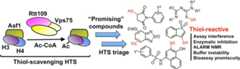
Significant resources in early drugdiscovery are spent unknowingly pursuing artifacts and promiscuousbioactive compounds, while understanding the chemical basis for theseadverse behaviors often goes unexplored in pursuit of lead compounds.Nearly all the hits from our recent sulfhydryl-scavenging high-throughputscreen (HTS) targeting the histone acetyltransferase Rtt109 were suchcompounds. Herein, we characterize the chemical basis for assay interferenceand promiscuous enzymatic inhibition for several prominent chemotypesidentified by this HTS, including some pan-assay interference compounds(PAINS). Protein mass spectrometry and ALARM NMR confirmed these compoundsreact covalently with cysteines on multiple proteins. Unfortunately,compounds containing these chemotypes have been published as screeningactives in reputable journals and even touted as chemical probes orpreclinical candidates. Our detailed characterization and identificationof such thiol-reactive chemotypes should accelerate triage of nuisancecompounds, guide screening library design, and prevent follow-up onundesirable chemical matter.
Introduction
The growing use of high-throughput screening(HTS) as a discovery tool in academic translational centers has resultedin the pursuit of assay artifacts, promiscuous bioactive compounds,and screening actives with major absorption, distribution, metabolism,excretion, and toxicological (ADMET) liabilities. A similar situationmay exist in industry, and this observation may simply be a reflectionof academic pressures to publish. In either case, the follow-up ofsuch compounds can significantly burden the post-HTS triage and hit-to-leadstages of the discovery process. Therefore, chasing assay artifactsand promiscuous screening compounds can waste both time and othervaluable resources, and failure to triage these compounds has ledto many artifacts and “frequent hitters” making theirway into the scientific literature, patent applications, and researchfunding applications.
As an example, pan-assay interferencecompounds (PAINS) can display apparent bioactivity and/or interferewith assay readouts across unrelated biological targets and testingmethods.1−3 Multiple sources for promiscuous behavior or assayinterference have been described, including: chemical aggregation,4 chelation,5 singletoxygen production,6 compound fluorescenceeffects,7,8 redox activity,9 sample impurities,10−15 membrane disruption,16 cysteine oxidation,17 and nonselective compound reactivity with proteins.18 Several well-designed experiments using fireflyluciferase have also shown compound–reporter interference asthe most likely source of biological assay readouts in a compoundthat has progressed to human clinical trials.19−25 An important point with these luciferase experiments is that confoundingreadouts are not isolated to cell-free assays. Cell-based assays withperturbations in cell proliferation may be particularly susceptibleto assay interference or off-target and confounding effects. Misleadingreadouts can have clinical relevance, as a recent study suggests thepharmacological activity of acamprosate (an FDA-approved drug forrelapse prevention in alcoholism) may be due to the calcium cationcomponent of its formulation rather than the long-presumed bioactiveingredient,N-acetylhomotaurinate.26
Despite the risks associated with pursuing thesetypes of undesirable compounds, their identities and the chemicalmechanisms by which they can mislead even seasoned researchers oftengo uncharacterized in the pursuit of identifying lead compounds. Unfortunately,this leaves open the possibility for other groups to fall into thesame scientific maelstrom that most often results in costly failure.In an effort to alert the uninitiated, we describe herein the structure–interferencerelationships (SIR) in five series of problematic compounds we encounteredin a recent HTS campaign.
Epigenetic enzymes, such as histonedeacetylases, methyltransferases, and histone acetyltransferases (HATs),are an important emerging class of therapeutic targets. Epigeneticchemical probes and enzymatic modulators are sought for a varietyof human diseases including cancers.27 Ourgroup and others have focused on a series of enzymes unique to fungi,Rtt109 HATs, that are critical for DNA replication-coupled nucleosomeassembly and genomic stability and therefore may represent a novelantifungal therapeutic approach.28−31 Several types of HTS technologieshave been adapted to screening epigenetic targets. Antibody-basedapproaches can probe for specific histone modifications such as methylationand acetylation.32 Another more indirectapproach probes for reaction byproducts via chemical probes or reporterenzymes. One chemical probe,N-[4-(7-diethylamino-4-methylcoumarin-3-yl)phenyl]maleimide(CPM), readily reacts with free thiols to form highly fluorescentadducts.33,34 Several CPM-based assays and screens havebeen reported for multiple biological targets, including some epigeneticenzymes.29,35−41
Recently, our group screened approximately 225K small moleculesfor their ability to inhibit Rtt109-catalyzed histone acetylationusing a cell-free CPM-based HTS.42 PAINSwere computationally filtered at the beginning of our triage and werenot initially evaluated in our post-HTS counter-screens. Post-HTStriage of approximately 1.5K primary screening hits demonstrated onlya few confirmed actives. In retrospect, this indicated a significantportion of the screening hits were either false positives or assayartifacts resulting from fluorescence quenching, compound–reagentinterference, and/or other mechanisms. On the basis of the chemicalstructures of the triaged compounds, we speculated many chemotypesfrom the primary HTS campaign were reacting with the CoA byproductto produce an interfering assay readout mimicking enzymatic inhibition.We also speculated many of these thiol-reactive compounds, includingseveral series of PAINS we had previously triaged, could also inhibitenzymatic activity by reacting with protein cysteines, a recognizedsource of promiscuous enzyme inhibition and metabolic liability. Weobserved chemotypes that were enriched among the actives that appearedchemically similar to many of the published PAINS substructures butwere not flagged by our cheminformatic PAINS filters.1,42
There is a growing interest in both assay interference andpromiscuous enzymatic inhibition, including nonspecific thiol reactivity.18,43,44 Therefore, identifying thiol-reactivechemotypes in compound screening libraries is important for enhancinglibrary design and post-HTS decision-making. Additionally, the characterizationof the chemical mechanisms of thiol reactivity may also be usefulfor reactivity prediction, compound optimization, and the avoidanceof follow-up on compounds that may have metabolic or selectivity liabilitiesfurther downstream in the drug discovery pipeline. The observationthat some PAINS-like compounds may escape cheminformatics filtersmay have significant consequences for screening centers without experiencedHTS triage personnel, especially if those performing HTS triage areoverly reliant on cheminformatics filters.45
Herein, we report the identification of multiple chemotypes(“chemical structural motifs”) that showed publication-qualityIC50 values in our primary assay but through a series oforthogonal assays and counter-screens showed thiol-reactive assayinterference and also promiscuous enzymatic inhibition. Using SIRand structure–activity relationships (SAR) from our Rtt109post-HTS triage, along with multiple analytical techniques, we provideevidence supporting several chemical mechanisms of assay interferencerelating to thiol reactivity. We show these chemotypes can form covalentadducts with other biologically relevant thiols such as glutathione(GSH) and cysteine residues on multiple structurally unrelated proteins.The chemical mechanisms we propose contributing to assay promiscuityinclude addition–elimination reactions, nucleophlic aromaticsubstitution, buffer instability, disulfide bond formation, and H2O2 production. Our findings may be more broadlyapplicable, as several compounds containing these chemotypes formedcovalent adducts with the La antigen (ALARM NMR), demonstrating potentiallybroad-spectrum thiol reactivity. Furthermore, compounds with thesechemotypes showed evidence of assay promiscuity in analyses of PubChemand the HTS database of a major pharmaceutical company. Despite thesered flags, several such compounds have been reported in the patentliterature and reputable scientific journals with varying claims oftarget specificity and utilities as either chemical probes or therapeuticleads. It is hoped that the identification and detailed characterizationof these thiol-reactive chemotypes can accelerate post-HTS triage,enhance lead identification, and prevent follow-up on unpromisingchemical matter by other researchers.
Results
Identificationof Artifact Chemotypes in a Fluorescence-Based HTS
We previouslyreported the use of a CPM-based method to screen approximately 225Kcompounds for their abilities to inhibit Rtt109-catalyzed histoneacetylation in vitro.42 In a HAT reaction,an acetyl group is enzymatically transferred from acetyl-CoA to theε-amino group of a histone lysine side chain, resulting in theproduction of an acetylated lysine and a CoA byproduct. The free thiolon CoA can then react with suitable substrates, such as maleimide-basedprobes like CPM, to form highly fluorescent adducts that can indirectlyassay HAT activity (Figure1A). In practice,we and others have found this method to be low-cost and relativelyrobust.46 We were also aware that thismethod is subject to assay interference by thiol-containing compounds.47 However, we soon learned that this assay ishighly susceptible to other mechanisms of reactive compound interferenceespecially when testing potentially heterogeneous chemical matterlike HTS libraries. In principle, compounds can interfere with theCPM fluorescence intensity by fluorescence quenching. Also, compoundswith nucleophilic or electrophilic reactivity can react with eitherthe CPM probe or the CoA reaction product, respectively.
Figure 1.

Susceptibilityof CPM-based HTS to screening compound-based interference. (A) Assayschematic for the CPM-based HTS used in this study. The assay measuresthe HAT activity of the Rtt109–Vps75 complex, which catalyzesthe transfer of an acetyl moiety from acetyl-CoA to specific lysineresidues on the Asf1–dH3–H4 substrate complex to produceacetylated histone residues and coenzyme A (CoA). Addition of thethiol-scavenging probe CPM leads to a highly fluorescent adduct byreacting with the CoA byproduct, which is used to quantify HAT activityvia fluorescence intensity measurement. (B) Representative assay interferencechemotypes identified during post-HTS triage.
Despite identifying 1.5K actives in the primary screen, apost-HTS triage consisting of computational filtering, experimentalcounter-screens, and orthogonal assays demonstrated only three compoundsthat could inhibit Rtt109-catalyzed histone acetylation. Therefore,significant portions of this collection of experimental and computationallyfiltered (“filtrand”) compounds were either false positivesor assay artifacts. In addition, many of the computationally filteredactives were flagged as PAINS, which we believed could inhibit HATactivity by nontherapeutically useful mechanisms. In all, severalprominent chemotypes were identified among the primary actives duringthe course of the post-HTS triage (Figure1B).
On the basis of their chemical structures, it appearedlikely that each chemotype could interfere with our HTS assay readoutthrough different and, perhaps, multiple thiol-trapping mechanisms.Many of these compounds were flagged as PAINS, but still many werenot verified as “bad actors” until relatively late inour triage process. To further confound matters, these electrophiliccompounds could conceivably inhibit enzymatic activity by nonspecificreactivity with the protein components in the assay, further scramblingthe assay readout. To better understand the chemical mechanism(s)behind this form of assay behavior and to assess whether this interferencecould have implications beyond our HTS, we examined five prominentsubclasses of compounds in more detail.
Orthogonal and Counter-ScreensIdentify Inhibitors among Interference Compounds
Severalclasses of compounds demonstrated low micromolar IC50 valuesin the CPM-based HTS method (Figure2). Compoundswith steep Hill slopes (e.g., >2) have been associated with cooperativityand anomalous binding behaviors, such as chemical aggregation.42,48,49 Most of the compounds showedslightly elevated Hill slopes, but this was not an immediate concern,as we had included a detergent (Triton X-100) in our assay buffersto mitigate micelle formation.
Figure 2.

Dose–responses of select screeningcompounds in the Rtt109 HTS and an assay interference counter-screen.Shown are representative examples from chemotypes1,2,3,4, and6, whichdisplayed promising low micromolar IC50 values by the primaryHTS assay (solid lines). A counter-screen that replaced the acetyl-CoAsubstrate with the CoA reaction product produced similar dose–responsecurves by the same assay readout (dashed lines). Data are mean ±SD for three replicates.
Reaction aliquots from the active compounds (1a,2a,3a,4a,6a, and6b) all showed decreases in histone acetylationat 125 μM when they were analyzed by an orthogonal slot blotassay that uses H3K56ac- and H3K27ac-specific antibodies to probefor the acetylated histone lysine product rather than the CoA byproduct(Tables1–5).We examined both histone modifications because the Rtt109–Vps75complex is capable of acetylating multiple histone H3 residues. Overall,reaction aliquots showed similar levels of histone acetylation, regardlessof whether H3K27ac or H3K56ac was examined, strongly suggesting thatany observed enzymatic inhibition was not specific to one particularhistone modification. This assay also detected decreases in histoneacetylation with garcinol, a natural product previously shown to inhibitRtt109 activity and other HATs in vitro at low micromolar compoundconcentrations.42,50 When the same assay was usedto examine reaction aliquots at lower compound concentrations (8 μM),we observed more discrepancies between the HTS and slot blot readouts(data not shown). Overall, these observations showed that representativesof these five compound classes could inhibit acetylation activityat high concentrations, but their HTS assay readouts were confoundedby assay interference near their apparent IC50 values.
Table 1. Benzothiophene 1,1-Dioxide Seriese.

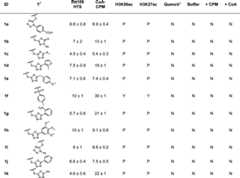
HTS refers to IC50 valuescalculated from the CPM-based Rtt109 HTS method, CoA-CPM refers toIC50 values calculated from the CoA-based HTS counter-screen.
HTS reaction aliquots fromcompounds tested at 125 μM final concentrations; Yes (“Y”),No (“N”), or Partial (“P”).
Compounds flagged as quenchers if greaterthan 20% assay signal reduction at 10 μM final concentrations.
Compounds flagged if fluorescenceintensity greater than 20% assay signal at 125 μM final concentrations;compounds tested in either HTS buffer (“Buffer”), HTSbuffer plus 20 μM CPM (“+ CPM”), or HTS bufferplus 7.5 μM CoA (“+ CoA”).
IC50 values shown are means ± SDfor three replicates.
Table 5.p-Hydroxyarylsulfonamide Seriese.

HTS refers to IC50 values calculatedfrom the CPM-based Rtt109 HTS method, CoA-CPM refers to IC50 values calculated from the CoA-based HTS counter-screen
HTS reaction aliquots from compoundstested at 125 μM final concentrations; Yes (“Y”),No (“N”) or Partial (“P”).
Compounds flagged as quenchers if greaterthan 20% assay signal reduction at 10 μM final concentrations.
Compounds flagged if fluorescenceintensity greater than 20% assay signal at 125 μM final concentrations;compounds tested in either HTS buffer (“Buffer”), HTSbuffer plus 20 μM CPM (“+ CPM”), or HTS bufferplus 7.5 μM CoA (“+ CoA”).
NA denotes IC50 value not availabledue to fluorescence interference.
IC50 values shown are means ± SD forthree replicates.
To further examine the mechanisms underlying this assay interference,we first established a fluorescence-quenching counter-screen to assessfor fluorescence interference. This assay accurately identified thefluorescence quencher BHQ-1, a positive control (Supporting Information, Figure S1). However, none of thesecompounds (1a,2a,3a,4a, and6b) showed evidence of fluorescence quenching,intrinsic fluorescence or the generation of fluorescent adducts witheither CoA or CPM in a set of assays mimicking our HTS procedures(Tables1–5).When the acetyl-CoA reactant was replaced by the CoA reaction byproduct,these compounds provided assay readouts that were strikingly similarto those obtained under the HTS assay conditions (Figure2). The degree of assay signal reduction was alsodependent on the levels of CoA present (data not shown). Similar assaybehavior was observed for a variety of chemical analogues bearingthese chemotypes (Tables1–5). Therefore, the body of evidence strongly implicateda thiol-trapping mechanism of assay interference. Next, we soughtto understand the chemical basis of this interference and potentialsources of enzymatic inhibition.
Further Characterizationof Compound–Thiol Adducts by UPLC-MS and LC-HRMS
Toprovide more direct evidence of the presumed compound–CoA adducts,we incubated the compounds with CoA under HTS-like conditions. Wealso tested for adducts with reducedl-glutathione (GSH),another important biological thiol, to assess if this presumed thiolreactivity was unique to CoA. UPLC–MS and LC–HRMS analysesshowed that the test compounds (1a,2a,3a and4a) form adducts with both CoA and GSH(Figure3 andSupportingInformation, Figure S2). We also observed the similar and expectedadducts by UPLC–MS for multiple other representative compoundsfrom each chemotype (data not shown). While thep-hydroxyarylsulfonamides6a–6e yieldedthe expected compound-GSH adducts (6a′–6e′; Figures4A,B), we alsoobserved that6a′–6e′were really intermediates that converted to a common adduct in situafter only 15 min under the HTS conditions (Figure4B,C).
Figure 3.

Compound–GSH adducts detected by qualitative UPLC–MS.(A) Selected interference compounds were incubated with MeOH (blacktraces), HTS buffer (blue traces), or HTS buffer plus GSH (red traces)and analyzed by UPLC–MS. Shown are overlays of the simultaneousELS and 254 nm traces. Selected mass spectra are also shown for aselect sample in MeOH (black spectrum) and selected adducts (red spectra).Numbers in parentheses represent the predominant ion molecular weight(“–” denotes negative ion mode). Data are representativeresults from one of at least two independent experiments. (B) Simplifiedschematics of the proposed reaction mechanisms to generate the observedadducts.
Figure 4.

Labile adducts betweenp-hydroxyarylsulfonamides(6) and GSH detected by qualitative UPLC–MS. (A)Simplified scheme of adduct formation between biological thiols andchemotype6. (B) UPLC–MS analyses of compound6a mixed with GSH in HTS buffer.6a was treatedwith GSH after varying lengths of incubation in HTS buffer (5, 15,30 min). After 5 min, reaction aliquots were analyzed by UPLC–MS.Trace (iv) shows the same sample from trace (i) analyzed 15 min later.(C). Summary of experiments described in (B) performed with compounds6a–6e. All test compounds initially formedthe expected adducts (6a′–6e′). A common breakdown product6″ wasdetected for all five sulfonamides tested (rt = 3.28 min,m/z = 446). SeeSupportingInformation, Figures S5, S7, and S11, for additional stabilitystudies with chemotype6. a = compound incubated in HTSbuffer for 5 min, then GSH added, then analyzed by UPLC-MS 5 min later;b = same sample from a, but analyzed by UPLC-MS 15 min later.
Together, this data is consistentwith a thiol-trapping mechanism as a major contributor to the CPM-basedassay signal reduction in the compound classes studied, as the testedcompounds reacted with both CoA and GSH. We note the generation ofcompound–GSH adducts is an important consideration for certaincell-based assays, or for in situ or in vivo assays, where xenobiotic–glutathioneconjugation is a major source of Phase II metabolism.
Proposed ChemicalMechanisms of Thiol Reactivity
The selected compounds interferewith the HTS assay readout and form thiol adducts by a variety ofchemical mechanisms (Figures3B and4A). On the basis of the UPLC–MS and chemicalprinciples, we propose the following chemical mechanisms of thiolreactivity for chemotypes1,2,3,4, and6 (Figure1):
Benzo[b]thiophene 1,1-dioxides1 (“benzothiophenes”) interfere via a straightforwardMichael addition–elimination reaction at the electrophilicC3-position through thiolate nucleophilic attack. The compounds withchemotype1 most likely to interfere and form thiol adductsin our experimental conditions were those withS-linkedheteroaromatic substituents (Table1). The UPLC–MS experiments using1a confirmed the presence of the adduct1a′ andthe leaving group1a″ (Figure3A). This proposed mechanism is also supported by the observationsthat several 2,3-dihydro analogues did not show appreciable levelsof apparent Rtt109 inhibition or interference in the CoA–CPMcounter-screen (Supporting Information, FigureS3). The level of assay interference is consistent with theleaving group ability of the C3 substituent, as compounds withN-,O-, orC-linked groupsat this C3-position did not show as significant levels of interferenceor apparent inhibition (Supporting Information,Figure S3). Most of the compounds with chemotype1 showed only partial decreases in histone acetylation at high compoundconcentrations (Table1), demonstrating thesecompounds can weakly inhibit Rtt109 activity in our HTS, most likelyby nonspecific thiol reactivity (Table1).
Thebenzothiadiazole/benzofurazan scaffold2 likely formsthiol adducts via nucleophilic aromatic substitution through a Meisenheimercomplex intermediate between the nucleophilic thiol and the stronglyelectrophilic heteroaromatic core. The benzofurazan core has beenpreviously associated with promiscuous thiol reactivity,18,43 while some related benzothiadiazoles have been reported as PAINS(e.g., substructures “diazox_B” and “diazox_sulfon_A”).1 Additionally, similar compounds have been shownto form covalent adducts with proteins.51 The related compound 4-chloro-7-nitrobenzofurazan (“NBD-Cl”)and its derivatives are widely used as probes for studying thiolsin biological systems.52 UPLC–MSanalysis of2a demonstrates that the parent compoundis stable to the HTS buffer but that the addition of a thiol sourceleads to near-complete conversion to the thiol adduct2a′ with the thiopurine serving as the leaving group (Figure3A). The compounds that showed the strongest apparentenzyme inhibition and interference contained electron-withdrawingsubstituents such as nitro groups and halogens, although there wasno apparent reactivity difference between benzothiadiazoles and benzofurazans.Another important feature for interference was the presence of anS-linked aryl substituent, which serves as the leaving groupeven when there are other electron-withdrawing groups present (Table2). Benzothiadiazoleswithout these features did not show significant levels of apparentenzyme inhibition or assay interference (SupportingInformation, Figure S4). While flagged as PAINS, many sulfoxide-substitutedanalogues tested in our system were inactive and noninterfering, anobservation we attribute to the absence of an additional strong electron-withdrawinggroup (e.g., nitro). Many compounds with chemotype2 werecapable of completely inhibiting Rtt109-catalyzed histone acetylationin our HTS (Table2).
Table 2. Benzothiadiazole/BenzofurazanSeriese.

HTS refers to IC50 values calculated fromthe CPM-based Rtt109 HTS method, CoA-CPM refers to IC50 values calculated from the CoA-based HTS counter-screen.
HTS reaction aliquots from compoundstested at 125 μM final concentrations; Yes (“Y”),No (“N”) or Partial (“P”).
Compounds flagged as quenchers if greaterthan 20% assay signal reduction at 10 μM final concentrations.
Compounds flagged if fluorescenceintensity greater than 20% assay signal at 125 μM final concentrations;compounds tested in either HTS buffer (“Buffer”), HTSbuffer plus 20 μM CPM (“+ CPM”). or HTS bufferplus 7.5 μM CoA (“+ CoA”).
IC50 values shown are means ± SDfor three replicates.
Whilethe core 1,2,4-thiadiazole heterocycle3 may appear benign,many such compounds can react quite readily with thiols53−57 but not other functional groups like alcohols or amines.58,59 Many properties of 1,2,4-thiadiazoles have been documented.60−62 The 1,2,4-thiadiazole core can be susceptible to ring-opening reactions,recyclization side products, and nonenzymatic reductions.63−67 Notably, this scaffold is similar to the “het_thio_N_5A”PAINS substructure, although it differs by resonance and substitutionat the N2-position, meaning this chemotype could bypass some PAINSfilters depending on its structural representation and certain chemoinformaticparameters.1
This speculation aside,the likely chemical mechanism of interference in our assay is sulfhydryl-scavengingby the 1,2,4-thiadiazole core at the S1-position, specifically a ring-openingreaction that generates a disulfide that can then be reduced by anotherthiol or electron source in situ to form the corresponding thiourea.57 Indeed, we first observed the formation of thethiourea form (3a″), as evidenced by a major shiftin the UPLC retention time upon the addition of thiols (Figure3A). The parent ions for this entity (i.e.,m/z = 270) were difficult to observe byUPLC–MS, and notably we did not observe any coeluting GSH ions,suggesting this peak was not the3a′ form withan attached GSH moiety. To gain a further structural understandingof the3a adducts, we synthesized it under HTS-like conditionsand characterized its identity and structure in situ by LC–HRMS.This data further pointed toward the detectable “adduct”being the thiourea form3a″ rather than the directcompound–GSH3a′ adduct (Supporting Information), which is consistent with a previousreport on this chemotype.57 These data,combined with our findings that compounds3 are stronglyreactive in our thiol-trapping interference screen, suggests the3–GSH adduct forms (3′) are notstable to our characterization procedures and/or our LC-MS conditions.
Examination of close analogues showed the assay interference stronglycorrelates with additional alkylation at the core N2-position to generatea partially cationic nitrogen, which presumably activates the S1–N2bond for thiol-mediated cleavage. Compounds lacking these substituentson the N2-position were inactive and showed minimal interference (Supporting Information, Figure S5). Of note,another related PAINS substructure is “het_5_inium”,which bears resemblance to the charged 1,2,4-thiadiazoles in thischemotype. Neither the nature of the R1–R4 substituents nor the particular salt composition appeared to havesignificant effects on thiol-trapping (Table3). Consistent with thismechanism, many 1,2,4-oxadiazole analogues showed minimal assay activityand interference (Supporting Information, FigureS5). We observed that many of these 1,2,4-thiadiazoles inhibitedRtt109-catalyzed histone acetylation quite effectively (Table3), suggesting these compounds can not only interferewith the HTS assay but can also inhibit enzymatic activity, againpresumably by nonspecific reactivity with protein thiols.
Table 3. 1,2,4-Thiadiazole Seriese.

HTS refers to IC50 values calculated from the CPM-based Rtt109 HTS method,CoA-CPM refers to IC50 values calculated from the CoA-basedHTS counter-screen.
HTSreaction aliquots from compounds tested at 125 μM final concentrations;Yes (“Y”), No (“N”) or Partial (“P”).
Compounds flagged as quenchersif greater than 20% assay signal reduction at 10 μM final concentrations.
Compounds flagged if fluorescenceintensity greater than 20% assay signal at 125 μM final concentrations;compounds tested in either HTS buffer (“Buffer”), HTSbuffer plus 20 μM CPM (“+ CPM”), or HTS bufferplus 7.5 μM CoA (“+ CoA”).
IC50 values shown are means ± SDfor three replicates.
Forthe succinimide chemotype4, our data is consistent withan elimination event followed by a Michael addition of a free thiolto the resulting maleimide. This is the same sulfhydryl-sensitivegroup present in the CPM probe used in our HTS. Elimination is likely,given the slightly alkaline pH of the assay buffer (pH 8.0). The thiolleaving groups (e.g.,4a″) were detected by UPLC–MSwhen the parent compound4a was incubated in HTS buffer.This same proposed leaving group was not detected when4a was incubated in neat MeOH (Figure3A). Severaltrends also support this proposed mechanism. First, the proposed eliminationproduct maleimides5 showed nearly identical IC50 values in both the HTS and interference counter-screens comparedto their parent succinimides (Table4). Second, the apparent enzymatic inhibition andcounter-screen IC50 values correlate well with the presumedleaving-group ability of the succinimide substituent. For instance,succinimides withS-linked aryl groups showed significantassay interference (Table4), while nonaryl,S-linked leaving groups showed no significant activity andinterference (Supporting Information, Figure S6). Third, succinimides withN-linked substituentsdid not appear to inhibit Rtt109 in our HTS or show interference inour counter-screens (Supporting Information, FigureS6). The substituents on the resulting maleimides did not havea noticeable effect on either the HTS or counter-screen IC50 values (Table4). Most of the interferingsuccinimides4 could only partially inhibit Rtt109 activityat higher compound concentrations in our HTS, which may be a reflectionof the kinetics of the succinimide-to-maleimide conversion in buffer.
Table 4. Succinimide Seriese.

HTS refers to IC50 values calculatedfrom the CPM-based Rtt109 HTS method, CoA-CPM refers to IC50 values calculated from the CoA-based HTS counter-screen
HTS reaction aliquots from compoundstested at 125 μM final concentrations; Yes (“Y”),No (“N”) or Partial (“P”).
Compounds flagged as quenchers if greaterthan 20% assay signal reduction at 10 μM final concentrations.
Compounds flagged if fluorescenceintensity greater than 20% assay signal at 125 μM final concentrations;compounds tested in either HTS buffer (“Buffer”), HTSbuffer plus 20 μM CPM (“+ CPM”), or HTS bufferplus 7.5 μM CoA (“+ CoA”).
IC50 values shown are means ± SDfor three replicates.
Thep-hydroxyarylsulfonamide chemotype6 has beenidentified as a PAINS substructure.1 Othershave shown this scaffold to be redox-active9 as well as subject to addition–elimination at the substitutedC3-position.44 During our post-HTS triage,we also observed that many of these compounds produced H2O2 in our assay buffer, both in the presence and absenceof the reducing agent DTT using a horseradish peroxidase–phenolred assay (HRP-PR;Supporting Information, TableS1, and data not shown). Several of these compounds did notproduce detectable levels of H2O2 in our assay,however. This may be related to compound stability in assay buffer,as discussed below. Given these results, we suspected that H2O2 production might be another source of assay interferencefor this chemotype (by oxidizing the free thiol on CoA to sulfenicand sulfinic acids). However, we found that even relatively high levelsof H2O2 (1 mM final concentrations) did notinterfere with the assay readout in the CoA–CPM counter-screenwhen compared to control reactions (p = 0.61,n = 8). Even H2O2 present in levelsgreater than those observed in our HRP-PR redox assay did not appreciablyinhibit the HAT activity of Rtt109–Vps75 or other HATs eitherin the presence or absence of DTT (SupportingInformation, Table S2), suggesting these particular proteinsare not overly susceptible to H2O2-mediatedinactivation under our experimental conditions. Additionally, noneof the other prototype compounds used in this report showed evidenceof redox activity when tested (Supporting Information,Table S1). Together, these data suggest H2O2 release by these redox-active compounds is not the primaryfactor behind their compound-mediated reductions in HTS signal orenzymatic activity.
UPLC–MS experiments provided importantinsights into the complex nature of this “triple-threat”chemotype. We first observed adducts6a′–6e′, which are consistent with addition–eliminationof a thiol on the parent compounds at the C3-position (Figure4B,C).68 Importantly,these sulfonamides and the aforementioned adducts were not stableto our assay conditions. To our surprise, compounds6a–6e (Table5) and adducts6a′–6e′ showed a time-dependent degradation in our HTSbuffer when monitored by UPLC (Figure4B,CandSupporting Information, Figure S7).These data are consistent with and extends a previous report examininga similar screening compound.69 On thebasis of this data and plausible chemical mechanisms, we speculatethat the degradation products are arylsulfonamides and naphthoquinonesresulting from imine hydrolysis and perhaps other as yet unidentifiedintermediates. Evidence supporting the complex and subversive reactivityof this class of compounds includes the observation that treatmentof6a–6e with GSH led to a commoncompound adduct (6″) with anm/z of 446. We propose that this GSH adduct is formedby loss of the arylsulfonamide and water, perhaps by imine hydrolysisof6a′–6e′ at the C–Nbond (Figure4C andSupportingInformation, Figure S7). Further characterization of this degradationprocess is ongoing.
In theaqueous and slightly alkaline HTS conditions, it is likely chemotype6 can also undergo imine hydrolysis to generate a reactivenaphthoquinone in situ, although we were unable to observe this compounddirectly by our UPLC–MS setup. Naphthoquinone formation isconsistent with the production of H2O2 and ourobservation of a common compound–glutathione adduct. It islikely the thiols could react with a resulting naphthoquinone viaMichael addition–elimination. Interestingly, compounds witha quinone moiety7 in place of a naphthoquinone generallyshowed less interference (Supporting Information,Figure S8) and none of these compounds were active in the slotblot or showed signs of redox activity (SupportingInformation, Table S1). Taken together, these data suggestthe napthoquinone moiety is an important structural factor for bothredox activity and thiol reactivity, at least under our experimentalconditions. Many compounds with the chemotype6 inhibitedRtt109-catalyzed histone acetylation as determined by slot blot (Table2), suggesting these compounds can inhibit enzymaticactivity either by reacting with proteins and/or other nonspecificmechanism(s).
We also examined the ability of the presumed aromaticleaving groups formed from these substrates (e.g.,1a″) to interfere with the assay readout. Many of these leavinggroups did not reduce the HTS or CoA-based counter-screen readouts,especially at the same low micromolar compound concentrations usedfor the prototype compounds (Supporting Information,Figure S9), and none inhibited enzymatic activity in the slotblot orthogonal assay. The severity of interference, however, appearsto increase when they were allowed to incubate longer with CoA (unpublishedobservations). Despite containing a thiol group, none of these leavinggroups formed fluorescent adducts with CPM, suggesting they are notsufficiently nucleophilic to react with the maleimide probe underthe conditions tested. Interestingly, the only leaving groups thatformed fluorescent adducts with CPM were somep-hydroxyarylsulfonamides(e.g.,6a) with thioglycolic or 3-mercaptopropionic acidsubstituents, as these compounds showed profiles consistent with false-negativeenzymatic inhibition (Table5).
Select AssayArtifacts Inhibit HAT-Catalyzed Histone Acetylation
Althoughcompounds with chemotypes1,2,3,4, and6 interfere with the assay readoutby trapping CoA, several of these same compounds were shown to inhibitRtt109-catalyzed histone acetylation at high compound concentrationsby slot blot assay (Tables1–5). We confirmed this inhibition for several compoundsusing a second, lower-throughput orthogonal HAT assay that utilized[3H]-acetyl-CoA. We found that most of these compoundsinhibited Rtt109-catalyzed histone acetylation in the low micromolarrange, particularly scaffolds2,3, and6 (Table6). This shows compounds with these chemotypes can inhibit Rtt109enzymatic activity in vitro, but this is most likely via nonspecificprotein reactivity, given the ability of these compounds to form thioladducts. As expected for compounds with nonspecific thiol reactivity,these same compounds also inhibited the human HAT p300 and the yeastGcn5–Ada2–Ada3 HAT complex at similar concentrations(Table6). This inhibition was profoundly attenuatedby the inclusion of DTT (Table6), which isconsistent with these chemotypes being thiol-reactive agents.
Table 6. Inhibition of HAT-Catalyzed Histone Acetylation bySelect Compounds Using an Orthogonal [3H]-Acetyl-CoA HATAssaya.
| ID | Rtt109 HTS IC50 (μM)b | slot blot activity (125 μM)b | Rtt109 IC50 (μM) (−) DTT | p300 IC50 (μM) (−) DTT | Gcn5IC50 (μM) (−) DTT | (+)DTT IC50 effectc |
|---|---|---|---|---|---|---|
| 1a | 8.8 | P | 15 (11–22) | 7.5 (3.0–19) | 11 (4.6–26) | increase |
| 1i | 6 | P | 4.6 (2.9–7.2) | 6.2 (1.8–21) | 20 (9.3–44) | increase |
| 1j | 6.6 | P | 3.4 (1.9–6.2) | 6.2 (3.8–10) | 3.7 (2.8–4.8) | increase |
| 1k | 4.6 | P | 6.1 (4.1–12) | 11 (3.1–38) | 11 (5.3–22) | increase |
| 2a | 2.8 | P | 3.9 (2.7–5.6) | 2.2 (1.7–2.9) | 4.6 (3.4–6.3) | increase |
| 2e | 2.3 | Y | 0.77 (0.67–1.1) | 1.1 (0.7–1.6) | 1.6 (0.7–3.9) | increase |
| 3a | 2.7 | Y | 0.81 (0.59–1.1) | 1.9 (1.4–2.5) | 7.5 (5.3–11) | increase |
| 3d | 2.7 | Y | 0.64 (0.55–1.3) | 1.8 (1.4–2.4) | 5.3 (3.9–7.2) | increase |
| 3f | 3.5 | Y | 1.7 (1.5–2.2) | 2.0 (1.6–2.5) | 8.1 (5.8–11) | increase |
| 4a | 15 | P | 3.9 (3.1–5.0) | 3.7 (1.1–13) | 27 (12–61)) | increase |
| 4b | 17 | P | 1.2 (0.7–2.1) | 2.8 (1.5–5.2) | 6.7 (2.7–16) | increase |
| 4e | 11 | Y | 8.6 (4.6–16) | 9.8 (7.1–14) | 27 (10–70) | increase |
| 6a | NA | Y | 0.52 (0.45–1.7) | 1.0 (0.9–1.2) | 0.65 (0.3–1.2) | increase |
| 6b | 1.5 | Y | 0.67 (0.63–1.4) | 0.51 (0.40–1.4) | 2.5 (1.7–3.8) | increase |
| 6c | NA | Y | 0.15 (0.12–0.51) | 0.66 (0.57–1.3) | 1.3 (0.9–1.9) | increase |
| 6d | 3.9 | Y | 4.3 (3.1–6.0) | 3.1 (2.6–3.7) | 4.3 (2.3–7.7) | increase |
| 6e | 2.5 | Y | 1.6 (1.2–2.1) | 1.8 (1.3–2.5) | 1.2 (0.7–1.9) | increase |
| 6f | 0.91 | Y | 1.7 (1.4–1.9) | 1.1 (0.7–1.6) | 5.2 (4.0–6.7) | increase |
| 6y | NA | Y | 0.13 (0.12–0.64) | 0.33 (0.30–2.3) | 1.2 (0.9–1.7) | increase |
| CPM | Y | 0.26 (0.20–0.27) | 0.26 (0.23–0.35) | 1.1 (0.9–1.2) | increase | |
| garcinol | 13d | Y | 3.5 (3.3–3.8) | 1.7 (0.9–3.1) | 2.6 (1.4–4.9) | none |
| fluconazole | inactive | inactive | inactive | inactive | inactive | none |
In parenthesesare the 95% confidence intervals for the IC50 values.
Compounds tested identically in the presence of 1 mMDTT; results similar versus Rtt109-Vps75, p300, and Gcn5; typically<20% inhibition was observed at 125 μM final compound concentrations.
Previously published value.42
Select AssayArtifacts Form Covalent Bonds with Protein Assay Components
To further examine the thiol reactivity of these problematic compounds,we performed protein mass spectrometry (LC–MS/MS) using trypticdigestions of samples containing select prototype compounds incubatedwith the protein components of the HTS assay. As expected for potentthiol-trapping compounds, we observed several ionized peptides withaccurate mass measurements corresponding to covalently modified cysteineresidues on Rtt109 (Figure5 andSupporting Information, Table S3). Detectableadducts were also observed with select cysteine residues on Vps75and Asf1 (Figure5 andSupporting Information, Table S3). These compounds did notform detectable adducts with all the cysteines in the HTS proteinsunder our experimental conditions. We speculate this may be becausesome of the adducts were particularly labile under the experimentalconditions or were not amenable to ionization or because stericallyinaccessible and/or chemically inactivated cysteines (via sulfur oxidation)were not subject to reactivity. Further studies are needed to assessthese possibilities.
Figure 5.

Selected spectra of compound–peptide adducts detectedby peptide mass spectrometry. Prototype compounds were incubated withpurified proteins from the Rtt109 HTS, and then samples were subjectedto LC-MS/MS analyses after in-gel proteolysis. Shown are peptide MS/MSspectra with assigned y- and b-type fragments. (A) Compound1a forms a detectable adduct with C94 on yeast Rtt109. (B)Compound6a forms a detectable adduct with mono-oxidizedC21 on yeast Vps75. Shown in each spectra are the sequences for theprecursor peptide and a simplified reaction scheme for the adductformation. SeeSupporting Information, Table S3, for additional examples of compound–peptide adducts detectedby peptide mass spectrometry.
Overall, these data demonstrate the prototype in each ofthe chemical classes can covalently modify the protein componentsof our HAT assays in a promiscuous fashion. Given this data, and thestrong attenuation of enzymatic inhibition by the inclusion of DTTin our radiolabeled HAT assays (Table6), themost likely mechanism of enzymatic inhibition is nonspecific thiolreactivity. Because Rtt109 does not have a known catalytic cysteineresidue,70 it is most likely the case thatthis thiol modification alters protein structure and dynamics ratherthan directly inhibiting the catalytic mechanism. The fact that severalof the protein components included in the HTS method were modified(and that HAT inhibition can be significantly attenuated with DTT)further suggests these compounds react with thiols indiscriminatelyand may therefore show promiscuous bioactivity.
Demonstrationof Compound–Protein Adducts by ALARM NMR
It is knownthat the reactivity of thiols in a proteinaceous microenvironmentmay be different than their reactivity with small-molecule thiolslike GSH71 (and presumably CoA). To completeour study, we investigated whether these interfering compounds couldreact with protein cysteines from a completely unrelated protein,the La antigen, using ALARM NMR.18,72 Importantly,this assay utilizes a completely orthogonal detection method, thatis, not based on fluorescence, mass spectrometry, antibodies, or radioactivesubstrates. We tested the prototype compounds (1a,2a,3a,4a,6a, and6b) as well as positive and negative control compounds 2-chloro-1,4-naphthoquinoneand fluconazole, respectively (Figure6A).Consistent with the previous findings, all of these prototype compoundsinduced peak shifts in the regions of interest in the absence of DTT.These effects could be prevented by the inclusion of DTT in the assaybuffer, the addition of which does not lead to peak shifts or signalattenuation (Figure6A andSupporting Information, Figure S10). Together, these resultsindicate these prototype compounds (1a,2a,3a,4a,6a, and6b) covalently modify cysteines located on the La antigen. In the caseof the arylsulfonamides6a and6b, it appearsthe protein conformation is strongly perturbed (“denatured”)without the inclusion of DTT. Of possible relevance, related compoundshave been recently reported as disrupters of protein–proteininteractions.73
Figure 6.

Thiol reactivity of selectscreening compounds with the La protein as measured by ALARM NMR.(A) 2D1H–13C HMQC spectra of selected13C-labeled methyl groups for the selected compounds1a,2a,3a,4a,6a, and6b as tested by ALARM NMR for proteinreactivity. These methyl groups have been shown to undergo peak shiftsand intensity decreases in the presence of many compounds that covalentlyreact with neighboring cysteine residues. Compounds were incubatedwith the La protein in either the presence or absence of 20 mM DTT.PC denotes the positive control compound, 2-chloro-1,4-naphthoquinone.Fluconazole is shown as a negative compound control. Shown are representativeresults from one of two independent experiments. (B) Summary of theadditional compounds tested by ALARM NMR, including several negativecompound controls that were inactive in the Rtt109 HTS and thiol-reactivecounter-screen.
To further show the utilityof this method and that the results were not exclusive to a selectsubset, we also tested several other analogues of these prototypecompounds, including some negative controls comprised of structuralanalogues that did not show interference in our HTS counter-screensnor inhibition of Rtt109-catalyzed histone acetylation in the slotblot assay. As expected, all of the prototype analogues, but not thenegative controls, were ALARM NMR-positive (Figure6B). As before, including DTT in the sample buffer preventedthe ALARM NMR reactivity. This demonstrates by a non-MS-based methodthat the interfering chemotypes are also susceptible to reactionswith protein cysteines, a known source of nonspecific enzymatic inhibitionand bioassay promiscuity.
Thiol-Reactive Chemotypes Show PromiscuousBehavior in Academic and Industrial Bioassays
As there isconsiderable chemical overlap in many academic screening libraries(unpublished observations), due in part to shared commercial vendorsand the “combiphilic” nature (i.e., amenable to synthesisby combinatorial schemes) of many screening scaffolds, we examinedthe scientific literature and the PubChem database to gauge whetherour findings may be more broadly applicable to other biological systemsand assay formats.74−76 Not surprisingly, compounds with the interferingscaffolds and some closely related derivatives have been reportedin the context of many biological systems with varying degrees ofbiological activity and claims of utility.77 Several compounds bearing the scaffolds described in this reportalso showed patterns of bioassay promiscuity in a simple search ofPubChem bioassay records (Figure7). On thebasis of our findings, it is likely much of this bioassay promiscuityis due to nonspecific thiol reactivity.
Figure 7.

Select examples of compoundscontaining thiol-reactive chemotypes that demonstrate promiscuousPubChem bioassay profiles. Shown are conspicuous examples of compoundscontaining chemotypes1,2,3,4, and6 that have promiscuous bioassayprofiles according to a PubChem substructure search (accessed 1 March2014). Accompanying each structure is the PubChem CID followed bythe ratio (number of bioassays where the compound was classified asactive/number of bioassays that the compound was tested).
Finally, we analyzed HTS records from a major pharmaceuticalcompany for evidence of frequent-hitter behavior across the chemotypesthat we have described above. It is commonly understood that academicand corporate libraries vary in size, composition, and chemical diversity,and therefore it is not immediately obvious that the trends seen inacademic data would apply outside of this domain. For the purposeof comparison, we derived frequent-hitter scores for a large subset(>1 M compounds) of AstraZeneca’s corporate compound collection.78 The frequent-hitter scores are based on thebody of historical HTS screening data for these compounds, typically,compounds in the corporate screening deck will have been tested inseveral tens to hundreds of HTS campaigns. The frequent-hitter scorewe derive takes into account the anticipated incidence of activityfor an average compound, with high scores suggesting a higher-than-expectedlevel of activity. A score cutoff is defined to identify those compoundswith an unexpectedly high level of activity, thereby designating frequenthitters empirically. Details of the derivation of the frequent-hitterscore (pBSF) have been described previously.78 It should be noted that the corporate data set used to identifyfrequent hitters covers a wide range of assay types, and does notsolely encompass assays like those described earlier in this publication.
We examined the incidence of frequent hitters across various categoriesof nuisance chemotypes in the AstraZeneca collection (Table7 andSupporting Information, Table S4). It is clear that some ofthe nuisance chemotypes derived from academic data display an elevatedincidence of frequent-hitter behavior in the corporate data as well,although not all chemotypes showed the same degree of promiscuity.Chemotypes1 (benzothiophene dioxides),2 (benzothiadiazole/benzofurazans), and6 (p-hydroxysulfonamides) exhibit high levels of promiscuous behaviorin the AstraZeneca screening deck, suggesting their indiscriminateand deleterious influence is present in a wide range of assay technologies.For thep-hydoxysulfonamides6, theobservation that they may also cause protein denaturation in the ALARMNMR assay in this study suggests another mode of action along theselines (that is, in addition to their other liabilities of redox activityand thiol reactivity). The AstraZeneca corporate data showed highlevels of assay promiscuity for chemotypes6 and7, which suggests the inactivity and weaker interference ofchemotype7 in our systems may be an assay-specific observation.That is, chemotype7 may still be relatively promiscuousunder other assays conditions,79 a speculationthat may be pursued in future investigations. Nonsalt forms of the1,2,4-thiadiazoles3 show only slightly elevated levelsof promiscuous behavior in the corporate data set (Supporting Information, Table S4), while the salt forms wererelatively promiscuous (Table7). The succinimidechemotype4 did not exhibit high promiscuity in the AstraZenecascreening deck, but this may be an indication of problematic behaviorunder specific assay conditions such as alkaline assay buffers, whichwe expect would be needed to generate the reactive maleimides5. We note that some of the assays used for generating thefrequent-hitter scores have been stabilized with additions of DTT,which has the potential to mitigate the effects of reactive behaviordepending on assay specifics. Therefore, the bioassay promiscuityemerging from this set of data may also be indicative of interferencecause by mechanisms other than thiol reactivity. Overall, the observationsderived from the larger set of corporate data corroborate the evidencederived from the academic data in this publication.
Table 7. Bioassay Promiscuity Analysis of Thiol-Reactive Chemotypes in anIndustrial HTS Settingd.

Structureannotations: A, any atom;ns, number of substituents(e.g., “2s”);nr, number of connectedring bonds (e.g., “2r”); X, halogen.
Ndata designates the subsetof compounds for which a pBSF score had been derived. This is dependenton the availability of HTS screening data.
Expected incidence of anomalous binders is 6% (averagedover all compounds).
Observed fractions of frequent hitters for structural classes (chemotypes).Note only biochemical assay data, and not cell-based assay data, wereused to derive the frequent hitter score.
Discussion
In this article, we characterizedthe chemical basis of assay interference for five problematic chemotypes(1,2,3,4, and6) identified during the course of a recent triage of a sulfhydryl-scavengingHTS for inhibitors of Rtt109-catalyzed histone acetylation. Thesechemotypes were flagged as PAINS or have close chemical structuralsimilarities to certain PAINS substructures. We first showed thatwhile compounds containing any of these five scaffolds are capableof inhibiting Rtt109-catalyzed histone acetylation, this inhibitionwas confounded by the ability of these compounds to interfere withthe HTS assay readout by reacting with free CoA in the Rtt109 HTS.We then demonstrated by UPLC–MS and LC–HRMS that thesecompounds can form adducts with other biological thiols such as GSH,and in another orthogonal enzymatic assay, can inhibit several differentHATs in vitro only when DTT is absent in the reaction mixture. Proteinmass spectrometry confirmed several of these compounds could covalentlymodify multiple cysteines in the HTS. Using ALARM NMR, yet anotherorthogonal detection method, we showed that the majority of thesecompounds can covalently modify cysteines on a completely unrelatedprotein system.
The findings described herein strongly suggestinvestigators (and reviewers) flag these problematic compounds andavoid their follow up. It is particularly troubling that many of thesecompound classes are still being reported in the patent literatureand reputable scientific journals, some with dubious claims of biologicalutility (seeSupporting Information). Perhapsnot coincidentally, these compound types were active in other bioassaysaccording to PubChem queries. The propagation of these nuisance compoundsin reputable journals suggests that many academicians and reviewersalike are not fully aware of nuisance compounds such as PAINS andperhaps not appreciative of their potential to sidetrack early drugdiscovery projects.
On the basis of our studies, we highly recommendthe problematic chemotypes described in this report be pursued aschemical leads with high levels of skepticism and that investigatorscurrently working with these compounds carefully re-evaluate the interpretationof their results when there are claims of biological utility, includingapparent enzymatic and cell-based selectivity, bioactivity, and mechanism-of-actionstudies. For instance, we posit that much of the selectivity observedfor these chemotypes (a common defense for those publishing PAINSas bioactive compounds) is due to different susceptibilities of assaycomponents (e.g., enzymes, cell lines) to thiol-reactive compoundsor other nonspecific mechanisms and that observed bioactivity is likelyattributable to off-target effects. With regards to mechanistic studies,it is likely some key component is missing from the experimental design(e.g., assessing the effect of DTT or rigorously testing for irreversibility).A recommended list of assays for evaluating the potential for compound–thiolreactivity is provided (Figure8). We recommendthat knowledge-based methods be supplemented by more than one of theexperimental-based methods.
Figure 8.

Methods to help identify nonselective cysteinereactivity in compounds from HTS campaigns. Triage of active compoundsfrom HTS (real or virtual) should always include knowledge-based methodsto flag potential reactive entities. Flagged compounds should theneither be removed from consideration or investigated more rigorouslyusing two or more of the experimental-based methods described above.Notes: Several of these methods have been described in the text andelsewhere.45,105,106 The use of frontier molecular orbital (FMO) calculations has beenreported as a gross method of flagging “frequent-hitters”.107 Certain cysteine proteases (e.g., caspase-1,-8) have been used as probes for reactivity including cysteines oxidationby redox-active compounds.108,109 MSTI = (E)-2-(4-mercaptostyryl)-1,3,3- trimethyl-3H-indol-1-ium;44 REOS, rapid elimination of swill.110
The emergence of epigenetic targets such as HATs has ledto the development of several types of HTS assays to study epigeneticmodifications like acetylation. HAT activity can be probed with antibody-basedmethods (e.g., Western blots, amplified luminescent proximity homogeneousassays, TR-FRET) or sulfhydryl-scavenging methods (e.g., fluorescentprobes or coupled-enzyme reporters).32,46,80 Other methods such as radiolabeled substrates, massspectrometry, and electrophoretic mobility, have been used to assaythe status of protein acetylation, including cell-based adaptations.81−85 While each method has distinct advantages and disadvantages, eachis still susceptible to false positives, assay artifacts, and identifyingpromiscuous “frequent hitters”.
The maleimide-basedscreens are subject to several mechanisms of chemical interference.We determined thiol-trapping compounds represented a significant sourceof assay artifacts in our CPM-based Rtt109 HTS, especially chemotypes1,2,3,4, and6. These compounds interfered with our HTS readout by formingcovalent adducts with the CoA produced by the HAT reaction, creatinga convoluted readout of enzymatic inhibition. Nucleophilic screeningcompounds can also form adducts with CPM that can create either afalse-positive or false-negative readout pattern, depending on thefluorescent characteristics of the adduct. Another artifact sourceis fluorescence quenching, although we did not encounter many examplesof fluorescence quenchers in our post-HTS triage (data not shown).On the basis of the chemotypes in this report, along with the othertriaged compounds, the majority of assay artifacts from our CPM-basedHTS resulted from thiol-trapping rather than compound–CPM adducts.In our experience, a major (though not insurmountable) disadvantageof this screening method is the high levels of assay interferenceand the time and resources needed in the post-HTS phase to triagethese artifacts. In fairness, it is worth noting that this methodis capable of identifying compounds that inhibit enzymatic activityand has distinct advantages such as low cost and robustness.29,42
To prevent follow-up on bad chemical matter discovered bymaleimide-based screens, we make several recommendations. First, westrongly recommend having a validated, robust orthogonal assay inplace prior to conducting an HTS with this method. Relying solelyon the CPM-based method could lead to the selection of thiol-trappingcompounds, and if used for the basis of compound optimization couldlead to the unfortunate case of optimizing for thiol reactivity ratherthan the desired enzymatic inhibition. This could conceivably happenif one were to view the apparent enzymatic inhibition data in Tables1–5 as evidence ofa preliminary SAR, when in fact it would be more appropriately calledSIR (i.e., “structure–interference relationship”).As the nature of the CPM-based format contraindicates the use of DTTand other biological reducing agents, it would be advisible to havean orthogonal assay that can test candidate compounds in both thepresence and absence of DTT or similar reducing agent to further ruleout thiol reactivity (e.g., Table6). Second,we recommend follow-up with the CoA–probe counter-screen, especiallyif no orthogonal assay is available. This assay can identify assayartifacts, and if used in parallel with an orthogonal assay, can identifypotentially problematic thiol-reactive enzymatic inhibitors. Third,the ratio of acetyl-CoA to test compound should be kept as high aspossible, although this must be balanced with other important factorssuch as the acetyl-CoAKM. If fluorescencequenching is a concern, we recommend the facile counter-screen usedin this manuscript, as it should not be easily susceptible to interferencefrom thiol-trapping compounds.
A deeper understanding and appreciationfor the chemical mechanisms of assay interference and thiol reactivitycan have important implications for early analogue selection and screeninglibrary design (see Figure1 for the generalchemotypes discussed here). For instance, benzothiophene 1,1-dioxides1 are susceptible to certain addition–elimination reactions,and on the basis of our results, we recommend a leaving group analysisfor such compounds. Therefore, selecting and/or testing analogueswith weaker leaving groups or a reduction at the C2–C3 position(Supporting Information, Figure S2) maybe a potential strategy to overcome thiol reactivity in this chemotype.The former strategy may be useful for certain succinimides4 with good leaving groups (e.g.,S-linked heteroaromatics;Supporting Information, Table S4). Certain 1,2,4-thiadiazoles3 are susceptible to attack by thiol nucleophiles at the S1-position,specifically when the N2-position is positively charged. We note ourfindings with this chemotype are consistent with other previous mechanisticwork on these compounds.56,57 Should investigatorschoose to pursue compounds bearing chemotype3, it maybe useful to assess the effect of switching to 1,2,4-oxadiazole analogues,as well as testing the nonsalt forms of 1,2,4-thiadiazoles. The benzothiadiazoles/benzofurazans2 interfere by nucleophilic aromatic substitution, and thisinterference correlated with the apparent strength of the presumedleaving group. As with chemotypes1,4,and6, a strategy for navigating away from this problematicchemotype would be to select analogues with weaker leaving groupsor with less electron-withdrawing functional groups on the heteroaromaticcore.86 These findings may be also usefulfor updating current PAINS filters. For instance, one example of updatingPAINS filters would be to include a modified “diazox_B”substructure to include additional strong electron-withdrawing moietiessuch as nitro groups (Table2).
The SAR/SIRof these chemotypes also raises important questions about the abilityof certain PAINS to be converted to non-PAINS. It is interesting tonote that even in the cases where incidence of anomalous behavioris high, presence of the offending substructure does not predisposeall compounds to anomalous behavior. This suggests that it may bepossible to “design out” such behavior if the activityseen in the assay is true after all. Nonetheless, presence of thenuisance chemotype does suggest that there is a very significant riskof failure in attempting such optimization, as chances are high the“active”is acting via a therapeutically uninteresting mechanism, thereby renderingsuch hits unattractive start points for HTS follow-up.
Boththe succinimides4 and thep-hydroxyarylsulfonamides6 illustrate the susceptibility of screening compounds toundergo chemical transformations under certain assay conditions. Thedecomposition of chemotype6 was unexpected, and it willbe interesting to examine the conditions critical for this conversionas well as more detailed characterization of this decomposition process.For instance, it appears several of these problematic arylsulfonamideswere also unstable in ALARM NMR buffer, suggesting this scaffold islikely unstable in many other biologically relevant aqueous buffersand not an isolated phenomenon (Supporting Information,Figure S11). We observed several quinone–protein adductsfor both6a and6b by protein LC–MS/MS,further attesting to the instability of this scaffold in our assayconditions (Supporting Information, Table S3). Given the instability of scaffolds4 and6, we recommend assessing the stability of any promising compoundsin assay buffer by analytical techniques to verify the structure ofthe active chemical entity in the biological context. This is a ratherstraightforward experiment, and in light of our findings, it may bean important confirmatory experiment to perform before proceedingto more extensive experiments, such as molecular modeling, that arebased on correct structure identification and integrity.
Therehas been a recent resurgence of interest in covalent drugs (e.g.,ibrutinib and dimethyl fumarate).87−92 This renewed interest has been used as a line of defense in thereporting of known reactive compounds, including PAINS, as viabledrug leads.93,94 We have shown in this manuscriptthat all interference compounds are not created equal and that theycan exhibit a distinct SIR. However, we suggest it is highly unlikelythat compounds that show indiscriminate protein reactivity, as doPAINS, will ever be useful drug or probe leads. While there may beexceptions, we expect that most of the recently developed covalentdrugs have either been purposefully designed as such or have undergoneextensive mechanistic studies and medicinal chemistry optimization.They are usually not the outcome of the optimization of nonselective,reactive, and promiscuous compounds that sometimes are reported fromHTS. Therefore, we recommend that the scientific community apply anextremely high standard of rigor to the review and publication ofmanuscripts that claim any drug- or probe-like potential for thesetypes of compounds. Additionally, we caution researchers that commerciallyavailable “probes” that feature known thiol-reactivemoieties, including but not limited to those chemotypes discussedherein, may be less selective versus the proteome than their “probe-like”status suggests (Supporting Information, TableS5).
Our findings highlight the importance of takinga chemocentric approach to HTS triage and hit prioritization and highlightthe need for carefully planned counter-screens and orthogonal assaysin a well-validated cascade of hit-triaging assays (Figure8). We believe our investigation also demonstratesthe importance of partnering with medicinal chemists in the post-HTStriage process and should serve as caution for lead selection basedprimarily on initial potency and SAR data without confirmation ofactivity by orthogonal methods. The continued growth of cheminformaticsand the incorporation of PAINS filters into both commercial softwaresuites (e.g., SYBYL, Schrodinger Canvas) and freeware is undoubtedlya positive advancement for the field. However, many compounds withchemotypes1–4 were not flagged byour cheminformatics PAINS filters. This raises important concernsabout the potential for overreliance on cheminformatics filters. Forinstance, unseasoned researchers (and reviewers) may fall into thetrap that because PAINS were removed by substructure filters, thatthey no longer have to consider any related nuisance compounds. Strategiesto mitigate this risk are to (1) take a chemocentric approach to HTStriage45 using a well-validated cascadeof deconvoluting assays, (2) encourage more mechanistic studies ofnuisance compounds to further the understanding of their behavior,(3) periodically update PAINS filters as more data is made available,and (4) mine the ever-increasing amount of HTS data for insights intoPAINS substructures (e.g., along the lines shown in a recent report).78 Such undertakings also raise important follow-upquestions for those in HTS triage about what exactly should constitutea PAINS and what criteria should form the basis for classifying acompound as “promiscuous” and/or “pan-assay”.Likely, these definitions will have to be dependent on the screeningcontext, at least in part, and guided by those with sufficient expertisein HTS triage.
Materials and Methods
MolecularLibraries, Compounds, and Reagents
The chemical library hasbeen described previously.42 The followingreagents were obtained from Sigma-Aldrich: DMSO, CPM, CoA (sodiumsalt hydrate), acetyl-CoA (sodium salt), bovine serum albumin (BSA),H2O2, and Triton X-100. Compounds tested inpost-HTS assays were repurchased as solid powders from standard chemicalvendors (e.g., eMolecules). In a quality-control sampling of a random5% of the chemical library samples used in this report, greater than90% of the tested commercial samples had acceptable purities (>90%)by UPLC–MS analysis and1H NMR and LRMS–ESIspectra consistent with their vendor-provided structures.
Rtt109 HTSand Dose–Response Experiments
The CPM-based Rtt109assays have been detailed in a previous report with minor modifications.42 Briefly, all compounds studied in this reportwere rescreened in assay buffer containing freshly prepared 0.01%Triton X-100 (v/v) and enzyme concentrations of 50 nM Rtt109–Vps75complex. For IC50 experiments, compounds were tested intriplicate at eight compound concentrations ranging from 200 nM to125 μM final compound concentrations. Slot blots were performedon reaction aliquots using standard techniques with a Bio-Rad Bio-DotSF microfiltration apparatus. Membranes were imaged with a LI-COROdyssey and analyzed using Image Studio (LI-COR Biosciences). Equalprotein loading was verified by Ponceau S staining of each membrane.
Data Analysis and Statistics
Z′factors for each plate were calculated using eq1:95
 | 1 |
where σ and μ represent the standarddeviation and mean of the positive (c+) and negative (c–) plate controls, respectively. All plates tested inthese studies hadZ′ factors ≥0.5.IC50 values were determined by fitting dose–responsedata to the sigmoidal dose–response variable slope four-parameterequation in GraphPad Prism 6.0. Other statistical analyses were alsoperformed in Prism using standard procedures.
Assay Interference Counter-Screens
Compounds interfering with the CPM-based assay readout were identifiedas previously described with minor modifications.42 Compounds were tested in triplicate at eight concentrationsranging from 200 nM to 125 μM final compound concentrationsusing an adaption of the Rtt109 HTS assay format. Proteins and assaybuffer were dispensed to assay plates analogously to the HTS procedure,then the acetyl-CoA substrate was replaced with CoA in concentrationstitered to match the fluorescence intensity observed for the uninhibitedenzyme reaction in the HTS assay (approximately 5 μM CoA). Compoundswere incubated with CoA and allowed to react with CPM under conditionsidentical to the HTS procedure. Assay interference was quantifiedby comparing the background-corrected (compound + proteins + CoA +CPM) fluorescence intensities to the (DMSO + proteins + CoA + CPM)controls. To further investigate their fluorescence behavior underthe HTS conditions, select compounds were also incubated with assayreagents (buffer-only, buffer + CoA, buffer + CPM) and their fluorescenceintensity measured. The overall plate layout, controls, protocols,and assay readouts were unchanged from the aforementioned compound–CoA–CPMcounter-screen.
Fluorescence Quenching Counter-Screen
Compounds were tested for evidence of fluorescence quenching usinga modification of our published procedure.42 Briefly, CPM and CoA (20 and 5 μM final concentrations, respectively)were allowed to react to completion in assay buffer. Completion wasdefined as a stable signal plateau, usually after 5 min reaction time.The CPM–CoA adduct solution (20 μL per well) was thendispensed into assay plates preplated with DMSO and test compounds.Compounds were dispensed using an ECHO 550 contactless liquid dispenser(Labcyte). Microplates were shaken for 5 min and allowed to equilibratefor another 5 min at room temperature. Fluorescence intensity wasmeasured, and the data was analyzed as percent signal reduction comparedto DMSO controls.
Compound–Thiol Adduct Characterization
Selected compounds (1 equiv) and either CoA or reducedl-glutathione (2 equiv) were incubated under HTS-like conditions,except with 5% DMSO (v/v) and no detergent in the assay buffer.42 Compounds were also tested in HTS buffer ormethanol minus the addition of biological thiols. Compounds were typicallyincubated at 0.5 mM final concentrations. Samples with visible precipitateswere passed through 0.25 μm syringe filters to remove particulates.Sample injections were typically 1.0 μL in volume performedby an autosampler and were analyzed on a Waters UPLC system usinga BEH C18 2.1 mm × 50 mm column. The flow rate was 0.250 mL/minwith a standard gradient starting at 95% Solution A (950 mL H2O, 50 mL MeCN, 1 mL formic acid) and ending with 100% solutionB (1000 mL MeCN plus 1 mL formic acid) over 6.5 min. The samples weremonitored simultaneously using an ELS detector, a diode array detector(214, 220, 244, and 254 nm), and a ZQ mass spectrometer (ESI positiveand negative modes).
Redox-Activity Assay
Selected compoundswere assessed for redox activity using published protocols.9,42,96 Freshly prepared 100 μMH2O2 (Sigma) was included as a positive platecontrol, while NSC-663284 and 4-amino-1-naphthol were used as positiveredox-active controls for DTT and DTT-free assay conditions, respectively.Fluconazole and DMSO were used as negative compound and plate controls,respectively. Compounds were tested in triplicate at eight final concentrations(200 nM to 125 μM via 2.5-fold dilutions) in either the presenceor absence of 1 mM DTT final concentration. All active compounds didnot interfere with the assay readout at A610 (data notshown).
[3H]-Acetyl-CoA HAT Assays
For selectedcompounds, inhibition of HAT activity was also checked with an orthogonalin vitro radiolabeled substrate assay. Rtt109 inhibition was testedat eight compound concentrations (200 nM to 125 μM final compoundconcentrations via 2.5-fold dilutions) in an adaptation of a previousprocedure.42 Briefly, reactions were performedin standard volume 384-well microplates using 45 μL total reactionvolumes containing the following in final concentrations: 50 mM TrisHCl, pH 8.0, 50 mM KCl, 0.1 mM EDTA, 1 mM DTT, 0.01% Triton X-100(v/v), 50 ng/μL BSA, and 2.5 μM [3H]-acetyl-CoA(PerkinElmer). Purified recombinant yeast Rtt109–Vps75 wastested at approximately 5 nM final concentrations, while purifiedrecombinant Asf1–dH3–H4 (approximately 250 nM) was usedas acetylation substrate. Compounds and DMSO were plated with a multichannelpipet, followed by a similar addition of a solution containing enzymeand histone substrate (36 μL). Test compounds were allowed toequilibrate with enzyme and histone substrate for 10 min at 30 °Cin an incubator. The HAT reaction was initiated by adding [3H]-acetyl-CoA solution (7.5 μL). DMSO content was kept constantacross all reactions at 3% (v/v). After 5 min, the reactions werequenched by multichannel pipet transfer of reaction aliquots (35 μL)to adjacent microplate wells each containing 35 μL of 2-propanol.Aliquots (35 μL) of the quenched solutions were carefully spottedonto Whatman P-81 phosphocellulose paper filters (GE Healthcare) andair-dried. Filter papers were washed five times for 5 min per cyclewith 50 mM NaHCO3, pH 9.0, then rinsed with acetone andthen allowed to air-dry for 30 min. [3H]-Acetate incorporationwas then measured by an LS6500 liquid scintillation counter (Beckman–Coulter).Percent inhibition was calculated as a percentage of DMSO control.Similar reactions minus Rtt109–Vps75 were used as backgroundcontrols. Testing versus p300–BHC and the Gcn5–Ada2–Ada3complex were performed similarly, except that the final enzyme concentrationswere approximately 500 pM and the substrate was purified recombinantdH3–H4 tetramers.97−99
Protein Mass Spectrometry
Test compounds were incubated with purified Rtt109–Vps75or Asf1 complexes. Compounds and proteins were incubated togetherat 30 °C for 60 min at 100 μM and 10 μM final concentrations,respectively. Reaction mixtures were denatured with gentle heatingand then further resolved by SDS-PAGE. Protein bands were excisedafter staining with Coomassie blue. In-gel protease digestions wereperformed in an adaption of published procedures.100 Peptide extracts were dried in vacuo and reconstitutedin 98:2:0.1 H2O:acetonitrile:TFA; approximately 0.2 μgof each gel band was analyzed by capillary LC–MS on a VelosOrbitrap mass spectrometer (Thermo Fisher) with higher energy collisioninduced dissociation activation.101 PeaksStudio 6.0 build 20120620 (Bioinformatics Solutions) software packagewas used for interpretation of tandem MS and protein inference.102 Search parameters for Rtt109, Vps75, and Asf1proteins were UniProt database (Sacharomyces cerevisiae strain ATCC 204508/S288c, taxonomy ID 559292, accessed 19 May 2014)concatenated with the common lab contaminant proteins (www.thegpm.org); parent mass error tolerance = 20.0 ppm; fragment mass error tolerance= 0.1 Da; precursor mass search type = monoisotopic; enzyme trypsinwith max missed cleavages = 2 and nonspecific trypsin cleavage; variablemodifications = methionine oxidation and dioxidation, cysteine oxidation,and dioxidation, and suspected compound adducts; maximum variablemodifications per peptide = 5; false discovery rate calculation =on; spectra merge options = 0.2 min within 10.0 ppm mass window; chargecorrection = on for charge states 2–8; spectral filter quality>0.65. Support for the detection of peptides plus adducts fromeach supporting tandem MS data was based on: (1) high confidence peakspeptide score (minimum −10 logP 35), (2)a minimum of five consecutive b- or y-type peptide fragment ions,(3) high precursor mass accuracy (<7 ppm), and (4) supporting signatureion peaks for the site localization of the pertinent cysteine modificationon one or more peptide fragments.
Cheminformatics
Incidence of frequent-hitting behavior was checked in the AstraZenecacorporate screening deck by mining the historical screening data.We calculate a descriptor, pBSF, for each compound to determine whetherit is more active than expected.78 ThepBSF score is the negative logarithm of the probability that the observedpattern of activity and inactivity is observed by chance, given theknown “average” behavior across all compounds in thescreening deck and across the historical set of screening campaignsthey have been measured in. If the likelihood of seeing the patternat hand is high, the compound is likely not a frequent hitter andall is fine. However, if the probability of seeing the pattern islow, the resulting pBSF score will be high and the pattern shouldbe regarded as anomalous. A cutoff of pBSF > 2 was used to designatecompounds exhibiting suspicious binding behavior. To check the incidenceof frequent-hitting behavior, we searched the corporate collectionusing substructures (with in-house tools), collated pBSF scores forthe set, and counted the number of frequent-hitting compounds usingthe pBSF threshold stated in the above. For reference, the averagefraction of compounds displaying frequent-hitting behavior acrossthe collection of compounds with historical HTS data is 6%.78 The number of HTS data points is variable foreach compound, as it depends on the number of times a compound hasbeen screened. The median number of data points per compound in thedata set is approximately 200, with only 10% of the compounds havingless than 50 data points. Only biochemical assay data, and not cell-basedassay data, were used to derive the frequent hitter score
ALARM NMR
ALARM NMR was performed as previously described with minor modifications.18,72 The gene encoding amino acids 100–324 of the human La antigenwas cloned into pET-28b+ vector (Novagen) such that it contained bothan N- and C-terminal His tag. The plasmid was freshly transformedintoEscherichia coli Rosetta cells(Novagen) and cultured in M9 minimal media supplemented with15NH4Cl (CIL) in an adaption of published procedures.103,104 The La antigen was enriched with13C at the δ-methylgroups of leucine, the δ-methyl group of isoleucine, and theγ-methyl groups of valine by the addition [3-13C]-α-ketobutyrateand [3,3′-13C]-α-ketoisovalerate (sodium salts,CIL) to the culture medium 30 min before inducing in the presenceof 1 mM IPTG for 8 h at 25 °C (OD600 was approximately0.8 at time of induction). Harvested cells were lysed by French pressin ice-cold lysis buffer consisting of 50 mM Tris, pH 7.6, 300 mMNaCl, 10% glycerol (v/v), 5 mM β-mercaptoethanol (BME), 5 mMimidazole, 2 mM MgCl2, benzonase (Sigma), and proteaseinhibitor cocktail. This solution containing the lysed cells was sonicatedbriefly (3 × 15 s pulse sequence) on ice, then loaded onto aprewashed Ni-bead column (GE Healthcare) kept at 4 °C. Proteinswere eluted from the beads with an elution buffer consisting of 50mM Tris, pH 7.6, 300 mM NaCl, 10% glycerol (v/v), 5 mM BME ,and animidazole gradient ranging from 5 mM to 0.5 M. Pooled elution fractionscontaining the La antigen were dialyzed overnight (25 mM sodium phosphate,pH 7.0, 5 mM DTT), flash-frozen in liquid N2, and storedat −80 °C until further use. Prior to use, aliquots of500 μM protein was incubated in the presence of 20 mM DTT at37 °C for 1 h, then dialyzed versus 2 × 2 L of 25 mM sodiumphosphate buffer, pH 7.0 (no DTT) at 4 °C with constant N2 bubbling. The1H/13C-HMQC spectra wereacquired in 25 mM sodium phosphate buffer, pH 7.0, 10% D2O (v/v; CIL) ± 200 μM test compounds delivered from 10mM DMSO stock solutions, and ± 20 mM DTT. Compounds were incubatedwith proteins at 37 °C for 1 h and then 30 °C for 15 h priorto data collection. Data were recorded at 25 °C on a Bruker 700MHz NMR spectrometer equipped with a cryoprobe (Bruker) and autosampler.Samples were loaded into Bruker 1.7 mM SampleJet tubes with 40 μLtotal sample volumes and stored at 4 °C while in queue. The ALARMNMR samples were tested at 50 μM protein concentrations using16 scans, 2048 complex points in F2, and 80 points in F1 using standardprotein HMQC and water suppression pulse sequences. Nonreactive compoundswere identified by the absence of chemical shifts (13C-methyl)± 20 mM DTT. Reactive compounds induced chemical shifts in certaindiagnostic peaks in the absence of DTT, and this effect was significantlyattenuated when 20 mM DTT was included in an otherwise identical sample.18 As an additional precaution against trace reactivecontaminants, compounds tested by ALARM NMR were repurified in-houseby standard HPLC procedures using mass-directed collection.
Chemical Synthesisand Characterization
Detailed adduct synthetic proceduresand chemical characterization can be found in theSupporting Information.
Acknowledgments
The authors acknowledge:Todd Rappe and Drs. Georges Mer, Chaohong Sun, and Youlin Xia forassistance with ALARM NMR; Drs. Sergei Gaidamakov and Richard Maraiafor the plasmid containing the full-length human La antigen; Dr. PhilipCole for the p300-BHC plasmid; Dr. Rebecca J. Burgess for producingthe Gcn5–Ada2–Ada3 complex; Sarah J. Sexton for assistancewith compound procurement; Dr. Annamaria Szabolcs for assistance withchemical library preparation; Dr. Kathryn Nelson for careful reviewof this manuscript; Todd W. Markowski and Jacob Wragge for assistancewith the protein mass spectrometry experiments; and the MinnesotaNMR Center and University of Minnesota Center for Mass Spectrometryand Proteomics. This work was supported by the Minnesota Partnershipfor Biotechnology and Medical Genomics (73–01 to M.A.W. andZ.Z.), the NIH (GM72719 and GM81838 to Z.Z.), the Mayo Foundationfor Medical Education and Research and the Minnesota SupercomputingInstitute. J.L.D. was supported by an NIH predoctoral fellowship (F30DK092026-01), a Pharmaceutical Research and Manufacturers of AmericaFoundation predoctoral pharmacology/toxicology fellowship, and theMayo Foundation. Funding for NMR instrumentation was provided by theOffice of the Vice President for Research, the University of MinnesotaMedical School, the University of Minnesota College of BiologicalScience, the NIH, the NSF, and the Minnesota Medical Foundation. Thefunders had no role in study design, data collection and analysis,decision to publish, or preparation of the manuscript. The opinionsor assertions contained herein belong to the authors and are not necessarilythe official views of the funders.
Glossary
Abbreviations Used
- Acetyl-CoA
acetyl coenzyme A
- ALARM NMR
a La assay to detectreactive molecules by nuclear magnetic resonance
- BME
β-mercaptoethanol
- BSA
bovine serum albumin
- CoA
coenzyme A
- CPM
N-[4-(7-diethylamino-4-methylcoumarin-3-yl)phenyl]maleimide
- DMSO
dimethyl sulfoxide
- DNA
Deoxyribonucleicacid
- DTT
dithiothreitol
- EDTA
ethylenediaminetetraaceticacid
- GSH
glutathione
- H3K27
histone H3 lysine27
- H3K27ac
histoneH3 lysine 27 acetylation
- H3K56
histone H3 lysine 56
- H3K56ac
histone H3 lysine 56 acetylation
- HAT
histone acetyltransferase
- HMQC
heteronuclear multiple quantumcoherence
- HPLC
high-performanceliquid chromatography
- HRMS
high-resolution mass spectrometry
- HRP-PR
horseradish peroxidase–phenol red
- HTS
high-throughputscreen or high-throughput screening
- IC50
half-maximal inhibitory concentration
- IPTG
isopropyl β-d-1-thiogalactopyranoside
- LC–HRMS
liquid chromatography–high-resolutionmass spectrometry
- LC–MS/MS
liquid chromatography–tandem mass spectrometry
- logP
partitioncoefficient
- m/z
mass-to-charge ratio
- LRMS–ESI
low-resolutionmass spectrometry–electrospray ionization
- MeCN
acetonitrile
- MeOH
methanol
- MS
mass spectrometry
- MTSI
(E)-2-(4-mercaptostyryl)-1,3,3-trimethyl-3H-indol-1-ium
- NMR
nuclear magnetic resonance
- PAINS
pan-assay interference compounds
- pBSF
negative log of binomialsurvivor function
- REOS
rapid elimination of swill
- SAR
structure–activity relationship
- SAR
structure–activityrelationship
- SDS-PAGE
sodium dodecyl sulfate polyacrylamide gel electrophoresis
- TFA
trifluoroacetic acid
- TR-FRET
time-resolvedfluorescence resonance energy transfer
- UPLC
ultraperformance liquid chromatography
Supporting Information Available
Detailed adduct synthetic proceduresand chemical characterization (PDF and CSV). This material is availablefree of charge via the Internet athttp://pubs.acs.org.
Author Contributions
Designed the experiments: J.L.D.,M.A.W., J.W.M.N., J.M.S. Performed the experiments: J.L.D., J.W.M.N.,J.M.S., S.F., L.H., H.Z. Analyzed the data: J.L.D., M.A.W., J.W.M.N.,J.M.S., S.F., L.H., Z.Z. Wrote the paper: J.L.D. Contributed withrevisions: M.A.W., J.W.M.N., J.M.S., S.F., L.H., Z.Z.
The authors declareno competing financial interest.
Supplementary Material
References
- Baell J. B.; Holloway G. A.New substructurefilters for removal of pan assay interference compounds (PAINS) fromscreening libraries and for their exclusion in bioassays. J. Med. Chem.2010, 53, 2719–2740. [DOI] [PubMed] [Google Scholar]
- Baell J. B.; Ferrins L.; Falk H.; Nikolakopoulos G.PAINS: relevanceto tool compound discovery and fragment-based screening. Aust. J. Chem.2013, 66, 1483–1494. [Google Scholar]
- Baell J.; Walters M. A.Chemical con artists foil drug discovery. Nature2014, 513, 481–483. [DOI] [PubMed] [Google Scholar]
- Feng B. Y.; Simeonov A.; Jadhav A.; Babaoglu K.; Inglese J.; Shoichet B. K.; Austin C. P.A high-throughput screen for aggregation-based inhibitionin a large compound library. J. Med. Chem.2007, 50, 2385–2390. [DOI] [PubMed] [Google Scholar]
- Schorpp K.; Rothenaigner I.; Salmina E.; Reinshagen J.; Low T.; Brenke J. K.; Gopalakrishnan J.; Tetko I. V.; Gul S.; Hadian K.Identificationof small-molecule frequent hitters from AlphaScreen high-throughputscreens. J. Biomol. Screening2013, 19, 715–726. [DOI] [PMC free article] [PubMed] [Google Scholar]
- Pai J. J.; Kirkup M. P.; Frank E. A.; Pachter J. A.; Bryant R. W.Compounds capable of generating singletoxygen represent a source of artifactual data in scintillation proximityassays measuring phosphopeptide binding to SH2 domains. Anal. Biochem.1999, 270, 33–40. [DOI] [PubMed] [Google Scholar]
- Simeonov A.; Jadhav A.; Thomas C. J.; Wang Y.; Huang R.; Southall N. T.; Shinn P.; Smith J.; Austin C. P.; Auld D. S.; Inglese J.Fluorescence spectroscopic profilingof compound libraries. J. Med. Chem.2008, 51, 2363–2371. [DOI] [PubMed] [Google Scholar]
- Gul S.; Gribbon P.Exemplification ofthe challenges associated with utilising fluorescence intensity basedassays in discovery. Expert Opin. Drug Discovery2010, 5, 681–690. [DOI] [PubMed] [Google Scholar]
- Soares K. M.; Blackmon N.; Shun T. Y.; Shinde S. N.; Takyi H. K.; Wipf P.; Lazo J. S.; Johnston P. A.Profiling the NIH Small Molecule Repository for compoundsthat generate H2O2 by redox cycling in reducingenvironments. Assay Drug Dev. Technol.2010, 8, 152–174. [DOI] [PMC free article] [PubMed] [Google Scholar]
- Jaki B. U.; Frazblau S. G.; Chadwick L. R.; Lankin D. C.; Zhang F.; Wang Y.; Pauli G. F.Purity–activityrelationships of natural products: the case of anti-TB active ursolicacid. J. Nat. Prod.2008, 71, 1742–1748. [DOI] [PubMed] [Google Scholar]
- Huang Z.Impact of impurities on IC50 values of P450 inhibitors. Drug Metab. Lett.2011, 5, 156–162. [DOI] [PubMed] [Google Scholar]
- Hermann J. C.; Chen Y.; Wartchow C.; Menke J.; Gao L.; Gleason S. K.; Haynes N.-E.; Scott N.; Petersen A.; Gabriel S.; Vu B.; George K. M.; Narayanan A.; Li S. H.; Qian H.; Beatini N.; Niu L.; Gan Q.-F.Metal impurities cause false positives in high-throughputscreening campaigns. ACS Med. Chem. Lett.2013, 4, 197–200. [DOI] [PMC free article] [PubMed] [Google Scholar]
- Imbert P.-E.; Unterreiner V.; Siebert D.; Gubler H.; Parker C.; Gabriel D.Recommendationsfor the reduction of compound artifacts in time-resolved fluorescenceresonance energy transfer assays. Assay DrugDev. Technol.2007, 5, 363–372. [DOI] [PubMed] [Google Scholar]
- Tarzia G.; Antonietti F.; Duranti A.; Tontini A.; Mor M.; Rivara S.; Traldi P.; Astarita G.; King A.; Clapper J. R.; Piomelli D.Identification of a bioactive impurity in a commercialsample of 6-methyl-2-p-tolylaminobenzo[d][1,3]oxazin-4-one (URB754). Ann. Chim.2007, 97, 887–894. [DOI] [PubMed] [Google Scholar]
- Wipf P.; Arnold D.; Carter K.; Dong S.; Johnston P. A.; Sharlow E.; Lazo J. S.; Huryn D.A case study from the chemistry core of the Pittsburgh MolecularLibrary Screening Center: the Polo-like kinase polo-box domain (Plk1-PBD). Curr. Top. Med. Chem.2009, 9, 1194–1205. [DOI] [PubMed] [Google Scholar]
- Ingólfsson H. I.; Thakur P.; Herold K. F.; Hobart E. A.; Ramsey N. B.; Periole X.; de Jong D. H.; Zwama M.; Yilmaz D.; Hall K.; Maretzky T.; Hugh C.; Hemmings J.; Blobel C.; Marrink S. J.; Koçer A.; Sack J. T.; Andersen O. S.Phytochemicals perturb membranesand promiscuously alter protein function. ACSChem. Biol.2014, 9, 1788–1798. [DOI] [PMC free article] [PubMed] [Google Scholar]
- Crowe A.; James M. J.; Lee V. M. Y.; Smith A. B. III; Trojanowski J. Q.; Ballatore C.; Brunden K. R.Aminothienopyridazines and methyleneblue affect tau fibrillization via cysteine oxidation. J. Biol. Chem.2013, 288, 11024–11037. [DOI] [PMC free article] [PubMed] [Google Scholar]
- Huth J. R.; Mendoza R.; Olejniczak E. T.; Johnson R. W.; Cothron D. A.; Liu Y.; Lerner C. G.; Chen J.; Hajduk P. J.ALARM NMR: a rapidand robust experimental method to detect reactive false positivesin biochemical screens. J. Am. Chem. Soc.2005, 127, 217–224. [DOI] [PubMed] [Google Scholar]
- Thorne N.; Inglese J.; Auld D. S.Illuminatinginsights into firefly luciferase and other bioluminescent reportersused in chemical biology. Chem. Biol.2010, 17, 646–657. [DOI] [PMC free article] [PubMed] [Google Scholar]
- Herbst K. J.; Allen M. D.; Zhang J.The cAMP-dependentprotein kinase inhibitor H-89 attenuates the bioluminescence signalproduced byRenilla luciferase. PLoS One2009, 4, e5642. [DOI] [PMC free article] [PubMed] [Google Scholar]
- Heitman L. H.; Veldhoven J. P. D. v.; Zweemer A. M.; Ye K.; Brussee J.; IJzerman A. P.False positivesin a reporter gene assay: identification and synthesis of substitutedN-pyridin-2-ylbenzamides as competitive inhibitors of fireflyluciferase. J. Med. Chem.2008, 51, 4724–4729. [DOI] [PubMed] [Google Scholar]
- Auld D. S.; Thorne N.; Maguire W. F.; Inglese J.Mechanismof PTC124 activity in cell-based luciferase assays of nonsense codonsuppression. Proc. Natl. Acad. Sci. U. S. A.2009, 106, 3585–3590. [DOI] [PMC free article] [PubMed] [Google Scholar]
- Auld D. S.; Southall N. T.; Jadhav A.; Johnson R. L.; Diller D. J.; Simeonov A.; Austin C. P.; Inglese J.Characterization of chemical libraries for luciferaseinhibitory activity. J. Med. Chem.2008, 51, 2372–2386. [DOI] [PubMed] [Google Scholar]
- Auld D. S.; Lovell S.; Thorne N.; Lea W. A.; Maloney D. J.; Shen M.; Rai G.; Battaile K. P.; Thomas C. J.; Simeonov A.; Hanzlik R. P.; Inglese J.Molecular basis for the high-affinity binding and stabilizationof firefly luciferase by PTC124. Proc. Natl.Acad. Sci. U. S. A.2010, 107, 4878–4883. [DOI] [PMC free article] [PubMed] [Google Scholar]
- Dranchak P.; MacArthur R.; Guha R.; Zuercher W. J.; Drewry D. H.; Auld D. S.; Inglese J.Profile of the GSK published proteinkinase inhibitor set across ATP-dependent and-independent luciferases:implications for reporter-gene assays. PLoSOne2013, 8, e57888. [DOI] [PMC free article] [PubMed] [Google Scholar]
- Spanagel R.; Vengeliene V.; Jandeleit B.; Fischer W.; Grindstaff K.; Zhang X.; Gallop M.; Krstew E.; Lawrence A.; Kiefer F.Acamprosate produces its anti-relapse effects via calcium. Neuropsychopharmacology2014, 39, 783–791. [DOI] [PMC free article] [PubMed] [Google Scholar]
- Cole P. A.Chemicalprobes for histone-modifying enzymes. NatureChem. Biol.2008, 4, 590–597. [DOI] [PMC free article] [PubMed] [Google Scholar]
- Wurtele H.; Tsao S.; Lépine G.; Mullick A.; Tremblay J.; Drogaris P.; Lee E.-H.; Thibault P.; Verreault A.; Raymond M.Modulation of histoneH3 lysine 56 acetylation as an antifungal therapeutic strategy. Nature Med.2010, 16, 774–780. [DOI] [PMC free article] [PubMed] [Google Scholar]
- Lopes da Rosa J.; Bajaj V.; Spoonamore J.; Kaufman P. D.A small moleculeinhibitor of fungal histone acetyltransferase Rtt109. Bioorg. Med. Chem. Lett.2013, 23, 2853–2859. [DOI] [PMC free article] [PubMed] [Google Scholar]
- Lopesda Rosa J.; Boyartchuk V. L.; Zhu L. J.; Kaufman P. D.Histoneacetyltransferase Rtt109 is required forCandida albicans pathogenesis. Proc. Natl. Acad. Sci. U. S.A.2010, 107, 1594–1599. [DOI] [PMC free article] [PubMed] [Google Scholar]
- Dahlin J.L.; Chen X.; Walters M. A.; Zhang Z.Histone-modifying enzymes, histonemodifications and histone chaperones in nucleosome assembly: lessonslearned from Rtt109 histone acetyltransferases. Crit. Rev. Biochem. Mol. Biol.2014, 1–23. [DOI] [PMC free article] [PubMed] [Google Scholar]
- Falk H.; Connor T.; Yang H.; Loft K. J.; Alcindor J. L.; Nikolakopoulos G.; Surjadi R. N.; Bentley J. D.; Hattarki M. K.; Dolezal O.; Murphy J. M.; Monahan B. J.; Peat T. S.; Thomas T.; Baell J. B.; Parisot J. P.; Street I. P.An efficient high-throughputscreening method for MYST family acetyltransferases, a new class ofepigenetic drug targets. J. Biomol. Screening2011, 16, 1196–1205. [DOI] [PubMed] [Google Scholar]
- Sippel T. O.New fluorochromes for thiols: maleimideand iodoacetamide derivatives of a 3-phenylcoumarin fluorophore. J. Histochem. Cytochem.1981, 29, 314–316. [DOI] [PubMed] [Google Scholar]
- Sippel T. O.Microfluorometricanalysis of protein thiol groups with a coumarinylphenylmaleimide. J. Histochem. Cytochem.1981, 29, 1377–1381. [DOI] [PubMed] [Google Scholar]
- Trievel R. C.; Li F. Y.; Marmorstein R.Application of a fluorescent histoneacetyltransferase assay to probe the substrate specificity of thehuman p300/CBP-associated factor. Anal. Biochem.2000, 287, 319–328. [DOI] [PubMed] [Google Scholar]
- Palmer N. A.; Sattler S. E.; Saathoff A. J.; Sarath G.A continuous, quantitative fluorescent assay for plantcaffeic acidO-methyltransferases. J. Agric. Food Chem.2010, 58, 5220–5226. [DOI] [PubMed] [Google Scholar]
- Linsky T.; Fast W.A continuous, fluorescent, high-throughput assay for human dimethylargininedimethylaminohydrolase-1. J. Biomol. Screening2011, 16, 1089–1097. [DOI] [PMC free article] [PubMed] [Google Scholar]
- Chung C. C.; Ohwaki K.; Schneeweis J. E.; Stec E.; Varnerin J. P.; Goudreau P. N.; Chang A.; Cassaday J.; Yang L.; Yamakawa T.; Kornienko O.; Hodder P.; Inglese J.; Ferrer M.; Strulovici B.; Kusunoki J.; Tota M. R.; Takagi T.A fluorescence-basedthiol quantification assay for ultra-high-throughput screening forinhibitors of coenzyme A production. Assay DrugDev. Technol.2008, 6, 361–374. [DOI] [PubMed] [Google Scholar]
- Bulfer S.; McQuade T.; Larsen M.Applicationof a high-throughput fluorescent acetyltransferase assay to identifyinhibitors of homocitrate synthase. Anal. Biochem.2011, 410, 133–140. [DOI] [PMC free article] [PubMed] [Google Scholar]
- Jenkins R. J.; Dotson G. D.A continuous fluorescentenzyme assay for early steps of lipid A biosynthesis. Anal. Biochem.2012, 425, 21–27. [DOI] [PMC free article] [PubMed] [Google Scholar]
- Goncalves V.; Brannigan J. A.; Thinon E.; Olaleye T. O.; Serwa R.; Lanzarone S.; Wilkinson A. J.; Tate E. W.; Leatherbarrow R. J.A fluorescence-basedassay forN-myristoyltransferase activity. Anal. Biochem.2012, 421, 342–344. [DOI] [PMC free article] [PubMed] [Google Scholar]
- Dahlin J. L.; Sinville R.; Solberg J.; Zhou H.; Francis S.; Strasser J.; John K.; Hook D. J.; Walters M. A.; Zhang Z.A cell-free fluorometric high-throughput screen for inhibitors ofRtt109-catalyzed histone acetylation. PLoS One2013, 8, e78877. [DOI] [PMC free article] [PubMed] [Google Scholar]
- Metz J. T.; Huth J. R.; Hajduk P. J.Enhancement of chemicalrules for predicting compound reactivity towards protein thiol groups. J. Comput.-Aided Mol. Des.2007, 21, 139–144. [DOI] [PubMed] [Google Scholar]
- McCallum M. M.; Nandhikonda P.; Temmer J. J.; Eyermann C.; Simeonov A.; Jadhav A.; Yasgar A.; Maloney D.; Arnold L. A.High-throughputidentification of promiscuous inhibitors from screening librarieswith the use of a thiol-containing fluorescent probe. J. Biomol. Screening2013, 18, 705–713. [DOI] [PMC free article] [PubMed] [Google Scholar]
- Dahlin J. L.; Walters M. A.The essential roles of chemistry in high-throughputscreening triage. Future Med. Chem.2014, 6, 1265–1290. [DOI] [PMC free article] [PubMed] [Google Scholar]
- Gao T.; Yang C.; Zheng Y. G.Comparativestudies of thiol-sensitive fluorogenic probes for HAT assays. Anal. Bioanal. Chem.2012, 421, 1–11. [DOI] [PMC free article] [PubMed] [Google Scholar]
- Thorne N.; Auld D. S.; Inglese J.Apparent activity in high-throughputscreening: origins of compound-dependent assay interference. Curr. Opin. Chem. Biol.2010, 14, 315–324. [DOI] [PMC free article] [PubMed] [Google Scholar]
- Shoichet B. K.Interpretingsteep dose–response curves in early inhibitor discovery. J. Med. Chem.2006, 49, 7274–7277. [DOI] [PubMed] [Google Scholar]
- Prinz H.Hill coefficients,dose–response curves and allosteric mechanisms. J. Chem. Biol.2010, 3, 37–44. [DOI] [PMC free article] [PubMed] [Google Scholar]
- Balasubramanyam K.; Altaf M.; Varier R.; Swaminathan V.; Ravindran A.; Sadhale P.; Kundu T.Polyisoprenylated benzophenone,garcinol, a natural histone acetyltransferase inhibitor, represseschromatin transcription and alters global gene expression. J. Biol. Chem.2004, 279, 33716–33726. [DOI] [PubMed] [Google Scholar]
- Federici L.; Sterzo C. L.; Pezzola S.; Matteo A. D.; Scaloni F.; Federici G.; Caccuri A. M.Structural basis for the bindingof the anticancer compound 6-(7-nitro-2,1,3-benzoxadiazol-4-ylthio)hexanolto human glutathioneS-transferases. Cancer Res.2009, 69, 8025–8034. [DOI] [PubMed] [Google Scholar]
- Montoya L. A.; Pearce T. F.; Hansen R. J.Development of selective colorimetricprobes for hydrogen sulfide based on nucleophilic aromatic substitution. J. Org. Chem.2013, 78, 6550–6557. [DOI] [PMC free article] [PubMed] [Google Scholar]
- Leung-Toung R.; Wodzinska J.; Li W.; Lowrie J.; Kukreja R.; Desilets D.; Karimian K.; Tam T. F.1,2,4-Thiadiazole:a novel Cathepsin B inhibitor. Bioorg. Med.Chem.2003, 11, 5529–5537. [DOI] [PubMed] [Google Scholar]
- Leung-Toung R.; Tam T. F.; Wodzinska J. M.; Zhao Y.; Lowrie J.; Simpson C. D.; Karimian K.; Spino M.3-Substituted imidazo[1,2-d][1,2,4]-thiadiazoles: a novel class of factor XIIIa inhibitors. J. Med. Chem.2005, 48, 2266–2269. [DOI] [PubMed] [Google Scholar]
- Marrano C.; Macedo P. d.; Gagnon P.; Lapierre D.; Gravel C.; Keillor J. W.Synthesis and evaluation of novel dipeptide-bound 1,2,4-thiadiazolesas irreversible inhibitors of guinea pig liver transglutaminase. Bioorg. Med. Chem.2001, 9, 3231–3241. [DOI] [PubMed] [Google Scholar]
- Lewandowicz A. M.; Vepsäläinen J.; Laitinen J. T.The ‘allostericmodulator’ SCH-202676 disrupts G protein-coupled receptor functionvia sulphydryl-sensitive mechanisms. Br. J.Pharmacol.2006, 147, 422–429. [DOI] [PMC free article] [PubMed] [Google Scholar]
- Göblyös A.; Vries H. d.; Brussee J.; IJzerman A. P.Synthesis and biologicalevaluation of a new series of 2,3,5-substituted [1,2,4]-thiadiazolesas modulators of adenosine A1 receptors and their molecularmechanism of action. J. Med. Chem.2005, 48, 1145–1151. [DOI] [PubMed] [Google Scholar]
- Wörffel U.; Behnisch R.5-Sulfanilamido- und3-sulfanilamido-1,2,4-thiodiazole. Arch. Pharm.1962, 295, 811–816. [DOI] [PubMed] [Google Scholar]
- Kurzer F.1,2,4-Thiadiazoles. Adv. Heterocycl. Chem.1965, 5, 119–204. [Google Scholar]
- Wilkins D.; Bradley P.. 1,2,4-Thiadiazoles. In Comprehensive Heterocyclic Chemistry II; Katrizky A., Rees C., Scriven E., Eds.; Pergamon: New York, 1996; Vol. 4, pp 307–354. [Google Scholar]
- Clerici F.Thiazole and thiadiazoleS-oxides. Adv. Heterocycl. Chem.2002, 83, 71–115. [Google Scholar]
- Tam T.; Leung-Toung R.; Li W.; Spino M.; Karimian K.Medicinal chemistry and propertiesof 1,2,4-thiadiazoles. Mini-Rev. Med. Chem.2005, 5, 367–379. [DOI] [PubMed] [Google Scholar]
- Zyabrev V. S.; Renskii M. A.Recyclization of5-[methyl(phenyl)amino]-2-(4-nitrobenzyl)-3-p-tolyl-1,2,4-thiadiazoliumperchlorate into 9-methyl-3a-(4-nitrophenyl)-2-p-tolyl-3a,9-dihydrobenzo[b]-imidazo[4,5-e][1,4]thiazine. Russ. J. Gen. Chem.2011, 81, 2209–2211. [Google Scholar]
- Zhang F.; Estavillo C.; Mohler M.; Cai J.Non-enzymatic reductionof a 1,2,4-thiadiazolium derivative. Bioorg.Med. Chem.2008, 18, 2172–2178. [DOI] [PubMed] [Google Scholar]
- Renskii M.A.; Zyabrev V. S.Recyclizationof 2,3-disubstituted 5-arylamino-2,5-dihydro-1,2,4-thiadiazoles andrelated salts into benzothiazole derivatives. Russ. J. Gen. Chem.2003, 73, 1324–1325. [Google Scholar]
- Zyabrev V. S.; Rensky M. A.; Rusanov E. B.; Drach B. S.Cycloaddition ofN-(2,2,2-trichloroethylidene)-substituted carboxamides andcarbamates to 1,2,4-thiadiazol-5(2H)-imines. Heteroat. Chem.2003, 14, 474–480. [Google Scholar]
- Renskii M. A.; Zyabrev V. S.; Drach B. S.Heterocyclizations based on productsof cycloaddition of malononitrile to substituted 1,2,4-thiadiazol-5-(2H)-imines. Russ. J. Gen. Chem.2002, 72, 1826–1827. [Google Scholar]
- Li W.-W.; Heinze J.; Haehnel W.Site-specificbinding of quinones to proteins through thiol addition and addition–eliminationreactions. J. Am. Chem. Soc.2005, 127, 6140–6141. [DOI] [PubMed] [Google Scholar]
- Reed D.; Shen Y.; Shelat A. A.; Arnold L. A.; Ferreira A. M.; Zhu F.; Mills N.; Smithson D. C.; Regni C. A.; Bashford D.; Cicero S. A.; Schulman B. A.; Jochemsen A. G.; Guy R. K.; Dyer M. A.Identification andcharacterization of the first small molecule inhibitor of MDMX. J. Biol. Chem.2010, 287, 10786–10796. [DOI] [PMC free article] [PubMed] [Google Scholar]
- Albaugh B. N.; Kolonko E. M.; Denu J. M.Kinetic mechanism of the Rtt109–Vps75histone acetyltransferase–chaperone complex. Biochemistry2010, 49, 6375–6385. [DOI] [PMC free article] [PubMed] [Google Scholar]
- Wilson J. M.; Wu D.; Motiu-DeGrood R.; Hupe D. J.A spectrophotometricmethod for studying the rates of reaction of disulfides with proteinthiol groups applied to bovine serum albumin. J. Am. Chem. Soc.1980, 102, 359–363. [Google Scholar]
- Huth J. R.; Song D.; Mendoza R. R.; Black-Schaefer C. L.; Mack J. C.; Dorwin S. A.; Ladror U. S.; Severin J. M.; Walter K. A.; Bartley D. M.; Hajduk P. J.Toxicological evaluationof thiol-reactive compounds identified using a la assay to detectreactive molecules by nuclear magnetic resonance. Chem. Res. Toxicol.2007, 20, 1752–1759. [DOI] [PubMed] [Google Scholar]
- Zhuang C.; Narayanapillai S.; Zhang W.; Sham Y. Y.; Xing C.Rapid identificationof Keap1–Nrf2 small-molecule inhibitors through structure-basedvirtual screening and hit-based substructure search. J. Med. Chem.2014, 57, 1121–1126. [DOI] [PubMed] [Google Scholar]
- Canny S. A.; Cruz Y.; Southern M. R.; Griffin P. R.PubChem promiscuity:a web resource for gathering compound promiscuity data from PubChem. Bioinformatics2009, 28, 140–141. [DOI] [PMC free article] [PubMed] [Google Scholar]
- Han L.; Wang Y.; Bryant S. H.A survey of across-target bioactivity results of smallmolecules in PubChem. Bioinformatics2009, 25, 2251–2255. [DOI] [PMC free article] [PubMed] [Google Scholar]
- Hu Y.; Bajorath J.What is the likelihoodof an active compound to be promiscuous? Systematic assessment ofcompound promiscuity on the basis of PubChem confirmatory bioassaydata. AAPS J.2013, 15, 808–815. [DOI] [PMC free article] [PubMed] [Google Scholar]
- SeeSupporting Information for references to papers containing examples of these problematicchemotypes.
- Nissink J. W. M.; Blackburn S.Quantificationof frequent-hitter behavior based on historical high-throughput screeningdata. Future Med. Chem.2014, 6, 1113–1126. [DOI] [PubMed] [Google Scholar]
- Vuorinen A.; Engeli R.; Meyer A.; Bachmann F.; Griesser U. J.; Schuster D.; Odermatt A.Ligand-based pharmacophoremodeling and virtual screening for the discovery of novel 17β-hydroxysteroiddehydrogenase 2 inhibitors. J. Med. Chem.2014, 57, 5995–6007. [DOI] [PMC free article] [PubMed] [Google Scholar]
- Kim Y.; Tanner K. G.; Denu J. M.A continuous,nonradioactive assay for histone acetyltransferases. Anal. Biochem.2000, 280, 308–314. [DOI] [PubMed] [Google Scholar]
- Fanslau C.; Pedicord D.; Nagulapalli S.; Gray H.; Pang S.; Jayaraman L.; Lippy J.; Blat Y.An electrophoreticmobility shift assay for the identification and kinetic analysis ofacetyl transferase inhibitors. Anal. Biochem.2010, 402, 65–68. [DOI] [PubMed] [Google Scholar]
- Ait-Si-Ali S.; Ramirez S.; Robin P.; Trouche D.; Harel-Bellan A.A rapid and sensitive assay for histoneacetyl-transferase activity. Nucleic Acids Res.1998, 26, 3869–3870. [DOI] [PMC free article] [PubMed] [Google Scholar]
- Turlais F.; Hardcastle A.; Rowlands M.; Newbatt Y.; Bannister A.; Kouzarides T.; Workman P.; Aherne G.High-throughput screeningfor identification of small molecule inhibitors of histone acetyltransferasesusing scintillating microplates (FlashPlate). Anal. Biochem.2001, 298, 62–68. [DOI] [PubMed] [Google Scholar]
- Wu H.-Y.; Huang F.-Y.; Chang Y.-C.; Hsieh M.-C.; Liao P.-C.Strategy for determinationof in vitro protein acetylation sites by using isotope-labeled acetylcoenzyme A and liquid chromatography–mass spectrometry. Anal. Chem.2008, 80, 6178–6189. [DOI] [PubMed] [Google Scholar]
- Robers M. B.; Loh C.; Carlson C. B.; Yang H.; Frey E. A.; Hermanson S. B.; Bi K.Measurement of the cellular deacetylase activity of SIRT1 on p53via LanthaScreen technology. Mol. BioSyst.2011, 7, 59–66. [DOI] [PubMed] [Google Scholar]
- Xie F.; Li B. X.; Broussard C.; Xiao X.Identification, synthesis and evaluation of substituted benzofurazansas inhibitors of CREB-mediated gene transcription. Bioorg. Med. Chem. Lett.2013, 23, 5371–5375. [DOI] [PMC free article] [PubMed] [Google Scholar]
- Flanagan M. E.; Abramite J. A.; Anderson D. P.; Aulabaugh A.; Dahal U. P.; Gilbert A. M.; Li C.; Montgomery J.; Oppenheimer S. R.; Ryder T.; Schuff B. P.; Uccello D. P.; Walker G. S.; Wu Y.; Brown M. F.; Chen J. M.; Hayward M. M.; Noe M. C.; Obach R. S.; Philippe L.; Shanmugasundaram V.; Shapiro M. J.; Starr J.; Stroh J.; Che Y.Chemical and computational methods for the characterization of covalentreactive groups for the prospective design of irreversible inhibitors. J. Med. Chem.2014, 57, 10072–10079. [DOI] [PubMed] [Google Scholar]
- ToledoWarshaviak D.; Golan G.; Borrelli K. W.; Zhu K.; Kalid O.Structure-based virtual screening approach for discovery of covalentlybound ligands. J. Chem. Inf. Model.2014, 54, 1941–1950. [DOI] [PubMed] [Google Scholar]
- Davids M. S.; Brown J. R.Ibrutinib: a firstin class covalent inhibitor of Bruton’s tyrosine kinase. Future Oncol.2014, 10, 957–967. [DOI] [PMC free article] [PubMed] [Google Scholar]
- Kalgutkar A. S.; Dalvie D. K.Drug discovery for a new generation of covalent drugs. Expert Opin. Drug Discovery2012, 7, 561–581. [DOI] [PubMed] [Google Scholar]
- Venci J. V.; Gandhi M. A.Dimethyl fumarate (Tecfidera): a new oral agent formultiple sclerosis. Ann. Pharmacother.2013, 47, 1697–1702. [DOI] [PubMed] [Google Scholar]
- Liu Q.; Sabnis Y.; Zhao Z.; Zhang T.; Buhrlage S. J.; Jones L. H.; Gray N. S.Developingirreversible inhibitors of the protein kinase cysteinome. Chem. Biol. (Oxford, U. K.)2013, 20, 146–159. [DOI] [PMC free article] [PubMed] [Google Scholar]
- Sinko W.; Wang Y.; Zhu W.; Zhang Y.; Feixas F.; Cox C. L.; Mitchell D. A.; Oldfield E.; McCammon J. A.Undecaprenyldiphosphate synthase inhibitors: antibacterial drug leads. J. Med. Chem.2014, 57, 5693–5701. [DOI] [PMC free article] [PubMed] [Google Scholar]
- Bancos I.; Bida J. P.; Tian D.; Bundrick M.; John K.; Holte M. N.; Her Y. F.; Evans D.; Saenz D. T.; Poeschla E. M.; Hook D.; Georg G.; Maher L. J.High-throughputscreening for growth inhibitors using a yeast model of familial paraganglioma. PLoS One2013, 8, e56827. [DOI] [PMC free article] [PubMed] [Google Scholar]
- Zhang J.; Chung T.; Oldenburg K.A simple statisticalparameter for use in evaluation and validation of high throughputscreening assays. J. Biomol. Screening1999, 4, 67–73. [DOI] [PubMed] [Google Scholar]
- Johnston P. A.; Soares K. M.; Shinde S. N.; Foster C. A.; Shun T. Y.; Takyi H. K.; Wipf P.; Lazo J. S.Development of a 384-well colorimetric assay to quantifyhydrogen peroxide generated by the redox cycling of compounds in thepresence of reducing agents. Assay Drug Dev.Technol.2008, 6, 505–518. [DOI] [PMC free article] [PubMed] [Google Scholar]
- Dancy B. M.; Crump N. T.; Peterson D. J.; Mukherjee C.; Bowers E. M.; Ahn Y.-H.; Yoshida M.; Zhang J.; Mahadevan L. C.; Meyers D. J.; Boeke J. D.; Cole P. A.Live-cell studies of p300/CBP histone acetyltransferaseactivity and inhibition. ChemBioChem2012, 13, 2113–2121. [DOI] [PMC free article] [PubMed] [Google Scholar]
- Zhang H.; Han J.; Kang B.; Burgess R.; Zhang Z.Human histone acetyltransferase 1protein preferentially acetylates H4 histone molecules in H3.1-H4over H3.3-H4. J. Biol. Chem.2012, 287, 6573–6581. [DOI] [PMC free article] [PubMed] [Google Scholar]
- Barrios A.; Selleck W.; Hnatkovich B.; Kramer R.Expression and purification of recombinant yeast Ada2/Ada3/Gcn5and Piccolo NuA4 histone acetyltransferase complexes. Methods2007, 41, 271–277. [DOI] [PMC free article] [PubMed] [Google Scholar]
- Shevchenko A.; Wilm M.; Vorm O.; Mann M.Mass spectrometricsequencing of proteins from silver-stained polyacrylaminde gels. Anal. Chem.1996, 68, 850–858. [DOI] [PubMed] [Google Scholar]
- Lin-Moshier Y.; Sebastian P.; Higgins L.; Sampson N.; Hewitt J.; Marchant J.Re-evaluation of the role of calcium homeostasis endoplasmicreticulum protein (CHERP) in cellular calcium signaling. J. Biol. Chem.2013, 288, 355–367. [DOI] [PMC free article] [PubMed] [Google Scholar]
- Ma B.; Zhang K.; Hendrie C.; Liang C.; Li M.; Doherty-Kirby A.; Lajoie G.PEAKS: powerful software for peptide de novo sequencingby tandem mass spectrometry. Rapid Commun. MassSpectrom.2003, 17, 2337–2342. [DOI] [PubMed] [Google Scholar]
- Gardner K.H.; Zhang X.; Gehring K.; Kay L. E.Solution NMR studies of a 42 kDaEscherichia coli maltose binding protein/β-cyclodextrincomplex: chemical shift assignments and analysis. J. Am. Chem. Soc.1998, 120, 11738–11748. [Google Scholar]
- Hajduk P. J.; Augeri D. J.; Mack J.; Mendoza R.; Yang J.; Betz S. F.; Fesik S. W.NMR-based screening of proteins containing13C-labeled methyl groups. J. Am. Chem.Soc.2000, 122, 7898–7904. [Google Scholar]
- Copeland R. A.Evaluation of EnzymeInhibitors in Drug Discovery: A Guide for Medicinal Chemists and Pharmacologists. 1st ed.; Wiley-Interscience: New York, 2005. [PubMed] [Google Scholar]
- Lor L. A.; Schneck J.; McNulty D. E.; Diaz E.; Brandt M.; Thrall S. H.; Schwartz B.A simple assay fordetection of small-molecule redox activity. J. Biomol. Screening2007, 12, 881–890. [DOI] [PubMed] [Google Scholar]
- Curpan R.; Avram S.; Vianello R.; Bologa C.Exploring the biologicalpromiscuity of high-throughput screening hits through DFT calculations. Bioorg. Med. Chem.2014, 22, 2461–2468. [DOI] [PubMed] [Google Scholar]
- Smith G.; Barrett D.; Blackburn K.; Cory M.Expression, preparation,and high-throughput screening of caspase-8: discovery of redox-basedand steroid diacid inhibition. Arch. Biochem.Biophys.2002, 399, 195–205. [DOI] [PubMed] [Google Scholar]
- Crowe A.; Huang W.; Ballatore C.; Johnson R. L.; Hogan A.-M. L.; Huang R.; Wichterman J.; McCoy J.; Huryn D.; Auld D. S.; Smith A. B.; Inglese J.; Trojanowski J. Q.; Austin C. P.; Brunden K. R.; Lee V. M. Y.Identification of aminothienopyridazine inhibitorsof tau assembly by quantitative high-throughput screening. Biochemistry2009, 48, 7732–7745. [DOI] [PMC free article] [PubMed] [Google Scholar]
- Walters W. P.; Namchuk M.A guide to drug discovery: designing screens: how tomake your hits a hit. Nature Rev. Drug Discovery2003, 2, 259–266. [DOI] [PubMed] [Google Scholar]
Associated Data
This section collects any data citations, data availability statements, or supplementary materials included in this article.