


. 1977 Jul;18(7):575–579. doi:10.1136/gut.18.7.575
Double-blind placebo-controlled study of loperamide (Imodium) in chronic diarrhoea caused by ileocolic disease or resection.
PMCID: PMC1411573 PMID:326642
Abstract
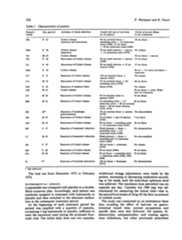
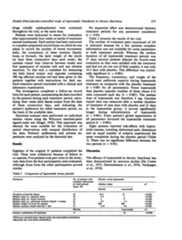
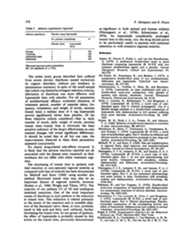
Loperamide (R 18 553) was compared with placebo in a double-blind crossover study of 21 patients with chronic diarrhoea caused by ileocolic disease or resection. Eighteen patients completed the trial. At a median daily dose of 6 mg the new antidiarrhoeal preparation was found to be superior to placebo in controlling chronic diarrhoea. The frequency and weight of stools significantly decreased, the stools became more solid, and carmine transit time was prolonged during loperamide therapy. Loperamide was consistently preferred to placebo by the patients. Gastrointestinal side-effects were few and comparable during both treatment periods.
Full text
PDF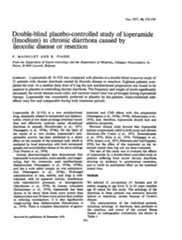
Selected References
These references are in PubMed. This may not be the complete list of references from this article.
- Amery W., Duyck F., Polak J., van den Bouwhuysen G. A multicentre double-blind study in acute diarrhoea comparing loperamide (R 18553) with two common antidiarrhoeal agents and a placebo. Curr Ther Res Clin Exp. 1975 Mar;17(3):263–270. [PubMed] [Google Scholar]
- Demeulenaere L., Verbeke S., Muls M., Reyntjens A. Loperamide: an open multicentre trial and double-blind cross-over comparison with placebo in patients with chronic diarrhoea. Curr Ther Res Clin Exp. 1974 Jan;16(1):32–39. [PubMed] [Google Scholar]
- Dom J., Leyman R., Schuermans V., Brugmans J. Loperamide (R 18 553), a novel type of antidiarrheal agent. Part 8: Clinical investigation. Use of a flexible dosage schedule in a double-blind comparison of loperamide with diphenoxylate in 614 patients suffering from acute diarrhea. Arzneimittelforschung. 1974 Oct;24(10):1660–1665. [PubMed] [Google Scholar]
- KALSER M. H., ROTH J. L., TUMEN H., JOHNSON T. A. Relation of small bowel resection to nutrition in man. Gastroenterology. 1960 Apr;38:605–615. [PubMed] [Google Scholar]
- Marsboom R., Hérin V., Verstraeten A., Vandesteene R., Fransen J. Loperamide (R 18 553), a novel type of antidiarrheal agent. Part 4: studies on subacute and chronic toxicity and the effect on reproductive processes in rats, dogs and rabbits. Arzneimittelforschung. 1974 Oct;24(10):1645–1649. [PubMed] [Google Scholar]
- Meihoff W. E., Kern F., Jr Bile salt malabsorption in regional ileitis, ileal resection and mannitol-induced diarrhea. J Clin Invest. 1968 Feb;47(2):261–267. doi: 10.1172/JCI105722. [DOI] [PMC free article] [PubMed] [Google Scholar]
- Niemegeers C. J., Lenaerts F. M., Janssen P. A. Loperamide (R 18 553), a novel type of antidiarrheal agent. Part 1: in vivo oral pharmacology and acute toxicity. Comparison with morphine, codeine, diphenoxylate and difenoxine. Arzneimittelforschung. 1974 Oct;24(10):1633–1636. [PubMed] [Google Scholar]
- Niemegeers C. J., Lenaerts F. M., Janssen P. A. Loperamide (R 18 553), a novel type of antidiarrheal agent. Part 2: in vivo parenteral pharmacology and acute toxicity in mice. Comparison with morphine, codeine and diphenoxylate. Arzneimittelforschung. 1974 Oct;24(10):1636–1641. [PubMed] [Google Scholar]
- Pelemans W., Vantrappen F. A double blind crossover comparison of loperamide with diphenoxylate in the symptomatic treatment of chronic diarrhea. Gastroenterology. 1976 Jun;70(6):1030–1034. [PubMed] [Google Scholar]
- Schuermans V., Van Lommel R., Dom J., Brugmans J. Loperamide (R 18 553), a novel type of antidiarrheal agent. Part 6: Clinical pharmacology. Placebo-controlled comparison of the constipating activity and safety of loperamide, diphenoxylate and codeine in normal volunteers. Arzneimittelforschung. 1974 Oct;24(10):1653–1657. [PubMed] [Google Scholar]
- Stokbroekx R. A., Vandenberk J., Van Heertum A. H., Van Laar G. M., Van der Aa M. J., Van Bever W. F., Janssen P. A. Synthetic antidiarrheal agents. 2,2-Diphenyl-4-(4'-aryl-4'-hydroxypiperidino)butyramides. J Med Chem. 1973 Jul;16(7):782–786. doi: 10.1021/jm00265a009. [DOI] [PubMed] [Google Scholar]
- Van Nueten J. M., Janssen P. A., Fontaine J. Loperamide (R 18 553), a novel type of antidiarrheal agent. Part 3: in vitro studies on the peristaltic reflex and other experiments on isolated tissues. Arzneimittelforschung. 1974 Oct;24(10):1641–1645. [PubMed] [Google Scholar]
- Verhaegen H., De Cree J., Schuermans V. Loperamide (R 18 553), a novel type of antidiarrheal agent. Part 7: Clinical investigation. Efficacy and safety of loperamide in patients with severe chronic diarrhea. Arzneimittelforschung. 1974 Oct;24(10):1657–1660. [PubMed] [Google Scholar]
- Wright H. K., Tilson M. D. The short gut syndrome: pathophysiology and treatment. Curr Probl Surg. 1971 Jun;:3–51. [PubMed] [Google Scholar]
- de Coster M., Kerremans R., Beckers J. A comparative double-blind study of two antidiarrhoeals, difenoxine and loperamide. Tijdschr Gastroenterol. 1972;15(5):337–342. [PubMed] [Google Scholar]