



Botulinum toxin injections for adults with overactive bladder syndrome
James B Duthie
G Peter Herbison
David Iain Wilson
Don Wilson
James B Duthie, Wellington Hospital, Riddiford Street, Newtown, Wellington, 6021, New Zealand.jbduthie@gmail.com.
Corresponding author.
Collection date 2011 Dec.
Abstract
Background
Overactive bladder syndrome (OAB) is a common condition with a significant negative impact on quality of life characterised by urgency with or without urge incontinence, frequency and nocturia. Intravesical botulinum toxin is being increasingly used to treat severe overactive bladder refractory to standard management. An increasing body of literature is forming that supports this technique as effective, well tolerated, and safe. This review is a substantial update of the 2007 review of the same title.
Objectives
The objective was to compare intravesical botulinum toxin with other treatments for neurogenic and idiopathic overactive bladder in adults. The hypothesis to be addressed were whether intravesical injection of botulinum toxin was better than placebo or no treatment; pharmacological and other non‐pharmacological interventions; whether higher doses of botulinum toxin were better than lower doses; whether botulinum toxin in combination with other treatments was better than other treatments alone; whether one formulation of botulinum toxin is better than another; and whether one injection technique was better than another.
Search methods
We searched the Cochrane Incontinence Group Specialised Trials Register (searched 23 February 2010). The Register contains trials identified from MEDLINE, CINAHL, the Cochrane Central Register of Controlled Trials (CENTRAL), and handsearching of journals and conference proceedings. Additionally, all reference lists of selected trials and relevant review papers were searched. No limitations were placed on the searches.
Selection criteria
All randomised or quasi‐randomised controlled trials of treatment for OAB in adults in which at least one management arm involved intravesical injection of botulinum toxin were included. Participants had either neurogenic OAB or idiopathic OAB with or without stress incontinence. Comparison interventions could include no intervention, placebo, lifestyle modification, bladder retraining, pharmacological treatments, surgery, bladder instillation techniques, neuromodulation, and different types, doses, and injection techniques of botulinum toxin.
Data collection and analysis
Binary outcomes were presented as relative risk and continuous outcomes by mean differences. Little data could be synthesised across studies due to differing study designs and outcome measures. Where applicable standard deviations were calculated from P values according to the formula described in section 7.7.3.3 of the Cochrane Handbook of Systematic Reviews of Interventions. Data were tabulated where possible with results taken from trial reports where this was not possible. Where multiple publications were found, the reports were treated as a single source of data.
Main results
Nineteen studies were identified that met the inclusion criteria. Most patients in the studies had neurogenic OAB, but some included patients with idiopathic OAB. All studies demonstrated superiority of botulinum toxin to placebo. Lower doses of botulinum toxin (100 to 150 U) appeared to have beneficial effects, but larger doses (300 U) may have been more effective and longer lasting, but with more side effects. Suburothelial injection had comparable efficacy to intradetrusor injection. The effect of botulinum toxin may last for a number of months and is dependent upon dose and type of toxin used. Patients receiving repeated doses do not seem to become refractory to botulinum toxin. Botulinum toxin appeared to have beneficial effects in OAB that quantitatively exceeded the effects of intravesical resiniferatoxin. Intravesical botulinum toxin appeared to be reasonably safe; however, one study was halted due to a perceived unacceptable rate of urinary retention.
Authors' conclusions
Intravesical botulinum toxin appears to be an effective therapy for refractory OAB symptoms, but as yet little controlled trial data exist on benefits and safety compared with other interventions, or with placebo. Further robust data are required on long term outcomes, safety, and optimal dose of botulinum toxin for OAB.
Keywords: Adult; Humans; Administration, Intravesical; Botulinum Toxins; Botulinum Toxins/administration & dosage; Botulinum Toxins/therapeutic use; Botulinum Toxins, Type A; Botulinum Toxins, Type A/administration & dosage; Botulinum Toxins, Type A/therapeutic use; Neuromuscular Agents; Neuromuscular Agents/administration & dosage; Neuromuscular Agents/therapeutic use; Randomized Controlled Trials as Topic; Syndrome; Urinary Bladder, Overactive; Urinary Bladder, Overactive/drug therapy
Plain language summary
Botulinum toxin injections into the bladder for overactive bladder syndrome in adults
Injection of botulinum toxin into the bladder is being increasingly used to treat persistent overactive bladder (OAB). This is a disorder characterised by the sudden urge to pass urine with or without incontinence, a frequent need to pass urine, and waking to pass urine during the night. We explored the research relating to how effective and safe botulinum toxin injections into the bladder are, and what the best dose of botulinum toxin is, and what is the best way of injecting it into the bladder. We found that there were several comparative studies, but these involved a relatively small number of patients. There was evidence that botulinum toxin improves the symptoms of OAB. It was unclear what the best dose of botulinum toxin was. Botulinum toxin injections into the bladder appeared to give few side effects or complications, but there were no long‐term follow‐up studies, and there could be rare side effects that have not been discovered yet.
Background
Overactive bladder syndrome (OAB) is a symptom complex that is comprised of urinary urgency with or without urge incontinence, urinary frequency, and nocturia. Urgency is the sudden onset of the desire to pass urine that is difficult to hold. Frequency refers to the passage of urine that is more often than is considered normal, usually more than eight times a day. The symptoms must be in the absence of any other underlying pathology including urinary tract infectionICS 2005.
OAB is estimated to affect approximately 10.9% of men and 12.9% women, with up to 28% of these men and 48% of these women reporting symptoms of incontinenceIrwin 2006. The prevalence of OAB increases with age. The symptoms of OAB have been shown to significantly decrease health related quality of life and lead to increased levels of depression and anxietyCoyne 2009. As well as the impact on the patient’s life, OAB has a significant financial burden associated with itIrwin 2008.
OAB is often divided into two types: neurogenic, where the symptoms are secondary to an underlying neurological condition such as spinal cord lesions, multiple sclerosis or Parkinson’s disease; and Idiopathic, where there is no discernable pathology underlying the symptoms. The aetiology of OAB is complex and poorly understood, but it is known that several afferent and efferent pathways as well as a multitude of neurotransmitters are involved. Recent investigation has identified the urothelium/suburothelium as an important component in the sensory function of the bladder with several abnormalities in its expression of receptors found in patients with OAB.
There are a number of treatment options for OAB. The first line treatment consists of behavioural and lifestyle modifications. Treatment may be supplemented with antimuscarinic drugs, and in some cases clean intermittent catheterization (CIC). Anti‐muscarinics can improve symptoms but are often poorly tolerated, and often cause patients to discontinue treatment. More invasive treatment options used as second or third line treatments include pudendal or sacral nerve stimulation, augmentation cystoplasty, bladder instillation of vanilloids (resiniferatoxin), and intravesical injection of botulinum toxin. Cochrane reviews are available for many of these treatments (Alhasso 2009;Eustice 2000;Hay‐Smith 2009;Herbison 2009;Nabi 2006;Ostaszkiewicz 2004a;Ostaszkiewicz 2004b;Roxburgh 2009;Wallace 2004).
Botulinum toxin is a potent neurotoxin derived from the anaerobic bacterium Clostridium Botulinum. There are many subtypes of the toxin but types A and B are the ones in clinical use. Botulinum toxin is an established treatment used in cosmetic medicine, for example relaxing facial wrinkle lines, and as muscle paralytic agents for conditions such as torticollis. Botulinum toxin is postulated to work in OAB via several separate mechanisms but its exact action is not completely understood. It is thought to inhibit release of acetylcholine (ACh), Adenosine triphosphate (ATP) and substance P from the urothelium which have been implicated in mediating the intrinsic and spinal reflexes that lead to OAB. Botulinum toxin also is known to inhibit release of ACh from parasympathetic nerve endings, this leads to detrusor paralysis and consequently may reduce many of the symptoms of OAB. There is also an additional action on C‐fibre afferents that is thought to be the mechanism behind the reduction in the sensation of urgency. Research is ongoing to define the action of botulinum toxin in more detail, with several other potential mechanisms of action being studiedApostolidis 2006;Cruz 2004;Drake 2008.
Botulinum toxin is injected into several sites in the bladder wall via cystoscopy (flexible or rigid) often in a day case/outpatient setting. Either general or local anaesthesia can be used. A special injection needle is inserted via the cystoscope an the botulinum toxin is then injected into the detrusor at multiple sites, usually avoiding the trigone with several variations of technique being evaluated in different centres. While botulinum toxin type A is the most common subtype used, botulinum toxin type B is also effective in symptom reduction, but seems to be effective for a shorter period of time.
Botulinum toxin has been used in the treatment of lower urinary tract disorders for many years, and although it remains unlicensed for most of these conditions a growing body of evidence is available showing its effectiveness. There are still many questions surrounding its use, and the purpose of this review was to evaluate the current literature regarding its safety, optimal dose, injection technique and efficacy. This review is a substantial update of the 2007 review.
Objectives
To compare intravesical botulinum toxin injection with other treatments for neurogenic and idiopathic OAB in adults with or without incontinence. The outcomes identified are primarily related to subjective improvements in symptoms and the duration of improvement, as OAB is principally a disease of symptoms. These symptoms were assessed using voiding diaries as well as quality of life scores. Urodynamic measures are included as outcome measures as they are often used as markers of disease. Specifically, neurogenic OAB may be associated with high intradetrusor pressures, which may cause upper renal tract complications when sustained above 40 cm H20.
The following hypotheses were to be addressed. 1. Intravesical injection of botulinum toxin is better than placebo or no treatment. 2. Intravesical injection of botulinum toxin is better than pharmacological interventions. 3. Intravesical injection of botulinum toxin is better than other non‐pharmacological interventions. 4. Higher doses of intravesical botulinum toxin are better than lower doses. 5. Intravesical injection of botulinum toxin combined with other treatments is better than other treatments alone. 6. One formulation of botulinum toxin is better than another. 7. One intravesical injection technique is better than another.
Methods
Criteria for considering studies for this review
Types of studies
All randomised or quasi‐randomised controlled trials including crossover studies.
Types of participants
Adult men and women diagnosed with idiopathic or neurogenic OAB syndrome regardless of whether they also had stress incontinence.
Types of interventions
Intravesical botulinum toxin compared against: no intervention; placebo; lifestyle modification; bladder retraining; pharmacological treatments; surgery; bladder instillation techniques; neuromodulation; and different types, doses, and injection techniques of botulinum toxin.
Types of outcome measures
A. Participant's observations, for example, rating scales for improvement, perception of improvement or cure, or satisfaction with treatment.
B. Quantification of symptoms, for example, number of leakage episodes, frequency and volume of voids.
C. Clinicians' measures, for example, urodynamic measures, and clinicians' findings.
D. Health status and quality of life using both general (for example SF36) and condition ‐ specific measures (for example, Incontinence Impact Questionnaire) measures and psychosocial measures.
E. Adverse events and issues with the use of botulinum toxin.
F. Socioeconomic measures ‐costs of interventions (for patients and providers, both direct and indirect), formal economic analysis (for example cost effectiveness), desire or need for further treatment.
G. Other outcomes not pre‐stated but deemed important during review, for example, long‐term follow up.
Search methods for identification of studies
We did not impose any language or other limits on any of the searches.
Electronic searches
This review has drawn on the search strategy developed for the Incontinence Review Group. Relevant trials were identified from the group's Specialised Register of Controlled Trials which is described, along with the search strategy, under the Incontinence Group's details inThe Cochrane Library (For more details please see the ‘Specialized Register’ section of the Group’s module in The Cochrane Library). The register contains trials identified from MEDLINE, CINAHL, the Cochrane Central Register of Controlled Trials (CENTRAL), and handsearching of journals and conference proceedings. The Incontinence Group's Trials Register was searched using the group's own keyword system. The search terms used were:
(topic.urine.incon*) AND ({design.cct*} OR {design.rct*}) AND ({intvent.chem.botulinum*} (All searches were of the keyword field of Reference Manager 12, Thomson Reuters).
Date of the most recent search of the register for this review: 23 February 2010.
The trials in the Incontinence Group's Specialised Register are also contained in CENTRAL.
Searching other resources
We searched the reference lists of identified articles for other possible relevant trials as well as reference lists from review articles on the topic.
Data collection and analysis
Identified trials were selected for inclusion in the review on the basis of appropriateness as determined by at least two of the review authors without prior consideration of the results. No publications were in languages other than English. The review authors independently assessed the risk of bias of the trials using the Cochrane Collaboration Risk of Bias tool. This tool incorporates assessment of randomisation (sequence generation and allocation concealment), blinding (trial participants and personnel, and outcome assessors separately), completeness of outcome data, selection of outcomes reported and other sources of bias. Other sources of bias included selection bias, where we assessed the risk of bias from imbalances in key baseline characteristics. Any disagreements were decided in discussion with a third person.
Binary outcomes were presented as risk ratios, and continuous outcomes by mean differences. If different tools were used to measure outcomes such as quality of life, standardised mean differences were considered. Pooling of data was to be done using a fixed‐effects model in the first instance. Little pooling was possible because of differences in the comparisons and outcomes between studies. Data was extracted by two authors and compared prior to insertion into the review to ensure accuracy.
It was intended that, if there were studies that included people with mixed incontinence a subgroup analysis was to be done to see if the effect was different in those with mixed incontinence, but this was not possible. Similarly, it was not possible to do a subgroup analysis dividing participants into neurogenic OAB and idiopathic OAB syndrome groups, or to assess the effect of different formulations of botulinum toxin. Although several studies separated idiopathic OAB and neurogenic OAB participants, the large variability in study design made pooling of these data impossible. For example outcome measures, doses of botulinum toxin, and different follow up time periods made the studies impossible to compare quantitatively. As many studies were only in abstract form, quantitative data were often limited. Study authors were contacted to try and obtain further results or statistical analysis as well as to confirm multiple publications and study methods. No further details were obtained from any of the authors contacted.
Data was synthesised across studies where possible, but limited in some cases due to differing designs and outcome measures. Some studies had multiple publications; these were treated as a single source of data. Due to limited published data some Standard Deviations for the meta‐analysis were calculated from P values using the formula found in section 7.7.3.3 of the Cochrane handbook.
Results
Description of studies
Search results
For the original review 19 publications were identified in the literature search of which eight were single reports of eight included studies and 11 reports were excluded (for details of the exclusions with reasons please see theCharacteristics of excluded studies). Updated searches in January 2009 and February 2010 identified a further 51 publications. Of these 20 were reports of 11 new studies and 20 were extra reports of four of the already included studies; the remaining 11 publications were excluded (detailed in theCharacteristics of excluded studies). In total 19 unique studies were identified as meeting the inclusion criteria (including eight from the original review) and the other publications were excluded from the analysis on the basis of their abstract or full review of the publication. Nine of the included studies were only available as abstracts (Finney 2006;Grise 2008;Herschorn 2009;Karsenty 2005;King 2007;Lucioni 2008;Moore 2009;Thavaseelan 2005;Truzzi 2004) and nine reported data in more than one article but derived from the same study (Brubaker 2008;Flynn 2009;Ghei 2005;Gousse 2005;Herschorn 2009;Kuo 2006;Kuo 2007;Sahai 2005;Schurch 2005). The flow of literature through the assessment process is shown in the PRISMA flow chartFigure 1.
1.
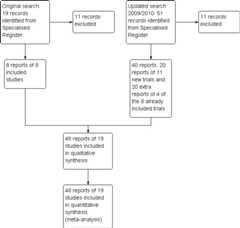
PRISMA Study flow diagram ‐ the flow of literature through the searching process. For details of why records were excluded please see the Characteristics of Excluded Studies table
Included studies
The included studies were:Brubaker 2008;Ehren 2007;Finney 2006;Flynn 2009;Ghei 2005;Giannantoni 2004;Gousse 2005;Grise 2008;Herschorn 2009;Karsenty 2005;King 2007;Kuo 2006;Kuo 2007;Lucioni 2008;Moore 2009;Sahai 2005;Schurch 2005;Thavaseelan 2005;Truzzi 2004.
Study objectives
Ten of the included studies compared intravesical botulinum toxin with placebo. Two studies used botulinum toxin type B (Ghei 2005;Moore 2009). The other eight studies used botulinum toxin type A; two of these compared 300U of botulinum toxin type A with placebo (Herschorn 2009;Brubaker 2008), two compared 200 U of botulinum toxin type A with placebo (King 2007;Sahai 2005), two compared both 300 U and 200 U with placebo (Schurch 2005;Flynn 2009) and two used 500 U of Dysport (a trade name for an extract of botulinum toxin type A) versus placebo (Ehren 2007;Finney 2006). Seven of the included studies compared different doses of botulinum toxin type A with or without a placebo arm (Flynn 2009;Gousse 2005;Grise 2008;Kuo 2006;Schurch 2005;Thavaseelan 2005;Truzzi 2004). One study compared 300 U of botulinum toxin type A with the other pharmacological treatment of intravesical resiniferatoxin (Giannantoni 2004), and three studies compared different injection techniques of botulinum toxin type A.Karsenty 2005 used different numbers of injection sites,Kuo 2007 compared intradetrusor, suburothelial and bladder base injections andLucioni 2008 compared different injection volumes. All studies used a single treatment with botulinum toxin exceptGousse 2005 where the participants were re‐injected every six months andHerschorn 2009 where an open label injection was offered to all participants at 36 weeks. Details can be found in theCharacteristics of included studies.
Design and sample size
The included studies were small, ranging from 14 to 77 participants with an average of 37 participants. The majority of the studies were double blinded and all were randomised. Two of the studies were of a crossover design,Ghei 2005 crossed over at six weeks andMoore 2009 crossed at 10 weeks. Only a few of the studies mentioned power calculations.
Participants
The majority of included studies involved participants with neurogenic OAB, often due to spinal cord injury or multiple sclerosis. Seven studies included only participants with idiopathic OAB (Brubaker 2008;Flynn 2009;Gousse 2005;King 2007;Kuo 2007;Moore 2009;Sahai 2005).Caruso 2009 (a subgroup fromGousse 2005) andFlynn 2009 specified that all included patients had OAB with incontinence. The majority of participants had symptoms refractory to antimuscarinics or did not tolerate the medication as an inclusion criteria. One study required all participants to self catheterise, four times a day post‐procedure to measure post‐void residual volume (Truzzi 2004). In three studies the participants had OAB of mixed aetiology (Ghei 2005;Kuo 2006;Truzzi 2004). Demographic features were often not clear from the abstract publications. Where stated, participants were of mixed gender except inBrubaker 2008 andFlynn 2009, which studied women only. The age ranges appeared to be wide across the studies, from 14 years (Truzzi 2004), to 89 years in (Lucioni 2008). The studies varied in whether or not participants were allowed to continue antimuscarinic medications for OAB during the follow up period. Details of the participants demographics were often poorly documented in the studies and the available details can be found in theCharacteristics of included studies.
Outcomes
Outcome measures included in the trial reports varied making it difficult to quantitatively compare data between studies. Often only measures of statistical significance were reported, sometimes with measures of difference, but often no group data. Results reported in several abstract publications were often unusable for comparison as full details of outcome measures had not been reported. There were, however, consistent themes with researchers most commonly utilising established questionnaires to report quantification of quality of life, incontinence episodes, and objective urodynamic measurements. In total, ten studies measured number of incontinence episodes (Brubaker 2008;Ehren 2007;Finney 2006;Flynn 2009;Ghei 2005;Giannantoni 2004;Karsenty 2005;King 2007;Kuo 2007;Schurch 2005), eleven measured quality of life (Brubaker 2008;Gousse 2005;Ehren 2007;Flynn 2009;Ghei 2005;Herschorn 2009;Karsenty 2005;Lucioni 2008;Moore 2009;Sahai 2005;Schurch 2005), and ten used urodynamic studies as outcomes (Ehren 2007;Flynn 2009;Giannantoni 2004;Herschorn 2009;Kuo 2006;Kuo 2007;Lucioni 2008;Sahai 2005;Schurch 2005;Thavaseelan 2005). Six studies used subjective recording of symptoms such as frequency and nocturia (Finney 2006;Flynn 2009;Ghei 2005;King 2007;Kuo 2007;Sahai 2005). Grise 2008 andTruzzi 2004 used continence as an outcome. Two papers measured pad weights (Finney 2006;Flynn 2009). One study each measured number of catheterizations (Giannantoni 2004), pad numbers (Flynn 2009), and antimuscarinic medication consumption (Ehren 2007). Only four studies included post void residual volume (PVR) as an outcome (Brubaker 2008;Finney 2006;Flynn 2009;Sahai 2005). Details of the outcomes measured can be found inCharacteristics of included studies.
Follow up
All studies followed participants after a single occasion of intravesical injection of botulinum toxin, exceptGousse 2005 where the participants were re‐injected every six months andHerschorn 2009 where the participants were offered open label use of botulinum toxin at 36 weeks. The length of predetermined follow up varied from six weeks inGhei 2005 to 24 months inGousse 2005. In several studies the follow up was ongoing.
Risk of bias in included studies
Details of study methodology were frequently unclear, particularly in the abstract publications. TheCharacteristics of included studies explore this in more detail.
Allocation
Allocation concealment was clear inBrubaker 2008,Flynn 2009,Ghei 2005;Gousse 2005, andSahai 2005. There appeared to be no allocation concealment inKuo 2006. Allocation concealment was unclear in the remaining studies.
Blinding
Truzzi 2004 andKuo 2006 describe single‐blinding of patients in their studies. Brubaker 2008 andMoore 2009 report blinding of patients, clinicians, and study coordinators or assessors. Clinicians and patients were blinded inGhei 2005,Finney 2006, andFlynn 2009. Assessors and patients were blinded inSahai 2005 andSchurch 2005. Giannantoni 2004 was unblinded. The remaining ten studies do not give clear details of the blinding process. Blinding of clinicians, and in some cases patients, in studies comparing different injection or administration techniques may be impossible.
Follow up and exclusions
There were no concerns over the exclusion of participants. All the included studies were of a small size ranging from 14 to 77 participants only a few of the studies performed power calculations to ensure appropriate numbers of participants. Several studies included participants who, as a group, had OAB of mixed aetiology. There were few dropouts reported in the studies.Ghei 2005 mentioned two patients who did not complete follow up due to an adverse event. The data still qualified for analysis, however, as this was the only study to describe analysis on an intention‐to‐treat basis. The only other reported withdrawals from treatment were seven participants at the 12 week follow up stage inFlynn 2009 and four fromEhren 2007, all from their respective placebo groups.
Additional risk of bias
Botulinum toxin was provided for study use inBrubaker 2008,Gousse 2005,Kuo 2006 andKuo 2007. Pharmaceutical companies partly or fully financedEhren 2007,Finney 2006,Herschorn 2009,King 2007, andLucioni 2008. A disclosure of relationship with pharmaceutical company was made by authors ofFlynn 2009,Sahai 2005, andSchurch 2005. Authors explicitly stated that they had no disclosures or conflicts of interest inGrise 2008, andMoore 2009.
Effects of interventions
Objective1: Intravesical injection of botulinum toxin is better than placebo or no treatment
Quantification of symptoms
InBrubaker 2008 patient perception of symptoms was significantly improved in the botulinum toxin group throughout 12 months follow up (P < 0.0001). Sixty percent of patients achieved a subjective clinical response based on Patient Global Impression of Improvement (PGI‐I) measurement. Number of incontinence episodes was also significantly reduced at one month (P < 0.0001).Ehren 2007 demonstrated a significantly lower rate of Tolterodine consumption at all time points studied (P < 0.003), and significantly fewer days with incontinence episodes (P ≤ 0.01).Finney 2006 showed significant improvements in pad weights, daytime frequency, and antimuscarinic requirements from 12 through to 36 weeks follow up (P < 0.05). There was no difference in nocturia or incontinence episodes. Incontinence episodes inFlynn 2009 were significantly reduced (P < 0.01), along with pad weight (P = 0.02), and nocturia (P = 0.02). Daytime frequency was unchanged.Ghei 2005 also reported a significant reduction in weekly incontinence episodes and frequency compared with placebo with the shorter acting botulinum toxin type B at two weeks (P = 0.001, P = 0.033 respectively).Herschorn 2009 reported fewer incontinence episodes at six and 24 weeks (P < 0.01). A significant reduction in incontinence episodes was also found inKing 2007 (P = 0.0005), along with nocturia (P = 0.0032). There was a trend towards reduced daytime frequency that was not statistically significant.Moore 2009 found a significant difference in incontinence episodes (P = 0.03), pad usage (P = 0.03), and frequency (P = 0.008) in the botulinum toxin group at two weeks, while a trend towards reduced nocturia was not significant.Sahai 2005 found significant improvements in frequency (P = 0.0001), urgency (P = 0.0047), and urge incontinence (P = 0.0284) at four weeks which was sustained until 12 weeks, although the improvement in urgency lost statistical significance after four weeks. Incontinence episodes were significantly reduced up to 24 weeks (P < 0.05) inSchurch 2005.
Graphical representation of the statistical meta‐analysis for urinary frequency and incontinence episodes is presented inFigure 2 andFigure 3. The meta‐analysis for urinary frequency favoured botulinum toxin at both the four to six week and 12 week follow up points. The mean difference was a reduction in urinary frequency of ‐ 6.50 episodes per day (‐ 8.92 to ‐ 4.07), (P = < 0.00001) at 4 to 6 weeks. At 12 weeks, the mean difference was a reduction in urinary frequency of ‐ 3.37 episodes per day (‐ 5.15 to ‐ 1.59), (P = 0.0002). . The meta‐analysis for incontinence episodes favoured botulinum toxin at both four to six week and 12 week follow up points. The mean difference was a reduction in incontinence episodes of ‐1.58 (‐ 2.16 to ‐1.01), (P = 0.00001) at 4 to 6 weeks. At 12 weeks, the mean difference was a reduction in incontinence episodes of ‐ 2.74 (‐ 4.47 to ‐1.01), (P = 0.002).
2.
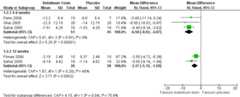
Forest plot of comparison: 1 Intravesical BTX‐A vs Placebo, Outcome: 1.2 Change in Frequency.
3.
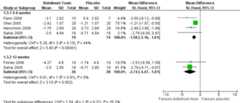
Forest plot of comparison: 1 Intravesical BTX‐A vs Placebo, Outcome: 1.3 Change in Incontinence Episodes.
Clinicians' measures (Urodynamics)
Brubaker 2008 was discontinued due to a high rate of urinary retention defined as a post‐void residual volume (PVR) of greater than 200 ml. This was seen in 43% of patients in the botulinum toxin group.Ehren 2007 found an improvement in bladder capacity at six (P < 0.001) and 12 weeks (P = 0.026), but no significant difference at 26 weeks (P = 0.064). Maximum detrusor pressure (MDP) was significantly lower in the botulinum toxin group (P < 0.01) at all time periods.Finney 2006 demonstrated a significant increase in maximum cystometric capacity (MCC) in the botulinum toxin group (P = 0.016) at six weeks. PVR was also significantly increased in the botulinum toxin group (P = 0.003), along with detrusor pressure at first overactive contraction (P = 0.001). PVR was also increased inFlynn 2009 (P < 0.01), but no difference was found in MCC, volume at first overactive contraction, peak flow, or detrusor pressure at peak flow. A PVR of greater than 200 ml was seen in 26.6% of patients at six weeks. A significant improvement in volume at first overactive contraction was reported inHerschorn 2009 through until week 24 (P < 0.01), along with volume at MDP (P < 0.05).Sahai 2005 reported an increase in PVR at four weeks (P = 0.024), but not at 12 weeks (P = 0.41). Volume at first overactive contraction was again increased at all time points (P ≤ 0.024).Schurch 2005 demonstrated an increase in MCC and volume at first overactive contraction, and a decrease in MDP at all time points to week 24 (P < 0.05 for all measures).
A meta‐analysis of the available data for PVR is presented inFigure 4. The meta‐analysis for change in PVR favours placebo with an increase of PVR of 70.22 ml (30.63 to 109.81) in the botulinum toxin group, (P = 0.0005).
4.

Forest plot of comparison: 1 Intravesical BTX‐A vs Placebo, Outcome: 1.1 Change in PVR at 4‐6 weeks.
Health status and quality of life questionnaires
Ehren 2007 used the Qualiveen questionnaire as a quality of life measure and found a significant decrease in bother score associated with symptoms including incontinence episodes (P < 0.00018) and disturbed nights (P = 0.033). Both the Urinary Distress Inventory‐ 6 (UDI‐6) and the Incontinence Impact Questionnaire (IIQ‐7) symptom scores showed improvement inFinney 2006 (P < 0.02, P ≤ 0.01 respectively).Ghei 2005 reported significant improvements compared with placebo in some of the domains of the King's Health Questionnaire, including impact on life, incontinence impact, and incontinence severity measures (P = 0.004, P = 0.03, P = 0.02 respectively).Herschorn 2009 andSchurch 2005 demonstrated improvement in Incontinence Quality of Life Questionnaire (IQOL) score compared with placebo at all time points (P < 0.05, and P < 0.05 respectively).Moore 2009 used UDI‐6 and the King's Health Questionnaire and found improvements in both at two weeks (P = 0.02, no P value given for any sub‐scale of the King's Health Questionnaire). InSahai 2005 IIQ‐7 and UDI‐6 were both significantly improved at four and 12 weeks (P ≤ 0.025, P ≤ 0.0003 respectively). Although some papers used the same quality of life measurement tools, there were none that used comparable methods of treatment. As such no pooling of quality of life data could be performed.
Objective 2: Intravesical injection of botulinum toxin is better than other pharmacological interventions
There was only one trial identified that addressed this objective.Giannantoni 2004 compared 300 U of intravesical botulinum toxin type A with instillation of resiniferatoxin. They reported a significant decrease in rates of incontinence with botulinum toxin compared with resiniferatoxin at six, 12 and 18 months. A significant increase in MCC and decrease in MDP measured by urodynamics compared with resiniferatoxin at six, 12 and 18 months (taken from the report of study) was found. They also reported a significant increase in PVR in the botulinum toxin group at all time points.
Objective 3: Intravesical injection of botulinum toxin is better than other non‐pharmacological interventions
There were no trials identified that addressed this objective.
Objective 4: Higher doses of intravesical botulinum toxin are better than lower doses
There were six trials identified that specifically addressed this objective (Gousse 2005;Grise 2008;Kuo 2006;Schurch 2005;Thavaseelan 2005;Truzzi 2004). AlthoughFlynn 2009 used 200 U and 300 U the results in the currently published study pooled these results so no comparative conclusion could be made. The unpooled data will hopefully be available once the study is finished.Gousse 2005 compared 100 U botulinum toxin type A with 150 U botulinum toxin type A with up to 50 patients and noted no difference in frequency, PVR, MDP, peak flow, MCC, quality of life, and incontinence, which were all improved in both groups compared to baseline. There was a non‐significant trend suggesting the higher dose led to more patients achieving complete dryness. In a subgroup analysis (Caruso 2009) of patients with idiopathic OAB and urge incontinence a significant difference was seen in incontinence episodes with 150 U superior to 100 U (P=0.02).Grise 2008 compared 500 U with 750 U (Dysport) and found a non‐significant trend towards better continence with 750 U.Kuo 2006 compared 100 U with 150 U and 200 U showing similar efficacy between the groups. The 150 U and 200 U groups demonstrating significantly higher bladder capacity and PVR while the duration of effect was shorter for the 100 U group. Mean therapeutic effect in the 200 U group was 6.7 months versus 5.5 months in the 150 U group and 3.5 months in the 100 U group. There was a significantly higher rate of urinary retention associated with the higher doses (P=0.011).Schurch 2005 compared 200 U and 300 U with placebo, and showed significant improvements in both botulinum toxin groups compared with placebo but found no clear difference between the two doses.Thavaseelan 2005 compared 200 U with 300 U but did not comment on any difference between the two groups.Truzzi 2004 compared 100 U with 300 U and suggested a trend towards better continence in the 300 U group, but did not report on statistical significance. While many of the studies used similar doses, none compared doses in a manner that allowed data pooling.
Objective 5: Intravesical injection of botulinum toxin combined with other treatments is better than other treatments alone
There were no trials identified that specifically addressed this objective.
Objective 6: One formulation of botulinum toxin is better than another
There were no trials identified that specifically addressed this objective.
Objective 7: One injection technique is better than another
There were three studies identified that addressed this objective.Karsenty 2005 compared two different techniques of injection of 300 U of botulinum toxin type A. They compared 10 versus 30 injection sites and reported a significant reduction in post‐procedure pain in the group receiving 10 injections. There were no significant differences found in any other measures including incontinence episodes or MCC (taken from the report of study).Kuo 2007 investigated suburothelial, intra‐detrusor and bladder base injections with 15 participants in each group. Urgency was improved in all groups but in the bladder base group there was no increase in MCC or PVR.Lucioni 2008 compared 200 U of botulinum toxin with injection volumes of 0.1, 0.5 and 1.0 cc per injection but with the same number of injections and found no significant difference between the groups quality of life using IIQ‐7 and UDI‐6. All groups had significant increases in MCC. In the 1.0 cc group there was no increase in bladder compliance, which was seen in the other two groups. As none of the studies had comparable injection techniques, data could not be pooled.
Adverse effects
Brubaker 2008 was halted before completion due to unacceptable adverse effects. Twelve of 28 patients in the treatment arm developed urinary retention requiring CIC, and 44% had diagnosed urinary tract infections (UTI). It should be noted thatBrubaker 2008 had a robust and rigorous follow up schedule monitoring these adverse events. Brubaker 2008 also reported a few miscellaneous adverse events of similar number in placebo and treatment arms that seemed unrelated to their treatment. InEhren 2007 one of 17 treatment patients, who had ceased their usual warfarin for three days pre‐procedure developed haematuria requiring 24 hours of catheterization before resolving. Flynn 2009 also had a single patient with haematuria requiring overnight hospital admission and continuous bladder irrigation, but of further investigation was found to be likely bleeding from ureteric varicosities. Four patients developed high PVR after injection of botulinum toxin inFlynn 2009, and one of these went on to perform CIC. This patient reported a better quality of life with CIC than with the symptoms of OAB prior to botulinum toxin treatment.
Of the adverse events mentioned in the included studies,Ghei 2005 reported two patients who needed to commence CIC for six weeks after developing urinary retention.Gousse 2005 reported one participant, who presumably did not undertake CIC, with a transient rise of post‐void residual volume to 200 ml and development of urinary tract infection.Herschorn 2009 reported two patients in the botulinum toxin group that experienced transient upper body weakness.Kuo 2006 included adverse events as an endpoint for their study of comparative doses of botulinum toxin, and found in the 200 U and 150 U groups, that six, and two patients respectively developed urinary retention. Four, and two patients were diagnosed with UTI, while those in the 100 U group had no reported retention or UTI. Kuo 2007 reported adverse events from their total group of 45 patients that in the suburothelial injection group seven developed dysuria, two urinary retention, two UTI, one gross haematuria, and one suffered post‐treatment pain. In the detrusor injection group five developed dysuria, two urinary retention, one UTI, and one post‐treatment pain. In the bladder base injection group, two developed dysuria, and one each developed urinary retention, UTI, and post‐treatment pain. Lucioni 2008 reported one patient in each of the three treatment arms developing urinary retention from the total group of 30 patients. Sahai 2005 reported three patients needing to commence CIC for reasons that were not mentioned.Schurch 2005 reported a urinary tract infection rate of approximately 25% in their participants who all performed regular self catheterization prior to intervention. This was commented on as being similar to the accepted infection rate in people who undertake CIC. This study also reported transient post‐procedure pain in one placebo and two 300 U botulinum toxin patients of the 59 patients in total.
Discussion
An increasing body of randomised data has emerged since the original review. During this same period, the use of botulinum toxin has become more mainstream for treating OAB. In this review a total of 14 new studies have been identified that meet the inclusion criteria, bringing the total number of included studies to 19. The studies are still universally small, with the maximum number of 77 participants in any individual study. There is an increase in data regarding idiopathic OAB, and data with an emphasis on wet versus dry OAB. It should be noted that in all cases the participants are not treatment naive, but are regarded as refractory to conservative measures and anti‐muscarinics.
There is now further support from the literature for the efficacy of botulinum toxin versus placebo. A significant clinical response may be seen in up to 60 to 90% of patients (Brubaker 2008;Gousse 2005). Of patients with OAB with incontinence, up to 66% may achieve complete continence (Grise 2008). The duration of effect seem to vary widely, partly due to variation in outcome measures, and perhaps dosage. Benefits may be seen for between three and 12 months (Kuo 2006;Brubaker 2008). There are still no randomised comparisons between different formulations of botulinum toxin, but it seems that botulinum toxin type A has a more durable effect than botulinum toxin type B which seems to be limited to less than 10 weeks (Moore 2009). Many studies did not comment on duration of effect at all due to short follow up. One study investigated repeated injections of botulinum toxin, finding this to be safe, with no evidence of patients becoming refractory to treatment.
There are still no eligible study that compare or combine botulinum toxin with other treatments, apart from one showing superiority to intravesical resiniferatoxin (Giannantoni 2004).
In the majority of studies the authors avoid injecting the trigone, however,Moore 2009 investigated injecting the trigone and found no evidence of vesico‐ureteric reflux.
The optimally safe and effective dose of botulinum toxin is still unproven, with only one small study suggesting that a lower dose of 100 U may have comparable efficacy to and improved safety over 200 U and 300 U (Kuo 2006).
Cohen 2007 reported extra data from theGousse 2005 study on treatment tolerability. They found that in the office setting, 26 of 27 patients tolerated botulinum toxin administration under local anaesthetic only.
There are consistent improvements in urodynamic parameters with botulinum toxin. Improved MCC and MDP have been reported by almost all authors who measured these variables. A significant increase in MCC was found in all studies that measured this except forFlynn 2009 which reported a non‐significant trend towards increased MCC. Those studies that measured MDP all found that it was significantly decreased after botulinum toxin treatment.
Since the first review an increasing number of studies have measured PVR, in response to the early findings that PVR may be increased after botulinum toxin. It has been found that some patients may require CIC after botulinum toxin. The need for CIC seems related to how aggressively patients are investigated for PVR and the pre‐determined volume threshold for commencing CIC. Significant increases in PVR may be seen in up to 72% of patients, however, this may in many cases not be clinically significant (Kuo 2006). Higher rates of increased PVR may be found with higher doses of botulinum toxin. There was variation in the threshold for commencing CIC. Some studies had a set point for CIC, while others only commenced CIC if patients became symptomatic, and one required all participants to perform regular CIC (Truzzi 2004). Some studies included participants that were already performing CIC prior to treatment (Schurch 2005). Although the need to commence CIC is considered a significant adverse effect by many, one study demonstrated a similar improvement in quality of life from baseline in patients after botulinum toxin treatment whether they had to commence CIC or not (Brubaker 2008). It should be remembered that all participants in the included studies had failed other conservative management options and were considered to have severe OAB. Many were incontinent prior to treatment, and it may be that patients prefer CIC to incontinence in some cases.
Adverse events following botulinum toxin administration may be related to the drug or the associated procedure. UTI rates reported by the authors have been consistently comparable to that related to cystoscopy alone. When CIC is commenced, UTI rates seem to increase to that seen in other CIC patients (Brubaker 2008).
Other adverse events were uncommon in the included studies, however, as previously stated the studies included small numbers of participants and may have been underpowered to detect rare adverse events. Constipation, transitory aesthenia, dry mouth, and proven chlorhexidine related anaphylaxis were all reported (Sahai 2005). Procedure related adverse events such as pain and haematuria were not specific to botulinum toxin, but also seen in placebo groups.
Authors' conclusions
Implications for practice.
Although the pool of randomised data is still small, they support the efficacy of botulinum toxin in the treatment of OAB. Due to the limited body of data, the issues of long term safety, optimal dose, and best injection technique remain largely unanswered, despite some efforts to explore these issues. There is some suggestion from the data that lower doses may offer comparable efficacy with fewer adverse events, albeit for a shorter duration than higher doses. The duration of effect of botulinum toxin type A may range from three to twelve months. The effect of botulinum toxin type B seems to be limited to less than ten weeks. This may give botulinum toxin type B a role in test‐dosing of patients, limiting the duration of adverse effects. In the past injection of the trigone has been avoided to prevent the theoretical risk of ureterovesical reflux. The available evidence suggests, however, that the trigone may be injected without compromising safety or efficacy. Botulinum toxin may be well tolerated without sedation, using only bladder instillation of local anaesthetic. In most studies the risk of UTI seems acceptable. There is further evidence from recent studies that botulinum toxin causes an increase in PVR, and may necessitate the commencement of CIC. Of interest, it appears that patients have an overall improvement in urinary symptom score after botulinum toxin even when it results in the need to initiate CIC. Adequate counselling about the risk of requiring CIC following botulinum toxin should be mandatory. Further, a patient who is unwilling to undertake CIC under any circumstances should not be a candidate for botulinum toxin therapy. The adoption of botulinum toxin as routine practice in many centres still seems largely based on descriptive rather than randomised data. The data presented are based on a patient groups with severe, otherwise treatment refractory OAB, and cautious should be exercised in treating patients with milder symptoms, or those who have not exhausted conventional treatment options.
Implications for research.
The studies are still uniformly small, with the largest study examining 77 patients, and have limited follow up. Larger studies with longer follow up would offer more power to identify unusual adverse events. Opportunities still exist for authors to explore optimal dosing, comparison with non‐pharmacological treatments, further elucidation of best injection technique, comparing different formulations, and combination with other treatments. Outcomes remain somewhat variable, with some authors still not including quality of life or symptom scores for what is largely a disease of symptoms. Reporting of clinically important parameters of PVR, MDP, and need for CIC has become more common, and these parameters should be included in future studies. Future research would benefit from the creation of a universal criterion for commencing CIC due to elevated PVR.
What's new
| Date | Event | Description |
|---|---|---|
| 29 October 2011 | New citation required and conclusions have changed | Updated review with 11 additional studies |
| 30 March 2011 | New search has been performed | new search 23 Feb 2010 |
History
Protocol first published: Issue 4, 2005 Review first published: Issue 3, 2007
| Date | Event | Description |
|---|---|---|
| 22 May 2007 | New citation required and conclusions have changed | Substantive amendment |
Acknowledgements
None declared
Data and analyses
Comparison 1. Intravesical BTX‐A vs Placebo.
| Outcome or subgroup title | No. of studies | No. of participants | Statistical method | Effect size |
|---|---|---|---|---|
| 1 Change in PVR at 4‐6 weeks | 2 | 54 | Mean Difference (IV, Fixed, 95% CI) | 70.22 [30.63, 109.81] |
| 2 Change in Urinary Frequency | 4 | Mean Difference (IV, Fixed, 95% CI) | Subtotals only | |
| 2.1 4‐6 weeks | 3 | 96 | Mean Difference (IV, Fixed, 95% CI) | ‐6.50 [‐8.92, ‐4.07] |
| 2.2 12 weeks | 2 | 54 | Mean Difference (IV, Fixed, 95% CI) | ‐3.37 [‐5.15, ‐1.59] |
| 3 Change in Incontinence Episodes | 5 | Mean Difference (IV, Fixed, 95% CI) | Subtotals only | |
| 3.1 4‐6 weeks | 4 | 153 | Mean Difference (IV, Fixed, 95% CI) | ‐1.58 [‐2.16, ‐1.01] |
| 3.2 12 weeks | 2 | 54 | Mean Difference (IV, Fixed, 95% CI) | ‐2.74 [‐4.47, ‐1.01] |
1.1. Analysis.
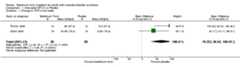
Comparison 1 Intravesical BTX‐A vs Placebo, Outcome 1 Change in PVR at 4‐6 weeks.
1.2. Analysis.
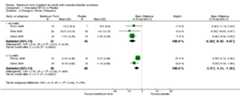
Comparison 1 Intravesical BTX‐A vs Placebo, Outcome 2 Change in Urinary Frequency.
1.3. Analysis.
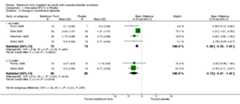
Comparison 1 Intravesical BTX‐A vs Placebo, Outcome 3 Change in Incontinence Episodes.
Characteristics of studies
Characteristics of included studies [ordered by study ID]
Brubaker 2008.
| Methods | "...multi‐institutional, randomised, double‐blind placebo controlled trial". Power calculation performed. | |
| Participants | 43 patients only women with IOAB refractory to pharmacological treatments. Particpants were "neurologically intact women at least 21 years old with refractory urge incontinence, defined as inadequate symptom control after at least 2 first line therapies, which had to include 2 anticholinergic medications and at least 1 of supervised behavioural therapy" "inclusion required at least 6 urge incontinence episodes in a standardised 3 day bladder diary and documented urodynamic DOI within the last year" Patients had on average 21.44 (BTX) and 19 (placebo) incontinence episodes in a 3 day bladder diary at baseline. Average age at baseline were 64.7 (BTX) and 69.2 (placebo). | |
| Interventions | Intravesical BTX‐A 200 U (n = 28) versus placebo (n = 15). Local anaesthetic administered then "6 ml of masked substance were injected at approximately 15 to 20 detrusor muscle sites. Injections were spread out to cover the posterior bladder wall in 3 rows sparing the trigone and ureteric orifice" | |
| Outcomes | Addressed Objective 1. PGI‐I, PVR, Patient Global Symptom Control (PGSC), incontinence episodes. "Primary outcome measure was time to failure (PGI‐I 4 or greater), secondary outcome measure were changes in the frequency of incontinence episodes, changes in symptom and quality of life measures and the occurrence and duration of voiding dysfunction requiring catheterization." "safety and adverse events were reported and monitored at 3 month intervals by an independent safety and monitoring board" | |
| Notes | Power calculation suggested required sample size of 210 participants. The study was stopped due to high rates of urinary retention (as defined by PVR of >200 ml), and UTI. Follow up was planned from 4 weeks up to 12 months. Full publication and 2 abstracts. | |
| Risk of bias | ||
| Bias | Authors' judgement | Support for judgement |
| Random sequence generation (selection bias) | Low risk | "randomisation (2:1 Botox or placebo) is performed using a random block size that is known only to the Data Coordinating Center (DCC)" |
| Allocation concealment (selection bias) | Low risk | "study coordinator selects next available randomisation number from a stratified list provided by the DCC that corresponds to a envelope that the pharmacist opens." |
| Blinding (performance bias and detection bias) All outcomes | Low risk | Patient, doctor, and study coordinator all blinded. "syringes were prepared by a study pharmacist and they appeared identical to the injecting physician" |
| Other bias | High risk | BTX provided by Allergan. |
Ehren 2007.
| Methods | "...randomised, placebo controlled, double‐blind study". No power calculation. | |
| Participants | 31 patients; 17 male,and 14 female. NOAB with urinary incontinence caused by spinal cord injury in 20, myelomeningocele in 2, birth trauma in 2, MS in 6, and myelitis in 1. "inclusion criteria were as follows: age ≥18 years, urodynamically proven detrusor overactivity with urinary leakage for at least 1 year, inadequate response to oral anticholinergics, and ability to perform clean intermittent catheterization." Mean age of patients was 36 years (range 21 to 66) | |
| Interventions | 500 U BTX‐A (n = 17) versus placebo (n = 14). "under cystoscopic guidance, 25 1.0 ml aliquots were injected intramuscularly into the detrusor, avoiding the trigone and ureteric orifices. Injections were performed under local or general anaesthesia." | |
| Outcomes | Addressed Objective 1. Follow up at 6, 12, and 26 weeks. Tolterodine consumption, MCC, MDP, incontinence episodes, QoL. "patients were followed for 26 weeks. Episodes of urinary leakage were registered daily in the diary during the study, Cystometry was performed after 6, 12 and 26 weeks and maximum detrusor pressure and maximum bladder capacity were registered. Quality of life was also assessed by means of the Qualiveen questionnaire at these points. Safety evaluations were based upon spontaneous reports of adverse events at the patient visits" | |
| Notes | 4 in placebo group did not complete study. Anticholinergics discontinued 1 week prior to starting trial and only initiated again if no response 1 week after injection. Full publication | |
| Risk of bias | ||
| Bias | Authors' judgement | Support for judgement |
| Random sequence generation (selection bias) | Unclear risk | Unclear. "patients were randomised to treatment with either 500 U of BTX‐A or placebo" methods of randomisation were not stated. |
| Allocation concealment (selection bias) | Unclear risk | Unclear. |
| Blinding (performance bias and detection bias) All outcomes | Unclear risk | Unclear. "double‐blind study" no details provided |
| Other bias | High risk | Ipsen grant. |
Finney 2006.
| Methods | Double‐bind placebo controlled trial. No power calculation. | |
| Participants | 20 patients with MS and OAB with at least episode of incontinence per day. "Diagnosis of MS for at least 1 year made by a consultant neurologist......Each also has OAB diagnosed by a consultant urologist......All had urodynamically proven detrusor overactivity and had found anticholinergics either ineffective or their side effects intolerable." "patients with symptoms of stress related incontinence were excluded" | |
| Interventions | 500 U BTX‐A (n = 10), versus placebo (n = 10). "injections were performed by flexible cystoscopy." | |
| Outcomes | Addressed Objective 1. Frequency, nocturia, incontinence, 24 hour pad weights, MCC, PVR. "continence diaries assessing daytime frequency, nocturia, and episodes of leakage were completed for 3 consecutive days prior to injection, at 12 weeks and 36 weeks....Urodynamics were performed at baseline, 6 weeks and 36 weeks. | |
| Notes | Follow up at 12 and 36 weeks. 7 of 10 patients from placebo group dropped out at 12 weeks, and patients experiencing no improvement at 12 weeks were withdrawn. Abstract only. | |
| Risk of bias | ||
| Bias | Authors' judgement | Support for judgement |
| Random sequence generation (selection bias) | Unclear risk | Unclear. |
| Allocation concealment (selection bias) | Unclear risk | Unclear. |
| Blinding (performance bias and detection bias) All outcomes | Low risk | Double‐blinded; "with the investigators and recruits; double blinded..." |
| Other bias | High risk | Ispen funded trial |
Flynn 2009.
| Methods | Randomised, placebo controlled, double‐blinded study. Power calculation performed. | |
| Participants | 22 patients with IOAB refractory to antimuscarinics with two or more leakage episodes per day and 24 hour pad weights greater than 100 g. "at least 1 anticholinergic medication and behavioural modifications must have failed in subjects before they entered the trial" "we allowed subjects with coexisting severe OAB and mild stress incontinence to enter the study. To minimise the impact of the stress component of the leakage and eliminate subjects with intrinsic sphincter deficiency, subjects could not have a cough leak point pressure less than 100 cm H2O." "all anticholinergic medications were stopped 10 days before study entry" "patients were excluded from the study if they had any known neurological condition" Patients had 8 incontinence episodes per day on average at baseline. Mean age was 66(41 to 85) | |
| Interventions | Placebo versus BTX‐A 200 U (n = 7) or 300 U (n = 15). Local anaesthetic and rigid cystoscope. "staying superior to the trigone and medial to the ureteric orifices, the detrusor was injected with approximately 0.2 cc study solution per site at 10 to 12 sites.." | |
| Outcomes | Addressed Objective 4. Urodynamics, UDI‐6, IIQ‐7, bladder diaries, pad usage. "primary outcomes were the number of incontinence episodes per 24 hours........and scores on UDI‐6 and IIQ‐7" "at all interactions subjects were assessed using a verbal questionnaire for evidence of adverse effects" | |
| Notes | 2 phase study, currently only phase 1 is reported. Follow up at 6 weeks. Full publication and 3 abstracts. | |
| Risk of bias | ||
| Bias | Authors' judgement | Support for judgement |
| Random sequence generation (selection bias) | Low risk | Random number generator. Subjects randomised in blocks of 6. |
| Allocation concealment (selection bias) | Low risk | "Study assignments were assigned via sealed, sequentially numbered opaque envelopes." |
| Blinding (performance bias and detection bias) All outcomes | Low risk | Double blinded. |
| Other bias | Unclear risk | Authors have relationships with Pfizer, Lifetech, and AMS. |
Ghei 2005.
| Methods | Randomised, double‐blinded, crossover study. Power calculation performed. | |
| Participants | 20 participants with IOAB or NOAB on urodynamics. 3 males, 17 females, mean age 50 years. "ages 18 to 81 with neurological and non neurological detrusor overactivity demonstrated by urodynamics" | |
| Interventions | Placebo or 5,000 U BTX‐B. Participants crossed over to other arm at 6 weeks. "5000 U of Botulinum‐B (diluted up to 20 ml) or 20 ml of placebo, as allocated, were injected into the detrusor over the same 10 different injection sites, sparing the trigone, by the same surgeon." | |
| Outcomes | Addressed objective 1. Void volume, incontinence episodes, weekly frequency, QoL, adverse events. "primary outcome measure was the paired difference in change in average voided volume. frequency, incontinence episodes and quality of life were secondary outcome measures" | |
| Notes | Follow up at 2 and 6 weeks after each procedure. power calculation required 20 pairs of cases. 2 full publications. | |
| Risk of bias | ||
| Bias | Authors' judgement | Support for judgement |
| Random sequence generation (selection bias) | Low risk | Random number generator. "a computerised random number generator was used by the clinical trials pharmacist to draw up a randomisation schedule" |
| Allocation concealment (selection bias) | Low risk | "Identical packages were produced...the contents of these were known only to the clinical trials pharmacist." |
| Blinding (performance bias and detection bias) All outcomes | Low risk | Drugs prepared by nurse; patients and doctors blinded. |
Giannantoni 2004.
| Methods | Randomised, unblinded, single centre, parallel study; "selected and randomised by commercially available software". No power calculation. | |
| Participants | 25 patients with NOAB; 18 males, 7 females. Mean age 38 yrs. "Mean age SD was 38.4 +/‐ 12.5 years and mean disease duration was 41.8 +/‐ 16.5 months" "A total of 20 patients had a lesion at the thoracic level while the remaining patients showed a cervical injury" "Inclusion criteria were unacceptable clinical (patient driven) and urodynamic suppression of detrusor activity (author assessment) by oral and intravesical oxybutynin, intolerable anticholinergic side effects, normal renal function, no vesicoureteral reflux and a normal upper urinary tract" | |
| Interventions | Either intravesical instillation of resiniferatoxin (n = 13), or 300 U intradetrusor BTX‐A (12). "Patients in group 1 (13) received intravesical administrations of RTX for 45 minutes through a polyvinyl chloride catheter with real‐time cystometrography as outpatients" "Patients in group 2 (12) were injected with 300 units of commercially available botulinum‐A toxin diluted in 30 ml 0.9% NaCl into the detrusor muscle (30 sites, sparing the trigone) under cystoscopic control" | |
| Outcomes | Addressed objective 2. Number of catheterizations, incontinence episodes, urodynamics. "Patients recorded the number of daily catheterizations and episodes of incontinence" "Urodynamic studies were repeated at 6, 12 and 18‐month follow up" | |
| Notes | Follow up at 6,12, and 18 weeks. Full Publication. | |
| Risk of bias | ||
| Bias | Authors' judgement | Support for judgement |
| Random sequence generation (selection bias) | Low risk | Computer generated randomisation. "randomised by commercially available software into 2 groups" |
| Allocation concealment (selection bias) | Unclear risk | Unclear |
| Blinding (performance bias and detection bias) All outcomes | High risk | Patients and doctors unblinded. |
| Other bias | Unclear risk | Unclear. |
Gousse 2005.
| Methods | Randomised, prospective, dose‐finding trial. No power calculation | |
| Participants | 44 participants with IOAB, 24 patients had OAB‐wet, 20 patients had OAB‐dry. "subjects were required to have either failed or have been unable to tolerate treatment with at least 2 different anti‐muscarinic agents and have been treated with these agents for at least 2 months" | |
| Interventions | BTX‐A in either 100 U (n = 22) or 150U (n = 22) dose. Re‐injected every 6 months. "injected in an office setting" "bladder was instilled with 40ml of 1% lidocaine solution" "supra‐trigonal detrusor muscle was injected with BTX‐A 10 units/ml in 10 to 15 separate sites" | |
| Outcomes | Addressed objective 4. Void volume, daily frequency, QoL, adverse events. "CIC was recommended to symptomatic patients with PVR >100 ml and asymptomatic patients with PVR >200 ml" "PVR, 3‐VD data and adverse events were obtained at clinic visits at 2, 6, 12 and 24 weeks" | |
| Notes | Follow up at 6 to 24 months. Full publication and 13 abstracts. | |
| Risk of bias | ||
| Bias | Authors' judgement | Support for judgement |
| Random sequence generation (selection bias) | Low risk | "based upon a random number generator with numbers pre‐assigned to the two doses" |
| Allocation concealment (selection bias) | Low risk | "sealed envelopes" |
| Blinding (performance bias and detection bias) All outcomes | Unclear risk | Unclear. |
| Other bias | High risk | BTX‐A funded by Allergan. |
Grise 2008.
| Methods | Prospective, randomised, multi‐centre clinical study. No power calculation. | |
| Participants | 77 patients with NOAB. Underlying pathology is spinal cord injury in 49, MS in 18, other causes in 10. "14 day wash out period without anticholinergic treatment was required, then no anticholinergic were authorised during the study period" "bladder tumour, lithiasis and urinary retention were excluded" | |
| Interventions | BTX‐A 500 U (n not given) versus 750 U (n not given). "injections were extra trigonal in the detrusor muscle" | |
| Outcomes | Addressed Objective 4. Continence. "onset of urinary incontinence was considered as failure of the treatment" | |
| Notes | Follow up at 30 days, 90, 180, and 360 days. Abstract only. | |
| Risk of bias | ||
| Bias | Authors' judgement | Support for judgement |
| Random sequence generation (selection bias) | Unclear risk | Unclear. |
| Allocation concealment (selection bias) | Unclear risk | Unclear. |
| Blinding (performance bias and detection bias) All outcomes | Unclear risk | Unclear. |
| Other bias | Low risk | No conflicts of interest declared; "No funding or grant". |
Herschorn 2009.
| Methods | Multicentre, randomised, double‐blind trial. Power calculation performed. | |
| Participants | 57 participants; 34 male, 23 female. NOAB associated with spinal injury(38) or MS(19) refractory to antimuscarinics. Mean age 42.8 years (32 to 50) "eligible for inclusion if they had urinary incontinence (minimum of 1 occurrence per day) despite current anticholinergic treatment". | |
| Interventions | BTX‐A 300 U (n = 12) vs placebo (n = 14). "with a flexible or rigid cystoscopic injection needle at 30 intra‐detrusor sites, sparing the trigone." | |
| Outcomes | Addresses Objective 1. Urodynamics, I‐QOL, ICIQ. "primary efficacy parameter was the frequency of incontinence episodes" | |
| Notes | Follow up at 6 weeks, 24 weeks, 36 weeks, 48 weeks, 60 weeks. 2 abstracts only. | |
| Risk of bias | ||
| Bias | Authors' judgement | Support for judgement |
| Random sequence generation (selection bias) | Unclear risk | Unclear. |
| Allocation concealment (selection bias) | Unclear risk | Unclear. |
| Blinding (performance bias and detection bias) All outcomes | Unclear risk | Unclear. |
| Other bias | High risk | "investigator initiated clinical trial funded by Allergan". |
Karsenty 2005.
| Methods | Randomised, single‐blinded trial. No power calculation. | |
| Participants | 24 participants with NOAB, 15 females, 9 males. "NDOI related to traumatic chronic spinal lesion (15), MS (8) or myelomeningocele (1)." | |
| Interventions | 300 U BTX‐A injected into either 10 (n not given) or 30 (n not given) intravesical sites. "injections were done under local anaesthesia" "trigone was not injected" | |
| Outcomes | Addressed objective 7. Bladder capacity, incontinence episodes, QoL. Primary endpoint was improvement in cystomanometric bladder capacity. | |
| Notes | Follow up at 6, 12, and 24 weeks. Abstract only. | |
| Risk of bias | ||
| Bias | Authors' judgement | Support for judgement |
| Random sequence generation (selection bias) | Unclear risk | Unclear. |
| Allocation concealment (selection bias) | Unclear risk | Unclear. |
| Blinding (performance bias and detection bias) All outcomes | Unclear risk | States patient blinding not assessors. |
| Other bias | Unclear risk | Unclear. |
King 2007.
| Methods | Randomised, double‐blind, placebo controlled trial. Power calculation performed. | |
| Participants | 31 patients with refractory idiopathic detrusor overactivity, all women between 18 and 85. "urodynamically documented DO, no neurological disease or injury and minimal response to current treatments" "no significant difference in age between the two arms (60.7 versus 64.3 years) | |
| Interventions | BTX‐A 200 U (n = 15) versus placebo (n = 16). "Under general anaesthesia 10 sites were injected subepithelially over the trigone and 10 sites on the bladder base" | |
| Outcomes | Addressed Objective 1. Incontinence episodes, nocturia, frequency. | |
| Notes | Follow up at 6 weeks, those with improvement continued for 9 months. Initial flow test at 2 weeks to exclude significant PVR. Power calculation suggested 15 patients required in each arm. Abstract only. | |
| Risk of bias | ||
| Bias | Authors' judgement | Support for judgement |
| Random sequence generation (selection bias) | Unclear risk | Unclear. |
| Allocation concealment (selection bias) | Unclear risk | Unclear. |
| Blinding (performance bias and detection bias) All outcomes | Unclear risk | Unclear. |
| Other bias | High risk | Funding by Allergan. "industry funding only investigator initiated and executed study" |
Kuo 2006.
| Methods | Prospective randomised controlled trial. No power calculation. | |
| Participants | 75 patients (32 women, 43 men) with detrusor overactivity (40 neurogenic, 35 idiopathic) refractory to antimuscarinics. Patients with high PVR pre‐treatment were excluded. "75 patients with NDO or IDO in whom antimuscarinic treatment using tolterodine 4 mg/day during the previous 3 months had failed were enrolled" "mean patient age was 63.4 +/‐ 10.7 years" "The use of anticholinergic agents was discontinued before BTX‐A injection" | |
| Interventions | BTX‐A 100 U (n = 23) versus 150 U (n = 25) versus 200 U (n = 27), suburothelial injections. "under intravenous general anaesthesia in the operation room" "Suburothelial injection of BTX‐A was "performed at 40 sites in the posterior and lateral walls of the urinary bladder" | |
| Outcomes | Assessed Objective 4. Bladder capacity, MDP, Peak flow rate (Qmax), PVR, voiding efficiency, therapeutic effect. | |
| Notes | Follow up at 4 and 12 weeks. Full publication and abstract. | |
| Risk of bias | ||
| Bias | Authors' judgement | Support for judgement |
| Random sequence generation (selection bias) | Unclear risk | Unclear. |
| Allocation concealment (selection bias) | High risk | None. |
| Blinding (performance bias and detection bias) All outcomes | Low risk | Single‐blinded (patients). |
| Other bias | High risk | Some of the BTX supplied by Allergan. "ACKNOWLEDGMENT. To Allergan, Incorporated, Irvine, California for providing part of the botulinum A toxin." |
Kuo 2007.
| Methods | Randomised controlled trial. No power calculation | |
| Participants | 45 patients with detrusor overactivity refractory to antimuscarinics. "urodynamically proven DO and unsuccessful antimuscarinic therapy" "Patients with neurogenic bladder, bladder outlet obstruction or urinary tract infection were excluded from the study" "The mean age and gender distribution were not significantly different among the 3 groups" "Mean pt age 72.1 +/‐ 10.3 (suburothelial) 71.6 +/‐ 13.6 (detrusor) 67.9+/‐12.1(bladder base)" | |
| Interventions | BTX‐A 100U administered as detrusor (n = 15), suburothelial (n = 15), or bladder base (n = 15) injections. | |
| Outcomes | Assessed Objective 7. Urodynamics, symptom score, urgency/incontinence episodes, severity score, satisfaction rating. "primary end point assessed was the effectiveness of the different intravesical BTX‐A injections as determined by the general satisfaction rating" | |
| Notes | Patients followed up at 1 week, 2 weeks, 4 weeks, and at monthly intervals thereafter until therapeutic effect lost. Majority of results published for 3 month interval. Full publication and abstract. | |
| Risk of bias | ||
| Bias | Authors' judgement | Support for judgement |
| Random sequence generation (selection bias) | Unclear risk | Unclear. |
| Allocation concealment (selection bias) | Unclear risk | Unclear. |
| Blinding (performance bias and detection bias) All outcomes | Low risk | Double‐blind; "The outcome parameters were measured by a research assistant who was not aware of the treatment assignments". |
| Other bias | High risk | Medications provided by Allergan. |
Lucioni 2008.
| Methods | Randomised controlled trial "prospective, randomised study" No power calculation. | |
| Participants | 30 patients with detrusor overactivity refractory to high dose antimuscarinics. "Patients failing high‐dose anticholinergic therapy for DO underwent cystoscopy and bladder injection of BTX" "Mean patient age was 70 years (33 to 89 years)" | |
| Interventions | BTX‐A 200 U as 30 injections given as 0.1 (n not given), 0.5 (n not given), or 1 cc (n not given) injections. "All patients received a total of 200 units of BTX divided among thirty evenly distributed intramural injections. Patients were randomised to receive injection volumes of 0.1 cc, 0.5 cc, or 1.0 cc per injection" | |
| Outcomes | Addressed Objective 7. UDI‐6, IIQ‐7 and urodynamics. "Patient response to BTX was determined by UDI‐6 and IIQ‐7 questionnaires (subjective evaluation) as well as urodynamics (objective evaluation)" | |
| Notes | 1 patient did not complete follow up. Follow up at 6 to 8 weeks and at 6 months. Abstract only. | |
| Risk of bias | ||
| Bias | Authors' judgement | Support for judgement |
| Random sequence generation (selection bias) | Unclear risk | Unclear |
| Allocation concealment (selection bias) | Unclear risk | Unclear. |
| Blinding (performance bias and detection bias) All outcomes | Unclear risk | Unclear. |
| Other bias | High risk | Research grant from Allergan. |
Moore 2009.
| Methods | Double‐blind, placebo controlled, randomised crossover trial of trigone specific injections. Crossover study Power calculation performed. | |
| Participants | 20 patients with idiopathic detrusor overactivity refractory to at least 2 antimuscarinics. | |
| Interventions | BTX‐B 5000 U versus placebo given as trigone specific injections in 3 sites. "after 10 weeks they were crossed over to receive the other treatment" "all injections were administered using the same anaesthetic method ...... injected with a rigid cystoscope" | |
| Outcomes | Voiding diaries, UDI‐6 and Kings Health Questionnaire. | |
| Notes | Follow up at 2 and 10 weeks after each injection. Power calculation required 20 patients. Abstract only. | |
| Risk of bias | ||
| Bias | Authors' judgement | Support for judgement |
| Random sequence generation (selection bias) | Low risk | Computer generated "Randomisation was computer generated". |
| Allocation concealment (selection bias) | Unclear risk | Unclear. |
| Blinding (performance bias and detection bias) All outcomes | Low risk | "patients, practitioners, and assessors were blinded to the treatment given". |
| Other bias | Low risk | No funding declared. |
Sahai 2005.
| Methods | Randomised, double‐blinded, single centre trial. Power calculation performed. | |
| Participants | 34 patients with at least 6 months of symptoms and urodynamically proven idiopathic detrusor overactivity. Mean age 50.3, mixed sex. All had failed at least 6 weeks of antimuscarinics. "in a trial of anticholinergics for 6 weeks or more before randomisation treatment failed due to poor efficacy or tolerability" urge incontinence episodes occurred 4.98 times/day in BTX group and 3.91 times/day in placebo group at baseline. Anticholinergics were not forbidden. | |
| Interventions | Placebo (n = 18) or BTX‐A 200 U (n = 16). "the minimally invasive technique involved 20 injections at 10 U/ml per injection site into the bladder wall, sparing the trigone." | |
| Outcomes | Addressed Objective 1. Urodynamics, QoL, frequency, incontinence episodes, PVR, adverse events. 3 day voiding diary. Use of antimuscarinics "primary endpoint was change in MCC" | |
| Notes | Telephone follow up at 1 week and formal review at 4 weeks and 12 weeks. Power calculation required 16 patients in each group. 2 full publications and 2 abstracts. | |
| Risk of bias | ||
| Bias | Authors' judgement | Support for judgement |
| Random sequence generation (selection bias) | Low risk | "An independent statistician generated the randomisation code using SAS version 8.2 software". |
| Allocation concealment (selection bias) | Low risk | "Both preparations were clear and appeared identical". |
| Blinding (performance bias and detection bias) All outcomes | Low risk | "Clinicians and patients were blinded". |
| Other bias | High risk | 3 authors have financial or other relationships with Allergan. |
Schurch 2005.
| Methods | Randomised, double‐blinded, multicentre, parallel trial. "patients from 8 centres in Belgium, France and Switzerland." Power calculation performed. | |
| Participants | 59 participants with NOAB. 36 males, 23 female, age over 18 years. All had symptoms for at least 6 weeks, performed regular CIC, and had failed a trial of antimuscarinics. "urinary incontinence caused by neurogenic detrusor overactivity (NDO) with spinal cord injury (53 patients) or multiple sclerosis (6 patients)." "Patients had experienced an inadequate response to oral anticholinergics; however, concomitant use of these agents at stable dosages was allowed during the study for ethical reasons." | |
| Interventions | Placebo (n = 21), 200 U BTX‐A (n = 19), or 300 U (n = 19) BTX‐A. Given as 30 trigone sparing injections of 1ml. "as 30 1.0 ml cystoscopically guided injections into the detrusor, sparing the trigone" | |
| Outcomes | Addressed Objectives 1 and 4. Incontinence episodes, urodynamics, QoL, adverse events. "Follow‐up visits occurred at weeks 2, 6, 12, 18, and 24, during which clinical and I‐QOL evaluations were performed" | |
| Notes | Follow up at 2, 6, 12,18 and 24 weeks. 2 full publications and 2 abstracts. | |
| Risk of bias | ||
| Bias | Authors' judgement | Support for judgement |
| Random sequence generation (selection bias) | Low risk | "each patient was allocated a unique randomisation number" "randomised in a 1:1:1 ratio" |
| Allocation concealment (selection bias) | Unclear risk | Unclear. |
| Blinding (performance bias and detection bias) All outcomes | Low risk | "This double‐blind, randomised, placebo controlled, parallel group study..." |
| Other bias | High risk | 1 author worked for Allergan, 2 had consultant agreement. |
Thavaseelan 2005.
| Methods | Randomised, double‐blind, single centre, parallel groups. No power calculation. | |
| Participants | 56 patients with NOAB due to spinal cord pathology. "56 patients with spinal pathology who self catheterise and failed anticholinergic treatment." | |
| Interventions | 200 U BTX‐A (n not given) or 300 U BTX‐A (n not given). | |
| Outcomes | Addressed Objective 4. Interim results commenting on efficacy. | |
| Notes | 5‐day bladder diary and urodynamics at 6, 12, 24, and 52 weeks. Abstract only. | |
| Risk of bias | ||
| Bias | Authors' judgement | Support for judgement |
| Random sequence generation (selection bias) | Unclear risk | Unclear. |
| Allocation concealment (selection bias) | Unclear risk | Unclear. |
| Blinding (performance bias and detection bias) All outcomes | Low risk | "a prospective, randomised, double blind trial" |
| Other bias | Unclear risk | Unclear. |
Truzzi 2004.
| Methods | Randomised, blinded, parallel dose finding trial. No power calculation. | |
| Participants | 14 participants, 13 with NOAB, 1 with IOAB. Aged 14 to 62. "mean age of 33 y.o." "all but one suffer from neurogenic bladder (12 due to spinal; cord injury and 1 to neuroschistosomiasis). The non‐neurogenic one was considered with an idiopathic etiology." | |
| Interventions | BTX‐A 100 U (n = 8) or BTX‐A 300 U (n = 6). "cystoscopy was performed under general anaesthesia with injection of 1ml of saline solution or Botox in each of thirty points" "they were asked to perform clean intermittent catheterization four times a day" | |
| Outcomes | Addressed Objective 4. MCC, MDP, continence. | |
| Notes | Follow up at 30, 60, and 90 days. Abstract only. | |
| Risk of bias | ||
| Bias | Authors' judgement | Support for judgement |
| Random sequence generation (selection bias) | High risk | "The dose (100 U or 300 U) was chosen by chance, immediately before the procedure". |
| Allocation concealment (selection bias) | High risk | By chance immediately before procedure. |
| Blinding (performance bias and detection bias) All outcomes | Low risk | Patients only. |
| Other bias | Unclear risk | Unclear. |
BTX = botulinum toxin; BTX‐A = botulinum toxin A; BTX‐B = botulinum toxin B; DCC = Data Coordinating Center; DOI = Detrusor Overactivity Incontinence; DO = Detrusor Overactivity; IDO = Idiopathic Detrusor Overactivity; IOAB = idiopathic overactive bladder; MCC = maximum cystometric capacity; MDP = maximum detrusor pressure; MS = multiple sclerosis; NaCI = sodium chloride; NDO=neurogenic detrusor overactivity; NDOI = Neurogenic Detrusor Overactivity Incontinence; NOAB = neurogenic overactive bladder; OAB = overactive bladder syndrome; PGI‐I = Patient Global Imression of Improvement index; PGSC = Patient Global Symptom Control; PVR = post void residual volume; QoL=quality of life; UTI = urinary tract infection; yrs = years; y.o = year old.
Characteristics of excluded studies [ordered by study ID]
| Study | Reason for exclusion |
|---|---|
| Brubaker 2006 | No data, methods of trial only. |
| Brubaker 2007 | Further report from study included in review. |
| Brubaker 2007a | Further report from study included in review. |
| Caruso 2009 | Further report from study included in review. |
| Cohen 2007 | Further report from study included in review. |
| Cohen 2008 | Pre‐injection predictors of success of BTX, not outcomes. |
| Cohen 2009 | Further report from study included in review. |
| Cohen 2009a | Pre‐injection predictors of success of BTX, not outcomes. |
| Cui 2007 | Studies detrusor‐sphincter dyssynergia, not OAB. |
| de Seze 2002 | Studies detrusor‐sphincter dyssynergia, not OAB. |
| Dykstra 1990 | Studies detrusor‐sphincter dyssynergia, not OAB. |
| Farid 2009 | Studies anismus, not OAB. |
| Farid 2009a | Studies anismus, not OAB. |
| Flynn 2007 | Further report from study included in review. |
| Flynn 2007a | Further report from study included in review. |
| Flynn 2008 | Further report from study included in review. |
| Gallien 2005 | Studies detrusor‐sphincter dyssynergia, not OAB. |
| Ghei 2005a | Further report from study included in review. |
| Ghei 2006 | 4 case studies of patients suffering side effects from BTX. |
| Giannantoni 2003 | Not a randomised controlled trial. |
| Giannantoni 2004B | Not a randomised controlled trial. |
| Gousse 2005 B | Study on pain tolerance during endoscopy for administration of intravesical BTX. Does not investigate efficacy of BTX. |
| Gousse 2005a | Further report from study included in review. |
| Gousse 2007 | Further report from study included in review. |
| Gousse 2007a | Further report from study included in review. |
| Gousse 2007b | Further report from study included in review. |
| Gousse 2007c | Further report from study included in review. |
| Gousse 2007d | Further report from study included in review. |
| Gousse 2008 | Further report from study included in review. |
| Gousse 2008a | Further report from study included in review. |
| Gousse 2008b | Further report from study included in review. |
| Gousse 2009 | Further report from study included in review. |
| Herschorn 2009a | Further report from study included in review. |
| Keshtgar 2007 | Studies constipation, not OAB. |
| Kessler 2007 | Editorial/correspondence, not a new study. |
| Kuo 2006a | Further report from study included in review. |
| Kuo 2007a | Studies urethral injections, not intravesical. |
| Kuo 2007b | Studies urethral injections, not intravesical. |
| Kuo 2007c | Further report from study included in review. |
| Maria 1998 | Studies chronic anal fissure, not OAB. |
| Maria 2003 | Studies benign prostatic hyperplasia, not OAB. |
| Neel 2007 | Studies patients with noncompliant bladder, not OAB |
| Ron 2001 | Studies anismus, not OAB. |
| Sahai 2006 | Further report from study included in review. |
| Sahai 2007 | Further report from study included in review. |
| Sahai 2009 | Further report from study included in review. |
| Schurch 2004 | Studies pain relief during intravesical injections, not effect of BTX. |
| Schurch 2004 B | Studies urinary incontinence, not OAB. |
| Schurch 2005 B | Further report from study included in review. |
| Schurch 2006 | Further report from study included in review. |
| Schurch 2007 | Further report from study included in review. |
| Taha 2007 | Studies interstitial cystitis, not OAB. |
BTX = Botulinum toxin; OAB = overactive bladder.
Contributions of authors
For the first version of the review J Duthie, D Wilson, and GP Herbison selected the studies and extracted the data. J Duthie wrote the first draft of the review, and all authors commented on it and suggested changes.
For this update J Duthie and M Vincent selected the studies, extracted the data and wrote the first draft of the review. All authors commented on the review and suggested changes.
Declarations of interest
None known
New search for studies and content updated (conclusions changed)
References
References to studies included in this review
Brubaker 2008 {published data only}
- Brubaker L. Refractory urge urinary incontinence and botulinum A injection: The methods of the RUBI trial. Journal of Applied Research 2006;6(4):260‐71. [Google Scholar]
- Brubaker L, Pelvic Floor Disorders Network. Refractory urge urinary incontinence and botulinum A toxin injection trial (Abstract number 101). Neurourology & Urodynamics 2007;26(5):728. [Google Scholar]
- Brubaker L, Pelvic Floor Disorders Network (PFDN). Refractory urge urinary incontinence and botulinum A toxin injection (RUBI) trial (Abstract number 2 Oral). Journal of Pelvic Medicine & Surgery 2007;13(5):224‐5. [Google Scholar]
- Brubaker L, Richter HE, Visco A, Mahajan S, Nygaard I, Braun TM, et al. Refractory idiopathic urge urinary incontinence and botulinum A injection. Journal of Urology 2008;180(1):217‐22. [DOI] [PMC free article] [PubMed] [Google Scholar]
Ehren 2007 {published data only}
- Ehren I, Volz D, Farrelly E, Berglund L, Brundin L, Hultling C, et al. Efficacy and impact of botulinum toxin A on quality of life in patients with neurogenic detrusor overactivity. Scandinavian Journal of Urology & Nephrology 2007;41(4):335‐40. [DOI] [PubMed] [Google Scholar]
Finney 2006 {published data only}
- Finney S, Patrick K, Stewart L. A double‐blind, placebo controlled study investigating efficacy of botulinum toxin type A (Dysport ‐ trademark) in MS related overactive bladder syndrome (OAB): provisional 36 week results (Abstract number 130). Neurourology & Urodynamics 2006;25(6):663‐4. [Google Scholar]
Flynn 2009 {published data only}
- Flynn M, Amundsen C, Webster G. Short‐term outcomes of a randomized, double‐blind placebo controlled trial of botulinum A toxin for the management of severe idiopathic detrusor overactivity incontinence (Abstract number 3 Oral). Journal of Pelvic Medicine & Surgery 2007;13(5):225‐6. [Google Scholar]
- Flynn M, Amundsen C, Webster G. Short‐term outcomes of a randomized, double‐blind placebo controlled trial of botulinum A toxin for the management of severe idiopathic detrusor overactivity incontinence (Abstract number 317). Proceedings of the 37th Annual Meeting of the International Continence Society (ICS), 20‐24 Aug, Rotterdam, the Netherlands. 2007.
- Flynn M, Amundsen C, Webster G. Short‐term outcomes of a randomized, double‐blind placebo controlled trial of botulinum A toxin for the management of severe idiopathic detrusor overactivity incontinence (Abstract number 317). Proceedings of the 37th Annual Meeting of the International Continence Society (ICS), 20‐24 Aug, Rotterdam, the Netherlands. 2007.
- Flynn MK, Amundsen CL, Perevich M, Liu F, Webster GD. Outcome of a randomized, double‐blind, placebo controlled trial of botulinum A toxin for refractory overactive bladder. Journal of Urology 2009;181(6):2608‐15. [DOI] [PMC free article] [PubMed] [Google Scholar]
Ghei 2005 {published data only}
- Ghei M, Maraj B, Miller R, Nathan S, O'Sullivan C, Fowler CJ, et al. Effects of botulinum toxin B on refractory detrusor overactivity: a randomised, double blind, placebo controlled, crossover trial. The Journal of Urology 2005;174(5):972‐6. [DOI] [PubMed] [Google Scholar]
- Ghei M, Maraj BH, Miller R, Nathan S, O'Sullivan C, Fowler CJ, et al. Effects of botulinum toxin B on refractory detrusor overactivity: a randomized, double‐blind, placebo controlled, crossover trial. Journal of Urology 2005;174(5):1873‐1877; discussion 1877. [DOI] [PubMed] [Google Scholar]
Giannantoni 2004 {published data only}
- Giannantoni A, Stasi SM, Stephen RL, Bini V, Costantini E, Porena M. Intravesical resiniferatoxin versus botulinum‐A toxin injections for neurogenic detrusor overactivity: a prospective randomised study. The Journal of Urology 2004;172(1):240‐3. [19320] [DOI] [PubMed] [Google Scholar]
Gousse 2005 {published data only}
- Caruso D, Kanagarajah P, Gousse A. 100 vs. 150 units of intra‐detrusor Botox (trademark): dose differences in OAB‐wet patients? (Abstract number 316). Proceedings of the 39th Annual Meeting of the International Continence Society (ICS), 2009 Sep 29 ‐ Oct 3, San Francisco, CA. 2009.
- Cohen BL, Barboglio P, Rodriguez D, Gousse AE. Preliminary results of a dose‐finding study for botulinum toxin‐A in patients with idiopathic overactive bladder: 100 versus 150 units. Neurourology & Urodynamics 2009;28(3):205‐8. [DOI] [PubMed] [Google Scholar]
- Cohen BL, Rivera R, Barboglio P, Gousse A. Safety and tolerability of sedation‐free flexible cystoscopy for intradetrusor botulinum toxin‐A injection. Journal of Urology 2007;177(3):1006‐10; discussion 1010. [DOI] [PubMed] [Google Scholar]
- Gousse A, Barboglio P, Cohen B, Rodriguez D, Caruso D. Botox (R) for idiopathic overactive bladder patients refractory to antimuscarinic therapy in the absence of detrusor overactivity (Abstract number 133). Neurourology and Urodynamics 2008;27(7):724‐5. [Google Scholar]
- Gousse A, Barboglio P, Cohen B, Rodriguez D, Caruso D. Can we predict who will respond to botulinum toxin‐A injections for idiopathic overactive bladder? (Abstract number 538). Proceedings of the 38th Annual Meeting of the International Continence Society (ICS), 20‐24 Oct, Cairo, Egypt. 2008.
- Gousse A, Barboglio P, Cohen B, Rodriguez D, Caruso D. The need for intermittent catheterization during repeated Botox (trademark) injections for idiopathic OAB (Abstract number 417). Proceedings of the 38th Annual Meeting of the International Continence Society (ICS), 20‐24 Oct, Cairo, Egypt. 2008.
- Gousse A, Cohen B, Rodriguez D, Barboglio P. Botulinum toxin A 100 vs 150 units in idiopathic overactive bladder patients: is there any difference? (Abstract number 100). Neurourology & Urodynamics 2007;26(5):726‐7. [DOI] [PubMed] [Google Scholar]
- Gousse A, Cohen B, Rodriguez D, Barboglio P. Botulinum toxin A: intradetrusor re‐injections in idiopathic overactive bladder every 6 months ‐ 3 years follow up (Abstract number 102). Neurourology & Urodynamics 2007;26(5):728‐9. [Google Scholar]
- Gousse A, Rivera R, Tunuguntla H, Barboglio P. Repeated intradetrusor injections of botulinum toxin‐A in neurogenic overactive bladder: urodynamic, UDI‐6 and quality of life data (Abstract number 103). Neurourology & Urodynamics 2007;26(5):730‐1. [Google Scholar]
- Gousse A, Shirodkar S, Gomez C, Kanagarajah P, Barboglio P, Caruso D. Botox (trademark) for idiopathic overactive bladder patients refractory to antimuscarinic therapy in the absence of urodynamically demonstrable detrusor overactivity (Abstract number: Poster# 64). Neurourology and Urodynamics 2009;28(2):144‐5. [Google Scholar]
- Gousse A, Tunuguntla H, Rodriguez D, Velasquez D. Dose‐finding prospective randomised study to evaluate the efficacy and safety of botulinum‐A toxin of refractory idiopathic overactive bladder (Abstract number 254). Proceedings of the 35th Annual Meeting of the International Continence Society (ICS); 2005 Aug 28 ‐ Sept 2; Montreal. 2005. [21069]
- Gousse AE, Barboglio P, Rivera R, Tunuguntla H, Cason L. Repeat Botox A injections and urodynamic findings in neurogenic OAB: long‐tem results (Abstract number 20). Neurourology & Urodynamics 2007;26(7 Suppl):1071. [Google Scholar]
- Gousse AE, Cohen B, Rodriguez D, Barboglio PG. Scheduled repeated Botox (trademark) injections for idiopathic OAB: evaluating therapeutic time (Poster abstract number 1192). Journal of Urology 2007;177(4 Suppl S):39. [Google Scholar]
- Gousse AE, Tununguntia HSGR, Bateman D, Velasquez D. Dose‐finding prospective randomized study to evaluate the efficacy and safety of botulinum‐A toxin for refractory non‐neurogenic overactive bladder (Abstract). Neurourology & Urodynamics 2005;24(2):161. [Google Scholar]
Grise 2008 {published data only}
- Grise P, Ruffion A, Chartier‐Kastler E, Denys P, Egon G. Impact on continence of only bladder botulinum toxin injection without antimuscarinics in neurogenic patients (Abstract number 356). Proceedings of the 38th Annual Meeting of the International Continence Society (ICS), 20‐24 Oct, Cairo, Egypt. 2008.
Herschorn 2009 {published data only}
- Herschorn S, Gajewski J, Ethans K, Corcos J, Carlson K, Bailly G, et al. Botulinum toxin A in patients with neurogenic detrusor overactivity: preliminary results from a Canadian multicentre randomized trial (Abstract number: Poster# 50). Neurourology and Urodynamics 2009;28(2):138‐9. [Google Scholar]
- Herschorn S, Gajewski J, Ethans K, Corcos J, Carlson K, Bailly G, et al. Efficacy of botulinum toxin A injection for neurogenic detrusor overactivity and urinary incontinence ‐ a randomized double‐blind trial (Abstract number 33). Neurourology & Urodynamics 2009;28(7):608‐9. [DOI] [PubMed] [Google Scholar]
Karsenty 2005 {published data only}
- Karsenty G, Boy S, Reitz A, et al. Botulinum toxin‐A (BTA) in the treatment of neurogenic detrusor overactivity incontinence (NDOI)‐a prospective randomized study to compare 30 vs. 10 injection sites (abstract). Neurourology and Urodynamics 2005;24(5/6):547‐8. [20977] [Google Scholar]
King 2007 {published data only}
- King J, Neville J. A randomised, double‐blind, placebo‐controlled trial of botulinum toxin type A injections for the treatment of refractory idiopathic detrusor overactivity. International Urogynecology Journal & Pelvic Floor Dysfunction 2007;18(Suppl 1):S77. [Google Scholar]
Kuo 2006 {published data only}
- Kuo H, Liu H. Will suburothelial injection of different dose of botulinum A toxin have similar therapeutic effects and less adverse events for refractory detrusor overactivity? (Abstract number 145). Proceedings of the 36th Annual Meeting of the ICS, 2006, 27 Nov‐1 Dec, Christchurch, New Zealand. 2006.
- Kuo HC. Will suburothelial injection of small dose of botulinum A toxin have similar therapeutic effects and less adverse events for refractory detrusor overactivity?. Urology 2006;68(5):993‐997, discussion 997‐8. [DOI] [PubMed] [Google Scholar]
Kuo 2007 {published data only}
- Kuo H‐C. Comparative study of the therapeutic effects of different intravesical injections of botulinum toxin A on overactive bladder (Poster abstract number 1190). Journal of Urology 2007;177(4 Suppl S). [Google Scholar]
- Kuo HC. Comparison of effectiveness of detrusor, suburothelial and bladder base injections of botulinum toxin a for idiopathic detrusor overactivity. Journal of Urology 2007;178(4 Pt 1):1359‐63. [DOI] [PubMed] [Google Scholar]
Lucioni 2008 {published data only}
- Lucioni A, Rapp DE, Reynolds WS, Gong EM, Fedunok PA, Bales GT. Evaluation of the effect of injection volumes of intravesical botulinum‐A toxin injections in patients with overactive bladder symptoms (Abstract number 17). Neurourology and Urodynamics 2008;27(2):132. [Google Scholar]
Moore 2009 {published data only}
- Moore KM, Hirst G, Emery S, Turner A, Lucas M. A double blind, placebo controlled, randomised, cross over study of trigone specific injections of botulinum toxin B for treating patients with idiopathic detrusor overactivity refractory to other conservative treatments (Abstract number 209). Neurourology & Urodynamics 2009;28(7):833‐4. [Google Scholar]
Sahai 2005 {published data only}
- Sahai A, Dowson C, Khan MS, Dasgupta P. Improvement in quality of life after botulinum toxin‐A injections for idiopathic detrusor overactivity: results from a randomized double‐blind placebo‐controlled trial. BJU International 2009;103(11):1509‐15. [DOI] [PubMed] [Google Scholar]
- Sahai A, Khan M, Smith K, Dasgupta P. Botulinum toxin‐A for patients with idiopathic detrusor overactivity: early results from a randomised, double‐blind, placebo‐controlled trial. Proceedings of the 35th Annual International Continence Society (ICS); 2005 Aug 28 ‐ Sept 2; Montreal. 2005:Abstract 428. [21092]
- Sahai A, Khan MS, Dasgupta P. Efficacy of botulinum toxin‐A for treating idiopathic detrusor overactivity: results from a single center, randomized, double‐blind, placebo controlled trial. Journal of Urology 2007;177(6):2231‐6. [DOI] [PubMed] [Google Scholar]
- Sahai A, Khan S, Dasgupta P. Quality of life in patients with symptoms of overactive bladder and refractory idiopathic detrusor over activity following intradetrusor injections of botulinum toxin type A: results from a randomised, double blind, placebo‐controlled trial (Abstract number 675). European Urology Supplements 2006;5:191. [Google Scholar]
Schurch 2005 {published data only}
- Schurch B. Botulinum toxin in the treatment of neurogenic bladder in adults and children. European Urology, Supplements 2006;5(11):679‐84. [Google Scholar]
- Schurch B, Seze M, Denys P, Chartier‐Kastler E, Haab F, Everaert K, et al. Botulinum toxin type A is a safe and effective treatment for neurogenic urinary incontinence: results of a single treatment, randomised, placebo controlled 6‐month study. The Journal of Urology 2005;174(1):196‐200. [20654] [DOI] [PubMed] [Google Scholar]
- Schurch B, Seze M, Denys P, Chartier‐Kastler E, Haab F, Evereart K, et al. Subgroup analysis to determine impact of patient demographics on urodynamic response to focal administration of botulinum toxin A. Neurourology & Urodynamics 2005;24(5/6):545‐6. [Google Scholar]
- Schurch B, Denys P, Kozma CM, Reese PR, Slaton T, Barron RL. Botulinum toxin a improves the quality of life of patients with neurogenic urinary incontinence. European Urology 2007;52(3):850‐9. [DOI] [PubMed] [Google Scholar]
Thavaseelan 2005 {published data only}
- Thavaseelan J T, Burns‐Cox N, Jordan K, Trewhella J. Efficacy of botulinum toxin type A (BOTOX) in the management of the neurogenic bladder: a prospective, randomised, double blind, dose comparative trial ‐ interim overview of results. British Journal of Urology 2005;95 Suppl 1:4‐5. [21155] [Google Scholar]
Truzzi 2004 {published data only}
- Truzzi J, Bruschini H, Simonetti R, Miguel S. What is the best dose for intravesical botulinum‐A toxin injected in overactive bladder treatment? A prospective randomised preliminary study. Proceedings of the International Continence Society (34th Annual Meeting), and the International Urogynaecological Association; 2004 Aug 23‐27; Paris. 2004:Abstract 520. [19069]
References to studies excluded from this review
Brubaker 2006 {published data only}
- Brubaker L. Refractory urge urinary incontinence and botulinum A injection: The methods of the RUBI trial. Journal of Applied Research 2006;6(4):260‐71. [Google Scholar]
Brubaker 2007 {published data only}
- Brubaker L, Pelvic Floor Disorders Network (PFDN). Refractory urge urinary incontinence and botulinum A toxin injection (RUBI) trial (Abstract number 2 Oral). Journal of Pelvic Medicine & Surgery 2007;13(5):224‐5. [Google Scholar]
Brubaker 2007a {published data only}
- Brubaker L, Pelvic Floor Disorders Network. Refractory urge urinary incontinence and botulinum A toxin injection trial (Abstract number 101). Neurourology & Urodynamics 2007;26(5):728. [Google Scholar]
Caruso 2009 {published data only}
- Caruso D, Kanagarajah P, Gousse A. 100 vs. 150 units of intra‐detrusor Botox (trademark): dose differences in OAB‐wet patients? (Abstract number 316). Proceedings of the 39th Annual Meeting of the International Continence Society (ICS), 2009 Sep 29 ‐ Oct 3, San Francisco, CA 2009.
Cohen 2007 {published data only}
- Cohen BL, Rivera R, Barboglio P, Gousse A. Safety and tolerability of sedation‐free flexible cystoscopy for intradetrusor botulinum toxin‐A injection. Journal of Urology 2007;177(3):1006‐1010; discussion 1010. [DOI] [PubMed] [Google Scholar]
Cohen 2008 {published data only}
- Cohen BL, Barboglio P, Gousse AE. Can we predict who will respond to botulinum toxin‐A injections for idiopathic overactive bladder? (Abstract number 18). Neurourology and Urodynamics 2008;27(2):132‐3. [Google Scholar]
Cohen 2009 {published data only}
- Cohen BL, Barboglio P, Rodriguez D, Gousse AE. Preliminary results of a dose‐finding study for botulinum toxin‐A in patients with idiopathic overactive bladder: 100 versus 150 units. Neurourology & Urodynamics 2009;28(3):205‐8. [DOI] [PubMed] [Google Scholar]
Cohen 2009a {published data only}
- Cohen BL, Caruso DJ, Kanagarajah P, Gousse AE. Predictors of response to intradetrusor botulinum toxin‐a injections in patients with idiopathic overactive bladder. Advances in Urology 2009;2009:1‐4. [DOI] [PMC free article] [PubMed] [Google Scholar]
Cui 2007 {published data only}
- Cui X‐G, Qu C‐Y, Xu D‐F, Ren J‐Z, Kong L‐L, Lin H‐Y. Botulinum toxin injection into urethral external sphincter combined with oral baclofen in treatment of patients with detrusor‐external sphincter dyssynergia after spinal cord injury. Academic Journal of Second Military Medical University 2007;28(8):875‐7. [Google Scholar]
de Seze 2002 {published data only}
- Seze M, Petit H, Gallien P, Seze MP, Joseph PA, Mazaux JM, Barat M. Botulinum A toxin and detrusor dyssynergia: A double‐blind lidocaine‐controlled study in 13 patients with spinal cord disease. European Urology 2002;42(1):56‐62. [15931] [DOI] [PubMed] [Google Scholar]
Dykstra 1990 {published data only}
- Dykstra DD, Sidi AA. Treatment of detrusor‐sphincter dyssynergia with botulinum A toxin: a double‐blind study. Archives of Physical Medicine and Rehabilitation 1990;71(1):24‐6. [384] [PubMed] [Google Scholar]
Farid 2009 {published data only}
- Farid M, Youssef T, Mahdy T, Omar W, Moneim HA, Nakeeb A, et al. Comparative study between botulinum toxin injection and partial division of puborectalis for treating anismus. International Journal of Colorectal Disease 2009;24(3):327‐34. [DOI] [PubMed] [Google Scholar]
Farid 2009a {published data only}
- Farid M, Monem HA, Omar W, Nakeeb A, Fikry A, Youssef T, et al. Comparative study between biofeedback retraining and botulinum neurotoxin in the treatment of anismus patients. International Journal of Colorectal Disease 2009;24(1):115‐20. [DOI] [PubMed] [Google Scholar]
Flynn 2007 {published data only}
- Flynn M, Amundsen C, Webster G. Short‐term outcomes of a randomized, double‐blind placebo controlled trial of botulinum A toxin for the management of severe idiopathic detrusor overactivity incontinence (Abstract number 3 Oral). Journal of Pelvic Medicine & Surgery 2007;13(5):225‐6. [Google Scholar]
Flynn 2007a {published data only}
- Flynn M, Amundsen C, Webster G. Short‐term outcomes of a randomized, double‐blind placebo controlled trial of botulinum A toxin for the management of severe idiopathic detrusor overactivity incontinence (Abstract number 317). Proceedings of the 37th Annual Meeting of the International Continence Society (ICS), 20‐24 Aug, Rotterdam, The Netherlands. 2007.
Flynn 2008 {published data only}
- Flynn M, Amundsen C, Perevich M, Webster G. Short‐term outcomes of a randomized, double‐blind placebo controlled trial of botulinum A toxin for the management of severe idiopathic detrusor overactivity incontinence (Abstract number 33, poster). Neurourology and Urodynamics 2008;27(2):151‐2. [Google Scholar]
Gallien 2005 {published data only}
- Gallien P, Reymann JM, Amarenco G, Nicolas B, Seze M, Bellissant E. Placebo controlled, randomised, double blind study of the effects of botulinum A toxin on detrusor sphincter dyssynergia in multiple sclerosis patients. Journal of Neurology, Neurosurgery & Psychiatry 2005;76(12):1670‐6. [DOI] [PMC free article] [PubMed] [Google Scholar]
Ghei 2005a {published data only}
- Ghei M, Maraj BH, Miller R, Nathan S, O'Sullivan C, Fowler CJ, et al. Effects of botulinum toxin B on refractory detrusor overactivity: a randomized, double‐blind, placebo controlled, crossover trial. Journal of Urology 2005;174(5):1873‐1877; discussion 1877. [DOI] [PubMed] [Google Scholar]
Ghei 2006 {published data only}
- Ghei M, Maraj BH, Nathan S, Malone‐Lee J, Miller R. Autonomic side effects of Botulinum toxin Type B Intravesical injections: Report of 4 cases and review of the literature. International Urology & Nephrology 2006;38(3‐4):543‐4. [DOI] [PubMed] [Google Scholar]
Giannantoni 2003 {published data only}
- Giannantoni A, Stasi SM, Pizzirusso G, Mearini E, Bini V, Porena M. Intravesical resiniferatoxin versus botulinum‐A toxin injections for the treatment of neurogenic detrusor overactivity (Abstract). Neurourology & Urodynamics 2003;22(5):497. [17103] [Google Scholar]
Giannantoni 2004B {published data only}
- Giannantoni A, Mearini E, Stasi SM, Constantini E, Zucchi A, Mearini L, et al. New therapeutic options for refractory detrusor overactivity. Minerva Urologica e Nefrologica 2004;56(1):79‐87. [20255] [PubMed] [Google Scholar]
Gousse 2005 B {published data only}
- Gousse A, Tunuguntla H, Rodriguez D, Velasquez D. Validated instrument to assess pain tolerance during flexible endoscopy for intradetrusor botox‐A injection (Abstract number 520). Proceedings of the 35th Annual International Continence Society (ICS); 2005 Aug 28 ‐ Sept 2; Montreal. 2005. [21070]
Gousse 2005a {published data only}
- Gousse AE, Tununguntia HSGR, Bateman D, Velasquez D. Dose‐finding prospective randomized study to evaluate the efficacy and safety of botulinum‐A toxin for refractory non‐neurogenic overactive bladder (Abstract). Neurourology & Urodynamics 2005;24(2):161. [Google Scholar]
Gousse 2007 {published data only}
- Gousse AE, Cohen B, Rodriguez D, Barboglio PG. Scheduled repeated Botox (trademark) injections for idiopathic OAB: evaluating therapeutic time (Poster abstract number 1192). Journal of Urology 2007;177(4 Suppl S):39. [Google Scholar]
Gousse 2007a {published data only}
- Gousse AE, Barboglio P, Rivera R, Tunuguntla H, Cason L. Repeat Botox A injections and urodynamic findings in neurogenic OAB: long‐tem results (Abstract number 20). Neurourology & Urodynamics 2007;26(7 Suppl):1071. [Google Scholar]
Gousse 2007b {published data only}
- Gousse A, Cohen B, Rodriguez D, Barboglio P. Botulinum toxin A: intradetrusor re‐injections in idiopathic overactive bladder every 6 months ‐ 3 years follow up (Abstract number 102). Neurourology & Urodynamics 2007;26(5):728‐9. [Google Scholar]
Gousse 2007c {published data only}
- Gousse A, Cohen B, Rodriguez D, Barboglio P. Botulinum toxin A 100 vs 150 units in idiopathic overactive bladder patients: is there any difference? (Abstract number 100). Neurourology & Urodynamics 2007;26(5):726‐7. [DOI] [PubMed] [Google Scholar]
Gousse 2007d {published data only}
- Gousse A, Rivera R, Tunuguntla H, Barboglio P. Repeated intradetrusor injections of botulinum toxin‐A in neurogenic overactive bladder: urodynamic, UDI‐6 and quality of life data (Abstract number 103). Neurourology & Urodynamics 2007;26(5):730‐1. [Google Scholar]
Gousse 2008 {published data only}
- Gousse A, Barboglio P, Cohen B, Rodriguez D, Caruso D. The need for intermittent catheterization during repeated Botox (trademark) injections for idiopathic OAB (Abstract number 417). Proceedings of the 38th Annual Meeting of the International Continence Society (ICS), 20‐24 Oct, Cairo, Egypt. 2008.
Gousse 2008a {published data only}
- Gousse A, Barboglio P, Cohen B, Rodriguez D, Caruso D. Can we predict who will respond to botulinum toxin‐A injections for idiopathic overactive bladder? (Abstract number 538). Proceedings of the 38th Annual Meeting of the International Continence Society (ICS), 20‐24 Oct, Cairo, Egypt. 2008.
Gousse 2008b {published data only}
- Gousse A, Barboglio P, Cohen B, Rodriguez D, Caruso D. Botox (R) for idiopathic overactive bladder patients refractory to antimuscarinic therapy in the absence of detrusor overactivity (Abstract number 133). Neurourology and Urodynamics 2008;27(7):724‐5. [Google Scholar]
Gousse 2009 {published data only}
- Gousse A, Shirodkar S, Gomez C, Kanagarajah P, Barboglio P, Caruso D. Botox (trademark) for idiopathic overactive bladder patients refractory to antimuscarinic therapy in the absence of urodynamically demonstrable detrusor overactivity (Abstract number: Poster# 64). Neurourology and Urodynamics 2009;28(2):144‐5. [Google Scholar]
Herschorn 2009a {published data only}
- Herschorn S, Gajewski J, Ethans K, Corcos J, Carlson K, Bailly G, et al. Botulinum toxin A in patients with neurogenic detrusor overactivity: preliminary results from a Canadian multicentre randomized trial (Abstract number: Poster# 50). Neurourology and Urodynamics 2009;28(2):138‐9. [Google Scholar]
Keshtgar 2007 {published data only}
- Keshtgar AS, Ward HC, Sanei A, Clayden GS. Botulinum toxin, a new treatment modality for chronic idiopathic constipation in children: long‐term follow‐up of a double‐blind randomized trial. Journal of Pediatric Surgery 2007;42(4):672‐80. [DOI] [PubMed] [Google Scholar]
Kessler 2007 {published data only}
- Kessler TM. Words of wisdom. Re: Efficacy of botulinum toxin‐A for treating idiopathic detrusor overactivity: results from a single center, randomized, double‐blind, placebo controlled trial. European Urology 2007;52(6):1793‐4. [DOI] [PubMed] [Google Scholar]
Kuo 2006a {published data only}
- Kuo HC. Will suburothelial injection of small dose of botulinum A toxin have similar therapeutic effects and less adverse events for refractory detrusor overactivity?. Urology 2006;68(5):993‐997, discussion 997‐8. [DOI] [PubMed] [Google Scholar]
Kuo 2007a {published data only}
- Kuo H‐C. Comparison of the therapeutic effects of urethral injections of 50 and 100 units of botulinum A toxin for voiding dysfunction. Tzu Chi Medical Journal 2007;19(3):134‐8. [Google Scholar]
Kuo 2007b {published data only}
- Kuo HC. Recovery of detrusor function after urethral botulinum A toxin injection in patients with idiopathic low detrusor contractility and voiding dysfunction. Urology 2007;69(1):57‐61, discussion 61‐2. [DOI] [PubMed] [Google Scholar]
Kuo 2007c {published data only}
- Kuo HC. Comparison of effectiveness of detrusor, suburothelial and bladder base injections of botulinum toxin a for idiopathic detrusor overactivity. Journal of Urology 2007;178(4 Pt 1):1359‐63. [DOI] [PubMed] [Google Scholar]
Maria 1998 {published data only}
- Maria G, Cassetta E, Gui D, Brisinda G, Bentivoglio AR, Albanese A. A comparison of botulinum toxin and saline for the treatment of chronic anal fissure. New England Journal of Medicine 1998;338:217‐20. [5285] [DOI] [PubMed] [Google Scholar]
Maria 2003 {published data only}
- Maria G, Brisinda G, Civello IM, Bentivoglio AR, Sganga G, Albanese A. Relief by botulinum toxin of voiding dysfunction due to benign prostatic hyperplasia: results of a randomized, placebo‐controlled study. Urology 2003;62(2):259‐64. [16639] [DOI] [PubMed] [Google Scholar]
Neel 2007 {published data only}
- Neel KF, Soliman S, Salem M, Seida M, Al Hazmi H, Khatab A. Botulinum‐A toxin: solo treatment for neuropathic noncompliant bladder. Journal of Urology 2007;178(6):2593‐2597; discussion 2597‐8. [DOI] [PubMed] [Google Scholar]
Ron 2001 {published data only}
- Ron Y, Avni Y, Lukovetski A, Wardi J, Geva D, Birkenfeld S, Halpern Z. Botulinum toxin type‐a in therapy of patients with anismus. Diseases of the Colon & Rectum 2001;44(12):1821‐6. [MEDLINE: ] [DOI] [PubMed] [Google Scholar]
Sahai 2006 {published data only}
- Sahai A, Khan S, Dasgupta P. Quality of life in patients with symptoms of overactive bladder and refractory idiopathic detrusor over activity following intradetrusor injections of botulinum toxin type A: results from a randomised, double blind, placebo‐controlled trial (Abstract number 675). European Urology Supplements 2006;5:191. [Google Scholar]
Sahai 2007 {published data only}
- Sahai A, Khan MS, Dasgupta P. Efficacy of botulinum toxin‐A for treating idiopathic detrusor overactivity: results from a single center, randomized, double‐blind, placebo controlled trial. Journal of Urology 2007;177(6):2231‐6. [DOI] [PubMed] [Google Scholar]
Sahai 2009 {published data only}
- Sahai A, Dowson C, Khan MS, Dasgupta P. Improvement in quality of life after botulinum toxin‐A injections for idiopathic detrusor overactivity: results from a randomized double‐blind placebo‐controlled trial. BJU International 2009;103(11):1509‐15. [DOI] [PubMed] [Google Scholar]
Schurch 2004 {published data only}
- Schurch B, Reitz A, Tenti G. Electromotive drug administration of lidocaine to anaesthetise the bladder before botulinum‐A toxin injections into the detrusor. Spinal Cord 2004;42(6):338‐41. [19336] [DOI] [PubMed] [Google Scholar]
Schurch 2004 B {published data only}
- Schurch B, Seze M, Denys P, Chartier‐Kastler E, Ismael S, Haab F, et al. Botulinum toxin A in neurogenic urinary incontinence: results from a multi‐centre randomised, controlled trial (abstract). Neurourology & Urodynamics 2004;23(5/6):609‐10. [MEDLINE: ] [Google Scholar]
Schurch 2005 B {published data only}
- Schurch B, Seze M, Denys P, Chartier‐Kastler E, Haab F, Evereart K, et al. Subgroup analysis to determine impact of patient demographics on urodynamic response to focal administration of botulinum toxin A. Neurourology & Urodynamics 2005;24(5/6):545‐6. [Google Scholar]
Schurch 2006 {published data only}
- Schurch B. Botulinum toxin in the treatment of neurogenic bladder in adults and children. European Urology, Supplements 2006;5(11):679‐84. [Google Scholar]
Schurch 2007 {published data only}
- Schurch B, Denys P, Kozma CM, Reese PR, Slaton T, Barron RL. Botulinum toxin a improves the quality of life of patients with neurogenic urinary incontinence. European Urology 2007;52(3):850‐9. [DOI] [PubMed] [Google Scholar]
Taha 2007 {published data only}
- Taha M, Farahat Y, Bahnasy A, Damhougy M. A randomized controlled trial of bacillus calmette‐guerin and botulinum toxin‐A for the treatment of refractory interstitial cystitis (Abstract number 107). Neurourology & Urodynamics 2007;26(5):735. [Google Scholar]
Additional references
Alhasso 2009
- Alhasso AA, McKinlay J, Patrick K, Stewart L. Anticholinergic drugs versus non‐drug active therapies for overactive bladder syndrome in adults. Cochrane Database of Systematic Reviews 2009, Issue 1. [DOI: 10.1002/14651858.CD003193.pub3] [DOI] [PubMed] [Google Scholar]
Apostolidis 2006
- Apostolidis A, Dasgupta P, Fowler C. Proposed mechanism for the efficacy of injected botulinum toxin in the treatment of human detrusor overactivity. European Urology 2006;49:644‐50. [DOI] [PubMed] [Google Scholar]
Coyne 2009
- Coyne K, Wein A, Tubaro A, Sexton C, Thompson C, Kopp S, Aiyer L. The burden of lower urinary tract symptoms: evaluating the effects of LUTS on health‐related quality of life, anxiety and depression: EpiLUTS. BJU International 2009;103(supplement 3):4‐11. [DOI] [PubMed] [Google Scholar]
Cruz 2004
- Cruz F. Mechanisms involved in new therapies for overactive bladder. Urology 2004 March;63(supplement 3A):65‐73. [DOI] [PubMed] [Google Scholar]
Drake 2008
- Drake M. Mechanisms of action of intravesical botulinum treatment in refractory detrusor overactivity. BJU International 2008;102(Supplement 1):11‐6. [DOI] [PubMed] [Google Scholar]
Eustice 2000
- Eustice S, Roe B, Paterson J. Prompted voiding for the management of urinary incontinence in adults. Cochrane Database of Systematic Reviews 2000, Issue 2. [DOI: 10.1002/14651858.CD002113] [DOI] [PMC free article] [PubMed] [Google Scholar]
Hay‐Smith 2009
- Hay‐Smith J, Ellis G, Herbison GP. Which antimuscarinic drug for overactive bladder symptoms in adults. Cochrane Database of Systematic Reviews 2009, Issue 1. [DOI: 10.1002/14651858.CD005429] [DOI] [PubMed] [Google Scholar]
Herbison 2009
- Herbison GP, Arnold EP. Sacral neuromodulation with implanted devices for urinary storage and voiding dysfunction in adults. Cochrane Database of Systematic Reviews 2009, Issue 2. [DOI: 10.1002/14651858.CD004202.pub2] [DOI] [PubMed] [Google Scholar]
ICS 2005
- International Continence Society. Fact Sheet 2: Overactive Bladder. www.icsoffice.org July 2005.
Irwin 2006
- Irwin DE, Milsom I, Hunskaar S, Reilly K, Kopp Z, Herschorn S, et al. Population‐based survey of urinary incontinence, overactive bladder, and other lower urinary tract symptoms in five countries: results of the EPIC study. European Urology 2006 Dec;50(6):1306‐14. [DOI] [PubMed] [Google Scholar]
Irwin 2008
- Irwin DE, Mungapen L, Milsom I, Kopp Z, Reeves P, Kelleher C. The economic impact of overactive bladder syndrome in six western countries. BJU International 2008;103:202‐9. [DOI] [PubMed] [Google Scholar]
Nabi 2006
- Nabi G, Cody DJ, Ellis G, Hay‐Smith J, Herbison P. Anticholinergic drugs versus placebo for overactive bladder syndrome in adults. Cochrane Database of Systematic Reviews 2006, Issue 4. [DOI: 10.1002/14651858.CD003781.pub2] [DOI] [PMC free article] [PubMed] [Google Scholar]
Ostaszkiewicz 2004a
- Ostaszkiewicz J, Johnston L, Roe B. Timed voiding for the management of urinary incontinence in adults. Cochrane Database of Systematic Reviews 2004, Issue 1. [DOI: 10.1002/14651858.CD002802.pub2] [DOI] [PMC free article] [PubMed] [Google Scholar]
Ostaszkiewicz 2004b
- Ostaszkiewicz J, Johnston L, Roe B. Habit retraining for the management of urinary incontinence in adults. Cochrane Database of Systematic Reviews 2004, Issue 2. [DOI: 10.1002/14651858.CD002801.pub2] [DOI] [PMC free article] [PubMed] [Google Scholar]
Roxburgh 2009
- Roxburgh C, Cook J, Dublin N. Anticholinergic drugs versus other medications for overactive bladder syndrome in adults. Cochrane Database of Systematic Reviews 2009, Issue 1. [DOI: 10.1002/14651858.CD003190.pub4] [DOI] [PubMed] [Google Scholar]
Wallace 2004
- Wallace S, Roe B, Williams K, Palmer M. Bladder training for urinary incontinence in adults. Cochrane Database of Systematic Reviews 2004, Issue 1. [DOI: 10.1002/14651858.CD001308.pub2] [DOI] [PMC free article] [PubMed] [Google Scholar]