



NanoDSF Screeningfor Anti-tubulin Agents UncoversNew Structure–Activity Insights
Viktoriia Baksheeva
Romain La Rocca
Diane Allegro
Carine Derviaux
Eddy Pasquier
Philippe Roche
Xavier Morelli
François Devred
Andrey V Golovin
Philipp O Tsvetkov
Email:philipp.tsvetkov@univ-amu.fr.
Received 2025 Apr 10; Accepted 2025 Jul 30; Revised 2025 Jul 18; Collection date 2025 Aug 28.
This article is licensed under CC-BY 4.0
Abstract
Microtubule targetingagents (MTAs) constitute a vital categoryof tubulin-binding compounds deployed across anticancer therapies.Despite the array of MTA drugs developed by pharmaceutical entities,the quest for novel efficacious molecules continues unabated. We unveilan innovative in vitro MTA screening methodology employing nano-differentialscanning fluorimetry (nanoDSF), presenting distinct advantages overknown assays. This novel approach not only assesses compound-tubulinbinding but also quantitatively analyzes its impact on tubulin polymerization,facilitating structure–activity relationship discovery. Theproposed nanoDSF assay was rigorously validated using the PrestwickChemical Library, which encompasses 1520 approved compounds, successfullyidentifying all previously known MTAs. This screening has unearthedpotential antitubulin agents among drugs currently utilized for unrelatedmedical conditions, offering insights into their mechanisms of actionin inhibiting cancer cell proliferation and/or inducing cytotoxicity.Finally, we have identified a previously unrecognized structure–activityrelationship within the carbendazim and phenothiazine drug clusters,providing valuable insights for the rational optimization of compoundsfrom these families. These discoveries open new opportunities fordrug repositioning of the newly identified MTAs and significantlystreamline the screening process of large chemical libraries for MTAswith novel chemical scaffolds.
Introduction
Microtubules (MT), polymeric structurescomposed of tubulin heterodimers,possess the dynamic ability to elongate or shorten (FigureA) in response to environmentalshifts. The dynamic behavior of MTs is essential for cell motilityand division, playing key roles in cytoskeletal rearrangement duringcell migration and the accurate positioning of chromosomes duringmitosis. This necessitates a sophisticated level of control over theMT dynamics. To achieve such precise regulation, cells have developeda complex network of microtubule-associated proteins (MAPs) that meticulouslyorchestrate the dynamics of MTs. Any disruptionin this fine-tuned process can adversely affect cell migration andblock mitosis and thus potentially be fatal for the cell. This explainswhy MT dynamics has become the focus of a wide range of pharmacologicalagents.
1.
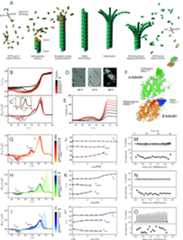
Monitoring tubulin polymerization with nano-differential scanningfluorimetry (nanoDSF). (A) Different stages of tubulin polymerizationin MTs. (B,C) Polymerization and denaturation of tubulin at differenttubulin concentrations followed by nanoDSF; the inset represents tubulindenaturation followed by nanoDSF in the nonpolymerizing buffer. (D)Transmission electron microscopy (TEM) of tubulin at different temperatures.(E) Polymerization and denaturation of tubulin at different tubulinconcentrations followed by turbidimetry. (F) Structures of mebendazole(MBZ), vinblastine (VBL), and taxol (TXL) complex with tubulin heterodimervisualized from structures with PDB IDs:5J2T,7OGN, and8UTN. (G–I) Polymerization and denaturationof tubulin in the presence of different concentrations of MBZ, VBL,and TXL, respectively, followed by nanoDSF. (J–L) Dependenceof the temperatures of polymerization (Tpoly), depolymerization (Tdepoly), and denaturation(Tm) of tubulin from the concentrationof MBZ, VBL, and TXL, respectively. (M–O) Isothermal titrationcalorimetry (ITC) curves of tubulin titration by MBZ, VBL, and TXL,respectively, in the polymerization buffer.
Microtubule targeting agents (MTAs) are a class of tubulin-bindingcompounds that are used not only for cancer treatment but also asanthelmintic, antibacterial, and antifungal drugs. Moreover, recently,MTA administration was proposed as a new strategy for the therapyof neurodegenerative diseases., The MTA interactionwith tubulin significantly impacts MT dynamics, thus perturbing vitalcellular processes. MTAs differ by their binding sites on tubulin, (FigureF) and aregrouped in two classes by their ability to induce or inhibit MT formation.The first MTAs with anticancer activity were originally obtained fromplants and were subsequently subjectedto chemical modifications to yield new compounds with superior anticancerproperties. While pharmaceutical companies have developed variousMTA anticancer drugs, the demand for new molecules remains high, drivingresearchers to explore additional natural sources of MTAs. These new compounds should exhibit increasedspecificity and broader efficacy across different tumor types andshould be capable of overcoming drug resistance observed in certaintumors, which may arise from MTA interplay with MAPs., Structure-based rational design of MTAs continues to play a crucialrole in drug discovery., However, small chemicalmodifications of existing drugs often fail to produce MTAs with significantlydifferent characteristics due to their shared scaffolds. Therefore,identifying MTAs with potentially superior anticancer properties requiresscreening large and structurally diverse libraries of chemical compounds.
There are several molecular screening assays based on differentbiophysical methods that allow for identification of the interactionbetween a target protein and potential binders. Among them, the thermalshift assay (TSA) has become widely used for early stage drug discoveryin the last years because it is accessible (RT-PCR equipment is sufficient)and is high throughput (adapted for 96, 384, and 1536-well plates)with a low material consumption. Thistechnique facilitates the assessment of protein thermostability (meltingor denaturation temperature,Tm) in thepresence of screening compounds, thereby providing evidence of aninteraction. However, like many molecular assays, it generates a certainnumber of false positive and false negative results. This phenomenonarises because, first, not all interactions between the protein andcompounds lead to a significant change in protein thermostability,as detected by TSA, and, second, not every interaction impacts thebiological process regulated by the protein, which is the intendedtarget of new drug therapies. This is especially relevant for tubulin,which possesses multiple ligand-binding sites. Consequently, thereis no direct correlation between the extent of tubulin stabilizationby a compound and its efficacy as a polymerization inhibitor or promoter.Thus, molecular screening assays that not only demonstrate tubulin–compoundinteractions but also elucidate the effect of the compound on tubulinpolymerization (the specific process targeted) are essential for theefficient discovery of MTAs.
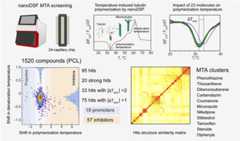
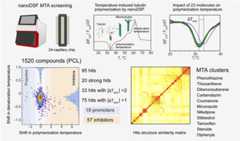
To address these challenges, weintroduce anin vitro functional MTA screening methodologyutilizing nanoDSF. Unlike RT-PCR-basedassays, nanoDSF does not require fluorescent dyes as it monitors theintrinsic fluorescence of proteins. Remarkably, this approach enablesa dual readout, allowing simultaneous detection of both tubulin stabilizationby the compound and its effect on tubulin polymerization. We appliedthe nanoDSF screening assay to the Prestwick Chemical Library (PCL),which comprises 1520 approved compounds. This application not onlyvalidated the assay with known MTAs contained within the library butalso led to the identification of approximately 100 compounds demonstratingMTA activity.
Results
Monitoring Tubulin PolymerizationUsing Nano-Differential ScanningFluorimetry
To monitor tubulin polymerization, we used ananoDSF instrument from NanoTemper Technologies, which enables trackingof the protein’s intrinsic fluorescence at 330 and 350 nm acrossa temperature range of 15–95 °C. The ratio of these twosignals (F350/F330) reflects the exposure of the protein’s tryptophan side-chainaromatic groups to the solvent, allowing for the observation of proteindenaturation upon heating the sample. We have noticed that the dimerizationinterface of tubulin contains several tryptophan residues, potentiallyenabling the use of nanoDSF not only to monitor tubulin denaturationbut also to observe the formation of MTs. To test this hypothesis,we subjected tubulin samples at varying concentrations to heatingusing nanoDSF in a polymerization buffer, wherein tubulin has thecapability to polymerize upon reaching physiological temperatures(FigureB,C). At alow subcritical concentration of tubulin, we detected only a singletransition around 62 °C, indicative of tubulin denaturation denotedfurther asTm. Consistently, at higherconcentrations of tubulin, two additional transitions emerged on thethermogram. The first transition, occurring between 26 and 39 °C(depending on tubulin concentration), displayed a signal oppositethat of tubulin denaturation, suggesting that tryptophan side-chainaromatic groups were concealed from the solvent rather than exposed.This event most probably corresponds to tubulin polymerization. Thesubsequent transition, occurring between 50 and 55 °C, matchedthe magnitude of signal change of the first transition but was oppositein direction, strongly suggesting it correlates with the depolymerizationof MTs. These transitions are also accompanied by changes in sampleturbidity at 350 nm, with an increase followed by a decrease, returningto baseline around 55 °C (FigureE). The polymer state of tubulin under nanoDSF experimentalconditions was confirmed using TEM at different temperatures (FigureD), thus validatingnanoDSF as a tool to study the impact of compounds on tubulin polymerization.Henceforth, we denote the temperatures corresponding to the minimaand maxima of the first derivative of theF350/F330 ratio as the apparent temperaturesof tubulin polymerization (Tpoly) anddepolymerization (Tdepoly), respectively.
Given that tubulin has multiple binding sites influencing its polymerization,we evaluated the interaction of tubulin with three MTAsVinblastine(VBL), Taxol (TXL), and Mebendazole (MBZ)each binding to distinctsites (FigureF).This was done to assess the capability of the nanoDSF assay to detectinteractions between tubulin and MTAs. Therefore, tubulin samplesin the presence of increasing concentrations of MBZ, VBL, and TXLwere subjected to heating from 15 to 80 °C using the nanoDSFinstrument. This induced markedly distinct alterations in tubulinpolymerization and denaturation profiles (FigureG–I). A gradual increase in MBZ concentrationresulted in a notable shift ofTpoly tohigher temperatures without affectingTdepoly andTm (FigureG,J), until MBZ reached a concentration of100 μM. At this concentration, MBZ entirely inhibited MT formation,resulting in the disappearance of the first two transitions (FigureG, yellow curve).
Contrary to MBZ, VBL is able not only to inhibit tubulin polymerizationin substoichiometric amounts but also to decrease the temperatureof depolymerization (FigureH,K). VBL is known to sequester tubulin into spiral structures.Therefore, the observed changes inTpoly andTdepoly values and the shallowerpeak slopes may indicate structural transitions between MTs and spiralsrather than dimers. This also explains the increase in the heightof the denaturation peak since it would induce the exposure to thesolvent of tryptophans not only from the tubulin core but also fromthe dimerization interface. Moreover, the marked increase in the denaturationtemperature may not result directly from ligand binding but ratherfrom mutual stabilization of tubulin dimers when arranged within spiralstructures.
Unlike MBZ and VBL, TXLknown to promoteMT formationshiftsTpoly andTdepoly in opposite directions (refer toFigureI,L). At a certainTXL concentration, thecharacteristic transitions become indistinguishable:Tpoly drops below 15 °C, while the depolymerizationtransition merges with the denaturation peak. Thus, similarly to VBL,high concentrations of TXL lead to an increase in the height of thedenaturation peak, likely reflecting the unfolding of tubulin thatremains assembled in MTs at the onset of denaturation. Despite thissimilarity, the denaturation profiles of tubulin differ markedly betweenTXL and VBL. Specifically, a detailed examination of tubulin denaturationpeaks with increasing concentrations of VBL reveals a sequence whereinitially, the peak’s magnitude decreases, followed by thepeak becoming asymmetric, and ultimately, it increases in amplitudeand shifts to higher temperatures. In contrast, TXL leads to a gradualincrease in both the amplitude andTm oftubulin’s symmetric denaturation peak. This may reflect differencesin site accessibility, which in turn couldinfluence the dynamics of compound exchange between free and boundstates, thereby differentially affectingtubulin denaturation.
Ultimately, the apparent affinity constantsof compounds couldbe independently estimated by analyzing both theTm shift and the alterationsin fluorescence signal at 15 °C,which is particularly advantageous under experimental conditions whereconventional reference methods, like ITC, are ineffective (FigureM–O). Moreover,the nanoDSF assay is easier to set up and requires significantly lessmaterial than ITC.
Application of Nano-Differential ScanningFluorimetry for MicrotubuleTargeting Agent Screening
Thus, tracking temperature-inducedtubulin polymerization with nanoDSF enables the detection of shiftsin the polymerization temperature (ΔTpoly) across a broad concentration range with high sensitivity. Thisapproach facilitates the qualitative assessment of MTAs’ effectson tubulin polymerization, allowing for their comparative evaluationbased on this criterion. Additionally, further heating reveals theimpact of MTAs on tubulin’s thermostability (ΔTm). By measuring these two distinct parameters,the first directly related to the tubulin function targeted by MTAsand the second reflecting the structural influence of MTAs on tubulin,this approach emerges as highly promising for MTA screening. AdvancednanoDSF instruments, such as the automated Prometheus NT.Plex, areequipped to conduct high-throughput screening of chemical librariesfor compounds targeting tubulin. To evaluate the efficacy of our novelMTA screening methodology, we applied it, as a proof of concept, tothe PCL, which comprises 1520 approved drugs (FigureA–C). SinceTpoly is highly sensitive to tubulin concentration (FigureB,C), each run includeda control sample, and the polymerization temperature shifts (ΔTpoly) were calculated relative to this control.This approach helped to minimize the variability of ΔTpoly values across experiments. Notably,Tpoly among 67 control samples followed a normaldistribution, with a standard deviation of 0.5 °C, while thestandard deviation ofTpoly in runs withouthits containing one control and 23 molecules was twice as low, atjust 0.25 °C.
2.

NanoDSF screening of PCL of 1520 approved compounds. (A)NanoDSFscreening workflow. (B) Results of PCL screening. Red dots representsorted data points. (C) Distributions of ΔTpoly and ΔTm valuesrepresented as 1D histograms and 2D density plot. (D) ΔTpoly histogram and its fitting with Laplacedistribution. (E) 2D distributions of ΔTpoly and ΔTm values of hitswith their therapeutic classes (some hits out of plot range, seeSupporting Information tables for ΔTpoly and ΔTm values for all hits). (F) Distribution of hits in therapeutic classes.(G) Known primary targets of hits. (H,I) IC50 of hits forU87MG cancer cell line and its distribution. (J) 2D distributionsof absolute value of |ΔTpoly| andIC50 of hits (orange points have negative ΔTpoly).
We observed that in the presence of 20 compounds (1.3% of PCL),tubulin exhibited no polymerization, suggesting either a completeinhibition of MT formation or the initiation of MT formation at temperaturesbelow 15 °C. These compounds are henceforth categorized as stronghits. Among these, nine are already known as MTAs (Table), three are suspected of havingMTA activity (Auranofin (AUF), Ebselen (EBS), and Riboflavin (RBF)),and eight (Aprepitant (APT), Benzarone (BZ), Benzbromarone (BZB),Benziodarone (BZI), Bithionol (BTN), Hexachlorophene (HCP), Nifedipine(NFD), and Nisoldipine (NSD)) are newly identified as exhibiting MTAactivity, previously unreported. For the remaining 1500 drugs, tubulinpolymerization occurred, enabling their classification based on twometrics: ΔTpoly and ΔTm. The initial findings, along with 1D and 2Ddistributions of these metrics, are depicted inFigureB–D with standard deviation equalto 0.7 and 0.2 °C for ΔTpoly and ΔTm, respectively. Both valuesdemonstrate Laplace distribution; compounds causing a ΔTpoly shift greater than 2 °C were designatedas hits withp < 0.0004. Those with a 1 °C< ΔTpoly < 2 °C are alsoconsidered potential MTAs, termed weak hits (p <0.02), meriting further investigation.
1. List ofDrugs from PCL with the MostImportant Effect on Tubulin Polymerization.
| Name | Therapeutic class | Targets | Impact on MTs | Cancertreatment |
|---|---|---|---|---|
| Known MTAs | ||||
| Colchicine | metabolism | tubulin | prevents MT assembly and thereby disrupts inflammasome activation | derivatives regarded as potentialchemotherapy drugs |
| Docetaxel | oncology | tubulin | disrupts normal MT dynamics and thereby stops cell division | chemotherapy agent utilized invarious cancers |
| Fenbendazole | infectology metabolism | tubulin | moderate affinity to mammalian tubulin | moderate antineoplastic activity |
| Mebendazole | infectologymetabolism | tubulin | selectively inhibitstubulin polymerization via interactionwith colchicine-binding site of β-tubulin | repositioned asa prospective anticancer agent |
| Paclitaxel | oncology | tubulin | stabilizes the MT polymer and protects it fromdisassembly | anticancerdrug |
| Podophyllotoxin | metabolism | tubulin | prevents polymerizationof tubulin by binding to colchicinesite | antitumor, derivativesapplied in chemotherapy |
| Dienestrol | endocrinology | ERα,ERβ | inhibits MT assembly in vitro by binding tothe site analogousto the colchicine site | carcinogenic |
| Hexestrol | endocrinology oncology | ERα,ERβ | inhibits MT assembly in vitro by binding tothe site analogousto the colchicine site | carcinogenic |
| Thiomersal | infectology | InsP3R | inhibits tubulin polymerization in vitro | induces apoptosis in some cancercell lines |
| Suspectedfor MTA activity | ||||
| Auranofin | metabolism | NF-κB kinase β;PRDX5 | inhibits phagocytosis which could be linked toMT modulation | cytotoxicto mutant p53 cancer cells |
| Ebselen | metabolism central nervous system(CNS) | AChE, SEH | in high doses disruptsMTs in cells | suppressescancer cell growth |
| Riboflavin | metabolism ophthalmology | FMN | rescues cytoskeletal alterations in patients withRTD | potential adjuvantin chemoradiotherapy |
| Newly detectedMTAs | ||||
| Aprepitant | metabolism | NK 1 receptor | unknown | potential antitumor agent |
| Benzarone | rheumatology | nonpurine XO; SLC22A12; EYA3 | unknown | inhibits tumor growth in animal model |
| Benzbromarone | cardiovascular | uric acid uptake | unknown | predictedas a therapeutic drug for lung adenocarcinoma (LUAD) |
| Benziodarone | cardiovascular | uric acid uptake | unknown | not used |
| Bithionol | dermatology | ADCY1 | unknown | synergistic with paclitaxelin ovarian cancer |
| Hexachlorophene | infectology | G6PDH, SHP2 | unknown | suppresses proliferation in nonsmallcell lung cancer (NSCLC)model |
| Nifedipine | cardiovascular | cytochrome P450 3A4 | unknown | reverses drug resistance of cancer cells |
| Nisoldipine | cardiovascular | DHP channel | unknown | not used |
Among both strong and weak hits, we discovered that 30 compoundsare classified within the therapeutic category targeting metabolism;26 are utilized in infectious diseases, 17 in endocrinology, and 17in the treatment of CNS disorders (seeFigureE,F). When examining the therapeutic effectsof the drugs that influence tubulin polymerization, we identified27 compounds with antifungal properties, 19 with antineoplastic effects,16 with antibacterial activity, and 9 each with anti-inflammatory,antipsychotic, and anthelmintic effects. As expected, the main knowntarget of those hits was tubulin; still, more than 75% of hits hasanother protein listed as the “main” target (FigureG). Therefore, tubulinshould also be considered a significant target for these compounds,which could explain the molecular mechanism of action of some compounds,or the side effects associated with the clinical use of these molecules.
To assess whether compounds with MTA activity also demonstratecytotoxic effects, cell survival assays were conducted on the humanU87MG glioblastoma cell lines at varying concentrations of some identifiedcompounds. Our analysis revealed that for approximately 50% of thesecompounds (54 molecules), the IC50 value was less than40 μM, while for about 20% (19 compounds), it was under 10 μM(FigureH–J,Tables S1–S8). The IC50 valuesshowed no significant correlation with the change in the tubulin polymerizationtemperature (ΔTpoly) (FigureJ).
Structure–ActivityRelationship of Some Newly IdentifiedMicrotubule Targeting Agents
Furthermore, we analyzed thestructural similarity among all of the hit compounds. To achieve this,we initially computed a structure similarity matrix detailing thepairwise distances between compounds, utilizing “Morgan Connectivity”fingerprints. Subsequently, we derived a cluster hierarchy based onthis matrix (FigureA) and reorganized the structure similarity matrix in accordancewith the identified clustering, excluding compounds with minimal structuralresemblance (FigureB, hits with small structural similarity are listed inTable S8). This process enabled us to identifyand better visualize several clusters of molecules with analogousstructures within the hits (FigureA,B). Thus, various small clusters that include bothpreviously identified and novel MTAs are identified (FigureA,B,F–L,Tables S3–S7), two prominent clustersare highlighted, composed of established MT inhibitors: carbendazim(FigureD,Table S2) and phenothiazine (PTZ) derivatives(FigureE,Table S1). In the last cluster, we identifiedtwo pairs of molecules, perphenazine (PPZ) and fluphenazine (FPh),as well as chlorpromazine (CPZ) and triflupromazine (TFZ), whereinthe substitution of a chlorine atom (–Cl) at the second positionof the PTZ scaffold with a trifluoromethyl group (−CF3) (seeFigureD)leads to a significant increase in ΔTpoly. To gain deeper understanding of this phenomenon, we employed funnelmetadynamics to simulate the docking of these four molecules, alongwith colchicine as a control, into the colchicine binding site ofβ-tubulinalso recognized as the binding site for PTZderivatives. The docking of colchicineto β-tubulin resulted in a center-of-mass position that wasconsistent with the X-ray crystallographic data (data not shown).Next, a comparative analysis of the two pairs of compounds showedthat the introduction of trifluoromethyl groups generally alteredboth the position and affinity of the molecules (FigureA,B). In the CPZ–TFZpair, the difference was most pronounced, with the trifluoromethylgroup penetrating deep into the protein cavity and “dragging”the entire molecule with it. In the PPZ–FPh pair, the trifluoromethylgroup also played a key role in forming effective contacts withinthe hydrophobic region of the β-sheet near the colchicine bindingsite. According to our calculations, the affinity of FPh was significantlyhigher than that of PPZ. Comparison of TFZ and FPh suggests that theirinhibition efficiencies arise from different mechanisms: while FPhexhibits high affinity, TFZ binding leads to substantial rearrangementsin the interfacial interactions between α- and β-tubulinsubunits.
3.

Structure–activity relationship of some hits. (A) Hierarchicaldendrogram representing chemical clusters of hits. (B) Sorted chemicalsimilarity matrix for hit compounds that have at least one similarcompound among the hits. (C) Absolute value of ΔTpoly of hits: polymerization inhibitors are shown in orangeand promoters in blue bars. Strong hits that completely inhibit tubulinpolymerization are shown in white bars. (D) Structures and ΔTpoly of CBZ derivatives. Each next modificationis highlighted in light yellow. (E) Structures and ΔTpoly of PTZ derivatives. (F–L) Tubulininhibitors grouped by scaffold similarity, with corresponding structuralformulas. Numbers indicate ΔTpoly values where applicable; * denotes compounds with low impact ontubulin polymerization (nonhits).
4.

Funnelmetadynamics simulation for PTZ derivatives. (A) Funnelmetadynamics simulation of the interactions between compounds PPZ,FPh, CPZ, and TFZ upon binding with the β-tubulin subunit. The2D plot represents the free energy profile of compound binding, withcoordinates as follows: thex-axis indicates thedistance from the center of mass (COM) of the CLH (as determined byX-ray data, zero value) to the COM of the compound, while they-axis shows the torsion angle representing the arbitraryrotation of the compound molecule relative to tubulin within the interactionplane. Stable binding modes are marked with a red cross. (B) Visualizationof the binding modes of compounds PPZ, FPh, CPZ, and TFZ with correspondingβ-tubulin conformations denoted by red cross minima. The proteinmolecules are shown in the cartoon mode, colored in blue and lightpink, while the compound molecules are displayed as spheres with carbonatoms in gray, chlorine atoms in yellow, and fluorine atoms in lightgreen. The dashed line represents the position of the CLH COM.
Discussion
New Approach for MicrotubuleTargeting Agent Screening
MTAs are an important class ofcompounds widely used in the treatmentof various diseases, including antifungal, antibacterial, antihelminthic,and antineoplastic therapies. Moreover, there is a growing body ofevidence that MT stabilizing MTAs could be used for treatment of braindisorders., Despite MTAs being considered a relativelyold class of anticancer drugs, some of which are perceived as no longer“trendy”, new therapeutic approaches based on MTAs continueto be proposed for cancer treatment. However,due to the development of drug resistance and significant side effectsassociated with these drugs, there is a constant need for more efficientand specific compounds that target tubulin polymerization. Numerousefforts have been made to develop MTA screening methods. In 2016,the team of Klassen et al. developed an assay of antitubulin drugsscreening based on catch-and-release electrospray ionization massspectrometry. They concluded that thedeveloped assay could be applied for anticancer drug screening andfor ranking the affinities of compounds to tubulin. Still, they didnot apply this new assay to “real” approved chemicallibraries. Moreover, the affinities of compounds are not always directlycorrelated with the anticancer activity of the molecules. While atleast six distinct binding sites for tubulin inhibitors are currentlyknown, each influencing tubulin polymerization in different ways,recent virtual screening studies have expanded the number of potentialbinding sites to 27. To validate thevirtual screening findings, the development of the functional MTAtest is still needed. This encouraged the team of Stefano Di Fioreto develop a SNAP-tag-based screening assay for the analysis of MTdynamics and cell cycle progression. Unfortunately,like the previous assay, it was tested only on a small number of molecules;however, it follows MT functions, making it more appropriate for newMTA screening. The main disadvantage of the proposed assay is thatit follows the impact of tested compounds in the cells wherein itis very difficult to separate the direct impact of the molecules ontubulin polymerization from indirect perturbation of the cellularcytoskeleton through molecules binding to some other targets thatperturb cell cycle and thus impact the cytoskeleton. Finally, to thebest of our knowledge, until now, there has been no functional high-throughputassay for MTA screening applied to diverse chemical libraries exceptin silico virtual screenings− sometimes followed by further in vitro validation.
The new nanoDSF screening assay introducedin this study not only overcomes the limitations of previous methodsbut also introduces additional advantages that are crucial for accuratelydetermining the mode of action of compounds. First, nanoDSF servesas an in vitro functional assay within a simplified environment, enablingthe ranking of compounds by their effect on tubulin polymerization,as indicated by shifts inTpoly. Second,nanoDSF incorporates several internal controls that enhance the assay’sreliability. The initial fluorescence measurement confirms the correcttubulin concentration, essential sinceTpoly is concentration dependent. Additionally, this assay enables thedetermination of tubulin’sTm,thereby not only calculating ΔTm for each compound but also ensuring the proper folding state oftubulin at each run. This feature is particularly vital for automatedscreenings, where maintaining the stability of such “fragile”proteins as tubulin over extended periods in plates is a key concern.Furthermore, by employing varying concentrations of compounds, itis feasible to ascertain the apparent association constants of hitswith tubulin based on both the fluorescence signal at a fixed temperatureand the denaturation temperature shift. Unlike previous MTA screeningassays, we validated our method on a library of 1520 approved compoundsand successfully identified every known MTA in that set Colchicine,Docetaxel, Fenbendazole, Mebendazole, Paclitaxel, Podophyllotoxin,Albendazole, Griseofulvin, Nocodazole, Oxibendazole, Oxfendazole,Parbendazole, and Triclabendazole.
Compounds with HighestMicrotubule Targeting Agent Activity
Through a novel nanoDSFscreening assay, we identified approximately95 compounds with MTA activity within the PCL. Among these, 20 compoundsfully inhibited temperature-induced tubulin polymerization under theexperimental conditions (Table). Some achieved this by directly inhibiting polymerization,while others promoted polymerization at lower temperatures. Notably,recognized MTAs such as Paclitaxel, Docetaxel, Podophyllotoxin, Colchicine,Fenbendazole, and Mebendazole were among those that prevented temperature-inducedpolymerization entirely. Additionally, our study confirmed that artificialestrogens like Hexestrol and Dienestrol, as well as the antisepticThiomersal, also impacted tubulin polymerization, consistent withprevious reports of their direct effects on tubulin.,
Over half of the strong hits were identified as MTAs for thefirst time through this screening. Among these, Auranofin (AUF), Ebselen(EBS), and Riboflavin (RBF) had previously been shown to affect thecytoskeleton despite the absence of direct evidence for tubulin binding.Thus, AUF, an antirheumatic gold complex, inhibits neutrophil activationby markedly reducing the number of centriole-associated MTs and obstructingphagocytosis in human polymorphonuclear leukocytes, likely througha mechanism that involves MT dysregulation., AUF is increasingly recognized as a potential anticancer agent;by serving as an inhibitor of both thioredoxin reductase and proteasome,it induces oxidative stress and triggers apoptosis in models of NSCLC. EBS, an organoselenium compound that mimicsglutathione peroxidase, has been explored as a neuroprotectant inischemia and conditions linked to oxidative stress. Research demonstrates its ability to destabilize MTs inskin melanocytes and inhibit tumor growth through the suppressionof 6-phosphogluconate dehydrogenase activity.− Deficienciesin RBF (vitamin B2) transport are linked to disturbances in MT dynamics;however, these disruptions can be alleviated through the administrationof RBF in cellular models. Furthermore,combining RBF with chemotherapy has been suggested as a strategy toreduce side effects and enhance therapeutic outcomes.
Eight of the identified strong hits were previouslyunrecognizedin their association with tubulin, marking them as novel discoveries.Notably, a family of benzofurans (Benzbromarone (BZB), Benzarone (BZ),and Benziodarone (BZI)FigureI) has been demonstrated to directly and effectively modulatetubulin polymerization, aligning with previous findings that BZ inhibitstumor growth in vitro. Intriguingly,BZ and BZB both were used in the treatment of gout akin to CLHawell-known MTA. While BZB is believed to act through uric acid reuptake,CLH disrupts inflammasome assembly at the cytoskeletal level., The revelation that benzofurans may also interact with MTs introducesan additional dimension to our understanding of their anticancer andanti-inflammatory properties. Among the novel MTAs identified is APT,a GPCR inhibitor is extensively used in chemotherapy to prevent commonside effects like nausea. Remarkably, APT is also attributed withthe antitumor properties of its own., BTN and HCP(FigureL) are fungicidesfrom a class of bridged diphenyl compounds with cytotoxic and antiproliferativeaction in cancer cell lines., Our findings revealthat several dihydropyridines, approved for managing angina, alsointerfere with MT assembly. Notably, Nifedipine (NFD) and Nisoldipine(NSD) (FigureG) demonstratedthe most significant impact on tubulin. While calcium channel blockerslike NFD have been previously noted to enhance the sensitivity ofdrug-resistant cancer cell lines to PTX, our research marks the first instance of identifying these medicationsas MTAs.
Collectively, the strong hits identified in this studypresentcompelling cases for drug repurposing, echoing the findings of priorresearch. Specifically, compounds such as AUF, EBS, APT, BZ, BZB,and HCP exhibit antitumor activity in vitro.,,,,, NFD shows potentialin reversing drug resistance in cancer cells, while RBF and BTN enhance the effectiveness of existing anticancerdrugs., Additionally, BZI and NFD represent modificationsof molecules with established antineoplastic properties, further underscoringtheir potential for repurposing in cancer therapy.
Structure–ActivityRelationship
Carbendazim and Benzofuran Clusters
Carbendazim derivativeswere characterized (Table S2) from a significantcluster of compounds with varied MTA activity, ranging from the completeinhibition of tubulin polymerization seen in the presence of MBZ andFBZ to a spectrum of high, medium, and low inhibitory effects observedfor Albendazole (ABZ, 6.4°C), Nocodazole (NCZ, 6.0°C), Oxfendazole(OFZ, 3.8°C), Methiazole (MTZ, 2.7°C), Parbendazole (PBZ,1.8°C), Flubendazole (FLU, 1.4°C), and Oxibendazole (OBZ,1.3°C) (FigureD). While most of these derivatives are utilized as broad-spectrumanthelmintic agents targeting the colchicine site on tubulin, PBZis employed as an antifungal drug, and only NCZ is used in oncology.However, most exhibit anticancer potential to varying degrees. Specifically,MBZ and ABZ have been highlighted as promising anticancer agents,, FBZ has shown moderate antineoplastic activity, OFZ has been found to inhibit cell growth in NSCLC, MTZ enhances the efficacy of gemcitabine inpancreatic cancer, and FBZ has a putativeaction against triple-negative breast cancer. Even OBZ, with the lowest inhibitory effect on tubulin polymerizationamong the MBZ derivatives, has been reported to significantly impedethe growth of androgen-independent tumors. Carbendazim itself, along with some of its derivatives, are systemic broad-spectrum fungicides thatalso target tubulin. The most potentinhibitors of tubulin polymerization among its derivatives, MBZ andFBZ, feature a benzene ring attached at the 11th position of the carbendazimstructure, connected through a sulfur atom or a carbonyl group. Furtheranalysis reveals that the inhibitory effect on tubulin polymerization,as indicated by changes in ΔTpoly for OBZ, PBZ, and ABZ, significantly improves with the substitutionof carbon atoms at the first position of the aliphatic chain withsulfur and, to a lesser extent, decreases with substitution by oxygen.
We also identified a compact cluster of three benzofuran derivatives:Benzarone (BZ), Benzbromarone (BZB), and Benziodarone (BZI) (FigureI,Table S2). All three compounds exhibited complete inhibitionof tubulin polymerization. Considering that modification of the phenolgroup with bromine and iodine does not diminish the inhibitory propertiesof BZ, it suggests that the benzofuran moiety may play a pivotal rolein tubulin polymerization inhibition. Supporting this notion, TCZ,featuring a Benzothiophene groupa structure analogous to benzofuranwith the oxygen atom replaced by sulfurexhibits the most pronouncedeffect on tubulin polymerization within the MCZ cluster (FigureH). This hypothesisis in line with published data on the impact of benzofuran in itsderivatives on tubulin polymerization., While therehas been no previous report of these compounds exhibiting MTA activity,BZ has been documented to inhibit the growth of colorectal cancercells both in vitro and in vivo. Althoughthe mechanism of BZ’s action was suggested to involve its primarytarget EYA3 and the inhibition of the EYA3-SIX5-p300 complex, ourresults suggest the possibility of a direct effect on MTs as well.This is supported by observations of BZ leading to a dose-dependentdecrease in cell proliferation and invasion, processes fundamentally reliant on MT dynamics. Additionally, BZBhas been pinpointed as a potential candidate for drug repositioningin the treatment of LUAD through AI-driven analysis of gene dysregulation. Our findings lend robust support to these insights,suggesting a potential molecular mechanism behind BZB’s anticancerefficacy.
Tricyclic Molecules Clusters
Severalderivatives ofPTZ have been identified to exhibit notable MTA activity (Figure,Table S1). While PTZ itself induces a modest shift in tubulinpolymerization temperature (ΔTpoly) by 1 °C, its derivativesThiethylperazine (TEP, 1.0°C),Chlorprothixene (CPX, 1.1°C), Toluidine blue (TB, 1.1°C),Perphenazine (PPZ, 1.5°C), Methylene Blue (MB, 1.7°C), Chlorpromazine(CPZ, 1.7°C), Trifluoperazine (TFP, 2.7°C), Flupentixol(FPX, 3.5°C), Fluphenazine (FPh, 3.7°C), and Triflupromazine(TFZ, 6.4°C)show progressively stronger inhibitory effects(FigureE). Theseare antipsychotics drugs (except TB and MB) often used in schizophreniapatients, and there is epidemiological evidence that has linked lowercancer incidence in schizophrenia patients to long-term medication,highlighting the anticancer potential of antipsychotics. Notably, only TFP and CPZ have been previouslyrecognized for their ability to inhibit MT assembly,, yet all these derivatives have been either demonstrated or hypothesizedto possess anticancer properties, despite their primary classificationas CNS therapeutics targeting dopamine receptors. For instance, PPZhas been highlighted as a potential antitumor agent, CPZ in oral cancer treatment, TFP in suppressing colorectal cancer cell models, FPX as a potential lung cancer treatment, FPh in enhancing cancer cell sensitivity to Halaven, and TFZ has been identified as a selective modulatoraffecting the breast cancer cell cycle. While various mechanisms for the anticancer activity of these drugshave been proposed, our results suggest a direct, shared MTA mechanismamong these structurally related molecules.
Additionally, thisMTA mechanism might offer an alternative explanation for the pleiotropiceffects observed with PTZ derivatives against Gram-negative bacterialpersister cells and their antitubercularactivity., Within the screened PTZ derivative family,there are three pairs of molecules in which the substitution of a–Cl group with a –CF3 group at the secondposition (FigureD)markedly enhanced their inhibitory effects on tubulin polymerization.Specifically, for the CPZ and TFZ pair, the ΔTpoly escalated from 1.7 to 6.4 °C; for PPZ and FPh,it increased from 1.5 to 3.7 °C; and for prochlorperazine andTFP, it rose from 0.5 to 2.7 °C (FigureD). The critical contribution of the –CF3 group to inhibiting tubulin polymerization is also underscoredby a 1 °C higher ΔTpoly observedfor 2-(trifluoromethyl) PTZ compared to PTZ.
A similar enhancementin tubulin polymerization inhibition resultingfrom the substitution of a –Cl group with a –CF3 group is observed in another pair of molecules, derivativesof thioxanthene. These differ from PTZ derivatives only by replacementof a nitrogen atom with carbon in the central ring (FigureD). Zuclopenthixol (ZPX), bearinga –Cl group at the second position, shows no significant effecton tubulin polymerization, whereas FPX, featuring a –CF3 group, induces a 3.5 °C shift inTpoly.
This study also uncovered a group of MTAs amongDibenzosuberone(DBS) derivatives (FigureF), traditionally recognized as tricyclic antidepressants:Nortriptyline (NTP), Loratadine (LTD), Protriptyline (PTP), Norcyclobenzaprine(nCBP), Opipramol (OPP), Clomipramine (CMP), and Asenapine (ANP).These compounds exhibit a modest effect on tubulin polymerization,with a ΔTpoly of approximately 1°C. While none of these were previously recognized for influencingtubulin polymerization, certain members have been noted for theiranticancer activities against prostate, or glioblastomacell lines. Additionally, CMP has beenreported to augment the cytotoxicity induced by vinorelbine in humanneuroblastoma cancer cells. The antitubulinproperties of PTZ, Thioxanthene, and DBS derivatives, which are utilizedin CNS treatments and thereby capable of crossing the blood–brainbarrier, position them as promising candidates for repositioning inthe treatment of brain tumors.
Conclusions
Insummary, we have developed a novel nanoDSF assay for screeningMT-targeting agents, compounds widely used in anticancer, antifungal,and antibacterial therapies. Unlike previous assays, our method evaluatesboth compound binding to tubulin and its impact on tubulin polymerization.We validated this assay using the PCL, comprising 1520 approved compounds,successfully identifying all known MTAs as hits. This approach alsouncovered new antitubulin drugs among compounds previously associatedwith cancer cell proliferation inhibition or cytotoxicity, reaffirmingtubulin as a critical target for anticancer drug development. Ourfindings not only pave the way for the drug repositioning of newlyidentified MTAs and streamline the search for novel scaffolds withinlarge chemical libraries but also facilitate the exploration of structure–activityrelationships, contributing to more efficient rational drug discovery.We hope to inspire renewed interest in the discovery of anticancercompounds within the MTA class.
ExperimentalSection
Materials
Human glioblastoma cells were obtained fromATCC (Gaithersburg, MD, USA). Compounds used in the cytotoxicity assaywere from PCL, MedChemTronica (Bergkällavägen, Sweden),or Sigma (St Louis, MO, USA).
Tubulin Purification
Tubulin was purified from lambbrains by ammonium sulfate fractionation and ion-exchange chromatographyand stored in liquid nitrogen as described. Tubulin concentration was determined at 275 nm with an extinctioncoefficient of 109,000 M–1 cm–1 in 6 M guanidine hydrochloride.
Turbidimetry and DifferentialScanning Fluorimetry Assays
Aliquots of tubulin were passedthrough a larger (1 × 10 cm)gravity column of Sephadex G25 equilibrated with 20 mM sodium phosphatebuffer, 1 mM EGTA, 10 mM MgCl2, 3.4 M glycerol, and 0.1mM GTP, pH 6.5 (PEMGT buffer) or 20 mM Tris, 1 mM MgCl2, 0.1 mM GTP, pH 6.5 for nonpolymerizing conditions. For MTA bindingassays, VBL, MBZ, and TXL were used at concentrations up to 100 μM,with tubulin at 15 or 10 μM, respectively. Each capillary wasloaded with 10 μL of the sample. Fluorescence and turbidimetrymeasurements were performed on a nanoDSF Prometheus NT.Plex systemequipped with backscattering optics from 15 to 80 °C, using 10%excitation power and a temperature ramp of 1 K/min.
Nano-DifferentialScanning Fluorimetry Screening
FornanoDSF screening of 1520 FDA-approved compounds, 50 nL aliquots in100% DMSO were dispensed into 384-well microplates and stored at −80°C. Prior to nanoDSF measurements, 10 μL of 10 μMtubulin in PEMGT buffer was added to each well in a 24-well lane andmixed thoroughly by pipetting. The final compound concentration wasapproximately 50 μM in 0.5% DMSO. Plates were briefly centrifugedto eliminate air bubbles, and the samples were transferred to standardDSF-grade capillaries mounted on a 24-capillary rack. All measurementswere performed on a nanoDSF Prometheus NT.Plex instrument from 20to 75 °C, with 10% excitation power and a heating rate of 1 K/min.
Isothermal Titration Calorimetry
Binding of MTA totubulin was probed using a MicroCal iTC200 instrument (MicroCal, Northampton,MA, USA, now part of Malvern Instruments Ltd., Malvern, UK) in PEMGTbuffer. To prevent tubulin polymerization, the cell temperature wasmaintained at 10 °C. Tubulin was loaded into the calorimetriccell at a concentration of 20 μM, and MTA was titrated witha syringe at 250 μM.
Transmission Electron Microscopy
Samples were adsorbedonto 200 mesh Formvar carbon-coated copper grids, stained with 2%(w/v) uranyl acetate, and blotted to dryness. Grids were observedusing a JEOL JEM-1220 transmission electron microscope operated at80 kV. Magnifications used range from 60,000× to 120,000×.To ensure that MTs do not disassemble during adsorption, this stepwas performed in a thermostated room at 37 °C. The same stepwas performed for grids at 4 and 80 °C.
Cell Culture, Cytotoxicity,and Proliferation Assays
Glioblastoma cell culture routines,viability, and proliferationassays were performed as previously described. U87MG cells were maintained in complete MEM media supplementedwith 10% FBS and 2 mMl-glutamine (Invitrogen, Paris, France).For cytotoxicity assays, cells were counted and plated in 96-wellflat-bottom plates (50,000 cells/mL, 5000 cells per well). After 24h, the cells were treated with increasing concentrations of the MTAs(0, 1, 5, 10, and 20–40 μM) in a vehicle solution, containing0.05% DMSO. All concentrations were done in triplicates. The survivingcells were quantified after 72 h by the tetrazolium bromide MTT-assay,according to the manufacturer’s instructions. After cell lysis,the optical density was measured at 600 nm using a Multiskan MS Thermoplate reader (LabSystems, Waltham, MA, USA). Cell viability was expressedas a percentage of survival, using cells treated with the vehiclesolution as 100%, and the IC50 values were calculated byusing the Chou and Talalay linearization method.
Funnel Metadynamics
We employedthree freely availablemodern force fields, including Amber19sb. All ligands were parametrizedusing acpype, with atom point charges derived from ab initio 6-31Gcalculations utilizing psiresp. Additionalparameters were assigned according to the GAFF2 force field. GDP wasparametrized in the same manner. The structure of tubulin alpha wasmodeled based on the coordinates from PDB ID4o2b. Protonation states of residues were predicted using PROPKAand manually verified. The system wasthen solvated in a triclinic box with periodic boundary conditionsby using TIP3P water molecules. To neutralize the system and achievean ionic strength of 0.15 M, Na+ and Cl– ions were added. Energy minimization was performed using 5000 stepsof the steepest descent method. The equilibration phase comprisedseven steps. Initially, a 100 ps NVT simulation was conducted, applyingpositional restraints of 1000 kJ/(mol nm2) to the heavyatoms. Temperature coupling was maintained with a velocity rescalethermostat. This was followed by fiverounds of NPT equilibration, each lasting 100 ps, during which restraintstrength was gradually reduced: 1000, 500, 200, 100, and 10 kJ/(molnm2). Pressure coupling was achieved using a stochasticbarostat.
The funnel metadynamicssetup was modeled after the approach described by Raniolo and Limongelli. A metadynamic potential of 0.5 kJ/mol was appliedevery 500 steps. Two collective variables were employed: first, thedistance between the COM of CLH in its binding site and a referencepoint is 20 Å away from its position. This variable projectedthe ligand along the funnel line. Second, the perpendicular distanceof the ligand from this line. A correction to the binding free energywas applied to account for the entropic contribution due to the funnel-shapedrestraint, following the equation provided in Raniolo and Limongelli. The correction factor for the cylinder was calculatedas 1.59 kcal/mol. Final binding free energies were reported with errorestimates, following the method of Bhakat and Söderhjelm, using a statistical analysis window of 1000ns.
Supplementary Material
Acknowledgments
This study was supportedby research funding fromthe Cancéropôle PACA AAP “Repositionnement demolécules en prématuration” 2023 and CanceropôlePACA/Gefluc AAP “Emergence” 2021.
Glossary
Abbreviations
- ITC
isothermal titration calorimetry
- MAP
microtubule-associatedprotein
- MT
microtubules
- MTA
microtubule targetingagents
- nanoDSF
nano-differentialscanning fluorimetry
- PCL
Prestwick Chemical Library
- TEM
transmission electron microscopy
- TSA
thermal shift assay
All data availableupon request.
The SupportingInformation isavailable free of charge athttps://pubs.acs.org/doi/10.1021/acs.jmedchem.5c01008.
PTZ, thioxanthene, anddibenzosuberane clusters; carbendazimand coumarone clusters; miconazole cluster; NFD cluster; stilbenoidsclusters; steroids cluster; diphenyls clusters; and nonclustered hits(PDF)
V.B.: conductednanoDSF and cell survival screening. R.L.R.: established the initialnanoDSF setup, conducted ITC and TEM experiments, and prepared therelated figures. D.A.: purified tubulin for the experiments. C.D.:managed the chemical library. E.P.: oversaw chemical management andrevise the manuscript. P.R.: performed SAR analysis. X.M.: providedsupervision for the chemical library. F.D.: revised the manuscript.A.V.G.: designed, executed, and analyzed funnel metadynamics experiments,interpreted the data, and drafted sections of the manuscript. P.O.T.:secured funding, conception, and design of the study; supervised theproject; performed data analysis and interpretation; prepared figures;drafted the manuscript; and revised it thoroughly.
The authorsdeclare no competing financial interest.
References
- Bodakuntla S., Jijumon A. S., Villablanca C., Gonzalez-Billault C., Janke C.. Microtubule-Associated Proteins: Structuring the Cytoskeleton. Trends Cell Biol. 2019;29:804–819. doi: 10.1016/j.tcb.2019.07.004. [DOI] [PubMed] [Google Scholar]
- Boiarska Z., Passarella D.. Microtubule-targetingagents and neurodegeneration. Drug DiscoveryToday. 2021;26:604–615. doi: 10.1016/j.drudis.2020.11.033. [DOI] [PubMed] [Google Scholar]
- Pellegrini L., Wetzel A., Grannó S., Heaton G., Harvey K.. Back to thetubule: microtubule dynamics in Parkinson’s disease. Cell. Mol. Life Sci. 2017;74:409–434. doi: 10.1007/s00018-016-2351-6. [DOI] [PMC free article] [PubMed] [Google Scholar]
- Guo H., Li X., Guo Y., Zhen L.. An overview of tubulin modulatorsdeposited in protein data bank. Med. Chem. Res. 2019;28:927–937. doi: 10.1007/s00044-019-02352-2. [DOI] [Google Scholar]
- Steinmetz M. O., Prota A. E.. Microtubule-TargetingAgents: Strategies To Hijackthe Cytoskeleton. Trends Cell Biol. 2018;28:776–792. doi: 10.1016/j.tcb.2018.05.001. [DOI] [PubMed] [Google Scholar]
- Barbier P., Tsvetkov P. O., Breuzard G., Devred F.. Decipheringthe molecularmechanisms of anti-tubulin plant derived drugs. Phytochem. Rev. 2014;13:157–169. doi: 10.1007/s11101-013-9302-8. [DOI] [Google Scholar]
- GonzálezGarcía M. C., Radix C., Villard C., Breuzard G., Mansuelle P., Barbier P.. et al. Myotoxin-3 from thePacific Rattlesnake Venom Is a New Microtubule-Targeting Agent. Molecules. 2022;27:8241. doi: 10.3390/molecules27238241. [DOI] [PMC free article] [PubMed] [Google Scholar]
- Devred F.. et al. Stathmin/Op18 is a novelmediator of vinblastine activity. FEBS Lett. 2008;582:2484–2488. doi: 10.1016/j.febslet.2008.06.035. [DOI] [PMC free article] [PubMed] [Google Scholar]
- Malesinski S., Tsvetkov P. O., Kruczynski A., Peyrot V., Devred F.. Stathmin potentiatesvinflunine and inhibits Paclitaxel activity. PLoS One. 2015;10:e0128704. doi: 10.1371/journal.pone.0128704. [DOI] [PMC free article] [PubMed] [Google Scholar]
- Steinmetz M. O., Prota A. E.. Structure-baseddiscovery and rational design of microtubule-targetingagents. Curr. Opin. Struct. Biol. 2024;87:102845. doi: 10.1016/j.sbi.2024.102845. [DOI] [PubMed] [Google Scholar]
- Mühlethaler T., Milanos L., Ortega J. A., Blum T. B., Gioia D., Roy B., Prota A. E., Cavalli A., Steinmetz M. O.. RationalDesign of a Novel Tubulin Inhibitor with a Unique Mechanism of Action. Angew. Chem., Int. Ed. Engl. 2022;61:e202204052. doi: 10.1002/anie.202204052. [DOI] [PMC free article] [PubMed] [Google Scholar]
- Gao K., Oerlemans R., Groves M. R.. Theory and applications of differentialscanning fluorimetry in early-stage drug discovery. Biophys. Rev. 2020;12:85–104. doi: 10.1007/s12551-020-00619-2. [DOI] [PMC free article] [PubMed] [Google Scholar]
- Celej M. S., Dassie S. A., González M., Bianconi M. L., Fidelio G. D.. Differentialscanning calorimetry as a tool to estimate binding parameters in multiligandbinding proteins. Anal. Biochem. 2006;350:277–284. doi: 10.1016/j.ab.2005.12.029. [DOI] [PubMed] [Google Scholar]
- Bhayani J. A., Ballicora M. A.. Determination of dissociation constantsof proteinligands by thermal shift assay. Biochem. Biophys.Res. Commun. 2022;590:1–6. doi: 10.1016/j.bbrc.2021.12.041. [DOI] [PubMed] [Google Scholar]
- Niebling S., Burastero O., Bürgi J., Günther C., Defelipe L. A., Sander S., Gattkowski E., Anjanappa R., Wilmanns M., Springer S.. et al. FoldAffinity:binding affinities from nDSF experiments. Sci.Rep. 2021;11:9572. doi: 10.1038/s41598-021-88985-z. [DOI] [PMC free article] [PubMed] [Google Scholar]
- Posso M. C., Domingues F. C., Ferreira S., Silvestre S.. Developmentof Phenothiazine Hybrids with Potential Medicinal Interest: A Review. Molecules. 2022;27:276. doi: 10.3390/molecules27010276. [DOI] [PMC free article] [PubMed] [Google Scholar]
- Varidaki A., Hong Y., Coffey E. T.. RepositioningMicrotubule StabilizingDrugs for Brain Disorders. Front. Cell. Neurosci. 2018;12:226. doi: 10.3389/fncel.2018.00226. [DOI] [PMC free article] [PubMed] [Google Scholar]
- Ehteda A.. et al. Microtubule-Targeting Combined with HDAC InhibitionIs a Novel TherapeuticStrategy for Diffuse Intrinsic Pontine Gliomas. Mol. Cancer Ther. 2023;22:1413–1421. doi: 10.1158/1535-7163.MCT-23-0179. [DOI] [PMC free article] [PubMed] [Google Scholar]
- RezaeiDarestani R., Winter P., Kitova E. N., Tuszynski J. A., Klassen J. S.. Screening Anti-Cancer Drugs against Tubulin using Catch-and-ReleaseElectrospray Ionization Mass Spectrometry. J.Am. Soc. Mass Spectrom. 2016;27:876–885. doi: 10.1007/s13361-016-1360-x. [DOI] [PubMed] [Google Scholar]
- Mühlethaler T.. et al. Comprehensive Analysisof Binding Sites in Tubulin. Angew. Chem., Int.Ed. Engl. 2021;60:13331–13342. doi: 10.1002/anie.202100273. [DOI] [PMC free article] [PubMed] [Google Scholar]
- Berges N., Arens K., Kreusch V., Fischer R., Di Fiore S.. Toward Discoveryof Novel Microtubule Targeting Agents: A SNAP-tag-Based High-ContentScreening Assay for the Analysis of Microtubule Dynamics and CellCycle Progression. SLAS Discovery. 2017;22:387–398. doi: 10.1177/2472555216685518. [DOI] [PubMed] [Google Scholar]
- Horgan M. J.. et al. Identification of Novel β-Tubulin InhibitorsUsing a Combined/Approach. J. Chem. Inf. Model. 2023;63:6396–6411. doi: 10.1021/acs.jcim.3c00939. [DOI] [PMC free article] [PubMed] [Google Scholar]
- Niu M.-M.. et al. Tubulin inhibitors: pharmacophore modeling, virtualscreening andmolecular docking. Acta Pharmacol. Sin. 2014;35:967–979. doi: 10.1038/aps.2014.34. [DOI] [PMC free article] [PubMed] [Google Scholar]
- Pérez-Peña H., Abel A.-C., Shevelev M., Prota A. E., Pieraccini S., Horvath D.. Computational Approachesto the Rational Design ofTubulin-Targeting Agents. Biomolecules. 2023;13:285. doi: 10.3390/biom13020285. [DOI] [PMC free article] [PubMed] [Google Scholar]
- Hadizadeh F., Ghodsi R., Mirzaei S., Sahebkar A.. In silico Explorationof Novel Tubulin Inhibitors: A Combination of Docking and MolecularDynamics Simulations, Pharmacophore Modeling, and Virtual Screening. Comput. Math. Methods Med. 2022;2022:4004068. doi: 10.1155/2022/4004068. [DOI] [PMC free article] [PubMed] [Google Scholar]
- Chaudoreille M. M., Peyrot V., Braguer D., Codaccioni F., Crevat A.. Qualitative study of the interactionmechanism of estrogenicdrugs with tubulin. Biochem. Pharmacol. 1991;41:685–693. doi: 10.1016/0006-2952(91)90067-f. [DOI] [PubMed] [Google Scholar]
- Parry J. M.. An evaluationof the use of in vitro tubulin polymerisation, fungal and wheat assaysto detect the activity of potential chemical aneugens. Mutat. Res. 1993;287:23–28. doi: 10.1016/0027-5107(93)90142-3. [DOI] [PubMed] [Google Scholar]
- Hafström I., Seligmann B. E., Friedman M. M., Gallin J. I.. Auranofin affectsearly events in human polymorphonuclear neutrophil activation by receptor-mediatedstimuli. J. Immunol. 1984;132:2007–2014. doi: 10.4049/jimmunol.132.4.2007. [DOI] [PubMed] [Google Scholar]
- Kühn S. H., Gemperli M. B., De Beer F. C.. Effect of two goldcompounds on humanpolymorphonuclear leukocyte lysosomal function and phagocytosis. Inflammation. 1985;9:39–44. doi: 10.1007/BF00915410. [DOI] [PubMed] [Google Scholar]
- Abdalbari F. H., Telleria C. M.. The gold complexauranofin: new perspectives for cancertherapy. Discover Oncol. 2021;12:42. doi: 10.1007/s12672-021-00439-0. [DOI] [PMC free article] [PubMed] [Google Scholar]
- Noguchi N.. Ebselen, auseful tool for understanding cellular redox biology and a promisingdrug candidate for use in human diseases. Arch.Biochem. Biophys. 2016;595:109–112. doi: 10.1016/j.abb.2015.10.024. [DOI] [PubMed] [Google Scholar]
- Kasraee B.. et al. Ebselen is a new skindepigmenting agent that inhibits melanin biosynthesisand melanosomal transfer. Exp. Dermatol. 2012;21:19–24. doi: 10.1111/j.1600-0625.2011.01394.x. [DOI] [PubMed] [Google Scholar]
- Feng Q.. et al. Discovery of Ebselenas an Inhibitor of 6PGD for Suppressing TumorGrowth. Cancer Manage. Res. 2020;12:6921–6934. doi: 10.2147/CMAR.S254853. [DOI] [PMC free article] [PubMed] [Google Scholar]
- Niceforo A., Marioli C., Colasuonno F., Petrini S., Massey K., Tartaglia M., Bertini E., Moreno S., Compagnucci C.. Altered cytoskeletalarrangement in induced pluripotent stem cells and motor neurons frompatients with riboflavin transporter deficiency. Dis. Models Mech. 2021;14:dmm046391. doi: 10.1242/dmm.046391. [DOI] [PMC free article] [PubMed] [Google Scholar]
- Hassan I., Chibber S., Naseem I.. Vitamin B2:A promising adjuvantin cisplatin based chemoradiotherapy by cellular redox management. Food Chem. Toxicol. 2013;59:715–723. doi: 10.1016/j.fct.2013.07.018. [DOI] [PubMed] [Google Scholar]
- Yang C., Liu H.. Both a hypoxia-inducibleEYA3 and a histone acetyltransferase p300function as coactivators of SIX5 to mediate tumorigenesis and cancerprogression. Ann. Transl. Med. 2022;10:752. doi: 10.21037/atm-22-2663. [DOI] [PMC free article] [PubMed] [Google Scholar]
- Dalbeth N., Lauterio T. J., Wolfe H. R.. Mechanism of action of colchicinein the treatment of gout. Clin. Ther. 2014;36:1465–1479. doi: 10.1016/j.clinthera.2014.07.017. [DOI] [PubMed] [Google Scholar]
- Azevedo V. F., Kos I. A., Vargas-Santos A. B., da Rocha Castelar Pinheiro G., Dos Santos Paiva E.. Benzbromaronein the treatment of gout. Adv. Rheumatol. 2019;59:37. doi: 10.1186/s42358-019-0080-x. [DOI] [PubMed] [Google Scholar]
- Wang D.-S.. et al. Effect of Aprepitant for the Prevention of Chemotherapy-InducedNauseaand Vomiting in Women: A Randomized Clinical Trial. JAMA Network Open. 2021;4:e215250. doi: 10.1001/jamanetworkopen.2021.5250. [DOI] [PMC free article] [PubMed] [Google Scholar]
- Muñoz M., Coveñas R.. The Neurokinin-1Receptor Antagonist Aprepitant: AnIntelligent Bullet against Cancer? Cancers. 2020;12:2682. doi: 10.3390/cancers12092682. [DOI] [PMC free article] [PubMed] [Google Scholar]
- Ayyagari V. N., Diaz-Sylvester P. L., Hsieh T.-H. J., Brard L.. Evaluation of the cytotoxicityof the Bithionol-paclitaxel combination in a panel of human ovariancancer cell lines. PLoS One. 2017;12:e0185111. doi: 10.1371/journal.pone.0185111. [DOI] [PMC free article] [PubMed] [Google Scholar]
- Fu N. J.. et al. Hexachlorophene, a selective SHP2 inhibitor, suppressesproliferationand metastasis of KRAS-mutant NSCLC cells by inhibiting RAS/MEK/ERKand PI3K/AKT signaling pathways. Toxicol. Appl.Pharmacol. 2022;441:115988. doi: 10.1016/j.taap.2022.115988. [DOI] [PubMed] [Google Scholar]
- Chiu L.-Y.. et al. L-type calcium channelblockers reverse docetaxel and vincristine-inducedmultidrug resistance independent of ABCB1 expression in human lungcancer cell lines. Toxicol. Lett. 2010;192:408–418. doi: 10.1016/j.toxlet.2009.11.018. [DOI] [PubMed] [Google Scholar]
- Huang R. X.. et al. Lung adenocarcinoma-relatedtarget gene prediction and drug repositioning. Front. Pharmacol. 2022;13:936758. doi: 10.3389/fphar.2022.936758. [DOI] [PMC free article] [PubMed] [Google Scholar]
- FreireBoullosa L.. et al. Auranofin reveals therapeutic anticancer potentialby triggering distinct molecular cell death mechanisms and innateimmunity in mutant p53 non-small cell lung cancer. Redox Biol. 2021;42:101949. doi: 10.1016/j.redox.2021.101949. [DOI] [PMC free article] [PubMed] [Google Scholar]
- Chai J.-Y., Jung B.-K., Hong S.-J.. Albendazoleand Mebendazole as Anti-Parasiticand Anti-Cancer Agents: an Update. Korean J.Parasitol. 2021;59:189–225. doi: 10.3347/kjp.2021.59.3.189. [DOI] [PMC free article] [PubMed] [Google Scholar]
- Pantziarka P., Bouche G., Meheus L., Sukhatme V., Sukhatme V. P.. Repurposingdrugs in oncology (ReDO)Cimetidine as an anti-cancer agent. Ecancermedicalscience. 2014;8:485. doi: 10.3332/ecancer.2014.485. [DOI] [PMC free article] [PubMed] [Google Scholar]
- Dogra N., Kumar A., Mukhopadhyay T.. Fenbendazoleacts as a moderate microtubuledestabilizing agent and causes cancer cell death by modulating multiplecellular pathways. Sci. Rep. 2018;8:11926. doi: 10.1038/s41598-018-30158-6. [DOI] [PMC free article] [PubMed] [Google Scholar]
- Xu D., Tian W., Jiang C., Huang Z., Zheng S.. The anthelminticagent oxfendazole inhibits cell growth in non-small cell lung cancerby suppressing c-Src activation. Mol. Med. Rep. 2019;19:2921–2926. doi: 10.3892/mmr.2019.9897. [DOI] [PubMed] [Google Scholar]
- Florio R., Veschi S., di Giacomo V., Pagotto S., Carradori S., Verginelli F., Cirilli R., Casulli A., Grassadonia A., Tinari N.. et al. The Benzimidazole-Based Anthelmintic Parbendazole:A Repurposed Drug Candidate That Synergizes with Gemcitabine in PancreaticCancer. Cancers. 2019;11:2042. doi: 10.3390/cancers11122042. [DOI] [PMC free article] [PubMed] [Google Scholar]
- Zhen Y.. et al. Flubendazole elicitsanti-cancer effects via targeting EVA1A-modulatedautophagy and apoptosis in Triple-negative Breast Cancer. Theranostics. 2020;10:8080–8097. doi: 10.7150/thno.43473. [DOI] [PMC free article] [PubMed] [Google Scholar]
- Chen Q., Li Y., Zhou X., Li R.. Oxibendazole inhibits prostate cancercell growth. Oncol. Lett. 2017;15:2218–2226. doi: 10.3892/ol.2017.7579. [DOI] [PMC free article] [PubMed] [Google Scholar]
- Li M.. et al. Targeting tubulin protein to combat fungal disease: Design, synthesis,and its new mechanistic insights of benzimidazole hydrazone derivatives. Int. J. Biol. Macromol. 2025;300:140226. doi: 10.1016/j.ijbiomac.2025.140226. [DOI] [PubMed] [Google Scholar]
- Vela-Corcía D., Romero D., de Vicente A., Pérez-García A.. Analysis ofβ-tubulin-carbendazim interaction reveals that binding sitefor MBC fungicides does not include residues involved in fungicideresistance. Sci. Rep. 2018;8:7161. doi: 10.1038/s41598-018-25336-5. [DOI] [PMC free article] [PubMed] [Google Scholar]
- El-Sayed N. F.. et al. Design, synthesis, biological evaluation, and molecular docking ofnew benzofuran and indole derivatives as tubulin polymerization inhibitors. Drug Dev. Res. 2022;83:485–500. doi: 10.1002/ddr.21880. [DOI] [PubMed] [Google Scholar]
- Stehrer-Schmid P., Wolf H. U.. Effects of benzofuranand seven benzofuran derivativesincluding four carbamate insecticides in the in vitro porcine braintubulin assembly assay and description of a new approach for the evaluationof the test data. Mutat. Res. 1995;339:61–72. doi: 10.1016/0165-1110(94)00015-5. [DOI] [PubMed] [Google Scholar]
- Hsu C.-Y., Yang W.-T., Lin J.-H., Lu C.-H., Hu K.-C., Lan T.-H., Chang C.-C.. Sertindole, an AntipsychoticDrug,Curbs the STAT3/BCL-xL Axis to Elicit Human Bladder Cancer Cell ApoptosisIn Vitro. Int. J. Mol. Sci. 2023;24:11852. doi: 10.3390/ijms241411852. [DOI] [PMC free article] [PubMed] [Google Scholar]
- Rao A. G., Cann J. R.. A comparativestudy of the interaction of chlorpromazine,trifluoperazine, and promethazine with mouse brain tubulin. Mol. Pharmacol. 1981;19:295–301. doi: 10.1016/S0026-895X(25)13483-4. [DOI] [PubMed] [Google Scholar]
- Poffenbarger M., Fuller G. M.. Effects of psychotropicdrugs on neurotubule assembly. J. Neurochem. 1977;28:1167–1174. doi: 10.1111/j.1471-4159.1977.tb12305.x. [DOI] [PubMed] [Google Scholar]
- Chen Y.. et al. Repurposing of antipsychoticsperphenazine for the treatment of endometrialcancer. Bioorg. Med. Chem. Lett. 2020;30:127239. doi: 10.1016/j.bmcl.2020.127239. [DOI] [PubMed] [Google Scholar]
- Jhou A.-J.. et al. Chlorpromazine, an antipsychotic agent, induces G2/Mphase arrestand apoptosis via regulation of the PI3K/AKT/mTOR-mediated autophagypathways in human oral cancer. Biochem. Pharmacol. 2021;184:114403. doi: 10.1016/j.bcp.2020.114403. [DOI] [PubMed] [Google Scholar]
- Xia Y., Jia C., Xue Q., Jiang J., Xie Y., Wang R., Ran Z., Xu F., Zhang Y., Ye T.. Antipsychotic DrugTrifluoperazine Suppresses Colorectal Cancer by Inducing G0/G1 Arrestand Apoptosis. Front. Pharmacol. 2019;10:1029. doi: 10.3389/fphar.2019.01029. [DOI] [PMC free article] [PubMed] [Google Scholar]
- Dong C.. et al. The antipsychotic agent flupentixol is a new PI3K inhibitorand potentialanticancer drug for lung cancer. Int. J. Biol.Sci. 2019;15:1523–1532. doi: 10.7150/ijbs.32625. [DOI] [PMC free article] [PubMed] [Google Scholar]
- Cheon J. H., Lee B. M., Kim H. S., Yoon S.. Highly Halaven-resistantKBV20C Cancer Cells Can Be Sensitized by Co-treatment with Fluphenazine. Anticancer Res. 2016;36:5867–5874. doi: 10.21873/anticanres.11172. [DOI] [PubMed] [Google Scholar]
- Warchal S. J.. et al. High content phenotypic screening identifies serotonin receptor modulatorswith selective activity upon breast cancer cell cycle and cytokinesignaling pathways. Bioorg. Med. Chem. 2020;28:115209. doi: 10.1016/j.bmc.2019.115209. [DOI] [PMC free article] [PubMed] [Google Scholar]
- Mohiuddin S. G., Nguyen T. V., Orman M. A.. Pleiotropic actionsof phenothiazinedrugs are detrimental to Gram-negative bacterial persister cells. Commun. Biol. 2022;5:217. doi: 10.1038/s42003-022-03172-8. [DOI] [PMC free article] [PubMed] [Google Scholar]
- Nizi M. G.. et al. Antitubercular polyhalogenatedphenothiazines and phenoselenazinewith reduced binding to CNS receptors. Eur.J. Med. Chem. 2020;201:112420. doi: 10.1016/j.ejmech.2020.112420. [DOI] [PubMed] [Google Scholar]
- Yano T., Li L.-S., Weinstein E., Teh J.-S., Rubin H.. Steady-statekinetics and inhibitory action of antitubercular phenothiazines onmycobacterium tuberculosis type-II NADH-menaquinone oxidoreductase(NDH-2) J. Biol. Chem. 2006;281:11456–11463. doi: 10.1074/jbc.M508844200. [DOI] [PubMed] [Google Scholar]
- Cheng X., Zhao W., Zhu M., Wang B., Wang X., Yang X.. et al. Drug repurposing for cancer treatment through globalpropagation with a greedy algorithm in a multilayer network. Cancer Biol. Med. 2021;19:74–89. doi: 10.20892/j.issn.2095-3941.2020.0218. [DOI] [PMC free article] [PubMed] [Google Scholar]
- Chang H.-T.. et al. The mechanism of protriptyline-inducedCa2+ movement andnon-Ca2+-triggered cell death in PC3 human prostate cancercells. J. Recept. Signal Transduction. 2015;35:429–434. doi: 10.3109/10799893.2014.1000464. [DOI] [PubMed] [Google Scholar]
- Lin W.-Z., Liu Y.-C., Lee M.-C., Tang C.-T., Wu G.-J., Chang Y.-T., Chu C.-M., Shiau C.-Y.. From GWAS to drugscreening: repurposing antipsychotics for glioblastoma. J. Transl. Med. 2022;20:70. doi: 10.1186/s12967-021-03209-2. [DOI] [PMC free article] [PubMed] [Google Scholar]
- Bilir A.. et al. Enhancement of vinorelbine-inducedcytotoxicity and apoptosis byclomipramine and lithium chloride in human neuroblastoma cancer cellline SH-SY5Y. J. Neuro-Oncol. 2010;100:385–395. doi: 10.1007/s11060-010-0209-6. [DOI] [PubMed] [Google Scholar]
- Andreu J. M., Gorbunoff M. J., Lee J. C., Timasheff S. N.. Interactionof tubulin with bifunctional colchicine analogues: an equilibriumstudy. Biochemistry. 1984;23:1742–1752. doi: 10.1021/bi00303a025. [DOI] [PubMed] [Google Scholar]
- Chocry M., Leloup L., Parat F., Messé M., Pagano A., Kovacic H.. Gemcitabine: An Alternative Treatmentfor Oxaliplatin-Resistant Colorectal Cancer. Cancers. 2022;14:5894. doi: 10.3390/cancers14235894. [DOI] [PMC free article] [PubMed] [Google Scholar]
- Chou T. C., Talalay P.. Quantitative analysis of dose-effectrelationships:the combined effects of multiple drugs or enzyme inhibitors. Adv. Enzyme Regul. 1984;22:27–55. doi: 10.1016/0065-2571(84)90007-4. [DOI] [PubMed] [Google Scholar]
- Alenaizan A., Burns L. A., Sherrill C. D.. Pythonimplementation of the restrainedelectrostatic potential charge model. Int. J.Quantum Chem. 2020;120:e26035. doi: 10.1002/qua.26035. [DOI] [Google Scholar]
- Prota A. E.. et al. The novel microtubule-destabilizingdrug BAL27862 binds to the colchicinesite of tubulin with distinct effects on microtubule organization. J. Mol. Biol. 2014;426:1848–1860. doi: 10.1016/j.jmb.2014.02.005. [DOI] [PubMed] [Google Scholar]
- Søndergaard C. R., Olsson M. H. M., Rostkowski M., Jensen J. H.. Improved Treatmentof Ligands and Coupling Effects in Empirical Calculation and Rationalizationof pKa Values. J. Chem. Theory Comput. 2011;7:2284–2295. doi: 10.1021/ct200133y. [DOI] [PubMed] [Google Scholar]
- Bussi G., Donadio D., Parrinello M.. Canonical sampling through velocityrescaling. J. Chem. Phys. 2007;126:014101. doi: 10.1063/1.2408420. [DOI] [PubMed] [Google Scholar]
- Bernetti M., Bussi G.. Pressure control usingstochastic cell rescaling. J. Chem. Phys. 2020;153:114107. doi: 10.1063/5.0020514. [DOI] [PubMed] [Google Scholar]
- Raniolo S., Limongelli V.. Ligand binding free-energy calculations with funnelmetadynamics. Nat. Protoc. 2020;15:2837–2866. doi: 10.1038/s41596-020-0342-4. [DOI] [PubMed] [Google Scholar]
- Bhakat S., Söderhjelm P.. Resolving the problem of trappedwater in binding cavities:prediction of host-guest binding free energies in the SAMPL5 challengeby funnel metadynamics. J. Comput.-Aided Mol.Des. 2017;31:119–132. doi: 10.1007/s10822-016-9948-6. [DOI] [PMC free article] [PubMed] [Google Scholar]
- Kumar A., Sharma P. R., Mondhe D. M.. Potentialanticancer role of colchicine-basedderivatives: an overview. Anticancer Drugs. 2017;28:250. doi: 10.1097/CAD.0000000000000464. [DOI] [PubMed] [Google Scholar]
- Cheetham P., Petrylak D. P.. Tubulin-targeted agents includingdocetaxel and cabazitaxel. Cancer J. 2013;19:59–65. doi: 10.1097/PPO.0b013e3182828d38. [DOI] [PubMed] [Google Scholar]
- Cortes J. E., Pazdur R.. Docetaxel. J. Clin. Oncol. 1995;13:2643–2655. doi: 10.1200/JCO.1995.13.10.2643. [DOI] [PubMed] [Google Scholar]
- Lacey E.. Mode of actionof benzimidazoles. Parasitol. Today. 1990;6:112–115. doi: 10.1016/0169-4758(90)90227-U. [DOI] [PubMed] [Google Scholar]
- Yang C.-P. H., Horwitz S. B.. Taxol: The First Microtubule StabilizingAgent. Int. J. Mol. Sci. 2017;18:1733. doi: 10.3390/ijms18081733. [DOI] [PMC free article] [PubMed] [Google Scholar]
- Vyas D. M., Kadow J. F.. Paclitaxel: a unique tubulin interacting anticanceragent. Prog. Med. Chem. 1995;32:289–337. doi: 10.1016/S0079-6468(08)70456-9. [DOI] [PubMed] [Google Scholar]
- Sackett D. L.. Podophyllotoxin,steganacin and combretastatin: natural products that bind at the colchicinesite of tubulin. Pharmacol. Ther. 1993;59:163–228. doi: 10.1016/0163-7258(93)90044-E. [DOI] [PubMed] [Google Scholar]
- Zhao W.. et al. Challenges and potential for improving the druggabilityof podophyllotoxin-deriveddrugs in cancer chemotherapy. Nat. Prod. Rep. 2021;38:470–488. doi: 10.1039/D0NP00041H. [DOI] [PubMed] [Google Scholar]
- Inano H.. et al. Promotive effects of diethylstilbestrol, its metabolite (Z,Z-dienestrol)and a stereoisomer of the metabolite (E,E-dienestrol) in tumorigenesisof rat mammary glands pregnancy-dependently initiated with radiation. Carcinogenesis. 1993;14:2157–2163. doi: 10.1093/carcin/14.10.2157. [DOI] [PubMed] [Google Scholar]
- Cavalieri E. L., Rogan E. G.. A unified mechanism in the initiation of cancer. Ann. N.Y. Acad. Sci. 2002;959:341–354. doi: 10.1111/j.1749-6632.2002.tb02105.x. [DOI] [PubMed] [Google Scholar]
- Kuo L. N.. et al. Effect of thimerosalon Ca(2+) movement and viability in human oralcancer cells. Hum. Exp. Toxicol. 2009;28:301–308. doi: 10.1177/0960327109106548. [DOI] [PubMed] [Google Scholar]
Associated Data
This section collects any data citations, data availability statements, or supplementary materials included in this article.
Supplementary Materials
Data Availability Statement
All data availableupon request.