


Series of (([1,1′-Biphenyl]-2-yl)methyl)sulfinylalkylAlicyclic Amines as Novel and High Affinity Atypical Dopamine TransporterInhibitors with Reduced hERG Activity
ThereseC Ku
Jianjing Cao
Sung Joon Won
Gisela A Camacho-Hernandez
Amarachi V Okorom
Kristine Walloe Salomon
Kuo Hao Lee
Claus J Loland
Henry J Duff
Lei Shi
Amy Hauck Newman
Email:anewman@intra.nida.nih.gov. Phone: (410)-952-0410.
Received 2023 Nov 10; Accepted 2023 Dec 22; Revised 2023 Dec 15; Collection date 2024 Feb 9.
Abstract
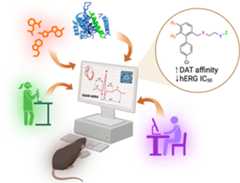
Currently, there are no FDA-approved medications forthe treatmentof psychostimulant use disorders (PSUD). We have previously discovered“atypical” dopamine transporter (DAT) inhibitors thatdo not display psychostimulant-like behaviors and may be useful asmedications to treat PSUD. Lead candidates (e.g., JJC8-091,1) have shown promising in vivo profiles in rodents; however,reducing hERG (humanether-à-go-go-relatedgene) activity, a predictor of cardiotoxicity, has remained a challenge.Herein, a series of 30 (([1,1′-biphenyl]-2-yl)methyl)sulfinylalkylalicyclic amines was synthesized and evaluated for DAT and serotonintransporter (SERT) binding affinities. A subset of analogues was testedfor hERG activity, and the IC50 values were compared tothose predicted by our hERG QSAR models, which showed robust predictivepower. Multiparameter optimization scores (MPO > 3) indicated centralnervous system (CNS) penetrability. Finally, comparison of affinitiesin human DAT and its Y156F and Y335A mutants suggested that severalcompounds prefer an inward facing conformation indicating an atypicalDAT inhibitor profile.
Keywords: atypical dopamine transporter inhibitors, dopamine transporter, DAT, serotonin transporter, psychostimulants, cocaine, humanether-à-go-go-related gene, hERG, multiparameteroptimization score, MPO
Deaths related to use of psychostimulants, such as cocaine andmethamphetamine, have surged by more than 13-fold between 1999 and2021, with a steep increase of nearly 300% recorded between 2013 and2019.1−3 Indeed, the current opioid overdose crisis includesfatalities of people who have used cocaine or methamphetamine thathas been contaminated with fentanyl and has caused the death of theseunsuspecting individuals.4 A combinationof FDA approved medication with behavioral therapy, termed medication-assistedtreatment, has proven more effective in treating substance use disorders(SUD) than employing monotherapies.5−8 However, psycho-stimulant use disorders(PSUD) still lack FDA approved pharmacotherapies. Thus, effectivemedications for the treatment of PSUDs are urgently needed.
The rewarding effects imparted by psychostimulants stem primarilyfrom their inhibition of dopamine (DA) reuptake via DAT9−14 resulting in a surge of synaptic DA and increased neurotransmissionthat can lead to euphoria and potential misuse.9−14 Molecular docking simulations15,16 and X-ray crystallography17 suggest that cocaine prefers binding DAT inan outward-facing conformation, whereas atypical DAT inhibitors, suchas modafinil, JHW007, and JJC8-091 (1;Figure1
Figure 1.

Chemicalstructures of modafinil and analogues.
Modafinil (Figure1) is a weak DAT inhibitor that has shown some positiveeffects intreating PSUD in humans but is not FDA approved as a medication forthat purpose.26−28 A wide range of atypical DAT inhibitors modeled afterthebisphenyl scaffold of modafinil have been synthesizedand evaluated.23,29−35 For example, preclinically, compound1 (Figure1) exhibited a noncocaine-likebehavioral profile, and its pretreatment reduced cocaine-induced reinstatementto drug seeking behaviors in rats.22 Inaddition, compound1 was effective in models of reducingboth short and long access methamphetamine self-administration.36 More recently, the sulfenyl-cis-2,6-dimethylpiperazine modafinil analogue, RDS03-94 (2;Figure1), was foundto have ∼10-fold higher DAT affinity than1, inrat brain tissue, but with modest cocaine-like locomotor stimulanteffects, in mice.31 Moreover,2 showed a reduced hERG (humanether-à-go-go-related gene)/DAT ratio compared to1, improving thepredicted cardiac safety profile at a therapeutically relevant dose.31 hERG affinity has become an important metricin drug development, as blockade of hERG may prolong the QT interval,which could lead to the lethal cardiac arrhythmia torsade de pointes.37−39 Nevertheless,2 showed relatively poor metabolic stabilityin mouse liver microsomes,31 which hasled to exploration of new scaffolds and computational modeling studies.A new bisphenyl analogue,S,S-CE-158,has recently been highlighted as a high affinity DAT inhibitor thatmay have promise for improving cognitive impairment through increasingDA levels in the nucleus accumbens core.40 It will be very interesting to see if this compound also is effectivein inhibiting behavioral actions of psychostimulant drugs such ascocaine or methamphetamine.
To further explore the structure–activityrelationships(SAR) in this class of compounds, diverse modifications on the piperazinelinker and the 2-propanol terminus have been investigated,31−34 but thebisphenyl scaffold itself has not beenprobed. However, a series ofbiphenyl analogues ofmodafinil, such as compound3 (Figure1), were examined for their effect on sleepin rats.41,42 The peripheral aryl group was functionalizedwith various substituents and was placedortho-,meta-, andpara- to the sulfeinylacetamidemoiety.41 Theortho-arylsubstituted compounds, especially compound3, were foundto be the most promising at promoting wakefulness within the study,illuminating an interesting template to explore chemically.41
Moreover, our machine learning-based quantitativeSAR (QSAR) modelsof hERG activity predicted that thebiphenyl seriesmay have reduced hERG activity compared to the 4′F-bisphenylanalogues.16 These studies inspired usto synthesize a series of new compounds combining thebiphenyl moiety of3 and sulfe(i)nyl-piperazine 2-propanolscaffolds of1 and2 to further our SARof atypical DAT inhibitors with potentially reduced hERG activity,with a focus on this diaryl pharmacophore.
All final compoundswere evaluated for DAT and SERT binding inrat brain (Table1).A subset of analogues was tested for hERG channel activity comparedto1 and previously reported analogues2,23–35. Additionally, we compared the hERG affinitiespredicted by our QSAR models and their corresponding experimentalmeasurements. Furthermore, compounds9k,10b,10i,10k,10l, and21a were also tested and compared to cocaine and1 for binding at WT DAT, and the Y156F and Y335A mutants, which wereheterologously expressed in cell lines. The ratios between the bindingaffinities in WT DAT compared to those in either the Y156F or Y335ADAT mutants have previously been used to predict if a compound demonstratesa classical (outward facing) or more atypical (inward facing) DATbinding profile.20,21
Table 1. Binding Data for Sulfenyl- and SulfinylalkylamineAnaloguesa.

EachKi value represents data from at least three independent experiments,each performed in triplicate.Ki valueswere analyzed by PRISM. Binding assay procedures are described indetail inExperimental Methods. [n] = number of experiments.
ND; not determined.
Results and Discussion
Chemical Synthesis
Synthesis of novel piperazine anddiazepane sulfenylalkylamines (9a–9l and11a–11b) and sulfinylalkylamines (10a–l and12a–b) was achieved as depicted inSchemes1 and2. Compounds5a–c were obtained by coupling4a–c with mercaptoethanol under basic condition in92–97% yield. The alcohols were converted to intermediates6a–c with 4-chlorobenzeneboronic acid under Suzukicoupling conditions in 62–77% yield. Compounds7a–c were obtained by bromination of6a–c, via theAppel reaction in 55–99% yield. Alkylation of7a–c with the appropriate piperazine or7b–c with1,4-diazepane furnished key intermediates8a–g or11a–b between 82 and ∼100% yield.As previously reported,23 epoxide ringopening using the appropriate oxiranes gave9a–l. Subsequent sulfenyl oxidation into the sulfinyl with H2O2 in methanol/acetic acid under room temperature gavefinal products10a–l in 35–93% yield (Scheme1). Alkylation ofintermediate7b and7c with 1-(piperazin-1-yl)propan-2-olor 1-(1,4-diazepan-1-yl)propan-2-ol afforded compounds11a and11b in 70 and 37% yield, respectively. Lastly,oxidation of the sulfenyl compounds was performed as described forcompounds10a–l, to afford12a–b in 71–90% yield (Scheme2). Of note, all final compounds are racemic or diastereomericmixtures and were not separated.
Scheme 1. Synthesis of Compounds9a–9l and10a–l.

Reagents and conditions:(a)mercaptoethanol, K2CO3, ACN, 55 °C, overnight;(b) 4-chlorobenzeneboronic acid, Pd(PPh3)4,Na2CO3 solution (2.7 M in H2O), toluene/EtOH= 1/1, 90 °C, overnight; (c) PPh3, CBr4, ACN, room temperature, 2 h; (d) piperazine or 1,4-diazepane, K2CO3, ACN, 60 °C, overnight; (e) appropriateoxirane, isopropanol, 90 °C, overnight; (f) H2O2, AcOH/MeOH, overnight.
Scheme 2. Synthesis of Compounds11a–b and12a–b.

Reagents and conditions:(a)1-(piperazin-1-yl)propan-2-ol or 1-(1,4-diazepan-1-yl)propan-2-ol,K2CO3, ACN, 60 °C, overnight; (b) H2O2, AcOH/MeOH, overnight.
Syntheses of the piperidine sulfenylalkylamine (20a and20b) and sulfinylalkylamine analogues (21a and21b) were achieved as depicted inScheme3. Bromination of alcohol13 togive15 was achieved under Appel conditionsin 69% yield. Thiourea was used to convert compound14 to thiol16 in 89% yield. Conjugation of15 with16 to give17 under alkylation conditionsin acetonitrile (ACN) was followed by Suzuki coupling with 4-chlorobenzeneboronicacid to obtain the Boc-protected biphenyl intermediate18 in 62% yield. Deprotection with TFA afforded19 inquantitative yield. As described above, the piperidine sulfenylalkylamine(20a and20b) were prepared with the appropriateoxirane in 48–62% yield followed by oxidation with H2O2 in methanol/acetic acid to give sulfinylalkylamineanalogues (21a and21b) in 34–69%yield.
Scheme 3. Synthesis of Compounds20a–b and21a–b.

Reagents and conditions:(a)PPh3, CBr4, DCM, room temperature, overnight;(b) thiourea, H2O/ethanol = 1/0.7, reflux, 45 min; (c)K2CO3, ACN, 60 °C, overnight; (d) 4-chlorobenzeneboronicacid, Pd(PPh3)4, Na2CO3 solution (2.7 M in H2O), toluene/ethanol = 1/1, 90 °C,overnight; (e) TFA, CH2Cl2, room temperature,overnight; (f) appropriate oxirane, isopropanol, 90 °C, overnight;(g) H2O2, AcOH/MeOH, overnight.
SAR at DAT and SERT
All final compounds were evaluatedfor binding at DAT and SERT in rat brain membranes and compared to1 and2. Previously reported compounds JJC8-088(22) and RDS04-010 (23) were also includedfor comparison. The DAT and SERT binding affinities (Ki values) and SERT/DAT ratios are presented inTable1.
In our previouslyreported 4′F-bisphenyl series, two major SAR features havebeen consistent: (1) sulfides typically have higher affinities atDAT than their analogous sulfoxides and (2) a terminal phenyl ringfurther increases binding affinities. Nevertheless, in both cases,these features reduce metabolic stability, which is detrimental tointerpreting in vivo studies and precludes further development.
In the first set of compounds evaluated, the (bis(4-fluorophenyl)methyl)substituent was replaced with a 4′-chloro-2-methyl-1,1′-biphenylgroup. Compared to1,10a showed a similarDAT affinity (Ki = 418 nM). Compound9a, also devoid of the 2,6-dimethyl substituents of2 on the piperazine ring, showed a 4.8-fold reduction in DATaffinity compared to2. However, based on the comparableDAT affinity (Ki = 95.5 nM) of9c, the 2,6-dimethyl substituents did not play a major role in theaffinities of these compounds. Likewise,10c showed comparableDAT affinity (Ki = 268 nM) to1. Compound10b showed comparably high affinity for DAT(Ki = 1.33 nM) to22 as did10d (Ki = 0.804 nM), but hereSAR diverged from the 4′F-bisphenyl analogues in that the sulfide,9d, showed a ∼ 3-fold lower affinity at DAT. Addinga F at R1, served to modestly decrease DAT affinities forall the sulfoxides, compared to their unsubstituted counterparts,e.g.,10e vs10b. However, the sulfideswere not adversely affected, e.g.,9d vs9g. When the F was moved to R2, DAT affinities were uniformlydecreased, e.g.,9h vs9a.
Anothermodification of the piperazine ring in1 orthe 2,6-dimethyl piperazine in compound2 to improvemetabolic stability was to replace these piperazines with either ahomopiperazine or a piperidine.34 Thismodification to compound2 decreased DAT affinity by∼4-fold, for9j (Ki = 95.3 nM) and, as observed in the 4′F-bisphenyl series,the sulfoxide10j showed lower affinity at DAT (Ki = 533 nM) compared to1. Interestingly,the reverse was true with the compounds with terminal phenyl rings,where10k had a similar DAT affinity compared to22 (Ki = 5.45 v. 2.60 nM, respectively).Unlike the previous pair, the sulfide,9k, had ∼8-foldlower affinity than the sulfoxide,10k, further demonstratingthat the importance of these two substituents in how these moleculesbind DAT.22 Overall, the F-substituentsin the R1 and R2 positions served to decreaseaffinities at DAT in the homopiperazine series. Finally, the replacementof the piperazine function with piperidine was relatively well-toleratedat DAT, although20a showed ∼6-fold lower affinitythan2 at DAT. The sulfoxide and sulfide analogues,20a and21a, showed essentially the same DATaffinities (Ki = 143 and 164 nM, respectively).
All of these analogues were selective for DAT overSERT. However,selectivities were dramatically different ranging from 6-fold for12b to >14,000-fold for10d.
In additionto searching for atypical DAT inhibitors with highto moderate DAT binding affinities, we also attempted to optimizecentral nervous system (CNS) permeability by aiming for a multiparameteroptimization (MPO)43,44 score of >3. MPO scores inthisseries ranged from 1.8 to 5.3, with approximately half of the compoundsmeeting our criteria of >3. Physicochemical parameters used fortheMPO calculations are tabulated for those compounds also tested forhERG channel activity (Table S1). Of note,all compounds with MPO scores of 4 or higher were sulfoxides.
Molecular Pharmacology and Mutagenesis Studies
We nextevaluated the binding ratios of compounds9k,10b,10i,10k,10l, and21a compared to cocaine and compound1 in hDATwildtype (WT) and the Y156F mutant to preliminarily assess the natureof DAT binding in vitro, as has been described previously with earliergeneration analogues of benztropine and modafinil.20−23 In hDAT WT, substrate bindinghas been predicted to generate a H-bond between the OH-group of Tyr156and Asp79. The H-bond contributes to the conformational changes thateventually expose the binding site toward the intracellular environment.Molecular docking simulations have shown that cocaine prefers to bindhDAT in an outward facing conformation that does not interfere withthis H-bond formation. Consequently, cocaine binds with similar affinitiesto the WT and hDAT Y156F where the OH group of tyrosine (Y) residuehas been removed by replacing it with a phenylalanine (F), yieldingthe hDAT Y156F mutant.15,23 However, binding of the atypicalDAT inhibitors prefer a more occluded DAT conformation when binding,which depends on the Tyr156–Asp79 H-bond formation.15,20,45 Hence, their binding affinitiesare typically decreased in hDAT Y156F resulting in a >2-fold decreaseinKi between hDAT WT and hDAT Y156F (seeTable2, affinity ratio).19,20
Table 2.Ki Valuesfor Inhibition of [3H]WIN35,428 Binding by Indicated Compoundsto hDAT WT and hDAT Y156Fa.
| compound | WTKi (nM) | n | Y156FKi (nM) | n | affinityratio |
|---|---|---|---|---|---|
| cocaine | 287 [244; 336] | 3 | 326 [247; 431] | 3 | 1.1 |
| 1 | 1020 [927; 1130] | 3 | 7560[3980; 14400] | 3 | 7.4 |
| 9k | 55.4 [49.4; 62.2] | 3 | 402 [360; 450] | 3 | 7.3 |
| 10b | 6.74 [6.44; 7.05] | 3 | 248 [195; 317] | 5 | 37 |
| 10i | 50.6 [49.3;51.9] | 3 | 618 [469; 882] | 4 | 12 |
| 10k | 37.5 [35.4; 39.7] | 3 | 346 [309; 387] | 3 | 9.2 |
| 10l | 244 [219; 272] | 3 | 1090[7610; 1560] | 4 | 4.5 |
| 21a | 86.9 [84.8; 89] | 3 | 1130 [1040; 1230] | 3 | 13 |
TheKi values are determined from their respective IC50 valuesin inhibiting [3H]WIN35,428 binding using the Cheng–Prusoffequation. Experiments were performed on intact COS7 cells transientlyexpressing hDAT WT or hDAT Y156F mutant. All measurements were performedin technical triplicate with the indicatedn numberof biological replicates. Values are shown as mean [SEM interval]and are calculated from pIC50 and the SE interval frompIC50 ± SE. SeeExperimental Methods section for details.
Inhibition of [3H]WIN35,428 binding onCOS7 cells transientlyexpressing hDAT WT or hDAT Y156F was determined for a subset of biphenylanalogues. As shown inTable2, all these compounds showed a Y156F/WT hDAT ratio of >2,suggesting a different binding preference than cocaine that is moreeffected by the disruption of the Y156–D79 H-bond formation.
In the next set of experiments, these same analogues were testedfor inhibition of [3H]DA uptake in hDAT WT and hDAT Y335A(Table3). In thiscase, the Y335A mutation induces a more inward facing conformationof hDAT, which dramatically reduces the binding affinity of cocaine.21,46 However, if most of these analogues are predicted to prefer a moreinward occluded conformation, this mutation would be expected to haveless of an adverse effect on binding relative to cocaine. Indeed,for most of the analogues tested, the Y335A/WT ratios were <70.However, compounds10b (TCK1-76) and10k (JJC12-009) showed similar binding affinity ratios to cocaine of72 and 69, respectively.
Table 3.Ki Valuesfor Inhibition of [3H]DA Uptake by Indicated Compoundsto hDAT WT and the Y335A Mutanta.
| compound | WTKi (nM) | n | Y335AKi (nM) | n | affinityratio |
|---|---|---|---|---|---|
| cocaine | 219 [191; 250] | 5 | 13800 [12700; 15100] | 6 | 70 |
| 9b | 39.8 [30.6; 51.8] | 6 | 1010[895; 1140] | 4 | 25 |
| 9k | 78.8 [73.2; 84.8] | 3 | 1670 [1540; 1810] | 3 | 21 |
| 10b | 7.93 [6.99; 8.99] | 3 | 573 [469; 700] | 5 | 72 |
| 10i | 50.5 [42.1;60.5] | 4 | 1580 [1450; 1730] | 3 | 31 |
| 10k | 42.7 [40.2; 45.4] | 3 | 2930 [2660;3230] | 3 | 69 |
| 10l | 225 [179; 283] | 3 | 6130 [5740; 6540] | 3 | 27 |
| 21a | 238 [217; 262] | 3 | 8660 [7840; 9560] | 3 | 36 |
TheKi values are determined from their respective IC50 valuesin inhibiting [3H]DA uptake using the Cheng–Prusoffequation. Experiments were performed on intact COS7 cells transientlyexpressing hDAT WT or hDAT Y335A. All measurements were performedin technical triplicate with the indicatedn numberof biological replicates. Values are shown as mean [SEM interval]and are calculated from pIC50 and the SE interval frompIC50 ± SE. SeeExperimental Methods section for details.
hERG Predicted and Experimental Data
As described inthe introduction, hERG channel activity is considered to be a predictorof cardiotoxicity and thus decreasing hERG activity in this seriesof compounds was another goal for this study. We evaluated 14 compoundsin this biphenyl series and compared their experimentally determinedand computationally predicted hERG channel activity data to 16 previouslydescribed 4′F-bisphenyl analogues. Our aim was to determineif the biphenyl analogues would improve the hERG/DAT affinity ratio,with the goal of >30.
Based on the experimentally determinedhERG activity, as shown inTable4, the only 4′F-bisphenyl analogues to show ahERG/DAT affinity ratio of >30 were the sulfoxides22 and27. The most notably high hERG/DAT affinity ratiosof >500 were all biphenyl analogues that were also sulfoxides andbore terminal phenyl rings. Of note, these ratios were largely drivenby very high DAT affinities in the low nanomolar range. More modesthERG/DAT affinity ratios of >30 were observed for the biphenylanalogues9c,10i, and10k.
Table 4. Predicted and Experimental hERG ActivityDataa.
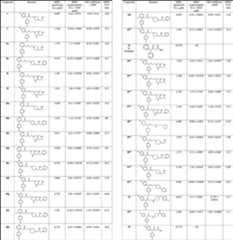
The experiment response of hERGcurrents to various compounds at various concentrations were measuredthrough whole-cell voltage clamp experiments. The results of eachcompound were fitted to Hill equation to obtain the IC50 and Hill coefficient values. IC50 values and Hill coefficientswere determined from at least three independent experiments performedin triplicate and are reported as mean ± SEM (μM). Thepredictions were made using the hERG QSAR models trained with theChEMBL 31 data set.
We previously gathered all availablehERG data from the ChEMBLdatabase and selected IC50 data to train our machine-learningQSAR models for hERG after careful filtering and curation. Utilizingboth random forest (RF) and eXtreme gradient boosting (XGBoost) algorithms,we constructed and optimized our QSAR models. The results showed thatXGBoost-trained models surpassed those trained with RF, and modelsusing clamp data slightly outperformed those using binding data inexternal validation. Compared to our previous QSAR models trainedwith the ChEMBL 25 data set,16 in thisstudy, the benchmarking results of our updated models trained withthe ChEMBL 31 data set demonstrated enhanced predictive power withthe coefficient of determination (R2)increasing from 0.70 to 0.73. The linear and monotonic correlations,represented by the Pearson and Spearman Rank correlation coefficients(RPearson andRSpearman, respectively), also improved:RPearson from 0.84 to 0.88 andRSpearman from0.74 to 0.84 (Figure2A,B). As described in theExperimental Methods section, the ChEMBL 31 data set has 525 more data points than theChEMBL 25 data set, which clearly enriched the training data set,resulting in better performance.
Figure 2.

Correlations between predicted and experimentalhERG affinities.For the 18 compounds that we have made predictions previously, wecompared the results from the QSAR models built from either the ChEMBL25 (A) or the ChEMBL 31 (B) data set. The calculations of both Pearsonand Spearman Rank correlation coefficients (R(p)andR(s), respectively) show that the ChEMBL 31 dataset-based models outperform those based on ChEMBL 25 data set. Panel(C) shows the correlations of all 30 compounds fromTable4 using QSAR models built fromthe ChEMBL 31 data set. The 18 compounds used as the validation dataset previously are shown in green, and the 12 new compounds addedin this study are shown in yellow. Note that the green markers in(B,C) are in the same locations. For each compound, the mean (centerpoint) and standard deviation (lines) of the predicted pIC50 values are plotted. 4′F-bisphenyl compounds are shown as“•”, while biphenyl compounds are shown as ‘x’.
Therefore, the models trained with the ChEMBL 31data set wereused to make predictions for 12 additional compounds (marked yellowinFigure2C; the predictedIC50 values are reported inTable4). The resultingRPearson andRSpearman indicate a strong, positivelinear and monotonic relationship between experimental and predictedpIC50 (0.82 and 0.73, respectively). This strong monotonicrelationship indicates that the hERG affinities can be predicted withreliability. Our QSAR models have practical utility in guiding futureSAR exploration and screening potential candidates for synthesis,either independently or in conjunction with experimental assays.
Conclusions
In summary, based on previous machine learning-basedQSAR model-derivedhERG channel activity predictions,16 wedesigned and synthesized 30 (([1,1′-biphenyl]-2-yl)methyl)sulfinylalkylalicyclic amines as novel and high affinity atypical DAT inhibitorswith reduced hERG activity. We evaluated these compounds for bindingat DAT and SERT and compared them to several previously described4′F-bisphenyl analogues. We determined that replacement ofthe 4′F-bisphenyl moiety with the (4′-(chloro-[1,1′-biphenyl]-2-yl)methyl)-substituentwas generally well tolerated at DAT and all compounds remained selectiveover SERT.
Interestingly, as in the 4′F-bisphenyl series,the compoundswith terminal phenyl rings showed highest affinities for DAT, butin contrast to the 4′F-bisphenyl series, the sulfoxides inthe (4′-(chloro-[1,1′-biphenyl]-2-yl)methyl)-seriestypically showed higher affinities for DAT than their sulfide analogues.This finding is important as the sulfoxides have previously been shownto be more metabolically stable than the sulfides and further, thesulfoxide plays an important role in the inward facing conformationof DAT that these compounds prefer and has been related to nonpsychostimulantbehavioral profiles.48,49 In addition, the sulfoxides generallyhad MPO scores > 3, suggesting these compounds would be more brainpenetrant than the sulfides.
Importantly, although addictionis a human behavior for which animalmodels are still used to determine therapeutic potential, computationalpredictive tools like the ones described herein, as well as in vitrostudies using transfected cell lines, to predict behavior can be usedto implement the principle of three R’s (i.e., replacement,reduction, and refinement), as first described by Russell and Burch.50 This remains a guiding tenet for the use ofanimals in research.51,52 Importantly, using computationaland in vitro predictive studies, we can now strategize new directionsin which to take our drug design that have predicted MPO scores of>3 and those with low predicted hERG activity or high hERG/DATratiosbefore synthesizing and testing the next seriesof compoundsin vivo.
What we conclude from this study is that the (4′-(chloro-[1,1′-biphenyl]-2-yl)methyl)-analogues,and especially those with a sulfoxide and terminal phenyl ring mightprovide an avenue for safer medications (lower hERG activity/higherhERG/DAT ratios). However, based on our previous SAR studies34 as well as preliminary stability studies inrat liver microsomes (Table S3), the compoundswith a piperazine linker and terminal phenyl ring will need furthermodification to achieve better metabolic stability. These resultsunderscore the effectiveness of using cell-based models and predictivetools such as MPO scores and especially, our hERG QSAR models in guidingthe rational design of novel DAT inhibitors.
Finally, the Y156Fand Y335A hDAT mutation studies supported anatypical DAT profile for most of the analogues tested. Additionalmolecular simulations are ongoing to investigate this further andultimately aid in identifying new lead compounds for further development.
Experimental Methods
Synthesis
All reagents and solvents used for chemicalsynthesis and buffer preparation were purchased from commercial sourcesunless otherwise stated and used without additional purification.Spectroscopic data and yields are reported for the compounds as freebases. All flash chromatography was performed using prepacked silicagel cartridges (Teledyne ISCO, RediSep Rf Gold 20–40 μmand RediSep Rf Flash columns 40 to 60 μm) in a combiFlash instrument(combiFlash RF or combiFlash EZ prep, Teledyne ISCO).1H and13C spectra were acquired using a Varian MercuryPlus 400 spectrometer.1H chemical shifts are reportedas parts per million (δ ppm) relative to tetramethylsilane (0.00ppm). All the coupling constants are measured in Hz. Chemical shiftsfor13C NMR spectra are reported as parts per million (δppm) relative to deuterated solvents. Chemical shifts, multiplicitiesand coupling constants (J) have been reported andcalculated using Vnmrj Agilent-NMR 400MR or MNova 9.0. Combustionanalyses were performed by Atlantic Microlab, Inc. (Norcross, GA)or Robertson Microlit Laboratories (Ledgewood, NJ) and agree within±0.4% of calculated values.
Electrospray Ionization Mass Spectrometry
Neat solutionsof samples were dissolved and diluted in ACN. Samples were analyzedby direct injection (10 μL) using a Vanquish UHPLC system (ThermoFisher,Waltham, MA) with tandem Orbitrap Exploris 120 mass spectrometer (ThermoFisher).The flow rate was 200 μL/min with an isocratic mobile phaseof 80% ACN for the 4 min run. Analysis was performed using a heatedelectron spray ionization (HESI) source in positive ion mode. In MSmode, the mass resolution was set at 120,000, while in MS/MS mode,the mass resolution was set at 15,000. HPLC analysis was performedusing an Agilent system coupled with DAD (Diode Array Detector). Meltingpoint determination was conducted using an OptiMelt automated meltingpoint system and are uncorrected. Based on NMR, combustion data andHPLC, all final compounds are >95% pure.
2-((2-Iodobenzyl)thio)ethan-1-ol (5a)
Commercially available 1-(bromomethyl)-2-iodobenzene (246 mg, 0.83mmol) was dissolved in ACN (10 mL). K2CO3 (120mg, 0.91 mmol) and 2-mercaptoethanol (0.07 mL, 0.99 mmol) were added.The mixture was heated to 55 °C and stirred for 18 h. The insolublesalts were removed via vacuum filtration and the crude mixture waspurified through column chromatography (EtOAc in hexanes 10–100%)to yield product (237 mg, 0.81 mmol, 97%) as clear oil.1H NMR (400 MHz, CDCl3) δ: 7.84 (d,J = 8.0 Hz, 1H), 7.36 (d,J = 8.0 Hz, 1H), 7.30 (t,J = 7.4 Hz, 1H), 6.94 (t,J = 7.4 Hz, 1H),3.85 (s, 2H), 3.74 (s, 2H), 2.71 (t,J = 5.4 Hz,2H), 2.18 (br, 1H).13C (100 MHz, CDCl3) δ:30.1, 36.2, 55.6, 95.8, 123.7, 124.2, 125.3, 135.2, 135.7.
2-((4-Fluoro-2-iodobenzyl)thio)ethan-1-ol (5b)
Compound5b was prepared as5a usingcommercially available 1-(bromomethyl)-4-fluoro-2-iodobenzene (11.07g, 34.07 mmol) to yield product (9.78 g, 31.34 mmol, 92%) as clearoil.1H NMR (400 MHz, CDCl3) δ: 7.57 (dd,J = 8.0, 2.6 Hz, 1H), 7.33 (dd,J = 8.5,5.8 Hz, 1H), 7.04 (ddd,J = 8.5, 8.0, 2.7 Hz, 1H),3.83 (s, 2H), 3.75 (q,J = 5.9 Hz, 2H), 2.70 (t,J = 5.9 Hz, 2H), 2.11 (t,J = 6.1 Hz, 1H).13C NMR (100 MHz, CDCl3) δ: 162.2, 159.7,151.0, 136.4, 136.4, 130.5, 130.4, 126.8, 126.6, 115.6, 115.4, 99.6,99.5, 77.3, 77.0, 76.7, 60.4, 40.1, 35.2, 34.8.
2-((3-Fluoro-2-iodobenzyl)thio)ethan-1-ol (5c)
Compound5c was prepared as5a usingcommercially available 1-(bromomethyl)-3-fluoro-2-iodobenzene (1.00g, 3.18 mmol) to yield product (954 mg, 3.06 mmol, 96%) as clear oil.1H NMR (400 MHz, CDCl3) δ: 7.29–7.24(m, 1H), 7.16 (dd,J = 1.2, 7.6 Hz, 1H), 6.95 (td,J = 1.6, 8 Hz, 1H), 3.90 (s, 2H), 3.78–3.72 (m, 2H),2.74–2.69 (br, 2H), 2.08 (t,J = 5.6 Hz, 1H).13C (100 MHz, CDCl3) δ: 163.2, 160.1, 142.6,129.6, 129.6, 125.4, 125.4, 114.3, 114.1, 60.4, 40.5, 40.5, 34.9.
2-(((4′-Chloro-[1,1′-biphenyl]-2-yl)methyl)thio)ethan-1-ol(6a)
In a glass tube,5a (900 mg,3.06 mmol) and 4-chlorobenzeneboronic acid (730 mg, 4.59 mmol) weresuspended in degassed toluene (4 mL) and ethanol (4 mL), followedby addition of Na2CO3 solution, (2.7 M in H2O, 3.06 mL). Pd(PPh3)4 (354 mg, 0.31mmol) was added last, the tube was sealed, and the reaction mixturewas allowed to stir at 90 °C for 18 h. The crude reaction mixturewas diluted with ethyl acetate (10 mL) washed with brine (2 times,10 mL), dried over MgSO4 and the solvent removed in vacuo.The organic mixture was purified via column chromatography (EtOAcin hexanes, 0–100%) to yield the product as yellow oil (530mg, 62%).1H NMR (400 MHz, CDCl3) δ: 7.47–7.20(m, 8H), 3.68 (s, 2H), 3.55 (t,J = 5.2 Hz, 2H),2.60 (t,J = 6 Hz, 2H), 1.99 (br, 1H).13C NMR (100 MHz, CDCl3) δ: 140.9, 139.3, 135.2, 133.4,130.6, 130.2, 130.2, 128.4, 128.0, 127.3, 60.1, 35.3, 33.4.
2-(((4′-Chloro-5-fluoro-[1,1′-biphenyl]-2-yl)methyl)thio)ethan-1-ol(6b)
Compound6b was prepared as6a using5b (1.33 g, 4.26 mmol) to yield theproduct as yellow oil (834 mg, 66%).1H NMR (400 MHz, CDCl3) δ: 7.43–7.32 (m, 5H), 7.04 (t,J = 8 Hz, 1H), 6.93 (d,J = 9.6 Hz, 1H), 3.63 (s,2H), 3.56 (q,J = 6 Hz, 2H), 2.60 (t,J = 6 Hz, 2H), 1.86 (t,J = 5.4 Hz, 1H).
2-(((4′-Chloro-6-fluoro-[1,1′-biphenyl]-2-yl)methyl)thio)ethan-1-ol(6c)
Compound6c was prepared as6a using5c (954 mg, 3.06 mmol) to yield theproduct as yellow oil (702 mg, 2.37 mmol, 77%).1H NMR(400 MHz, CDCl3) δ: 7.46–7.03 (m, 7H), 3.57–3.53(m, 4H), 2.59 (t,J = 6.4 Hz, 2H), 1.84 (t,J = 5.6 Hz, 1H).13C NMR (100 MHz, CDCl3) δ: 161.0, 158.6, 138.4, 134.8, 134.1, 132.0, 131.4, 129.2,129.1, 128.6, 125.5, 125.4, 114.5, 114.3, 60.2, 35.2, 33.1, 33.1.
(2-Bromoethyl)((4′-chloro-[1,1′-biphenyl]-2-yl)methyl)sulfane(7a)
Compound6a (850 mg, 3.02mmol) was dissolved in 20 mL DCM under argon and cooled to 0 °C;CBr4 (2.00 g, 6.04 mmol) was added followed by PPh3 (1.98 g, 7.55 mmol). The reaction was allowed to warm toroom temperature and stirred for 2 h. The solvent was removed in vacuoand the crude mixture was resuspended in ethyl acetate. The resultingsuspension was sonicated for 10 min, after which the mixture was filtered.The filtrate was evaporated, and the crude mixture was further purifiedvia column chromatography (EtOAc in hexanes, 0–10%) to yield7a as clear oil (573 mg, 1.68 mmol, 55%).1H NMR(400 MHz, CDCl3) δ: 7.46–7.20 (m, 8H) 3.71(s, 2H), 3.22 (t,J = 7.6 Hz, 2H), 2.78 (t,J = 8 Hz, 2H).
(2-Bromoethyl)((4′-chloro-5-fluoro-[1,1′-biphenyl]-2-yl)methyl)sulfane(7b)
Compound7b was prepared as7a using6b (8.81 g, 29.7 mmol) to yield7b as clear oil (8.42 g, 78%).1H NMR (400 MHz,CDCl3) δ: 7.44–7.32 (m, 5H), 7.08–6.92(m, 2H), 3.66 (s, 2H), 3.24 (t,J = 9.6 Hz, 2H),2.77 (t,J = 9.0 Hz, 2H).
(2-Bromoethyl)((4′-chloro-6-fluoro-[1,1′-biphenyl]-2-yl)methyl)sulfane(7c)
Compound7c was prepared as7a using6c (702 mg, 2.37 mmol) to yield7c as clear oil (851 mg, 2.37 mmol, 99%).1H NMR(400 MHz, CDCl3) δ: 7.45–7.04 (m, 7H), 3.59(s, 2H), 3.22 (t,J = 7.6 Hz, 2H), 2.77 (t,J = 9.2 Hz, 2H).13C NMR (100 MHz, CDCl3) δ: 161.0, 158.6, 138.2, 138.2, 134.2, 131.8, 131.4, 129.3,129.2, 128.6, 125.5, 125.4, 114.7, 114.5, 60.4, 33.8, 33.4, 33.4,30.1, 30.0, 14.2.
1-(2-(((4′-Chloro-[1,1′-biphenyl]-2-yl)methyl)thio)ethyl)piperazine(8a)
Compound7a (2.45 g, 7.17mmol) was suspended in ACN (100 mL). Piperazine (3.71 g, 43.0 mmol)was added to the mixture followed by K2CO3 (1.98mg, 14.35 mmol). The mixture was heated to 60 °C and stirredfor 18 h. The insoluble salts were filtered off, and the resultingcrude mixture was concentrated and purified via column chromatography(MeOH in DCM, 5–20%) to yield yellow oil (2.35 g, 6.77 mmol,94%).1H NMR (400 MHz, DMSO-d6) δ: 7.51–7.19 (m, 8H), 3.69 (s, 2H), 3.02 (s, 4H),2.55–2.39 (m, 8H).
1-(2-(((4′-Chloro-5-fluoro-[1,1′-biphenyl]-2-yl)methyl)thio)ethyl)piperazine(8b)
Compound8b was prepared as8a using7a (1.47 g, 4.30 mmol) to yield yellowoil (1.45 g, 3.97 mmol, 97%).1H NMR (400 MHz, acetone-d6) δ: 7.58–7.47 (m, 5H), 7.13 (t,J = 8.4 Hz, 1H), 7.02 (d,J = 9.6 Hz, 1H),3.79 (s, 2H), 3.61 (s, 4H), 3.38 (s, 4H), 3.07 (t,J = 7.2 Hz, 2H), 2.81 (t,J = 7.6 Hz, 2H).
1-(2-(((4′-Chloro-6-fluoro-[1,1′-biphenyl]-2-yl)methyl)thio)ethyl)piperazine(8c)
Compound8c was prepared as8a using7c (851 mg, 2.37 mmol) to yield yellowoil (642 mg, 1.76 mmol, 74%).1H NMR (400 MHz, CDCl3) δ: 7.42–6.99 (m, 7H), 3.55 (s, 2H), 2.86–2.82(m, 4H), 2.52–2.33 (m, 8H).13C NMR (100 MHz, CDCl3) δ: 160.9, 158.4, 138.8, 133.8, 132.0, 131.5, 129.0,128.9, 128.4, 125.4, 125.4, 114.2, 114.0, 60.2, 58.6, 54.3, 45.9,33.8, 29.2, 14.1.
(3S,5R)-1-(2-(((4′-Chloro-[1,1′-biphenyl]-2-yl)methyl)thio)ethyl)-3,5-dimethylpiperazine(8d)
Compound8d was prepared as8a using7a (957 mg, 2.80 mmol) andCis-2,6-dimethylpiperazine (383 mg, 3.36 mmol) to yield yellow oil (990mg, 2.80 mmol, 94%).1H NMR (400 MHz, CDCl3)δ: 7.47–7.20 (m, 8H), 3.69 (s, 2H), 2.90–2.41(m, 8H), 1.60 (t,J = 10.8 Hz, 2H), 1.05 (d,J = 6.0 Hz, 6H).
(3S,5R)-1-(2-(((4′-Chloro-5-fluoro-[1,1′-biphenyl]-2-yl)methyl)thio)ethyl)-3,5-dimethylpiperazine(8e)
Compound8e was prepared as8a using7b (1.56 g, 4.35 mmol) andcis-2,6-dimethylpiperazine (383 mg, 3.36 mmol) to yield yellow oil (1.54g, 4.35 mmol, 90%).1H NMR (400 MHz, CDCl3)δ: 7.44–7.33 (m, 5H), 7.02 (t,J = 8.0Hz, 1H), 6.92 (d,J = 9.6 Hz, 1H), 3.63 (s, 2H),2.90–2.83 (m, 2H), 2.68 (d,J = 10.4 Hz, 2H),2.52 (t,J = 7.2 Hz, 2H), 2.40 (t,J = 7.2 Hz, 2H), 1.56 (t,J = 10.4 Hz, 2H), 1.03(d,J = 5.6 Hz, 6H).13C NMR (100 MHz,CDCl3) δ: 162.6, 160.2, 142.7, 142.6, 138.3, 133.7,131.9, 131.8, 131.4, 130.5, 128.5, 116.9, 116.7, 114.8, 114.6, 109.8,109.8, 60.5, 58.1, 50.5, 33.6, 29.3, 19.9.
1-(2-(((4′-Chloro-[1,1′-biphenyl]-2-yl)methyl)thio)ethyl)-1,4-diazepane(8f)
Compound8f was prepared as8a using7a (1.7 g, 5.0 mmol) and 1,4-diazepane(2.0 g, 4 eq, 20.0 mmol) to yield as yellow oil (1.8 g, 5.0 mmol,100%).1H NMR (400 MHz, CDCl3) δ: 7.53–7.19(m, 8H), 3.67 (s, 2H), 2.92–2.84 (m, 4H), 2.65–2.49(m, 8H), 1.72–1.70 (m, 2H).
1-(2-(((4′-Chloro-6-fluoro-[1,1′-biphenyl]-2-yl)methyl)thio)ethyl)-1,4-diazepane(8g)
Compound8g was prepared as8a using7c (1.28 g, 3.56 mmol) and 1,4-diazepane(1.43 g, 14.2 mmol) to yield product (1.1 g, 2.9 mmol, 82%) as yellowoil.1H NMR (400 MHz, CDCl3) δ: 7.43–7.41(m, 2H), 7.30–7.25 (m, 4H), 7.05–7.02 (m, 1H), 3.55(s, 2H), 2.98–2.86 (m, 4H), 2.62–2.47 (m, 8H), 1.83–1.72(m, 2H).
1-(4-(2-(((4′-Chloro-[1,1′-biphenyl]-2-yl)methyl)thio)ethyl)piperazin-1-yl)propan-2-ol(9a)
Compound8a (96 mg, 0.28 mmol)was suspended in isopropyl alcohol (1 mL) in a glass tube and cooledto 0 °C. DIPEA (9 μL, 0.06 mmol) and propylene oxide (0.20mL, 0.28 mmol) were added, and the tube was sealed. The mixture washeated to 90 °C and stirred for 18 h. The solvent was evaporatedin vacuo, and the crude mixture was purified via column chromatography(10% NH4OH in MeOH/DCM, 0–25%) to give yellow oil(78 mg, 0.19 mmol, 70%).1H NMR (400 MHz, CDCl3) δ: 7.48–7.22 (m, 8H), 3.86 (br, 1H), 3.76 (s, 2H)2.67–2.36 (m, 14H), 1.06 (d,J = 5.6 Hz, 3H).13C NMR (100 MHz, CDCl3) δ: 140.8, 139.4,135.6, 133.2, 130.7, 130.2 128.4, 128.3, 127.8, 127.1, 65.6, 62.2,58.0, 53.2, 53.1, 34.3, 29.4, 20.0. The free base was converted tothe fumarate salt and recrystallized from methanol to give a whitesolid. mp 195–196 °C. Anal. (C22H29ClN2OS·2C4H4O4)C, H, N.
1-(4-(2-(((4′-Chloro-[1,1′-biphenyl]-2-yl)methyl)thio)ethyl)piperazin-1-yl)-3-phenylpropan-2-ol(9b)
Compound8a (50 mg, 0.14 mmol)in anhydrous isopropyl alcohol (2 mL) was cooled to 0 °C in aglass tube. 2-Benzyloxirane (0.02 mL, 0.14 mmol) was added; the tubewas sealed and heated to 90 °C for 18 h. The solvent was removedin vacuo, and the crude content was purified via column chromatography(DMA 0–25%) to give9b as yellow oil (65 mg, 0.14mmol, 94%).1H NMR (400 MHz, CDCl3) δ:7.44–7.17 (m, 13H), 3.93–3.87 (m, 1H), 3.65 (s, 2H),2.82–2.32 (m, 16H).13C NMR (100 MHz, CDCl3) δ: 140.8, 139.4, 138.2, 135.6, 133.2, 131.3, 130.9, 130.7,130.2, 129.3, 128.6, 128.5, 128.4, 128.3, 127.9, 127.8, 127.2, 126.3,67.2, 63.4, 58.0, 53.0, 41.4, 34.3, 29.7, 29.4. The free base wasconverted to the fumarate salt and recrystallized from methanol togive a white solid. mp 202–203 °C. Anal. (C28H33ClN2OS·2C4H4O4) C, H, N.
1-((2S,6R)-4-(2-(((4′-Chloro-[1,1′-biphenyl]-2-yl)methyl)thio)ethyl)-2,6-dimethylpiperazin-1-yl)propan-2-ol(9c)
Compound9c was prepared as9a using8d (744 mg, 1.98 mmol) and propyleneoxide (2.1 mL, 29.76 mmol) to give yellow oil (660 mg, 1.52 mmol,77%).1H NMR (400 MHz, CDCl3) δ: 7.46–7.19(m, 8H), 3.67–3.65 (m, 3H), 2.63–2.32 (m, 10H), 1.81–1.77(m, 2H), 1.10 (d,J = 6.4 Hz, 3H), 1.04–1.02(m, 6H).13C NMR (100 MHz, CDCl3) δ: 140.7,139.3, 135.4, 133.1, 130.6, 130.1, 128.2, 127.8, 127.1, 127.0, 65.3,60.8, 58.4, 58.3, 57.7, 56.1, 34.2, 29.2, 20.2, 19.3, 19.1. The freebase was converted to the oxalate salt and recrystallized from methanolto give white foam. Anal. (C24H33ClN2OS·2C2H2O4·H2O) C, H, N.
1-((2S,6R)-4-(2-(((4′-Chloro-[1,1′-biphenyl]-2-yl)methyl)thio)ethyl)-2,6-dimethylpiperazin-1-yl)-3-phenylpropan-2-ol(9d)
Compound9d was prepared as9b using8d (458 mg, 1.22 mmol) and 2-benzyloxirane(1.00 mL, 7.63 mmol) to give9d as yellow oil (452 mg,73%).1H NMR (400 MHz, CDCl3) δ: 7.46–7.18(m, 13H), 3.82–3.76 (m, 1H), 3.67 (s, 2H), 2.83–2.31(m, 12H), 1.79–1.72 (m, 2H), 0.99 (dd,J =2.4, 6.4 Hz, 6H).13C NMR (100 MHz, CDCl3) δ:140.8, 139.4, 138.4, 135.6, 133.2, 130.7, 130.18, 130.16, 129.3, 128.3,128.3, 127.8, 127.1, 126.2, 70.0, 58.2, 57.8, 56.2, 41.9, 34.3, 29.3,19.3, 19.0. The free base was converted to the oxalate salt and recrystallizedfrom methanol to give a white solid. mp 81–83 °C. Anal.(C30H37ClN2OS·2C2H2O4·0.5H2O) C, H, N.
1-(4-(2-(((4′-Chloro-5-fluoro-[1,1′-biphenyl]-2-yl)methyl)thio)ethyl)piperazin-1-yl)-3-phenylpropan-2-ol(9e)
Compound9e was prepared as9b using8b (200 mg, 0.55 mmol) and 2-benzyloxirane(72 μL, 0.55 mmol) to give product as yellow oil (230 mg, 0.46mmol, 84%).1H NMR (400 MHz, acetone-d6) δ: 7.56–7.00 (m, 12H), 4.50–4.12(m, 1H), 3.74 (s, 2H), 2.84–2.51 (m, 16H).13C NMR(100 MHz, acetone-d6) δ: 167.8,165.3, 147.9, 147.8, 144.5, 143.9, 138.4, 137.55, 137.51, 137.47,136.1, 136.0, 135.9, 134.6, 133.6, 133.4, 133.1, 131.0, 121.7, 121.5,119.8, 119.5, 73.0, 69.0, 63.3, 58.5, 58.2, 46.6, 38.3, 34.5. Thefree base was converted to the fumarate salt and recrystallized frommethanol to give a white solid. mp 170–176 °C. Anal. (C28H32ClFN2OS·2C4H4O4) C, H, N.
1-((2S,6R)-4-(2-(((4′-Chloro-5-fluoro-[1,1′-biphenyl]-2-yl)methyl)thio)ethyl)-2,6-dimethylpiperazin-1-yl)propan-2-ol(9f)
Compound9f was prepared as9a using8e (944 mg, 2.40 mmol) and isopropylalcohol (3 mL) to give yellow oil (350 mg, 32%).1H NMR(400 MHz, CDCl3) δ: 7.43–7.26 (m, 5H), 7.02(t,J = 8.0 Hz, 1H), 6.91 (d,J =9.6 Hz, 1H), 3.68–3.62 (m, 3H), 2.66–2.32 (m, 10H),1.80–1.76 (m, 2H), 1.10 (d,J = 6.0 Hz, 3H),1.02 (s, 6H).13C NMR (100 MHz, CDCl3) δ:163.7, 161.2, 143.6, 143.5, 139.2, 134.6, 132.7, 132.6, 132.2, 131.3,131.2, 129.3, 129.2, 117.7, 117.4, 115.6, 115.4, 65.8, 61.2, 58.9,58.7, 58.1, 56.5, 33.9, 29.6, 20.5, 19.5, 19.3. The free base wasconverted to the oxalate salt and recrystallized from methanol togive a white solid. mp 112–114 °C. Anal. (C24H32ClFN2OS·2C2H2O4·0.5H2O) C, H, N.
1-((2S,6R)-4-(2-(((4′-Chloro-5-fluoro-[1,1′-biphenyl]-2-yl)methyl)thio)ethyl)-2,6-dimethylpiperazin-1-yl)-3-phenylpropan-2-ol(9g)
Compound9g was prepared as9b using8e (587 mg, 1.49 mmol) and 2-benzyloxirane(1.23 mL, 9.34 mmol) to give product as yellow oil (658 mg, 84%).1H NMR (400 MHz, CDCl3) δ: 7.44–7.19(m, 10H), 7.01 (td,J = 2.8, 8.4 Hz, 1H), 6.91 (dd,J = 2.8, 9.4, 1H), 3.82–3.75 (m, 1H), 3.62 (s, 2H),2.82–2.31 (m, 12H), 1.79–1.72 (m, 2H), 0.99 (dd,J = 2.4, 6.2 Hz, 6H).13C NMR (100 MHz, CDCl3) δ: 162.6, 160.2, 142.7, 142.6, 138.4, 138.3, 133.7,131.9, 131.8, 131.42, 131.37,130.7, 130.5, 129.3, 128.5, 128.3, 128.1,126.2, 116.9, 116.7, 114.8, 114.6, 70.0, 60.91, 60.88, 60.4, 58.2,57.8, 56.1, 41.9, 33.6, 29.4, 19.3, 19.1, 19.0. The free base wasconverted to the oxalate salt and recrystallized from methanol togive a white solid. mp 142–146 °C. Anal. (C30H36ClFN2OS·2C2H2O4) C, H, N.
1-(4-(2-(((4′-Chloro-6-fluoro-[1,1′-biphenyl]-2-yl)methyl)thio)ethyl)piperazin-1-yl)propan-2-ol(9h)
Compound9h was prepared as9a using8c (279 mg, 0.765 mmol) and propyleneoxide (0.54 mL, 7.65 mmol) to give yellow oil (26 mg, 0.06 mmol, 8%).1H NMR (400 MHz, CDCl3) δ: 7.41–7.01(m, 7H), 3.85–3.77 (m, 1H), 3.56 (s, 2H), 2.64–2.18(m, 14H), 1.12 (d,J = 6.4 Hz, 3H).13C NMR (100 MHz, CDCl3) δ: 161.0, 158.6, 138.7, 133.9,132.0, 131.5, 129.1, 129.0, 128.5, 128.4, 128.2, 125.4, 125.4, 114.4,114.2, 65.5, 62.2, 58.0, 53.1, 33.95, 33.92, 29.5, 20.0. The freebase was converted to the fumarate salt and recrystallized from methanolto give white foam. Anal. (C22H28ClFN2OS·2C4H4O4) C, H, N.
1-(4-(2-(((4′-Chloro-6-fluoro-[1,1′-biphenyl]-2-yl)methyl)thio)ethyl)piperazin-1-yl)-3-phenylpropan-2-ol(9i)
Compound9i was prepared as9b using8c (223 mg, 0.61 mmol) and 2-benzyloxirane(287 μL, 2.14 mmol) to give product as yellow oil (272 mg, 0.54mmol, 89%).1H NMR (400 MHz, CDCl3) δ:7.43–7.01 (m, 12H), 3.94–3.88 (m, 1H), 3.56 (s, 2H),2.84–2.32 (m, 16H).13C NMR (100 MHz, CDCl3) δ: 161.0, 158.6, 138.8, 138.7, 138.3, 133.9, 132.1, 131.5,129.3, 129.1, 129.0, 128.5, 128.41, 128.36, 128.2, 126.3, 125.5, 125.4,114.4, 114.2, 67.2, 63.4, 58.0, 53.1, 41.4, 34.0, 33.9, 29.5. Thefree base was converted to the fumarate salt and recrystallized frommethanol to give a white solid. mp 184–186 °C. Anal. (C28H32ClFN2OS·2C4H4O4·0.5H2O) C, H, N.
1-(4-(2-(((4′-Chloro-[1,1′-biphenyl]-2-yl)methyl)thio)ethyl)-1,4-diazepan-1-yl)propan-2-ol(9j)
Compound9j was prepared as9a using8f (420 mg, 1.16 mmol) and propyleneoxide (135 mg, 0.16 mL, 2 eq, 2.33 mmol) to give product (140 mg,334 μmol, 29%) as yellow oil.1H NMR (400 MHz, CDCl3) δ: 7.47–7.19 (m, 8H), 3.74–3.70 (m,3H), 2.82–2.48 (m, 13H), 2.23–2.17 (m, 1H), 1.76–1.75(m, 2H), 1.12–1.11 (d,J = 6 Hz, 3H);13C NMR (100 MHz, CDCl3) δ: 140.5, 139.2,135.4, 133.0, 130.5, 130.4, 130.02, 129.99, 129.9, 128.1, 128.0, 127.6,126.8, 65.4, 62.7, 57.6, 55.3, 55.1, 54.2, 53.5, 53.1, 34.0, 29.9,27.5, 19.5. The free base was converted to oxalate salt and recrystallizedin methanol to get a white solid. mp 155–157 °C. Anal.(C23H31ClN2OS·2C2H2O4·0.25H2O) C, H, N.
1-(4-(2-(((4′-Chloro-[1,1′-biphenyl]-2-yl)methyl)thio)ethyl)-1,4-diazepan-1-yl)-3-phenylpropan-2-ol(9k)
Compound9k was prepared as9b using8f (360 mg, 997 μmol) and 2-benzyloxirane(161 mg, 157 μL, 1.2 eq, 1.20 mmol) to give product (340 mg,687 μmol, 69%) as yellow oil.1H NMR (400 MHz, CDCl3) δ: 7.45–7.19 (m, 13H), 3.84–3.80 (m,1H), 3.66 (s, 2H), 2.84–2.46 (m, 15H), 2.33–2.27 (m,1H), 1.77–1.70 (m, 2H);13C NMR (100 MHz, CDCl3) δ: 140.8, 136.6, 136.2, 128.8, 128.6, 128.5, 128.4,127.4, 127.1, 121.4, 121.2, 121.0, 64.6, 64.4, 53.3, 53.1, 51.2, 44.3,44.2, 43.0, 41.7, 41.2, 36.0, 35.7, 24.5. The free base was convertedto fumaric salt and recrystallized in methanol to get a white solid.mp 168–170 °C. Anal. (C29H35ClN2O2S·2C4H4O4) C, H, N.
1-(4-(2-(((4′-Chloro-6-fluoro-[1,1′-biphenyl]-2-yl)methyl)thio)ethyl)-1,4-diazepan-1-yl)-3-phenylpropan-2-ol(9l)
Compound9l was prepared as9b using8g (1.00 g, 2.64 mmol) and 2-benzyloxirane(425 mg, 417 μL, 1.2 eq, 3.17 mmol) to give product (900 mg,1.75 mmol, 67%) as yellow oil.1H NMR (400 MHz, CDCl3) δ: 7.42–7.41 (m, 2H), 7.29–7.23 (m,9H), 7.05–7.03 (m, 1H), 3.81 (m, 1H), 3.54 (s, 2H), 2.79–2.45(m, 15H), 2.33–2.27 (m, 1H), 1.74–1.73 (m, 2H);13C NMR (100 MHz, CDCl3) δ: 161.0, 158.6,138.9, 138.5, 133.9, 132.1, 131.5, 129.3, 129.0, 128.9, 128.6, 128.5,128.4, 128.2, 126.6, 126.4, 126.2, 125.4, 114.3, 114.1, 68.1, 67.9,63.7, 62.9, 62.8, 57.7, 57.5, 55.8, 55.4, 54.5, 54.4, 53.8, 42.6,41.3, 41.2, 33.9, 30.3, 29.3, 27.8. The free base was converted tothe oxalate salt and recrystallized from methanol to give a whitesolid. mp 90–92 °C. Anal. (C29H34ClFN2OS·2C2H2O4)C, H, N.
1-(4-(2-(((4′-Chloro-[1,1′-biphenyl]-2-yl)methyl)sulfinyl)ethyl)piperazin-1-yl)propan-2-ol(10a)
To compound9a (400 mg, 0.99mmol) in MeOH (10 mL) was added acetic acid (1 mL) and H2O2 (0.60 mL). The reaction was stirred for 18 h. The reactionwas neutralized with sat. NaHCO3 solution (10 mL), extractedwith ethyl acetate (20 mL × 3), and the organic extracts werewashed with brine (20 mL × 2) and dried over MgSO4. The crude product was purified via column chromatography (10% NH4OH in MeOH/DCM, 0–25%) to give yellow oil (388 mg,0.92 mmol, 93%).1H NMR (400 MHz, acetone-d6) δ: 7.24–7.01 (m, 8H), 4.11 (br, 1H), 3.79(s, 2H), 3.14–3.32 (m, 14H), 0.76 (d,J =6.0 Hz, 3H).13C NMR (100 MHz, acetone-d6) δ: 142.0, 139.6, 134.1, 133.1, 131.7, 131.6,130.4, 130.0, 128.5, 128.1, 104.6, 101.2, 66.2, 62.5, 62.0, 55.8,49.9, 49.4, 47.3, 46.8, 20.7. The free base was converted to the fumaratesalt and recrystallized from methanol to give a white solid. mp 165–167°C. Anal. (C22H29ClN2O2S·2C4H4O4) C, H, N.
1-(4-(2-(((4′-Chloro-[1,1′-biphenyl]-2-yl)methyl)sulfinyl)ethyl)piperazin-1-yl)-3-phenylpropan-2-ol(10b)
Compound10b was preparedas10a using9b (336 mg, 0.70 μmol)to obtain product (122 mg, 245 μmol, 35%) as yellow oil.1H NMR (400 MHz, acetone-d6) δ:7.53–7.19 (m, 13H), 4.07 (d,J = 5.2 Hz, 2H),4.03–3.96 (m, 1H), 2.94–2.40 (m, 16H).13C NMR (100 MHz, acetone-d6) δ:141.8, 139.5, 139.0, 132.9, 131.6, 131.4, 130.2, 130.0, 129.5, 128.3,128.0,127.9, 125.9, 67.5, 63.3, 55.6, 54.1, 53.0, 52.0, 50.3, 49.4,41.5, 29.5, 28.5, 28.4. The free base was converted to the fumaratesalt and recrystallized from methanol to give a white solid. mp 170–175°C. Anal. (C28H33ClN2O2S·2C4H4O4) C, H, N.
1-((2S,6R)-4-(2-(((4′-Chloro-[1,1′-biphenyl]-2-yl)methyl)sulfinyl)ethyl)-2,6-dimethylpiperazin-1-yl)propan-2-ol(10c)
Compound10c was preparedas10a using9c (1.06 g, 2.45 mmol) to giveyellow oil (878 mg, 80%).1H NMR (400 MHz, CDCl3) δ: 7.48–7.27 (m, 8H), 4.02 (s, 2H), 3.70–3.66(m, 1H), 2.66–2.42 (m, 10H), 1.89–1.78 (m, 2H), 1.10(d,J = 5.2 Hz, 3H), 1.04 (s, 6H).13CNMR (100 MHz, CDCl3) δ: 141.9, 139.1, 133.9, 131.5,131.2, 130.7, 128.9, 128.6, 128.5, 128.5, 65.7, 61.1, 60.5, 58.4,56.5, 56.2, 50.6, 49.4, 20.6, 19.5, 19.4, 19.3, 19.2. The free basewas converted to the oxalate salt and recrystallized from methanolto give a white solid. mp 61–63 °C. Anal. (C24H33ClN2O2S·2C2H2O4·0.4H2O) C, H, N.
1-((2S,6R)-4-(2-(((4′-Chloro-[1,1′-biphenyl]-2-yl)methyl)sulfinyl)ethyl)-2,6-dimethylpiperazin-1-yl)-3-phenylpropan-2-ol(10d)
Compound10d was preparedas10a using9d (30 mg, 589 μmol)to give yellow oil (273 mg, 589 μmol, 88%).1H NMR(400 MHz, CDCl3) δ: 7.48–7.19 (m, 13H), 3.99(s, 2H), 3.81–3.74 (m, 1H), 2.82–2.40 (m, 12H), 1.86–1.71(m, 2H), 0.98 (dd,J = 2.4, 6 Hz, 6H).13C NMR (100 MHz, CDCl3) δ: 141.7, 138.9, 138.3, 131.2,130.9, 130.5, 129.3, 128.6, 128.4, 128.3, 128.3, 128.2, 126.3, 70.0,61.0, 60.4, 60.3, 58.1, 58.0, 56.3, 56.0, 50.3, 49.3, 41.8, 41.8,19.2, 19.1, 19.0, 18.9. The free base was converted to the oxalatesalt and recrystallized from methanol to give a white solid. mp 105–107°C. Anal. (C30H37ClN2O2S·2C2H2O4·0.5H2O) C, H, N.
1-(4-(2-(((4′-Chloro-5-fluoro-[1,1′-biphenyl]-2-yl)methyl)sulfinyl)ethyl)piperazin-1-yl)-3-phenylpropan-2-ol(10e)
Compound10e was preparedas10a using9e (2.06 g, 4.13 mmol) to giveyellow oil (1.97 g, 3.82 mmol, 93%).1H NMR (400 MHz, CDCl3) δ: 7.28–6.78 (m, 12H), 3.78–3.68 (m,3H), 2.65–2.12 (m, 16H).13C NMR (100 MHz, CDCl3) δ: 164.0, 163.5, 161.6, 161.0, 143.8, 143.8, 138.4,138.0, 134.2, 133.25, 133.17, 131.9, 131.8, 130.8, 129.4, 128.8, 128.4,126.4, 126.1, 124.6, 117.5, 117.3, 116.1, 115.9, 115.4, 115.2, 67.4,63.5, 57.3, 55.4, 53.2, 53.1, 50.8, 50.7, 49.6, 48.6, 41.5. The freebase was converted to the fumarate salt and recrystallized from methanolto give a white solid. mp 143–145 °C. Anal. (C28H32ClFN2O2S·2C4H4O4·0.5H2O) C, H, N.
1-((2S,6R)-4-(2-(((4′-Chloro-5-fluoro-[1,1′-biphenyl]-2-yl)methyl)sulfinyl)ethyl)-2,6-dimethylpiperazin-1-yl)propan-2-ol(10f)
Compound10f was preparedas10a using9f (141 mg, 0.31 mmol) to giveyellow oil (97 mg, 313 μmol, 66%).1H NMR (400 MHz,CDCl3) δ: 7.47–7.39 (m, 3H), 7.26 (d,J = 6.8 Hz, 2H), 7.09 (t,J = 8.4 Hz, 1H),6.99 (d,J = 9.2 Hz, 1H), 3.94 (s, 2H), 3.72 (m,1H), 2.66–2.46 (m, 10H), 2,03–1.87 (m, 2H), 1.12–1.06(m, 9H).13C NMR (100 MHz, CDCl3) δ: 163.4,161.0, 143.74, 143.66, 137.9, 134.2, 133.1, 133.1, 130.7, 128.8, 124.3,117.4, 117.2, 115.3, 115.1, 109.8, 65.1, 60.1, 59.5, 58.5, 56.4, 55.2,50.3, 49.2, 20.4, 18.8. The free base was converted to the oxalatesalt and recrystallized from methanol to give white foam. Anal. (C24H32ClFN2O2S·2C2H2O4·0.5H2O) C, H, N.
1-((2S,6R)-4-(2-(((4′-Chloro-5-fluoro-[1,1′-biphenyl]-2-yl)methyl)sulfinyl)ethyl)-2,6-dimethylpiperazin-1-yl)-3-phenylpropan-2-ol(10g)
Compound10g was preparedas10a using9g (307 mg, 582 μmol)to obtain product (212 mg, 390 μmol, 67.0%) as yellow oil.1H NMR (400 MHz, CDCl3) δ: 7.47–6.97(m, 12H), 3.92 (dd,J = 12.8, 19.4 Hz, 2H), 3.81–3.75(m, 1H), 2.82–2.41 (m, 12H), 1.86–1.72 (m, 2H), 0.98(dd,J = 3.2, 6 Hz, 6H);13C NMR (100MHz, CDCl3) δ: 163.4, 161.0, 143.7, 143.6, 138.3,137.9, 134.2, 133.1, 133.0, 130.7, 129.3, 128.8, 128.4, 126.3, 124.4,124.4, 117.4, 117.2, 115.3, 115.1, 70.0, 61.0, 60.4, 58.1, 56.2, 56.0,55.3, 50.3, 49.4, 41.8, 41.8, 19.2, 19.1, 19.0, 18.9, 14.2. The freebase was converted to the oxalate salt and recrystallized from methanolto give a white solid. mp 108–110 °C. Anal. (C30H36ClFN2O2S·2C2H2O4·1.5H2O) C, H, N.
1-(4-(2-(((4′-Chloro-6-fluoro-[1,1′-biphenyl]-2-yl)methyl)sulfinyl)ethyl)piperazin-1-yl)propan-2-ol(10h)
Compound10h was preparedas10a using9h (800 mg, 1.89 mmol) to giveproduct yellow oil (600 mg, 1.37 mmol, 72%). δ: 7.44–7.11(m, 7H), 3.89 (s, 2H), 3.82–3.78 (m, 1H), 2.68–2.60(m, 6H), 2.40–2.18 (m, 8H), 1.12 (d,J = 6.0Hz, 3H);13C NMR (100 MHz, CDCl3) δ: 165.6,161.2, 158.8, 135.3, 134.4, 131.7, 131.6, 131.5, 131.4, 129.5, 129.3,129.2, 129.1, 128.8, 126.8, 126.7, 115.7, 115.5, 65.5, 62.2, 56.1,53.0, 50.6, 49.8, 19.9. mp 163–165 °C. Anal. (C22H28ClFN2O2S·2C4H4O4·0.5H2O) C, H, N.
1-(4-(2-(((4′-Chloro-6-fluoro-[1,1′-biphenyl]-2-yl)methyl)sulfinyl)ethyl)piperazin-1-yl)-3-phenylpropan-2-ol(10i)
Compound10i was preparedas10a using9i (179.6 mg, 0.36 mmol) togive yellow oil (66 mg, 0.13 mmol, 36%).1H NMR (400 MHz,CDCl3) δ: 7.42–7.10 (m, 12H), 3.93–3.84(m, 3H), 2.83–2.27 (m, 16H).13C NMR (100 MHz, CDCl3) δ: 161.2, 158.8, 138.2, 134.4, 131.7, 131.6, 131.5,131.5, 129.6, 129.5, 129.3, 129.3, 129.1, 128.8, 128.4, 126.8, 126.7,126.3, 115.7, 115.5, 67.2, 63.4, 56.0, 53.0, 50.6, 49.7, 49.7, 41.3.The free base was converted to the fumarate salt and recrystallizedfrom methanol to give a white solid. mp 172–174 °C. Anal.(C28H32ClFN2O2S·2C4H4O4) C, H, N.
1-(4-(2-(((4′-Chloro-[1,1′-biphenyl]-2-yl)methyl)sulfinyl)ethyl)-1,4-diazepan-1-yl)propan-2-ol(10j)
Compound10j was preparedas10a using9j (220 mg, 525 μmol)to give product (130 mg, 299 μmol, 57%) as clear oil.1H NMR (400 MHz, CDCl3) δ: 7.49–7.27 (m, 8H),4.01–3.97 (m, 2H), 3.74–3.70 (m, 1H), 2.87–2.50(m, 13H), 2.23–2.16 (m, 1H), 1.77–1.72 (m, 2H), 1.12–1.11(d,J = 6 Hz, 3H);13C NMR (100 MHz, CDCl3) δ: 141.4, 138.6, 133.4, 130.9, 130.7, 130.2, 128.3,128.1, 128.0, 127.9, 65.3, 62.6, 55.9, 55.2, 55.1, 54.1, 54.0, 53.4,50.3, 50.2, 50.1, 27.4, 19.5. The free base was converted to oxalatesalt and recrystallized in methanol to get a white solid. mp 147–149°C. Anal. (C23H31ClN2O2S·2C2H2O4·0.75H2O) C, H, N.
1-(4-(2-(((4′-Chloro-[1,1′-biphenyl]-2-yl)methyl)sulfinyl)ethyl)-1,4-diazepan-1-yl)-3-phenylpropan-2-ol(10k)
Compound10k was preparedas10a using9k (1.48 g, 3.64 mmol) to giveproduct (160 mg, 313 μmol, 55%) as clear oil.1HNMR (400 MHz, CDCl3) δ: 7.46–7.02 (m, 13H),4.03–3.95(m, 2H), 3.82–3.81 (m, 1H), 2.86–2.52(m, 15H), 2.33–2.28 (m, 1H), 1.73–1.70 (m, 2H);13C NMR (100 MHz, CDCl3) δ: 141.4, 138.6,138.1, 133.4, 130.9, 130.7, 130.2, 129.1, 128.5, 128.4, 128.3, 128.2,128.12, 128.05, 126.0, 67.7, 63.2, 55.9, 55.2, 55.1, 54.1, 54.0, 53.4,50.3, 50.1, 41.0, 27.4. The free base was converted to oxalate saltand recrystallized in methanol to get a white solid. mp 156–158°C. Anal. (C29H35ClN2O2S·2C2H2O4) C, H, N.
1-(4-(2-(((4′-Chloro-6-fluoro-[1,1′-biphenyl]-2-yl)methyl)sulfinyl)ethyl)-1,4-diazepan-1-yl)-3-phenylpropan-2-ol(10l)
Compound10l was preparedas10a using9l (550 mg, 1.07 mmol) to giveproduct (330 mg, 624 μmol, 58%) as clear oil.1HNMR (400 MHz, CDCl3) δ: 7.41–7.13 (m, 12H),3.86–3.81 (m, 3H), 2.82–2.55 (m, 15H), 2.33–2.27(m, 1H), 1.72–1.71 (m, 2H);13C NMR (100 MHz, CDCl3) δ: 161.2, 158.8, 138.4, 134.4, 131.72, 131.66, 131.6,129.5, 129.4, 129.3, 129.1, 128.8, 128.3, 126.7, 126.3, 115.7, 115.5,67.9, 63.6, 55.9, 55.5, 54.4, 54.3, 53.7, 50.9, 50.5, 41.3, 27.8.The free base was converted to the oxalate salt and recrystallizedfrom methanol to give a white solid. mp 90–92 °C. Anal.(C29H34ClFN2O2S·2C2H2O4·0.25H2O) C, H,N.
1-(4-(2-(((4′-Chloro-5-fluoro-[1,1′-biphenyl]-2-yl)methyl)thio)ethyl)piperazin-1-yl)propan-2-ol(11a)
Compound11a was preparedas8a using7b (890 mg, 2.47 mmol) and commerciallyavailable 1-(piperazin-1-yl)propan-2-ol (428 mg, 2.97 mmol) to yieldyellow oil (720 mg, 1.70 mmol, 70%).1H NMR (400 MHz, CDCl3) δ: 7.43–7.33 (m, 5H), 7.02 (t,J = 8.0 Hz, 1H), 6.92 (d,J = 9.2 Hz, 1H), 3.85–3.76(m, 1H), 3.63 (s, 2H), 2.65–2.18 (m, 14H), 1.12 (d,J = 6.0 Hz, 3H).13C NMR (100 MHz, CDCl3) δ: 162.6, 160.2, 142.7, 142.6, 138.3, 133.7, 131.8, 131.8,131.4, 130.7, 130.5, 130.4, 128.5, 128.4, 116.9, 116.7, 114.8, 114.6,65.6, 62.2, 58.0, 53.1, 33.7, 29.5, 20.0. The free base was convertedto the fumarate salt and recrystallized from methanol to give a whitesolid. mp 188–190 °C. Anal. (C22H28ClFN2OS·2C4H4O4)C, H, N.
1-(4-(2-(((4′-Chloro-6-fluoro-[1,1′-biphenyl]-2-yl)methyl)thio)ethyl)-1,4-diazepan-1-yl)propan-2-ol(11b)
Compound11b was preparedas8a using7c (1.12 g, 3.11 mmol) and commercialavailable 1-(1,4-diazepan-1-yl)propan-2-ol (493 mg, 3.11 mmol) togive product (500 mg, 1.14 mmol, 37%) as yellow oil.1HNMR (400 MHz, CDCl3) δ: 7.42–7.41 (m, 2H),7.30–7.22 (m, 4H), 7.04–7.00 (m, 1H), 3.72 (m, 1H),3.54 (s, 2H), 2.81–2.48 (m, 13H), 2.22–2.16 (m, 1H),1.76–1.74 (m, 2H), 1.11–1.09 (d,J =5.2 Hz, 3H);13C NMR (100 MHz, CDCl3) δ:161.0, 158.5, 138.9, 133.9, 132.1, 131.5, 129.0, 128.9, 128.5, 128.4,128.2, 125.4, 114.3, 114.1, 65.7, 62.9, 57.7, 55.5, 55.4, 54.5, 53.8,33.9, 30.3, 27.8, 19.8. The free base was converted to the oxalatesalt and recrystallized from methanol to give an orange solid. mp165–167 °C. Anal. (C23H30ClFN2OS·2C2H2O4) C, H, N.
1-(4-(2-(((4′-Chloro-5-fluoro-[1,1′-biphenyl]-2-yl)methyl)sulfinyl)ethyl)piperazin-1-yl)propan-2-ol(12a)
Compound12a was preparedas10a using11a (552 mg, 1.30 mmol) togive yellow oil (405 mg, 71%).1H NMR (400 MHz, CDCl3) δ: 7.49–7.26 (m, 5H), 7.09 (t,J = 8.0 Hz, 1H), 6.99 (d,J = 9.2 Hz, 1H), 3.95 (s,2H), 3.81 (m, 1H), 2.75–2.19 (m, 14H), 1.12 (d,J = 5.6 Hz, 3H).13C NMR (100 MHz, CDCl3) δ:163.4, 160.9, 143.7, 143.6, 137.8, 134.1, 133.1, 133.0, 130.7, 128.9,128.8, 124.4, 117.4, 117.2, 115.3, 115.1, 109.8, 65.5, 62.2, 55.4,53.0, 50.7, 49.5, 20.0. The free base was converted to the fumaratesalt and recrystallized from methanol to give a white solid. mp 165–167°C. Anal. (C22H28ClFN2O2S·2C4H4O4·0.4H2O) C, H, N.
1-(4-(2-(((4′-Chloro-6-fluoro-[1,1′-biphenyl]-2-yl)methyl)sulfinyl)ethyl)-1,4-diazepan-1-yl)propan-2-ol(12b)
Compound12b was preparedas10a using11b (300 mg, 686 μmol)to give product (280 mg, 618 μmol, 90%) as clear oil.1H NMR (400 MHz, CDCl3) δ: 7.44–7.24 (m, 6H),7.15–7.11 (m, 1H), 3.87 (s, 2H), 3.70 (m, 1H), 2.83–2.54(m, 13H), 2.21–2.16 (m, 1H), 1.73–1.74 (m, 2H), 1.11–1.09(d,J = 5.6 Hz, 3H);13C NMR (100 MHz,CDCl3) δ: 161.2, 158.8, 134.4, 131.7, 131.7, 131.6,129.5, 129.4, 129.3, 129.1, 128.8, 126.7, 115.7, 115.5, 65.6, 62.9,55.9, 55.5, 55.4, 54.4, 54.3, 53.7, 50.9, 50.5, 27.8, 19.8. The freebase was converted to the oxalate salt and recrystallized from methanolto give a white solid. mp 90–92 °C. Anal. (C23H30ClFN2O2S·2C2H2O4) C, H, N.
tert-Butyl 4-(2-bromoethyl)piperidine-1-carboxylate(15)
To commercially availabletert-butyl 4-(2-hydroxyethyl)piperidine-1-carboxylate (1.00 g, 4.36 mmol)in anh. dichloromethane (20 mL) was added CBr4 (3.14 g,9.46 mmol) followed by triphenylphosphine (1.34 g, 5.10 mmol) portionwise. The mixture was stirred at room temperature overnight. The resultingreaction mixture was diluted with hexanes (50 mL) and washed withwater (40 mL), then brine (40 mL × 2) and dried over MgSO4. Thecrude mixture was purified via column chromatography (0–30%,hexanes/EtOAc) to yield product (875 mg, 2.99 mmol, 69%) as clearoil.1H NMR (400 MHz, CDCl3) δ: 4.07 (br,2H), 3.42 (t,J = 7.2 Hz, 2H), 2.68 (t,J = 12.8 Hz, 2H), 1.79 (q,J = 6.4 Hz, 2H), 1.69–1.59(m, 3H), 1.43 (s, 9H), 1.14–1.04 (m, 2H).13C NMR(100 MHz, CDCl3) δ: 154.8, 79.3, 43.7, 39.1, 34.4,31.4, 31.0, 28.4.
(2-Iodophenyl)methanethiol (16)
To a solutionof thiourea (500 mg, 6.57 mmol) in warm water (5 mL) (allowed thioureato dissolve) were added ethanol (3.5 mL) and 1-(bromomethyl)-2-iodobenzene(1.95 g, 6.57 mmol). The mixture was stirred at reflux for 45 min.The solvent was evaporated under vacuum to giveS-(2-iodobenzyl)isothiouronium chloride, which was used without furtherpurification. The salt was added to a solution of NaOH (0.6 g) inwater (6 mL). The mixture was stirred at reflux for 2 h, cooled toroom temperature using an ice bath, acidified with 6 M HCl solution,and then extracted with Et2O (3 × 100 mL). The combinedorganic extracts were dried and concentrated. The crude mixture waspurified via column chromatography (0–50%, hexanes/EtOAc) togive product (1.46 g, 5.83 mmol, 89%) as a colorless oil.1H NMR (400 MHz, CDCl3) δ: 7.82 (dd,J = 1.2, 8 Hz, 1H), 7.38 (dd,J = 1.6, 7.6 Hz, 1H),7.31 (td,J = 1.2, 7.4 Hz, 1H), 6.93 (td,J = 1.6, 7.4 Hz, 1H), 6.82 (d,J = 8 Hz,2H).
tert-Butyl 4-(2-((2-iodobenzyl)thio)ethyl)piperidine-1-carboxylate(17)
To16 (532 mg, 2.13 mmol)and15 (653 mg, 2.24 mmol) in ACN (10 mL) was added K2CO3 (588 mg, 4.25 mmol). The reaction was stirredvigorously at 60 °C for 18 h. Inorganic solids were removed viafiltration, and the solvent was removed in vacuo. Crude content waspurified via column chromatography (0–50%, hexanes/EtOAc) togive product (771 mg, 1.67 mmol, 79%) as clear oil.1HNMR (400 MHz, CDCl3) δ: 7.84 (dd,J = 1.2, 8 Hz, 1H), 7.36–7.28 (m, 2H), 6.93 (td,J = 1.6, 7.4 Hz, 1H), 3.81 (s, 2H), 2.65 (t,J =11.6 Hz, 2H), 2.51 (t,J = 7.6, 2H), 1.62–1.45(m, 16H), 1.11–1.01 (m, 2H).13C NMR (100 MHz, CDCl3) δ: 154.8, 140.9, 139.8, 129.9, 128.7, 128.3, 100.6,79.2, 41.5, 35.9, 35.0, 31.8, 28.9, 28.4.
tert-Butyl 4-(2-(((4′-chloro-[1,1′-biphenyl]-2-yl)methyl)thio)ethyl)piperidine-1-carboxylate(18)
In a glass tube,17 (900 mg,3.06 mmol) and 4-chlorobenzeneboronic acid (730 mg, 4.59 mmol) weresuspended in degassed toluene (4 mL) and ethanol (4 mL), followedby addition of Na2CO3 solution, (2.7 M in H2O, 3.06 mL). Pd(PPh3)4 (354 mg, 0.31mmol) was added last, and the tube was sealed, and the reaction mixturewas allowed to stir at 90 °C for 18 h. The crude reaction mixturewas diluted with ethyl acetate (10 mL), washed with brine (10 mL ×2), dried over MgSO4, and the solvent removed in vacuo.The organic mixture was purified via column chromatography (EtOAcin hexanes, 0–100%) to yield the product as yellow oil (530mg, 62%).1H NMR (400 MHz, CDCl3) δ: 7.45–7.19(m, 8H), 3.64 (s, 2H), 2.64 (t,J = 10.8 Hz, 2H),2.40 (t,J = 6.8 Hz, 2H), 1.61–1.35 (m, 16H),1.06–0.97 (m, 2H);13C NMR (100 MHz, CDCl3) δ: 154.8, 140.8, 139.4, 133.2, 130.7, 130.2, 128.3, 127.8,127.1, 79.2, 35.8, 35.0, 33.9, 31.8, 29.5, 28.5.
4-(2-(((4′-Chloro-[1,1′-biphenyl]-2-yl)methyl)thio)ethyl)piperidine(19)
Compound18 (569 mg, 1.28mmol) in DCM (10 mL) and TFA (1 mL) was stirred at room temperaturefor 18 h. The reaction was neutralized with sat. NaHCO3 solution (5 mL), extracted with ethyl acetate (5 mL × 3), theorganic extracts were washed with brine (5 mL × 2), and driedover MgSO4. The crude product purified via column chromatography(10% NH4OH in MeOH/DCM, 0–25%) to obtain product(440 mg, quant.) as yellow oil.1H NMR (400 MHz, CDCl3) δ: 7.44–7.19 (m, 8H), 3.64 (s, 2H), 3.35 (d,J = 12.4 Hz, 2H), 2.79 (q,J = 10.8 Hz,2H), 2.38 (t,J = 6.8 Hz, 2H), 1.73 (d,J = 12.4 Hz, 2H), 1.54–1.39 (m, 6H);13C NMR (100MHz, CDCl3) δ: 140.8, 139.4, 135.4, 133.3, 130.7,130.2, 130.1, 128.8, 128.5, 128.3, 127.9, 127.2, 43.9, 34.8, 33.9,32.7, 28.9, 28.3.
1-(4-(2-(((4′-Chloro-[1,1′-biphenyl]-2-yl)methyl)thio)ethyl)piperidin-1-yl)propan-2-ol(20a)
Compound20a was preparedas9a using19 (1.1 g, 3.2 mmol) and propyleneoxide (1.8 g, 2.2 mL, 32 mmol) to give product (800 mg, 1.98 mmol,62%) as yellow oil.1H NMR (400 MHz, CDCl3)δ: 7.55–7.00 (m, 8H), 3.90–3.76 (m, 1H), 3.63(s, 2H), 2.96 (d,J = 12 Hz, 1H), 2.74 (d,J = 12 Hz, 1H), 2.40 (t,J = 7.6 Hz, 2H),2.27–2.14 (m, 3H), 1.84 (t,J = 12 Hz, 1H),1.57 (d,J = 10.4 Hz, 2H), 1.37–1.12 (m, 8H);13C NMR (100 MHz, CDCl3) δ: 140.7, 139.5,135.7, 133.2, 130.7, 130.2, 130.1, 128.5, 128.3, 127.8, 127.1, 65.9,62.3, 55.6, 52.1, 35.8, 34.7, 33.9, 32.3, 32.0, 29.7, 20.0. Anal.(C23H30ClNOS) C, H, N.
1-(4-(2-(((4′-Chloro-[1,1′-biphenyl]-2-yl)methyl)thio)ethyl)piperidin-1-yl)-3-phenylpropan-2-ol(20b)
Compound20b was preparedas9b using19 (443 mg, 1.28 mmol) and 2-benzyloxirane(601 μL, 4.48 mmol) to give product as yellow oil (293 mg, 0.61mmol, 48%).1H NMR (400 MHz, acetone-d6) δ: 7.43–7.18 (m, 13H), 3.99–3.93(m, 3H), 3.72–3.51 (m, 3H), 2.92–2.67 (m, 4H), 2.38(t,J = 6.8 Hz, 2H), 1.62 (d,J =10.8 Hz, 2H), 1.38–1.25 (m, 6H).
1-(4-(2-(((4′-Chloro-[1,1′-biphenyl]-2-yl)methyl)sulfinyl)ethyl)piperidin-1-yl)propan-2-ol(21a)
Compound21a was preparedas10a using20a (350 mg, 866 μmol)to give product (250 mg, 595 μmol, 69%) as clear oil.1H NMR (400 MHz, CDCl3) δ: 7.51–7.27 (m, 8H),4.00 (s, 2H), 3.80–3.76 (m, 1H), 2.97 (d,J = 11.2 Hz, 1H), 2.75 (d,J = 12 Hz, 1H), 2.54–2.40(m, 2H), 2.27–2.21 (m, 3H), 1.85 (t,J = 12Hz, 1H), 1.62–1.52 (m, 4H), 1.21–1.08 (m, 6H);13C NMR (100 MHz, CDCl3) δ: 141.6, 138.8,133.7, 131.2, 131.1, 130.9, 130.6, 130.5, 128.6, 128.5, 128.4, 128.1,65.9, 62.4, 62.3, 56.0, 55.4, 52.0, 49.0, 35.0, 32.3, 32.2, 32.0,31.8, 28.6, 20.0. Anal. (C23H30ClNO2S) C, H, N.
1-(4-(2-(((4′-Chloro-[1,1′-biphenyl]-2-yl)methyl)sulfinyl)ethyl)piperidin-1-yl)-3-phenylpropan-2-ol(21b)
Compound21b was preparedas10a using20b (293 mg, 0.61 mmol) togive product as yellow oil (102 mg, 0.206 mmol, 34%)1HNMR (400 MHz, CDCl3) δ: 7.44–7.19 (m, 13H),4.09–4.03 (m, 1H), 3.97 (d,J = 12.8 Hz, 2H),3.11 (dd,J = 10.8, 31.8 Hz, 2H), 2.87 (dd,J = 6.4, 13.6 Hz, 1H), 2.65 (dd,J = 6,13.6 Hz, 1H), 2.60–2.32 (m, 5H), 2.10 (t,J = 11.2 Hz, 1H), 1.98 (s, 1H), 1.65–1.34 (m, 6H).13C NMR (100 MHz, CDCl3) δ: 141.6, 138.8, 137.8, 133.7,131.2, 130.9, 130.5, 129.3, 128.7, 128.5, 128.3, 127.9, 126.5, 67.0,63.3, 56.0, 55.0, 52.2, 48.5, 41.7, 34.1, 30.6, 30.6, 30.4, 30.4,28.2. HRMS M + H+, 496.20610 (calc. 496.20770). Anal. (C29H34ClNO2S) C, H, N.
Radioligand Binding Assays in Rat Brain Tissue
Radioligandbinding assays were performed similar to what was reported previously.31,53
DAT Binding Assay
Frozen striatum tissue dissectedfrom male Sprague–Dawley rat brains (supplied on ice by BioIVT,Hicksville, NY) were homogenized in 20 volumes (w/v) of ice-cold modifiedsucrose phosphate buffer (0.32 M sucrose, 7.74 mM Na2HPO4, and 2.26 mM NaH2PO4, pH adjusted to7.4) using a Brinkman Polytron (Setting 6 for 20 s) and centrifugedat 45,995g for 10 min at 4 °C. The resultingpellet was resuspended in buffer, recentrifuged, and suspended inice cold buffer again to a concentration of 20 mg/mL, (original wetweight, OWW). Experiments were conducted in 96-well polypropyleneplates containing 50 μL of various concentrations of the testcompound, diluted using 30% DMSO vehicle, 300 μL of sucrosephosphate buffer, 50 μL of [3H]WIN35,428 (final concentration1.5 nM;Kd = 14.6 nM; PerkinElmer LifeSciences, Waltham, MA), and 100 μL of tissue (2.0 mg/well OWW).All compound dilutions were tested in triplicate, and the competitionreactions started with the addition of tissue; the plates were incubatedfor 120 min at 0–4 °C. Nonspecific binding was determinedusing 10 μM final concentration of indatraline.
SERT Binding Assay
Frozen brainstem tissue dissectedfrom male Sprague–Dawley rat (supplied on ice by BioIVT, Hicksville,NY) were homogenized in 20 volumes (w/v) of 50 mM Tris buffer (120mM NaCl and 5 mM KCl, adjusted to pH 7.4) at 25 °C using a BrinkmanPolytron (at setting 6 for 20 s) and centrifuged at 34,957g for 10 min at 4 °C. The resulting pellet was resuspendedin buffer, recentrifuged, and suspended in buffer again to a concentrationof 20 mg/mL, OWW. Experiments were conducted in 96-well polypropyleneplates containing 50 μL of various concentrations of the testcompounds, diluted using 30% DMSO vehicle, 300 μL of Tris buffer,50 μL of [3H]citalopram (final concentration 1.5nM;Kd = 6.91 nM; PerkinElmer Life Sciences,Waltham, MA), and 100 μL of tissue (2.0 mg/well OWW). All compounddilutions were tested in triplicate, and the competition reactionsstarted with the addition of tissue, and the plates were incubatedfor 60 min at room temperature. Nonspecific binding was determinedusing 10 μM final concentration of fluoxetine. For all bindingassays, incubations were terminated by rapid filtration through PerkinElmerUni-Filter-96 GF/B (DAT), GF/B or GF/C SAN (SERT) presoaked in either0.3% (SERT) or 0.05% (DAT) polyethylenimine, using a Brandel 96-WellPlates Harvester manifold (Brandel Instruments, Gaithersburg, MD).The filters were washed a total of three times with 3 mL (3 ×1 mL/well) of ice-cold binding buffer. 65 μL PerkinElmer MicroScint20Scintillation Cocktail was added to each filter well. All the plates/filterswere counted using a PerkinElmer MicroBeta Microplate Counter. Foreach experiment, aliquots of the prepared radioligand solutions weremeasured to calculate the exact amount of radioactivity added, takinginto account the experimentally determined top-counter efficiencyfor each radioligand.Ki values have beenextrapolated by constraining the bottom of the dose–responsecurves (=0% residual specific binding) in the nonlinear regressionanalysis.Ki values were calculated usingGraphPad Prism 8 version 8.4.0 for Macintosh (GraphPad Software, SanDiego, CA) utilizing One site- FitKi model.Kd values for the radioligands were determinedvia separate homologous competitive binding or radioligand bindingsaturation experiments.Ki values weredetermined from at least three independent experiments performed intriplicate and are reported as mean ± SEM and rounded to threesignificant digits.
Molecular Pharmacology
Site-Directed Mutagenesis
The Y156F or Y335A mutationwas introduced with QuickChange (adapted from Stratagene, La Jolla,CA) on hDAT WT cDNA cloned into the pcDNA3 expression vector. Clonescarrying these mutations were detected by DNA sequencing (EurofinsGenomics, DE), and plasmids were amplified by transformation [XL1blue cells (Stratagene)] and harvested using the maxi prep kit (Qiagen)according to the manufacturer’s manual.
Cell Culture and Transfection
COS7 cells were grownin Dulbecco’s modified Eagle’s medium 041 01885 supplementedwith 10% fetal calf serum, 2 mMl-glutamine, and 0.01 mg/mLgentamicin at 37 °C in 10% CO2. hDAT WT, Y335A andY156F were transiently transfected into COS7 cells with Lipo2000 (Invitrogen)according to manufacturer’s manual using a cDNA/Lipo2000 ratioof 3:6.
[3H]WIN35,428 Binding Experiments
Bindingassays were carried out essentially as described.54 Transfected COS7 cells were plated in 24-well dishes (105 cells/well) coated with poly ornithine (Sigma). 48 h aftertransfection, cells were washed with 500 μL uptake buffer (UB)(25 mM HEPES, 130 mM NaCl, 5.4 mM KCl, 1.2 mM CaCl2, 1.2mM MgSO4, 1 mMl-ascorbic acid and 5 mMd-glucose, pH 7.4), and the nonlabeled compound was added to the cellsin a total volume of 500 μL UB. The assay was initiated by theaddition of 10 nM [3H]WIN35,428 (82 Ci/mmol) (Novandi Chemistry,SE). The reactions were incubated at 5 °C until equilibrium wasobtained (>90 min). Then cells were washed twice with 500 μLof ice cold UB, lysed in 250 μL of 1% SDS, and left for 1 hat 37 °C. All experiments were carried out with 10 concentrationsof unlabeled ligand within a concentration range from 1 nM to 1 mM,performed in triplicates. All concentrations were compared to thecontrol where no unlabeled ligand was added. Nonspecific binding wasdetermined with the addition of 50 μM nomifensine.
Allsamples were transferred to 24-well counting plates (PerkinElmer,Waltham, MA); 500 μL (24 well) of Opti-phase Hi Safe 3 scintillationfluid (PerkinElmer) was added followed by counting of the plates ina Wallac Tri-Lux β-scintillation counter (PerkinElmer).
[3H]DA Uptake Experiments
Uptake assayswere carried out essentially as described.54 COS7 cells transfected with either wild-type hDAT or mutant hDATY335A were cultured in 24-well dishes coated with poly ornithine (Sigma)at a density of 105 cells per well or in 12-well dishesat a density of 1.5 × 10⁵ cells per well. After 48h of incubation, the cells were rinsed with 400 μL of uptakebuffer (UB) (25 mM HEPES, 130 mM NaCl, 5.4 mM KCl, 1.2 mM CaCl2, 1.2mM MgSO4, 1 mMl-ascorbic acid, and 5 mMd-glucoseat pH 7.4). Subsequently, 50 μL of nonlabeled compound was introducedto the cells along with 400 μL of UB. The assay was incubatedat 22 °C with gentle agitation for 30 min to reach binding equilibrium.Uptake was initiated by the addition of 50 μL 13.3 nM [3H]DA (specific activity of 30–45 Ci/mmol, PerkinElmer).After 5 min of uptake for hDAT WT or 10 min for hDAT Y335A, the reactionwas stopped by washing the cells twice with 500 μL of ice-coldUB. The cells were then lysed in 250 μL of a 1% SDS solutionand incubated at 37 °C for 1 h.
All experiments were conductedusing 10 concentrations of an unlabeled ligand, spanning from 1 nMto 1 mM, and were performed in triplicates. All concentrations werecompared to the control where no unlabeled ligand was added. Nonspecificbinding was determined with the addition of 50 μM nomifensine.Subsequently, all samples were transferred to 24-well counting plates(PerkinElmer), and 500 μL of Opti-phase Hi Safe 3 scintillationfluid (PerkinElmer) was added to each well. The plates were then countedusing a Wallac Tri-Lux β-scintillation counter (PerkinElmer).
hERG Channel Activity Method
The WT-hERG constructswere transiently transfected into human embryonic kidney (HEK) 293cells by the calcium phosphate method and cultured in Dulbecco’smodified Eagle’s medium supplemented with 10% fetal bovineserum and 1% penicillin and streptomycin (GIBCO, CA).55 Transfected HEK cells were grown on cover glass chips.After 24 to 72 h incubation, the glass chips were moved in a 2 cm3 chamber with constant extracellular medium superfusion. Variousconcentrations of compounds were superfused at a rate of ∼1.5mL/min during experiments. The conventional whole-cell voltage-clampmethods were used to measure hERG currents.55 The pipet solution contained (in mM) KCl 10, K-aspartate 110, MgCl2 5, Na2 ATP 5, EGTA 10, HEPES 5, CaCl2 1, correctedto pH 7.2 with KOH. The extracellular solution contained (in mM) NaCl140, KCl 5.4, CaCl2 1, MgCl2 1, HEPES 5, glucose5.5, pH 7.4, with NaOH. The holding potential was −80 mV. ThehERG currents were activated by 1 s depolarization to +50 mV and thenhyparpolarized to −100 mV to induce tail currents. The amplitudesof tail currents were measured in response to testing compounds. Allcompounds were dissolved in DMSO (20–50 mM) first and thendiluted into the extracellular solution before the experiments.N = 3 to 6 at the concentrations around IC50 ofthe compounds. All the experiments were performed at room temperature.AXOPATCH 200B amplifier and Clampex software (Axon Instruments) wasused. The data were sampled at 2 kHz and analyzed with Clampfit (Axon,USA). IC50 and Hill’s coefficient of each compoundwere calculated by fitting all the data to Hill’s equationwith SigmaPlot 14.
QSAR Modeling to Predict hERG Activity
Machine learning-basedQSAR models were built to correlate the chemical structures of the4'F-bisphenyl and biphenyl DAT inhibitors with binding affinitiesat hERG. Our previous study16 showed thatthe machine-learning-based QSAR models trained with the hERG clampIC50 data set and eXtreme gradient boosting (XGBoost) algorithmhave the best predictive power. Therefore, we chose to use this combinationof data set and algorithm to generate QSAR models for this study.
To extract the correct and relevant information, we queried and retrievedthese data from ChEMBL database56 usingthe same filtering pipeline used in our previous study.16 The same list of keywords for hERG data wasused to comprehensively retrieve relevant entries. However, two significantchanges were made for this study. First, we upgraded the ChEMBL versionfrom 25 to 31. Second, we only kept the largest pChEMBL value amongthe compounds with the same chemical structure (Tanimoto similarity>0.999) that appeared in the database and removed the others. Afterthese filter changes and adding back 55 compounds with high-qualitymeasurements of hERG affinity,57 therewere 1930 IC50 data points in the clamp data set, a drasticincrease of 525 data points from ChEMBL 25 (1405). This data set wasused to search the hyper-parameter space as described previously.16 Ten production models were then generated usingthe resulting hyper-parameters and 100% of the data.
These QSARmodels were used to predict the 4'F-bisphenyl and biphenylDAT inhibitors. For each compound, the mean and standard deviationof the predicted values from the ten models are reported inTable4.
Acknowledgments
We thank Lone Rosenquist for excellent technicalassistance. We thank James Paule for obtaining RLM data at Johns HopkinsDrug Discovery, Johns Hopkins University. Support for this researchwas provided by the National Institute on Drug Abuse-Intramural ResearchProgram [Z1A DA000389 (AHN) and Z1A DA000606 (LS)] and the MedicationsDevelopment Program. CJL is supported by the Lundbeck Foundation (R344-2020-1020)and Danish Council for Independent Research (3101-00381B).
Glossary
Abbreviations
- ACN
acetonitrile
- ANOVA
analysis of variance
- Boc
tert-butyloxycarbonyl
- CDI
carbonyldiimidazole
- CFT
β-carbomethoxy-3-β-(4-fluorophenyl)tropane
- CNS
central nervous system
- DA
dopamine
- DAT
dopamine transporter
- DCM
dichloromethane
- EI
electron ionization
- FDA
food and drug administration
- hDAT
human dopaminetransporter
- hERG
humanether-à-go-go-related gene
- HESI
heated electrosprayionization
- IC50
half maximal inhibitoryconcentration
- Kd
dissociationconstant
- Ki
inhibitorconstant
- MeOH
methanol
- MPO
multiparameteroptimization
- MS
mass spectrometry
- NMR
nuclear magnetic resonance
- NT
not tested
- OWW
original wet weight
- ppm
parts-per-million
- PSUD
psychostimulant use disorders
- QSAR
quantitative structure–activityrelationships
- RT
room temperature
- SEM
standard error of the mean
- SAR
structure–activity relationships
- SERT
serotonin transporter
- TEA
triethylamine
- TFA
trifluoroacetic acid
- WT
wild type
Supporting Information Available
The Supporting Informationisavailable free of charge athttps://pubs.acs.org/doi/10.1021/acsptsci.3c00322.
Microanalysis data on all final compounds and SMILESdata (PDF)
Author Contributions
A.H.N. andT.C.K. designed the project; T.C.K., G. A. C.-H., and A.H.N. wrotethe manuscript with input of all authors; T.C.K., C.J.L, H.J.D., L.S.,and A.H.N. designed and/or supervised the experiments and data analyses;T.C.K., S.J.W., J.G., G.A. C.-H., A.V.O., K.W.S., and K.H.L performedexperiments. T.C.K and J.C. contributed equally to this work.
The authorsdeclare no competing financial interest.
Supplementary Material
References
- NIDA . Overdose Death Rates. 2022.https://nida.nih.gov/drug-topics/trends-statistics/overdose-death-ratess (accessed, May 09, 2023).
- NIDA . Methamphetamine-involved Overdose Deaths Nearly Tripledbetween 2015 to 2019, NIH Study Finds. 2021.https://nida.nih.gov/news-events/news-releases/2021/09/methamphetamine-involved-overdose-deaths-nearly-tripled-between-2015-to-2019-nih-study-finds (accessed, May 23, 2022).
- Foundation N . Stimulant Deaths on the Rise, Compounded by Rise in SyntheticOpioids. 2021.https://nihcm.org/publications/stimulant-deaths-on-the-rise-compounded-by-rise-in-synthetic-opioids#:~:text=In%202019%2C%20stimulants%20were%20involved,also%20opioids%20or%20other%20drugs)https://nihcm.org/publications/stimulant-deaths-on-the-rise-compounded-by-rise-in-synthetic-opioids#:~:text=In%202019%2C%20stimulants%20were%20involved,also%20opioids%20or%20other%20drugs) (accessed, May 23, 2022).
- Friedman J.; Shover C. L.Charting the fourthwave: Geographic, temporal, race/ethnicityand demographic trends in polysubstance fentanyl overdose deaths inthe United States, 2010–2021. Addiction2023, 118 (12), 2477–2485. 10.1111/add.16318. [DOI] [PubMed] [Google Scholar]
- Mattick R. P.; Breen C.; Kimber J.; Davoli M.Methadone maintenancetherapy versus no opioid replacement therapy for opioid dependence. Cochrane Database Syst. Rev.2009, 2009 (3), CD002209. 10.1002/14651858.CD002209.pub2. [DOI] [PMC free article] [PubMed] [Google Scholar]
- Mattick R. P.; Breen C.; Kimber J.; Davoli M.Buprenorphine maintenanceversus placebo or methadone maintenance for opioid dependence. Cochrane Database Syst. Rev.2014, 2014 (2), CD002207. 10.1002/14651858.CD002207.pub4. [DOI] [PMC free article] [PubMed] [Google Scholar]
- Schwartz R. P.; Gryczynski J.; O’Grady K. E.; Sharfstein J. M.; Warren G.; Olsen Y.; Mitchell S. G.; Jaffe J. H.Opioidagonist treatments and heroin overdose deaths in Baltimore, Maryland,1995–2009. Am. J. Public Health2013, 103 (5), 917–922. 10.2105/AJPH.2012.301049. [DOI] [PMC free article] [PubMed] [Google Scholar]
- Jordan C. J.; Cao J.; Newman A. H.; Xi Z. X.Progress in agonist therapy for substanceuse disorders: Lessons learned from methadone and buprenorphine. Neuropharmacology2019, 158, 107609. 10.1016/j.neuropharm.2019.04.015. [DOI] [PMC free article] [PubMed] [Google Scholar]
- Balster R. L.; Kuhar M. J.; Schuster C. R.. Pharmacological Aspectsof Drug Dependence: Toward an Integrated Neurobehavioral Approach; Springer, 1996. [Google Scholar]
- Schmitt K. C.; Zhen J.; Kharkar P.; Mishra M.; Chen N.; Dutta A. K.; Reith M. E. A.Interaction ofcocaine-, benztropine-,and GBR12909-like compounds with wildtype and mutant human dopaminetransporters: molecular features that differentially determine antagonistbinding properties. J. Neurochem.2008, 107 (4), 928–940. 10.1111/j.1471-4159.2008.05667.x. [DOI] [PMC free article] [PubMed] [Google Scholar]
- Schmitt K. C.; Reith M. E.Regulation of thedopamine transporter: aspects relevantto psychostimulant drugs of abuse. Ann. N.Y.Acad. Sci.2010, 1187, 316–340. 10.1111/j.1749-6632.2009.05148.x. [DOI] [PubMed] [Google Scholar]
- Fleckenstein A. E.; Volz T. J.; Riddle E. L.; Gibb J. W.; Hanson G. R.New insightsinto the mechanism of action of amphetamines. Annu. Rev. Pharmacol. Toxicol.2007, 47, 681–698. 10.1146/annurev.pharmtox.47.120505.105140. [DOI] [PubMed] [Google Scholar]
- Wood S.; Sage J. R.; Shuman T.; Anagnostaras S. G.Psychostimulantsand cognition: a continuum of behavioral and cognitive activation. Pharmacol. Rev.2014, 66 (1), 193–221. 10.1124/pr.112.007054. [DOI] [PMC free article] [PubMed] [Google Scholar]
- Madras B.; Kuhar M.J.. The Effects of Drug Abuseon the Human Nervous System; Elsevier, 2014. [Google Scholar]
- Beuming T.; Kniazeff J.; Bergmann M. L.; Shi L.; Gracia L.; Raniszewska K.; Newman A. H.; Javitch J. A.; Weinstein H.; Gether U.; Loland C. J.The binding sitesfor cocaine anddopamine in the dopamine transporter overlap. Nat. Neurosci.2008, 11 (7), 780–789. 10.1038/nn.2146. [DOI] [PMC free article] [PubMed] [Google Scholar]
- Lee K. H.; Fant A. D.; Guo J.; Guan A.; Jung J.; Kudaibergenova M.; Miranda W. E.; Ku T.; Cao J.; Wacker S.; Duff H. J.; Newman A. H.; Noskov S. Y.; Shi L.Toward Reducing hERG Affinities for DAT Inhibitors with a CombinedMachine Learning and Molecular Modeling Approach. J. Chem. Inf. Model.2021, 61 (9), 4266–4279. 10.1021/acs.jcim.1c00856. [DOI] [PMC free article] [PubMed] [Google Scholar]
- Wang K. H.; Penmatsa A.; Gouaux E.Neurotransmitter andpsychostimulantrecognition by the dopamine transporter. Nature2015, 521 (7552), 322–327. 10.1038/nature14431. [DOI] [PMC free article] [PubMed] [Google Scholar]
- Desai R. I.; Newman A. H.; Katz J. L.Antagonismof the stimulant effectsof cocaine by the dopamine transporter ligand, JHW007. Behav. Pharmacol.2005, 16, S78. 10.1097/00008877-200509001-00244. [DOI] [Google Scholar]
- Tanda G.; Newman A. H.; Katz J. L.Discoveryof drugs to treat cocainedependence: behavioral and neurochemical effects of atypical dopaminetransport inhibitors. Adv. Pharmacol.2009, 57, 253–289. 10.1016/S1054-3589(08)57007-4. [DOI] [PMC free article] [PubMed] [Google Scholar]
- Loland C. J.; Mereu M.; Okunola O. M.; Cao J.; Prisinzano T. E.; Mazier S.; Kopajtic T.; Shi L.; Katz J. L.; Tanda G.; Newman A. H.R-modafinil (armodafinil):a uniquedopamine uptake inhibitor and potential medication for psychostimulantabuse. Biol. Psychiatry2012, 72 (5), 405–413. 10.1016/j.biopsych.2012.03.022. [DOI] [PMC free article] [PubMed] [Google Scholar]
- Loland C. J.; Desai R. I.; Zou M. F.; Cao J.; Grundt P.; Gerstbrein K.; Sitte H. H.; Newman A. H.; Katz J. L.; Gether U.Relationship between conformationalchanges in thedopamine transporter and cocaine-like subjective effects of uptakeinhibitors. Mol. Pharmacol.2008, 73 (3), 813–823. 10.1124/mol.107.039800. [DOI] [PubMed] [Google Scholar]
- Newman A. H.; Cao J.; Keighron J. D.; Jordan C. J.; Bi G. H.; Liang Y.; Abramyan A. M.; Avelar A. J.; Tschumi C. W.; Beckstead M. J.; Shi L.; Tanda G.; Xi Z. X.Translating the atypical dopamineuptake inhibitor hypothesis toward therapeutics for treatment of psychostimulantuse disorders. Neuropsychopharmacology2019, 44 (8), 1435–1444. 10.1038/s41386-019-0366-z. [DOI] [PMC free article] [PubMed] [Google Scholar]
- Cao J.; Slack R. D.; Bakare O. M.; Burzynski C.; Rais R.; Slusher B. S.; Kopajtic T.; Bonifazi A.; Ellenberger M. P.; Yano H.; He Y.; Bi G. H.; Xi Z. X.; Loland C. J.; Newman A. H.Novel andHigh Affinity2-[(Diphenylmethyl)sulfinyl]acetamide (Modafinil) Analogues as AtypicalDopamine Transporter Inhibitors. J. Med. Chem.2016, 59 (23), 10676–10691. 10.1021/acs.jmedchem.6b01373. [DOI] [PMC free article] [PubMed] [Google Scholar]
- Abramyan A. M.; Stolzenberg S.; Li Z.; Loland C. J.; Noe F.; Shi L.The Isomeric Preferenceof an Atypical Dopamine Transporter InhibitorContributes to Its Selection of the Transporter Conformation. ACS Chem. Neurosci.2017, 8 (8), 1735–1746. 10.1021/acschemneuro.7b00094. [DOI] [PMC free article] [PubMed] [Google Scholar]
- Avelar A. J.; Cao J.; Newman A. H.; Beckstead M. J.Atypicaldopamine transporter inhibitorsR-modafinil and JHW 007 differentially affect D2 autoreceptor neurotransmissionand the firing rate of midbrain dopamine neurons. Neuropharmacology2017, 123, 410–419. 10.1016/j.neuropharm.2017.06.016. [DOI] [PMC free article] [PubMed] [Google Scholar]
- Mereu M.; Bonci A.; Newman A. H.; Tanda G.The neurobiology ofmodafinil as an enhancer of cognitive performance and a potentialtreatment for substance use disorders. Psychopharmacology2013, 229 (3), 415–434. 10.1007/s00213-013-3232-4. [DOI] [PMC free article] [PubMed] [Google Scholar]
- Dackis C. A.; Kampman K. M.; Lynch K. G.; Plebani J. G.; Pettinati H. M.; Sparkman T.; O’Brien C. P.A double-blind,placebo-controlledtrial of modafinil for cocaine dependence. J.Subst Abuse Treat2012, 43 (3), 303–312. 10.1016/j.jsat.2011.12.014. [DOI] [PMC free article] [PubMed] [Google Scholar]
- Anderson A. L.; Reid M. S.; Li S. H.; Holmes T.; Shemanski L.; Slee A.; Smith E. V.; Kahn R.; Chiang N.; Vocci F.; Ciraulo D.; Dackis C.; Roache J. D.; Salloum I. M.; Somoza E.; Urschel H. C.; Elkashef A. M.Modafinilfor the treatment of cocaine dependence. DrugAlcohol Depend.2009, 104 (1–2), 133–139. 10.1016/j.drugalcdep.2009.04.015. [DOI] [PMC free article] [PubMed] [Google Scholar]
- Kalaba P.; Ilic M.; Aher N. Y.; Dragacevic V.; Wieder M.; Zehl M.; Wackerlig J.; Beyl S.; Sartori S. B.; Ebner K.; Roller A.; Lukic N.; Beryozkina T.; Gonzalez E. R. P.; Neill P.; Khan J. A.; Bakulev V.; Leban J. J.; Hering S.; Pifl C.; Singewald N.; Lubec J.; Urban E.; Sitte H. H.; Langer T.; Lubec G.Structure-ActivityRelationships of Novel Thiazole-Based Modafinil Analogues Acting atMonoamine Transporters. J. Med. Chem.2020, 63 (1), 391–417. 10.1021/acs.jmedchem.9b01938. [DOI] [PubMed] [Google Scholar]
- Kalaba P.; Aher N. Y.; Ilic M.; Dragacevic V.; Wieder M.; Miklosi A. G.; Zehl M.; Wackerlig J.; Roller A.; Beryozkina T.; Radoman B.; Saroja S. R.; Lindner W.; Gonzalez E. P.; Bakulev V.; Leban J. J.; Sitte H. H.; Urban E.; Langer T.; Lubec G.HeterocyclicAnalogues of Modafinil as Novel, Atypical Dopamine Transporter Inhibitors. J. Med. Chem.2017, 60 (22), 9330–9348. 10.1021/acs.jmedchem.7b01313. [DOI] [PubMed] [Google Scholar]
- Slack R. D.; Ku T. C.; Cao J.; Giancola J. B.; Bonifazi A.; Loland C. J.; Gadiano A.; Lam J.; Rais R.; Slusher B. S.; Coggiano M.; Tanda G.; Newman A. H.Structure-ActivityRelationships for a Series of (Bis(4-fluorophenyl)methyl)sulfinylAlkyl Alicyclic Amines at the Dopamine Transporter: Functionalizingthe Terminal Nitrogen Affects Affinity, Selectivity, and MetabolicStability. J. Med. Chem.2020, 63 (5), 2343–2357. 10.1021/acs.jmedchem.9b01188. [DOI] [PMC free article] [PubMed] [Google Scholar]
- Okunola-Bakare O. M.; Cao J.; Kopajtic T.; Katz J. L.; Loland C. J.; Shi L.; Newman A. H.Elucidationof structural elements for selectivityacross monoamine transporters: novel 2-[(diphenylmethyl)sulfinyl]acetamide(modafinil) analogues. J. Med. Chem.2014, 57 (3), 1000–1013. 10.1021/jm401754x. [DOI] [PMC free article] [PubMed] [Google Scholar]
- Cao J.; Prisinzano T. E.; Okunola O. M.; Kopajtic T.; Shook M.; Katz J. L.; Newman A. H.SARs at the Monoamine Transportersfor a Novel Series of Modafinil Analogues. ACSMed. Chem. Lett.2011, 2 (1), 48–52. 10.1021/ml1002025. [DOI] [PMC free article] [PubMed] [Google Scholar]
- Okorom A.V.; Camacho-Hernandez G. A.; Salomon K.; Lee K. H.; Ku T. C.; Cao J.; Won S. J.; Friedman J.; Lam J.; Paule J.; Rais R.; Klein B.; Xi Z.-X.; Shi L.; Loland C. J.; Newman A. H.Modifications to 1-(4-(2-Bis(4-fluorophenyl)methyl)sulfinyl)alkylAlicyclic Amines That Improve Metabolic Stability and Retain an AtypicalDAT Inhibitor Profile. J. Med. Chem.2023, 10.1021/acs.jmedchem.3c02037. [DOI] [PMC free article] [PubMed] [Google Scholar]
- Kalaba P.; Pacher K.; Neill P. J.; Dragacevic V.; Zehl M.; Wackerlig J.; Kirchhofer M.; Sartori S. B.; Gstach H.; Kouhnavardi S.; Fabisikova A.; Pillwein M.; Monje-Quiroga F.; Ebner K.; Prado-Roller A.; Singewald N.; Urban E.; Langer T.; Pifl C.; Lubec J.; Leban J. J.; Lubec G.Chirality Matters: Fine-Tuning ofNovel Monoamine Reuptake Inhibitors Selectivity through Manipulationof Stereochemistry. Biomolecules2023, 13 (9), 1415. 10.3390/biom13091415. [DOI] [PMC free article] [PubMed] [Google Scholar]
- Tunstall B. J.; Ho C. P.; Cao J.; Vendruscolo J. C. M.; Schmeichel B. E.; Slack R. D.; Tanda G.; Gadiano A. J.; Rais R.; Slusher B. S.; Koob G. F.; Newman A. H.; Vendruscolo L. F.Atypical dopamine transporter inhibitorsattenuate compulsive-like methamphetamine self-administration in rats. Neuropharmacology2018, 131, 96–103. 10.1016/j.neuropharm.2017.12.006. [DOI] [PMC free article] [PubMed] [Google Scholar]
- Perrin M. J.; Kuchel P. W.; Campbell T. J.; Vandenberg J. I.Drug bindingto the inactivated state is necessary but not sufficient for high-affinitybinding to human ether-a-go-go-related gene channels. Mol. Pharmacol.2008, 74 (5), 1443–1452. 10.1124/mol.108.049056. [DOI] [PubMed] [Google Scholar]
- Gintant G.; Sager P. T.; Stockbridge N.Evolution of strategies to improvepreclinical cardiac safety testing. Nat. Rev.Drug Discovery2016, 15 (7), 457–471. 10.1038/nrd.2015.34. [DOI] [PubMed] [Google Scholar]
- Kalyaanamoorthy S.; Barakat K. H.Binding modes of hERG blockers: an unsolved mysteryin the drug design arena. Expert Opin. DrugDiscovery2018, 13 (3), 207–210. 10.1080/17460441.2018.1418319. [DOI] [PubMed] [Google Scholar]
- Lubec J.; Kalaba P.; Hussein A. M.; Feyissa D. D.; Kotob M. H.; Mahmmoud R. R.; Wieder O.; Garon A.; Sagheddu C.; Ilic M.; Dragacevic V.; Cybulska-Klosowicz A.; Zehl M.; Wackerlig J.; Sartori S. B.; Ebner K.; Kouhnavardi S.; Roller A.; Gajic N.; Pistis M.; Singewald N.; Leban J. J.; Korz V.; Malikovic J.; Plasenzotti R.; Sitte H. H.; Monje F. J.; Langer T.; Urban E.; Pifl C.; Lubec G.Reinstatement of synapticplasticity in the aging brain through specific dopamine transporterinhibition. Mol. Psychiatry2021, 26 (12), 7076–7090. 10.1038/s41380-021-01214-x. [DOI] [PubMed] [Google Scholar]
- Dunn D.; Hostetler G.; Iqbal M.; Messina-McLaughlin P.; Reiboldt A.; Lin Y. G.; Gruner J.; Bacon E. R.; Ator M. A.; Chatterjee S.Wake-promotingagents: Search fornext generation modafinil: Part I. Bioorg. Med.Chem. Lett.2012, 22 (6), 2312–2314. 10.1016/j.bmcl.2011.12.099. [DOI] [PubMed] [Google Scholar]
- Dunn D.; Hostetler G.; Iqbal M.; Messina-McLaughlin P.; Reiboldt A.; Lin Y. G.; Gruner J.; Bacon E. R.; Ator M. A.; Chatterjee S.Wake-promoting agents: search fornext generation modafinil: part II. Bioorg.Med. Chem. Lett.2012, 22 (6), 2315–2317. 10.1016/j.bmcl.2012.01.064. [DOI] [PubMed] [Google Scholar]
- Wager T. T.; Hou X.; Verhoest P. R.; Villalobos A.Moving beyondrules: the developmentof a central nervous system multiparameter optimization (CNS MPO)approach to enable alignment of druglike properties. ACS Chem. Neurosci.2010, 1 (6), 435–449. 10.1021/cn100008c. [DOI] [PMC free article] [PubMed] [Google Scholar]
- Wager T. T.; Hou X.; Verhoest P. R.; Villalobos A.Central Nervous System MultiparameterOptimization Desirability: Application in Drug Discovery. ACS Chem. Neurosci.2016, 7 (6), 767–775. 10.1021/acschemneuro.6b00029. [DOI] [PubMed] [Google Scholar]
- Bisgaard H.; Larsen M. A.; Mazier S.; Beuming T.; Newman A. H.; Weinstein H.; Shi L.; Loland C. J.; Gether U.The bindingsites for benztropines and dopamine in the dopamine transporter overlap. Neuropharmacology2011, 60 (1), 182–190. 10.1016/j.neuropharm.2010.08.021. [DOI] [PMC free article] [PubMed] [Google Scholar]
- Loland C. J.; Norregaard L.; Litman T.; Gether U.Generation of an activatingZn(2+) switch in the dopamine transporter: mutation of an intracellulartyrosine constitutively alters the conformational equilibrium of thetransport cycle. Proc. Natl. Acad. Sci. U.S.A.2002, 99 (3), 1683–1688. 10.1073/pnas.032386299. [DOI] [PMC free article] [PubMed] [Google Scholar]
- Giancola J. B.; Bonifazi A.; Cao J.; Ku T.; Haraczy A. J.; Lam J.; Rais R.; Coggiano M. A.; Tanda G.; Newman A. H.Structure-activityrelationships for a series of (Bis(4-fluorophenyl)methyl)sulfinylethyl-aminopiperidinesand -piperidine amines at the dopamine transporter: Bioisosteric replacementof the piperazine improves metabolic stability. Eur. J. Med. Chem.2020, 208, 112674. 10.1016/j.ejmech.2020.112674. [DOI] [PMC free article] [PubMed] [Google Scholar]
- Tanda G.; Hersey M.; Hempel B.; Xi Z. X.; Newman A. H.Modafiniland its structural analogs as atypical dopamine uptake inhibitorsand potential medications for psychostimulant use disorder. Curr. Opin. Pharmacol.2021, 56, 13–21. 10.1016/j.coph.2020.07.007. [DOI] [PMC free article] [PubMed] [Google Scholar]
- Newman A. H.; Ku T.; Jordan C. J.; Bonifazi A.; Xi Z. X.New Drugs, Old Targets:Tweaking the Dopamine System to Treat Psychostimulant Use Disorders. Annu. Rev. Pharmacol. Toxicol.2021, 61, 609–628. 10.1146/annurev-pharmtox-030220-124205. [DOI] [PMC free article] [PubMed] [Google Scholar]
- Russell W. M. S.; Burch R. L.The Principles ofHumane Experimental Technique. Med. J. Aust.1960, 1 (13), 500. 10.5694/j.1326-5377.1960.tb73127.x. [DOI] [Google Scholar]
- Flecknell P.Replacement,reduction and refinement. ALTEX2002, 19 (2), 73–78. [PubMed] [Google Scholar]
- Gorzalczany S. B.; Rodriguez Basso A. G.Strategiesto apply 3Rs in preclinical testing. PharmacolRes. Perspect2021, 9 (5), e00863 10.1002/prp2.863. [DOI] [PMC free article] [PubMed] [Google Scholar]
- Camacho-Hernandez G.A.; Casiraghi A.; Rudin D.; Luethi D.; Ku T. C.; Guthrie D. A.; Straniero V.; Valoti E.; Schutz G. J.; Sitte H. H.; Newman A. H.Illuminating the norepinephrine transporter:fluorescent probes based on nisoxetine and talopram. RSC Med. Chem.2021, 12 (7), 1174–1186. 10.1039/D1MD00072A. [DOI] [PMC free article] [PubMed] [Google Scholar]
- Pedersen A. V.; Andreassen T. F.; Loland C. J.A conserved salt bridge between transmembranesegments 1 and 10 constitutes an extracellular gate in the dopaminetransporter. J. Biol. Chem.2014, 289 (50), 35003–35014. 10.1074/jbc.M114.586982. [DOI] [PMC free article] [PubMed] [Google Scholar]
- Durdagi S.; Guo J.; Lees-Miller J. P.; Noskov S. Y.; Duff H. J.Structure-guidedtopographic mapping and mutagenesis to elucidate binding sites forthe human ether-a-go-go-related gene 1 potassium channel (KCNH2) activatorNS1643. J. Pharmacol. Exp. Ther.2012, 342 (2), 441–452. 10.1124/jpet.111.189159. [DOI] [PubMed] [Google Scholar]
- Gaulton A.; Bellis L. J.; Bento A. P.; Chambers J.; Davies M.; Hersey A.; Light Y.; McGlinchey S.; Michalovich D.; Al-Lazikani B.; Overington J. P.ChEMBL:a large-scale bioactivity database for drug discovery. Nucleic Acids Res.2012, 40 (D1), D1100–D1107. 10.1093/nar/gkr777. [DOI] [PMC free article] [PubMed] [Google Scholar]
- Kramer J.; Obejero-Paz C. A.; Myatt G.; Kuryshev Y. A.; Bruening-Wright A.; Verducci J. S.; Brown A. M.MICE models: superior to the HERGmodel in predicting Torsade de Pointes. Sci.Rep.2013, 3, 2100. 10.1038/srep02100. [DOI] [PMC free article] [PubMed] [Google Scholar]
Associated Data
This section collects any data citations, data availability statements, or supplementary materials included in this article.