
Super Mario (franchise)
- This article is about the entire franchise. For the main series ofplatform games, seeSuper Mario (series).
| Super Mario | |
|---|---|
 The current version of the logo, used sinceSuper Mario 3D Land | |
| First installment | Donkey Kong (1981) |
| Latest installment | Mario Tennis Fever (2026) |
| Number of installments | 300+ |
| Series | Mario Bros.,Wrecking Crew,Super Mario,Mario Golf,Famicom Grand Prix,Dr. Mario,Mario Teaches Typing,Mario Kart,Mario Discovery Series,Mario's Picross,Game & Watch Gallery,Mario Party,Mario Artist,Mario Tennis,Paper Mario,Luigi's Mansion,Mario & Luigi,Mario vs. Donkey Kong,Super Mario Stadium,Mario Strikers,Mario & Sonic,Mario + Rabbids |
| Related franchises | Donkey Kong,Yoshi,Wario |
- “Super Mario is equivalent to the Big Bang of our gaming universe. If it were not for this blindingly spectacular creation, digital entertainment as we know it today would not exist.”
- —Hideo Kojima,Nintendo Power Volume 230, November 2010
TheSuper Mario franchise, also known simply as theMario franchise,[1][2][3][4] is amedia franchise chiefly consisting of video games published and produced by the Japanese companyNintendo. It centers around the fictional characterMario, an Italian plumber who serves as the hero of a realm called theMushroom Kingdom. The franchise was created by game designerShigeru Miyamoto, and its first installment was the arcade gameDonkey Kong, released on July 9, 1981. Many of the games are developed and self-published by Nintendo, while others are developed by other companies under Nintendo's supervision (such asHudson Soft,Camelot Software Planning, andIntelligent Systems) or by development studios affiliated with Nintendo (includingNext Level Games,Retro Studios, andNintendo Cube). MostSuper Mario games have been released for Nintendo's various video game consoles and handhelds, from thethird generation onwards.
The main series in the franchise is theSuper Mario series, consisting ofplatform games that typically involve Mario and his brother,Luigi, adventuring to save the Mushroom Kingdom and its ruler,Princess Peach, from theKoopa villainBowser andhis army of minions. The two brothers use theirjumping prowess and various power-ups to progress throughlevels, while also being helped by their friends, such as the dinosaur-like characterYoshi and Mushroom Kingdom citizenToad.Super Mario games of othergenres include theMario Kartracing series;sports games such as theMario Tennis,Mario Golf,Super Mario Stadium, andMario Strikers series;party games such as theMario Party series;role-playing games such as thePaper Mario andMario & Luigi series;puzzle games such as theDr. Mario andMario vs. Donkey Kong series; the action-adventureLuigi's Mansion series; andeducational games such as theMario Discovery Series, among others. Furthermore, a few spin-off franchises have arisen starring specific characters from the franchise, namely theDonkey Kong,Yoshi, andWario franchises. In total, over 300 video games are included in the franchise, which combined have sold over 950 million copies,more than any other video game franchise. The franchise has also been licensed into other media, such as television series, anime, comics (including manga), children's books, and feature films, and spawned various promotional videos anda theme park attraction. As the flagship franchise of Nintendo,Super Mario has garnered critical acclaim and widespread recognition throughout the world, with several of its games being considered to be among thebest video games ever made. It has become one of the world'shighest-grossing media franchises, as well as one of the longest-running video game franchises of all time.
The best-selling game in the franchise isMario Kart 8 Deluxe for theNintendo Switch, selling over 70.59 million copies worldwide as of December 31, 2025.[5]
Common elements
Plot, themes, and universe
Characters

The franchise revolves around the adventures of an extensive cast of recurring characters. The main protagonist of the franchise, the titularMario, is a fictional Italian-American plumber who serves as the hero of a realm called theMushroom Kingdom, which he endeavors to defend by traversing through stages filled with obstacles and enemies. His arch-nemesis isBowser, the king of theKoopas, a race of evil-driven anthropomorphic turtles. Bowser is responsible for the vast majority of the Mushroom Kingdom's invasions, and almost always appears as the final boss, who consistently attempts to put an end to the escapades of Mario and his friends.
Mario's younger but taller twin brother,Luigi, often participates in his adventures alongside him; in early games, he was playable only in the two-player mode as a simplepalette swap, but with the passage of time, he went on to gain more significant roles. The Mushroom Kingdom's ruler,Princess Peach, is Mario's love interest and recurring damsel in distress; she repeatedly gets kidnapped by Bowser and has to be rescued by Mario, but occasionally serves as a protagonist herself. Her kingdom's inhabitants and her personal servants are theToads, a species of fungal creatures who often support Mario during his adventures. A homonymousindividualized member of this species often appears as a sidekick to Mario and Luigi and sometimes serves as a damsel in distress. Additionally,Toadette, introduced in spin-off games as Toad's female counterpart, has also begun to play a larger role in the main platformer series' recent games, fromhelpful side character toplayableprotagonist. Another prominent sidekick of Mario's isYoshi, a dinosaur-like creature who serves as a riding mount to Mario, and has a long tongue which he uses to eat food and enemies; this character became so popular after his debut that he was spun off intohis own franchise. Mario also has a greedy, hot-tempered doppelganger rival namedWario, who has antagonized Mario on various occasions, and also serves as an anti-hero withhis own adventures which generally involve money grubbing and treasure hunting.Donkey Kong, a muscular and somewhat dim-witted ape, originally served as Mario's first rival in his arcade debut, but eventually became the main protagonist ofhis own franchise; in his adventures and spin-offs, he pairs with his buddyDiddy Kong, a monkey who specializes in acrobatics.
Other significant recurring characters in the franchise includePrincess Daisy, the tomboyish ruler of a four-kingdom country calledSarasaland who later became a friend to Peach;Birdo, a pink dinosaur creature originally portrayed as an antagonist but revived as Yoshi's frequent ally in spin-offs;Waluigi, Wario's accomplice in many spin-off games;Professor Elvin Gadd, an aging scientist and inventor;Rosalina, a mysterious figure who watches over the cosmos; theLumas, a species of stars who are cared for by Rosalina and accompany her often; andPauline, originally portrayed as the damsel in distress in the arcadeDonkey Kong but eventually resurrected as a city mayor and singer. Additionally, Mario and Luigi have their owninfantversions, who are recurring characters in Yoshi's adventures and appear alongside their adult counterparts in spin-offs.
Enemies

Throughout his adventures, Mario faces a wide variety of enemies that make attempts to hinder his progress. The majority of these enemies are in the service of Bowser, and are collectively known asBowser's Minions.
Mario's most common enemies are theGoombas, closely followed by theKoopa Troopas. Goombas are mushroom-like creatures that betrayed the Mushroom Kingdom, and are almost always the first enemy that Mario encounters on his adventures. They are the most basic and standard enemies of the series; typically they are extremely weak to the extent that a single stomp is enough to defeat them. Koopa Troopas, as their name implies, are Koopas serving as basic foot soldiers for Bowser who retract into their shells if stomped on, after which they can be used to attack other foes (either by being kicked or picked up and thrown). They come in multiple colors, most often green and red; green Koopa Troopas move around recklessly and tend to fall off platforms, while red ones are much more cautious. Koopa Troopas also exist in several variants, the most common being the aerialKoopa Paratroopas, which have wings on their shells that Mario can detach with a single stomp; and the skeletal, undeadDry Bones, which are typically found in fortresses. Aside from Koopa Troopas and their variants, there are also many other types ofKoopas, such as the projectile-wieldingHammer Bros., the hard-shelledBuzzy Beetles, the cloud-ridingLakitus and the spike-toppedSpinies they drop, the ball-belchingSpikes, and the sorcerousMagikoopas.
Other common, recurring enemies that Mario has faced over the years includeBoos, timid ghosts that cover their faces whenever the hero stares at them;Piranha Plants, man-eating flora that dwell within pipes;Pokeys, spiked cacti with detachable body segments;Monty Moles, rodent creatures that burst out of the ground;Wigglers, caterpillars with segmented bodies and large noses which when stomped on get angry and run frantically;Shy Guys, masked creatures wearing robes who come in many different variations;Bullet Bills, projectiles that are shot out of cannons called "blasters";Bob-ombs, anthropomorphic wind-up bombs with short tempers leading to inevitable explosions;Chain Chomps, tethered ball-and-chain creatures that lunge at Mario when in close proximity;Bloopers, squids that like to corner and close in on their prey;Cheep Cheeps, fish with wing-like fins and the ability to attack above the surface of the water;Thwomps, rectangular rock creatures that flatten whoever passes below them using their own weight;Whomps, stone slab creatures with bandaged backs that use their faces to flatten Mario; andLava Bubbles (also known as "Podoboos"), living fireballs that inhabit lava pits and attack by leaping upward out of the lava.
Major individualized minions of Bowser include his sonBowser Jr.; a seven-member clan called theKoopalings;Kamek, a high-ranking Magikoopa who often serves as one of Bowser's top acolytes;King Boo, the supreme leader of most Boos and an arch-nemesis to Luigi; andBoom Boom, a short-tempered powerhouse who attacks by flailing his arms (who later gained a female boomerang-throwing counterpart,Pom Pom).
Locations
The central location of theSuper Mario universe is the Mushroom Kingdom, which Peach rules over and Bowser regularly invades. The kingdom has a diverse landscape that includesforests, deserts, snowlands, beaches, mountains, and plains. When Bowser invades the kingdom and kidnaps Peach, he takes her tohis castle, usually situated in a volcanic world, and Mario and his friends have to travel there and defeat some of Bowser's most powerful minions, as well as Bowser himself, in order to get the princess back. Some games have been set in locations other than the Mushroom Kingdom, such asthe island where Yoshi and his dinosaur friends live, andIsle Delfino, a large dolphin-shaped tropical resort.
Aesthetics, tone, and style

Aesthetically and tonally, Mario's world is cute, colorful, cartoonish, quirky and full of personality. TheSuper Mario series is very flexible in terms of plot, with gameplay and character interactions almost always emphasized over story; nonetheless, the games' plots can range from simple stories meant as a vehicle for the gameplay (as with many of the 2D platformers) to more complicated plots (as with many of the RPG titles). While the overall direction of the games can vary from lighthearted romps to epic, sprawling adventures, they are always optimistic and family-friendly in nature. As Nintendo's flagship franchise,Super Mario is designed with universal appeal in mind; although its colorful characters and settings are highly appealing to children, various key people at Nintendo, including Miyamoto and former company presidentSatoru Iwata, have repeatedly stressed that Mario and his games are designed to be "cool"[6] and to be played and enjoyed by video game players of all ages.[7] As such, the games often feature simple core gameplay, while featuring bonus levels and modes meant to appeal to more seasoned gamers.
Gameplay mechanics

In the mainSuper Mario series, Mario traverses his way through the games' various levels by defeating enemies, collecting coins, and solving puzzles. Since his earliest games, Mario has been defined by his trademarkjumping ability, which he commonly uses to help him progress through the playfield and defeat the majority of his enemies. This ability has seen numerous evolutions throughout the series, including theSpin Jump fromSuper Mario World; and theTriple Jump,Wall Kick, andLong Jump, all introduced inSuper Mario 64. In the 2D platformers, Mario must reach a single-exit objective (marked by aflagpole or other object) within a set time limit to get to the next sequential level; the 3D games' levels, however, are less linear and allow Mario to walk around freely and gather special objects, likePower Stars andShine Sprites, that allow him to progress further into the game.
Another integral element ofSuper Mario franchise gameplay is the use ofitems, which Mario can use topower himself up. Often these items can be found in specialitem blocks, labeled with a question mark (?), which alternatively can also yieldcoins.
Many power-ups in theSuper Mario games aremushrooms. The most iconic of this category of power-ups is theSuper Mushroom, which increases Mario's size and allows him to break brick blocks. When hit by an enemy, Mario reverts to his smaller size instead of losing a life. While Mario is already in Super form, most blocks that would contain a Super Mushroom instead offer a more powerful power-up. The JapaneseSuper Mario Bros. 2 introduced thePoison Mushroom, which behaves more like an enemy, shrinking or killing Mario whenever he comes in direct contact with it. TheNew Super Mario Bros. series introduced two additional mushroom power-ups: theMini Mushroom, which shrinks Mario into miniature size, allowing him to access areas he normally cannot; and theMega Mushroom, which grows Mario into a towering, invulnerable giant who destroys enemies and the environment by running through them.
Certain items exist that grant Mario anextra life. The most recurring and significant is the1-Up Mushroom, which appears similar to the Super Mushroom but is green instead of red. It is sometimes hidden in invisible item blocks, and in the 3D games, it sometimes appears when Mario walks in a particular area. Although the 1-Up Mushroom is the most common extra life-granting item in the franchise, there are other items that serve the same or a similar function, such as the3-Up Moon introduced inSuper Mario World, which grants three extra lives instead of one.

There are also power-ups taking the form of flowers, which allow Mario to shoot projectiles of various kinds. The first and most significant is theFire Flower, which turns Mario intohis fire form, in which he is able to sling bouncing fireballs at incoming enemies. Mario's fireballs instantly kill most enemies on contact, except for certain enemies which are fire-resistant, like the Buzzy Beetle. Later games introduced alternate variants of this item, such as theIce Flower, which allows Mario to shoot balls of ice that can also freeze enemies in ice blocks to be used as platforms or projectiles; and theGold Flower fromNew Super Mario Bros. 2, which turns Mario into gold and allows him to turn bricks into coins and earn bonus coins for defeating enemies.
Another prominent item in the series is theSuper Star (also called the Starman), a flashing anthropomorphic star which grants Mario temporary invincibility, allowing him to kill virtually any enemy upon making contact with it. Some games feature substitutes for this item, likeSuper Mario 64, where Mario can resist harm using theMetal andVanish Caps; andSuper Mario Galaxy andits sequel, where invincibility is provided by the "Rainbow Star," which also progressively increases Mario's speed, to the point where he becomes almost uncontrollable as his power wears off, and allows him to break through certain objects.
The games often feature collectibles found in levels in order to progress in the overworld, most frequently with the visual motif of a star. They are typically situated in locations that are not readily found or reached, or awarded for completing stunts, or objectives given by NPCs. They include thePower Stars inSuper Mario 64 and theSuper Mario Galaxy games,Shine Sprites inSuper Mario Sunshine,Star Coins in theNew Super Mario Bros. games andSuper Mario 3D Land,Green Stars in theGalaxy games andSuper Mario 3D World, andPower Moons inSuper Mario Odyssey.
Flight is a common theme throughout the series, first enabled with themagic carpet item in the internationalSuper Mario Bros. 2. TheSuper Leaf andTanooki Suit items, first appearing inSuper Mario Bros. 3, provide Mario with an animal-suited tail which in turn acts as a flight propeller. The Tanooki Suit returns inSuper Mario 3D Land, and the Super Leaf returns inNew Super Mario Bros. 2. In theNew Super Mario Bros. games, theSpin Block and thePropeller Mushroom let Mario spin up into the air and slowly descend.Super Mario World has for its various forms of flight theCape Feather, thePower Balloon, and the wings that Yoshi is given after eating a blue Koopa shell. InSuper Mario 64, flight is granted for a limited time by theWing Cap, and inNew Super Mario Bros. U, Mario has limited flight and gliding capabilities in hisFlying Squirrel form. InSuper Mario Galaxy, Mario can obtain a special red star that transforms him intoFlying Mario for a limited time. Finally, Lakitu's cloud can be commandeered in several of the side-scrolling games.
Several additional suits have also appeared in theSuper Mario series. Most of these, like the Raccoon and Tanooki Suits, are based on animals, but there are some based onSuper Mario enemies, such as theHammer Suit (consisting of a Hammer Bro's helmet and shell), which allows Mario to throw hammers as projectiles to defeat enemies at a distance. Other power-up suits in the series include theFrog Suit,Penguin Suit,Cat Suit,Boomerang Suit, andBee Suit.
Coins are a common element inSuper Mario game design, traditionally incorporated as puzzles and rewards. MostSuper Mario games award the player an extra life once a certain amount of coins are collected, commonly 50 or 100. There are also special variants of Coins, such asDragon Coins inSuper Mario World,Red Coins inSuper Mario 64 and a number of games afterwards; andStar Coins in theNew Super Mario Bros. games. InSuper Mario 64,Sunshine, and theGalaxy games, coins replenish health (and air, when Mario is underwater). In RPGs, Coins can be used to purchase items and other useful things.
One of theSuper Mario franchise's most common modes of transportation is theWarp Pipe, a drain pipe-like structure which comes in a number of different colors (the most common being green). Warp Pipes provide access to secret underground areas that often host mass amounts of Coins, and can also function as platforms that allow Mario to traverse from one area to another; some pipes even launch the hero into the air. Special well-hidden areas in early games, known as "Warp Zones," contain pipes that allow players to skip several levels and even entire worlds at once. Most 3D games in the series feature cannons that allow Mario to progress through levels and reach otherwise inaccessible areas; to use them, he jumps into the barrel, aims himself and is fired at his target.
Yoshi has served as a riding mount to Mario in severalSuper Mario platformers, starting with his debut inSuper Mario World. He had been planned to appear in this role as early as the days following the completion ofSuper Mario Bros., but his inclusion was impossible then due to the technical restraints of the era.[9] In addition to the ability to eat enemies, he has other abilities including flying, breathing fire, and spitting out enemies that he has eaten. Besides Yoshi, other riding mounts have appeared that the player can control, including animals such as thePlesiosaur charactersDorrie andPlessie, fromSuper Mario 64 andSuper Mario 3D World respectively; and vehicles such as theMarine Pop (a submarine) and theSky Pop (an armed biplane) inSuper Mario Land, or theKoopa Clown Car, an aircraft that belongs to Bowser but has been usable by Mario in theSuper Mario Maker games.Super Mario games additionally feature automated objects in various levels that may transport Mario to certain places.
Video games
Origins
Donkey Kong series
- Main article:Donkey Kong (series)

After the commercial failure ofRadar Scope in North America,Shigeru Miyamoto was assigned to create an arcade game that would appeal to the North American market. Miyamoto came up with the idea of a game in which the playable character has to make his way through an obstacle course consisting of sloped platforms, ladders and rolling barrels. He named the gameDonkey Kong, which was originally released on July 9, 1981, and is an early example of the platform genre. In addition to presenting the goal of saving Lady (later renamedPauline), the game features a scoring system where points are awarded for finishing screens, leaping over obstacles, destroying objects, collecting items, and completing other tasks. The game was surprisingly successful.[10] The player character did not originally have a permanent name, so when Nintendo requested its U.S. localization team to name him, it was decided that he would be internationally named Mario, his namesake being the Italian-American landlord of storage and company housing,Mario Segale.[11] The success of the arcade game spawned ports to numerous platforms such as theColecoVision and theAtari 2600.
A direct sequel to this game,Donkey Kong Jr., was released the following year; it was the only game to feature Mario as the antagonist, in which role he kidnaps Donkey Kong and cons the ape's son into saving him. Another sequel,Donkey Kong 3, was released in October 1983 and did not feature Mario; instead of him, the hero was an exterminator namedStanley who had to defend his greenhouse from Donkey Kong.
EarlyMario-branded games
Nintendo released elevenMario-relevant LCD electronic games as part of theGame & Watch line between 1982 and 1991. One of these wasMario Bros., released in 1983, where Mario received title billing for the first time; the game introduced Mario's brother Luigi, who frantically worked alongside him in a bottling plant. In the same year, two moreMario-branded Game & Watch games were released,Mario's Cement Factory andMario's Bombs Away. In the late 1990s and early 2000s, Nintendo released fourGame & Watch Gallery games on theGame Boy, featuring a combined eighteen Game & Watch handheld games in both their original forms and new "Modern" versions, which feature updated graphics and enhanced gameplay and replace the generic Game & Watch characters with the characters of theSuper Mario franchise.Mario Bros. andCement Factory were featured in the third and fourth entries of that series, respectively; the "Modern" version of the former had the brothers work in a cake factory instead, and that of the latter changed the "cement" to cookie dough.
Later in 1983,Mario Bros. reappeared as an arcade game, unrelated to the same-named Game & Watch handheld, and Luigi now appeared as a green palette swap. The object of the game is to defeat all of the enemies in a series of platforms, called a "phase" in-game, with four pipes at each corner of the wraparound screen and an object called a "POW Block" in the center. The gameplay mechanics involve only running and jumping; in this game, enemies cannot be jumped on until Mario or Luigi flips them over, either by jumping under the platform they are on or with a POW Block. The game was reimagined asMario Clash, released for theVirtual Boy in 1995. As part of the "Year of Luigi" celebration in 2013,Super Mario 3D World also includes a port of the NES release, titledLuigi Bros., in which both characters are Luigi (using his originalsprite and an edited sprite based on his modern appearance).
Wrecking Crew series
- Main article:Wrecking Crew (series)
Mario stars as the main character of the 1984VS. System arcade gameVS. Wrecking Crew and its 1985 NES follow-upWrecking Crew, which are the first puzzle games to feature the character. The games have Mario working on a demolition site, with the goal being to break every wall on each stage while avoiding enemies such asGotchawrenches,Eggplant Men, andSpike, the site's foreman. The games would receive a sequel,Wrecking Crew '98, which was released exclusively for the Super Famicom in Japan over theNintendo Power service in 1998 and would later be released as a standalone cartridge later that year. This game features a story mode, in which Mario must stop Bowser from building a series of high-rises across the Mushroom Kingdom.
Super Mario series
- Main article:Super Mario (series)

In 1985, Mario became the star of his own side-scrolling platform game calledSuper Mario Bros., which was the pack-in title for theNintendo Entertainment System, and introduced theSuper Mario branding as it is known today. The game centers around Mario's quest to save the Mushroom Kingdom and Princess Peach (then known to the Western world as Princess Toadstool) from Bowser and his minions. To save the princess, Mario conquers the eight worlds of the Mushroom Kingdom by going to the castle in each to defeat Bowser and his minions. The plot of Bowser kidnapping the princess has been repeatedly reused throughout the subsequent games in the coreSuper Mario series.Super Mario Bros. sold over 40 million units worldwide for its original Famicom and NES release alone; as such, it had the all-time highest sales of any title in the franchise until the end of 2021. It was also the world's best-selling video game overall until 2009.
A direct sequel toSuper Mario Bros., with significantly more challenging levels, was released in Japan in 1986 for theFamicom Disk System add-on. However, Nintendo of America deemed the game far too difficult for Western gamers and instead released its ownSuper Mario Bros. 2 in 1988, this title being an altered version of the unrelated Famicom Disk System titleYume Kōjō: Doki Doki Panic ("Dream Factory: Heart-Pounding Panic"). In this game, Mario travels the dream world ofSubcon with Luigi, the princess, and Toad to free the land from the curse of an evil frog king namedWart. One and a half years later, in 1990, the next mainstreamSuper Mario game was released:Super Mario Bros. 3. Here, Mario goes on a quest to save the rulers of the seven kingdoms in theMushroom World from the Koopalings (then portrayed as Bowser's children), travelling across these kingdoms to restore order. When Mario finishes saving the Mushroom World, Bowser kidnaps Princess Peach, and Mario must traverse his kingdom and storm his castle in order to rescue her. In 1991,Super Mario was revolutionized once again for theSuper Nintendo Entertainment System, with the launch titleSuper Mario World. Peach is once again kidnapped while on vacation with Mario and Luigi inDinosaur Land, and the brothers must once again foil Bowser and the Koopalings. Several of the nativeYoshis have also been trapped inside of eggs, and help Mario on his quest by allowing him to ride them. In 1993, a game calledSuper Mario All-Stars was released on the SNES, which compiled the entire NESSuper Mario Bros. trilogy into one cartridge, adding a save system to these games and enhancing the graphics and audio of all three for the more powerful console; additionally, the cartridge included a remake of the JapaneseSuper Mario Bros. 2, labeled in-game as "The Lost Levels," introducing that game to Western audiences for the first time.
TheGame Boy had its own series of threeSuper Mario platformers, titledSuper Mario Land. This series'first entry was released in 1989 as one of the handheld's launch titles, and became its best-selling game despite not being bundled with the system. It follows Mario as he travels through Sarasaland, a kingdom with four geographical areas, to corner the alienTatanga and rescue the region's kidnapped ruler, Princess Daisy. A sequel, subtitled6 Golden Coins, was released in 1992 and had Mario working to save his private island from an evil spell conjured by his childhood friend turned rival, Wario. That character became so popular that a little over a year later,the third game in theSuper Mario Land series shifted the attention to him, spawning theWario Land series. Neither of Nintendo's next two handhelds received any original mainstreamSuper Mario games, only ports and remakes; these included a 1999 "Deluxe" edition ofSuper Mario Bros. forGame Boy Color; andSuper Mario Advance, a series ofGame Boy Advance cartridges containing ports of various SNESSuper Mario adventures with new features and additions, with a remake ofMario Bros. included as bonus content.

In 1996, theNintendo 64 console debuted withSuper Mario 64 as a launch title, one of the first fully 3D console games, and the first game to feature theSuper Mario characters in their 3D rendered versions. Peach sends Mario a letter inviting him to her castle; however, when he arrives, Mario discovers that Bowser has invaded the castle and imprisoned the princess and her servants within it using the castle's Power Stars. Many of the castle's paintings are portals to other worlds, which Mario explores to recover the stars from Bowser's Minions. The game was followed up in 2002 withSuper Mario Sunshine, for theNintendo GameCube. There, Mario and Peach take a vacation to the tropical resort calledIsle Delfino, which has been vandalized and polluted bya mysterious figure similar in appearance to Mario. Mario is arrested and ordered to clean up the island; in the process, he seeks the help ofF.L.U.D.D., a robotic water pump, and must also collect theShine Sprites, which the pollution has caused to flee the island's main plaza. Eventually, Peach is kidnapped by Shadow Mario, who later reveals himself to be Bowser Jr. (in his debut appearance), and Mario must confront him, along with Bowser senior, to rescue the princess.

In 2006, a2.5D retro throwback subseries calledNew Super Mario Bros. was inaugurated for theNintendo DS. Beyond the first game, the series has continued with follow-ups onthe Wii,Nintendo 3DS, andWii U. The games in the series are similar in structure and gameplay to the original 2D games, and as such have generally minimalist stories, where Bowser simply kidnaps Peach and provokes Mario to give chase, venturing through eight worlds as in the originalSuper Mario Bros., and eventually do battle with him to rescue the princess. In the Wii and Wii U installments, four players can simultaneously control their characters; the Mario brothers are accompanied as playable heroes in these games by two Toads, oneblue and the otheryellow.
In 2007, the mainstreamSuper Mario series continued for theWii withSuper Mario Galaxy, today recognized as the franchise's most critically acclaimed game of all time. While Mario prepares to attend the Mushroom Kingdom's centennial "Star Festival," Bowser invades and uproots Peach's castle, carrying it into space toward the "center of the universe." In space, Mario meets star-like creatures called Lumas and their guardian Rosalina, who tells Mario that he must recover the Power Stars―the power source for hermobile observatory―from Bowser's Minions in order to reclaim Peach from Bowser's "galaxy reactor" in the center of the universe. The game was followed up in 2010 witha sequel that features a loosely similar plot; this time, Bowser uses the Power Stars to become a giant, and Mario navigates through the galaxies and eventually to Bowser's lair using a "Starship", or mobile planet, in the shape of his head.
In 2011, the series would receive a new type of 3D platformer withSuper Mario 3D Land for theNintendo 3DS. Developed to appeal to fans of the 2D games, the game combines elements of the 3DSuper Mario platformers with those of the 2D side-scrollers, and a plotline involving Peach being kidnapped by Bowser. This game would also be followed up in 2013 withSuper Mario 3D World for theWii U, which incorporates four-player simultaneous multiplayer for the first time in a 3DSuper Mario game. In this game, Bowser has taken over theSprixie Kingdom, having capturedits seven princesses, and Mario and friends journey through the realm to save it from Bowser's rule.
In 2016, the team behindNew Super Mario Bros. releasedSuper Mario Run, Nintendo's first realsmartphone game, which was one of the few instances aSuper Mario game was developed for non-Nintendo hardware.[13] In the game Mario automatically runs through stages, while the player must tap on the screen to have him jump.
A new game titledSuper Mario Odyssey was released for theNintendo Switch console in 2017, to universal acclaim. The game marks a return to the original open-ended, exploration-based style of 3DSuper Mario games as seen inSuper Mario 64 andSuper Mario Sunshine. Mario travels through different kingdoms, such asa metropolis that resemblesNew York City,a sand-filled country which shares inspirations fromMexico andEgypt, anda wooded forest with mechanical elements. During his adventure, the hero's hat is possessed by his newest ally,Cappy, which allows him to throw it like a long-range weapon and use it to capture and possess certain objects and enemies. The story centers around Mario's efforts to prevent a forced marriage between Peach and Bowser, in which process he must rescue not only Peach but also Cappy's sister,Tiara.
Another 2D side-scrolling game,Super Mario Bros. Wonder, was released for the Switch in 2023, also to widespread critical acclaim. Mario―accompanied by Luigi, Princesses Peach and Daisy, multiple Toads, and Yoshi―journeys to theFlower Kingdom at the invitation of its ruler,Prince Florian, to see a demonstration of the kingdom's treasuredWonder Flower, which has the power to warp reality; but Bowser interrupts and seizes the flower, merging himself with the kingdom's castle, and places the inhabitants under his control. Mario and his friends volunteer to help Florian save the imprisoned population, defeat Bowser, and restore order to the kingdom. In the process, they make use of the Wonder Flower's ability to trigger strange effects that involve the player character and the world being altered.
Puzzle games
Dr. Mario
- Main article:Dr. Mario (series)

Dr. Mario (ドクターマリオDokutā Mario)[14] is an arcade-style action puzzle game series originally developed byNintendo Research & Development 1, and later developed byArika and produced byNintendo Software Planning & Development. It casts Mario as a medical doctor who must eradicate deadly viruses; the player's objective is to destroy the viruses populating the on-screen playing field by using falling colored capsules that are dropped into the field, similarly toTetris. The player manipulates the capsules as they fall so that they are aligned with viruses of matching colors, which removes them from the playing field. The player progresses through the game by eliminating all the viruses on the screen in each level.
The firstDr. Mario game was launched in 1990 on the NES and the Game Boy to critical and commercial success. It has spawned five original follow-ups, three for home consoles and one a handheld game. To keep the brand fresh, each follow-up has introduced new gameplay elements and modes. After an eleven-year hiatus, the series returned in 2001 withDr. Mario 64 for the Nintendo 64, which introduced three new game modes ("Story," "Score Attack," and "Marathon"), added Wario as a playable character alongside Mario, and updated the multiplayer functions to allow up to four people to play. Two additionalDr. Mario games were launched in 2008:Dr. Mario Express for theNintendo DSi'sDSiWare service, andDr. Mario Online Rx for the Wii'sWiiWare service; the latter introduced online multiplayer to the series. In 2013, a Wii U game calledDr. Luigi, available onNintendo eShop, gave Luigi his own "doctor" persona and featured an "Operation L" game mode in which all capsules assume the shape of the letterL. Finally,Dr. Mario: Miracle Cure was released for the Nintendo eShop on Nintendo 3DS in 2015. In addition to all of the returning game elements from previous installments, this game introduces theMiracle Cure, which can have a variety of different effects to help destroy multiple Viruses at once.
Mario's Picross
Mario's Picross is a Game Boy game released in 1995 which featuresnonogram logic puzzles. Each puzzle consists of a grid of tiles, ranging from 5×5 to 15×15, where each row and column includes a number of tiles that should be filled in to create a hidden picture. The player must use deductive reasoning to determine which squares to fill and which to leave blank. Mario is portrayed as an archaeologist who chisels away to form the images on the grid. The game was poorly received in the West, but in Japan, it was successful enough to spawn two sequels:one on the SNES, andanother on the Game Boy. These sequels introduce larger puzzles and new gameplay features. Altogether, the games spawned thePicross series, which continues to receive new entries into the present day, though only some featureMario elements.
Mario Kart series
- Main article:Mario Kart

Mario Kart (マリオカートMario Kāto) is a series of go-kartracing games developed byNintendo Entertainment Analysis and Development. It is possibly the franchise's most popular spin-off series; since its inception, it has become the most successful and longest-running kart racing series in gaming history, and has sold over 100 million copies worldwide.[15] Players compete in go-kart races, controlling one of a selection of pre-establishedSuper Mario characters, and use various power-up items obtained by driving into item boxes laid out on the course. Different items assist the player-characters in different ways; for example, the Super Mushroom gives players a speed boost, the shells of Koopa Troopas are thrown at opponents to stun them, and banana peels can be laid on the track as hazards.[16]
There have been a total of 13 games in theMario Kart series: six for home consoles, three portable games, and four arcade spin-offs developed byBandai Namco, generally considered separate from the Nintendo titles. The series' first entry,Super Mario Kart, was released in 1992 for the SNES and was critically and commercially successful. As the series has progressed, new course types, items, playable characters, and other elements have been introduced to keep the experience fresh.[16] In 1996,Mario Kart 64 for the Nintendo 64 introduced four-player racing and 3D graphics.[16] This was followed up in 2001 withSuper Circuit for the Game Boy Advance, which featured unlockable retro tracks from the first installment. In 2003,Double Dash!! for the GameCube introduced a co-operative LAN multiplayer mode and was the only entry to feature two-person karts.[16]Mario Kart DS, released in 2005, introduced dual-screen play and online multiplayer via Wi-Fi; additionally, the use of unlockable retro tracks from previous installments was reintroduced and made a permanent feature of the series. In 2008,Mario Kart Wii introduced motion controls, 12-player racing, motorbikes, stunts, and playable Mii characters. In 2011,Mario Kart 7 for the Nintendo 3DS featured optional stereoscopic graphics, and introduced hang gliding, submersible karts, an alternatefirst-person perspective, and kart customization.[16]Mario Kart 8, released for the Wii U in 2014, introducedanti-gravity racing,ATVs, and downloadable content; allows highlights to be uploaded toYouTube via "Mario Kart TV"; allows up to four people to play in Grand Prix races; and is the first game in the series to boast HD graphics. The game was ported to the Switch in an enhancedDeluxe edition in 2017; this release introduced a third mini-turbo boost level called "Ultra Mini Turbo," and more accessible options for beginners, such as "smart steering" (which allows the kart to avoid off-road areas) and auto-acceleration.
The four Bandai Namco arcade installments comprise a subseries known asMario Kart Arcade GP, and consists of four installments:Mario Kart Arcade GP,Mario Kart Arcade GP 2, andMario Kart Arcade GP DX, andMario Kart Arcade GP VR. These titles have different features from the main installments, such as a timer similar to other arcade racing games, many more items than the normal installments, and the inclusion of characters from Bandai Namco series such asPac-Man,Tamagotchi, andTaiko no Tatsujin.
Role-playing games
The first role-playing game in theSuper Mario franchise,Super Mario RPG: Legend of the Seven Stars, was released in 1996 for the SNES to critical acclaim. Developed bySquaresoft beforeit merged withEnix, it contains gameplay elements similar to or inspired by Square'sFinal Fantasy series. The story focuses on Mario as he, with the help of four other characters, seeks to eliminate the game's main antagonist,Smithy, who has stolen the seven pieces of theStar Road where all the wishes of the world's inhabitants are turned into stars; Mario must return the pieces so these wishes may again be granted.Super Mario RPG was later followed by two role-playing game series, calledPaper Mario andMario & Luigi, which have been consideredinformal sequels andspiritual successors to Square's game.
Paper Mario series
- Main article:Paper Mario (series)

Paper Mario (ペーパーマリオPēpā Mario) is developed byIntelligent Systems and launchedits first installment on the Nintendo 64 in 2000, to critical and commercial success. In thePaper Mario series, the player controls an alternate-style depiction of Mario in a mixture of 3-dimensional environments and 2-dimensional characters who look as if they are made of paper. This version of Mario can jump and use his hammer to overcome physical obstacles placed in the game's overworld, and combat enemies in turn-based battles. In battles, the player can influence the power of a move when attacking or defending by timing a button-press accurately or performing some other action command as required, similar to the "timed hits" mechanic inSuper Mario RPG. Progression through these games depends upon interaction with the game'snon-player characters (NPCs), who will often offer clues or detail the next event in the storyline. In the first three games, Mario accumulates partners with specialized skills, who also assist him in battle. The series' original formula is similar to those of traditional RPGs, involving special moves that consume a particular number of points when performed, badges that yield bonuses like added moves or gradual health restoration, and anexperience-point system that allows Mario to level up either his health, his special-moves points, or his badge points.
There have been sixPaper Mario games released, five being home console entries and one a portable game. As time has passed, each game has introduced new elements in order to keep the gameplay fresh; since 2012, however, the stories and character rosters have been significantly toned down from what they were in the first three games. The originalPaper Mario for Nintendo 64 is set in a paper-based version of the Mushroom Kingdom, where Mario tries to rescue Peach from Bowser, who has imprisoned the sevenStar Spirits, lifted her castle into the sky, and has successfully defeated his foe after stealing theStar Rod fromStar Haven and making himself completely invulnerable. To save Mushroom Kingdom, rescue Peach, get the castle back, and defeat Bowser, Mario must locate the Star Spirits, who can negate the effects of the stolen Star Rod, by defeating Bowser's Minions who are guarding them. In the sequel,Paper Mario: The Thousand-Year Door, released in 2004 for the GameCube, Mario quests to retrieve sevenCrystal Stars and rescue Peach from the secret society of theX-Nauts and their cybernetic leader,Sir Grodus. In this game, Mario gains the ability to fold himself up into things like a paper airplane and a boat to interact with the overworld. In 2007,Super Paper Mario was released on Wii, which deviated into the 2D action RPG genre and introduced the ability to "flip" into a 3D perspective in which the level rotates to reveal a hidden z-axis, placing Mario in a 3D environment; the plot follows Mario's quest to collect eightPure Hearts in order to preventCount Bleck, the main antagonist, from destroying the universe. In the first two installments, Peach is a secondary playable character, with Bowser joining her inThe Thousand-Year Door; inSuper Paper Mario, not only these two but also Luigi function as secondary playable characters with their own sets of abilities independent of Mario's. In 2012,Paper Mario: Sticker Star for the Nintendo 3DS introduced the use of stickers in the environment and turn-based battles, which can be found and peeled off from various areas in the overworld, obtained from battles, or purchased/received from NPCs. The game's story involves Mario retrieving the sixRoyal Stickers, which have been scattered after Bowser attempted to steal theSticker Comet. Using a similar battle style toSticker Star, 2016'sPaper Mario: Color Splash for the Wii U has Mario questing to retrieve the stolenBig Paint Stars in order to restore color toPrism Island. In 2020'sPaper Mario: The Origami King for the Nintendo Switch, Mario has to defeatKing Olly, who has transformed Bowser's Minions into origami enemies calledFolded Soldiers, and destroy the five colored streamers that Olly has wrapped around Peach's Castle.
Mario & Luigi series
- Main article:Mario & Luigi (series)

TheMario & Luigi series, developed byAlphaDream until 2019 andAcquire thereafter, is formed of several role-playing games for Nintendo's handheld systems. The series features games with long, detailed stories full of battles that the Mario brothers must endure in order to progress through the game with ease; as in thePaper Mario series, the battle system emphasizes timing and more elaborate attacks. Compared to other RPGs, the tone of theMario & Luigi games is generally more whimsical and lighthearted, with various in-game jokes and comical references to the heritage of theSuper Mario franchise. With the exception ofPaper Jam, Bowser is a side antagonist but lends his form for the games' final bosses.
The first game in the series, 2003'sMario & Luigi: Superstar Saga for the Game Boy Advance, has Mario and Luigi travel to a foreign land called theBeanbean Kingdom, where they combat a witch namedCackletta and her assistantFawful, who have stolen Princess Peach's voice and are plotting to take over the realm by using her voice to awaken theBeanstar. In 2005,Partners in Time for the Nintendo DS was released. The game places an emphasis on time travel as the protagonists journey between the past and present of the Mushroom Kingdom. Mario and Luigi encounter their younger selves and work with them to search for Peach, who has been abducted by an alien species called theShroobs that conquer the Mushroom Kingdom in the past. In 2009,Bowser's Inside Story, also for the DS, makes Bowser the main protagonist, who tries to foil Fawful's takeover of the entire kingdom; Mario and Luigi, who have been inhaled into the body of their long-time nemesis, find ways to assist him despite him being unaware of their presence.
The Nintendo 3DS has seen four entries in theMario & Luigi series (two original games and two reissues). In 2013,Dream Team introduced "Dreamy Luigi," where Luigi sleeps in the Dream World, as part of the "Year of Luigi" celebration. Mario, Luigi, Princess Peach and her attendants head toPi'illo Island for a vacation, but find that it must be saved fromAntasma, who seeks theDream Stone.Paper Jam, released in 2015, was a crossover game in which the paper incarnations of theSuper Mario cast seen in thePaper Mario series are brought into the world ofMario & Luigi. After the two Bowsers team up to conquer the Mushroom Kingdom, Mario and Luigi team up withPaper Mario in order to stop them. In 2017, aremastered version ofSuperstar Saga was released as the 3DS' third entry, with an added story called "Minion Quest: The Search for Bowser," involving the attempts of Bowser's Minions to rescue their king from the problems he gets into during the course of the main plot, while confronting and teaming up with the creatures of the Beanbean Kingdom.Bowser's Inside Story wasgiven the same treatment for its 10th anniversary in 2019, with its added subplot incorporating Bowser Jr. into the storyline.
The long-awaited sixth installment in the series,Mario & Luigi: Brothership, arrived on the Nintendo Switch in 2024; with AlphaDream closed, development was turned over to Acquire for this entry. In this game, Mario and Luigi are transported by a mysterious portal to the world ofConcordia, which they must save from the dark forceGlohm, which is being used to separate and isolate the inhabitants in solitude. The series' first installment to be fully 3D and to be designed for a home console,Brothership places a greater emphasis on exploration and quests than other games and modifies the battle system to focus on teamwork actions with attacks.
Mario Party series
- Main article:Mario Party (series)

Mario Party (マリオパーティMario Pāti), aparty game series, has four human- or computer-controlled characters compete in a board game interspersed withminigames. The series is known for its party game elements, including the often-unpredictable multiplayer modes that allow play with up to four (and sometimes eight) human players.
TheMario Party series was originally developed byHudson Soft until several of its key designers left the company, leading to its eventual disestablishment. After this, development was turned over toNDcube (later Nintendo Cube), several key members of the original Hudson Soft staff having moved there. The series consists of the original 1999Mario Party on Nintendo 64, nine numbered sequels on home consoles (two forthe N64,fourontheGameCube,twoon Wii, andone on Wii U), five handheld games (Advance,DS,Island Tour,Star Rush, andThe Top 100), and three Switch installments:Super Mario Party,Mario Party Superstars, andSuper Mario Party Jamboree. TheMario Party brand has also been licensed into three Japan-only arcade games developed byCapcom:Super Mario Fushigi no Korokoro Party ("Super Mario: Wonderful Rolling Party"), released in 2004;a sequel to the aforementioned game, released the following year; andMario Party Fushigi no Korokoro Catcher ("Mario Party: Rolling Wonder Catcher"), released in 2009.
Sports games
Mario Tennis series
- Main article:Mario Tennis (series)

Mario appeared in Nintendo's firsttennis game, originally released for the NES and later ported to the Game Boy; there, he only appeared in the capacity of a cameo as the referee.
The first tennis game to use theSuper Mario branding wasMario's Tennis for the Virtual Boy. The mainMario Tennis series, developed byCamelot, was launched in 2000 withits first installment on the Nintendo 64 (with aGame Boy Color counterpart releasing soon afterward), and spawned a number of subsequent games:Mario Power Tennis for the GameCube,Mario Tennis: Power Tour for the Game Boy Advance,Mario Tennis Open for the Nintendo 3DS,Mario Tennis: Ultra Smash for the Wii U, andMario Tennis Aces for the Switch. Though the Virtual BoyMario's Tennis simply focused on tennis fundamentals, Camelot'sMario Tennis series adds gameplay elements not present in traditional tennis, such as power-up items, power shots, and external obstacles interfering with the game. Camelot's first- and second-generationMario Tennis titles feature ready-made human characters created by the company specifically for these games, never to appear again.
Mario Golf series
- Main article:Mario Golf (series)
The golfer inNintendo's first golf game for NES (later ported to Game Boy) was a mustached man resembling Mario; in the Western version, this golfer is Mario himself, though his identity would later be retconned. A later game,NES Open Tournament Golf, featured Mario and Luigi as the golfers, with Peach and Daisy as their respective caddies.
The mainMario Golf series, developed by Camelot, was launched withits first installment on the Nintendo 64 in 1999 and followed up with aGame Boy Color version later in the year. Later follow-up games includeToadstool Tour for the Nintendo GameCube,Advance Tour for the Game Boy Advance,World Tour for the Nintendo 3DS, andSuper Rush for the Switch. Camelot'sMario Golf games feature a home-console-to-handheld linking capability and add a number of recognizableSuper Mario elements as obstacles to give the gameplay some originality. As was the case withMario Tennis, Camelot's first twoMario Golf titles and their handheld counterparts featured original human characters that were never reused in any future games.
Super Mario Stadium series
- Main article:Super Mario Stadium
The first use ofSuper Mario characters in a baseball title was in the Game Boy port of theBaseball game that served as the launch title for the NES, where Mario and Luigi were featured as team captains. Years later, a dedicated baseball series in the franchise, calledSuper Mario Stadium in Japan only, was developed byNamco, with two entries:Mario Superstar Baseball for the GameCube, andMario Super Sluggers for the Wii. This series features more playable characters in a single game than in any other spin-off title, with a total of more than forty inSuper Sluggers.
Mario Strikers series
- Main article:Mario Strikers
TheMario Strikers series (known as theMario Football series in Europe) is a soccer-based series developed byNext Level Games. The series formerly had only two installments:Super Mario Strikers (2005) for GameCube, and its follow-up gameMario Strikers Charged (2007) for Wii. After years on hiatus, the series returned for a third installment,Mario Strikers: Battle League, released in 2022.
Before theStrikers series, Mario and friends first played soccer inone of the minigames in the earlier GameCube gameMario Party 4.
Mario vs. Donkey Kong series
- Main article:Mario vs. Donkey Kong (series)

Mario vs. Donkey Kong was launched in 2004 with a Game Boy Advance title, which marked the reestablishment of the long-abandoned rivalry between Donkey Kong and Mario. The game was followed up in later years byMarch of the Minis andMini-Land Mayhem! for the DS,Minis March Again! on DSiWare,Minis on the Move! for 3DS, andTipping Stars andMini Mario & Friends: amiibo Challenge for the 3DS and Wii U. The later installments of the series reintroduced Pauline, Mario's first damsel-in-distress, now no longer described as his love interest; and featured the "Mini Marios," miniature toy versions of Mario, as the player-characters instead of Mario himself. The originalMario vs. Donkey Kong would later beremade for the Switch in 2024. The series traces its origins to 1994Game Boy gameDonkey Kong, which begins with the pretense of being areissue of the arcade original but adds 96 completely different levels and gives Mario an expanded moveset.
Educational games
In the early 1990s, manyeducational games were released in theSuper Mario series, which sought to teach miscellaneous skills such as typing, mathematics, or history. Despite being licensed by Nintendo, they are not officially recognized by the company, as it had limited involvement in their production.
The first of Mario's edutainment games,Mario Teaches Typing, was produced in 1991 byInterplay and was released forMS-DOS,Windows, andMacintosh computers;a sequel was released by Interplay's Brainstorm studio in 1996.Mario is Missing!, a geography-centered platformer produced by The Software Toolworks (a subsidiary ofMindscape) in 1993 for PCs and later forthe SNES andNES, features Luigi as the main protagonist attempting to foil Bowser, who has imprisoned Mario in his Antarctic castle, sent his soldiers to steal important landmarks from many of the world's major cities, and plans to use mail-order hairdryers to melt Antarctica and flood the entire earth. Shortly thereafter, the company released a follow-up toMissing!, calledMario's Time Machine for PCs as well asthe SNES andNES, which features Mario as the protagonist who travels through time to return major historical objects and artifacts that Bowser has stolen and assembled into his personal museum, in order to prevent the Koopa King from irreversibly damaging world history. Finally, Toolworks released a three-gameMario's Early Years! series which was aimed at small children and was meant to teach them the basics of real-world education, such as numbers, counting, the English alphabet, and spelling among others. The educationalSuper Mario games that Toolworks produced were loosely linked through theMario Discovery Series brand.
OtherSuper Mario games
In 1992, a creativity game calledMario Paint was released for the SNES and took advantage of itsmouse. The main game functions similarly to graphics-related computer software, but also allows the user to incorporate predrawn sprites called "stamps," some of which are ripped directly from the graphics data ofSuper Mario World. There is also a "music mode" that allows users to make their own music samples, and a minigame called "Gnat Attack" where the player can use the SNES mouse to swat different fly-like enemies.Mario Paint later inspired a three-gameMario Artist series for the64DD, a failed add-on of the Nintendo 64, andSuper Mario Maker, a Wii U game released in 2015.Maker allows players to create their own 2DSuper Mario levels using a variety of objects, backgrounds, and game styles. The game received aNintendo 3DS port in 2016; and in 2019,a sequel was released for the Switch, bringing many improvements and new features (including sloped terrain, additional enemies, a style based onSuper Mario 3D World, and one of that game's power-up items, theSuper Bell).
In 2001, the Japanese sewing machine company Jaguar released a piece of embroidery software calledMario Family for Game Boy Color, which when the handheld was linked to Jaguar's JN-100 sewing machine, would allow the user to choose from a number of designs, which are copied from officialSuper Mario artworks of the classic hand-drawn era.

Later in 2001, when Nintendo released the Nintendo GameCube, one of its launch titles wasLuigi's Mansion, where as inMario is Missing! before it, Luigi is the main protagonist instead of Mario. The game takes place in a haunted mansion that Luigi wins in a contest that he never entered. Mario has gone missing while investigating the mansion, so Luigi must find him with the help of Professor E. Gadd, who is studying the ghosts in the mansion. The scientist equips Luigi with a vacuum cleaner called thePoltergust 3000, with which he must capture every ghost in the mansion, and eventually corner their leader,King Boo. In the 2010s, the game ended up spawning afull-fledged series, with several follow-ups. The first sequel,Luigi's Mansion: Dark Moon, was released in 2013 as part of the "Year of Luigi" celebration. In this game, King Boo has escaped and shattered theDark Moon, causing the normally peaceful ghosts ofEvershade Valley to become wild. E. Gadd once again enlists the help of Luigi, equipped with the upgradedPoltergust 5000, to stop the ghosts, this time across five mansions. In 2015, anarcade spinoff was released by Capcom. In 2018, the firstLuigi's Mansion wasremade for 3DS with enhanced graphics and audio, modified levels, and added features such as in-game achievements. Another main game,Luigi's Mansion 3, where Luigi uses the new modelPoltergust G-00, was released for the Switch in 2019.Luigi's Mansion: Dark Moon would later be ported to the Switch in high definition under the nameLuigi's Mansion 2 HD in 2024.
In 2005, the franchise saw a role-reversal withSuper Princess Peach for the Nintendo DS. Developed by the behind-the-scenes studioTOSE, it casts Peach as the main protagonist, who usesPerry the talking parasol and her own powers of emotion in the form ofVibes to save Mario, Luigi, and several Toads from Bowser, who has imprisoned them onVibe Island. Peach would later appear as the main protagonist again in 2024'sPrincess Peach: Showtime! for the Switch, developed byGood-Feel, where she makes her way through the plays at theSparkle Theater to save it from the takeover of the wicked sorceressGrape and herSour Bunch, relying on the sentient ribbonStella and the special abilities afforded by the costumes she uses to fit in each play's setting to help her.
In 2014, Nintendo releasedCaptain Toad: Treasure Tracker for Wii U, a puzzle-platforming game based on the "Adventures of Captain Toad" stages inSuper Mario 3D World, retaining the main gimmick in that the player is unable to jump, though in this game they can attack by picking up and throwing objects. The heroesCaptain Toad andToadette go on a quest for treasure, but must save each other from a treasure-seeking bird namedWingo.Treasure Tracker was ported to both the Switch and the 3DS in 2018, replacing the3D World levels with new ones based offSuper Mario Odyssey; this port was updated the following year with a downloadable pack containing 18 new levels and a co-op mode.
Spin-off series
Partner franchises
- Main articles:Yoshi (franchise),Wario (franchise),Donkey Kong (franchise)

One of the most closely linked partner franchises toSuper Mario is theYoshi franchise, composed of various platform and puzzle games. In addition to Nintendo, its games have been developed by such other companies asGame Freak, Intelligent Systems,Artoon,Arzest, andGood-Feel. The franchise was conceived after its eponymous character gained mass popularity from his debut appearance inSuper Mario World. The "main" branch of theYoshi franchise―that in which he is featured in playable main-character roles―was established in 1995 withSuper Mario World 2: Yoshi's Island for the SNES, which introduced the main staples of Yoshi's independent universe; in this game, Yoshi and his friends tote Baby Mario around their island to reunite him with Baby Luigi, who along with the stork that was supposed to deliver the two brothers was kidnapped by the Magikoopa Kamek, who is caring for aninfant Bowser.Yoshi's Island has since spawned six follow-up adventures, one of which,Yoshi's Island DS, introduced infant versions of several other recurringSuper Mario characters. OtherYoshi games includea 1991 falling-block puzzle game for NES and Game Boy; the tile-matching gameYoshi's Cookie, developed byBlue Planet Software (then called Bullet-Proof Software); and a dedicatedlight gun shooter calledYoshi's Safari, which made use of the SNESSuper Scope.
After Wario gained his share of popularity from his debut inSuper Mario Land 2, he was spun off intohis own franchise. The thirdSuper Mario Land game, released in 1994, focused its attention on him, and kicked off a platforming series calledWario Land, spawningthreenumberedsequels on handhelds, aVirtual Boy adventure, andWario Land: Shake It! on Wii. In the interim betweenWario Land 4 andShake It!, Wario starred in two additional adventures: the 3D gameWario World andWario: Master of Disguise on DS. Wario's adventures typically involve him grubbing money and hunting for treasure in attempts to further increase his wealth. Nearly ten years after the originalWario Land was released, a newWario series was added, calledWarioWare, in which Wario, motivated by his wish of making money, foundsa video game studio and hires numerous friends of his to make short microgames for him. SinceWarioWare launched on Game Boy Advance, every Nintendo system from the sixth generation onwards has contributed an entry of its own to that series, with each new entry featuring microgames that often exploit the new technological enhancements of the console or handheld for which the game is released.
Although Donkey Kong debuted with Mario as his first rival, theDonkey Kong series fizzled out after the failure in the arcades ofDonkey Kong 3; this original era ofDonkey Kong also saw an edutainment game calledDonkey Kong Jr. Math and variousGame & Watch entries. It did not become itsown brand and franchise independent ofSuper Mario until 1994, whenRare revived the character with its SNES side-scrolling platform gameDonkey Kong Country. That game, its sequelsDiddy's Kong Quest andDixie Kong's Double Trouble!, and their next-platform follow-upDonkey Kong 64 focus on the adventures of Donkey Kong and the various members of his clan as they work to defendtheir island home from theKremlings, a race of crocodiles, and their leaderKing K. Rool. After a long hiatus followingDonkey Kong 64, the mainline series was revived in the 2010s byRetro Studios; its games,Donkey Kong Country Returns for Wii andDonkey Kong Country: Tropical Freeze on the Wii U, remove the Kremlings in favor of new anthropomorphic-animal villain characters. TheDonkey Kong name has also branched out into other genres including rhythm games (Donkey Konga) and racing games (Diddy Kong Racing). A hallmark of this franchise is thebarrels used by the Kongs as weapons, vehicles, furniture, and lodging.
Crossovers
- Main articles:Super Smash Bros. (series),Mario & Sonic
Major characters of theSuper Mario series have been staple fighters in theSuper Smash Bros. series sinceits first installment, on Nintendo 64, was released in 1999. This all-out fighting series is not explicitly a spinoff of theSuper Mario franchise or any of its other constituent franchises; it is more of a crossover series for all of Nintendo's major intellectual properties, and later installments even featurecharacters from other gaming companies who have appeared on Nintendo systems. In the games, players select from an array of fighters, and fight against each other on a specific stage. Each character has their own unique and clearly defined moveset, and can also use items to harm others or help themselves in some way.
In 2005, Nintendo signed a deal withElectronic Arts to feature Nintendo characters in EA's games. This would lead to Mario, Peach, and Luigi being included as playable characters exclusively in the Nintendo GameCube versions ofNBA Street V3 andSSX on Tour.

In 2007,Super Mario characters crossed over with the characters ofSega'sSonic the Hedgehog series in a sports game calledMario & Sonic at the Olympic Games, based on the2008 Summer Olympics in Beijing, for Wii, with a Nintendo DS version being released later. Boasting a player-character roster evenly divided among theSuper Mario andSonic casts, the game featured a combination of sporting events taken directly from theSummer Olympics and those exclusive to the game. A follow-up,Olympic Winter Games, was released in 2009, this time based on the2010 Winter Olympics in Vancouver. Four more installments based on later Olympics have been released:London 2012 Olympic Games, released for Wii in 2011 and 3DS in 2012;Sochi 2014 Olympic Winter Games, released exclusively on the Wii U in 2013;Rio 2016 Olympic Games, launched to Wii U and 3DS in 2016; andOlympic Games Tokyo 2020, released exclusively on Nintendo Switch in 2019. That last edition is notable for being so far the only entry in the series to be based on an Olympics that ended up not happening during the year projected.
Two sports games developed bySquare Enix crossed over several characters fromFinal Fantasy into the world ofSuper Mario. The first,Mario Hoops 3-on-3, released in 2006, is a basketball game where theSuper Mario characters play on sixteen courts distributed among four tournaments, using "special shots" to gain an advantage over unsuspecting opponents, and question-mark panels yielding items to use on foes. In 2010, this was followed up withMario Sports Mix, where theSuper Mario cast not only competes in basketball again, but also plays three additional sports―hockey, dodgeball, and volleyball.
Super Mario characters have also crossed over into another Square Enix series,Fortune Street (いただきストリートItadaki Sutorīto). This series, originally exclusive to Japan for many years, is a series of party games fashioned in a format similar to that of the board gameMonopoly. TheSuper Mario cast specifically appeared in theFortune Street series'Nintendo DS installment, alongside several characters from Square Enix'sDragon Quest series, released in 2007; then returned in theWii follow-up, released in 2011, which was the first to be released overseas.
More recently, theSuper Mario world crossed over into thePuzzle & Dragons series byGungHo Online Entertainment, when aSuper Mario Bros. Edition of the series was released in 2015 for Nintendo 3DS. The game mixes thePuzzle & Dragons gameplay of matching icons to damage enemies with pre-establishedSuper Mario characters, enemies, locations, and the use of power-ups as the icons.
In a collaboration between Nintendo andActivision, Bowser and Donkey Kong are featured as playable characters in the Nintendo versions ofSkylanders: SuperChargers, with their ownSkylanders figures that can also double asamiibo. These figures are also compatible with the Wii U and later Nintendo Switch versions ofSkylanders: Imaginators.
Mario + Rabbids Kingdom Battle, a turn-based tactical role-playing game, was produced byUbisoft (through its Italian studio division, based in Milan) for the Nintendo Switch, as a crossover betweenSuper Mario and theRaving Rabbids series. Featuring both single-player and co-operative multiplayer gameplay, the game gives Mario, Luigi, Peach, and Yoshi their ownRabbid counterparts, who work along with them as they deal with the aftermath of a sudden invasion by a group of Rabbids, who have accidentally misused a powerful invention that has brought chaos to the Mushroom Kingdom. In the process, the group must counter the schemes of Bowser Jr., who intends to conquer the kingdom by exploiting a special Rabbid who has the ability to fuse any two objects. The game was released in Europe and North America in 2017, and was generally praised by critics for its gameplay, depth, and graphics. In 2022, the game spawned a sequel,Mario + Rabbids Sparks of Hope, which features an improved battle system and focuses on Mario, his friends, and their Rabbid counterparts as they travel through a range of galactic locations to dispel an infection brought upon the universe by a shadowy corruptive substance and eradicate a malevolent, power-hungry creature calledCursa.
Games not manufactured by Nintendo
The games in this section were both developed and published by companies other than Nintendo. Nintendo had no involvement in these titles other than licensing the underlying property; as such, they are not officially recognized by the company.
Hudson Soft
In 1984,Hudson Soft releasedMario Bros. Special, an original arcade-style platformer based onMario Bros. with adjusted graphics and sound and new stages. This game featured very different methods to stun enemies. This was followed up later in the year byPunch Ball Mario Bros., which was exactly the same as the arcade original but involvedPunch Balls that Mario and Luigi could use to hit and stun enemies, as well as a reversed platform pattern. Both of these games were released for the Japanese computersNEC PC-6001,NEC PC-8801,FM-7, andSharp X1.
In 1986, Hudson releasedanotherSpecial game, this one based onSuper Mario Bros. and released for the PC-88 and Sharp X1. The true "lost" game of the series,Special was the first licensed sequel toSuper Mario Bros., appearing only a few months afterThe Lost Levels. Though it is superficially similar to the original game, the levels are completely original. There is no screen-scrolling mechanism, no two-player mode, the jumping and running physics are different from the NES original, and the graphics and audio quality are altered for the home computers' inferior technology.
Philips

Three games using theSuper Mario license were planned to be released byPhilips' interactive media division for itsCD-i machine:Super Mario's Wacky Worlds,Hotel Mario, andMario Takes America. OnlyHotel Mario was released; the other two were eventually canceled. Philips was given permission to use Nintendo characters in CD-i games due to its taking part in developing an unreleased CD add-on for the SNES.Hotel Mario was critically panned and gained very little success, if any at all.
Hotel Mario, a puzzle game, was developed by Fantasy Factory and published by Philips in 1994. The player characters in the game are Mario and Luigi, who must find Princess Peach by going through seven "Koopa Hotels" in the Mushroom Kingdom. Every hotel is divided into multiple stages, and the objective is to close all doors on each stage. The game has been criticized as one of the worst games in the series, mainly because of its cutscenes and the simplicity of its gameplay.
Super Mario's Wacky Worlds was developed byNovaLogic and attempted to replicate the gameplay ofSuper Mario World. Though the game sprites are based on those inSuper Mario World, the level design is based on Earth locations rather than Dinosaur Land. Due to the limitations of the CD-i, several features could not be included in the game, such as large numbers of sprites on the screen, and many visual effects. Though the game was canceled, a few prototype discs exist.
Mario Takes America was proposed about Mario's trip to Hollywood to make his own movie. Developed by Cigam, the game would have used full-motion backgrounds with character sprites based on cartoon animation. The concept initially impressed Philips, but was canceled due to the company being unsatisfied with the game's development progress.
Other
FourSuper Mario games were licensed toNelsonic Industries for use in its "Game Watch" toy line between 1989 and 1994. Three additionalSuper Mario LCD watch games were released as part of 1990'sSuper Mario Bros. Watch line of promotional items atMcDonald's restaurants in both North America and Japan. There were also twoSuper Mario games in the "Gamewatch Boy" line, produced by the Hong Kong-based Mani Industries in 1992.
A digital coloring book calledSuper Mario Bros. & Friends: When I Grow Up was released for MS-DOS in 1991. This software features drawings of Mario and other characters from the franchise (while also incorporating cameos from severalLegend of Zelda characters) themed after common trades and professions; while the player paints the pictures, they can also view captions with short blurbs on the careers depicted.
Mario's Game Gallery was developed by Presage Software for Windows computers and released by Interplay in 1995. The game allows the player to play one of five games against Mario. This was one of the earliest games to featureCharles Martinet as the voice actor for Mario, and he went on to serve as such for 28 years, ending in 2023.Mario's Game Gallery was later reissued in 1998 asMario's FUNdamentals, which was compatible with Macintosh computers as well as Windows.
Other media
TheSuper Mario franchise includes many alternate-media adaptations of the games, including five TV series produced by the animation studioDIC Entertainment, and numerous comics and manga. Most of these productions were released in the late 1980s and early 1990s, and have since become obscure. The games also spawned three film adaptations: a Japan-only anime released to theaters and home video in 1986, a largely unsuccessful live action film released in 1993, and a fully animated feature film released in April 2023.
Television

Saturday Supercade, an animated show produced for Saturday mornings byRuby-Spears Productions, ran for two seasons onCBS beginning in 1983. Each episode consisted of several short segments featuring characters from thegolden age of arcade games. The show featured a series of 19 segments based on theDonkey Kong arcade game, in which Pauline and Mario chase Donkey Kong around the world to catch him after escaping from their circus. A lesser-shown segment series highlighted the adventures of Donkey Kong Jr.
The Super Mario Bros. Super Show! is the first American series to revolve entirely around the Mario character. It was broadcast in syndication on every weekday from September 4 to December 1, 1989. The first of threeSuper Mario animated series to be produced by DIC Entertainment, it was distributed for syndicated television byViacom Enterprises, though full rights to the series have since been returned to DIC and carried over to its successors. The show featured live-action segments where Mario and Luigi (played byLou Albano andDanny Wells respectively), living intheir basement workshop inBrooklyn, are often visited by various celebrity guest stars; and animated segments, based onSuper Mario Bros. andSuper Mario Bros. 2, where the brothers team up with Princess Toadstool and Toad to battle "King Koopa" (a merger of Bowser and Wart) and his forces to save the many lands of the world. On Fridays, the show would instead air an episode ofThe Legend of Zelda as its animated segment. Reruns of theSuper Show after its initial airing rebranded the series asClub Mario, replacing the live-action segments with the adventures of aSuper Mario-loving slacker namedTommy Treehugger and his friendCo-MC.
Mario Ice Capades, a live-action ice show, aired onABC in 1989 and starredAlyssa Milano andJason Bateman as a pair of kids. The two are playingSuper Mario Bros. on an NES, when suddenly the game begins glitching and Bowser appears on stage. He sends his minions to attack, prompting Princess Toadstool to appear and assist the Mario Bros., who with the help of a vaporizing gun, must defeat Bowser and his army to save the day.
King Koopa's Kool Kartoons, a live-action children's television show, was broadcast in Southern California during the holiday season of 1989/1990. A live-action version of King Koopa read fan mail, hosted quizzes for the TV audience, and showed public-domain cartoons irrelevant to the themes of theSuper Mario franchise. The 30-minute program was originally broadcast during the after-school afternoon time-slots on Los Angeles-basedKTTV Fox 11.
The Adventures of Super Mario Bros. 3 originally aired onNBC on Saturday mornings from September 8 to December 1, 1990. It was based onSuper Mario Bros. 3, taking the basic premise of theSuper Show and morphing the atmosphere to create a more fitting link between the show and the game. Like the previousSuper Mario cartoon series, the animation was done bySei Young Animation Co., Ltd., however this show was co-produced by Reteitalia S.P.A., leading to slight differences in character design.
A show calledThe Super Mario Challenge aired onThe Children's Channel in the United Kingdom on weekday afternoons in 1990 and 1991. The show was a game show hosted byJohn Lenahan, who would be dressed as Mario. Two guest players had to do tasks, all of which involved playing theSuper Mario Bros. games. Initially, only the first and second games were included;Super Mario Bros. 3 was not released in Europe until 1991. Rounds included challenges to see which player could complete a level in the fastest time and who could collect the most gold coins on a certain level.
Super Mario World was DIC's third and last Saturday morning cartoon based onSuper Mario, and was based on the SNES game of the same name. The show was originally aired on Saturday mornings on NBC in the 1991–92 season. It was featured in a half-hour time slot with a shortened version ofCaptain N: The Game Master. Episodes ofSuper Mario World were later shown as part of the syndication packageCaptain N & The Video Game Masters. After the cancellation ofCaptain N, the series was split therefrom, and episodes of both it and theSuper Show were shown in time-compressed reruns on a compilation program calledMario All Stars in 1994.
Film

TheSuper Mario Bros. film, released on May 28, 1993, is a science fiction live-action movie adaptation of the series, loosely based on the games, and the first Hollywood adaptation of a video game property. The film starredBob Hoskins andJohn Leguizamo asMario andLuigi respectively (both considered separate from the original video game characters),Dennis Hopper as "President Koopa" (representing Bowser), andSamantha Mathis as a young woman namedDaisy (unrelated to the character from the games). The movie's plot centers around the Mario brothers, a pair of down-on-their-luck plumbers from Brooklyn, as they discover a parallel universe called "Dinohattan", dictated by President Koopa. When Koopa seeks to merge the two dimensions together so that he can rule both worlds, the heroes must stop him with help from Daisy, who finds out that she is the daughter of the world's displaced king. The film was abox office bomb, grossing only $20.9 million on a $48 million budget, and was panned by critics, with a 15% aggregate score onRotten Tomatoes. However, it did receive twoSaturn Award nominations, one for Best Costume and the other for Best Makeup. The film has since gained a cult following, leading to future re-releases.
Years later, in January 2018, it was announced that another film adaptation of the franchise would be produced:The Super Mario Bros. Movie, a fully animated film produced by Nintendo,Illumination, andUniversal Pictures.[17] The film was released theatrically worldwide in April 2023,[18] and is the first major motion picture produced by Nintendo. Featuring an all-star voice cast includingChris Pratt as Mario,Charlie Day as Luigi,Anya Taylor-Joy as Peach, andJack Black as Bowser, the film depicts the story of the Mario brothers' origins in Brooklyn, then follows Mario and Luigi as they are transported to the alternate worlds of theMushroom Kingdom and theDark Lands, respectively, and become entangled in a battle between the Mushroom Kingdom and the Koopa army. Luigi is kidnapped by Bowser's forces, and Mario must work alongside Peach and Toad to save him, as well as foil Bowser's plot for world domination. The film earned a better reception than the previous live-action film, as it was praised by a number of major film critics; earned aggregate scores of 59% and 96% among critics and audiences, respectively, on Rotten Tomatoes;[19] set numerous box office records for animated features within multiple countries; and grossed over $1 billion worldwide in its lifetime,[20] the highest of all video game adaptations in the history of cinema.[20] It also received threeGolden Globe Award nominations: for Best Animated Feature Film, Best Original Song (fora musical number performed by Bowser in the film), and Cinematic and Box Office Achievement.[21]
Anime
Super Mario Bros.: Peach-hime Kyūshutsu Dai Sakusen! (subtitle translated as "The Great Mission to Rescue Princess Peach") was a Japan-only anime film released on July 20, 1986. Directed by Masami Hata and produced by Masakatsu Suzuki and Tsunemasa Hatano, it stars Mario and Luigi, who get stuck in a video game world, in which they must save Princess Peach and the Mushroom Kingdom from Bowser, who plans to marry the princess. The first full-length feature film to be based on a video game, it was adapted into manga form shortly after its release.
A three-episodeOVA series,Amada Anime Series: Super Mario Bros., was released in August 1989 featuring theSuper Mario characters re-enacting three popular fairy tales: the stories ofMomotarō,Issun-bōshi, andSnow White. In these episodes, Mario plays the heroes, Peach the damsels, and Bowser the villains; supporting roles are taken by otherSuper Mario characters.
Toei Animation produced twopublic service announcement short films using theSuper Mario characters.Super Mario no Shōbōtai, a fire safety video, featured Mario and Luigi teaching children not to play with dangerous objects that could start fires and other ways to prevent them from starting.Super Mario no Kōtsū Anzen, a traffic safety video, had Mario teach children how to safely cross the road. These films were only distributed to schools in Japan in 1989.[22]
Super Mario World: Mario to Yoshi no Bōken Land (subtitle translated "Mario & Yoshi's Adventure Land") was an interactive anime video based onSuper Mario World. The video is meant to be used in conjunction withBandai's "Terebikko", a phone-shaped microphone that allows viewers to input answers to questions asked during the video.
Shogakukan produced a highly obscure 1993 educational VHS release, theMario Kirby Meisaku Video (meisaku meaningmasterpiece), which has Mario and his fellow Nintendo iconKirby go on separate adventures, in stories told via still imagery and narration accompanied by text that was intended to teach Japanese childrenkanji, Chinese characters which are commonly used in Japanese writing. Shogakukan also madeSuper Mario: ABC no Uta Video, which has Mario teaching English to Japanese children.
Literature
Manga

Mario has appeared in numerous, often simultaneous,manga serializations. The following are the most notable.
Themangaka most closely associated withSuper Mario manga isYukio Sawada, who has been publishing them since 1986, starting with hisSuper Mario Bros. one-shot. Sawada'sSuper Mario-kun (スーパーマリオくんSūpā Mario-kun) is his current work and has been serialized monthly byShogakukan in its magazineCoroCoro Comic since 1990. It contains retellings of many of the various stories inSuper Mario games. With over 60tankōbon published since 1991, it is the longest-runningSuper Mario manga series and the only one being serialized at the present. Originally only available in Japan, the series was localized for France by Soleil Manga starting in late 2014, with a Spanish localization by Planeta Cómic following in 2016, and English translations of the series' all-time best strips were compiled under the localized title ofSuper Mario Manga Mania byViz Media, and released in late 2020.
Another long running manga is the 43 volume series written byKazuki Motoyama and published under theKC Deluxe banner inKodansha'sComic BomBom magazine from 1988 to 1998. While volumes are named after and based on specific games, the manga also features original characters and scenarios.
Western comics
TheNintendo Comics System, a series of comic books published byValiant Comics in 1990 and 1991, was part of a licensing deal with Nintendo to create comics featuring characters from its video games and the cartoons based on them. Valiant'sSuper Mario Bros. comic books were based on the three mainSuper Mario games on the NES and, to some extent, on theSuper Show. They featured many long and short stories, which were comedy-oriented and included a number of exclusive original characters, the most prominent beingthe scatterbrained king of the Mushroom Kingdom, and his adviserWooster. The series also featured a number of fake advertisements and letter pages. AnotherNintendo Comics System series, the four-issue miniseriesGame Boy, had the characters ofSuper Mario Land appearing in the real world from Game Boys, with Mario trying to stop Tatanga from taking over the world.
Super Mario characters and elements also featured prominently in the comics published inClub Nintendo, Nintendo's official magazine in Germany. The first of these comics appeared in the April 1991 issue, and thirty-six moreSuper Mario-based installments were released over a span of several years.
Super Mario Adventures, a comic anthology written by Kentaro Takekuma and drawn by Charlie Nozawa, was published monthly for exactly one year byNintendo Power from January to December 1992. Loosely based onSuper Mario World, the comic follows Mario, Luigi, Yoshi, and Toad as they set off to save Princess Toadstool and the other Yoshis from the Koopalings and Bowser, who intends to forcibly marry the princess. Immediately following the end ofSuper Mario Adventures,Nintendo Power concluded the epic with a ten-page story based onSuper Mario Land 2: 6 Golden Coins titledMario vs. Wario, which was featured in the January 1993 issue. Shortly thereafter,Super Mario Adventures was reprinted in graphic novel format, withMario vs. Wario as bonus content, and would later be reprinted a second time by Viz Media in 2016.Mario vs. Wario: The Birthday Bash, a secondMario vs. Wario comic, was published a year later, in the January 1994 issue.
Archie Comics made a pitch to Nintendo fora newSuper Mario comic years later, which was rejected.[23][24]
Children's books

TheSuper Mario brand was licensed toWestern Publishing for use in children's books in its "Golden Look-Look Book" line, which was aimed at very young readers. ThreeSuper Mario Bros. books were published under this banner in 1989 and 1990, and were written by Jack C. Harris. The first,Trapped in the Perilous Pit, has Bowser kidnap Princess Toadstool while Mario and Luigi are trying to repair the castle pipes; the brothers try to push back Bowser's Minions as they advance, but unfortunately fall into a pit, with the princess thrown in as well.Happy Birthday, Princess Toadstool! centers around Mario and Luigi's contest to see who can be the first to claim a Starman to present the princess for her birthday. The third and last,The Secret Bridge, has the brothers and the princess create a bridge to avoid paying Bowser's toll.
TheNintendo Adventure Books series was published between 1991 to 1992 by Archway Books in the United States, and Mammoth Books in the United Kingdom. They are formatted like the popularChoose Your Own Adventure books, where the reader makes decisions throughout the story that change the outcome of the plot. At the end of each book is a rating page, in which the reader would tally their score based on how they did in the book to determine their rating. Ten out of twelve books in the series are about the Mario Bros.' adventures in the Mushroom Kingdom and are based primarily on Valiant'sNintendo Comics System stories.
Additionally,Scholastic Corporation published twoSuper Mario children's books of its own. The first, released in 2001, was aChoose Your Own Adventure-style guide book based onthe firstSuper Mario Advance game (which was a remake ofSuper Mario Bros. 2), as part of a series of four Nintendo-based books in this style. The second wasMario and the Incredible Rescue, a 2006 chapter book that takes many of its plot elements fromSuper Mario RPG, and was one of two books in Scholastic's short-livedNintendo Heroes series.
Other
In 2015, a pair of books were published for theSuper Mario Bros. 30th Anniversary celebration. The first of these,Super Mario Memorial Book, was released in September 2015 and features the history of the franchise, a list of characters, developer interviews, and more. The second is theSuper Mario Bros. Encyclopedia, which features comprehensive details on characters, items, gameplay techniques, and more from everySuper Mario game up toSuper Mario 3D World.
Broadcasts
A "virtual magazine" titledShitamachi Ninjō Gekijō ("Lower-City Empathy Theater") was broadcast in 1995 and 1996 onSatellaview, a satellite service add-on for the SNES in Japan. The brainchild of a unorthodox humorist, the broadcast consisted of narrated slideshows starring plush toys of variousSuper Mario characters, and was notable for featuring more vulgar and violent subject matter than otherSuper Mario media.
Merchandising
Mario has appeared on T-shirts, caps, sneakers, and various other clothing; accessories, school supplies, and stationery; toys such as board games and trading cards; in candy form, on soda cans, cereal,Pez dispensers, and various other food products; and miscellaneous other items and collectibles including kitchenware, backpacks, badges, shampoo bottles, lunch boxes, and furniture. TheSuper Mario characters have also appeared as figurines, keychains, and plush toys. Licensed versions of popular board games have also been released, such asDonkey Kong Jenga,Super Mario Chess, and a special version ofMonopoly based onSuper Mario Bros.,[25] all of which were released by USAopoly.
Concerts and performances
TheSuper Mario franchise's central theme tune is the overworld theme fromSuper Mario Bros., written byKoji Kondo. It has been featured in many concerts, includingPLAY! Chicago,[26] theMario & Zelda Big Band Live,Play!: A Video Game Symphony,[27] and theVideo Games Live concert.[28] Arrangements of this theme have been performed by theColumbus Symphony Orchestra,[29] theEminence Symphony Orchestra,[30] theSwedish Radio Symphony Orchestra,[31] and theTokyo Kosei Wind Orchestra,[32] among others.
Theme park attraction
Super Nintendo World is a themed area atUniversal Theme Parks, it was developed as the result of a partnership with Nintendo, and is mainly based on theSuper Mario franchise. After being delayed several times due to theCOVID-19 pandemic, the land was opened atUniversal Studios Japan on March 18, 2021,[33] and later atUniversal Studios Hollywood on February 17, 2023[34] andUniversal's Epic Universe atUniversal Orlando Resort on May 22, 2025, with a further opening announced forUniversal Studios Singapore, set to open in 2025. Miyamoto was heavily involved in the design and construction of the area.[35]
The area is accessible via a Warp Pipe leading to the foyer of Peach's castle, beyond which is an open doorway leading to the main park area. Its attractions includeMario Kart: Bowser's Challenge, an interactive dark ride attraction featuringaugmented reality technology based on theMario Kart series;Yoshi's Adventure (only featured at Universal Studios Japan and Universal's Epic Universe), an omnimover ride themed after theYoshi franchise; and the Power-Up Band Key Challenge, a treasure hunt-style interactive attraction which tasks the player with retrieving keys to defeat Bowser Jr. using a separately sold Power-Up Band and the official Universal Studios app.
Reception and legacy
- “The evolution of the Mario series led the rest of gaming by the hand, blazing a trail, and teaching lessons in game mechanics, structure, and sheer playability to any who would study its secrets.”
- —Next Generation No. 14, February 1996
Critical response

Throughout theSuper Mario franchise's life span of over forty years, many critics, fans, and developers have considered it to be the greatest video game franchise of all time. Mario is widely considered the most famous video game character in history and an icon of the gaming industry.[36][37] Mario was an inaugural inductee of San Francisco's "Walk of Game," which honored notable figures in video gaming from 2005 to 2012; and was the first video game character to be honored with a figure in theHollywood Wax Museum in 2003. At the height of his popularity, a national survey showed that Mario had become more recognizable to children than American cartoon characters likeMickey Mouse.[38] Miyamoto has declared Mario to be his favorite out of all the characters he has created.[39]
Being the largest gaming franchise in existence,Super Mario has received many high-scoring reviews on its various games. All of the main series entries had very high approval ratings onGameRankings before it was shut down in 2019; for example,Super Mario Bros. held an 85% score,Super Mario Bros. 3 had 97%,Super Mario World had 94%,Super Mario 64 had 96%, and the first and secondSuper Mario Galaxy games andSuper Mario Odyssey all held scores of 97% -- placing all three in the top five best-rated games on the site, with the firstSuper Mario Galaxy in the top spot. Many of the franchise's spin-off games held high GameRankings scores as well, such asSuper Mario Kart, which held a 93% score. No game in the franchise ever had a rating below 50% on the site.
Super Mario is the best-selling video game franchise in history;[40] since 1995, 31 of its games have received special marking labels from Nintendo for having sold over 1 million copies. The games in the core series, alone, have sold a combined total of over 330 million units worldwide;[41] theMario Kart series has sold more than 100 million units;[15] theMario Party games have sold more than 45 million units;[42] theDonkey Kong arcade game sold more than 125,000 machines,[43][44] while its Coleco version sold six million cartridges;[45] andMario Bros. sold 1.72 million cartridges in its Famicom release.[46] Mario's legacy has also been recognized by theGuinness Book of World Records, which awarded the Nintendo mascot and the video games featuring him seven records in its 2008 "Gamer's Edition"; these include "Best Selling Video Game Series of All Time", "First Movie Based on an Existing Video Game", and "Most Prolific Video Game Character", as up to that point, Mario himself had appeared in 116 distinct titles (not counting remakes or re-releases of existing games).
In the franchise, many games have been considered to be the best of their time by players.[47] However, the franchise has been considered to have some games of lower quality.[48] Examples include later installments in theMario Party andPaper Mario series; these series have been cited as losing their flair, respectively, due to stagnation in installments released afterMario Party 3 and the increased shallowness inSticker Star and its follow-ups.Super Mario Bros. was declared to be the greatest video game of all time twice: once by GamesRadar in 2000, and another time by IGN in 2003.[49]
TheSuper Mario cartoons also were shown to have received favorable reviews.[50][51][52] Though each of the series were short-lived, they were considered to be highly popular, attracting an audience of children to each episode.[53]
Even with the success of the games and cartoons in the franchise, some productions have attracted many negative reviews. TheSuper Mario Bros. film is often considered to be a great failure, and even Hoskins and Hopper were recorded expressing personal distaste for their work. In the May 2006 issue ofNintendo Power, an interviewer from the magazine had said, "Yes, it happened. Let us speak no more of it."Hotel Mario has often been cited as one of the worst video games ever.
Cultural impact

TheSuper Mario franchise has culturally impacted a multitude of people over the years, with references and parodies in numerous entertainment media. It has also been referenced inreal life outside the media, where many people and places have been named or nicknamed in the character's honor; and a specific calendar date, March 10, is celebrated as "National Mario Day"[54] because when presented as MAR 10, it resembles the name of Mario.[55]
TheSuper Mario franchise has been referenced more times invideo games than in any other medium. Many ofSuper Mario's fellow Nintendo properties, includingThe Legend of Zelda,Star Fox,F-Zero,Pokémon,Kirby, andAnimal Crossing, have referenced the company's flagship franchise in very notable ways. Even games and franchises not produced by Nintendo―such asMinecraft,Super Meat Boy,Call of Duty,Just Dance,Angry Birds,Banjo-Kazooie, andOverwatch―have made various references to theSuper Mario games and characters.
Super Mario characters and elements have been represented or parodied in numerousanimated television series, includingThe Simpsons (in over a dozen episodes),The Ren and Stimpy Show,South Park,Family Guy,SpongeBob SquarePants,The Fairly OddParents,Mad (in 16 episodes), andGravity Falls.Super Mario has also been referenced in suchlive-action shows asThe Fresh Prince of Bel-Air,My Name is Earl,The Big Bang Theory, andTosh.0. Additionally, to promote the2020 Summer Olympics inTokyo, Mario appeared in a pre-recorded video shown during the telecast of the2016 Summer Olympics closing ceremony, and Japanese Prime MinisterShinzō Abe arrived at the ceremony itself in a Mario costume and an oversized Warp Pipe.
In film, theSuper Mario franchise has been referenced in such titles asBilly Madison,Ghostbusters II, andNeed for Speed. Notable appearances ofSuper Mario in film include 1989'sThe Wizard, which prominently featuresSuper Mario Bros. 3 in the "Video Armageddon" tournament in the climax (marking the North American public's first exposure to that game), and the 2012Rich Moore-directed filmWreck-It Ralph, where Bowser and the Super Mushroom make cameo appearances and Mario is name-dropped. TheSuper Mario franchise has also had minor representations inadvertising (notably, in aGot Milk? commercial), and spawned severalstage theatrical productions.
Many books have also referenced theSuper Mario franchise, including theScott Pilgrim graphic novel series. The comics industry has also referenced the games in Western comic books, comic strips, and manga alike. Some publications have even been completely centered aroundSuper Mario, such as several installments of the comic stripFoxTrot.
A number ofmusicians have referencedSuper Mario in their music, such asEminem,Ludacris, andTrace Adkins. Some songs have been dedicated to the popular series, such as the song "Birdo" byHorse the Band, which is loosely based offthe same-namedSuper Mario Bros. 2 boss.
Additionally, theSuper Mario franchise possesses a highly diverse fanbase, where content and gameplay are frequently shared viathe Internet. As Nintendo's most popular series,Super Mario attracts fans of all ages and skill levels―one of its core mission statements. Many websites and online games have poked fun at the series, and there are several sites that have dedicated themselves to it completely. Thousands of unlicensed fan-made games, videos, comics, stories, cosplay costumes, artworks,video game modifications, and other materials dedicated to theSuper Mario franchise and its games and characters have existed on sites such asNewgrounds,YouTube,FanFiction.net, andDeviantArt, among others; many of these fan-works have been viewed or accessed by tens or even hundreds of thousands of people. A few Internet memes have been based aroundSuper Mario characters, and a multitude of YouTube videos have poked fun at what is perceived to be one of the series' greatest blunders,Hotel Mario. Crossover titles such asSuper Smash Bros. are highly coveted among fans, and frequently raise heated discussion in online communities; many of these titles help to introduceSuper Mario fans to other Nintendo or third-party franchises, resulting in large amounts of fandom overlap.
Gallery

Horizontal version of the logo

Previous logo used from 1996 to 2011

Horizontal version of the previous logo

The current logo of the series (print vector)

The current logo of the series (print vector)

The current Japanese logo of the series

The current Japanese logo of the series

The previous simplified Chinese logo of the series

The current simplified Chinese logo of the series

The previous traditional Chinese logo of the series

The current traditional Chinese logo of the series

Background featuringSuper Mario characters

Group illustration of the major characters (Older variant)

Group illustration of the major characters

Group artwork of the major characters (Older variant)

Group artwork of the major characters

Group artwork of Mario, Luigi, Peach, Yoshi, Toad, and Bowser (Older variant)

Group artwork of Mario, Luigi, Peach, Yoshi, Toad, and Bowser (Updated variant)
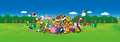
2D illustration of the major characters

2D poster artwork of the major characters

Size comparison chart of theSuper Mario characters


.png)


Names in other languages
| Language | Name | Meaning | Notes |
|---|---|---|---|
| Japanese | スーパーマリオ[56] Sūpā Mario | Super Mario | |
| Chinese(Simplified) | 超级马力欧[57] Chāojí Mǎlì'ōu | Super Mario |
References
- ^"The Mario Portal website, where you can find various kinds of information related to the Mario series, is available in English." – July 12, 2022.Introducing the Mario Portal website!. Singapore:nintendo.com (English). Retrieved January 19, 2024. (Archived November 28, 2023, 04:39:39 UTC via Wayback Machine.)
- ^"That was the brand new 2D side-scrolling Mario game,Super Mario Bros. Wonder." –Shinya Takahashi (subtitles) via Nintendo UK (June 21, 2023).Nintendo Direct – 21/06/2023 (1:04:34).YouTube (British English). Retrieved June 22, 2023 (ScreenshotMedia:YT NintendoUK 2023-06-21 Nintendo Direct 3874s.jpg).
- ^"The very first RPG in the Mario series is back! See what has critics jumping for joy in #SuperMarioRPG, available now only on the Nintendo Switch system!" – NintendoAmerica (November 24, 2023).Post.X (American English). Retrieved November 25, 2023. (Archived November 25, 2023, 03:09:31 UTC via Wayback Machine.)
- ^The franchise and its character-driven spin-off franchises have been referred to collectively asMushroom Kingdom on very rare occasions, such as here:https://play.nintendo.com/parents/game-finder/
- ^Nintendo (February 3, 2026).Top Selling Title Sales Units.Nintendo Japan (English). Retrieved February 3, 2026.
- ^2. A Sound That Defines Mario.Nintendo of UK (British English). Retrieved July 5, 2024.
- ^October 28, 2011.Semi-Annual Financial Results Briefing for Fiscal Year Ending March 2012 Q&A.Nintendo (English). Retrieved July 5, 2024.
- ^The Top 11 Video Game Powerups.UGO Networks (English). Archived October 17, 2007, 16:44:52 UTC from the original via Wayback Machine. Retrieved July 5, 2024.
- ^October 11, 2017.Nintendo Classic Mini: SNES developer interview – Volume 5: Super Mario World and Super Mario World 2: Yoshi's Island.Nintendo of UK (British English). Retrieved July 5, 2024.
- ^June 1994.Nintendo Power Volume 61.[page number needed]
- ^"A long time ago, they sent Donkey Kong over to us when we were at a little tiny warehouse down at Southcenter in Seattle. We were standing out there, myself and Mr. Minoru Arakawa, who was president [of NOA] at the time, and the character in Donkey Kong was called Jumpman in Japan, and they said, what do you want to name it in the USA? And so we sat there and we thought, the guy who owned the lease on our facility was named Mario Segale, and so we thought, this guy is a recluse, no one's ever actually met him, so we thought, "wouldn't it be a great joke if we named this character Mario?" And so we said, "that's great," and we sent a telex to Japan, and that's how Mario got his name." – February 17, 2012.Game|Life Podcast: When Jay Mohr Met Tomonobu Itagaki (51:16).Wired (English). Retrieved July 5, 2024.
- ^2005.IGN's Top 100 Games.IGN. Archived July 16, 2005, 04:45:37 UTC from the original via Wayback Machine. Retrieved July 5, 2024.
- ^Ingraham, Nathan (December 8, 2016).Super Mario Run Is Just As Much Fun As We'd Hoped.Engadget (English). Retrieved July 5, 2024.
- ^Stylized as "D℞. MARIO" in the Western logo
- ^abPassary, Anu (June 10, 2014).Mario Kart 8 revs up to 1.2 million units in sales, becomes fastest-selling Wii U game.TechTimes (English). Retrieved July 5, 2024.
- ^abcdeFebruary 5, 2012.Mario Kart Franchise Retrospective.WatchMojo.com (English).
- ^Pallotta, Frank (November 14, 2017).Super Mario Bros. animated movie in the works at Illumination Entertainment.CNNMoney (American English). Retrieved July 5, 2024.
- ^@NintendoAmerica (April 25, 2022).This is Miyamoto. After consulting with Chris-san, my partner at Illumination on the Super Mario Bros. film, we decided to move the global release to Spring 2023–April 28 in Japan and April 7 in North America. My deepest apologies but I promise it will be well worth the wait..Twitter (American English). Retrieved April 25, 2022.
- ^THE SUPER MARIO BROS. MOVIE.Rotten Tomatoes (English). Retrieved April 4, 2023.
- ^abDoolan, Liam (April 9, 2023).Super Mario Movie Secures Most Successful Opening Weekend For Any Animated Film, Ever.Nintendo Life (English). Retrieved July 5, 2024.
- ^Rich, Katey (December 11, 2023).Golden Globes 2024: See All the Nominations Here.Vanity Fair (American English). Retrieved December 11, 2023.
- ^Gaijillionaire (May 30, 2017).A Lost Super Mario Anime Has Been Found and Shown Off in Japan.Nintendo Life (English). Retrieved July 5, 2024.
- ^Lamoreux, Ben (November 2, 2015).Archie Comics Pitched a Super Mario Comic, But Nintendo Rejected It.Gamenesia (English). Archived November 6, 2015, 12:23:49 UTC from the original via Wayback Machine. Retrieved July 5, 2024.
- ^rawmeatcowboy (November 2, 2015).Archie pitched Nintendo a Super Mario comic, but it was shot down.Go Nintendo (English). Retrieved July 5, 2024.
- ^"MONOPOLY®: Super Mario Bros.™ Collector's Edition" page at USAopoly.
- ^April 14, 2006.Super Mario Bros. and Zelda composer Koji Kondo to attend PLAY! Chicago.Music 4 Games. Archived February 25, 2009, 00:47:00 UTC from the original via Wayback Machine. Retrieved July 5, 2024.
- ^Ballantyne, Robert (September 27, 2006).I hear a video game symphony.Pop Journalism (Canadian English). Archived December 15, 2007, 02:14:37 UTC from the original via Wayback Machine. Retrieved July 5, 2024.
- ^Kennedy, Sam and Thomas Puha (October 17, 2007).Super Mario Bros. Composer Koji Kondo Interview.1UP.com. Archived November 4, 2012, 07:05:59 UTC from theoriginal via Wayback Machine. Retrieved January 23, 2025.
- ^April 27, 2007.Symphony piles up points with video game concert.The Columbus Dispatch. Archived May 31, 2012, 06:42:42 UTC from the original via Wayback Machine.
- ^Dimix86 (September 7, 2007).Super Mario Bros. Medley (Eminence Symphony Orchestra).YouTube (English). Retrieved July 5, 2024.
- ^KRB (February 13, 2016).Super Mario - Suite (Live with the Swedish Radio Symphony Orchestra : SCORE Orchestral Game Music).YouTube. Retrieved July 5, 2024.
- ^Leal, Pablo (February 12, 2011).Super Mario Bros. Tokyo Kosei Wind Orchestra.YouTube. Retrieved July 5, 2024.
- ^Steen, Emma.Super Nintendo World opens at Universal Studios Japan today.Time Out Tokyo (English). Retrieved July 5, 2024.
- ^Universal Studios Hollywood (December 14, 2022).A new way to play. SUPER NINTENDO WORLD™ opens 2/17/2023.YouTube (American English). Retrieved July 5, 2024.
- ^Parkin, Simon (December 20, 2020).Shigeru Miyamoto Wants to Create a Kinder World.The New Yorker (American English). Retrieved July 5, 2024.
- ^Orlando, Greg (May 15, 2007).Console Portraits: A 40-Year Pictorial History of Gaming.Wired News (English). Archived October 20, 2008, 15:39:28 UTC from the original via Wayback Machine.
- ^Buchanan, Levi (June 15, 2012).Is There a Bad Mario Game?.IGN (English). Retrieved July 5, 2024.
- ^Iwabuchi, Koichi.Recentering Globalization: Popular Culture and Japanese Nationalism.Duke University Press. Page 30. Archived July 9, 2010, 18:37:46 UTC from the original via Wayback Machine.
- ^"Porges, Seth (December 17, 2009).Exclusive Interview with Nintendo Gaming Mastermind Shigeru Miyamoto.Popular Mechanics (English). Retrieved July 5, 2024.
- ^Italian Plumber More Memorable Than Harper, Dion.Canadian NewsWire (Canadian English).
- ^September 30, 2015.Super Mario Maker has sold 1 Million units around the world.Nintendo of America (American English). Archived October 2, 2015, 14:20:05 UTC from the original via Wayback Machine. Retrieved July 5, 2024.
- ^February 19, 2015.Bring along your amiibo as your party plus-one from 20th March inMario Party 10.Nintendo of UK (British English). Retrieved July 5, 2024.
- ^Ashcraft, Brian and Jean Snow (2008).Arcade Mania: The Turbo-charged World of Japan's Game Centers. Tokyo:Kodansha International. ISBN4-7700-3078-9.
- ^Kent, Steven (September 6, 2001).The Ultimate History of Video Games: The Story behind the Craze that Touched Our Lives and Changed the World. Roseville:Prima Games. ISBN0-7615-3643-7.
- ^Sheff, David (April 15, 1999).Game Over, Press Start to Continue: The Maturing of Mario.GamesPress (American English). ISBN0-9669617-0-6.
- ^September 29, 2006. Les ventes de Nintendo au Japon.NintendojoFR (French). Retrieved July 5, 2024.[dead link]
- ^2006.IGN Readers' Choice 2006 - The Top 100 Games Ever.IGN (American English). Archived October 13, 2006, 19:43:42 UTC from the original via Wayback Machine. Retrieved July 5, 2024.
- ^Snow, Blake (September 18, 2007).10 Biggest Video Game Flops.GamePro (English). Archived September 13, 2008, 21:36:20 UTC from the original via Wayback Machine.
- ^Super Mario Bros. declared the greatest game of all time
- ^The Super Mario Bros. Super Show!.TV.com (English). Archived February 23, 2015, 04:46:29 UTC from the original via Wayback Machine. Retrieved July 5, 2024.
- ^Captain N & the Adventures of Super Mario Bros. 3.TV.com (English). Archived November 22, 2012, 21:12:56 UTC from the original via Wayback Machine.
- ^Super Mario World animated series.TV.com (English). Archived July 2, 2017, 19:51:21 UTC from the original via Wayback Machine. Retrieved July 5, 2024.
- ^The cartoons that had children waiting for more of the Mushroom Kingdom[dead link]
- ^Dievendorf, Schuyler (March 10, 2014).8 Best Ways to Celebrate National Mario Day.The Escapist (English). Archived March 12, 2017, 03:32:43 UTC from the original via Wayback Machine. Retrieved July 5, 2024.
- ^Warner, Dani (March 7, 2016).Jump-Start Your Week with Some Items of Interest.Star Tribune. Retrieved July 5, 2024.
- ^Japanese logoMedia:Super Mario logo JP current.png
- ^Simplified Chinese logoMedia:Super Mario Current SCN Logo.png
External links


- The official home of Super Mario at Nintendo.com
- "Mario Portal" page at the Nintendo Japan site
- "Mario Portal" page at the Nintendo Korea site
- "Super Mario Bros. Hub" page at the Nintendo UK site
- "The official home of Super Mario" page at the Nintendo Australia site


