My decade watching the Korean peninsula: the delicacy of peace
Lessons from starting out a career analysing one of the most dangerous flashpoints in global politics.

North Korea cut off the military hot lines with South Korea, blamed Seoul’s hardline policy for the chill in relations, and threatened retaliation over military drills with the United States.
This wasn’t yesterday. Or last month. It was10 years ago, another crisis replete with warnings todiplomats in the North andforeigners in the South about thelooming prospect of war. And while fortunately military conflictwas avoided, this particular episode was enough to capture my scholarly interest and begin my enterprise as a Korea watcher.
And while of course the past decade comes with all the baggage of tensions across the demilitarised zone stretching back 70 years, it has itself been an extraordinary time. When in 2018 North Korea’s Chairman Kim Jong-un and South Korea’s President Moon Jae-in held thethird inter-Korean summit in Panmunjom, many observers were sceptical. But it was different. Hopeful even, with apromise to finally, formally, declare an end of the Korean War. Kim became the first North Korean leader to step foot on the South. More, there followed a meeting for Kim with US President Donald Trump in Singapore, which for all the carnival atmosphere, was still a remarkable event. In a later meeting between the two men in Hanoi,my hometown, a dealwas close, only tocollapse. Little has gone well for diplomacy since.
What a different world it might have been had the Hanoi summit been a success. Maybe we could have seen a reopening of the Kaesong Industrial Complex, or a halt in North Korea’s constant provocations, or animperfect but good enough framework of engagement for Moon’s successors to build on. But it is important to see the world as it is, not as you might wish it to be. And with North Korea’ssuccessive inter-continental ballistic missile launches andregular threats to retaliate against an increasingly hardline South Korea, we seem to be back to where we started a decade ago.
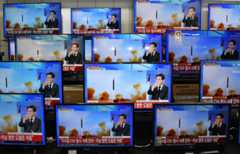
While it might appear that nothing has changed, the past decade has taught me important lessons. Although we cannot deny that deterrence by force has been vital to bringing aboutpeace, we also should not underestimate the power of diplomacy in maintaining it. Diplomacy has many timespulled the two Koreas back from the brink of a military conflict, and it opened the door to otherpossibilities. Moon’s engagement may be judged a failure, but his efforts werevital to stopping a conflict between the United States and North Korea whentensions ran to near boiling point in 2017. The balance of force between the two Koreas has not changed dramatically in the past year since the inauguration of the incumbent South Korea’s President Yoon Suk-yeol, but tension has increased due to alack of engagement. A peace built on force alone is afragile peace.
But diplomacy has its limits. It only took achange of leadership between liberal and conservative South Korean presidents for the winds of engagement to blow in another direction – a pattern that has repeated over the years. And regardless of who is in charge, whether in South Korea or the North, it is often easier to reach an agreement than to sustain it. This can be seen in thediscrepancy between the great number of major inter-Korean agreements with grand visions of the future and the small impact that these agreements have had in reality.
Trust is short. Neither Korea willcommit to promises today for fear of what happens tomorrow. North Korea won’t trust that future South Korea’s conservative presidents will honour the past promises made by liberal presidents, while South Korea simply has no faith in any pledges to denuclearise because North Korea hasbroken such undertakings in the past. Diplomacy can be anillusion of progress: sustaining it requires amutual adjustment of long-term interests.
Hope springs eternal, as is said. History iscontingent, not deterministic. And if the past decade offers lessons, it’s mostly that trying is better than not.
