The existence of offshore financial centers (OFCs) affects the work of the Fund in severalways. First, a better understanding of the activities taking place in OFCs can contribute tostrengthening financial system surveillance by improving abilities to identify and deal withsurrounding risks at an early stage. Second, OFCs are generally used not only by major industrialcountries, but also by emerging market economies whose financial systems are perhaps morevulnerable than others to reversals in capital flows, rapid accumulation of short-term debt,unhedged exposure to currency fluctuations, and selective capital account liberalization. Finally,the operation of OFCs has implications for the Fund's work on the promotion of goodgovernancebecause it can reduce transparency, including through the exploitation of complex ownershipstructures and relationships among different jurisdictions involved. Following discussions in various international fora, including the Fund's Interim Committeeand the G-7 Ministers of Finance,1 the Financial StabilityForum (FSF) established a working group to look into the workings of OFCs and their impact onfinancial stability. As a result of the working group's report, the FSF has recommended a systemof assessment for a number of OFCs which may have implications for the Fund's work on theassessment of financial stability in general, and for the joint IMF-World Bank Financial SectorAssessment Program (FSAP) in particular. The purpose of this paper is to provide background information on the business of OFCsand on a number of initiatives taking place in various international fora concerning OFCs. Acompanion paper addresses the main policy issues stemming from a possible involvement of theFund in the assessment of OFCs. This paper is organized as follows.2 Chapter IIdescribes what is meant by the business of offshore finance, where it takes place, and presents anumber of definitions of an OFC. It describes the principal activities involved, notes the lack ofdata on many aspects, and discusses why OFCs are used. Most of the discussion relates tobanking because that is the only sector for which statistics are available. Chapter III describes thevarious initiatives that are being taken in a variety of international fora affecting OFCs. Offshore finance is, at its simplest, the provision of financial services by banks and otheragents to non-residents. These services include the borrowing of money from non-residents andlending to non-residents. This can take the form of lending to corporates and other financialinstitutions, funded by liabilities to offices of the lending bank elsewhere, or to marketparticipants. It can also take the form of the taking of deposits from individuals, and investing theproceeds in financial markets elsewhere. Some of these activities are captured in the statisticspublished by the Bank for International Settlements (BIS). Probably rather more significant arefunds managed by financial institutions at the risk of the customer. Such off-balance sheet, orfiduciary, activity is not generally reported in available statistics. Furthermore, significant fundsare believed to be held in OFCs by mutual funds and trusts, so-called International BusinessCompanies (IBCs), or other intermediaries not associated with financial institutions. The definition of an OFC is far less straightforward. At its broadest, an OFC can be definedasany financial center where offshore activity takes place. This definition would include all themajorfinancial centers in the world. In such centers, there may be little distinction between on- andoffshore business, that is a loan to a non-resident may be funded in the center's own market,where the suppliers of funds can be resident or non-resident. Similarly, a fund manager may wellnot distinguish between funds of resident customers and those of non-residents. Such centers,e.g., London, New York, and Tokyo could more usefully be described as "InternationalFinancial Centers" (IFCs). In some cases, e.g., New York and Tokyo, some of this activity,but by no means all, is carried on in institutions which are favorably treated for tax and otherpurposes, e.g., the U.S. International Banking Facilities (IBFs) and the Japanese Offshore Market(JOM). A more practical definition of an OFC is a center where the bulk of financial sector activityisoffshore on both sides of the balance sheet, (that is the counterparties of the majority of financialinstitutions liabilities and assets are non-residents), where the transactions are initiatedelsewhere,and where the majority of the institutions involved are controlled by non-residents. Thus OFCsare usually referred to as:
However, the distinction is by no means clear cut. OFCs range from centers such as HongKong and Singapore, with well-developed financial markets and infrastructure, and where aconsiderable amount of value is added to transactions undertaken for non-residents, to centerswith smaller populations, such as some of the Caribbean centers, where value added is limited tothe provision of professional infrastructure. In some very small centers, where the financialinstitutions have little or no physical presence, the value added may be limited to the booking ofthe transaction. But in all centers specific transactions may be more or less of an"offshore" type. That is in all jurisdictions it is possible to find transactions whereonlythe "booking" has taken place in the OFC, while at the same time business involvingmuch more value added may also take place. In addition to banking activities, other services provided by offshore centers include fundmanagement, insurance, trust business, tax planning, and IBC activity. Statistics aresparse—but impressions are of rapid growth in many of these areas in recent years, incontrast to some decline in banking (see Section C below).Box 1 providesexamples of uses of OFCs. Table 2 provides the Financial Stability Forum's list of 42jurisdictions that it considers to have significant offshore activities.4 The list is organized according to the FSF's groupings, which aredefined as follows: The first group (Group I) would be jurisdictions generally viewed ascooperative, with a high quality of supervision, which largely adhere to international standards.The second group (Group II) would be jurisdictions generally seen as having procedures forsupervision and co-operation in place, but where actual performance falls below internationalstandards, and there is substantial room for improvement. The third group (Group III) would bejurisdictions generally seen as having a low quality of supervision, and/or beingnon-co-operativewith onshore supervisors, and with little or no attempt being made to adhere to internationalstandards. There is also a great variety in the reputation of OFCs—ranging from those withregulatory standards and infrastructure similar to those of the major international financialcenters,such as Hong Kong and Singapore, to those where supervision is non-existent. In addition, manyOFCs have been working to raise standards in order to improve their market standing, whileothers have not seen the need to make comparable efforts. There are some recent entrants to theOFC market who have deliberately sought to fill the gap at the bottom end left by those that havesought to raise standards. Although there can be no hard and fast dividing line and the definitionof an OFC depends on the use to which it is to be put, the following taxonomy can beproposed:
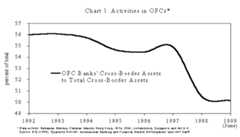
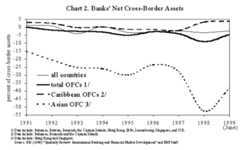
OFCs as defined in this third category, but to some extent in the first two categories as well,usually exempt (wholly or partially) financial institutions from a range of regulations imposed ondomestic institutions. For instance, deposits may not be subject to reserve requirements, banktransactions may be tax-exempt or treated under a favorable fiscal regime, and may be free ofinterest and exchange controls. Offshore banks may be subject to a lesser form of regulatoryscrutiny, and information disclosure requirements may not be rigorously applied. Small countries, with small domestic financial sectors, may choose to develop offshorebusiness and become an OFC for a number of reasons. These include income generatingactivitiesand employment in the host economy, and government revenue through licensing fees, etc.Indeedthe more successful OFCs, such as the Cayman Islands and the Channel Islands, have come torelyon offshore business as a major source of both government revenues and economic activity. OFCs can be used forlegitimate reasons, taking advantage of: (1) lower explicittaxation and consequentially increased after tax profit; (2) simpler prudential regulatoryframeworks that reduce implicit taxation; (3) minimum formalities for incorporation; (4) theexistence of adequate legal frameworks that safeguard the integrity of principal-agent relations;(5) the proximity to major economies, or to countries attracting capital inflows; (6) the reputationof specific OFCs, and the specialist services provided; (7) freedom from exchange controls; and(8) a means for safeguarding assets from the impact of litigation etc. They can also be used fordubious purposes,such as tax evasion andmoney-laundering, by taking advantage of a higher potential for less transparent operatingenvironments, including a higher level of anonymity, to escape the notice of the law enforcementagencies in the "home" country of the beneficial owner of the funds.5 While incomplete, and with the limitations discussed below, the available statisticsnonetheless indicate that offshore banking is a very sizeable activity. Staff calculations based onBIS data suggest that for selected OFCs, on balance sheet OFC cross-border assets reached alevel of US$4.6 trillion at end-June 1999 (about 50 percent of total cross-border assets),of which US$0.9 trillion in the Caribbean, US$1 trillion in Asia, and most of the remainingUS$2.7 trillion accounted for by the IFCs, namely London, the U.S. IBFs, and the JOM. The major source of information on banking activities of OFCs is reporting to the BIS whichis, however, incomplete. First, reporting is confined to the major OFCs.6 The smaller OFCs (for instance, Bermuda, Liberia, Panama, etc.) donot report for BIS purposes, but claims on the non-reporting OFCs are growing, whereas claimson the reporting OFCs are declining. Second, the BIS does not collect from the reporting OFCsdata on the nationality of the borrowers from or depositors with banks, or by the nationality oftheintermediating bank. Third, for both offshore and onshore centers, there is no reporting ofbusiness managed off the balance sheet, which anecdotal information suggests can be severaltimes larger than on-balance sheet activity. In addition, data on the significant quantity of assetsheld by non-bank financial institutions, such as insurance companies, is not collected at all. Noristhere any information on assets held by mutual funds as well as private trusts and companies (i.e.,IBCs) whose beneficial owners are normally not under any obligation to report.7 The maintenance of historic and distortionary regulations on the financial sectors ofindustrialcountries during the 1960s and 1970s was a major contributing factor to the growth of offshorebanking and the proliferation of OFCs. Specifically, the emergence of the offshoreinterbank market during the 1960s and 1970s, mainly in Europe—hence the eurodollar, canbe traced to the imposition of reserve requirements, interest rate ceilings, restrictions on the rangeof financial products that supervised institutions could offer, capital controls, and high effectivetaxation in many OECD countries. In Asia,offshore interbank markets began to develop after 1968 when Singaporelaunched the Asian Dollar Market (ADM) and introduced the Asian Currency Units (ACUs). TheADM was an alternative to the London eurodollar market, and the ACU regime enabled mainlyforeign banks to engage in international transactions under a favorable tax and regulatoryenvironment.8 In Europe, Luxembourg began attracting investors from Germany, France and Belgium in theearly 1970s due to low income tax rates, the lack of withholding taxes for nonresidents oninterestand dividend income, and banking secrecy rules. The Channel Islands and the Isle of Manprovided similar opportunities. In the Middle East, Bahrain began to serve as a collection centerfor the region's oil surpluses during the mid 1970s, after passing banking laws and providing taxincentives to facilitate the incorporation of offshore banks. In the Western Hemisphere, theBahamas and later the Cayman Islands provided similar facilities. Following this initial success,anumber of other small countries tried to attract this business. Many had little success, becausethey were unable to offer any advantage over the more established centers. This did, however,lead some late arrivals to appeal to the less legitimate side of the business. By the end of the 1990s, the attractions of offshore banking seemed to be changing for thefinancial institutions ofindustrial countriesas reserve requirements, interest rate controlsand capital controls diminished in importance, while tax advantages remain powerful. Also,somemajor industrial countries began to make similar incentives available on their home territory. Forexample, the U.S. established in 1981, in major U.S. cities, the so-called International BankingFacilities (IBFs).9 Later, Japan allowed the creation of theJapanese Offshore Market (JOM) with similar characteristics. At the same time, supervisoryauthorities, and to some extent tax authorities, were adopting the principle of consolidationwhichreduced the incentives for banks to carry on business outside their principaljurisdiction.10 As a result, the relative advantage of OFCs for conventionalbanking has become less attractive to industrial countries, although the tax advantages for assetmanagement appear to have grown in importance. In fact, reported bank intermediation on thebalance sheet in IFCs has declined over the period 1992-1999, thus contributing to the overalldecline in the share of bank cross-border assets intermediated through OFCs from 56 percent oftotal bank cross-border assets in 1992 to about 50 percent of total bank cross-border assets atend-June 1999 (Chart 1). However, important tax advantages continue, perhaps less for banks themselves than forcorporate and individual customers. For the latter, the ability to reduce inheritance and othercapital taxes seems to have been a prime incentive and has led to a large expansion in offshorefund management activity, in particular by the use of investment vehicles such as trusts andprivate companies, for which, however, there is no statistical evidence for the reasons discussedabove. Industrial and commercial companies have also been able to reduce their tax liabilitythrough the use of foreign sales corporations to maximize the proportion of their profits that arisein lower tax jurisdictions. Offshore banking, however, seems to continue to be an appealing alternative for banksoperating in the sometimes more highly regulated financial markets of emerging marketeconomies. The share of the cross-border assets of OFCs, excluding the U.K. andBelgium-Luxembourg, in total cross-border claims on emerging economies increased from 58.5percent in 1991 to a peak of 67 percent in 1997 and stood at some 56 percent as of end-June1999. A possible explanation for this sharp contraction, which occurred for the most part in1998, lies in the significant consolidation that took place in the Japanese banking system as wellasthe impact of the Asian crisis (e.g., Hong Kong where offshore activity dropped substantially).The share of OFCs' cross-border liabilities in total cross-border liabilities to emerging economiessteadily increased from 36 percent in 1991 to 54 percent at end-June 1999. These figures areparticularly noteworthy because, at end-June 1999, for the world as a whole, only 25 percent ofbanks' assets, and about 33 percent of banks' liabilities, were vis-à-vis emerging marketeconomies. Among emerging market economies, Asia's OFCs have markedly and progressivelyincreasedtheir net cross-border liabilities, suggesting that they have intermediated a sizeable portion ofcapital flows into the region. Asian OFCs' net cross-border liabilities as percent of assets,increased from about 15 percent in 1991 to about 53 percent in 1998 (Chart2), falling back to 38 percent at end-June 1999. It is noteworthy that banks in other OFCsand banks engaged in ordinary cross-border banking maintained broadly squared net cross-borderpositions over the same period (i.e., a trend around zero inChart 2). Banking activity in OFCs is now predominantly carried out by branches and affiliates ofbanksincorporated elsewhere, mainly in major countries, but also in larger emerging marketeconomies. Since the failure of BCCI and Meridian Bank it has becomedifficult for a bank incorporated in a jurisdiction with limited domestic markets to carry onbusiness in other countries. Supervisors now require banks wishing to open branches andaffiliatesto demonstrate a capacity for their home supervisor to exert consolidated supervision, which it isalmost impossible to do for a bank whose business is almost entirely outside the home country'sjurisdiction. The physical presence of establishments of foreign banks in OFCs varies. In some centerstheymay originate and, in some cases, fund the business carried on their books. But in other cases,they may have a very limited physical presence and the business decisions may all be takenelsewhere.11 Such establishments are sometimes knownas "shell"branches. There has been a tendency in the more successfulOFCs for the amount of local value added to grow, as these OFCs have acquired the ability tosupply specialist capabilities and skills. Offshore activities may also take place through so-calledparallel-owned banks,that is, banks that are not subsidiaries of a bank in the onshorecenter, but have the same owners or controllers.Effective consolidated supervision ismore difficult in such cases. Offshore banks engage in a wide variety of transactions: foreign currency loans (includingsyndicated loans) and the taking of deposits, the issue of securities, over-the counter (OTC)trading in derivatives for risk-management and speculative purposes, and the management ofcustomers' financial assets.12
III. International PolicyInitiativesTable 3 provides a synoptic description of the many ongoinginitiatives—some of which are more fully discussed below, aimed at curbing OFCinvolvement in lax financial regulation, tax evasion, and financial crime. While cross-border andoffshore banking have been at the core of the Basel Committee's work since the mid-1970s,OFCshave more recently become a major target of the FATF and OECD because some of them areincreasingly viewed as offering opportunities for money-laundering and tax evasion, as well asraising obstacles to anti-corruption investigations. The Financial Stability Forum's Working Group on Offshore Financial Centers was set up toreview the uses and activities of OFCs and their significance for global financial stability. ThoseOFCs with weaknesses in financial supervision, cross-border cooperation, and transparency werefelt to allow financial market participants to engage in regulatory arbitrage, undermining effortstostrengthen the global financial system. The FSF considers that the key to addressing most of theproblems with these OFCs is through the adoption and implementation of international standards,particularly in cross-border cooperation. The FSF has identified the relevant internationalstandards whose implementation would address these issues, is considering mechanisms forassessing compliance in the implementation of the standards, and is looking at appropriateincentives to enhance such compliance. The FSF has also asked the Fund to take on the mainresponsibility for conducting these assessments, drawing in expertise from supervisory agenciesand elsewhere. The Basel Committee on Banking Supervision has been actively promoting more effectivecooperation between "home" and "host" supervisors for manyyears.13 Cross-border banking issues were atthe core of the "Basel Concordat" of 1975; the Concordat was revised in1983 to take account of the growing need for consolidated supervision of international bankinggroups. That work was given further impetus by the collapse of the Bank of Credit andCommerce International (BCCI) in 1991, which led to the publication in 1992 by the BaselCommittee of theMinimum Standards—seeBox 2.Subsequently, in 1996, a Working Group on Cross-Border Banking was established,composed of members of the Basel Committee and the Offshore Group of Banking Supervisors.This group prepared a report (the "1996 Report") including 29recommendations to address a number of practical problems that had arisen in theimplementationof the 1992 Minimum Standards.14 None of this work isspecific to OFCs, although the problems involved in establishing the relative responsibilities andeffective cooperation between home and host supervisors arises particularly with supervisors inOFCs. Finally, in 1997, the Basel Committee issued itsCore Principles for Effective BankingSupervision, providing, inter alia,a comprehensive framework for effectiveconsolidated supervision which is also appropriate for offshore banking activities.
The prudential and supervisory frameworks set forth in theMinimum Standards, the1996 Report and theCore Principles are broadly adequate for risk managementpurposes if effectively and universally implemented. They have effectively eradicated thepossibility of a bank based in a small jurisdiction, not capable of exercising consolidatedsupervision, becoming a significant player in international markets. Although BCCI was asubstantial bank and its failure could have had significant systemic effects, in fact it did not doso.15 However, a high degree of coordination is requiredbetween "home" and "host" supervisory authorities. Moreover,remainingsupervisory gaps coupled with heterogeneous accounting standards may be an impediment toeffective consolidated supervision of offshore banking activities in practice.16 Indeed, effective consolidated supervision is one of the more difficult aspects ofsupervisionto implement in practice. For this reason, it is generally weakly implemented in many countries,according to a recent study by the staff,17 which showsthat most of the countries so far assessed were rated non-compliant or materially non-compliantwith regard to Core Principle 20 dealing with consolidated supervision. Indeed, out of thesecountries for which consolidated supervision was relevant, only 28 percent were rated fully orlargely compliant, with 72 percent found seriously wanting. One contribution to this weakness isthe absence of consolidated accounting and reporting, together with differences in accountingstandards. Supervisory coordination is shown to be another vital element, somewhat betterimplemented but still weak in many instances. Recommendations for action following the 1998 Basel Committee's survey to assessimplementation of theCore Principles are currently being considered by the BaselCommittee. The Committee is now considering, against the evidence from implementation, howfar the gaps referred to above and any others should lead to an updating and/or fine-tuning of the29 recommendations of the1996 Report. The Financial Action Task Force (FATF) was established to help protect financial systemsfrom criminal use for the laundering of the proceeds of drug related and other seriouscrime.18 More recently, the emphasis has been on theextension of the FATF's work to crimes other than those associated with drugs, including somefiscal crimes.19 The FATF's 40 recommendations havecome to be recognized as a statement of best practice in the combat against money-laundering.The Task Force has also encouraged the formation of regional groups, the first of which was theCaribbean Financial Action Task Force (CFATF), and which includes the major OFCs in thatregion. The CFATF has also published a list of 19 recommendations in addition to the FATF's40,many of which deal with aspects germane to business in OFCs. A similar group has beenestablished in the South Pacific. The FATF's Ad Hoc Group on Non-CooperativeJurisdictions was established in 1998 to develop a common process for FATFmembers to evaluate whether jurisdictions are cooperating with FATF anti-money launderinginitiatives. This work was finalized on June 22, 2000, when the FATF published a report whichincluded a list of 15 non-cooperative jurisdictions.20 The U.N. Offshore Forum is a 1999 initiative of the U.N.'s Office for Drug Control andCrime Prevention to deny criminals access to OFCs for the purpose of laundering the proceeds ofcriminal activities. The Forum's program seeks political commitment from OFCs towards theadoption of minimum performance standards.21 Inreturn,the Forum will provide technical assistance that will aid OFCs in coming into compliance withthestandards. The Forum's program was set out to the global financial community in March 2000during its Plenary Meeting in the Cayman Islands. The OECD Committee on Fiscal Affairs (CFA) has established the Forum on Harmful TaxCompetition under the aegis of the G-7, which, since the Birmingham Summit of May 1998,placed a greater emphasis on the need to step up international cooperation to enhance theeffectiveness of attempts to prevent the erosion of the ability of major countries' tax authorities totax the income and capital of their residents. The OECD's Forum was created as the result of theOECD May 1998 report on Harmful Tax Competition and it was assigned responsibility, interalia, for undertaking an ongoing evaluation of existing and proposed preferential tax regimes inOECD member and non-member countries, and examining whether particular jurisdictionsconstitute tax havens.22 The OECD hasinformed some 49 jurisdictions that they are considered to be "tax havens." They willbe classified in three categories according to their willingness to cooperate with OECD countries'tax authorities: a group of "non-cooperative" OFCs against whom sanctions may betaken; a second group which are committed to "reform," but where such reformshavenot been set in train; and a third group which are in the process of implementing reforms. Thenames of those falling in the first two categories are expected to be published. There have also been assessments and surveys other than those carried out by recognizedinternational bodies. For example, the U.K. authorities have published a review of the offshorebusiness of the Channel Islands and the Isle of Man, which provides considerable information onthe nature of the business carried out in those jurisdictions.23 The U.K. authorities are also sponsoring a study by KPMG of themain overseas dependent territories which provide facilities for offshore business. The work isexpected to be completed by mid-2000 and the results will published. All these international initiatives aimed at OFCs relate in various ways to the Fund'sheightened focus on assessments of financial stability, including under multilateral and bilateralsurveillance, and more recently notably through the implementation of the joint Bank-FundFinancial Sector Assessment Program (FSAP).24 Theseissues are, inter alia, discussed in a companion Policy paper.
| |||||||||||||||||||||||||||||||||||||||||||||||||||||||||||||||||||||||||||||||||||||||||||||||||||||||||||||||||||||||||||||||||||||||||||||||||||||||||||||||||||||||||||||||||||||||||||||||||||||||||||||||||||||||||||||||||||||||||||||||||||||||||||||||||||||||||||||||||||||||||||||||||||||||||||||||||||||||||||||||||||||||||||||||||||||||||||||||||||||||||||||||||||||||||||||||||||||||||||||||||||||||||||||||||||||||||||||||||||||||||||||||||||||||||||||||||||||||||||||||||||||||||||||||||||||||||||||||||||||||||||||||||||||||||||||||||||||||||||||||||||||||||