Uganda
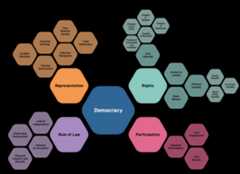
Uganda exhibits low range performance in three categories of the Global State of Democracy Framework (Rights, Representation, and Rule of Law) but is in the mid-range with regard to Participation. It is among the bottom 25 per cent of countries in several aspects of Rights and Rule of Law. Over the last five years, it has experienced significant declines in Economic Equality and Civic Engagement. Uganda is a landlocked and low-income country, largely reliant on agriculture. Despite the endurance of low levels of human development, Uganda has maintained relatively brisk economic growth driven by investments in the oil sector.
In precolonial times, present-day Uganda was ruled by a number of powerful kingdoms, notably the still influential Kingdom of Buganda. In the late 19th century, the country was colonized by the British, whose rule deepened ethnic divisions, skewed the country’s economic development, polarized its elite and, at independence in 1962, left behind a weak state apparatus. Independence was followed by the authoritarian rule of Milton Obote and of Idi Amin. The country’s current president, Yoweri Museveni, came to power in 1986, after defeating Obote in the Ugandan Bush War. For the first two decades of Museveni’s presidency, Uganda was governed under a unique 'non-party system', in which grass roots participation was encouraged through the structures of a single, all-encompassing ‘movement’ and candidates ran for election on the basis of personal merit. Multi-party elections were reintroduced in 2006, however since then further democratization has stalled. In recent years, Museveni has entrenched his power by various means, including patronage, constitutional reform, weakening countervailing institutions and building a politicizedsecurity apparatus, that has regularly been deployed against the political opposition and civil society, particularly during elections. Yet, Museveni retains genuine support, especially in the rural areas and among older and wealthy voters, who credit him with stabilizing the country.
Ethnicity is another salient cleavage in Uganda, which is home to over 50 ethnic/tribal groups – who speak as many languages or dialects – and has a long history of these identities being politically instrumentalized. Its salience is visible in the prominence of tribalist language in political discourse and in voting patterns, which continue to be influenced by regional fault lines. While some progress has been made on women’s rights issues, gender-based violence is widespread and a priority concern for Ugandans. Women also suffer economic inequalities, most glaringly in gender wage disparities. LGBTQIA+ rights is a highly volatile and politicized issue, and members of this community face severe state and societal discrimination under a harsh legal regime, that in 2023 was made even stricter by the Anti-Homosexuality Act.
Another important issue shaping politics in Uganda is its economic performance, with high unemployment, high cost of living, and uneven growth driving the country’s burgeoning urban youth into conflictual opposition with the government. Concerns about unemployment have been exacerbated by anger over pervasive corruption and state-repression and harassment of opposition parties and civil society organizations.
Looking ahead, it will remain important to monitor the various elements of Uganda’s growing authoritarianism. These include the systematic repression of the political opposition and civil society – which is expected to intensify ahead of the January 2026 general election – the militarization of the state and other less visible processes, such as executive interference in the judiciary. Changes here could impact performance across many GSoD indicators, including Free Political Parties, Freedom of Association and Assembly and Judicial Independence.
Updated: June 2025
https://www.idea.int/democracytracker/
June 2025
Parliament reauthorizes military trials for civilians
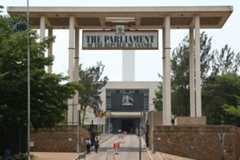
On 16 June, President Yoweri Museveni signed into law the 2025 Uganda Peoples’ Defence Forces (Amendment) Bill, reauthorizing the trial of civilians in military courts. The move follows Parliament’s 20 May approval of the bill, which grants military courts jurisdiction over civilians accused of collaborating with soldiers or possessing military items. The law directly contradicts a January Supreme Court ruling declaring such trials unconstitutional, prompting critics to accuse the government of defying the judiciary to entrench executive control. Opposition lawmakers cited Article 92 of the Constitution, which prohibits laws from overturning specific court decisions, arguing the bill effectively sidesteps the Supreme Court’s judgment. Rights groups and legal experts warn the law may be used to target opposition figures and suppress dissent. Uganda’s Bar Association and Law Society pledged to challenge its constitutionality, setting the stage for further confrontation between the executive and judiciary.
Sources: Human Rights Watch, UN High Commissioner for Human Rights, The Monitor, The Independent, Parliament of Uganda, International IDEA,Jurist News


March 2025
Army accused of assaulting dozens of journalists during by-election coverage
On 13 March, at least 18 journalists were reportedly assaulted by Ugandan security personnel while covering legislative by-elections in Kawempe North, Kampala. The alleged attackers included members of the Uganda People’s Defence Force (UPDF) and the Joint Anti-Terrorist Task Force (JATT). The journalists, all visibly identified as press, were severely beaten and had equipment confiscated. While press freedom violations are common in Uganda, a single incident of this scale is unusual. Fifteen journalists later petitioned the Uganda Human Rights Commission (UHRC) demanding justice. The UPDF announced an investigation and said findings would inform disciplinary measures. A spokesperson described the violence as a ‘misunderstanding.’ President Yoweri Museveni also stated that authorities would investigate the conduct of the vote.
Sources:Human Rights Network for Journalists – Uganda,X,Committee to Protect Journalists,Uganda People’s Defence Forces,Reporters Without Border,Barron’s

January 2025
Supreme Court rules military trials of civilians unconstitutional
On 31 January, Uganda’s Supreme Court ruled that trying civilians in military courts is unconstitutional, nullifying all ongoing prosecutions. The Uganda Law Society welcomed the landmark decision as a victory for constitutionalism. Despite President Yoweri Museveni initially dismissing the ruling, the Attorney General announced on 4 February that the government was to take steps to implement it, including transferring civilian cases from military to civilian courts. On 17 February, the government stated that it would move opposition figure Dr. Kizza Besigye’s trial to a civilian court. Besigye was arrested in Kenya in November 2024 alongside his aide, Haji Obeid Lutale, and faces charges carrying the death penalty.
Sources:X,Monitor,Human Rights Watch,Radio France Internationale,Parliament of the Republic of Uganda,Voice of America,Associated Press

August 2024
LRA commander convicted of crimes against humanity in landmark case
As the first Lord’s Resistance Army (LRA) commander to be tried by a Ugandan court, Thomas Kwoyelo was found guilty of dozens of crimes against humanity on 13 August 2024. Kwoyelo was convicted of dozens of atrocities committed during the LRA insurgency. A child soldier-turned rebel commander, Kwoyelo has been in custody since 2009. Rights group International Center for Transitional Justice (ICTJ) described the trial, which had faced years of delays, as a milestone in the country’s efforts to hold war criminals accountable. The trial is also the first atrocity case to be tried under the International Crimes Division, a special division of the High Court, that was established in 2008 to try international crimes. Human rights groups welcomed the verdict as a crucial step toward justice for victims of the LRA’s brutal campaign. Kwoyelo is yet to be sentenced.
Sources:Al Jazeera,BBC,ISS Africa,The Africa Report,Human Rights Watch,ICTJ

See all event reports for this country
Global ranking per category of democratic performance in 2024

Basic Information

Human Rights Treaties
 State party
 Signatory
 No action
Create your monthly alerts
and receive a customized selection of reports directly in your inbox
Performance by category over the last 6 months
 Representation
 Rights
 Rule of law
 Participation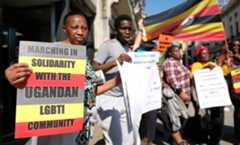
Global State of Democracy Indices
Hover over the trend lines to see the exact data points across the years


Factors of Democratic Performance Over Time
Use the slider below to see how democratic performance has changed over time