Sweden

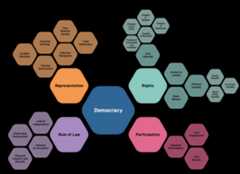
Sweden is high performing in all categories of the Global State of Democracy framework. The country performs in the top 25 per cent globally across every metric except for Inclusive Suffrage. Though it remains in the high range, between 2019-2024, Sweden’s performance declined in Civil Liberties, including Freedom of Association and Assembly and Freedom of the Press, due partly to online harassment against journalists. The government recently sought to protect impartial reporting via legislation augmenting penalties for crimes committed against journalists. Sweden’s mixed, competitiveeconomy features strong automotive, forestry, and telecommunications industries. Sweden has seen a significant increase in income inequality since the 1990s.
The foundations of the modern Swedish state were laid during the reign of King Gustav Vasa in 1523, when the church was nationalized and the Protestant Reformation began. Sweden has typically been characterized by its consensual political culture, politically active electorate, and its commitment to universal welfare, equal standards and redistribution of wealth.
While Swedish politics have been long dominated by the classic socioeconomic left-right dimension, national political competition has more recently been structured along new political cleavages—particularly around issues such as environmental protection and migration policy. As Sweden’s population has become increasingly multicultural, political debate has centred around questions of national identity and the promotion of political, economic and social inclusion. In some cases, moves to improve security have been criticized for risks of ethnic profiling.
There have also been debates about the balance between state interests and Indigenous rights, especially in relation to mining activity as Sweden pushes towards greater self-sufficiency in the energy supply. Sweden’s accession to NATO in response to the Russian war in Ukraine signaled a shift away from its historical position of neutrality. Additionally, new political actors, such as civil society, think tanks and social movements, have become increasingly engaged in traditionally party-centered processes. This shift is accompanied by new forms of political engagement as Sweden has begun experimenting with national citizens’ assemblies, including on sustainable food systems and climate change.
As the country grapples with new challenges—such as rising political violence by extremists, an increase in organized violent crime, including among children and youth, and widespread disinformation—its political landscape continues to evolve. Together, these transformations have resulted in a more turbulent form of politics, as it has become harder to form strong coalition governments.
Sweden is high performing in Gender Equality, particularly in terms of women’s political representation. While Sweden is highly advanced in terms of economic equality, gender disparities in disposable income and average pensions persist. Recent legislation made it easier for people to change their legally recognized gender in the population register, with impacts on the rights of Sweden’s transgender population.
Looking ahead, it is important to watch the country’s performance in Social Group Equality, especially in conjunction with Personal Integrity and Security, as the country addresses domestic security challenges and the ongoing questions around immigration. Finally, legislation that increases penalties for threats and violence against public sector employees should be watched for its potential to improve Predictable Enforcement, particularly in view of rising political violence.
Last updated: June 2025
https://www.idea.int/democracytracker/
December 2025
Government proposes constitutional amendments to open way for citizenship revocations
On 5 December, the government introduced draft constitutional amendments to Parliament that would allow authorities to revoke the citizenship of dual‑nationals who are guilty of ‘crimes that seriously harm Sweden’s vital interests’. The move follows a January 2025 cross-party inquiry that supported revocation when citizenship was obtained through bribery or fraud, or for crimes threatening the state, such as espionage or treason. The new proposal further extends to ‘crimes that seriously harm Sweden’s vital interests’, aiming to enable action against organised crime leaders. If adopted, courts would decide individual cases. Constitutional amendments require approval by two simple majority decisions in Parliament. Between the two decisions, parliamentary elections must take place and it is the newly elected Parliament that makes the second decision. UN anti-discrimination experts expressed concern over proposals to expand revocation grounds based on discriminatory, overly broad and vague criteria, particularly targeting dual nationals and those born abroad.
Sources: ConstitutionNet, Swedish Government, BBC, The Local, Sveriges Radio,UN Committee on the Elimination of Racial Discrimination


February 2025
Gunman kills 10 people at adult education centre
On 4 February, 10 people were killed at an adult education centre in Örebro, west of Stockholm, in what Prime Minister Ulf Kristersson described as the worst mass shooting in Swedish history. An additional five people were hospitalised with gunshot wounds. Police opened an investigation into charges of murder, an aggravated weapons offence, and arson - due to the attacker’s use of smoke grenades. The centre offers Swedish language classes for immigrants, vocational training, as well as programmes for people with disabilities. The suspect, Rickard Andersson, a former student, died by suicide at the scene. As authorities investigate the motive, the attack sparked safety concerns among Örebro’s immigrant communities after it emerged that the victims were of various nationalities, including Syrian, Bosnian, Eritrean, Iranian and Kurdish backgrounds. Media reports and embassies criticised authorities for being slow to release information, contributing to uncertainty and unease within these communities.

May 2024
Parliament approves amendments criminalising genocide denial
On 22 May, Parliament passed amendments to the Criminal Code as well as to the Freedom of the Press Ordinance, part of Sweden’s Constitution, clarifying provisions on incitement against ethnic groups. The amendments explicitly criminalise the denial of genocide, crimes against humanity or war crimes. The Criminal Code previously criminalised incitement, threats or disrespect against a group of people based on race, ethnicity, religion, sexual orientation or transgender identity, and included a maximum penalty of two years in prison (maximum of four years for serious crimes in cases of particularly threatening or offensive content or distribution to a large number of people). The amendments clarify that these provisions apply to incitement to violence to reduce ambiguity in the application of the law. The provisions further extend protections to individuals belonging to protected groups, and provide the right to damages and status as injured parties. The amendments to the Criminal Code will enter into force on 1 July 2024. The constitutional amendments can only apply from 1 January 2027 after the next parliamentary elections, according to the Constitution.
Sources:SVD,Riksdagen (1),Riksdagen (2),Riksdagen (3),Riksdagen (4),Civil Rights Defenders


April 2024
Controversial Police Act amendment allows the creation of ‘Security Zones’
On 10 April, Parliament approved an amendment to the Police Act, allowing the police to create so-called “Security zones.” The security zones are temporary, geographically limited areas in which the police are allowed to conduct a body search or search a vehicle without concrete suspicion of crime. The decision to search a person or vehicle could instead be based on certain risk profiles, such as wearing clothing brands that are associated with gangs. The law's purpose is to make it easier for the police to find weapons or explosives and to combat rising gang violence. The law has been heavily criticized including by the Equality Ombudsman (DO) and the Swedish Institute for Human Rights, which each expressed strong concerns that the law can lead to ethnic profiling, that it is too extensive in terms of the power it gives the police, and that there is a risk of arbitrary use. The law entered into force on 25 April.
Sources:The Equality Ombudsman,Institute for Human Rights,the Swedish Government,Svt Nyheter (1),Svt Nyheter (2),the Police Act

Masked men attack anti-fascist meeting
A public meeting organized by the Left Party (V) and the Green Party (MP) was attacked by three masked men on 24 April. The meeting was about the growth of fascism and featured speakers from the anti-racist foundation, Expo as well as the Swedish journalist and activist, Mathias Wåg. The attackers deployed a smoke bomb and physically assaulted speakers and attendees. The Swedish Prime Minister, Ulf Kristersson, as well as leaders of the other major political parties, expressed their concern about such an attack on a political meeting. The attack comes as part of a longer trend of increased political violence, with a notable example being the murder that occurred during Almedalen Political Week in 2022.
Sources:SVT,Reuters (1),Swedish Radio,Swedish Security Service,Euractiv,Reuters (2),Government Offices of Sweden

Parliament approves legislation facilitating legal gender changes
On 17 April, Parliament passed a new law making it easier for people to change their legally recognized gender in Sweden’s population register. The law was introduced by the Health and Welfare parliamentary committee and passed with 234 votes in favour and 94 against. The legislation ensures that changing legal gender no longer requires a medical diagnosis of gender dysphoria but means a shorter consultation with a doctor is sufficient. Additionally, the age limit for legal gender changes was lowered from 18 years to 16 years with a guardian’s approval. Proponents, such as the Swedish Federation for Lesbian, Gay, Bisexual, Transgender, Queer and Intersex Rights (Riksförbundet för homosexuellas, bisexuellas, transpersoners, queeras och intersexpersoners rättigheter - RFSL), say the law can contribute to improved personal safety for transgender people. The law will enter into force in July 2025.
Sources:Sveriges Riksdag,RFSL,The Local (1),The Local (2),Svenska Dagbladet
See all event reports for this country
Global ranking per category of democratic performance in 2024

Basic Information

Human Rights Treaties
 State party
 Signatory
 No action
Create your monthly alerts
and receive a customized selection of reports directly in your inbox
Performance by category over the last 6 months



Global State of Democracy Indices
Hover over the trend lines to see the exact data points across the years


Factors of Democratic Performance Over Time
Use the slider below to see how democratic performance has changed over time