Sri Lanka

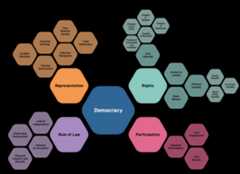
Sri Lankaperforms in the mid-range across all four categories of theGlobal State of Democracy Framework and is among the top 25 per cent of countries in the world regarding several factors, including Civic Engagement and Electoral Participation. Over the last five years, it has seen advances in Elected Government, Freedom of Expression and Freedom of the Press s and declines in Freedom of Association and Assembly. Sri Lanka isconsidered a lower middle income economy and is currently recovering fromthe most severe economic crisis of its post-independence history.
British colonizers left behind a divided island in 1948, having stoked pre-existing power struggles between the majority Sinhalese and minority Tamil communities by favouring the latter during their rule. In addition to these groups, there is a Muslim community (nine per cent) and other small minority groups (less than one per cent). Significant class, caste, and religious regional divisions within communities have been used strategically by politicians for their own ends. Sinhalese dominance in government and a raft of ethnically chauvinist legislation in the wake of independence eventually led to the outbreak of a 26-year-long civil war in 1983. A combination of economic and communal issues also led to a violent insurrection between 1987 and 1989, spearheaded by the communist nationalist Janatha Vimukthi Peramuna (JVP).
In ensuing years, politics was driven by politicized ethnicity, and political violence – perpetrated both by the state and by the Liberation Tigers of Tamil Eelam and other armed groups – became normalized. The end of the war was tainted by allegations of human rights violations perpetrated by the state, and the government refused to cooperate with an UN-led investigation into these events. In the post-war era, new social cleavages, including anti-Muslim sentiment and Islamic terrorism, have grown. The country was further militarized after the war, particularly in the war-torn regions, and civil liberties remained restricted. At the same time, many Tamils in the north were resentful of the government’s continued refusal to address the root causes of the war and its “pampering” of former LTTE leaders who had brutalized the community. The Prevention of Terrorism Act (PTA), enacted in 1979, remained in force and has allowed surveillance, detention, and harassment of Tamils accused of trying to recreate the LTTE.
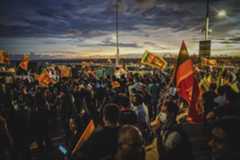
Recent political history has been shaped by the Rajapaksa family, blamed for the worst economic crisis the country has experienced since independence. Popular protests in 2022 forced the former president to flee and led to an interim government. In 2024, left-leaning candidate Anura Kumara Dissanayake won both presidential and parliamentary elections, marking a departure from long-standing political oligarchies.
Sri Lanka has made some progress in gender equality, notably in education and healthcare access for women. However, key challenges remain, including gender-based violence, wage disparities, and low female representation in leadership roles including in legislature, despite having elected the world’s first female prime minister in 1960. Same-sex relations remain criminalized and LGBQTIA+ discrimination persists.
Looking ahead, it will be critical to watch if and how the newly elected administration addresses the protesters’ demands, manages economic reform and tackles pervasive militarization of civilian governmental functions. Accountability mechanisms for civil-war-era violations,corruption and threats to independent institutions and the rule of law remain significant challenges. Civil Liberties will also need attention considering controversial legislation regulating online content and ongoing efforts to replace the PTA.
Last Updated: June 2025
https://www.idea.int/democracytracker/
December 2025
Draft bill replacing anti-terror legislation prompts major criticism
In December, Sri Lanka’s Ministry of Justice and National Integration published the draft Protection of the State from Terrorism Bill (PSTA), intended to replace the Prevention of Terrorism Act (PTA). The PTA has long been criticized as a tool used to facilitate human rights abuse and silence dissent. Rights experts warn that the draft retains—and in some cases worsens—many of the controversial features of the PTA, including overbroad definitions of terrorism, expansive police and presidential powers and inadequate safeguards that allow for prolonged detentions. The government has invited public comment on the proposed legislation until 28 February. However, civil society groups have criticized the timing of the release, noting that it comes in the aftermath of Cyclone Ditwah, which limits meaningful public engagement.
Sources: Centre for Policy Alternatives, Lankaweb,International IDEA,Ministry of Justice Sri Lanka,Human Rights Watch


November 2025
Controversial state of emergency declared in response to cyclone
On 29 November, Sri Lanka’s government declared a state of emergency following the worst natural disaster in decades. ‘Cyclone Ditwah’ resulted in over 600 deaths, with thousands of homes destroyed and hundreds of people still missing. The emergency laws grant the president sweeping powers to override existing laws, deploy armed forces, impose curfews and regulate media and essential services. While the use of emergency laws in Sri Lanka is not unprecedented, their continued use as a default response to crises—particularly under a new administration that came into office after the mass protests in 2022—raises significant concerns. Civil society organizations note that recovery efforts should be addressed through existing laws such as the Disaster Management Act. A key concern raised is that the emergency laws create yet another council under the president, duplicating the Disaster Management Council and undermining accountability and civilian governance.
Sources:Centre for Policy Alternatives,New York Times,Colombo Telegraph


August 2025
Former President Ranil Wickremesinghe arrested over corruption probe
On 22 August, former President Ranil Wickremesinghe was arrested for allegedly misusing public funds while in office. Wickremesinghe is accused of using USD 59,500 in state funds to attend his wife’s graduation ceremony in London after a diplomatic visit to the United States in 2023. His arrest marks the first time a former president has been arrested and brought before a court on corruption charges. Rights experts note that the case represents the government’s commitment to tackling alleged corruption; however, some critics question why there have been no prosecutions against former presidents Gotabaya and Mahinda Rajapaksa, widely blamed for the economic crisis in 2022 and exacerbating a culture of corruption in politics. On 26 August, a Sri Lankan court granted Wickremesinghe bail, with legal proceedings in progress.
Sources: Deutsch Welle,The Diplomat, Daily Financial Times
Parliament votes to remove former chief of national police force
On 5 August, Sri Lanka’s parliament voted to remove Deshabandu Tennakoon from his role as Inspector General of the Sri Lanka Police (IGP). The decision follows a parliamentary-led inquiry and the release of a report in July that found him guilty of charges related to torture, misconduct and abuse of power. Tennakoon was suspended from his position by the Supreme Court in July 2024 due to a case launched by civil society organizations questioning the suitability of his appointment. An acting IGP was put in his place during this time. The parliamentary vote makes Tennakoon the first IGP in Sri Lanka’s history to be dismissed on these grounds. On 13 August, Priyantha Weerasooriya was appointed the new IGP, while Tennakoon continues to face ongoing court cases against him related to his prior conduct.
Sources: International IDEA,Newswire.lk, Al Jazeera

July 2025
Supreme Court rules 2022 use of emergency powers unconstitutional
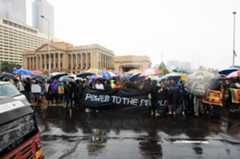
On 23 July, the Supreme Court delivered a landmark ruling, declaring that the emergency regulations enacted under the Public Security Ordinance by then-acting President Ranil Wickremesinghe on 17 July 2022 violated protesters’ fundamental rights. The Court found that the powers used to disperse peaceful Aragalaya protesters, which included arbitrary searches, arrests and detainment, were not supported by valid legal grounds. The fundamental rights petitions had been filed by several prominent figures from civil society. The Court declared the emergency regulations void and instructed the state to cover the legal costs of the petitioners. This ruling marks a crucial legal precedent, reinforcing the right to peaceful protest and establishing that government actions must adhere to constitutional standards.
Sources: NewsFirst.lk,Centre for Policy Alternatives,Groundviews

See all event reports for this country
Global ranking per category of democratic performance in 2024

Basic Information

Human Rights Treaties
 State party
 Signatory
 No action
Create your monthly alerts
and receive a customized selection of reports directly in your inbox
Performance by category over the last 6 months

Blogs
Election factsheets

Global State of Democracy Indices
Hover over the trend lines to see the exact data points across the years


Factors of Democratic Performance Over Time
Use the slider below to see how democratic performance has changed over time