Netherlands
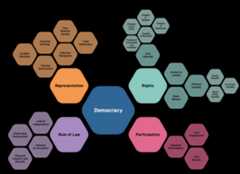
The Netherlands performs in the high-range across all categories of the Global State of Democracy (GSoD) framework and is among the world’s top 25 per cent of countries in all factors. Between 2019-2024, the country saw declines in Social Group Equality and the Rule of Law (due to declines in Predictable Enforcement), but it continues to be a high-performer in all these three areas. The Netherlands is home tovarious intergovernmental organizations and international courts in The Hague as well as to one of the world’s most competitive economies. The most robust sectors include chemical industries, life sciences and health, agrifood, energy and IT.
Until 1795, the Netherlands was a republic of seven autonomous provinces. Under French occupation, it became a unitary state, regaining independence in 1813. A major 1848 amendment to the constitution reduced royal powers and enhanced the authority of the Cabinet and the Parliament, marking the beginning of parliamentary democracy. Dutch politics is characterized by party fragmentation. While some see fragmentation as beneficial because it allows voters to choose parties that are closer to their values, it has also been a source ofpolitical deadlocks.
The Netherlands has historically managed cleavages through a pillarized society (verzuiling), particularly from the 1900s to the 1960s, with Catholic, Reformed, and neutral or liberal pillars coexisting within a "consociational democracy," marked by tolerance and separate but equal social groups. Dutch society’s respect for diverse social views has made it a bastion of openness, marked by legalization of same-sex marriage, euthanasia, and other phenomena. It has a long history of multiculturalism and being a safe haven for refugees.
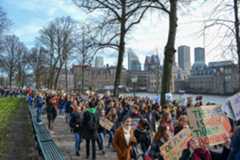
However, the recent spike in immigration has exposed political divisions. Immigration is a crucial issue in the country, and disputes over asylum policy contributed to the collapse of the coalition government in 2025. The Netherlands has also seen growing concerns about discrimination. This issue, combined with inflation (which has recently slowed) and a housing crisis, has contributed to declining political trust. In 2023, anasylum shelter crisis and a childcare benefit scandal that exposed discriminatory algorithms within the Tax and Customs Administration also resulted in the previous government stepping down. Climate policies have also caused divisions, with some citizens demanding swift action and a farmers’ movement against farm emission regulations. Such divisions have fuelled political instability and uncertainty.
The Netherlands performs highly in Gender Equality, which is also constitutionally guaranteed. Advancements include a significant presence of women in education and the workforce and substantial funding for promoting gender equality. Still, challenges regarding the gender pay gap—although gradually narrowing—and misogyny persist. The Netherlands is a global leader in LGBTQIA+ rights, being the first in the world to legalize marriage equality and enshrining protection against sexual orientation discrimination in its constitution in 2023.
Looking ahead, it will be important to watch Representation, especially Elected Government and Effective Parliament, given the political turmoil following the collapse of the last two governments.
Rights, with a focus on Social Group Equality, should also remain a key area of attention, especially in light of ongoing discussions and the main parties’ differing positions on asylum policies. The balance between Predictable Enforcement and Participation (especially Civic Engagement) will be crucial, considering ongoing climate-related protests and the decline in political trust.
Last updated: June 2025
https://www.idea.int/democracytracker/
October 2025
Centrist D66 receives most votes in snap parliamentary elections
On 29 October, the Netherlands held snap elections for the House of Representatives after the governing coalition fell in the aftermath of the withdrawal of support from Geert Wilder’s Freedom Party (PVV). In a significant turnaround from the 2023 elections, the centrist D66 more than doubled its seats, securing 26 seats with 16.9 per cent of the vote. PVV also secured 26 seats with 16.7 per cent of the vote. The People’s Party for Freedom and Democracy (VVD) placed third with 14.2 per cent, marking a moderate decline from 2023. The GroenLinks-PvdA alliance followed with 12.8 per cent, while the Christian Democratic Appeal (CDA) earned 11.8 per cent of the vote, doubling its seats. The share of women in Parliament will reach 43.3 per cent, surpassing both the previous high of 42.7 per cent in 2010 and the 39.3 per cent in the previous mandate, marking the highest level in the House since 1918. Voter turnout was 78.3 per cent, up from 77.8 per cent in 2023.
Sources:Kiesraad (1),Kiesraad (2),IPU Parline,RTL Nieuws,International IDEA


September 2025
Lower House of Parliament votes to ban conversion therapy
On 19 September, the Lower House of Parliament (Tweede Kamer) voted in favour of banning conversion therapy, a practice aimed at changing a person’s gender identity or sexual orientation (from homosexuality to heterosexuality). The bill, introduced by parties including The People’s Party for Freedom and Democracy (VVD) and Democrats 66 (D66), now awaits approval from the Upper House of Parliament (Eerste Kamer).
Sources:NL Times, Eertse Kamer, Tweede Kamer

July 2025
Lower House approves draft bills introducing new limits on asylum seekers
On 4 July, the Lower House (Tweede Kamer) approved two bills setting new limits on asylum rights. The bills reduce the length of temporary residence permits from five to three years, abolish permanent residence permits for new applicants, and tighten rules on family reunions. An amendment introduced by the Party for Freedom (PVV), which criminalizes aid to migrants by NGOs and individuals, drew criticism, with outgoing Minister of Justice and Security, David van Weel, urging its removal. The bills now move to the Upper House of Parliament (Eerste Kamer) for consideration.
Update: After the Upper House of Parliament (Eerste Kamer) deferred consideration pending the Council of State’s review, the Council issued its opinion on 3 November, warning that the draft bill was poorly prepared and legally inconsistent, advising government revision of the amendment. The Minister of Asylum and Migration has since revised the bill accordingly and resubmitted it to the Upper House.
Sources: Euronews, AP News,NOS,Dutch News, Council of State,Eerste Kamer
January 2024
Senate passes law on fair distribution of asylum seekers
On 23 January, the Dutch Senate approved a law on fair distribution of asylum seekers between Dutch municipalities. Over the past decade, only roughly half of Dutch municipalities have provided accommodations for asylum seekers. With 32,000 people currently housed in temporary shelters, the objective of the law is to tackle the lack of accommodation by granting the government authority to override municipalities’ refusal to accept asylum seekers. The Senate approved the law with 43 votes in favour, 27 against, and 5 abstentions. The law could be passed largely due to the support of the conservative-liberal People’s Party for Freedom and Democracy (VVP), the party of former prime minister Mark Rutte, even though Geert Wilders’ right-wing Party for Freedom (PVV), currently trying to form a government, voted against it.
Sources:Netherlands government,Dutch News (1),Dutch News (2),NL Times,RTL Nieuws

See all event reports for this country
Global ranking per category of democratic performance in 2024

Basic Information

Human Rights Treaties
 State party
 Signatory
 No action
Create your monthly alerts
and receive a customized selection of reports directly in your inbox


Global State of Democracy Indices
Hover over the trend lines to see the exact data points across the years


Factors of Democratic Performance Over Time
Use the slider below to see how democratic performance has changed over time