Lesotho
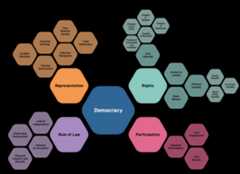
Lesotho exhibits mid-range performance across all categories of the Global State of Democracy Framework. It is among the top 25 per cent of countries with regard to Free Political Parties, Civic Engagement, and Freedom of Religion, while it falls among the bottom 25 percent in Basic Welfare. Compared to 2019, it has experienced a significant advance in Credible Elections and a significant decline in Freedom of the Press. Classified as a lower middle-income country, Lesotho’s economy relies heavily on subsistence farming, foreign aid and remittances - mostly from migrant labourers working in neighboring South Africa. Key sectors also include diamond mining, textiles, construction and tourism.
Lesotho, formerly known as Basutoland, was an independent kingdom until it came under British rule in the late 19th century. In 1966, Basutoland became the independent country of Lesotho. Post-colonial Lesotho has been marked by political impunity, military interventions, and a series of coups until the return of multi-party democratic elections in 1993. The coups, including four attempted coups, are a reflection of the power of the army and the constant tussle for power between politicians and the monarchy in a context of underdevelopment. Lesotho’s politics have also been destabilized by its constitutional arrangements, which have produced chronically weak coalition governments, intra-party conflicts, politicized security forces and a judiciary vulnerable to political interference. Since 2012, efforts to address these deficiencies through a comprehensive package of constitutional reforms have been frustrated by the very political instability they are designed to rectify. Furthermore, corruption in the public sector has undermined confidence in key institutions. High homicide rates, murders and intimidation targeting journalists, and allegations of abuse of prisoners pose serious threats to press freedom and personal integrity and security. So too, do recent reports of torture and killings perpetrated by the security agencies against civilians.
Lesotho grapples with high levels of poverty, inequality, and unemployment. Having the world’s second-highest HIV prevalence rate (22.7 per cent) and third-lowest life expectancies (55 years for men/61 years for women), public health challenges also remain pressing. Lesotho is a mid-performer on the GSoD’s Gender Equality measure and, despiteenhanced legal protections and growing public support for equality for women, significant gender gaps exist in political representation, education and employment, and gender-based violence iswidespread. The LGBTQIA+ community also faces discrimination and violence and lacks legal protections. However, the government has made efforts to make healthcare more accessible to LGBTQIA+ persons and in 2012 same-sex relations were legalized.
Looking ahead, it will be important to monitor progress towards constitutional reforms that are considered the most crucial intervention to stabilize Lesotho’s politics. The impact of such reforms would likely be felt across the GSoD framework, but particularly in factors related to Representation. Access to Justice is another area meriting attention, in light of mounting legal cases against the country’s security agencies over alleged torture during recent operations, and recommendations from the ombudsman calling for investigations into the abuses and for the perpetrators to be held to account. Additionally, the economic and public health effects of international aid cuts and US trade tariffs should also be watched closely for their impact on Basic Welfare and Economic Equality.
Last updated: July 2025
https://www.idea.int/democracytracker/
October 2025
Asset recovery body dissolved after reporting alleged government corruption
On 23 October, the Office of the Prime Minister announced the dissolution of the Government Assets Recovery Task Team (GASRTT), a body tasked with reclaiming fraudulently acquired state assets, just weeks after it had reported alleged government mismanagement and corruption to Lesotho’s parliament. Among the findings it shared with the Public Accounts Committee (PAC) were that state land had been irregularly allocated to senior government officials and private individuals and that the government could not account for hundreds of its vehicles. The prime minister’s office justified GASRTT’s dissolution on the grounds that it lacked the necessary legal framework and said it would be re-established once this had been rectified. However, questions have been raised about the timing of the intervention, with GASRTT reported to have flagged the legal framework issue when it began its operations in 2023. The team had been due to present two further reports to the PAC on 3 November.
Sources:Lesotho Times,Ground Up,Lesotho News Agency,Lesotho Tribune


August 2025
Lesotho enacts first set of long-awaited constitutional reforms
On 13 August, Lesotho’s government gazetted the Tenth Amendment to the Constitution Act, the first of three sets of anticipated reforms intended to address the constitutional causes of the country’s chronic political instability. Among other things, the Tenth Amendment establishes parliamentary oversight powers over government expenditure, provides for a parliamentary service, strengthens the independence of the Human Rights Commission and entrenches within the constitution a new anti-corruption commission. Further, it creates a Media Council to regulate the media industry and a Media Ombudsman to settle disputes within the sector, as well as providing for affirmative action in favour of historically marginalised groups, including women and people with disabilities. The approach taken by the current government to constitutional reform (the process began in 2012), however, has been criticised for being piecemeal, top-down and excluding stakeholders.
Sources:Tenth Amendment to the Constitution Act, 2025,Democracy in Africa,News 24,International IDEA


September 2024
Civilians allegedly killed and tortured by army in ongoing operation
Between August and September, soldiers from the Lesotho Defence Forces (LDF) allegedly killed at least two civilians and tortured at least five others, as part of an ongoing operation to confiscate firearms from criminal gangs. ‘Operation Hard Fist’ was launched earlier in 2024 in response to an increase in gun-related violence in Lesotho, but it has been marred by reports of human rights abuses, including arbitrary detention, torture and killings. The incidents follow a speech made by Prime Minister Sam Matekane in early August, in which he urged the deputy army commander to ‘do everything in your power to ensure that peace returns to Lesotho’ – although he subsequently clarified that it was not a call for the army to torture and kill civilians. Opposition parties and civil society organisations have condemned the deployment of the LDF, saying it threatened civil liberties.
Sources:Lesotho Times (1),Amnesty International,News 24,Lesotho Times (2)
March 2024
Ombudsman’s report finds that prisoners were abused in Maseru
Ombudswoman Tlotliso Polaki published a report on 19 March that detailed the findings of an investigation into allegations that prisoners were abused at the Maseru Correctional Centre Institution in December 2023. The Ombudswoman’s investigation found that prison staff, and notably trainees of the Lesotho Correctional Service, intentionally provoked a confrontation with inmates. On 21 December six inmates at the facility escaped. The following day, prison officials arranged a search of the facility. The Ombudswoman found that the search was intentionally aggressive in order to provoke fights with inmates, and that 300 of the 650 inmates were beaten. The Ombudsman’s report further identified an orchestrated effort to conceal the abuse and a denial of medical care to those who had been injured.
Sources:Ombudsman of Lesotho,African Legal Information Institute,Lesotho News Agency,News24
See all event reports for this country
Global ranking per category of democratic performance in 2024

Basic Information

Human Rights Treaties
 State party
 Signatory
 No action
Create your monthly alerts
and receive a customized selection of reports directly in your inbox


Global State of Democracy Indices
Hover over the trend lines to see the exact data points across the years


Factors of Democratic Performance Over Time
Use the slider below to see how democratic performance has changed over time