Argentina

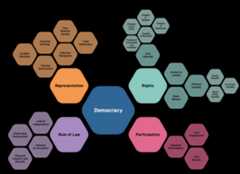
Argentinaexhibits mid-range performance in the Rights, Participation and Rule of Law categories of the Global State of Democracy Framework, and high-range performance in Representation. It is among the top 25 per cent of countries regarding multiple factors of democratic performance. Over the past five years, it has experienced significant advances in Access to Justice and declines in Freedom of Expression and Judicial Independence. It is one of Latin America's largest economies, relying heavily on food production and agricultural exports.
Argentina gained independence from Spain in1816, following centuries of colonization and years of rebellion against the colonial power. The origin myth of the nation as white and European has traditionally excluded Indigenous communities andAfro-descendants from the concept of national identity. Racial discrimination exists at a structural level, and unequal access to social rights and opportunities is common. Despite recent improvements in macroeconomic indicators like inflation and public debt,poverty remainshigh—especially among children.
Argentina has pioneered progressive gender equality legislation over the past decade, including on marriage equality (2010), gender identity (2012) and abortion (2021).Recent setbacks—with severe budget cuts to key institutions andprograms—nowthreaten progress in gender mainstreaming whileseverely limiting access to sexual and reproductive rights. Further, violence against women remains widespread, with alarming rates of femicides.
Since the mid-19th century,repeated economic crises and military coups disrupted Argentina’s democratic rule. The last dictatorship (1975-1983) was marked by widespread human rights violations includingenforced disappearances and extrajudicial killings. Democratic rule returned in 1983.Civil society-led efforts for justice and accountability contributed to the creation of a truth commission, criminal proceedings, and strengthened civilian oversight of the armed forces. However, recent cuts to institutions supportingmemory, truth, and justice initiativesthreaten ongoing prosecutions, with hundreds of cases still pending.
Divisions in politics have traditionally fallen between Peronism—a movement rooted in former President Juan Peron’s pro-union and working-class policies—and the Radical Civic Movement (UCR) a center-right liberal party. Over the years, endemic corruption, low levels of public trust and political polarization have weakened institutions and fueled public fatigue with the political establishment. Traditional parties' failure to address chronic economic instability, including record-high inflation, paved the way for the rise of new right-wing and far-right parties. The2023 general elections brought a new libertarian party to power. The government swiftly implemented anaggressive economic reform introducingausterity measures that sharply cut public welfare and public spending. The broad use of “Necessity and Urgency Decrees” has drawncriticism fromlegal experts that accused the government of eroding checks and balances, bypassing Congress and underminingjudicial independence. Other salient issues that have featured prominently in politics include the perception of a shrinking civic space due to restrictions oncivic freedoms, claims of excessive use offorce duringprotests, and challenges topress freedom, including allegations ofjournalist intimidation. These developments have exacerbated social unrest and political polarization.
In the coming years, it will be important to follow the impact of the government's budget cuts to education, public health, pensions and social welfare on Basic Welfare. Gender Equality also warrants close attention, given recent structural reforms to the country’s legal andinstitutional frameworks for gender mainstreaming. Civil Liberties—including Freedom of the Press, Expression and Assembly and Association—will be key to follow amidst ashrinking civic space.
Last Updated: July 2025
https://www.idea.int/democracytracker/
December 2025
Labour reforms postponed amid protests
On 10 December, President Javier Milei proposed a labour reform package aimed at overhauling employment laws. Key measures include reducing severance pay by excluding bonuses and vacation pay, allowing salaries in foreign currencies and eliminating automatic renewal of collective bargaining agreements. The reform also gives precedence to company-level agreements, which often provide fewer protections compared to broader national agreements. It further limits the right to strike, and imposes stricter regulations on union activities. While the government presented the reform as a way to boost formal employment and reduce bureaucracy, it faced significant public backlash. Critics, including unions, argued the changes undermine workers' rights, weaken collective bargaining, and increase job insecurity. On 18 December, massive protests led by the General Confederation of Labor (CGT) highlighted these concerns. In response, the government postponed the legislative debate to 2026.
Sources:El Pais (1), Republica de Argentina – Poder Ejecutivo Nacional,Reuters,Chequeado,Reuters,Buenos Aires Times, El Pais (2)


November 2025
Milei appoints new military minister of defence
In November, President Javier Milei named Lieutenant General Carlos Presti as the country’s new Minister of Defence. The appointment marks a historic shift, as it is the first time since the return to democracy in 1983 that a serving military officer (rather than a civilian) has assumed this role. The decision, framed by the government as an effort to end the ‘demonization’ of the armed forces, has sparked significant debate. Critics, including human rights organizations, view this move as a potential threat to democratic norms, given Argentina's history of military dictatorship and human rights abuses. Supporters argue it reflects a pragmatic approach to defence leadership. This appointment signals an increased role for the military in governance, raising concerns about its implications for civilian oversight and the preservation of democratic principles in Argentina.
Sources:Marco Press, El Pais, BBC, Página 12

Government unveils new US-inspired immigration body
Argentina's government announced the creation of the National Migration Agency (ANM), a new body under the Ministry of Security tasked with enforcing immigration laws and coordinating federal law enforcement agencies, including the Federal Police, Airport Police, Naval Prefecture, and Gendarmerie. Inspired by the US Border Patrol, the ANM aims to strengthen border security and combat transnational crime through a unified and operationally coordinated structure. This shift represents a significant change, as immigration oversight historically fell under the Ministry of the Interior. The government emphasized that the ANM would address migration as a national security priority, reflecting a broader trend of adopting U.S.-style security models. While proponents argue this change enhances efficiency in tackling organized crime, critics have expressed concerns about the potential erosion of civil liberties and the implications for accountability in Argentina.
Sources:Ministerio de Seguridad Nacional (1),Ministerio de Seguridad Nacional (2), El País, La Nación

President Javier Milei accused of corruption
On 18 November, an Argentine congressional commission concluded its investigation into the alleged $LIBRA cryptocurrency fraud, implicating President Javier Milei and his sister, Karina Milei, in the scheme. The report accuses Milei of using his presidential platform to promote $LIBRA, a cryptocurrency that collapsed in value shortly after its launch, causing significant financial losses to over 114,000 investors. The commission highlighted Milei's social media endorsement of $LIBRA, which boosted demand before a ‘rug pull’ —a fraudulent manoeuvre where insiders abruptly withdraw funds, causing the asset's value to plummet—led to its abrupt devaluation. The report also alleges misuse of government resources and connections to facilitate the scheme, raising questions about Milei's role and accountability. While the findings have been submitted to judicial authorities, further congressional action is unlikely as many of the new lawmakers elected in October’s mid-term elections are aligned with Milei. They will assume office on 10 December.
Sources:El País,Indo Premier,AP News,International IDEA

October 2025
Mid-term legislative elections result in victory for the ruling party
On 26 October, Argentina held legislative elections to renew half of the members of the Chamber of Deputies (127 seats) and one-third of the members of the Senate (24 seats). Two main political coalitions won the majority of votes across the country: the incumbent La Libertad Avanza (LLA) and the opposition Fuerza Patria/Peronismo (FP) alliance. In the Chamber of Deputies, LLA received 41.5 per cent of the vote, followed by FP with 34.9 per cent. In the Senate, LLA also led with 42.0 per cent, while FP followed with 36.9 per cent. Despite voting being mandatory, voter turnout was 67.9 per cent, down from 71.5 per cent in the 2021 mid-term legislative elections. At the time of writing, data on women elected to Congress was not available. This election marked the first time the country voted using a Single Paper Ballot (SPB), replacing the previous party ballot system.
Sources: BBC, Buenos Aires Herald, Infobae, Resultados Elecciones, Cámara Nacional Electoral
Congress approves bill to limit presidential decrees
On 8 October, Argentina’s lower chamber of Congress approved a bill aimed at restricting the use of decrees of necessity and urgency (DNU), a legislative tool frequently employed by President Javier Milei to advance his reform agenda. The bill, which had already passed the Senate, introduces stricter controls, requiring DNUs to gain approval from both chambers of Congress rather than just one, and allowing either chamber to annul them. This amendment, seen as a measure to curb executive overreach, marks a significant challenge to Milei, who has issued around 70 such decrees during his term due to his lack of a congressional majority. The legislation now returns to the Senate for final review and approval. However, it still requires presidential promulgation, and Milei retains the option to veto the measure.
Sources:Camara de Diputados, Swissinfo, Info Bae, Pagina 12
September 2025
Congress overturns presidential veto and approves emergency law on disability
On 4 September, Congress overturned President Milei’s veto of a law aimed at improving disability benefits. The law declares disability a national emergency amid worsening conditions for citizens with disabilities affected by Milei’s austerity measures. This is the first time in 22 years that Congress has overturned a presidential veto—which requires a two-thirds majority and signifies the law’s final approval. The president had vetoed Law No. 27.793, originally approved by Congress in June, citing a lack of funds and accusing Congress of fiscal irresponsibility for passing it. According to experts and rights groups, the law’s final approval represents a crucial improvement in the living conditions of one of the most vulnerable sectors of society and among the hardest hit by government cuts in social welfare. The new law declares a national emergency on disability until the end of 2026, raising pensions for people with disability and guaranteeing increased public spending to support their rights.
Sources:Boletin Oficial,El Pais,The guardian,Chequeado


Ban on publication of Milei audio recordings raises press freedom concerns
On 1 September, a federal court issued an injunction prohibiting the broadcast of audio recordings featuring Karina Milei, Secretary of the Presidency and sister of President Javier Milei. The recordings, secretly recorded inside the Casa Rosada (President’s office), reportedly contain evidence of a supposed corruption scheme that surfaced in August, allegedly involving Karina Milei and senior officials accused of receiving kickbacks from the purchase of medication through the National Disability Agency. The ban followed earlier leaks of recordings featuring Diego Spagnuolo, the agency’s former head, appearing to admit the scheme and implicating Karina Milei. Journalists had announced plans to release additional recordings featuring Milei. Judge Patricio Maraniello argued that the dissemination of these recordings could harm Milei’s privacy and reputation, and jeopardize her work. Press freedom watchdogs have called the ruling a severe threat to press freedom and to the public’s right to access information in Argentina.
Update: Following an appeal presented by a journalist against the gag order imposed on the publication of audios, Karina Milei asked the court to lift the ban on 15 September, noting that the audio recordings had already been published by foreign media and no longer posed a national security risk. Consequently, on 16 September, a federal court in Buenos Aires lifted the ban.
Sources:Reporters without borders,El Pais,Buenos Aires Herald,AP News,Global Freedom of Expression, Nuevos Papeles

See all event reports for this country
Global ranking per category of democratic performance in 2024

Basic Information

Human Rights Treaties
 State party
 Signatory
 No action
Create your monthly alerts
and receive a customized selection of reports directly in your inbox
Performance by category over the last 6 months
Global State of Democracy Indices
Hover over the trend lines to see the exact data points across the years


Factors of Democratic Performance Over Time
Use the slider below to see how democratic performance has changed over time