
Internet routers, devices that deliver and direct packets ofdata back and forth between networks, are an essential part of Internetnetworks. Most of today’s routers also allow network administrators to censoror block—or, as the industry calls it, “filter”—the data going through them,programming the router to block certain kinds of data from passing in or out ofa network. This filtering capability was initially intended so that InternetService Providers could control viruses, worms, and spam. The same technology,however, can also be easily employed to block political, religious, or anyother category of content that the person programming the router seeks toblock.
The first layer of Chinese Internet censorship takes placeat this router level. According to the 2005 technical analysis of ChineseInternet filtering conducted by the Open Net Initiative, IAP administratorshave entered thousands of URLs (Internet website addresses) and keywords intothe Internet routers that enable data to flow back and forth between ISPs in China and Internet servers around the world. Forbidden keywords and URLs are also pluggedinto Internet routers at the ISP level, thus controlling data flows between theuser and the IAP.
This router-level censorship, configured into the hardwareof the Chinese Internet, is reinforced by software programs deployed at thebackbone and ISP level which conduct additional “filtering” of politicalcontent. (In many countries such censorship software deployed at the backboneand ISP level is a product called SmartFilter, developed by Secure Computing. China, however, has developed its own home-grown filtering software.) Such filtering programsare used globally by households, companies, and organizations for all kinds ofpurposes: they enable employers to block employees from surfing pornography orgambling online from the office, and enable schools to prevent young studentsfrom accessing age-inappropriate content.
It is this type of censorship or blocking that causes anerror message to appear in the Chinese Internet user’s browser when he or shetypes, for example, http://www.hrw.org (the Human Rights Watch website) intothe address field of his or her browser.
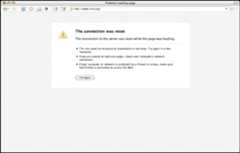
Figure 1: Error page appearing when userattempts to access www.hrw.org on a Chinese ISP
It is important to note that while similar Internetcensorship is conducted in many countries, some governments choose to informtheir citizens that censorship is taking place, while other governments chooseto leave users with an error message that could be the result of any number ofproblems, including user error or technical failure of the Internet connection.In Saudi Arabia, when a user attempts to access a webpage that authorities havechosen to block, they are directed not to a 404 error page as depicted inFigure 1 above, but to a page informing the user that the page he or she isattempting to access has been blocked in accordance with national laws, withcontact information in the event that the user believes the page was censoredin error.
2. Censorship by Internet Content Providers:Delegating censorship to business
Building censorship into China’s Internet infrastructure isthe first way in which the Chinese government seeks to block user access topolitically sensitive information. The second step is to prevent ISP’s—many ofthem privately-held businesses, some with foreign investment—from hostingpolitically objectionable content by holding them liable for doing so. The thirdstep targets Internet Content Providers (ICPs): organizations or individuals(either for-profit or non-profit) who provide publicly available content on theWeb (news, entertainment, or commercial websites), or who provide platforms onwhich users can communicate and converse with one another (chatrooms andbulletin board systems known commonly as BBS), or on which users can create andshare text, photographs, audio and video (blogging services, photo- andvideo-sharing sites, podcasting and audio-sharing services, etc.).
All ICPs—commercial or non-commercial—are required toregister for and display a license in order to operate legally, and are heldliable for all content appearing on their websites, whether created by thecompany’s or organization’s employees, or by any of the site’s visitors or usersof its content-creation and sharing services.
If an ICP wants to obtain—and keep—its business license tooperate in China, it is expected to prevent the appearance of politicallyobjectionable content through automated means, or to police content beinguploaded by users for unacceptable material, which is then taken down manuallyby company employees.The obligation to do so is manifested in a “voluntary pledge” signed byhundreds of organizations including Chinese companies, universities, and governmentoffices. This “Public Pledge on Self-discipline for the Chinese InternetIndustry,” initiated by the Internet Society of China (ISOC), commitssignatories to “energetic efforts to carry forward the rich cultural traditionof the Chinese nation and the ethical norms of the socialist culturalcivilization” by observing all state industry regulations. In particular,signatories vow to refrain “from producing, posting, or disseminatingpernicious information that may jeopardize state security and disrupt socialstability.”The Internet Society of China is the major professional association for theChinese Internet industry. While the ISOC is called a “nongovernmentalorganization,” its “governing body” is the Ministry of Information Industry,the government ministry in charge of China’s national Internetinfrastructure.To date, Yahoo! is the only Western company known to have signed the pledge (aswill be discussed further in Section IV, Part 1).
The display of politically objectionable content can resultin reprimands to company management and employees from the MII, the StateCouncil Information Office, the Communist Party’s Propaganda Department, and/orvarious state security organs, accompanied by warnings that insufficientcontrols will result in revocation of the company’s license. In order tominimize reprimands and keep their licenses in good standing, BBS and bloghosting services maintain lists of words and phrases that either cannot beposted or which cause monitoring software to “flag” the content for manualremoval by employees.
Search engines likewise maintain lists of thousands ofwords, phrases and web addresses to be filtered out of search results so thatlinks to politically objectionable websites do not even appear on the searchengine’s results pages, even when those websites may be blocked at the backboneor ISP level. Thus, the user is prevented from knowing that the forbiddencontent exists at all. This is a deliberate choice made by the operator of thesearch engine.
In 2004, Xiao Qiang, Director of the China Internet Projectat the University of California at Berkeley, published one such list that hadbeen leaked from a Chinese instant messaging service (see Appendix I). Anothersimilar list was obtained by theWashington Post from an unnamed Chineseweblog hosting company in early 2006 (see Appendix II).
Such lists are not given directly to Internet companies bythe Chinese government; rather, the government leaves the exact specifics andmethods of censorship up to companies themselves. Companies generate their “block-lists”based on educated guesswork plus trial-and-error: what they know to bepolitically sensitive, what they are told in meetings with Chinese officials,and complaints they may receive from Chinese authorities in response to theappearance of politically objectionable search results.
But the complicity of companies is even more direct: theyactually run diagnostic tests to see which words, phrases, and web addressesare blocked by the Chinese authorities at the router level, and then add themto their lists, without waiting to be asked by the authorities to add them. Andbecause they seek to stay out of trouble and avoid complaints from theauthorities, many businesspeople who run ICPs in China confess that they areinclined to err on the side of caution and over-block content which does notclearly violate any specific law or regulation, but which their instincts tellthem will displease the authorities who control their license. In all these ways, companiesare doing the government’s work for it and stifling access to information.Instead of being censored, they have taken on the role of censor. Yahoo!,Microsoft’s MSN, and Google all act as ICP’s in China.
3. Surveillance and censorship in email and webchat
As in most countries, email services hosted on serversinside the PRC are expected to respond to requests by law enforcementauthorities for user information and copies of email communications. Yahoo!,the only non-Chinese Internet company providing email services with user datahosted inside the PRC, has responded to information requests in criminal cases,as have all domestic Chinese businesses that provide email services. BecauseChinese law enforcement bodies and courts include a range of internationallyprotected political speech in their interpretation of what constitute criminalacts under Chinese domestic law, Yahoo!’s compliance with Chinese law hasassisted in the conviction of at least four Chinese government critics (seebelow, Section IV, part 1).
Mobile and Internet chat services licensed to sell servicesto Chinese users inside the PRC are also required to filter politicallysensitive content. As mentioned in the previous section, in 2004 Xiao Qiangobtained a block sensitive word list used by the popular QQ instant messagingservice, owned by the Chinese company Tencent. Human Rights Watch has received reportsfrom users of other Internet chat services that some messages containingpolitical content were sent but not received by the intended recipient. In atleast some cases, however, users suspected that the blocking had taken place atthe ISP or backbone level, rather than at the level of the chat client itself. However, atleast one international company, Skype, has admitted to building censorshipfunctions into its Chinese-language chat client developed jointly with theChinese company Tom Online (see Section IV, Part 4).
4. Breaching the Great Chinese Firewall
Censorship at the gateway and ISP level can be circumventedby the tech-savvy user through the use of proxy servers and other circumventiontechnologies. A proxy server is an intermediary web server that the Internetuser can use to access other websites indirectly, so that the ISP only seesthat you are visiting the intermediary site but not the final destination site.If an Internet user configures her web browser to access the Internet via aproxy server located outside China, her web-surfing experience will be similar(although necessarily slower) to that of users in the country where thatparticular proxy server is hosted. Lists of proxy servers can be found on theInternet, but the Internet Protocol (IP) addresses of these proxies are quicklyblocked by administrators somewhere at the Chinese backbone or ISP level, makingthem impossible to use. Users from inside China report having to search for anew, unblocked proxy every thirty minutes to two hours. Software tools such asAnonymizer, Tor, and others such as Dynapass (created by affiliates ofFalungong) have been devised to help users get around this problem either byproviding updates of new proxies or by setting up the software to automaticallydiscover new unblocked proxies.Roger Dingledine, creator of Tor, reports that “some tens of thousands” ofpeople appear to be using Tor from China on a weekly basis. (Why the Chinesegovernment has, as of this writing, chosen not to block the proxy nodes used byTor is unknown.)
According to a 2000 Chinese Academy of Social Sciences(CASS) survey of Internet use in five Chinese cities, 10 percent of userssurveyed admitted to regularly using, and 25 percent to occasionally using,proxy servers to circumvent censorship. A 2005 CASS Internet user survey, askingthe same question, received the following response: “never”: 71.2 percent; “seldom”:19.7 percent; “sometimes”: 5.9 percent; “often”: 2.5 percent; “frequently”: 0.6percent.As the number of new Internet users increases rapidly, exactly how many peoplein China today really do use proxy servers on a regular basis—compared to thosewilling to admit doing so to pollsters—is the subject of anecdotal speculationand debate. However anecdotal evidence does support the CASS finding that whilemany people—especially university students—may be aware of proxy servers and knowhow to use them, the percentage of people who regularly use proxy servers toaccess blocked sites is small. In 2005 the global citizens’ media weblog GlobalVoices Online posted some questions to Chinese bloggers about proxy server usein China, including: “Of the people in China who use the internet regularly,what percentage do you think know how to use proxies? Of the people you know,what percentage know how to use proxies?” Here is what the student blogger “Undersound”wrote in response:
1. The first question I would prefer a percentage of 5percent. Most of my classmates and friends just don’t need to resort to proxy.They just view the major websites in China, which would comply with governmentand have no risk of shut down.
2. It is difficult to view blocked site as for the low speedand inconvenience. So rarely would we use those proxy unless the information isimportant.
3. Blocked sites are usually consisting of those types:blogs, TaiWan [sic] media, oversea community criticizing Chinese policy. ChineseInternet users tend to focus on some entertainment like online game and chat,rather than some serious subject. So generally those blocked sites had alimited impact. But for someone who are seeking those information it is veryannoying.
This is just one example of many conversations with ChineseInternet users illustrating why Chinese users are not currently using availabletechnologies to circumvent the Internet. Thus, the Great Firewall, while notinfallible, is successful enough to keep Chinese public opinion in line. Andwithout a doubt, multinational companies are playing a significant part inpreventing Chinese Internet users from stumbling across information that theChinese government would prefer they did not know existed.
This collaboration with political censorship also appears torun contrary to the wishes of the Chinese people. According to the 2005 CASSInternet survey, the majority of Chinese Internet users surveyed believed thatit was necessary for the government to control violent and pornographic contenton the Internet. However the study found that most users do not agree thatpolitical content should be controlled, and only 12 percent felt thatcontrolling political content is a good idea.
5. Chinese and International Law
China’s Internet regulations may be among the most extensiveand restrictive in the world. At least twelve different government bureaus havesome authority over the Internet, including the powerful State CouncilInformation Office, the Ministry of Public Security, and the Ministry ofInformation Industry, which is in charge of the licensing and registration ofall Internet content providers.In 2001, Human Rights Watch estimated that the Chinese government had issuedmore than sixty sets of government Internet regulations; many new regulationshave been issued since then, all of them increasing government control. Theextensive national-level framework is only part of the picture: thenational-level regulations coexist with an unknown number of provincial- and local-levelimplementing regulations, guidelines, policy documents, and other instrumentsthat have legal impact. Regulations in recent years have focused on, amongother things, expanding government censorship and control, both to newtechnology, such as cellphones,and to new mediums of expression, like blogs.
Although not all regulations are enforced against everypossible individual or entity arguably in violation of the rules––to do sowould be almost impossible, given the breadth and vagueness of certainprovisions––nonetheless the legal framework does have a significant andimmediate impact on the amount of information available online, and the extentto which the Internet can be used as a vehicle for free expression byindividual Chinese.
One of the most recent sets of regulations to be issued bythe government is the Provisions on the Administration of Internet NewsInformation Services (Provisions on News Information Services), issued jointlyby the State Council Information Office (SCIO) and the Ministry of InformationIndustry in September 2005. The Provisions cover the creation and management ofnews websites, and are the first new regulations on news websites since theissuance of the Interim Provision on the Administration of Internet Web SitesEngaged in News Posting Operations in 2000. Because the Provisions make use of avariety of control methods, including registration requirements, externalgovernment supervision, broad-based content restrictions, and administrativepenalties for violation of any part of the Provisions, they are fairlyrepresentative. The Provisions also make repeated reference to restrictionsfound in other relevant regulations, thus fully integrating China’s Internet law and assuring that virtually all restrictions apply to all situations.
In the first section, the Provisions on News InformationServices make clear that the purpose of news websites is not to inform thepublic of the facts, but instead to “serve socialism” and to “safeguard thenation’s interests and the public interest.” News with content that does not “servesocialism” is banned.News websites are “encouraged” to disseminate news that is “healthy” and “civilized,”and that will “rais(e) the quality of the nation.”
The key content restriction provision is Article 19, which forbidsthe following content:
(1) violating the basic principles as they are confirmedin the Constitution;
(2) jeopardizing the security of the nation, divulgingstate secrets, subverting of the national regime or jeopardizing the integrityof the nation’s unity;
(3) harming the honor or the interests of the nation;
(4) inciting hatred against peoples, racism againstpeoples, or disrupting the solidarity of peoples;
(5) disrupting national policies on religion, propagatingevil cults and feudal superstitions;
(6) spreading rumors, disturbing social order, ordisrupting social stability;
(7) spreading obscenity, pornography, gambling, violence,terror, or abetting the commission of a crime;
(8) insulting or defaming third parties, infringing onthe legal rights and interests of third parties;
(9) inciting illegal assemblies, associations, marches,demonstrations, or gatherings that disturb social order;
(10) conducting activities in the name of an illegalcivil organization; and
(11) any other content prohibited by law or rules.
Prior Chinese government censorship practices suggest theeffect of Article 19 extends well beyond the narrow band of information thatmight truly incite hatred or disturb social order. Instead, such provisions areimplemented in a way to prohibit all reporting that reflects a line differentfrom the official government position, or contains information that thegovernment deems too embarrassing, or is too candid in its discussion ofparticularly entrenched social problems.
Equally important are the registration requirements createdby the Provisions. In general, news information websites must be part of theofficial media system, and must register with the government in order to beginoperation. The Provisions envision a system in which most news websites areextensions of currently-existing news units, although the provisions do allowfor a situation in which a non-News Work Unit can establish a new site. Suchwebsites are not permitted to do their own reporting, and are instead limitedto reprinting news stories generated by other media outlets.
Permission to create a news information website is grantedby the SCIO, or, in some cases, the information office at the provincial level. The requirementsfor setting up a news website are significant: the applicant must be a legalperson, must meet certain staffing and equipment requirements, and must have aclean slate in terms of prior violations of relevant Internet rules. Cash-poorstartups are also not allowed: all applicant organizations must have registeredcapital of no less than RMB10,000,000 (roughly U.S.$1.25 million).
The Provisions also create clear legal authority to engagein extensive supervision of news websites. Under Article 4 of the Provisions,supervisory authority is shared by the SCIO and the provincial governmentinformation offices. Both the SCIO and the relevant provincial governmentinformation office are empowered to carry out “on-site inspections” of theentities set up under the provisions,and can carry out an “examination” of the entity if it is deemed necessary todo so.
Finally, the penalties laid out in the Provisions aresignificant. Websites that carry news they are not authorized to carry—newsstories produced by their own staff, for example––can be fined anywhere fromRMB10,000 to RMB30,000 (U.S.$1,250-3,750); if the circumstances of theinfraction are “severe,” then the website can be shut down. Article 27 applies samefines to acts of posting material that contains content prohibited by Article19. There are no provisions on reduced liability for content that has alreadybeen published in another official media source, which means that news websiteshave to make an independent judgment as to whether news material is within thebroad confines of Article 19; the fact that the story has already beenpublished elsewhere, and therefore presumably approved by the authorities,provides no legal cover.
The broad content restrictions found in Chinese Internet lawand reiterated by the Provisions are impossible to reconcile with the freespeech protections found in international law. Article 19 of the InternationalCovenant on Civil and Political Rights (ICCPR) states that:
Everyone shall have the right to freedom of expression;this right shall include freedom to seek, receive and impart information andideas of all kinds, regardless of frontiers, either orally, in writing or inprint, in the form of art, or through any other media of his choice.
Although the Internet is a new medium, the fact that onlinespeech is covered by the ICCPR and other relevant human rights instruments isreflected in the January 1999 comments of then-UN special rapporteur on theprotection and promotion of freedom of opinion and expression, Abid Hussein:
As regards the impact of new information technology onthe right to freedom of opinion and expression, the Special Rapporteurconsiders it of pre-eminent importance that they be considered in light of thesame international standards as other means of communication and that nomeasures be taken which would unduly restrict freedom of expression andinformation; in case of doubt, the decision should be in favour of freeexpression and flow of information. With regard to the Internet, the SpecialRapporteur wishes to reiterate that on-line expression should be guided byinternational standards and be guaranteed the same protection as is awarded toother forms of expression.
Under international law, governments are allowed to restrictthe free flow of information to protect certain narrowly determined interestssuch as national security or public morals. But any decision to limit orrestrict access to information should comport with international standards forprotecting the right to information. Prior censorship in particular is severelydisfavored in international law, and not permitted in many constitutionalsystems. A decision to block access to online material should be subject to thehighest level of scrutiny, with a burden on the government to demonstrate thatcensorship would effectively avert a threat of irreparable, imminent, andweighty harm, and that less extreme measures are unavailable as alternatives toprotect the state interest at issue. At present, it seems apparent that China engages in no such scrutiny, and instead censors an immense amount of material thatposes no threat to security whatsoever. The decision to censor certain materialis often unreviewable, just as the decision to punish certain online speakersmerely for exercising their right to speak freely online is arbitrary andunpredictable.
In addition to provisions that limit content and provisionsthat place severe restrictions on who can and cannot gather and report news,other Internet regulations go beyond granting broad oversight powers andactually compel certain entities to enable themselves to spy on all Internetusers at all times. The Rules on Internet Security Protection TechnologyMeasures, issued by the Ministry of Public Security in December 2005, obligateInternet Service Providers and work units that use certain technologies todevelop the capacity to track and record the movements of individuals usingtheir service to go online. Article 9(2) of the Rules, for example, creates alegal obligation for ISPs to maintain the technological capability to “recordand retain information content and time of dissemination for providers of news,publishing, and electronic bulletin services.” ISPs are required to keeprecords on websurfers for up to sixty days.
Regulations like these undercut the right to privacy ofChinese web users. Freedom from arbitrary and unlawful interference with one’sprivacy and correspondence is protected both under the Universal Declaration ofHuman Rights and the International Covenant on Civil and Political Rights, and appliesto electronic communications, including email and newsgroup postings, as wellas electronic forms of personal data retained about individuals. Interferencethat is capricious, unjust or disproportionate would be “arbitrary,” as wouldinterference for a purpose inimical to the protection of human rights moregenerally, such as inhibiting peaceful dissent. States may not randomly orfreely intercept or monitor email or Internet usage.
The United Nations Human Rights Committee, the treaty bodythat is an authoritative interpreter of state duties under the ICCPR, in aGeneral Comment on the right to privacy, has said:
As all persons live in society, the protection of privacyis necessarily relative. However, the competent public authorities should onlybe able to call for such information relating to an individual’s private lifethe knowledge of which is essential in the interests of society as understoodunder the Covenant. […] Even with regard to interferences that conform to theCovenant, relevant legislation must specify in detail the precise circumstancesin which such interferences may be permitted. A decision to make use of suchauthorized interference must be made only by the authority designated under thelaw, and on a case-by-case basis. [….]
By requiring ISPs to maintain the capability to read thecommunications of individuals communicating online, and even to be able to keeprecords of which websites individual netizens choose to visit, the Chinese governmentis seriously infringing on the privacy rights of its own people. As withviolations of freedom of expression discussed above, no particularizeddetermination is made; ratherall users are subject to scrutiny.
In addition to the Internet regulations themselves, thereare many broader structural problems with China’s legal system that prevent theemergence of a more liberal Internet law regime. One key stumbling block toimproved Internet regulation in China is the absence of any enforceable normsagainst which Internet regulations can be measured. Although the Chineseconstitution explicitly protects the right to free expression, the right toprivacy, and the right to engage in academic research, the constitution itselfis not directly enforceable, and therefore regulations that clearly violatethese rights escape any form of judicial scrutiny.
The overall institutional weakness and lack of independenceof Chinese courts also plays a key role. Because most courts in China receive the majority of their funding from the local government, they are often unable orunwilling to deliver a verdict contrary to the local expectations, especiallyin politically sensitive cases. Courts are also subject to both government andCommunist Party authority, and must please both masters. This lack ofindependence stifles any legal creativity on the part of judges that mightotherwise limit the scope or effect of Internet regulations.
Finally, once an individual has been arrested and chargedwith a criminal offense in relation to his or her use of the Internet, theserious shortcomings of the criminal justice system in China come into play. Mechanisms for protecting key basic rights, including the right to a fairtrial, the right to legal counsel, and the right to presumption of innocence,have yet to be fully integrated into the Chinese legal system, which means that anindividual arrested for violating any laws relating to the Internet that carrycriminal penalties will find it difficult to obtain a fair trial.
| <<previous | index | next>> | August 2006 |