

Photo added byMicah7eight
Adding photos to this memorial is not allowed.
Photo requests are not allowed for this cemetery.
William McKinleyVeteranFamous memorial
- Birth
- Niles, Trumbull County, Ohio, USA
- Death
- 14 Sep 1901 (aged 58)Buffalo, Erie County, New York, USA
- Burial
- Canton,Stark County,Ohio,USAShow MapGPS-Latitude: 40.8073489, Longitude: -81.3931894
- Plot
- Mausoleum
- Memorial ID
- 699View Source
Adding photos to this memorial is not allowed.
Photo requests are not allowed for this cemetery.
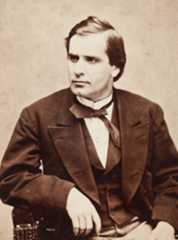
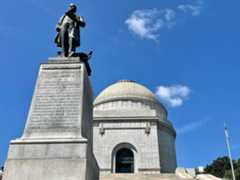
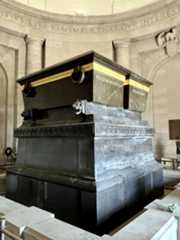
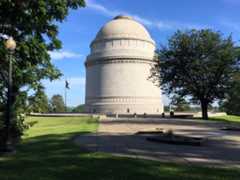
United States Congressman, 25th U.S. President. A member of the Republican Party, he served as U.S. President from March 4, 1897, until his death on September 14, 1901, and is best remembered during his administration for leading America to victory during the Spanish-American War. Born William McKinley, Jr., he was the seventh of eight children whose father owned a small iron foundry. After graduating from high school in 1859, he enrolled at Allegheny College in Meadville, Pennsylvania, but returned home in 1860 after becoming ill. He regained his health, but family finances prevented him from returning to college. He then obtained employment as a postal clerk and later a schoolteacher. When the American Civil War broke out in 1861, he enlisted as a private in the Union Army, serving under future U.S. PresidentRutherford B. Hayes. He saw action at the Battles of Carnifex Ferry, South Mountain, and Antietam. For his actions at Antietam, he was promoted to the rank of 2nd Lieutenant, and his unit saw little action until May 1864 when they engaged Confederate forces at Cloyd's Mountain and later in the Shenandoah Valley Campaign. Following his promotion to the rank of Captain, he was transferred to Major GeneralPhilip Henry Sheridan's staff. Sheridan's forces pursued the Confederates and won engagements at Berryville, Fisher's Hill, and Cedar Creek. Prior to the the war's end, he was breveted to the rank of Major, and was discharged in July 1865. Upon his return to Ohio, he decided to become a lawyer and began studying in the office of an attorney in Poland, Ohio. The following year he attended Albany Law School in Albany, New York, for a year, and, in March 1867, he was admitted to the bar in Warren, Ohio. In 1869, he ran for the office of prosecuting attorney of Stark County and was elected, but lost when he ran for re-election. In January 1871, he married Ida Saxon. Their two daughters were born over the next two years, but they both died by 1875. His wife never recovered from their deaths, and they would have no more children. In 1876, he was nominated as a Republican for Ohio's 17th Congressional District and won. He was a strong advocate of maintaining America on the gold standard and protective tariffs. He introduced and supported bills that raised protective tariffs, and opposed those that lowered them or imposed tariffs simply to raise revenue. In 1878, he won a second term in Congress from Ohio's 16th District and served on the House Ways and Means Committee. In 1880, he was returned to Congress from Ohio's 17th District, serving until 1883. In 1884, he won back his congressional seat and remained there until the election of 1890, when he was narrowly defeated. In 1891, he was elected governor of Ohio and was considered as a Republican candidate for the 1892 presidential election and finished third, behind the re-nominated Benjamin Harrison andJames Gillespie Blaine. In 1896, he won the Republican nomination for President and defeated the Democratic nomineeWilliam Jennings Bryan in the November general election.During his first term, Cuban rebels were waging a war against Spain for independence, and the Spanish military were engaged in harsh brutality against them. As many Americans called for war to liberate Cuba, he favored a peaceful approach, hoping that through negotiation, Spain might be convinced to grant Cuba independence, or allow the Cubans some measure of autonomy. In January 1898, Spain promised some concessions, but when American consul Fitzhugh Lee reported riots in Havana, McKinley agreed to send the battleshipUSS Maine there to protect American lives and property. On February 15, 1898, theMaine exploded and sank with 266 men killed. While the American public called for war, McKinley insisted that a court of inquiry first determine whether the explosion was accidental. On March 20, 1898 the court ruled that the Maine was blown up by an underwater mine. An investigation started in 1974 by Adm. Rickover showed the explosion happened on the inside of the ship and not from the outside. He continued to negotiate for Cuban independence, but Spain refused his proposals, and he turned the matter over to Congress. He didn't ask for war, but Congress declared war on April 20, with the addition of the Teller Amendment which disavowed any intention of annexing Cuba. The war, known as the Spanish American War, would last for only for 100 days. After an overwhelming naval victory at the Battle of Manila Bay in the Philippines and the defeat of Spanish forces at the Battle of San Juan Hill in Cuba along with the defeat of Spanish naval forces at Santiago, Cuba, Spain agreed to a ceasefire and on December 18, 1898, at the Treaty of Paris, they conceded the islands of Puerto Rico, Guam, and the Philippines to the United States and granted Cuba their sovereignty. The United States agreed to pay Spain $20 million dollars. In 1900, when the Boxer Rebellion broke out in China, and Americans and other westerners in Peking were besieged, he sent 5,000 U.S. troops to the city in June of that year to provide protection and liberation. That same year, he ran as the Republican nominee for a second presidential term withTheodore Rooseveltas his running mate, and easily defeated the Democratic nominee, William Jennings Bryan. In March 1901, he undertook a six-week rail tour of the U.S., which was to conclude at the Pan-American Exposition in Buffalo, New York, in June. When his wife became ill in California, he decided to postpone the visit to the Exposition for six months, and, on September 6, 1901, he attended a public reception at the Temple of Music in Buffalo, New York. While standing in the reception line to greet guests, an anarchist namedLeon Czolgosz concealed a revolver in a handkerchief and shot him twice in the abdomen. His gunshot wounds were at first not considered life-threatening, with one grazing him and the other penetrating his abdomen. However, the doctor chosen at the scene to attend to him had little experience in abdominal surgery or treating gunshot wounds, and the Exposition's hospital was not designed for major medical issues. His wound was cleaned and closed and he was transported to the Milburn House. His condition appeared to improve in the days after the shooting, and his doctors allowed him to eat toast and coffee on September 12, but he was unable to digest the food. Unbeknownst to the doctors, gangrene was spreading in the walls of his stomach, slowly poisoning his blood. The following day, his condition took a turn for the worse, and in the early morning of September 14, he died. Theodore Roosevelt was sworn in as President that afternoon and Czolgosz was tried for murder nine days later, found guilty on September 26, and executed by electric chair the following month. McKinley's body first lay in state in the Buffalo City Hall, transferred to Washington, D.C. for a state funeral, and finally returned to Canton, Ohio, and temporarily interred at Westlawn Cemetery. In the following years, a massive mausoleum was constructed and dedicated by President Theodore Roosevelt on September 30, 1907, four months after his wife's death. McKinley was the last U.S. President to have served in the American Civil War.
United States Congressman, 25th U.S. President. A member of the Republican Party, he served as U.S. President from March 4, 1897, until his death on September 14, 1901, and is best remembered during his administration for leading America to victory during the Spanish-American War. Born William McKinley, Jr., he was the seventh of eight children whose father owned a small iron foundry. After graduating from high school in 1859, he enrolled at Allegheny College in Meadville, Pennsylvania, but returned home in 1860 after becoming ill. He regained his health, but family finances prevented him from returning to college. He then obtained employment as a postal clerk and later a schoolteacher. When the American Civil War broke out in 1861, he enlisted as a private in the Union Army, serving under future U.S. PresidentRutherford B. Hayes. He saw action at the Battles of Carnifex Ferry, South Mountain, and Antietam. For his actions at Antietam, he was promoted to the rank of 2nd Lieutenant, and his unit saw little action until May 1864 when they engaged Confederate forces at Cloyd's Mountain and later in the Shenandoah Valley Campaign. Following his promotion to the rank of Captain, he was transferred to Major GeneralPhilip Henry Sheridan's staff. Sheridan's forces pursued the Confederates and won engagements at Berryville, Fisher's Hill, and Cedar Creek. Prior to the the war's end, he was breveted to the rank of Major, and was discharged in July 1865. Upon his return to Ohio, he decided to become a lawyer and began studying in the office of an attorney in Poland, Ohio. The following year he attended Albany Law School in Albany, New York, for a year, and, in March 1867, he was admitted to the bar in Warren, Ohio. In 1869, he ran for the office of prosecuting attorney of Stark County and was elected, but lost when he ran for re-election. In January 1871, he married Ida Saxon. Their two daughters were born over the next two years, but they both died by 1875. His wife never recovered from their deaths, and they would have no more children. In 1876, he was nominated as a Republican for Ohio's 17th Congressional District and won. He was a strong advocate of maintaining America on the gold standard and protective tariffs. He introduced and supported bills that raised protective tariffs, and opposed those that lowered them or imposed tariffs simply to raise revenue. In 1878, he won a second term in Congress from Ohio's 16th District and served on the House Ways and Means Committee. In 1880, he was returned to Congress from Ohio's 17th District, serving until 1883. In 1884, he won back his congressional seat and remained there until the election of 1890, when he was narrowly defeated. In 1891, he was elected governor of Ohio and was considered as a Republican candidate for the 1892 presidential election and finished third, behind the re-nominated Benjamin Harrison andJames Gillespie Blaine. In 1896, he won the Republican nomination for President and defeated the Democratic nomineeWilliam Jennings Bryan in the November general election.During his first term, Cuban rebels were waging a war against Spain for independence, and the Spanish military were engaged in harsh brutality against them. As many Americans called for war to liberate Cuba, he favored a peaceful approach, hoping that through negotiation, Spain might be convinced to grant Cuba independence, or allow the Cubans some measure of autonomy. In January 1898, Spain promised some concessions, but when American consul Fitzhugh Lee reported riots in Havana, McKinley agreed to send the battleshipUSS Maine there to protect American lives and property. On February 15, 1898, theMaine exploded and sank with 266 men killed. While the American public called for war, McKinley insisted that a court of inquiry first determine whether the explosion was accidental. On March 20, 1898 the court ruled that the Maine was blown up by an underwater mine. An investigation started in 1974 by Adm. Rickover showed the explosion happened on the inside of the ship and not from the outside. He continued to negotiate for Cuban independence, but Spain refused his proposals, and he turned the matter over to Congress. He didn't ask for war, but Congress declared war on April 20, with the addition of the Teller Amendment which disavowed any intention of annexing Cuba. The war, known as the Spanish American War, would last for only for 100 days. After an overwhelming naval victory at the Battle of Manila Bay in the Philippines and the defeat of Spanish forces at the Battle of San Juan Hill in Cuba along with the defeat of Spanish naval forces at Santiago, Cuba, Spain agreed to a ceasefire and on December 18, 1898, at the Treaty of Paris, they conceded the islands of Puerto Rico, Guam, and the Philippines to the United States and granted Cuba their sovereignty. The United States agreed to pay Spain $20 million dollars. In 1900, when the Boxer Rebellion broke out in China, and Americans and other westerners in Peking were besieged, he sent 5,000 U.S. troops to the city in June of that year to provide protection and liberation. That same year, he ran as the Republican nominee for a second presidential term withTheodore Rooseveltas his running mate, and easily defeated the Democratic nominee, William Jennings Bryan. In March 1901, he undertook a six-week rail tour of the U.S., which was to conclude at the Pan-American Exposition in Buffalo, New York, in June. When his wife became ill in California, he decided to postpone the visit to the Exposition for six months, and, on September 6, 1901, he attended a public reception at the Temple of Music in Buffalo, New York. While standing in the reception line to greet guests, an anarchist namedLeon Czolgosz concealed a revolver in a handkerchief and shot him twice in the abdomen. His gunshot wounds were at first not considered life-threatening, with one grazing him and the other penetrating his abdomen. However, the doctor chosen at the scene to attend to him had little experience in abdominal surgery or treating gunshot wounds, and the Exposition's hospital was not designed for major medical issues. His wound was cleaned and closed and he was transported to the Milburn House. His condition appeared to improve in the days after the shooting, and his doctors allowed him to eat toast and coffee on September 12, but he was unable to digest the food. Unbeknownst to the doctors, gangrene was spreading in the walls of his stomach, slowly poisoning his blood. The following day, his condition took a turn for the worse, and in the early morning of September 14, he died. Theodore Roosevelt was sworn in as President that afternoon and Czolgosz was tried for murder nine days later, found guilty on September 26, and executed by electric chair the following month. McKinley's body first lay in state in the Buffalo City Hall, transferred to Washington, D.C. for a state funeral, and finally returned to Canton, Ohio, and temporarily interred at Westlawn Cemetery. In the following years, a massive mausoleum was constructed and dedicated by President Theodore Roosevelt on September 30, 1907, four months after his wife's death. McKinley was the last U.S. President to have served in the American Civil War.
Bio by:William Bjornstad
Inscription
WILLIAM McKINLEY
Gravesite Details
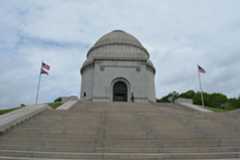
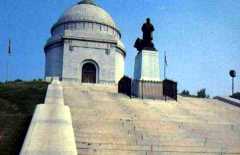
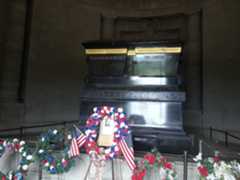
The interior dome measures 50 feet in diameter and is 77 feet above the floor. The skylight has 45 stars representing the 45 states in the Union at the time. VF
Family Members


Other Records
See moreMcKinley memorials in:
How famous was William McKinley?
What was William famous for?
- Current rating:4.64143 out of 5 stars
449 votes
Sign-in to cast your vote.
- Maintained by: Find a Grave
- Added: Apr 25, 1998
- Find a Grave Memorial ID:
- Find a Grave, database and images (https://www.findagrave.com/memorial/699/william-mckinley: accessed), memorial page for William McKinley (29 Jan 1843–14 Sep 1901), Find a Grave Memorial ID699, citing McKinley Memorial Park, Canton,Stark County,Ohio,USA;Maintained by Find a Grave.
Add Photos for William McKinley
Fulfill Photo Request for William McKinley
Photo Request Fulfilled
Thank you for fulfilling this photo request. An email has been sent to the person who requested the photo informing them that you have fulfilled their request
There is an open photo request for this memorial
Are you adding a grave photo that will fulfill this request?
- Oops, something didn't work. Close this window, and upload the photo(s) again.
- Make sure that the file is a photo. Photos larger than 8 MB will be reduced. Photos larger than 20 MB will not be accepted.
- Photos larger than8.0 MB will be optimized and reduced.
- Photos larger than20 MB will not be accepted.
- Each contributor can upload a maximum of5 photos for a memorial.
- A memorial can have a maximum of20 photos from all contributors.
- The sponsor of a memorial may add an additional10 photos (for a total of30 on the memorial).
- Include gps location with grave photos where possible.
- No animated GIFs, photos with additional graphics (borders, embellishments.)
- No post-mortem photos.

File Name
Request Grave Photo
Photo request failed. Try again later.
The note field is required.
Leave a Flower
You are only allowed to leave one flower per day for any given memorial.
Memorial Photos
This is a carousel with slides. Use Next and Previous buttons to navigate, or jump to a slide with the slide dots. Use Escape keyboard button or the Close button to close the carousel.

Added by: Micah7eight on 05 Jan 2025
Photo type: Person

Added by: Ryan David Schweitzer on 08 Jul 2024
Photo type: Grave

Added by: Ryan David Schweitzer on 08 Jul 2024
Photo type: Grave


Added by: RPD2 on 28 Jan 2019
Photo type: Grave

Added by: Ryan David Schweitzer on 08 Jul 2024
Photo type: Grave


Added by: strude86 on 04 Dec 2023
Photo type: Grave

Added by: James Nicol on 12 Jul 2019
Photo type: Grave


Added by: Thomas W. Costello on 14 Jan 2024
Photo type: Person

Added by: Ron Buchinski on 05 Mar 2001
Photo type: Grave

Added by: Zach Anderson on 11 Jul 2017
Photo type: Grave

Added by: Anonymous on 21 Jun 2021
Photo type: Grave


Added by: Curtis Jackson on 15 Sep 2008
Photo type: Person
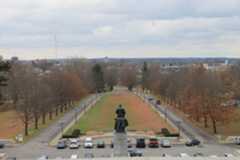

Added by: Zach Anderson on 11 Jul 2017
Photo type: Grave
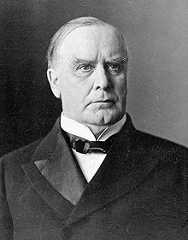

Added by: William Bjornstad on 12 May 2022
Photo type: Person
Save To
Your Virtual Cemeteries
Report Abuse
Are you sure that you want to report this flower to administrators as offensive or abusive?
This flower has been reported and will not be visible while under review.
Failed to report flower. Try again later.
Delete Flower
Failed to delete flower. Try again later.
Delete Memorial
Failed to delete memorial. Try again later.
This memorial cannot be deleted. You cancontact support with questions.
Reported Problems
- Problem #index#:
- Details:
- Reported By:
- Reported On:
There was an error deleting this problem. Try again later.
Report a problem
Recently Deceased
Report a Duplicate Memorial
Which memorial do you think is a duplicate ofWilliam McKinley(699)?
We will review the memorials and decide if they should be merged.Learn more about merges.
Invalid memorial
Please enter a valid Memorial ID
You cannot merge a memorial into itself
Memorial has already been merged
Memorial has already been removed
Delete Photo
Are you sure that you want to delete this photo?
Failed to delete photo. Try again later.
Welcome to a Find a Grave Memorial Page
Learn about how to make the most of a memorial.
or don't show this again—I am good at figuring things out
Cover photo and vital information
Quickly see who the memorial is for and when they lived and died and where they are buried.
Show Map
If the memorial includes GPS coordinates, simply click 'Show Map' to view the gravesite location within the cemetery. If no GPS coordinates are available, you can contribute by adding them if you know the precise location.
Photos
For memorials with more than one photo, additional photos will appear here or on the photos tab.
Photos Tab
All photos appear on this tab and here you can update the sort order of photos on memorials you manage. To view a photo in more detail or edit captions for photos you added, click the photo to open the photo viewer.
Flowers
Flowers added to the memorial appear on the bottom of the memorial or here on the Flowers tab. To add a flower, click theLeave a Flower button.
Family Members
Family members linked to this person will appear here.
Related searches
Use the links underSee more… to quickly search for other people with the same last name in the same cemetery, city, county, etc.
Sponsor This Memorial
Remove advertising from a memorial by sponsoring it for <strong>just $10</strong>. Previously sponsored memorials or famous memorials will not have this option.
Share
Share this memorial using social media sites or email.
Save to
Save to an Ancestry Tree, a virtual cemetery, your clipboard for pasting or Print.
Edit or Suggest Edit
Edit a memorial you manage or suggest changes to the memorial manager.
Have Feedback
Thanks for using Find a Grave, if you have any feedback we would love to hear from you.