Home ≫ The Constitution Framers ≫ T.T Krishnamachari
Early Life:
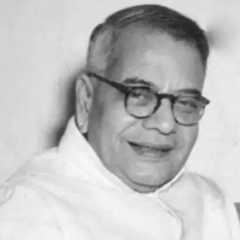
Tiruvallur Thattai Krishnamachariwas born on 26 November 1899 to a Madras High Court judge. He receivedhis education from Madras University. In 1928, heset up TTK Company Ltd., an indenting agency. A few years later, he joined politics full-time and left the company’s affairs to his sons.
Role in India’s Independence Movement:
Krishnamachari became a member of the Madras Legislative Assembly in 1937 and of the Central Legislative Assembly in 1942.
Contribution to Constitution Making:
Krishnamachari waselected to the Constituent Assembly from Madras on aCongress Party ticket. As a member of the Drafting Committee, hededicated 4014 hours in numerous assignments of the Committee. In the Assembly, he intervened on the issues offreedom of speech andemergency provisions, among others.
Later Contributions:
Krishnamachari was the Central Minister for Iron and Steel between 1955 and 1957. Later, heserved briefly as the Finance Minister in 1956. During his tenure, hebrought in key tax reforms; he introduced taxes on capital gains, wealth, estate and expenditure. Amidst theMundhra corruption scandal, he resigned in 1958. But in 1963, he wasrecalled to Nehru’s cabinet and served as the Finance Minister for two years.
He played acrucial role in the setting up of financial organizations includingIndustrial Development Bank of India and Unit Trust of India.
Hepassed away on 7 March 1974 leaving behind three sons.
Key Writings:
In 1954, Krishnamachari authored his memoir ‘Parliamentary Life during 1929-54‘, as a part of the Silver Jubilee Commemoration Volume published by Lok Sabha Secretariat.
- Krishnamachariwanted to include ‘contempt of court’ as a restriction to freedom of speech and expression.
- Heargued against inclusion of Devadasi in Article 23. Instead heinsisted that the social practices must be tackled through legislative reforms and public mobilization.
- Responding to criticism on emergency provisions, hepointed out that these provisions are crucial in protecting the constitution against future misuse of power.