


When brothers Thomas and John Knoll began designing and writing an image editing program in the late 1980s, they could not have imagined that they would be adding a word to the dictionary.
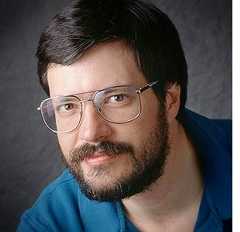
Thomas Knoll
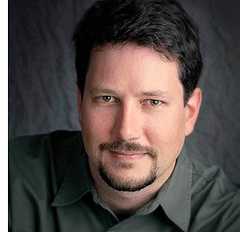
John Knoll
Thomas Knoll, a PhD student in computer vision at the University of Michigan, had written a program in 1987 to display and modify digital images. His brother John, working at the movie visual effects company Industrial Light & Magic, found it useful for editing photos, but it wasn’t intended to be a product. Thomas said, “We developed it originally for our own personal use…it was a lot a fun to do.”
Gradually the program, called “Display”, became more sophisticated. In the summer of 1988 they realized that it indeed could be a credible commercial product. They renamed it “Photoshop” and began to search for a company to distribute it. About 200 copies of version 0.87 were bundled by slide scanner manufacturer Barneyscan as “Barneyscan XP”.
The fate of Photoshop was sealed when Adobe, encouraged by its art director Russell Brown, decided to buy a license to distribute an enhanced version of Photoshop. The deal was finalized in April 1989, and version 1.0 started shipping early in 1990.
Over the next ten years, more than 3 million copies of Photoshop were sold.
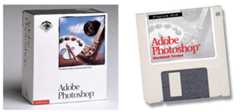
The box and disk for the original version of Photoshop on Mac.
That first version of Photoshop was written primarily in Pascal for the Apple Macintosh, with some machine language for the underlying Motorola 68000 microprocessor where execution efficiency was important. It wasn’t the effort of a huge team. Thomas said, “For version 1, I was the only engineer, and for version 2, we had two engineers.” While Thomas worked on the base application program, John wrote many of the image-processing plug-ins.
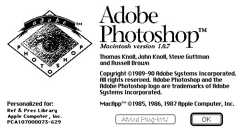
The splash screen of Photoshop 1.0.7.
With the permission of Adobe Systems Inc., the Computer History Museum is pleased to make available, for non-commercial use, the source code to the 1990 version 1.0.1 of Photoshop. All the code is here with the exception of the MacApp applications library that was licensed from Apple. There are 179 files in the zipped folder, comprising about 128,000 lines of mostly uncommented but well-structured code. By line count, about 75% of the code is in Pascal, about 15% is in 68000 assembler language, and the rest is data of various sorts.
To download the code you must agree to the terms of the license, which permits only non-commercial use and does not give you the right to license it to third parties by posting copies elsewhere on the web.
DownloadPhotoshop version 1.0.1 Source Code
Software architect Grady Booch is the Chief Scientist for Software Engineering at IBM Research Almaden and a trustee of the Computer History Museum. He offers the following observations about the Photoshop source code:
And this is the kind of code we all can learn from. Software source code is the literature of computer scientists, and it deserves to be studied and appreciated. Enjoy a view of Photoshop from the inside.
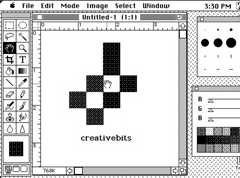
The home screen, showing the available tools.
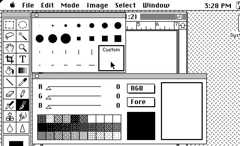
Photoshop allowed you to select brush color as well as size and texture. (The first color Mac was the Macintosh II in 1987.)

There were some sophisticated selection tools, and a good assortment of image filters. One important missing feature, which came with version 3 in 1994, was the ability to divide an image into multiple layers.
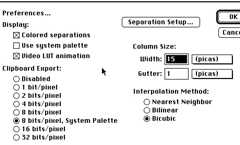
The preferences page allowed for some customization of the features.
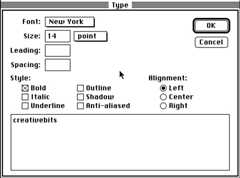
There was a limited choice of fonts, font sizes, and font styles. The text was entered into this dialog box, then moved into the image.
Len Shustek is the founding chairman emeritus of the board of trustees of the Computer History Museum.
In 1979, he co-founded Nestar Systems, an early developer of networks for personal computers. In 1986, he cofounded Network General, a manufacturer of network analysis tools including The Sniffer™. The company became Network Associates after merging with McAfee Associates and PGP. He has taught Computer Science at Carnegie-Mellon and Stanford Universities, and was a founder of the “angel financing” firm VenCraft. He has served on various for-profit and non-profit boards, including the Polytechnic Institute of Brooklyn, which is now the NYU Tandon School of Engineering.
Shustek has a BS and MS in Physics from the Polytechnic Institute, and an MS and PhD in Computer Science from Stanford University.

