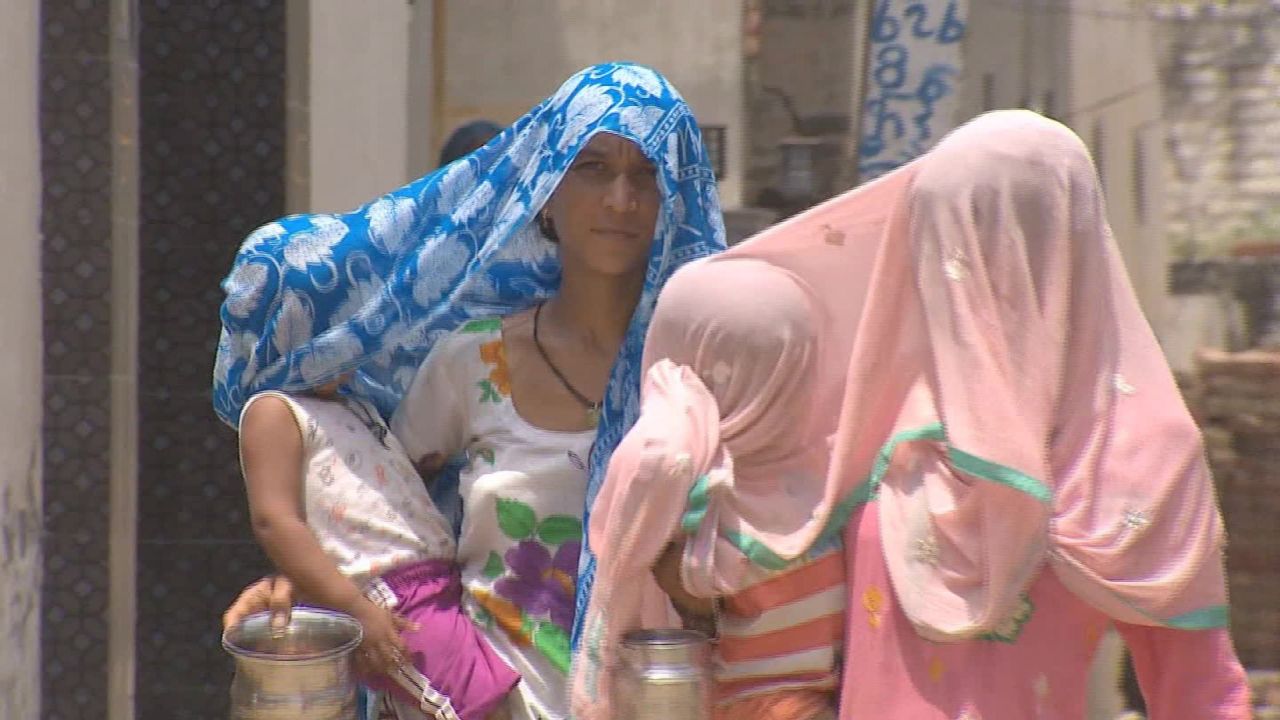












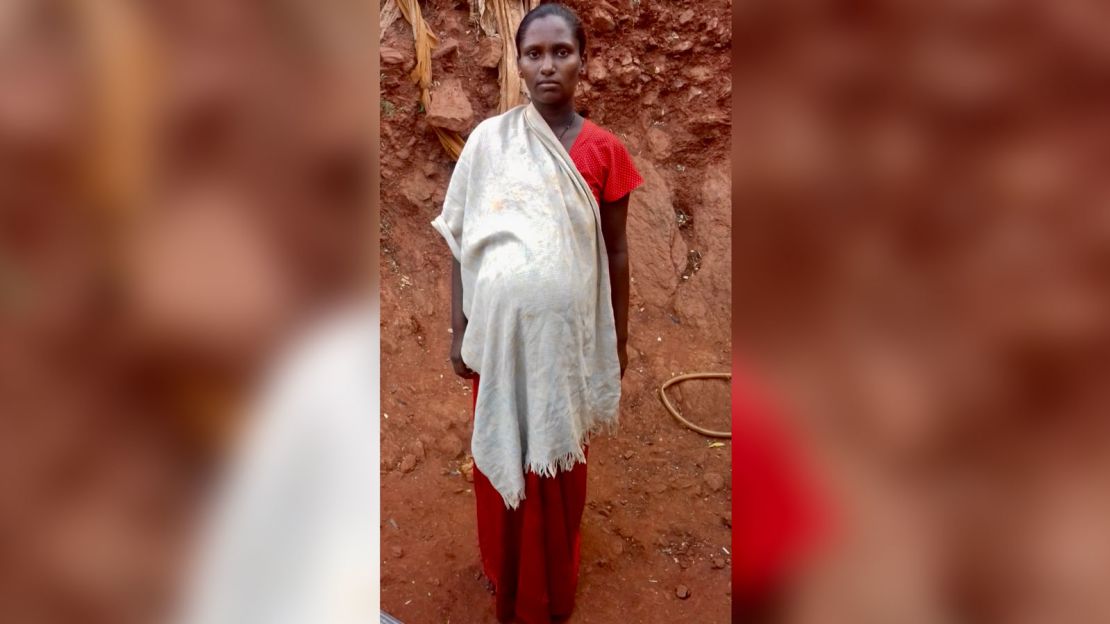
Polamma carefully descends the 250 steps from the hilltop slum where she lives in southern India to walk one kilometer to the nearest grocery store.
She is nine months pregnant and has four children to feed, but at the bottom of the steps community leaders of a dominant caste force her to go back empty-handed.
SinceIndia went into lockdown to stop the spread of coronavirus on March 25, 57 families who live in Polamma’s hilltop village in Vijayawada, Andhra Pradesh, have been barred from going down the hill, even to purchase essentials such as food and medicine.
The families are part of the Yanadi community, who work mainly as waste pickers and drain cleaners and who – even before the coronavirus – were segregated because of their caste.
“We’ve been locked up here, like prisoners – we live near a milk factory, and there is not a drop of milk for my children to drink. We are called dirty, and they say we spread the disease,” said Polamma, who only goes by one name.
India’s caste system was officially abolished in 1950, but the 2,000-year-old social hierarchy imposed on people by birth still exists in many aspects of life. The caste system categorizes Hindus at birth, defining their place in society, what jobs they can do and who they can marry.
Those at the bottom of the hierarchy, who fall outside the four main categories of Brahmins (priests and teachers), Kshatriyas (warriors and rulers), Vaishyas (traders and merchants) and the Shudras (laborers), are considered “untouchables” or Dalits.

Millions of people, about 25% of India’s population of 1.3 billion people, are grouped under the scheduled castes (Dalits) and scheduled tribes (Adivasis) in India’s constitution. Adivasis are indigenous Indians who have been socially and economically marginalized for centuries.
Both groups have long endured social isolation, but it’s feared the rapid spread ofthe coronavirus and measures to stop it have worsened their segregation.
Jobs that Dalits and Adivasis have been forced to take for centuries – cleaners, manual scavengers and waste pickers – expose them to a greater risk of catching the virus.
During the pandemic, their jobs are considered essential services by the Indian government, but many say they haven’t been given adequate equipment to protect themselves against Covid-19. And if they get sick, there’s no social safety net to ensure they don’t fall even deeper into poverty.
Lower access to services and higher mortality
When the Spanish Flu pandemic ripped through India in 1918 killing almost 17 million people, caste played a crucial role in determining who received health care – and who died.
Lower caste people living in crowded slums were the most exposed to the virus, and the least able to find food and medicine as the flu spread, according to historian David Arnold, who has extensively researched and written about the Spanish Flu epidemic in India.
Historian Amit Kapoor, author of “Riding the Tiger,” said 61 lower caste people died for every 1,000 in the community. For upper caste Hindus it was 19 for every 1,000, and the figure was even lower for Europeans living in India.
However, Kapoor believes that while people belonging to the lower caste were disproportionately impacted in 1918, the situation now is different. “While caste was very predominant in 1918, in 2020 the impact of epidemics have more to do with the economic hierarchy than the social hierarchy,” said Kapoor.
There’s little doubt that lower caste Indians are poorer than higher castes.
According to the United Nations Development Programme (UNDP) and the Oxford Poverty and Human Development Initiative (OPHI)’s global multidimensional poverty index (MPI), half of scheduled tribes were considered poor compared to 15% of higher castes.
Poverty makes lower castes more vulnerable during emergencies, according to the findings ofa 2013 study by the International Dalit Solidarity Network, a network of international human rights groups fighting Dalit discrimination.
For example, after the 2004 Asian tsunami, Dalits were forced to remove bodies and debris, for very little if any pay, and weren’t offered any psychological support. Many weren’t compensated for their lost possessions, such as the bikes and fishing nets that were swept away, the report said.
Dalit activists fear the coronavirus will again reinforce inequality in India.
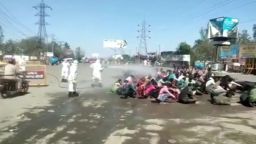
Related articleMigrant workers sprayed with disinfectant in one Indian state
“India has 600,000 villages and almost every village a small pocket on the outskirts is meant for Dalits,” said Paul Divakar, a Dalit activist from the National Campaign on Dalit Human Rights.
“This settlement is far from health care centers, banks, schools and other essential services. During times like Covid-19, the aid may not even reach this small pocket.”
He said repeated advice on social distancing threatened to encourage the kind of behavior seen in the northern city of Bareilly when migrant workers weredoused with bleach disinfectant.
“Covid-19 is legitimizing these actions all in the name of hygiene and social distancing,” said Divakar.
Essential workers
Dalits are forced to take up the jobs such as cleaning, manual scavenging, working at brick kilns and leather-crafting – occupations considered “filthy” or “dishonorable” for higher-caste communities.
The sanitation and cleaning work formally and informallyemploys 5 million people, of which 90% belong to the lowest Dalit sub-castes, according to a five-month study of sanitation workers across India carried out in 2017 by Dalberg Advisors, a development policy and strategy firm, with the support of The Gates Foundation.
The Indian government has deemed sanitation and cleaning to be essential services, which must continue during the lockdown. India’s Ministry of Health and Family Welfareissued a directive that sanitation workers in hospitals and elsewhere should be provided with personal protective equipment (PPE), including N95 masks and gloves.
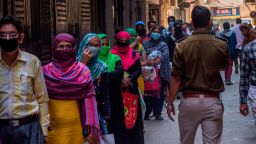
Sanitation workers clean hospitals for seven to eight hours a day, but many say they have not been given sufficient, if any, protective gear, said Suryaprakash Solanke, leader of a Dalit workers union in Mumbai.
“For years they have been cleaning and scrubbing hospitals, residential complexes, streets and railway stations. But instead of providing them with protective gear, and rewarding them, people are ostracizing them. Some have even been refused water to drink, when requested while at work,” said Solanke.
Vanita Bhaskar Salvi works as a sanitation worker in a hospital in the Mumbai district of Thane. She says she and her colleagues have only been given single-layered cloth masks to protect them from the virus while at work.
“We are lesser humans. We clean and wash the entire ward. When patients soil their clothes, we clean them up. All for 8,500 rupees ($115) a month. And now we are further at risk of disease as we have no protection gear when we touch and clean all the waste,” she said.
Salvi says she is scared of contracting the virus and would prefer not to go to work, but as the only one with a job in her family, she has no option.
Kiran Dighavkar, officer at the Mumbai Municipal Corporation, the civic body governing Mumbai, said: “There are enough kits with us for sanitation worker. Masks, gloves, kits, everything.”
CNN reached out to officials in the Health and Labor Ministry for comment on allegation insufficient PPE had been provided to sanitation workers but did not receive a response.
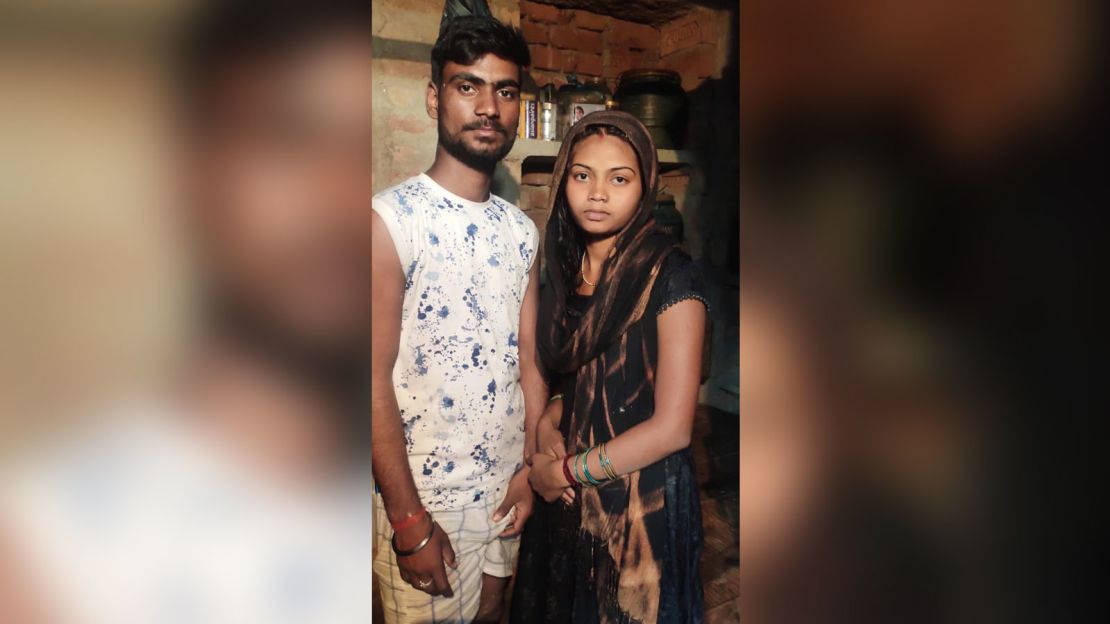
The work Dalits do exposes them to another risk: discrimination.
Sanoj Kumar left his job at a brick kiln in Tamil Nadu to return to his village near Bodh Gaya in Bihar before the lockdown was imposed. He said he faced ostracism as soon as he stepped off the train.
“The police started stopping the returning migrants at the railway station and sending them for checkups to the hospital. They were stopping people in a random manner. Those who well dressed and seemed like belonged to an upper class and dominant caste were not singled out. The others like me were stopped and sent to the hospital,” he said.
After his checkup, Kumar was sent home and ordered to self-quarantine for 14 days. He says health workers check on him every two days. He obliges because he understands the need to fight the virus, but every time they visit, it adds to his family’s social stigma.
“They should come up with a better and more sensitive way of doing this,” said Kumar.
Informal workers without ID cards
Lower caste Indians are not only more exposed to the coronavirus and face more stigmatization, but they’re also being left out of government subsidies.
On March 26, Finance Minister Nirmala Sitharaman announced that all healthcare workers would be covered by health insurance for three months, and that sanitarian workers would receive special insurance cover. The Rs 50 lakh ($66,000) measure was part of the government’s $22.5 billion stimulus package.
But to claim it, workers need an employment ID card validating their status as sanitation workers. Many sanitation workers don’t have that.
According to the Dalit Bahujan Resource Centre, 22% of sanitation workers, manual scavengers and waste pickers did not have the 12-digit, biometric national identification number and 33% did not possess ration cards to get subsidized food through the public distribution system.
The unique national identification number is required to access many government schemes including getting subsidies and direct cash transfers, and health insurance under the Prime Minister’s health project, as well as to open a bank account.
“It has been seen that most Dalits and Adivasis, find it difficult to get these government ID cards … or ration cards. Either the information doesn’t reach them, or the enrollment camps to get biometric IDs are never set up in their villages and mostly they are asked to pay huge bribes to get these IDs made,” said Alladi Devakumar, executive secretary of Dalit Bahujan Resource Centre.
Many sanitation workers who work as informal labor don’t even have employment IDs. Salvi says she tried to approach the dean of the hospital where she works to ask for an employment identity card that would enable her to claim health insurance benefits and board the few buses that are running for essential service workers in Mumbai during the lockdown.
She thinks we are trash and now she has more reason to treat us like trash
Vanita Bhaskar Salvi
Without the ID card, she cannot get on the bus and has to walk 90 minutes each way to work. But when she approached the office, she says the Dean shouted for security.
“She threatened me and said don’t you dare come inside and called the guard to take me away. She thinks we are trash, and now she has more reason to treat us like trash,” says Salvi. CNN contacted the Dean, but she declined to comment.
No access to bank accounts
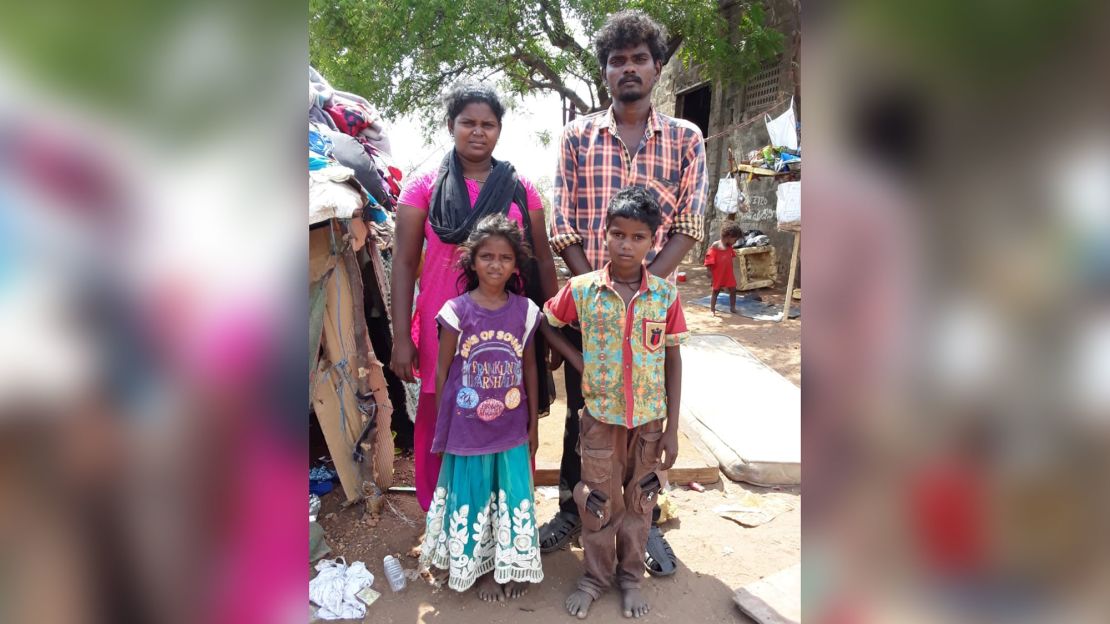
Estheramma lives with her husband and two children in a dump yard, five kilometers away from the densely populated city of Guntur in the southern state of Andhra Pradesh. She’s an Adivasi waste picker and makes a living by collecting the waste from dumps, segregating the waste and selling it. She and her community live segregated on the dump. There is no ration shop nearby nor are there any health care facilities close to her.
Like many other Dalits and Adivasis, Estheramma doesn’t have an active bank account or a national ID card – the two basic instruments needed to access direct cash transfers by the government.
Without this she won’t be able to claim the Rs 500 ($7) offered each month for the next three months to women, who are bank account holders registered under the government’s financial inclusion program.
“There are people, especially Dalits and Adivasis who don’t have accounts, then there are those who have accounts but are not able to operate them because the control of it is with someone else, either their upper caste literate landlord or the ration shopkeeper,” says P. Sainath founding editor ofPeople’s Archive of Rural India, a digital journalism platform that archives stories from rural India.
Since many bank accounts are tied to mobile phone accounts, local shopkeepers help many illiterate Dalits and Adivasis carryout their bank transactions.
“Sometimes, the bank accounts are automatically opened when someone buys a mobile connection and the person is not even aware that this bank account exists. And according to the government, all the direct cash transfers come to the newest bank account of the beneficiary, so at times they have no clue that they have received money,” adds Sainath.
Estheramma has a ration card and is eligible to receive the government benefit of 5 kilograms wheat or rice and 1 kilogram of preferred pulses for free for the next three months, but she said she can’t go to the ration shop because it’s run by shopkeepers of dominant castes who are not letting her come in, citing Covid-19. She says she’s living on small food packets distributed by charities.
“The relief package should not be centralized or linked to biometric IDs like Aadhar,” said economist Jayati Ghosh, chairperson of the Center for Economic Studies and Planning at the Jawaharlal Nehru University.
“This will leave many out of the relief. This has to be done through state governments where they hand over these benefits through other beneficiary accounts of employment and food security.”
More than 11,900 have been infected with the coronavirus in India, and more than 390 people have died, according to the latest numbers from the John Hopkins University.
It’s a staggeringly small number in a nation of 1.3 billion people. The Indian government is expected to extend the nationwide lockdown beyond May 3, but it is still too early to gauge the final impact on the country’s poorest.
Every time I step out, people start shouting ‘corona, corona’
Sanoj Kumar
People like Polamma, Salvi and Kumar hope they’ll be offered greater protection, but it hasn’t come yet.
After two weeks of lockdown, Polamma was finally able to access the grocery store after the police interfered at the request of Dalit activists. But she said no health workers were visiting her community to check on pregnant and lactating mothers.
Salvi takes a painkiller every day and walks to the hospital to clean and do her job with no protective gear. And Kumar and his family are staying indoors to comply with the lockdown order – and to avoid abuse.
“Every time I step out, people start shouting ‘corona, corona,’” he said. “Earlier they would walk at a distance because I am a Dalit, but now they call me the disease itself.”