
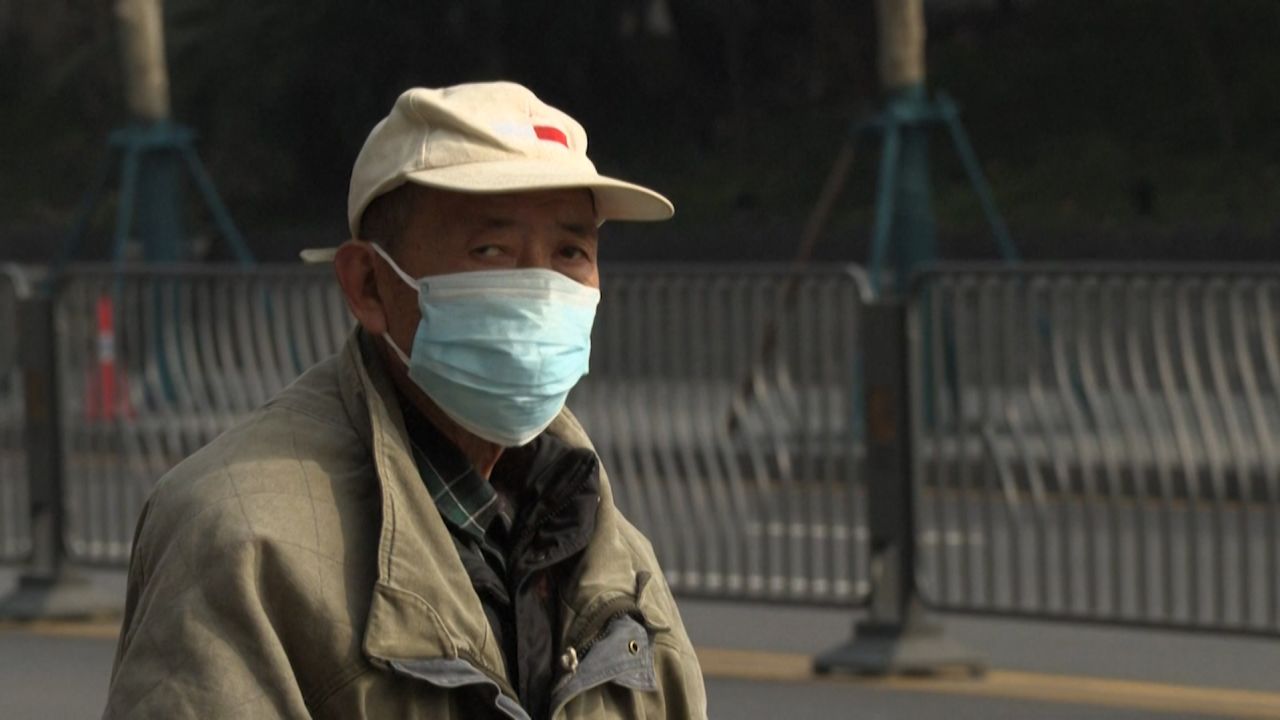














Nearly two decades have passed since a coronavirus known asSARS emerged in China, killinghundreds of people and sparking panic that sent a chill through the global economy. The virus now rampaging across China could be much moredamaging.
China has become an indispensable part of global business since the 2003 SARS outbreak. It’s grown into the world’s factory, churning out products such as the iPhone and driving demand forcommodities like oil and copper. The country also boasts hundreds of millions of wealthy consumers who spend big onluxury products,tourism andcars. China’s economy accounted for roughly 4% of world GDP in 2003; it now makes up 16% of global output.
SARSsickened 8,098 people and killed 774 before it was contained. The new coronavirus, which originated in the central Chinese city of Wuhan, has already killed more than 900 people and infected over 40,000 across at least 25countries and territories. Chinese officials have locked down Wuhan and several other cities, but the virus continues to spread.
“The outbreak has the potential to cause severe economic and market dislocation. But the scale of the impact will ultimately be determined by how the virus spreads and evolves, which is almost impossible to predict, as well as how governments respond,” said Neil Shearing, group chief economist at Capital Economics.
Compounding the risk is the fact that the world outside China has also changed since 2003.
Globalization has encouraged companies to build supply chains that cut across national borders, making economies much more interconnected. The major central banks have used up much of the ammunition they would typically deploy to fight economic downturns since the 2008 financial crisis, and global debt levels have never been higher. Rising nationalism may make it harder to coordinate a worldwide response, if that’s required.
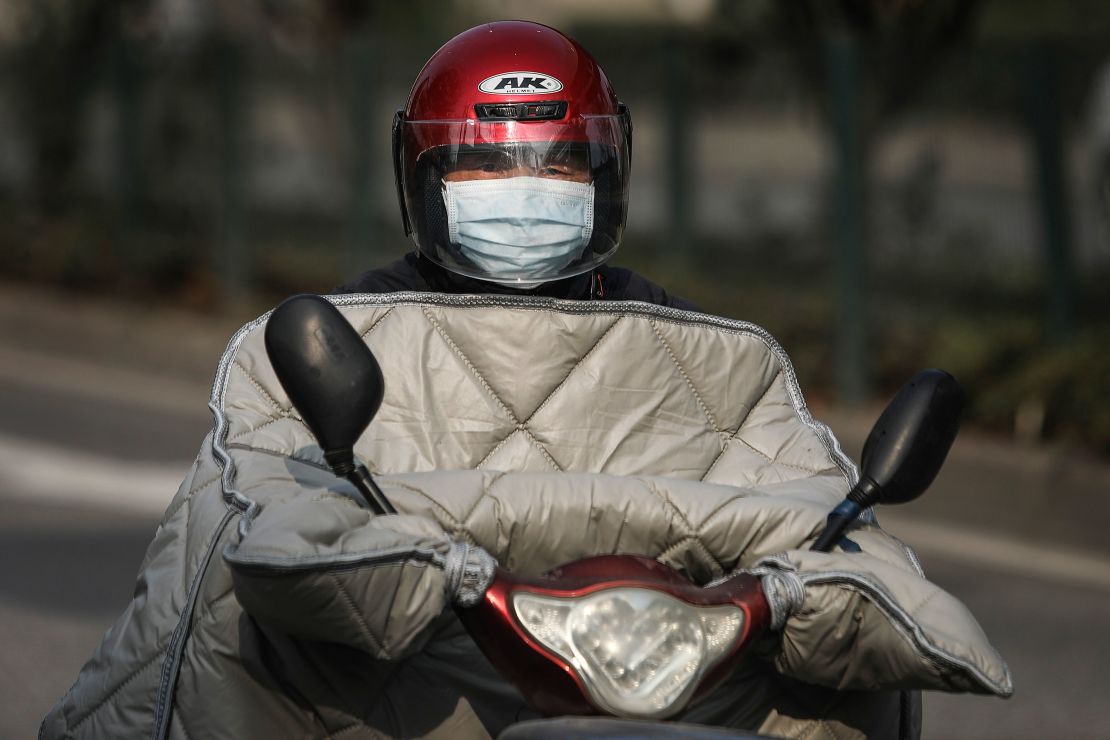
The virus is snarling supply chains and disrupting companies.
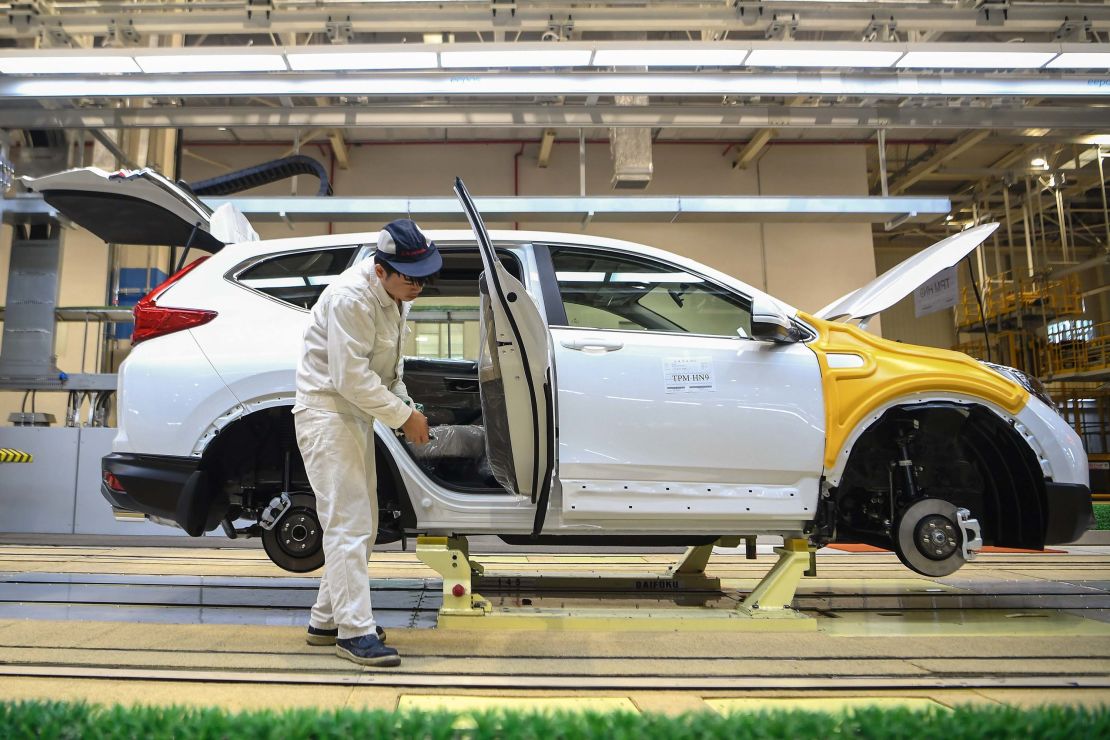
Car plants across China have been ordered to remain closed following the Lunar New Year holiday, preventing global automakers Volkswagen (VLKAF), Toyota (TM), Daimler (DDAIF), General Motors (GM), Renault (RNLSY), Honda (HMC) and Hyundai (HYMTF) from resuming operations in the world’s largest car market. According to S&P Global Ratings, the outbreak will force carmakers in China to slash production by about 15% in the first quarter. Toyota (TM) said on Friday it would keep its factories shut at least until February 17.
Luxury goods makers, which rely on Chinese consumers who spend big at home and while on vacation, have also been hit. British brand Burberry (BBRYF) has closed 24 of its 64 stores in mainland China, and its chief executive warned Friday that the virus is causing a “material negative effect on luxury demand.”Dozens of global airlines have curtailed flights to and from China.
Even more troubling is the threat to global supply chains. Qualcomm (QCOM), the world’s biggest maker of smartphone chips, warned that the outbreak was causing “significant” uncertainty around demand for smartphones, and the supplies needed to produce them. Already, auto parts shortages have forced Hyundai (HYMTF) to close plants in South Korea and caused Fiat Chrysler (FCAU) to make contingency plans to avoid the same result at one of its plants in Europe.
Economists say the current level of disruption is manageable. If the number of new coronavirus cases begins to slow, and China’s factories reopen soon, the result will be a fleeting hit to the Chinese economy in the first quarterand a dent in global growth. If the virus continues to spread, however, the economic damage will increase rapidly.
Mohamed El-Erian, chief economic adviser to Allianz (ALIZF), told CNN Business that he was most worried about the potential cascading economic effects.
“They first paralyze the region of the virus outbreak,” he said. “Then they gradually spread domestically, undermining internal trade, consumption, production and the movement of people. If the virus is still not contained, the process spreads further, including regionally and internationally by disrupting trade, supply chains and travel.”
Epidemic risk
Economists have a hard time working out the potential costs of epidemics because of their unique characteristics.
Yet diseases can be far more damaging than natural disasters such as hurricanes or a tsunami, or other unpredictable events known as “black swans.”According to a study by theWorld Bank, a severe pandemic could cause economic losses equal to nearly 5% of global GDP, or more than $3 trillion. Losses from a weaker flu pandemic, such as the 2009 H1N1 virus, can still wipe 0.5% off global GDP.
“A severe pandemic would resemble a global war in its sudden, profound, and widespread impact,” the World Bank assessed in a report on pandemics from 2013. (The Wuhan coronavirus has not been declared a pandemic by the World Health Organization.)
The virus is not the driving factor behind those losses, however. Instead, it’s the way consumers, businesses and governments respond to an outbreak that matters most.
People are more likely to stay home during an outbreak to avoid getting sick, preventing them from traveling, shopping and working. Doing so limits demand for consumer goods and energy. Decisions by companies and governments to close shops and idle factories, meanwhile, curtail production.
“This is continuing to grow in scope and magnitude. It could end being really, really big, and really, really serious. We can’t project that now,” said William Reinsch, a senior adviser at the Center for Strategic and International Studies who spent 15 years as president of the National Foreign Trade Council.
According to Shearing, past epidemics show that China’s economy is likely to take a significant hit in the first quarter. But that will quickly fade from memory if the virus is contained.
“As long as factory closures don’t lead to job losses, by this time next year the level of GDP is unlikely to be very different from what it would have been without the virus,” he said.
What can be done?
China’s government has moved quickly to counter the economic fallout from the coronavirus and the measures taken to contain it.
The People’s Bank of China cut a key interest rate this week and injected huge amounts of cash into markets in order to help take the pressure off banks and borrowers. Officials have also announced new tax breaks and subsidies designed to help consumers.
Yet China is also more vulnerable to a crisis than it was 17 years ago when SARS broke out.
“It has much higher debt, trade tensions with a major trading partner and its growth has been steadily slowing down for a number of years, which gives a weak starting point to face such a crisis,” said Raphie Hayat, a senior economist at Dutch bank Rabobank.
Analysts at Capital Economics expect the government to announce additional measures in the coming days. If the virus keeps spreading, they believe that Beijing will have to abandon its long-running efforts to get its debt under control and pump money directly into the economy.
Central banks in neighboring countries including Sri Lanka, Malaysia, Thailand and the Philippines have cut interest rates in recent weeks. South Korea and Taiwan could be next.
But the big powers of the financial world are exhausted from a decade fighting anemic growth since the global financial crisis. The European Central Bank introduced negative interest rates in 2014 and hasn’t been able to increase them since, while the Bank of Japan is in a similar position. The US Federal Reserve already cut interest rates three times last year; Chair Jerome Powell has said he’scarefully monitoring the situation.
Meanwhile, debt levels have soared in the United States, Japan and key European countries including Italy, limiting the scope for a big fiscal stimulus if the world economy goes into another tailspin. Global debt, including borrowing by households, governments and companies, has jumped tomore than three times the size of the global economy, the highest ratio on record, according to the Institute of International Finance.
Also critical is whether governments are able to coordinate their response to the outbreak, ideally with help from multinational institutions. This is especially true because, according to the World Bank, preparedness for a potential pandemic is low. But coordination may prove difficult in a increasingly fractured world where nationalism is often prized over cooperation.
“It’s quite clear that multinational institutions are under more pressure, and have less teeth on day to day issues than 10 years ago,” Shearing said. “But the optimist in me would like to think that in the face of a global pandemic, global institutions are still in a position to respond.”
Correction:An earlier version of this story misidentified Raphie Hayat's employer.


