




Movatterモバイル変換


[0]ホーム

URL:


CNN values your feedback

1. How relevant is this ad to you?
2. Did you encounter any technical issues?
Thank You!
Your effort and contribution in providing this feedback is much appreciated.
Close
Ad Feedback

‘Doomsday clock’ ticks closer to apocalyptic midnight

2 min read
Updated 3:00 PM EST, Thu January 25, 2018
Link Copied!
nuclear test 2
Video Ad Feedback
Newly declassified films show US nuclear tests
00:56
Now playing
• Source:CNN
The South Korean Air Force said in a press release today that South Koreas four F-15K fighters from Daegu Air Base carried out a joint drill this afternoon with US Air Force's two B-1B bombers from Guam and the US Marine Corps' four F-35B aircraft based in Japan. They conducted an air-to-ground bombing drill, which simulates a surgical strike of key enemy facilities, over the Pilseung range in the eastern province of Gangwon.  The South Korean and the US Air Forces carried out a joint air defense exercise this afternoon on Aug. 31 to strongly counter North Koreas relatedly launches of ballistic missiles and development of nuclear weapons.
Video Ad Feedback
US fighter jets fly over Korean Peninsula
00:51
Now playing
• Source:CNN
russia decoded military illustration
Video Ad Feedback
The muscle in Russia's military arsenal
01:52
Now playing
• Source:CNN
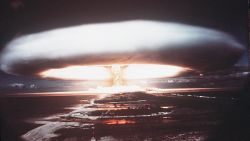
(FILES) A picture taken in 1971 shows a nuclear explosion in Mururoa atoll. France said on March 24, 2009 it will compensate 150,000 victims of nuclear testing carried out in the 1960s in French Polynesia and Algeria, after decades of denying its responsibility. An initial sum of 10 million euros (14 million dollars) has been set aside for military and civilian staff as well as local populations who fell ill from radiation exposure, Defence Minister Herve Morin told Le Figaro newspaper. AFP PHOTO FILES / STRINGER (Photo credit should read -/AFP/Getty Images)
Video Ad Feedback
How fast can a nuke fly?
02:27
Now playing
• Source:CNN
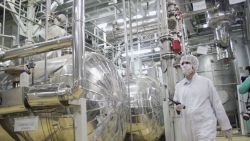
ISFAHAN, IRAN - MARCH 30:  A worker walks inside of an uranium conversion facility March 30, 2005 just outside the city of Isfahan, about 254 miles (410 kilometers), south of capital Tehran, Iran. The cities of Isfahan and Natanz in central Iran are home to the heart of Iran's nuclear program. The facility in Isfahan makes hexaflouride gas, which is then enriched by feeding it into centrifuges at a facility in Natanz, Iran. Iran's President Mohammad Khatami and the head of Iran's Atomic Energy Organisation Gholamreza Aghazadeh is scheduled to visit the facilities. (Photo by Getty Images)
Video Ad Feedback
Explaining the Iran nuclear deal
01:20
Now playing
• Source:CNN
trump kim jong un split amanpour
Video Ad Feedback
Can anyone stop Trump from ordering a nuclear strike?
03:11
Now playing
• Source:CNN
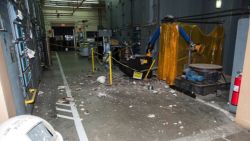
Y12 nuclear facility NNSA
Video Ad Feedback
Photos show US nuclear facilities in dangerous disrepair
02:06
Now playing
• Source:CNN
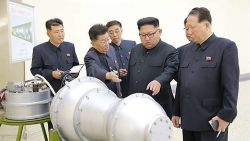
North Korea's regime has "succeeded in making a more developed nuke," according to state news agency KCNA. During a visit to the country's Nuclear Weapons Institute "he watched an H-bomb to be loaded into new ICBM," KCNA added.
Video Ad Feedback
The weapon that makes N. Korea more dangerous
01:12
Now playing
• Source:CNN
US President Donald Trump speaks to the press on August 10, 2017, at his Bedminster National Golf Club in New Jersey before a security briefing. / AFP PHOTO / Nicholas Kamm        (Photo credit should read NICHOLAS KAMM/AFP/Getty Images)
Video Ad Feedback
Fact check: Trump wrong on his nuclear boast
02:48
Now playing
• Source:CNN
A view of the coastline at Oahu, Hawaii, USA, circa 1960. (Photo by Archive Photos/Getty Images)
Video Ad Feedback
How Hawaii is preparing for a nuclear attack
01:22
Now playing
• Source:CNN
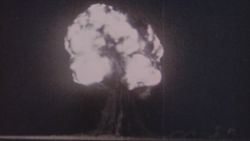
first nuclear test anniversary orig GR_00001527.jpg
Video Ad Feedback
A fraction of a second that changed the world
03:15
Now playing
• Source:CNN
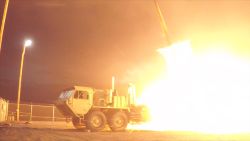
THAAD test Alaska US military orig vstop dlewis_00000000.jpg
Video Ad Feedback
See THAAD missile hit mid-air target
00:51
Now playing
• Source:CNN
fukushima reactor melted fuel gears close up
Video Ad Feedback
Fukushima robot: Apparent sign of melted fuel
01:07
Now playing
• Source:CNN
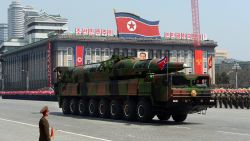
A military vehicle carries what is believed to be a Taepodong-class missile Intermediary Range Ballistic Missile (IRBM), about 20 meters long, during a military parade to mark the 100 birth of the country's founder Kim Il-Sung in Pyongyang on April 15, 2012. The commemorations came just two days after a satellite launch timed to mark the centenary fizzled out embarrassingly when the rocket apparently exploded within minutes of blastoff and plunged into the sea.    AFP PHOTO / PEDRO UGARTE (Photo credit should read PEDRO UGARTE/AFP/Getty Images)
Video Ad Feedback
How far can a North Korean missile reach?
01:09
Now playing
• Source:CNN
isis nuclear materials facilities scientists labott dnt lead _00002523.jpg
Video Ad Feedback
Could ISIS get nukes?
01:40
Now playing
• Source:CNN
CNN  — 

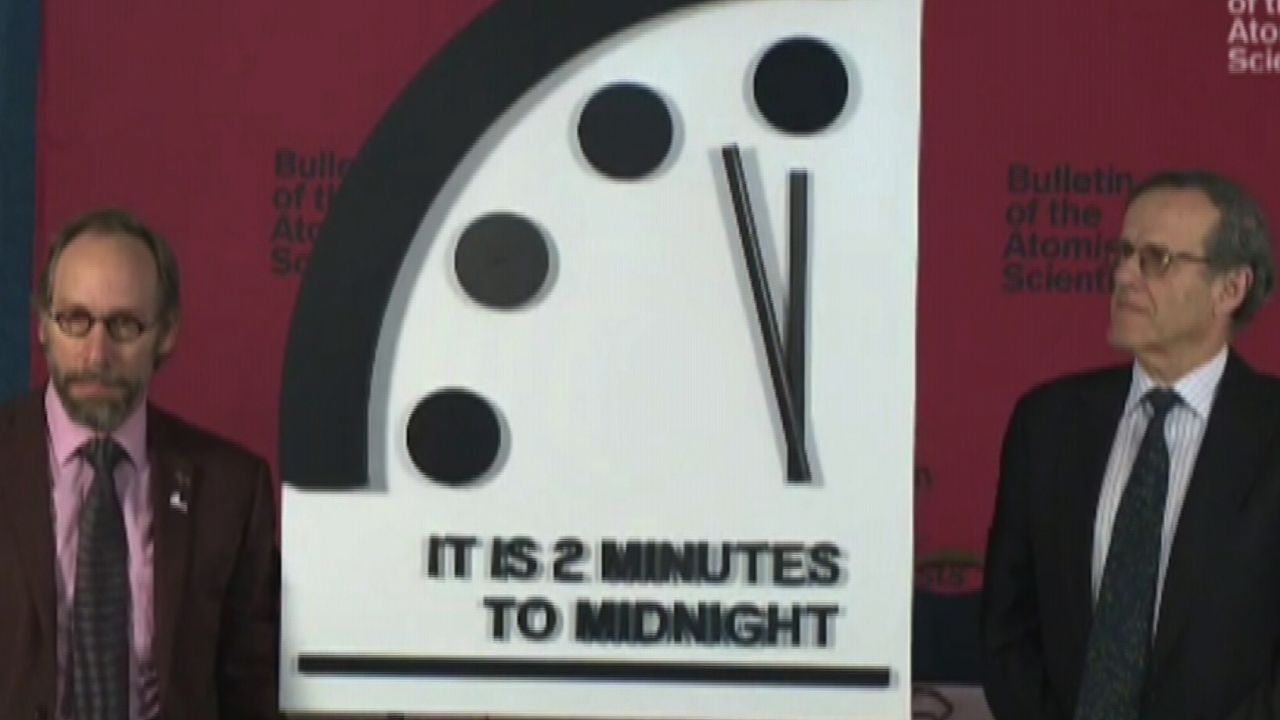
A panel of scientists and scholars said Thursday they believe the world is as close as it has ever been to a so-called doomsday scenario.

The Bulletin of Atomic Scientists, which has been tracking the threat posed by nuclear weapons and other technologies since the 1940s, moved the second hand forward on their Doomsday Clock forward closer to its symbolic apocalyptic midnight.

“It is with considerable concern that we set the time of the 2018 doomsday clock and offer a plea to rewind the doomsday clock,” said Bulletin of Atomic Scientists President and CEO Rachel Bronson. “As of today, it is two minutes to midnight.”

According to the group’s report, the greatest threats to global security came from the nuclear realm.

“North Korea’s nuclear weapons program made remarkable progress in 2017, increasing risks to North Korea itself, other countries in the region, and the United States,” the report notes. “Hyperbolic rhetoric and provocative actions by both sides have increased the possibility of nuclear war by accident or miscalculation.”

Speaking at a news conference Thursday, members of the panel discussed some of the specific threats that led them to revise the clock’s setting. In particular, several panelists bemoaned what they see as a reluctance by policymakers to embrace scientific data.

“Divorcing public policy from empirical reality endangers us all,” said theoretical physicist Lawrence Krauss, adding, “what we need is evidence-based policy making, not policy-based evidence making.”

The administration of US President Donald Trump was repeatedly singled out by the group over policies they view as harmful. These include the decision last year to withdraw from the Paris Climate Accord, and the administration’s disparagement of the Iran nuclear deal.

The last time the clock was so close to midnight was in 1953, when the US and the Soviet Union were engaged in a nuclear arms race.

In 2017, the board moved the clock from three minutes to midnight, to two and a half minutes to midnight. The furthest the clock has been from midnight is17 minutes in 1991.

Ad Feedback
Ad Feedback
Ad Feedback
Ad Feedback
Ad Feedback
Ad Feedback
Ad Feedback
Ad Feedback

Download the CNN app

Scan the QR code to download the CNN app on Google Play.

Scan the QR code to download the CNN app from Google Play.

Download the CNN app

Scan the QR code to download the CNN app from the Apple Store.

Scan the QR code to download the CNN app from the Apple Store.

[8]ページ先頭

©2009-2026 Movatter.jp