

Politics
Learn about this topic in these articles:
Assorted References
- comment on Philip of Macedon’s death
- InPhilip II: Last years

In hisPolitics a few years later he used this incident as an example of a monarch murdered for private and personal motives—which would have been a puerile indiscretion if either he or the world in general had ever taken the canard seriously.
Read More
- discussed in biography
- InAristotle: Political theory of Aristotle

… treatises to their sequel, thePolitics, the reader is brought down to earth. “Man is a political animal,” Aristotle observes; human beings are creatures of flesh and blood, rubbing shoulders with each other in cities and communities. Like his work in zoology, Aristotle’s political studies combine observation and theory. He…
Read More
- influence on Middle Ages
- InSpain: Castilian institutions, society, and culture
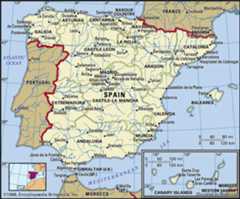
…in Roman law and Aristotle’sPolitics, profoundly influenced the development of the Castilian monarchy. As the one primarily responsible for maintaining the well-being of the state, the king (God’s vicar on earth, according to the Siete Partidas and numerous other medieval texts) tended to concentrate power in his own hands.…
Read More
- study of political philosophy
- Inpolitical philosophy: Aristotle

…than a prophet, and hisPolitics, written while he was teaching at the Lyceum at Athens, is only part of an encyclopaedic account of nature and society, in which he analyzes society as if he were a doctor and prescribes remedies for its ills. Political behaviour is here regarded as…
Read More
role in
- Greek scholarship
- Inclassical scholarship: Beginnings
…comic festivals, and supplemented hisPolitics with a collection of 158 studies of the constitutions of various Greek states. He also carried further the discussion of the constituent parts of a sentence and discussed the nature of synonyms, compounds, and rare words in early poetry.
Read More
- Inclassical scholarship: Beginnings
- historiography
- Inancient Greek civilization: Historical writings

Aristotle’sPolitics examines the theoretical conceptions underlying Greek attitudes toward polis life. This is a precious document, although it can be criticized for insufficient awareness of the monarchical and federal developments of the age.
Read More
view of
- common good
- Incommon good
In Book I of thePolitics, Aristotle asserted that man is political by nature. It is only through participation as citizens in the political community, orpolis, provided by the state that men may achieve the common good of community safety—only as citizens and through active engagement with politics, whether…
Read More
- Incommon good
- tyranny
- Intyranny: Classic definitions
of tyranny comes from Aristotle’sPolitics: “Any sole ruler, who is not required to give an account of himself, and who rules over subjects all equal or superior to himself to suit his own interest and not theirs, can only be exercising a tyranny.” Aristotle presents tyranny in a very…
Read More
- Intyranny: Classic definitions