


Our editors will review what you’ve submitted and determine whether to revise the article.
Cuban Independence Movement
- What was the Cuban Independence Movement?
- Why did Cubans want independence from Spain?
- Who were some important leaders in the Cuban Independence Movement?
- What were the Ten Years' War and the War of Independence in Cuba?
- How did the United States get involved in Cuba's fight for independence?
- What changes happened in Cuba after it gained independence?
Cuban Independence Movement, nationalist uprising in Cuba against Spanish rule. It began with the unsuccessfulTen Years’ War (Guerra de los Diez Años; 1868–78) andculminated in the U.S. intervention that ended the Spanish colonial presence in the Americas (seeSpanish-American War).
Dissatisfied with the corrupt and inefficient Spanish administration, lack of political representation, and high taxes, Cubans in the eastern provinces united under the wealthy planterCarlos Manuel de Céspedes, whose declaration of independence in October 1868, the Grito de Yara (“Cry of Yara”), signaled the beginning of the Ten Years’ War, in which 200,000 lives were lost. Céspedes had the support of some landowners, whose main interest was economic and political independence from Spain, whereas the farmers and labourers were more concerned with the immediate abolition of slavery and greater political power for the common man.
In 1876 Spain sent Gen.Arsenio Martínez Campos to crush the revolution. Lacking organization and significant outside support, the rebels agreed to an armistice in February 1878 (Pact of Zanjón), the terms of which promisedamnesty and political reform. A second uprising,La Guerra Chiquita (“The Little War”), engineered by Calixto García, began in August 1879 but was quelled by superior Spanish forces in autumn 1880. Spain gave Cuba representation in the Cortes (parliament) and abolished slavery in 1886. Other promised reforms, however, never materialized.
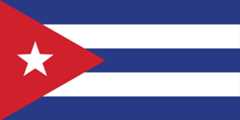
In 1894 Spain canceled a trade pact between Cuba and theUnited States. The imposition of more taxes and trade restrictions prodded the economically distressed Cubans in 1895 to launch the Cuban War of Independence, a resumption of the earlier struggle. Poet and journalistJosé Julián Martí, the ideological spokesman of the revolution, drew up plans for an invasion of Cuba while living inexile inNew York City.Máximo Gómez y Báez, who had commanded the rebel troops during the Ten Years’ War, was among those who joined Martí’s invasion force. Although Martí was killed (and martyred) in battle about one month after initiation of the invasion on April 11, 1895, Gómez andAntonio Maceo employed sophisticated guerrilla tactics in leading the revolutionary army to take control of the eastern region. In September 1895 they declared the Republic of Cuba and sent Maceo’s forces to invade the western provinces.
By January 1896 rebel forces controlled most of the island, and the Spanish government replaced Martínez Campos with Gen.Valeriano Weyler y Nicolau, who soon became known as El Carnicero (“The Butcher”). In order to deprive the revolutionaries of the rural support on which they depended, Weyler instituted a brutal program of “reconcentration,” forcing hundreds of thousands of Cubans into camps in the towns and cities, where they died of starvation and disease by the tens of thousands.
In 1897 Spain recalled Weyler and offered home rule to Cuba, and the next year it ordered the end of reconcentration. In the meantime, the rebels continued to control most of the countryside. Perhaps more important, they had won the sympathy of thevast majority of the Cuban people to their cause. Moreover, news of Spanish atrocities and tales of rebel bravery were splashed in theyellow journalism headlines ofWilliam Randolph Hearst’sNew York Journal, which beat the drums of war.
- Date:
- October 1868 - December 10, 1898
When the USSMaine sank in Havana’s harbour in February 1898 after a mysterious explosion, the United States had pretext for going to war, and theSpanish-American War ensued. By the time of the American intervention in Cuba in April 1898, Maceo had been killed, but the war proved to be brief and one-sided. It was over by August 12, when the United States and Spain signed a preliminary peace treaty. By the Treaty of Paris of December 10, 1898, Spainwithdrew from Cuba. A U.S. occupation force remained for more than three years, leaving only after the constitution of the new Republic of Cuba had incorporated the provisions of thePlatt Amendment (1901), a rider to a U.S. appropriations bill, which specified the conditions for American withdrawal. Among those conditions were (1) the guarantee that Cuba would not transfer any of its land to any foreign power but the United States, (2) limitations on Cuba’s negotiations with other countries, (3) the establishment of a U.S. naval base in Cuba, and (4) the U.S. right to intervene in Cuba to preserve Cuban independence. Thus, the creation of theRepublic of Cuba was effected on May 20, 1902.
