


Our editors will review what you’ve submitted and determine whether to revise the article.

Jesuit
Who founded the Jesuit order?
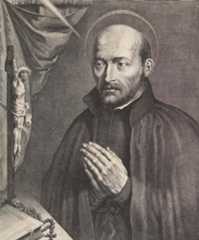
The Jesuitorder was founded bySt. Ignatius of Loyola inParis in 1534 and officially established by papal approval in 1540. The order’s founder had been a Spanish soldier who experienced a religious conversion while convalescing from battle wounds.
What are the Jesuits known for?
The Jesuits are known for their educational, missionary, and charitable works. They were principal agents of theCounter-Reformation in the 16th and 17th centuries. The Jesuit order is one of the largestRoman Catholicreligious orders in the world.
Who was the first Jesuit pope?
The first Jesuitpope wasFrancis, formerly Cardinal Jorge Bergoglio ofBuenos Aires. Francis was elected to thepapacy in 2013. He died in April 2025.
Why were the Jesuits suppressed in the 18th century?
The Jesuits faced hostility due to their defense of Indigenous populations in some parts of the Americas, their preeminent position among otherRoman Catholicreligious orders, and theanticlerical spirit of the times. This led to their suppression in 1773 by PopeClement XIV.
What role did the Jesuits play in colonial slavery?
The Jesuits were among the largest enslavers in places such as the island ofMartinique andMaryland in colonial America. Several Jesuit communities used enslaved labor for theirmissions and trafficked enslaved Africans and African Americans to support their institutions, such as Georgetown College (nowGeorgetown University inWashington, D.C.).
News•
Jesuit, member of the Society of Jesus (S.J.), aRoman Catholic order of religious men founded bySt. Ignatius of Loyola in 1534 and officially established by papal approval in 1540. Noted for their educational,missionary, andcharitable works, the Jesuits are regarded by many as having been the principal agents of theCounter-Reformation of the 16th and 17th centuries. Thereligious order was later a leading force in modernizing the church. In 2013 PopeFrancis (formerly Cardinal Jorge Bergoglio ofBuenos Aires) became the first Jesuit to serve as leader of the Roman Catholic Church.
Founding of the order
The Jesuit order grew out of the activity of Ignatius, a Spanish soldier who experienced a religiousconversion during a period of convalescence from a wound received in battle. After a period of intenseprayer, he composedThe Spiritual Exercises, a guidebook to convert the heart and mind to a closer following ofJesus Christ. On August 15, 1534, inParis, six young men who had met Ignatius at theUniversity of Paris and made a retreat according toThe Spiritual Exercises joined him invows of poverty, chastity, and apilgrimage toJerusalem. If this last promise did not prove possible, as it did not, they vowed to accept any apostolic work requested by thepope. In 1539 Ignatius drafted the first outline of the order’s organization, which PopePaul III approved on September 27, 1540.
The Jesuit uniform is a long, flowing black robe. Its appearance inspired the nickname given to Jesuits byIndigenous North Americans in the 18th and 19th centuries: “Black Robes” or “blackrobes.”
The society introduced severalinnovations in the form of the religious life. Among these were thediscontinuance of manymedieval practices—such as regularpenances orfasts obligatory on all, a common uniform, and the choral recitation of theliturgical office—in the interest of greater mobility and adaptability. Other innovations included a highly centralized form of authority with lifetenure for the head of the order, probation lasting many years before final vows, gradation of members, and lack of a female branch. Particular emphasis was laid upon the virtue of obedience, including special obedience to the pope. Emphasis was also placed upon flexibility, a condition that allowed Jesuits to become involved in a great variety ofministries and missionary endeavors in all parts of the world.
Growth of the order
The society grew rapidly, and it quickly assumed a prominent role in the Counter-Reformation defense and revival of Catholicism. Almost from the beginning,education and scholarship became the society’s principal work. The early Jesuits, however, also produced preachers and catechists who devoted themselves to the care of the young, the sick, prisoners, prostitutes, and soldiers. They also were often called upon toundertake the controversial task of confessor to many of the royal and ruling families ofEurope.
The society entered the foreignmission field within months of its founding as Ignatius sentSt. Francis Xavier, his most gifted companion, and three others to the East. More Jesuits were to be involved in missionary work than in any other activity, save education. By the time of Ignatius’s death in 1556, about 1,000 Jesuits were working throughout Europe and inAsia,Africa, and the New World. By 1626 the number of Jesuits was 15,544, and in 1749 the total was 22,589.
Matteo Ricci and the Chinese rites controversy

The society encountered an important controversy centered on the Italian JesuitMatteo Ricci, who worked as a missionary inChina in the late 16th and the early 17th centuries. Decades of scholarly research intoBuddhist andConfucian thought had prepared Ricci to attach the Roman Catholic understanding of the Christianfaith to the deepest spiritualapprehensions of the Chinese religious tradition. The veneration ofConfucius, the great Chinese religious and philosophical leader, and the religious honors paid to ancestors were to be seen not as elements of so-calledpaganism to be rejected out of hand but as rituals of Chinese society that could be adapted to Christian purposes.

Although Ricci’s apostolic labors won him many converts in China, they also aroused the suspicion of many in the West that the distinctiveness ofChristianity was being compromised. The suspicion did not assert itself officially until long after Ricci’s death, but, when it did, the outcome was a condemnation of the so-calledChinese rites by PopeClement XI in 1704 and 1715 and by PopeBenedict XIV in 1742. Ancestor veneration and Confucian devotion were said to be inseparable elements of traditional Chinesereligion and hence incompatible with Christian worship and doctrine.
Suppression of the Jesuits

Among therepercussions of the controversy over Chinese rites was an intensification of the resentment directed against the Jesuits. Their preeminent position among the religious orders and their championship of the pope exposed them to hostility, and by the middle of the 18th century a variety of adversaries, both lay and clerical, were seeking to destroy the order. The opposition can be traced to several reasons, primarily to theanticlerical and antipapal spirit of the times.
Hostility to the Jesuits was further inspired by their defense of theIndigenous populations in some parts of theAmericas—notably theGuaraní inParaguay and the Indigenous converts in themissions of theAmazon River basin inBrazil—against abuses committed by Spanish and Portuguese colonizers. Moreover, the sheer strength of the order was regarded as an impediment to the establishment of absolutemonarchist rule.
The Portuguese crown expelled the Jesuits in 1759,France made them illegal in 1764, andSpain and theKingdom of the Two Sicilies took other repressive action in 1767. Opponents of the Society of Jesus achieved their greatest success when they took their case toRome. Although PopeClement XIII refused to act against the Jesuits, his successor,Clement XIV, issued a brief abolishing the order in 1773.
The society’s corporate existence was maintained inRussia, where political circumstances—notably the opposition ofCatherine II the Great—prevented thecanonical execution of the suppression. The demand that the Jesuits take up their former work became so insistent that in 1814 PopePius VII reestablished the society. Meanwhile, however, the suppression of the Jesuits had done serious damage to the missions and the educational program of the church at a time when both enterprises were under great pressure. These devastating effects included the closure of many Jesuit schools,hospitals, and missions around the world and the confiscation or wholesale destruction of Jesuit apostolic works and texts.
Pedro Arrupe, liberation theology, and Pope Francis

After the society was restored, the Jesuits grew to be the largest male religious order. Work in education on all levels continued to involve more Jesuits than any other activity, while the number of Jesuits working in the mission fields, especially in Asia and Africa, exceeded that of any other religious order. They were involved in a broad and complex list of activities, including the field of communications,social work,ecumenism,human rights, and politics. In 1968 the Jesuit superior general,Pedro Arrupe, refocused the order with “a preferential option for the poor” (a principle of Catholic social teaching), and the Jesuit ranks experienced a rise in the popularity ofliberation theology, which holds that ministry should include involvement in the political struggle of the poor. Thisideology influenced a number of Jesuit leaders inLatin America in the late 20th century, some of whom were met with violence and death because of their activism. It also brought the order into conflict with PopeJohn Paul II, who sought to curb the movement by appointingconservativeprelates in Latin America. In 2013Jorge Mario Bergoglio of Argentina became PopeFrancis, the first Jesuit to be elected pope.
Colonial slavery and the Jesuits
Throughout Europeans’ colonization of the Americas, the Jesuits exhibited a mixed record onslavery. Although some Jesuits served as protectors and advocates of Indigenous populations during the colonial era, particularly against their enslavement, the order was among the largest enslavers in places such as the French island ofMartinique in theCaribbean,French Guiana inSouth America, and colonialMaryland andLouisiana in theUnited States. Jesuit missions contributed to the spread of deadly European diseases among Indigenous populations and relied on the labor of enslaved Indigenous and African people. Many Jesuit missions, churches, and schools also benefited from the sale of enslaved Africans andAfrican Americans; the profits from such trafficking were used to support or expand the order’s institutions. By the mid-18th century and the beginning of the suppression, the Jesuits’ holdings included more than 20,000 enslaved people throughout the Americas.
In the United States the order used and trafficked enslaved people until theThirteenth Amendmentabolished slavery in 1865. The earliest known Jesuitcommunity to use forced labor in what became the United States was a mission founded by French Jesuits in 1703 along theKaskaskia River inIllinois. TheKaskaskia Jesuits used enslaved Native Americans and Africans to work theirplantation and were the largest enslavers in Illinois until the order’s suppression by the French.

In Maryland, where the Jesuits first arrived in 1634, the order received extensive land tracts that were initially worked byindentured labor. By the beginning of the 18th century that labor force had been replaced by enslaved people, specifically Africans and African Americans. Some members of this enslaved population worked in various roles at Georgetown College (nowGeorgetown University), which the Jesuits founded in 1789 and was the first Roman Catholic college in the United States.
By 1838 the Maryland Jesuits had fallen into deep debt, partly because of unprofitable plantations. In order to keep the college afloat, on June 19 Jesuitprovincial superior Thomas Mulledy signed a bill of sale of 272 enslaved people to Jesse Batey and Henry Johnson, both of whom owned sugar plantations in Louisiana. A large number of the people listed on the bill of sale were then trafficked to Louisiana. The 272 individuals included children less than a year old. Even after the sale, the college and the Maryland Jesuits continued to use enslaved labor, essentially until slavery was abolished.
The 1838 sale and the fate of the “GU272” (as those who were trafficked came to be known through an activist campaign onsocial media) came to public attention in 2016 after a series of articles about the sale were published inThe New York Times. In 2017 the Jesuit Conference of Canada and the United States issued a public apology to the descendants of the GU272. The order also established the Slavery, History, Memory, and Reconciliation Project in partnership withSaint Louis University, another Jesuit institution that relied on enslaved laborers. The project works with descendants of enslaved people and with historians andgenealogists to address thelegacy of Jesuit slaveholding.
- Date:
- 1540 - present
In 2023 the Jesuits pledged a donation of $17 million in the form of financial reparations and plantation land to the Descendants Truth & Reconciliation Foundation, which supports descendants of the GU272; Georgetown University pledged a $10 million donation.