Trading Calendar
Release1.9.42.116 adds support forTrading Calendars. This is usefulwhen resampling in for example the following scenarios:
Daily to Weekly resampling can now deliver the weekly bar together with the last bar of the week.
This is so because the trading calendar identifies thenext trading dayand thelast trading day of the week can be identified in advance
Sub-daily to Daily resampling when the end of the session is not the regular one (which can already be specified to the data feed)
Trading Calendar Interface
There is a base classTradingCalendarBase which is used as a base for anytrading calendar. It defines two (2) methods which have to be overridden:
class TradingCalendarBase(with_metaclass(MetaParams, object)): def _nextday(self, day): ''' Returns the next trading day (datetime/date instance) after ``day`` (datetime/date instance) and the isocalendar components The return value is a tuple with 2 components: (nextday, (y, w, d)) where (y, w, d) ''' raise NotImplementedError def schedule(self, day): ''' Returns a tuple with the opening and closing times (``datetime.time``) for the given ``date`` (``datetime/date`` instance) ''' raise NotImplementedErrorImplementations
PandasMarketCalendar
This implementation is based on a neat package which is a spin-off of initialfunctionality available from Quantopian. The packages is at:pandas_market_calendars and can be easilyinstalled:
pip install pandas_market_calendarsThe implementation features the following interface:
class PandasMarketCalendar(TradingCalendarBase): ''' Wrapper of ``pandas_market_calendars`` for a trading calendar. The package ``pandas_market_calendar`` must be installed Params: - ``calendar`` (default ``None``) The param ``calendar`` accepts the following: - string: the name of one of the calendars supported, for example `NYSE`. The wrapper will attempt to get a calendar instance - calendar instance: as returned by ``get_calendar('NYSE')`` - ``cachesize`` (default ``365``) Number of days to cache in advance for lookup See also: - https://github.com/rsheftel/pandas_market_calendars - http://pandas-market-calendars.readthedocs.io/ ''' params = ( ('calendar', None), # A pandas_market_calendars instance or exch name ('cachesize', 365), # Number of days to cache in advance )TradingCalendar
This implementation allows to construct a calendar using self-gatheredinformation by specifying the holidays, early days, non-trading weekdays andthe opening and closing session times:
class TradingCalendar(TradingCalendarBase): ''' Wrapper of ``pandas_market_calendars`` for a trading calendar. The package ``pandas_market_calendar`` must be installed Params: - ``open`` (default ``time.min``) Regular start of the session - ``close`` (default ``time.max``) Regular end of the session - ``holidays`` (default ``[]``) List of non-trading days (``datetime.datetime`` instances) - ``earlydays`` (default ``[]``) List of tuples determining the date and opening/closing times of days which do not conform to the regular trading hours where each tuple has (``datetime.datetime``, ``datetime.time``, ``datetime.time`` ) - ``offdays`` (default ``ISOWEEKEND``) A list of weekdays in ISO format (Monday: 1 -> Sunday: 7) in which the market doesn't trade. This is usually Saturday and Sunday and hence the default ''' params = ( ('open', time.min), ('close', _time_max), ('holidays', []), # list of non trading days (date) ('earlydays', []), # list of tuples (date, opentime, closetime) ('offdays', ISOWEEKEND), # list of non trading (isoweekdays) )Usage pattern
Global Trading Calendar
ViaCerebro one can add a global calendar which is the default for all datafeeds, unless one is specified for the data feed:
def addcalendar(self, cal): '''Adds a global trading calendar to the system. Individual data feeds may have separate calendars which override the global one ``cal`` can be an instance of ``TradingCalendar`` a string or an instance of ``pandas_market_calendars``. A string will be will be instantiated as a ``PandasMarketCalendar`` (which needs the module ``pandas_market_calendar`` installed in the system. If a subclass of `TradingCalendarBase` is passed (not an instance) it will be instantiated '''Per data-feed
By specifying acalendar parameter following the same conventions asdescribed above inaddcalendar.
For example:
...data = bt.feeds.YahooFinanceData(dataname='YHOO', calendar='NYSE', ...)cerebro.adddata(data)...Examples
Daily to Weekly
Let’s have a look at a sample run of the code that can be found below. In 2016,Easter Friday (2016-03-25) was a holiday also in theNYSE. If the sample isrun with no trading calendar, let’s see what happens around that date.
In this case the resampling is being done from daily to weekly (usingYHOOand the daily data for 2016):
$ ./tcal.py...Strategy len 56 datetime 2016-03-23 Data0 len 56 datetime 2016-03-23 Data1 len 11 datetime 2016-03-18Strategy len 57 datetime 2016-03-24 Data0 len 57 datetime 2016-03-24 Data1 len 11 datetime 2016-03-18Strategy len 58 datetime 2016-03-28 Data0 len 58 datetime 2016-03-28 Data1 len 12 datetime 2016-03-24...In this output, the 1st date is the accounting made by the strategy. The 2nddate is that of the daily
The week ends, as expected, on 2016-03-24 (Thursday), but without a tradingcalendar the resampling code cannot know it and the resampled bar with date2016-03-18 (the week before) is delivered. When the trading moves on to2016-03-28 (Monday), the resampler detects the week change and delivers aresampled bar for 2016-03-24.
The same but run with aPandasMarketCalendar forNYSE (and adding a plot)
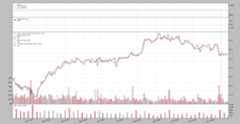
$ ./tcal.py --plot --pandascal NYSE...Strategy len 56 datetime 2016-03-23 Data0 len 56 datetime 2016-03-23 Data1 len 11 datetime 2016-03-18Strategy len 57 datetime 2016-03-24 Data0 len 57 datetime 2016-03-24 Data1 len 12 datetime 2016-03-24Strategy len 58 datetime 2016-03-28 Data0 len 58 datetime 2016-03-28 Data1 len 12 datetime 2016-03-24...There is a change! Thanks to the calendar the resampler knows the week is overon 2016-03-24 and delivers the corresponding weekly resampled bar for2016-03-24 on the same day.
And the plot.
Since the information may not necessarily be available for each and everymarket, one can also craft the calendar. For theNYSE and2016 it looks like:
class NYSE_2016(bt.TradingCalendar): params = dict( holidays=[ datetime.date(2016, 1, 1), datetime.date(2016, 1, 18), datetime.date(2016, 2, 15), datetime.date(2016, 3, 25), datetime.date(2016, 5, 30), datetime.date(2016, 7, 4), datetime.date(2016, 9, 5), datetime.date(2016, 11, 24), datetime.date(2016, 12, 26), ] )Easter Friday (2016-03-25) is listed as one of the holidays. Running the samplenow:
$ ./tcal.py --plot --owncal...Strategy len 56 datetime 2016-03-23 Data0 len 56 datetime 2016-03-23 Data1 len 11 datetime 2016-03-18Strategy len 57 datetime 2016-03-24 Data0 len 57 datetime 2016-03-24 Data1 len 12 datetime 2016-03-24Strategy len 58 datetime 2016-03-28 Data0 len 58 datetime 2016-03-28 Data1 len 12 datetime 2016-03-24...And the same result has been obtained with the crafted calendar definition.
Minutes to Daily
Using some private intraday data and the knowledge that the market closed earlyon 2016-11-25 (the day after Thanksgiving the market closed at 13:00 inUS/Eastern timezone), another test run, this time with the 2ndsample.
Note
The source data is taken directly from the displayed data and is inCET timeozone even if the asset in question,YHOO trades inthe USA. Thetzinput='CET' andtz='US/Eastern' is used in thecode for the data feed to let the platform appropriately transformthe input and display the output
First with no trading calendar
$ ./tcal-intra.py...Strategy len 6838 datetime 2016-11-25 18:00:00 Data0 len 6838 datetime 2016-11-25 13:00:00 Data1 len 21 datetime 2016-11-23 16:00:00Strategy len 6839 datetime 2016-11-25 18:01:00 Data0 len 6839 datetime 2016-11-25 13:01:00 Data1 len 21 datetime 20 16-11-23 16:00:00Strategy len 6840 datetime 2016-11-28 14:31:00 Data0 len 6840 datetime 2016-11-28 09:31:00 Data1 len 22 datetime 2016-11-25 16:00:00Strategy len 6841 datetime 2016-11-28 14:32:00 Data0 len 6841 datetime 2016-11-28 09:32:00 Data1 len 22 datetime 2016-11-25 16:00:00...As expected the day closes early at13:00, but the resampler doesn’t knowit (the official session ends at16:00) and keeps on delivering theresampled daily bar from the previous day (2016-11-23) and the new resampled daily bar is firstdelivered during the next trading day (2016-11-28) with a date of 2016-11-25.
Note
The data has an extra minute bar at13:01 which is probably dueto the auction process offering a last price after the market closingtime.
We could add a filter to the stream to filter out the bars outside ofthe session times (the filter would find it out from the tradingcalendar)
But that’s not the point of this sample.
The same run with aPandasMarketCalendar instance:
$ ./tcal-intra.py --pandascal NYSE...Strategy len 6838 datetime 2016-11-25 18:00:00 Data0 len 6838 datetime 2016-11-25 13:00:00 Data1 len 15 datetime 2016-11-25 13:00:00Strategy len 6839 datetime 2016-11-25 18:01:00 Data0 len 6839 datetime 2016-11-25 13:01:00 Data1 len 15 datetime 2016-11-25 13:00:00Strategy len 6840 datetime 2016-11-28 14:31:00 Data0 len 6840 datetime 2016-11-28 09:31:00 Data1 len 15 datetime 2016-11-25 13:00:00Strategy len 6841 datetime 2016-11-28 14:32:00 Data0 len 6841 datetime 2016-11-28 09:32:00 Data1 len 15 datetime 2016-11-25 13:00:00...And now the daily bar for 2016-11-25 is delivered when the intraday 1-minutefeed hits 2016-11-25 at 13:00 (let’s disregard the 13:01 bar), because thetrading calendar is telling the resampling code that the day is over.
Let’s add a crafted definition. The same as before but extending it with someearlydays
class NYSE_2016(bt.TradingCalendar): params = dict( holidays=[ datetime.date(2016, 1, 1), datetime.date(2016, 1, 18), datetime.date(2016, 2, 15), datetime.date(2016, 3, 25), datetime.date(2016, 5, 30), datetime.date(2016, 7, 4), datetime.date(2016, 9, 5), datetime.date(2016, 11, 24), datetime.date(2016, 12, 26), ], earlydays=[ (datetime.date(2016, 11, 25), datetime.time(9, 30), datetime.time(13, 1)) ], open=datetime.time(9, 30), close=datetime.time(16, 0), )The run:
$ ./tcal-intra.py --owncal...Strategy len 6838 datetime 2016-11-25 18:00:00 Data0 len 6838 datetime 2016-11-25 13:00:00 Data1 len 15 datetime 2016-11-23 16:00:00Strategy len 6839 datetime 2016-11-25 18:01:00 Data0 len 6839 datetime 2016-11-25 13:01:00 Data1 len 16 datetime 2016-11-25 13:01:00Strategy len 6840 datetime 2016-11-28 14:31:00 Data0 len 6840 datetime 2016-11-28 09:31:00 Data1 len 16 datetime 2016-11-25 13:01:00Strategy len 6841 datetime 2016-11-28 14:32:00 Data0 len 6841 datetime 2016-11-28 09:32:00 Data1 len 16 datetime 2016-11-25 13:01:00...The avid reader will notice that the crafted definition contains has defined13:01 (withdatetime.time(13, 1)) as the end of session for our shortday of 2016-11-25. This is only to show how the craftedTradingCalendar canhelp into fitting things.
Now the daily resampled bar for 2016-11-25 is delivered together with the1-minute bar at 13:01.
Extra bonus for the strategy
The firstdatetime, the one belonging to the strategy, is always in adifferent timezone which is actuallyUTC. Also with this release1.9.42.116 this can be synchronized. The following parameter has been added toCerebro (use either during instantiation or withcerebro.run
- ``tz`` (default: ``None``) Adds a global timezone for strategies. The argument ``tz`` can be - ``None``: in this case the datetime displayed by strategies will be in UTC, which has been always the standard behavior - ``pytz`` instance. It will be used as such to convert UTC times to the chosen timezone - ``string``. Instantiating a ``pytz`` instance will be attempted. - ``integer``. Use, for the strategy, the same timezone as the corresponding ``data`` in the ``self.datas`` iterable (``0`` would use the timezone from ``data0``)It is also supported with thecerebro.addtz method:
def addtz(self, tz): ''' This can also be done with the parameter ``tz`` Adds a global timezone for strategies. The argument ``tz`` can be - ``None``: in this case the datetime displayed by strategies will be in UTC, which has been always the standard behavior - ``pytz`` instance. It will be used as such to convert UTC times to the chosen timezone - ``string``. Instantiating a ``pytz`` instance will be attempted. - ``integer``. Use, for the strategy, the same timezone as the corresponding ``data`` in the ``self.datas`` iterable (``0`` would use the timezone from ``data0``) '''Repeating the last run of the intraday sample and using0 fortz(synchronize with the timezone ofdata0) the following is the outputfocusing on the same dates and times as above:
$ ./tcal-intra.py --owncal --cerebro tz=0...Strategy len 6838 datetime 2016-11-25 13:00:00 Data0 len 6838 datetime 2016-11-25 13:00:00 Data1 len 15 datetime 2016-11-23 16:00:00Strategy len 6839 datetime 2016-11-25 13:01:00 Data0 len 6839 datetime 2016-11-25 13:01:00 Data1 len 16 datetime 2016-11-25 13:01:00Strategy len 6840 datetime 2016-11-28 09:31:00 Data0 len 6840 datetime 2016-11-28 09:31:00 Data1 len 16 datetime 2016-11-25 13:01:00Strategy len 6841 datetime 2016-11-28 09:32:00 Data0 len 6841 datetime 2016-11-28 09:32:00 Data1 len 16 datetime 2016-11-25 13:01:00...The timestamp is now timezone aligned.
Sample usage (tcal.py)
$ ./tcal.py --helpusage: tcal.py [-h] [--data0 DATA0] [--offline] [--fromdate FROMDATE] [--todate TODATE] [--cerebro kwargs] [--broker kwargs] [--sizer kwargs] [--strat kwargs] [--plot [kwargs]] [--pandascal PANDASCAL | --owncal] [--timeframe {Weeks,Months,Years}]Trading Calendar Sampleoptional arguments: -h, --help show this help message and exit --data0 DATA0 Data to read in (default: YHOO) --offline Read from disk with same name as ticker (default: False) --fromdate FROMDATE Date[time] in YYYY-MM-DD[THH:MM:SS] format (default: 2016-01-01) --todate TODATE Date[time] in YYYY-MM-DD[THH:MM:SS] format (default: 2016-12-31) --cerebro kwargs kwargs in key=value format (default: ) --broker kwargs kwargs in key=value format (default: ) --sizer kwargs kwargs in key=value format (default: ) --strat kwargs kwargs in key=value format (default: ) --plot [kwargs] kwargs in key=value format (default: ) --pandascal PANDASCAL Name of trading calendar to use (default: ) --owncal Apply custom NYSE 2016 calendar (default: False) --timeframe {Weeks,Months,Years} Timeframe to resample to (default: Weeks)Sample usage (tcal-intra.py)
$ ./tcal-intra.py --helpusage: tcal-intra.py [-h] [--data0 DATA0] [--fromdate FROMDATE] [--todate TODATE] [--cerebro kwargs] [--broker kwargs] [--sizer kwargs] [--strat kwargs] [--plot [kwargs]] [--pandascal PANDASCAL | --owncal] [--timeframe {Days}]Trading Calendar Sampleoptional arguments: -h, --help show this help message and exit --data0 DATA0 Data to read in (default: yhoo-2016-11.csv) --fromdate FROMDATE Date[time] in YYYY-MM-DD[THH:MM:SS] format (default: 2016-01-01) --todate TODATE Date[time] in YYYY-MM-DD[THH:MM:SS] format (default: 2016-12-31) --cerebro kwargs kwargs in key=value format (default: ) --broker kwargs kwargs in key=value format (default: ) --sizer kwargs kwargs in key=value format (default: ) --strat kwargs kwargs in key=value format (default: ) --plot [kwargs] kwargs in key=value format (default: ) --pandascal PANDASCAL Name of trading calendar to use (default: ) --owncal Apply custom NYSE 2016 calendar (default: False) --timeframe {Days} Timeframe to resample to (default: Days)Sample Code (tcal.py)
from __future__ import (absolute_import, division, print_function, unicode_literals)import argparseimport datetimeimport backtrader as btclass NYSE_2016(bt.TradingCalendar): params = dict( holidays=[ datetime.date(2016, 1, 1), datetime.date(2016, 1, 18), datetime.date(2016, 2, 15), datetime.date(2016, 3, 25), datetime.date(2016, 5, 30), datetime.date(2016, 7, 4), datetime.date(2016, 9, 5), datetime.date(2016, 11, 24), datetime.date(2016, 12, 26), ] )class St(bt.Strategy): params = dict( ) def __init__(self): pass def start(self): self.t0 = datetime.datetime.utcnow() def stop(self): t1 = datetime.datetime.utcnow() print('Duration:', t1 - self.t0) def prenext(self): self.next() def next(self): print('Strategy len {} datetime {}'.format( len(self), self.datetime.date()), end=' ') print('Data0 len {} datetime {}'.format( len(self.data0), self.data0.datetime.date()), end=' ') if len(self.data1): print('Data1 len {} datetime {}'.format( len(self.data1), self.data1.datetime.date())) else: print()def runstrat(args=None): args = parse_args(args) cerebro = bt.Cerebro() # Data feed kwargs kwargs = dict() # Parse from/to-date dtfmt, tmfmt = '%Y-%m-%d', 'T%H:%M:%S' for a, d in ((getattr(args, x), x) for x in ['fromdate', 'todate']): if a: strpfmt = dtfmt + tmfmt * ('T' in a) kwargs[d] = datetime.datetime.strptime(a, strpfmt) YahooData = bt.feeds.YahooFinanceData if args.offline: YahooData = bt.feeds.YahooFinanceCSVData # change to read file # Data feed data0 = YahooData(dataname=args.data0, **kwargs) cerebro.adddata(data0) d1 = cerebro.resampledata(data0, timeframe=getattr(bt.TimeFrame, args.timeframe)) d1.plotinfo.plotmaster = data0 d1.plotinfo.sameaxis = True if args.pandascal: cerebro.addcalendar(args.pandascal) elif args.owncal: cerebro.addcalendar(NYSE_2016) # Broker cerebro.broker = bt.brokers.BackBroker(**eval('dict(' + args.broker + ')')) # Sizer cerebro.addsizer(bt.sizers.FixedSize, **eval('dict(' + args.sizer + ')')) # Strategy cerebro.addstrategy(St, **eval('dict(' + args.strat + ')')) # Execute cerebro.run(**eval('dict(' + args.cerebro + ')')) if args.plot: # Plot if requested to cerebro.plot(**eval('dict(' + args.plot + ')'))def parse_args(pargs=None): parser = argparse.ArgumentParser( formatter_class=argparse.ArgumentDefaultsHelpFormatter, description=( 'Trading Calendar Sample' ) ) parser.add_argument('--data0', default='YHOO', required=False, help='Data to read in') parser.add_argument('--offline', required=False, action='store_true', help='Read from disk with same name as ticker') # Defaults for dates parser.add_argument('--fromdate', required=False, default='2016-01-01', help='Date[time] in YYYY-MM-DD[THH:MM:SS] format') parser.add_argument('--todate', required=False, default='2016-12-31', help='Date[time] in YYYY-MM-DD[THH:MM:SS] format') parser.add_argument('--cerebro', required=False, default='', metavar='kwargs', help='kwargs in key=value format') parser.add_argument('--broker', required=False, default='', metavar='kwargs', help='kwargs in key=value format') parser.add_argument('--sizer', required=False, default='', metavar='kwargs', help='kwargs in key=value format') parser.add_argument('--strat', required=False, default='', metavar='kwargs', help='kwargs in key=value format') parser.add_argument('--plot', required=False, default='', nargs='?', const='{}', metavar='kwargs', help='kwargs in key=value format') pgroup = parser.add_mutually_exclusive_group(required=False) pgroup.add_argument('--pandascal', required=False, action='store', default='', help='Name of trading calendar to use') pgroup.add_argument('--owncal', required=False, action='store_true', help='Apply custom NYSE 2016 calendar') parser.add_argument('--timeframe', required=False, action='store', default='Weeks', choices=['Weeks', 'Months', 'Years'], help='Timeframe to resample to') return parser.parse_args(pargs)if __name__ == '__main__': runstrat()Sample Code (tcal-intra.py)
from __future__ import (absolute_import, division, print_function, unicode_literals)import argparseimport datetimeimport backtrader as btclass NYSE_2016(bt.TradingCalendar): params = dict( holidays=[ datetime.date(2016, 1, 1), datetime.date(2016, 1, 18), datetime.date(2016, 2, 15), datetime.date(2016, 3, 25), datetime.date(2016, 5, 30), datetime.date(2016, 7, 4), datetime.date(2016, 9, 5), datetime.date(2016, 11, 24), datetime.date(2016, 12, 26), ], earlydays=[ (datetime.date(2016, 11, 25), datetime.time(9, 30), datetime.time(13, 1)) ], open=datetime.time(9, 30), close=datetime.time(16, 0), )class St(bt.Strategy): params = dict( ) def __init__(self): pass def prenext(self): self.next() def next(self): print('Strategy len {} datetime {}'.format( len(self), self.datetime.datetime()), end=' ') print('Data0 len {} datetime {}'.format( len(self.data0), self.data0.datetime.datetime()), end=' ') if len(self.data1): print('Data1 len {} datetime {}'.format( len(self.data1), self.data1.datetime.datetime())) else: print()def runstrat(args=None): args = parse_args(args) cerebro = bt.Cerebro() # Data feed kwargs # kwargs = dict(tz='US/Eastern') # import pytz # tz = tzinput = pytz.timezone('Europe/Berlin') tzinput = 'Europe/Berlin' # tz = tzinput tz = 'US/Eastern' kwargs = dict(tzinput=tzinput, tz=tz) # Parse from/to-date dtfmt, tmfmt = '%Y-%m-%d', 'T%H:%M:%S' for a, d in ((getattr(args, x), x) for x in ['fromdate', 'todate']): if a: strpfmt = dtfmt + tmfmt * ('T' in a) kwargs[d] = datetime.datetime.strptime(a, strpfmt) # Data feed data0 = bt.feeds.BacktraderCSVData(dataname=args.data0, **kwargs) cerebro.adddata(data0) d1 = cerebro.resampledata(data0, timeframe=getattr(bt.TimeFrame, args.timeframe)) # d1.plotinfo.plotmaster = data0 # d1.plotinfo.sameaxis = False if args.pandascal: cerebro.addcalendar(args.pandascal) elif args.owncal: cerebro.addcalendar(NYSE_2016()) # or NYSE_2016() to pass an instance # Broker cerebro.broker = bt.brokers.BackBroker(**eval('dict(' + args.broker + ')')) # Sizer cerebro.addsizer(bt.sizers.FixedSize, **eval('dict(' + args.sizer + ')')) # Strategy cerebro.addstrategy(St, **eval('dict(' + args.strat + ')')) # Execute cerebro.run(**eval('dict(' + args.cerebro + ')')) if args.plot: # Plot if requested to cerebro.plot(**eval('dict(' + args.plot + ')'))def parse_args(pargs=None): parser = argparse.ArgumentParser( formatter_class=argparse.ArgumentDefaultsHelpFormatter, description=( 'Trading Calendar Sample' ) ) parser.add_argument('--data0', default='yhoo-2016-11.csv', required=False, help='Data to read in') # Defaults for dates parser.add_argument('--fromdate', required=False, default='2016-01-01', help='Date[time] in YYYY-MM-DD[THH:MM:SS] format') parser.add_argument('--todate', required=False, default='2016-12-31', help='Date[time] in YYYY-MM-DD[THH:MM:SS] format') parser.add_argument('--cerebro', required=False, default='', metavar='kwargs', help='kwargs in key=value format') parser.add_argument('--broker', required=False, default='', metavar='kwargs', help='kwargs in key=value format') parser.add_argument('--sizer', required=False, default='', metavar='kwargs', help='kwargs in key=value format') parser.add_argument('--strat', required=False, default='', metavar='kwargs', help='kwargs in key=value format') parser.add_argument('--plot', required=False, default='', nargs='?', const='{}', metavar='kwargs', help='kwargs in key=value format') pgroup = parser.add_mutually_exclusive_group(required=False) pgroup.add_argument('--pandascal', required=False, action='store', default='', help='Name of trading calendar to use') pgroup.add_argument('--owncal', required=False, action='store_true', help='Apply custom NYSE 2016 calendar') parser.add_argument('--timeframe', required=False, action='store', default='Days', choices=['Days'], help='Timeframe to resample to') return parser.parse_args(pargs)if __name__ == '__main__': runstrat()