 Iran in Geo
Over the past two years, we’ve had a project at the James Martin Center for Nonproliferation Studies to look at Iran’s space programs. For the past year or so, my partner-in-crime has been Jim Lamson.
Now Jim, and John Krzyzaniak from IISS, have written a very readable summary of Iran’s space efforts.
To Geostationary Orbit and Beyond?
Assessing Iran’s Space Launch Goals and Efforts
By Jim Lamson and John Krzyzaniak
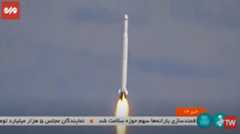
Iranian president Ebrahim Raisi’srenewedemphasis on space is already beginning to bear fruit. Since the first meeting ofthe Supreme Space Council in more than 10 years last November, Iran hasconducted threesatellitelaunchattemptsand revealed anewsolid-fuel motor for space launch vehicles (SLVs). Many commentators see theseactivities purely through the lens of Iran’s ballistic missile development, butIran has ambitious space launch goals that go far beyond developing rockets. Amore comprehensive look at Iran’s space launch efforts and the challenges itwill face in the years ahead gives a more nuanced picture of the militarythreats these activities may pose to the West in the future.
Iran’s Ambitious Space LaunchGoals
What are Iran’s space launchgoals? What is Iran trying to achieve with its space launches? First, both throughits national space program and a parallel program of the Islamic RevolutionaryGuard Corps (IRGC), Iran wants to launch satellites to various orbits and then operatethem for both civilian and military purposes. Second, as a separate, lower-prioritygoal, Iran’s national space program also aims to launch an Iranian astronaut toorbit. Third, as highlighted bygovernments andanalysts, Iran may intend to use technologicaladvancements from its SLV development and launches—especially large solidrocket motors—to develop intercontinental ballistic missiles (ICBMs). Achievingany and all of these goals will require Iran to conduct many space launches inthe coming months and years.
Since its start in the 2000s, thenational space program—run by the Iranian Space Agency (ISA)—has laid out ambitiousspace launch goals as a central element of Iran’s “space technology cycle” (charkheh-ye fanavari-e fazai)—whichincludes the development of satellites, SLVs, launch sites, and satelliteground stations. These goals include the development, launch, and use ofincreasingly capable remote sensing, communications, and navigation satellitesfor both civilian and military applications. This requires not only placingsatellites inlowearth orbit (LEO) but also launchingsatellites to 36,000 kmgeostationaryorbit (GEO). Separate from itssatellite efforts, the ISA also plans to conduct several launches in support ofits “humans-to-space” (ensan be faza) effort to launchIranian astronauts to orbit.
Reinvigorated by President Raisiin recent months, the national program’s currentfocus is to “stabilize” the launch and presence ofsatellites in LEO as soon as possible and to take steps to place a satellite inGEO by thePersianyear 1404 (which ends in March 2026).According to Iranian spaceofficials, the ISA plans to operateremote sensing satellites in LEO—for example, tomonitor Iran’s natural resources, disasters, andpollution—navigation satellites in LEO, and communicationssatellites inGEO. Iranian space officials havestated that GEO is a “strategic” orbit and key toIran’s success in the economic, military, and security fields. Separately, aspart of its astronaut program, the ISAaims to launch an astronaut aboard an Iranianrocket into orbit by the Persian year 1410 (which ends in March 2032), forreasons such as joining the world’s space powers,creating national pride and showing Iran’s scientific and technological progress,studying human life in space, and achieving technologies for space exploration.
In parallel to the nationalprogram, for years theIRGC has implemented its own space efforts undera “super project” (abar-perozheh)with the goal of developing its own satellites, SLVs, ground stations, and asatellite control center. Like the national program, the IRGC has also highlightedits goals of placing satellites in bothLEO andGEO orbits. In addition,analysts have highlighted concerns that the IRGC’s SLV efforts may also beintended to develop ICBMs.
In addition to civilian aims, boththe national and IRGC space programs have acknowledged military goals for theirspace launch efforts. As part of the national program, Iran’scurrentandprevious defense ministers have highlighted plans to use Iranian satellites for military reconnaissance, communications,and navigation as well as for tracking the positions of space systems. For itspart, the IRGC hasstatedplans to use satellites for military reconnaissance,communications, and navigation.
These civilian and military goalsappear to have taken on increased urgency due to Iran’s concerns over losing accesstoLEO due to overcrowding and toGEO by not acquiring orbital slots assigned bythe International Telecommunications Union. Thus, the race is on for Iran todeliver satellites to LEO and GEO, not just to achieve its civilian andmilitary goals but also to avoid the perceived closing window of orbital access.
Major Lines of Effort
Two entities already have a visible presence in developing therockets to help Iran establish a fixed presence in LEO. The first is theAerospace Industries Organization (AIO), under the Ministry of Defense andArmed Forces Logistics. The Aerospace Industries Organization and itssub-entities produced theSafir, whichfirstput a satellite into LEO in 2009 but as of 2020 wasofficially retired.It also produces theSimorgh andZoljanah. Both are, in theory,capable of putting payloads of a few hundred kilograms into 500 kilometerorbit, but neither has ever successfully done so.
Next in the AIO’s launch vehicle development pipeline is theSarir,which willreportedlybe based on theSimorgh and use the same cluster of fourShahab-3enginesfor its first stage, but it will have a new, larger upper stage. Following thatwill be theSoroush-1, capable of carrying somewhere between 8 and 12metric tons to LEO and so classified as a medium-lift launch vehicle. Accordingto variouspress reportsSoroushwill be four meters in diameter and have four auxiliary boosters attachedto the main stage. TheSoroush-2 will be even larger than itspredecessor and reportedly willuse a new first-stage enginecalledBahman, which will burn cryogenic propellants, and a second-stageengine that will also use cryogenic propellants.Soroush-2 will potentially be able to carry a payload of 15 tons to LEO.
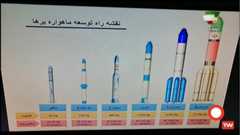
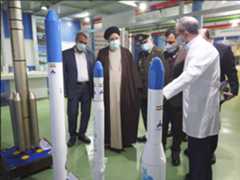
The second major player working to secure Iran’s presence in LEOis the Space Command of the IRGC Aerospace Force, through its management of oneor more IRGC research centers, based on a project that wasinitiallycalledGhaem. The IRGC produces theQasedSLV, which recentlyplacedits second satellite,Noor-2, in orbit. TheQasedrelies on a convertedliquid-propellantGhadrmissile for its first stage, topped by twosolid-fuel upper stages. But, despite this configuration, the IRGC has longbeen interested in developing all-solid-propellant SLVs. Ali Jafarabadi, thespace commander of the IRGC Aerospace Force,statedin 2020 that the IRGC planned to develop theQased-2, a three-stage SLVthat would use a solid rocket motor in its first stage, be lighter than theQased-1,and would carry heavier payloads to higher altitudes, and therecent unveilingof theRaafe motor indicates substantial progress toward that goal.
While these two entities – one under the Ministry of Defense andthe other under the IRGC – were long thought to be working in parallel, if notoutright competition with one another, to develop SLVs, recent developmentsindicate a trend toward increasing cooperation and integration. For starters,the IRGC Aerospace Force commander Amir Ali Hajizadehwaspresent at the November meeting of the Supreme Space Council, anunexpected turn since the IRGC space program sits outside this administrativestructure. Additionally, in February Iranian Space Agency chief Hassan Salariehstated in aninterview that over the coming year a pair of his organization’sNahidsatelliteswould be launched by both “ZoljanahandGhaem”rockets.Just a few days later, the space commander of the IRGC Aerospace Force AliJafarabadisaidthe IRGC was part of the national space program,spoke explicitly about IRGC–AIO cooperation inspace launches, and stated that in the near future the IRGC would deliverupper-stage rocket motors to the AIO. This followedcommentsin 2020 in which he said the IRGC had offered to launch ISA satellites as well.This increasing cooperation and integration is worth watching, as it augurs amore streamlined, unified effort.
Beyond these two, there are new entrants on the horizon. Forexample, in February Iran’s Regular Air Force—parallel to the IRGC’s AerospaceForce—signeda memorandum of understanding to collaborate on space projectswith the civilian Iranian Space Research Center (ISRC). One goal of thiscollaboration is to develop anair-launchedSLV to carry small payloads into LEO, modelled afterNorthropGrumman’s Pegasus project. Experts from the Regular AirForce’s Shahid Sattari University havestudieda conceptual design for an air-launched SLV, similar to the Pegasus, to launch smallcube satellites to LEO.
Private companies also have outsized aspirations in this area.Manouchehr Manteghi, a long-time aerospace official who is now secretary of thespace technology development headquarters under the vice president for scienceand technology, recentlyspokeabout the growing role for private companies in Iran’s space efforts and predicted that “in3 to 4 years we will have a private sector launcher.” One company aspiring towork on launch vehicles in Iran isAti Aerospace Group (Grouh-e Havafaza-ye Ati), whose website advertises services suchas developing and building small-lift launchers using liquid, solid, or hybridpropulsion.
Of course, a presence in LEO requires morethan just launchers – it takes satellites too. The Iranian Space Agency has theresponsibility for operating Iran’s civilian satellites, and contracts with itsaffiliated ISRC, the Defense Ministry’s Iran Electronics Industries (IEI), andseveral universities to develop them. For example, Malek-Ashtar University ofTechnologydesigned and built theRasad,launched in 2011, and Sharif University of Technologydesigned and built theDoosti,unsuccessfully launched in 2019. The ISRC, IEI, and Iran’s universities are developingseveral families of remote sensing and communications satellites for futurelaunches to LEO and eventually GEO. This includes thePayam andPars families ofremote sensing satellites with planned resolutions of about one meter. Additionally,the growing trend of private sector involvement in space also extends tosatellites. During celebrations of Iran’s national space program in February2022, Manteghiunveiled a satellite calledKowsar that was produced by a consortium of eight knowledgeenterprises and private companies. According to Manteghi,Kowsaris setto be launched in less than a year.
On the military side, the IRGC operates theNoor-1andNoor-2 satellites, though it is not entirely clear who designed andbuilt these. One possibility is that the IRGC has its own in-house satellitedevelopment capability, but another possibility is that the IRGC contractedwith one or more of the entities that develops satellites for the ISA.
The lines of effort to reach GEO are similarto those for LEO, albeit in earlier stages. The AIO’sSoroushseries ofSLVs will be the main workhorse for the task, although theSarirmay also have a role as a test platform for placing payloads into parkingorbit and then transferring them to geosynchronous orbits. TheSoroush-1will be too large for the facilities at Semnan as they are currentlyconfigured, however, and thus the plan is to launch it from a new,yet-to-be-builtlaunch center in Chabahar. Chabahar will offer multiple advantages over Semnan,including closer proximity to the equator and an ability to launch more towardthe east, both of which will reduce the amount of energy required to reach GEO,and its proximity to the Indian Oceanprovides safer launch corridors than Semnan.
The IRGCis also interested inreaching GEO, but how this effort will proceed is not entirely clear. Inan interview following the successful launch of theQased inMarch 2022, Ali Jafarabadi, space commander of the IRGC Aerospace Force, said,“The space program for the whole country — of which we are a part — is toestablish a fixed presence in LEO … and then to reach 36,000 km orbit.” It ispossible the IRGC role will be limited to producing rocket motor stages todeliver to the AIO, but more likely the IRGC will produce one or more follow-onsystems to theQased family that are capable placing satellites in GEOthemselves.
The humans-to-space effort is at an even morenascent stage. The Science Ministry’s Aerospace Research Institute (ARI) isleading theeffort to produce the capsule for crewedspaceflight and using launchers developed by the AIO. Between 2006 and 2013 theIranian Space Agencylaunched severalKavoshgarrockets—including with a monkey and other live animals—into sub-orbital space as initial steps towarddeveloping crewed space capsules. The project has made little to no headwaysince then, however, due to a lack of funding during the Rouhani years. Iran has developed prototype space capsulesto carry astronauts and has stated plans for incremental steps, including thesuborbital launch of a space capsule, launches of animals toorbit and astronauts to sub-orbit, leading to thelaunch of an astronaut to orbit by 2032. For launch, theSoroush-1 would likely be thefirst SLV capable of lifting the 2-ton-plus crewed capsule into orbit.
Obstacles Ahead
Iran faces significantprogrammatic and technical challenges to successfully implement these effortsand achieve its space goals. First, Iran must successfully develop—and preparefor the launch queue—multiple families of increasingly capable remote sensing,communications, and navigation satellites for launch to LEO or GEO. Second, insupport of its GEO goals, Iran must develop a family oforbitaltransfer systems that will propel its satellitesfrom LEO parking orbits to successively higher orbits, eventually reaching GEO.Third, both thenational andIRGC programs need to develop their families of increasinglycapable SLVs, a challenge both in terms of overall SLV design as well as developingand integrating complex new technologies such as large liquid rocket enginesand solid rocket motors. Plus, the AIO needs to fix apparent technical problemswith the Simorgh SLV that have prevented its successful delivery of any satellitesto orbit. Fourth, for the astronaut effort, Iran needs to develop the spacecapsules and launchers necessary to safely launch and return astronauts toearth. Fifth, to support future launches of both satellites and astronauts—especiallythose relying on theSoroush SLVs—Iran needs to construct and put intooperation the large new space launch facility inChabahar. Finally, Iran needs to integrate multiple elementsabove in the form of successful space launches. The risks are high—delays,disruptions, or failures in any of these elements will hinder the entire effort.
The goal to place a satellite inGEO by March 2026 illustrates the steep programmatic and technical challengesIran faces in achieving its ambitious space goals. According toIranian officials, Iran’s progression for placing a satellitein GEO will include several complicatedsteps—whatofficials have called a “complicated path” (masir-epichideh). This path includes conducting at least four launches, usingdifferent SLVs, to deliver satellites to LEO parking orbits, where orbitaltransfer systems will then propel them to successively higher orbits, andeventually to GEO. Any delays or failures in the elements of satellites,orbital transfer systems, SLV development, or launches will severely disruptand delay, if not bring to a halt, the race to GEO. And Iran aims to do all ofthis in four years.
Outlook and Implications
What should analysts and policymakers expect in the months andyears ahead? First, they should expect a higher pace and number of launches intendedto make progress against Iran’s LEO, GEO, and astronaut goals—perhaps higherthan in the past. These will include LEO launches of the multiple satellitescurrently stuck in Iran’s launch queue, LEO launches of several new remotesensing satellites in development, launches of communications satellites assteps to reach GEO, sub-orbital test launches of new Iranian SLVs, and launchesas steps to carry an Iranian astronaut to orbit. More launches may increaseconcerns about the dual-use nature of Iran’s rocket and satellite technologies.However, there’s also the possibility that Western officials will eventuallybecome desensitized to these launches, just as they have become numbed to NorthKorean missile tests, leading to less vociferous international outcry and atacit, albeit unwilling, acceptance of Iran’s space program.
In terms of ballistic missiles, while a liquid-fueled system liketheSimorghwould make a terrible missile, Iran’s solid-fuel SLVs havemore carry-over potential. Plus, Iranian officials and media have exacerbatedworries byemphasizing the abilityfor certain systems to betowedand launched from various locations using mobile erector launchers.
There are other military concerns beyond the rocket boostertechnologies, though the risks for now are low First, as part of itshumans-to-space effort Iran will likely want to continue recoveringspace-launched payloads. If so, the knowledge and experience it gains from aspace capsule program would be beneficial for the development of ballisticmissile re-entry vehicle technologies. However, it would likely not bedecisive, as designing a re-entry vehicle for a long-range ballistic missilewould not be a major challenge for Iran in any event.
Second, if Iran’s Regular Air Force successfully develops anair-launched SLV, this could potentially be repurposed as an air-launchedballistic missile. Iran has shown little to no capability or intent inproducing an air-launched ballistic missile, however. Plus, it’s worth notingthat Iran’s missile force largely owes its existence to its under-equipped airforce, and Iran’s ground-launched missiles will likely remain a much greaterconcern than future air-launched capabilities.
Third, Iran may seek to develop direct ascent anti-satellite(ASAT) weapons, either launched from the ground or air. Here again, however,the risk is very low, at least in the near and medium terms. First, there is noevidence Iran is interested in developing these weapons. Second, the technicalchallenges for Iran to develop a viable ASAT capability are steep, includingnot just the rocket booster and kill vehicle but also the significant obstacle ofprecisely tracking and targeting satellites in orbit.
Finally, Iran will almost certainly proceed in the deployment ofincreasingly effective remote sensing satellites that it could use forreconnaissance and targeting. Although here Iran has demonstrated intent—bothin official statements and with its launch of the twoNoormilitarysatellites—its capabilities are lacking. In addition to its efforts to developincreasingly capable remote sensing satellites—including thePayam andParsfamilies with planned resolutions of about one meter—Iran is exploringnon-indigenous short cuts in this regard. TheWashington Postreportedin 2021 that Russia was preparing to supply Iran with aKanopus-Vsatellite with a 1.2-meter resolution camera “within months,” although Russiahas apparently still not yet launched the satellite. If and when it isdeployed, it will advance Iran’s reconnaissance capabilities substantially.
This broad look at Iran’s space launch goals and efforts reveals amixed picture. On the one hand, there are more potential areas of military concernthan previous analyses have recognized. On the other hand, virtually all of therisks are low in the near and mid-term—lower, anyway, than the risks posed byIran’s more advanced and very well-publicized missile program. While Iran haspulled off some important surprises and advances in its space launch efforts inrecent years, its ambitions are lofty, and the challenges ahead are steep. Observersshould avoid over-hyping these activities and attempt to distinguish between thosethat pose a viable military threat and those that do not.
| Iranian Space Launches, 2006-2022: Known and Suspected | |||||
|---|---|---|---|---|---|
| Date | Program | Launcher | Payload | Launch Site | Notes |
| Oct06 | National (H2S) | Kavoshgar-1 sounding rocket | 95 kg payload | Semnan | Partial success |
| 4Feb08 | National (STC) | Kavoshgar-1 (Safir) SLV | None | Semnan | Sub-orbital test for Safir SLV |
| 17Aug08 | National (STC) | Safir SLV | Dummy satellite | Semnan | Failure |
| 26Nov08 | National (H2S) | Kavoshgar-2 sounding rocket | 160 kg payload | Semnan | Success; Iran’s first images from space |
| 2Feb09 | National (STC) | Safir SLV | Omid satellite | Semnan | Success |
| 3Feb10 | National (H2S) | Kavoshgar-3 sounding rocket | 167 kg payload | Semnan | Partial success; launched animal |
| 15Mar11 | National (H2S) | Kavoshgar-4 sounding rocket | 250 kg payload | Semnan | Success |
| 15Jun11 | National (STC) | Safir SLV | Rasad satellite | Semnan | Success |
| 23Aug11 | National (H2S) | Kavoshgar-5 sounding rocket | 250 kg payload, live monkey | Semnan | Partial success; monkey killed |
| 3Feb12 | National (STC) | Safir SLV | Navid satellite | Semnan | Success |
| 23May12 (Suspected) | National (STC) | Safir SLV | Fajr-1 satellite | Semnan | Failure |
| 8Sep12 | National (H2S) | Kavoshgar-6 sounding rocket | 250 kg payload | Semnan | Partial success |
| 22Sep12 (Suspected) | National (STC) | Safir SLV | Fajr-2 satellite | Semnan | Failure |
| 28Jan13 | National (H2S) | Kavoshgar-7 (Kavoshgar Pishgam) sounding rocket | 288 kg payload, including monkey | Semnan | Success |
| 17/18Feb13 (Suspected) | National (STC) | Safir SLV | Fajr-3 satellite | Semnan | Failure |
| Oct13 | National (STC) | Safir SLV | Unknown | Semnan | Failure; reported explosion on the launchpad |
| 14Dec13 | National (H2S) | Kavoshgar 8 (Kavoshgar Pazhuhesh) sounding rocket | 290 kg payload, including monkey | Semnan | Success |
| 20Mar14 (Suspected) | National (STC) | Safir SLV | Tadbir satellite | Semnan | Failure |
| 2Feb15 | National (STC) | Safir SLV | Fajr-5 satellite | Semnan | Success |
| 19Apr16 | National (STC) | Simorgh SLV | None | Semnan | Success; sub-orbital launch |
| Feb17 | National (STC) | Safir SLV | Doosti satellite | Semnan | Planned launch; Iran cancelled launch due to fear of US sanctions |
| 27Jul17 | National (STC) | Simorgh SLV | Tolu-1 satellite | Semnan | Failure |
| 15Jan19 | National (STC) | Simorgh SLV | Payam-1 satellite | Semnan | Partial success; successful launch, stage separation, and upper-stage engine ignition, but the satellite failed to achieve orbit |
| 5Feb19 | National (STC) | Safir SLV | Doosti satellite | Semnan | Partial success; successful launch, stage separation, and upper-stage engine ignition, but failed to achieve orbit |
| 17Apr19 | IRGC | Qased SLV | Test payload called Naba | Shahroud | Success; sub-orbital launch |
| 29Aug19 | National (STC) | Safir SLV | Nahid-1 satellite | Semnan | Failure |
| 2019 (Suspected) | National (STC) | Safir SLV | Kiasat satellite | Semnan | Unknown |
| 9Feb20 | National (STC) | Simorgh SLV | Zafar-1 satellite | Semnan | Partial success; successful launch, stage separation, and upper-stage engine ignition, but the satellite failed to achieve orbit due to insufficient speed |
| 22Apr20 | IRGC | Qased SLV | Noor-1 satellite | Shahroud | Success |
| Late 2020 | National (STC) | Zoljanah SLV | None | Semnan | Success; sub-orbital launch |
| 14Dec20 (Suspected) | IRGC | Qased SLV | Unknown | Shahroud | Unknown; possible failure |
| 12Jun21 (Suspected) | National (STC) | Probably Simorgh SLV | Unknown | Semnan | Failure |
| 23Jun21 (Suspected) | National (STC) | Probably Simorgh SLV | Unknown | Semnan | Failure |
| 30Dec21 | National (STC) | Simorgh SLV | 3 satellites: Ghoghnus satellite and two cube satellites | Semnan | Partial success; successful launch, stage separation, and upper-stage engine ignition, but the satellites failed to achieve orbit due to insufficient speed |
| 27Feb22 (Suspected) | National (STC) | Possibly Zoljanah SLV | Unknown | Semnan | Failure |
| 8Mar22 | IRGC | Qased | Noor-2 satellite | Shahroud | Success |
| Note: “National (STC)” = Space Technology Cycle; “National (H2S)” = Humans to Space | |||||
