Buy new:JPY9,271 DeliveryMonday, January 5 Ships from: Amazon.com Sold by: Amazon.com
Save with Used - Like NewJPY5,397 DeliveryMonday, January 5 Ships from: Amazon Sold by: 1UP Video Games, Books & DVDs

Download the free Kindle app and start reading Kindle books instantly on your smartphone, tablet, or computer -no Kindle device required.
Read instantly on your browser with Kindle for Web.
Using your mobile phone camera - scan the code below and download the Kindle app.



Follow the author
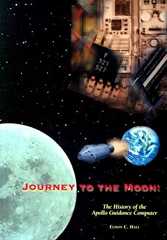
Journey to the Moon (Library of Flight)
Purchase options and add-ons
- ISBN-10156347185X
- ISBN-13978-1563471858
- PublisherAIAA (American Institute of Aeronautics & Astronautics)
- Publication dateJanuary 1, 1996
- LanguageEnglish
- Dimensions7 x 0.55 x 9.94 inches
- Print length196 pages
Frequently purchased items with fast delivery
- Forever Young: A Life of Adventure in Air and SpacePaperbackJPY 1,550 shippingOnly 11 left in stock (more on the way).





Customers also bought or read
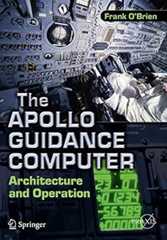
- The Apollo Guidance Computer: Architecture and Operation (Springer Praxis Books)PaperbackJPY5,024DeliveryMon, Jan 5
- Reentry: SpaceX, Elon Musk, and the Reusable Rockets that Launched a Second Space AgeHardcoverJPY2,937DeliveryFri, Jan 2
Product details
- Publisher : AIAA (American Institute of Aeronautics & Astronautics)
- Publication date : January 1, 1996
- Language : English
- Print length : 196 pages
- ISBN-10 : 156347185X
- ISBN-13 : 978-1563471858
- Item Weight : 1.1 pounds
- Dimensions : 7 x 0.55 x 9.94 inches
- Best Sellers Rank: #1,589,773 in Books (See Top 100 in Books)
- #287 inComputing Industry History
- #513 inAstronautics & Space Flight
- #1,149 inAeronautics & Astronautics (Books)
- Customer Reviews:
About the author

Discover more of the author’s books, see similar authors, read book recommendations and more.
Customer reviews
Customer Reviews, including Product Star Ratings help customers to learn more about the product and decide whether it is the right product for them.
To calculate the overall star rating and percentage breakdown by star, we don’t use a simple average. Instead, our system considers things like how recent a review is and if the reviewer bought the item on Amazon. It also analyzed reviews to verify trustworthiness.
Learn more how customers reviews work on AmazonCustomers say
Customers appreciate the book's narrative quality, with one review noting it provides a rare glimpse into the thinking behind the Apollo Guidance Computer's architecture. The book receives positive feedback for its pacing, with customers finding it very interesting.
Select to learn more
Customers appreciate the narrative quality of the book, with one review noting it is told from the perspective of a project manager and provides a rare glimpse into the thinking behind the Apollo Guidance Computer's architecture.
"...He has taken avery complex subject, nearly forgotten due to time, and made it utterly relevant and engaging...."Read more
"...Hall tells a very interesting and important story, providing aninsightful narrative of his experiences on the development of the Apollo Guidance..."Read more
"...a close-up look at the challenges of devising new andnovel technological solutions from the unique perspective of a person who was there when it..."Read more
"...It issomewhat technical (I had no idea how they made rope memory modules, an early ROM format before this book for instance), but Hall is very..."Read more
Customers find the book interesting and engaging, with one customer describing it as an amazing achievement.
"...nearly forgotten due to time, and made it utterly relevant andengaging...."Read more
"Eldon Hall tells avery interesting and important story, providing an insightful narrative of his experiences on the development of the Apollo..."Read more
"Story of anAmazing Acheivement..."Read more


Top reviews from the United States
There was a problem filtering reviews. Please reload the page.
- Reviewed in the United States on March 13, 2023Format: PaperbackVerified PurchaseEldon Hall tells a very interesting and important story, providing an insightful narrative of his experiences on the development of the Apollo Guidance Computer (AGC) along with insights into NASA and the space race. Especially the MIT Instrumentation Lab (now Draper Laboratory) and the engineering challenges they faced, and the inventions they came up with.
He also provides a great tutorial on the AGC's architecture, the sensors they devised and the innovations in IC technology they leveraged along with the importance or reliability.
The real let down for me was the poor quality "ink jet" like print quality of the book and the grey colored text; Whilst the book was initially released in 1996, someone could have at least re-typeset the book and done the author and this important subject matter justice. The book's presentation and quality of print was a bit of an insult to the author.
The one take away I got from the book was this: without a space race, we wouldn't have the technology, automation, compute power and innovation we enjoy today in the consumer world. To stay competitive America (US) needs another space race...I think its clear to others that whoever leads innovation in space travel, leads technology and innovation that brings with-it all the economic benefits of being a leader... - Reviewed in the United States on December 14, 2008Format: PaperbackAs other reviewers have mentioned, this is an excellent book full of interesting detail, photos and diagrams. Anyone interested in the Apollo project is likely to enjoy this book.
While not inexpensive, I felt the price was reasonable for a specialty book; in addition to my copy I purchased one as a gift.
Although this book focuses specifically on the development of the Apollo Guidance Computer, as a byproduct it provides a fascinating look at the development of computers at a time when the industry was experiencing rapid growth and development as the integrated circuit - now both ubiquitous and unremarkable - was just making its revolutionary debut as what would become the basis for virtually all modern electronic devices.
My only disappointment with this book is that it deals exclusively with hardware, software and - in general - things. One suspects that there is a parallel story to be told about the people, the personalities, the conflicts and the emotions that went with this project. - Reviewed in the United States on January 26, 2010Format: PaperbackVerified PurchaseThe book presents a close-up look at the challenges of devising new and novel technological solutions from the unique perspective of a person who was there when it was happening. The stories of some of the people behind the innovations provide a rare glimpse into the thinking and personalities of the engineers involved with the development of the AGC, and the descriptions of the interactions between NASA and the engineers at MIT offer some unique insights into the dynamics of how space missions really happen.
Computer technology has changed dramatically since the days of Apollo, and that change is due in large part to the Apollo program. Comparing the photographs of the prototype systems for the AGC to the package that actually flew on the spacecraft gives new meaning to word "amazing". The software that ran on the AGC was also a stunning feat in and of itself. The AGC utilized real-time multi-tasking before it was even a commonly accepted approach in the software industry (and it's now a standard feature of every cell phone and MP3 player).
The text is well-written and easily accessible, with enough details to keep the more technical minded reader interested. As someone who stood on a hill behind his house in Florida as a kid and watched the Saturn V rockets disappear over the horizon, stayed up late to watch Neil Armstrong step onto the surface of the moon, and then later ended up working in the aerospace industry, this book has a special meaning for me. I highly recommend it. - Reviewed in the United States on September 5, 2003Format: PaperbackVerified PurchaseEldon Hall has done something rare with this book. He has taken a very complex subject, nearly forgotten due to time, and made it utterly relevant and engaging. For anyone with an interest in either space or computer history, this is a vital book.
It is somewhat technical (I had no idea how they made rope memory modules, an early ROM format before this book for instance), but Hall is very careful to explain things in terms that an average reader can readily understand.
The book itself documents the Apollo Guidance Computer from conception through numerous iterations and changes, to final successful lunar landings. Although the AGC capabilities seem trivial today, the AGC was the world's first Integrated Chip computer, and had enormous hurdles to overcome. In the end, of course, we know that Hall and his fellow employees at MIT did a good job...what I didn't know before was exactly what they had to do and the challenges they had to overcome.


Top reviews from other countries
- ZapReviewed in Italy on December 21, 2015
4.0 out of 5 starsSoddifsatto
Format: PaperbackVerified PurchaseCertamente si tratta di un volume per appassionati della storia della tecnologia.
Non l'ho ancora finito di leggere ma per ora è davvero appassionante e corredato di informazioni, foto e schemi che arricchiscono lo sviluppo del tema. - Gauthier LafruitReviewed in Germany on December 22, 2022
4.0 out of 5 starsnice book difficult to find elsewhere
Format: HardcoverVerified PurchaseThe book has reached my expectations: delivered in time, and very special book about the space conquest.