

…
82 pages


AI
This paper explores the cultural and economic transformations that occurred along the northern frontier of pre-imperial China, particularly focusing on the transition from agricultural to pastoral economies. It discusses the emergence of distinct cultural identities during the Neolithic and Bronze Ages, the adaptation of communities to arid environments, and the historical significance of nomadic groups such as the Xiongnu. The paper also examines the complex interplay between the nomadic cultures and the developing Chinese state, highlighting the long-standing presence of these pastoralists within Chinese history.
AI
Journal of World Prehistory, 2021
The Xindian culture of northwest China has been seen as a prototypical example of a transition toward pastoralism, resulting in part from environmental changes that started around 4000 years ago. To date, there has been little available residential data to document how and whether subsistence strategies and community organization in northwest China changed following or in association with documented environmental changes. The Tao River Archaeology Project is a collaborative effort aimed at gathering robust archaeological information to solidify our baseline understanding of economic, technological, and social practices in the third through early first millennia BC. Here we present data from two Xindian culture residential sites, and propose that rather than a total transition to nomadic pastoralism-as it is often reconstructed-the Xindian culture reflects a prolonged period of complex transition in cultural traditions and subsistence practices. In fact, communities maintained elements of earlier cultivation and animal-foddering systems, selectively incorporating new plants and animals into their repertoire. These locally-specific strategies were employed to negotiate ever-changing environmental and social conditions in the region of developing 'proto-Silk Road' interregional interactions.
Scientific reports, 2020
While classic models for the emergence of pastoral groups in Inner Asia describe mounted, horse-borne herders sweeping across the Eurasian Steppes during the Early or Middle Bronze Age (ca. 3000-1500 BCE), the actual economic basis of many early pastoral societies in the region is poorly characterized. In this paper, we use collagen mass fingerprinting and ancient DNA analysis of some of the first stratified and directly dated archaeofaunal assemblages from Mongolia's early pastoral cultures to undertake species identifications of this rare and highly fragmented material. Our results provide evidence for livestock-based, herding subsistence in Mongolia during the late 3rd and early 2nd millennia BCE. We observe no evidence for dietary exploitation of horses prior to the late Bronze Age, ca. 1200 BCE-at which point horses come to dominate ritual assemblages, play a key role in pastoral diets, and greatly influence pastoral mobility. In combination with the broader archaeofaunal record of Inner Asia, our analysis supports models for widespread changes in herding ecology linked to the innovation of horseback riding in Central Asia in the final 2nd millennium BCE. Such a framework can explain key broad-scale patterns in the movement of people, ideas, and material culture in Eurasian prehistory. Horse domestication is widely recognized as a key transformative event in human prehistory. The initial domes-tication of horses has been linked to major changes in human mobility and social organization, particularly in Inner Asia 1. Horses have also been invoked to explain continent-scale population movements, such as the spread 1
A Companion to the Archaeology of the Ancient Near East, First Edition. Edited by D.T. Potts, 2012
Frontiers in Ecology and Evolution
This study combines plant stable isotope and archaeobotanical analyses to explore how ancient pastoral communities in varying landscapes of eastern Tianshan managed their barley fields. The question is less archaeologically investigated, as recent discussions have focused on pastoral and nomadic activities. Results show that diversified cultivation strategies were employed in barley cultivation at different locations in eastern Tianshan. We also observed a diachronic transition toward less labour-intensive crop management corresponding to a growing pastoral lifeway from the late Bronze Age (1300–800 BCE) to historical periods (400 BCE–300 CE). These results inform us about the mechanism by which southwest Asian originated domesticates were adapted to the Inner Asian environments in the context of the early food globalisation.
This study examines how ancient Chinese sources depicted nomadic peoples of the steppe and explores the cultural, ideological, and historiographical biases underlying these representations. Chinese historiography often portrayed nomads as inferior, greedy, immoral, and unclean, emphasizing their supposed admiration for China and framing their Sinicization as a virtue. By analyzing records from texts such as the Wei Shu, Liang Shu, and Bei Shi, the study demonstrates that these portrayals reflect a Sino-centric worldview rather than historical reality. Contrary to Chinese claims, the steppe peoples possessed a highly organized socio-political structure, an independent moral code, and a coherent cultural system centered on mobility, animal husbandry, and ironworking. Archaeological evidence also indicates that they engaged in limited agriculture, challenging the dichotomy between "barbarian nomads" and "sedentary farmers." Modern scholarship has at times perpetuated Chinese biases, constructing the image of the nomads as parasitic and predatory. This paper argues that such interpretations stem from a misreading of ideologically charged Chinese narratives and calls for a reassessment of steppe civilization as an autonomous and internally consistent cultural type

Loading Preview
Sorry, preview is currently unavailable. You can download the paper by clicking the button above.
AI
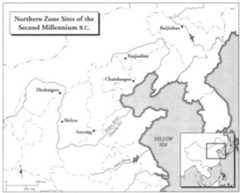
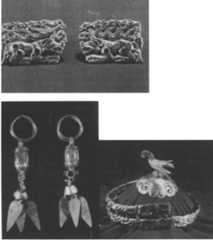
Research indicates that distinct northern cultures began emerging during the Shang dynasty, around 1200-1050 B.C., characterized by a notable cultural complex distinguishable from the Central Plain. These cultures exhibited a common inventory of bronze objects, suggesting connections with broader bronze civilizations across North and West Asia.
The transition from agriculture to a pastoral-based economy in Inner Mongolia initiated around the late second millennium B.C., highlighted by a gradual increase in domesticated animal remains. The archaeological evidence, including larger herds and new management techniques, supports a cultural shift towards horse-riding pastoralism by the eighth century B.C.
The relationship between China and northern nomads became critical during the Qin-Han period, particularly following the emergence of the Xiongnu in 209 B.C. The Xiongnu's significant military power forced china to confront a major antagonistic force, altering political dynamics and cultural exchanges.
The Xiongnu, emerging as a powerful entity around 209 B.C., represented a formidable challenge to the newly unified Qin state, altering historic perceptions of northern peoples. Their influence marked a shift in political relations, indicating the northern frontier had become a crucial area of military and cultural significance.
Cultural development in the Northern Zone can be divided into four key phases, spanning from the Shang through the Warring States, with distinct shifts in material culture and metallurgy. This progression reflects increasing complexity in socioeconomic structures and interactions with neighboring regions.
P.I. Shulga, D.P. Shulga The cultures of the early iron age in China as a part of the Scythian world // Археология, история, нумизматика, сфрагисти-ка и эпиграфика –2020. № 12. – С. 111–147. , 2020
THE CULTURES OF THE EARLY IRON AGE IN CHINA AS A PART OF THE SCYTHIAN WORLD* Based on archaeological and written sources, the authors characterizes the two ethno cultural regions of the 9th — 3rd centuries BCE that developed in the east of the Scythian world — in Xinjiang and North China. In the 9th — 8th centuries BCE there, in local cultures of transitional appearance, burial complexes with “Scythian triad” individual elements in the Animal style in a horse bridle are recorded. It is obvious that both of these areas were the early Scythian cultures formation centers like the center in Tyva. At the same time, according to all sources, the Animal style was brought to the China territory from Mongolia. Due to natural factors, in these areas up to the 2nd century BCE Scythian cultures developed almost in isolation from each other in contact with the adjacent Kazakhstan, Southern Siberia and Mongolia regions. In the second half of the 4th century BCE the northern part of Xinjiang (including the Tien Shan) get closed culturally with Pazyryk culture of Altai, and then to the Sakas and Wusuns of Kazakhstan. At this time the North China cultures were in close contact with South Siberia population. At the same time, some Scythian-like features were preserved in them until 3rd — 2nd centuries BCE, even after the Han and Xiongnu empires formation at the end of the 3rd century BCE
Empires and Diversity: On the Crossroads of Archaeology, Anthropology, and History, Gregory G. Indrisano (ed.), 2013
Empires.indb 164 2/25/13 3:32 PM e x p a n s i o n o f t h e c h i n e s e e m p i r e i n t o i t s n o r t h e r n f r o n t i e r 165 mobile pattern of occupation before integration, as suggested by ancient as well as recent interpretations of the texts, but also integration did not result in the swift adoption of an imperial Chinese-style agricultural economy. What was provoked, however, was a mixed pastoral-agricultural lifeway on the margins of the settlement pattern. This chapter 1 does not question that the Chinese political apparatusbeginning in the middle of the first millennium BCE under the states of Qin, Wei, Zhao, and Yan and then under the imperial rulers of the Qin and Hanexpanded into the areas north of the Central Yellow River basin, or Northern Zone, 2 but it does offer a new understanding of the process of imperial expansion. We test the models used previously to explain the changes brought about by expansion by applying data collected during archaeological surface surveys conducted in the summers of 2002 and 2004 in Liangcheng County, in south-central Inner Mongolia . The currently accepted model for this expansion suggests that both the initial expansion into the Northern Zone that occurred during the Warring States period (ca. 475-221 BCE) and the consolidation of this region by the imperial system that took place during the Qin (ca. 221-207 BCE) and Han (202 BCE-220 CE) dynastic periods Table 6.1. Chronology used in this settlement pattern study. The left half of the table lists the traditional historical chronology of the Central Plain and right half of the table lists the archaeological chronology used here.
At the easternmost edge of the Iranic world, settled rather than saddled Scythians ran the kingdom of Khotan as Iranian-speaking Buddhists who traded and tussled with their T’ang and Tibetan neighbours. Straddling the Sino-Tibetan and Irano-Indic oecumenes, these Saka dynasts of the southern ‘Silk Road’ were conquered and converted by the Turkification and Islamisation of the Tarim Basin. Their effect, both historical and artistic, merits consideration in Scythian studies for their own achievements. This survey is based on the existing corpora of administrative and religious texts in Khotanese, an amply documented Middle Iranian language, which enables the tracing of the trajectory of these Scythian legatees until the end of antiquity.
Journal of World Prehistory
Horses and chariots—and the associated technology and expertise—derived from the steppe contributed to the success of the Zhou conquest of the Shang in c. 1045 BC and remained important throughout Zhou rule in ancient China. On the basis of material cultural patterns, including the style and material used in bridle cheek-pieces found in tombs of the late second and early first millennium BC, this paper points to a northern origin for Zhou horses. Important intermediaries, providing these horses, were the clans whose cemeteries have been identified on the northern edges of the Central Plains. The necessity for repeated exchanges bringing south horses from the north was a consequence of key environmental differences between the steppe and the Central Plains, including climate, geomorphology, essential soil nutrients, and land use. These created significant difficulties in sustainably breeding and pasturing horses of quality. As a result, the people of the Central Plains were bound, ov...
Scientific Reports, 2023
Mobile pastoralism was a key lifeway in the Late Bronze and Iron Age of Northwest China and played a crucial role in the regional socio-cultural development, as well as the formation of transregional networks. In this paper we analyse the complete faunal assemblage from House F2 in Shirenzigou, on the Eastern Tianshan Mountains, in combination with radiocarbon dating and spatial analysis, to explore local animal resources exploitation strategies and related socio-economic implications. Our results show an intensive multipurpose caprine management, while the exploitation of other domestic taxa, cattle, horses and dogs, was limited. This pastoral economy was supplemented with some hunting. The differentiated use of space in F2 indicates that basic domestic tasks were carried out in the structure, however its position within the landscape and the predominance of bone tools related to warfare and socialization activities, suggests that it was not an ordinary dwelling, it may also have served as a watch post for the summer encampment within the gully. Our findings constitute an important contribution on the discussion on animal resources exploitation strategies and their relationship with evolving socio-economic complexity in the Eastern Tianshan region in the late first millennium BCE.

 nicola di cosmo