

2021, African Archaeological Review
https://doi.org/10.1007/S10437-021-09453-7…
18 pages

Two recent documentaries promote a “Black Pharaohs” theme in which Kushite rulers overthrew the superior Egyptians and ruled Egypt (25th dynasty), but the Egyptians later erased their reign from history. This narrative undergirds “The Rise of the Black Pharaohs” produced by National Geographic and “Lost Kingdom of the Black Pharaohs” by the Science Channel. This article argues that these documentaries employ the principle of presentism--the imposition of current perspectives and attitudes--to depict and interpret past events. The two documentaries highlight the fascinating archaeological finds in the Nile Valley while also resurrecting the now-discredited views on race and Egyptian- Kushite interactions during the nineteenth and early twentieth centuries. The earliest Egyptologists (e.g., Petrie, Smith, Reisner) advance the theory that dynastic Egypt emerged from the migration of a white race into the Nile valley, bringing the elements of civilization superior to that of the indigenous blacks. While these documentaries condemn Reisner’s racist views on Kush, they largely accept this theory on Egypt’s origins and transfer this thinking onto the ancient Egyptians. These documentaries ignore the archaeological evidence showing that Egypt and Kush have shared origins,, and that Ancient Egyptian Civilization arose from a Pastoral Neolithic cattle-based culture encompassing present-day Sudan up to Middle Egypt. Presentism in the documentaries uses current racial constructs to interpret Egyptian–Kushite interactions. For example, the oppressive relationship between the colonizer and colonized that characterized European colonialism over the past five hundred years was assumed to apply to Ancient Egypt during its colonization of Kush. This review article highlights archaeological findings that challenge these views of Egyptian-Kushite relationships. Examples of Kushite influences on Egyptian cosmology are presented to demonstrate millennia of cultural exchange between the two. I argue that Ancient Egyptians did not think of “race,” as illustrated in these documentaries. The pharaohs from earlier dynasties shared phenotypic features with Kushites, considered “Black” by current Eurocentric criteria.

AI
Ethnic Identities in the Land of the Pharaohs deals with the ancient Egyptian concept of collective identity, various groups which inhabited the Egyptian Nile Valley and different approaches to ethnic identity in the last two hundred years of Egyptology. The aim is to present the dynamic processes of ethnogenesis of the inhabitants of the land of the pharaohs, and to place various approaches to ethnic identity in their broader scholarly and historical context. The dominant approach to ethnic identity in ancient Egypt is still based on the culturehistorical method. This and other theoretically better-framed approaches (e.g. instrumentalist approach, habitus, postcolonial approach, ethnogenesis, intersectionality) are discussed using numerous case studies from the third millennium to the first century BC. Finally, this Element deals with the recent impact of the third science revolution on archaeological research on ethnic identity in ancient Egypt.
Issues in Ethnology and Anthropology, 2023
On criticism, misrepresentation, and logical fallacy in Egyptology: A response to Aaron de Souza's review of Ethnic Identities in the Land of the Pharaohs. Past and Present Approaches in Egyptology Reading the books Genesis and Development of a Scientific Fact by Ludwik Fleck (1981 [1935]) and Laboratory Life: The Construction of Scientific Facts by Bruno Latour and Steve Woolgar (1986) was in many ways an eye-opening experience. These authors argue that:-Research is a social process and is therefore not an entirely objective and value-free enterprise.-Knowledge is constructed within social contexts and through the actions of researchers. Certain ideas are black-boxed, meaning that they are taken for granted and unquestioned.-Researchers form communities which can be called thought-collectives and they share thought-styles. What they do is often the result of various social influences, including funding, politics, and personal interests. I utilized these ideas in my analysis of scientific racism in Egyptology and archaeology of Sudan (Matić 2018a) as well as in my tackling of the legacy of culture-historical archaeology in the archaeology of Egypt (Matić 2018b). These papers prompted the editors of the new Elements series of Cambridge University Press titled "Ancient Egypt in Context" to invite me to write a short review on the approaches to ethnic identities in Egyptology (Matić 2020). After both editorial and external peerreview, the book was published and has since then mostly received a positive reception, as indicated by, among other things, its quotation rate on Google Scholar (28 times since 2020). However, the book also received other responses, such as negative criticism by Aaron de Souza (2021), parts of which I would like to address here. de Souza starts his criticism gradually and builds up his arguments toward the total dismissal of my work in his conclusion. Firstly, in summarizing the introductory chapter, he claims: "Apart from the research questions themselves, the introductory section is otherwise dominated by the chronological overview, despite Matić's claim that 'chronological boundaries will not play a significant role' for the volume." (de Souza 2021, 347) This is, however, unfair and untrue for two reasons. The first is that the introduction of the book counts 15 pages and is divided into three sections. The dominating chronological overview de Souza refers to is less than two pages long (Matić 2020, 1-2). The second reason is that this is a logical fallacy, specifically a straw man argument. De Souza attacks a different subject than the topic he discusses and gives an entirely wrong and unjustified
Evolutionary Theories and Religious Traditions: National, Transnational, and Global Perspectives, 1800–1920 , 2023
In 1863, the Armenian-Egyptian civil engineer Yusuf Hekekyan (1807-1876) published a dense and obscure book for English-reading audiences titled A Treatise on the Chronology of Siriadic Monuments. In it, he coined the term astrogeology to refer to the ancient Egyptian application of geology and astronomy to agriculture, specifically Nile regulation. Hekekyan argued this long forgotten “astrogeological” or “hydromathematical” science, called Khemy, was used to construct the oldest monuments in Egypt. He moreover argued, in the masonic tradition, that this advanced knowledge was preserved within pharaonic structures and was evidence of the ingenuity of “the remotest generations of mankind.” The book was the culmination of Hekekyan’s extraordinary career which included mining expeditions, Nile hydrography, geo-archaeological excavations, and overseeing major state-funded projects, as well as his pedagogical role as the director of Polytechnique Institute in Cairo and a founder of the Egyptian School in Paris. As a Europeanized Catholic Turkish-Armenian in the high ranks of the Egypt’s bureaucratic elite, Hekekyan brought a distinctively hybrid approach to his chronological written and visual work. He attempted to reconcile ancient Egyptian, Babylonian, Classical, Biblical, and Islamic sources against astrogeological evidence. This paper will explore the theological-ideological roots of Hekekyan’s unique vision of prehistory amidst the backdrop of local Egyptian Freemasonry, competing chronologies of human antiquity, and debates about the relative authorities of written and material sources for deep time.
Egypt and the Levant, 2020
In this article, a number of terms and concepts will be discussed that have undergone significant review in recent decades, such as race, culture, or civilization. Wherever any of these or related terms are used in this text, they refer to the work of specific authors and to references discussed herein, without this author's general endorsement. The writer would also like to emphasize that when concepts of apparent racial significance are used, she expressly rejects their application to humanity because they contradict universal human rights as stipulated in the UN Declaration of Human Rights as well as the Jena Declaration on race of 2019.
African Studies Review, 2005
Across the Mediterranean – Along the Nile: Studies in Egyptology, Nubiology and Late Antiquity Dedicated to László Török on the Occasion of His 75th Birthday, Vol. 1 (Budapest: Institute of Archaeology, Research Centre for the Humanities, Hungarian Academy of Sciences and Museum of Fine Arts, 2018
A question which is frequently discussed in Nubian scholarship is the degree of Egyptianization of the Kushite Elite during the millennia of Egyptian-Kushite interactions. While the ethnic make-up of the kingdom of Kush was non-Egyptian, its ideology and cultural aspirations seemed Egyptian in nature. The last thirty years have seen a shift from Egypto-centrism to Nubio-centrism. Recently we witness attempts of reinterpretation of textual and archaeological and iconographic evidence for the sake of a “Sudanic model”. It is the intent of this paper to reconsider the indigenous or Egyptian origin of several of these cultural and religious elements, such as the Nubian Gods, Kushite Temples, Burial practices, Priesthood, and the succession pattern in the 25th Kushite dynasty.
The theme of this research paper seeks to study the Afrocentric claims against the ancient Egyptian Civilization from the prospective of historical evaluation and analytical refutation in assessing the claims of Afrocentrism in ancient Egypt. This article critically examines Afrocentric claims regarding the origins of ancient Egyptian civilization, particularly those asserting that it was primarily African. By exploring the extensive history of military conflicts between ancient Egypt and the Kushite Kingdoms, explaining how these civilizations were distinct from each other, which refutes the idea of a unified African identity, so this study illustrates the distinct nature of these civilizations and challenges the notion of a unified African identity. The research includes a detailed analysis of the term Kmt, its etymology, and how it has been interpreted in various contexts throughout historical eras. The study discusses genetic and skeletal evidence to shed light on the continuity of the Egyptian population since prehistoric times and during the Early Dynastic period, this reinforces the rejection of claims of a significant influence from sub-Saharan Africa. The study's premises reinforce the belief concepts associated with Egypt's cultural heritage and legacy, pointing out the need to respect the unique identities of ancient civilizations.
Le Centre pour la Communication Scientifique Directe - HAL - Inria, 2017
Keith W. Crawford
Two recent documentaries promote a “Black Pharaohs” theme in which Kushite rulers overthrew the superior Egyptians and ruled Egypt (Twenty-Fifth Dynasty), but the Egyptians later erased their reign from history. This narrative undergirds The Rise of the Black Pharaohs produced by National Geographic and “Lost Kingdom of the Black Pharaohs” by the Science Channel. This article argues that these documentaries employ the use of presentism-the imposition of current perspectives and attitudes to depict and interpret past events. The two documentaries highlight fascinating archaeological finds in the Nile valley while also resurrecting now-discredited views on race and EgyptianKushite interactions arising in the nineteenth and early twentieth centuries. The earliest Egyptologists (e.g., Petrie, Smith, Reisner) advanced the theory that dynastic Egypt emerged from the migration of a white race into the Nile valley, bringing in the elements of civilization superior to that of the indigenous blacks. While these documentaries condemn Reisner’s racist views on Kush, they largely accept this theory on Egypt’s origins and transfer this
[1]thinking onto the ancient Egyptians. These documentaries ignore the archaeological evidence showing that Egypt and Kush have shared origins and that ancient Egyptian civilization arose from a Pastoral Neolithic cattle-based culture encompassing Northern Sudan and much of ancient Northeast Africa. Craniometric studies and non-metrical studies of cranial and dental traits demonstrate a close relationship between ancient Upper Egyptian and Lower Nubian populations. They also demonstrate population continuity in Egypt from predynastic phases into the dynastic era. Presentism in the documentaries uses current racial constructs to interpret Egyptian-Kushite interactions. For example, the oppressive relationship between the colonizer and colonized that characterized European colonialism was assumed to apply to ancient Egypt during its colonization of Kush. This review article highlights archaeological findings that challenge these views of Egyptian-Kushite relationships. Examples of Kushite influences on Egyptian cosmology are presented to demonstrate millennia of cultural exchange between the two. The ancient Egyptians did not think of “race,” as presented in these documentaries. Pharaohs from earlier dynasties shared phenotypic features with Kushites, considered “Black” by current criteria.
Résumé Deux documentaires récents font la promotion d’un thème « Pharaons noirs» dans lequel les souverains koushites ont renversé les Égyptiens supérieurs et ont gouverné l’Égypte (25e dynastie), mais les
K. W. Crawford
Department of Pharmacology, Howard University College of Medicine, Washington, D.C. 20059, USA
K. W. Crawford (
National Institutes of Allergy and Infectious Diseases, National Institutes of Health, Rockville, MD 20852, USA
e-mail: kwcrawford1@gmail.com↩︎
Égyptiens ont ensuite effacé leur règne de l’histoire. Ce récit sous-tend «The Rise of the Black Pharaohs» produit par National Geographic et «Lost Kingdom of the Black Pharaohs» par Science Channel. Cet article soutient que ces documentaires utilisent le principe du présentisme-l’imposition de perspectives et d’attitudes modernes-pour décrire et interpréter des événements passés. Les deux documentaires mettent en lumière les découvertes archéologiques fascinantes dans la vallée du Nil tout en ressuscitant les points de vue désormais discrédités sur la race et les interactions Égypto-Koushites au cours du XIXe et au début du XXe siècle. Les premiers égyptologues (par exemple, Petrie, Smith, Reisner) avancent la théorie selon laquelle l’Égypte dynastique a émergé de la migration d’une race blanche dans la vallée du Nil, apportant les éléments de civilisation supérieurs à celui des Noirs indigènes. Alors que ces documentaires condamnent les opinions racistes de Reisner sur Koush, ils acceptent largement cette théorie sur les origines de l’Égypte et transfèrent cette pensée sur les anciens Égyptiens. Ces documentaires ignorent les preuves archéologiques montrant que l’Égypte et Koush ont des origines communes, et que la civilisation égyptienne est née d’une culture pastorale néolithique répandue à travers le Soudan actuel jusqu’à la Moyenne Égypte. Le présentisme dans les documentaires utilise les constructions raciales actuelles pour interpréter les interactions égypto-koushites. Par exemple, la relation oppressive entre le colonisateur et le colonisé qui caractérisait le colonialisme européen au cours des cinq derniers siècles était supposée s’appliquer à l’Égypte ancienne lors de sa colonisation de Koush. Cet article de synthèse met en lumière les découvertes archéologiques qui remettent en question ces points de vue sur les relations égypto-koushites. Des exemples d’influences koushites sur la cosmologie égyptienne sont présentés pour démontrer des millénaires d’échanges culturels entre les deux. Je soutiens que les anciens Égyptiens ne pensaient pas à la «race» comme illustré dans ces documentaires. En fait, les pharaons des dynasties antérieures partageaient des caractéristiques phénotypiques avec les Koushites, considérés comme «noirs» par les critères eurocentriques actuels.
Keywords Nile valley Ancient Egypt Ancient Sudan Kush Nubia Black Pharaoh
In Rise of the Black Pharaohs (henceforth, Rise), National Geographic explores the mysterious “Black Pharaohs”-the Nubian kings-whose reign was written off as heresy by early archaeologists who refused to believe that dark-skinned Africans could have risen so high (https://www.youtube. com/watch?v=q_q4dEsNqHw&list=PL-S32IxotLRp XOdz36WfaR8HQGfoG_NRH&index=8). The documentary, which debuted in 2014, highlights intriguing archaeological discoveries in the Kush/Nubia region whose history of social complexity and city-state formation parallels that of ancient Egypt. Rise focuses on the Kushite/Nubian (25th) Dynasty of ancient Egypt (744-656 BC). A second documentary, Lost Kingdom of the Black Pharaohs (henceforth, Lost Kingdom), aired on the Science Channel in December 2019. It expands the archaeological work and includes some of the same archaeologists as in Rise (https://www.scien cechannel.com/tv-shows/lost-kingdom-of-the-black-pharaohs/full-episodes/lost-kingdom-of-the-blackpharaohs). However, both documentaries are tainted by the ugly legacy of European racist thought and colonialism, which has distorted the history and the complex racial dynamics of the Nile valley.
The producers and archaeologists featured in Rise and Lost Kingdom imposed their own biases about “Black Africans” onto the ancient Egyptians, implying that periods of animosity between Egypt and Kush were based on racial differences. This article will make the argument that the “Black Pharaohs” theme suffers from historical presentism. Presentism can be understood, in this context, as the imposition of present-day perspectives onto interpretations of past events. Modern historians and archaeologists seek to avoid presentism in their work because they consider it a form of cultural bias and believe it creates a distorted understanding of their subject matter. Hunt (2019) argues that the main problem with presentism is that it gives us a biased view of the past. It keeps us from developing a comprehensive and non-prejudicial understanding of people different from us. Rise and Lost Kingdom reflect prevalent thinking from over a century
Some of the literature reviewed used Kishite and Nubian interchangeably although this may not always be appropriate.↩︎
ago. Though refuted by more recent research, these racist ideas about the relationship between ancient Egypt and Nubia persist in academia and public discourses. To contextualize the argument that follows, the article summarizes some of the early attitudes about race and their impact on Egyptology. Recent archaeological work and studies in physical anthropology will be presented to challenge these views, and the documentaries will then be critiqued.
National Geographic describes their documentary as follows:
“Rise of the Black Pharaohs tells the forgotten story of unexpected conquest and buried history. The story is a perfect example of history being written by the victors,” says executive producer Jared Lipworth. He continues:
“Here was this great civilization that rose up alongside the Egyptians, conquered them for a time, and then was relegated to the shadows when the Egyptians recorded their history. George Reisner, the archaeologist who discovered most of the Kush treasures, made matters worse. He unveiled the Kushite civilization, but his narrow-minded view of race meant that despite all the evidence he uncovered, he could not fathom the idea that dark-skinned Africans had built this great society.”
Archaeologist Tim Kendall added:
I think the golden age of Egyptology was taking place just when people’s understanding of the concept of race was at its probably lowest form. So the idea of a dark-skinned Nubian people taking over Egypt somehow went in the face of their closely held beliefs. Namely, that White European civilization was superior to anything else and that other races were inferior. Fortunately, today’s archaeologists are a more enlightened lot. They’re separating fiction from fact and at last giving the Kushites the exposure and respect they deserve as one of the great civilizations of the
ancient world. (https://www.kpbs.org/news/2014/ sep/29/rise-black-pharaohs/).
The major problem with the above statements is twofold. First, ancient Egypt was not a white or European civilization. Second, some archaeologists still cling to outdated concepts of population variation in the Nile valley that have not evolved much since the time of Reisner. This section will briefly review how these attitudes arose and impacted Egyptology.
Martin Bernal (1987) discusses the origins of racism in the West. While recognizing that essentially all cultures have some degree of prejudice against people who look different, he concludes that Northern European, American, and other colonial racism since the seventeenth century has been much more intense and pervasive than the norm. Bernal then explains how North American racism grew more virulent after 1650 with the increasing colonization of the continent and its twin policies of extermination of Native Americans and enslavement of Africans. The German philosopher, Georg Hegel, is recognized as a pioneer of Western philosophical thought. He is also known for espousing racist theories where his Eurocentric approach to world history virtually eliminates Africa’s contributions to world civilization (Zambrana, 2016). Many other notables in eighteenth- and nineteenth-century Europe classified blacks as the lowest of the races. According to naturalist Baron von Cuvier, “The projection of the lower parts of the face, and the thick lips evidently approximate it to the monkey tribe: the hordes of which it consists have always remained in the most complete state of barbarism” (Bernal, 1987, p. 241). Arthur de Gobineau, the French diplomat, writer, and ethnologist who developed the theory of the Aryan master race, also states: “The black variety is the lowest and lies at the bottom of the ladder. The animal character lent to its basic form imposes its destiny from the moment of conception. It never leaves the most restricted intellectual zones…” (Bernal, 1987, p. 241). The relegation of Africans to the lowest rungs of the human evolutionary ladder provided an excuse for the brutality and egregious inhumanity of slavery and colonialism, the source of wealth for Europe and the USA. The biblical “curse of Ham,” misinterpreted as a curse on the black race to serve other races, was also frequently invoked to justify slavery,
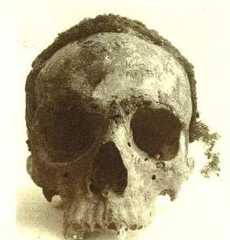
Fig. 1 Skull of an X-group Nubian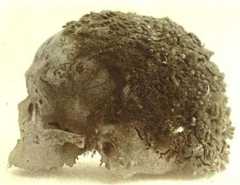
colonialism, and displacement of Africans from their land by white settlers (Sanders, 1969).
Egyptology made its debut in this intensely racist environment of the nineteenth century. In the USA, starting with Samuel Morton in 1844, scientists began the first analysis of Egyptian skeletal remains. Importantly, many of these analyses were based on paradigms with no scientific validity. Some early researchers were polygenists, believing that different human “races” emerged from different evolutionary lineages (Sanders, 1969). Through this polygenist view, populations could be characterized as “Negroid” and yet be wholly different from “Negroes.” “Hamites” in Africa could be dark-skinned and still be Caucasian. So in this world where “black” isn’t black and “black” is “white,” findings from any analysis could be manipulated to support the assertion that black Africans had no role in the establishment of Egyptian civilization (or any other civilization for that matter). What early anatomists labeled as the “true negro” represented a phenotype from West Africa sought by Europeans and Americans in the Transatlantic slave trade. Bernal (2001) points out how no one is considered “black” in ancient Egypt by Egyptology unless the individual conforms to the European stereotype of a West African. The irony, according to Bernal, is that very few ancient Egyptians would have been identified as “white” in the nineteenth- or twentiethcentury Europe or America. Populations in Egypt and Kush/Nubia with less stereotypical Negro craniofacial features, such as narrower nasal apertures, narrower face, and less lower facial protrusion (alveolar prognathism), were classified as Caucasians instead of recognizing this array of traits as a variant African phenotype adapted to the Nile valley over many millennia (Keita, 2004). Importantly, some of the traits
that were used to distinguish “races,” such as soft tissues (nose, lips), hair texture, and skin pigmentation, cannot be determined from the skeleton. Illustrating these points, Ahmed Batrawi (1935) shows a skull of an X-Group Nubian who has “typical negro hair” but a face “not typically negro” (Fig. 1). How might this skull have been classified had the hair not been attached? This skull captures the complexity and elasticity of population variation in the Nile valley.
Views of the Early Egyptologists and Nubiologists
The dominant ideological paradigm held that dynastic Egypt arose from the migration of a Caucasian population into Egypt, bringing the elements of an advanced civilization with them. They encountered indigenous races less intellectually advanced. Mixing with these latter races led to cultural decline and stagnation. Waves of migrations alternating between Caucasians and Negroes accounted for expansions and lulls in civilization, respectively. This was the view pioneered by the prominent archaeologist Flinders Petrie during the early twentieth century. Petrie believed that starting from the earliest times, Egyptian culture was born out of the conquest of Caucasian outsiders from the north, who were needed to invigorate the local gene pool after cultural decay and decadence repeatedly arose due to the influence of inferior races. The soul of Egypt belonged to the north, and it would be given up to European invaders repeatedly over time (Ramsey, 2004).
The protodynastic Egyptians, labeled by anatomist Eliot Smith as the “Brown Race,” were described as “swarthy, narrow-headed, black-haired people of small stature …” (Smith, 1915, p. 169). Yet Smith emphasizes that the technological advances
associated with this race could not have come into fruition until a “more virile, larger brain alien coming into the delta from the north” jumpstarted civilization. This white race, labeled “Armenoid” by Smith, was responsible for the advent of dynastic Egyptian culture (Smith, 1915, p. 174). Writing approvingly of Reisner’s racial ideas about Nubia, Eliot Smith further states “From the time of the Third Dynasty there was a rapid decline of Egyptian influence in Nubia, associated with a degradation of its essentially ProtoEgyptian culture and the infusion of negro blood into its population” (Smith, 1914, p. 85).
While Reisner’s archaeological methodology in Nubia is impeccable, his racist views severely compromised his ability to interpret his finds accurately. An example is Reisner’s excavation of a high priestess or official burial in a royal tumulus at Kerma. In Reisner’s mind, she was the sacrificed “Negroid” wife of an Egyptian official. Reisner assumed that Kerma was an Egyptian outpost in Nubia, an idea challenged by archaeologist Herman Junker in 1922 and long disproven (Emberling, 2014). In Elizabeth Minor’s critique of Reisner’s work, she stresses how much of the scholarship from early in the twentieth century, particularly concerning the anthropology of Africa, is heavily biased by colonialist thinking and attitudes. She concludes: “Turn-of-the last-century biases are found on multiple levels of interpretation of Reisner’s records, and can be doubly colonialist and misogynistic” (Minor, 2018, p. 260).
However, there was a broad colonialist and racist context for Reisner’s writings. For example, Seligman (1930, p. 96), in Races of Africa, writes:
Apart from relatively late Semitic influence… the civilizations of Africa are the civilizations of the Hamites, its history the record of these peoples and of their interaction with the two other African stocks, the Negro and the Bushman, whether this influence was exerted by highly civilized Egyptians or by such wider pastoralists as are represented at the present day by the Beja and Somali …The incoming Hamites were pastoral ‘Europeans’-arriving wave after wave-better armed as well as quicker witted than the dark agricultural Negroes.
Diop (1974, p. 9) challenges the validity of this Hamitic construct thus:
It is impossible to link the notion of Hamite, as we labor to understand it in official textbooks, with the slightest historical, geographical, linguistic, or ethnic reality. No specialist is able to pinpoint the birthplace of the Hamites (scientifically speaking), the language they spoke, the migratory route they followed, the countries they settled, or the form of civilization they may have left. On the contrary, all the experts agree that this term has no serious content, and yet not one of them fails to use it as a kind of masterkey to explain the slightest evidence of civilization in Black Africa.
William W. Adams (1977), in Nubia: Corridor to Africa, is also highly critical of the early periods in the development of Egyptology and Nubiology. He was struck by the degree to which racism permeated the early comparative anatomical studies of the Nile valley’s skeletal remains. He was similarly amazed at how little the discipline was supported by foundations based in science, going so far as to label it a “pseudoscience.” During that era, researchers were obsessed with highlighting differences between the established racial categories of the time, ignoring similarities and not even considering whether the concept of race had any validity in human population biology. Unvalidated research methodology and erroneous assumptions about population variability allowed these researchers to draw whatever conclusions they wished from their analyses. Adams emphasized that a racist perspective was the rule, not the exception, and had many strong proponents, such as G. Elliot Smith, Douglas Derry, and George Reisner. He recognized G. Elliot Smith (1909, p. 25) as the most outspoken, reflected in his following remark: “…the smallest infusion of Negro-blood immediately manifests itself in a dulling of initiative and a ‘drag’ on the further development of arts and civilization” (Smith, 1909, p. 25). This sentiment was embraced and articulated by most of the researchers of the time.
This short overview of racism in the foundation of Egyptology and Nubiology shows how the view of the ancient Egyptians as white Europeans gained momentum, a view expressed by Timothy Kendall at the beginning of this section. There may have been differences in how these early researchers characterized the Egyptians, but a common thread unifies their views and those of many physical anthropologists,
anatomists, and archaeologists. From their perspective, the dynastic Egyptian culture was initiated by the migration of a white race into Africa. They were supposedly more technologically advanced than races indigenous to the region, particularly the negroes. Both the National Geographic and Science Channel documentaries embrace this narrative while, paradoxically, decrying Reisner’s racism.
The concept of Egypt as a civilization existing along the narrow strip of the Nile, connected to the Mediterranean but isolated from much of Africa, is inconsistent with the archaeological and climatic data coming from the Sahara, the Nile valley, the Eastern desert, and Sudanese Nubia. During the formative periods of ancient Egypt, there essentially was no Saharan desert barrier and, consequently, no “SubSaharan” Africa. The end of the last wet phase of the Neolithic did not yield to the current arid conditions in the Nile valley until well into the dynastic period. Mokhtar (1981) notes that the last wet phase of the Neolithic ended around 2400 BC, during Egypt’s Fifth Dynasty. African populations and cultures moved freely in Northeast Africa from south to north and from east to west prior to the period leading to the desiccation of the Sahara. He considers this to be a primordial period for the formation and differentiation of African cultures. Smith (2018a) echoes the views of Mohtar, similarly pointing out that modern climate conditions do not appear in Egypt until the end of the third millennium BC, about a millennium after the establishment of the Pharaonic state. There was an intense exchange between Saharan and Nile valley populations and a blending of cultures, ideas, and technologies from which Egyptian Pharaonic civilization emerged. Smith (2018a) discusses how ancient Egypt shares cultural features common throughout Northeast Africa but not found in Western Asia. These include the ritual practices, the use of headrests, the incorporation of a bull’s tail into the royal regalia, and the representation of a bull’s penis in the Egyptian s scepter. The conditions during the Sahara wet phase also led to the establishment of a widespread pastoral cattle complex in what is now Egypt and Sudan, a specialized practice unifying much of Northeast Africa during the Neolithic.
Wengrow et al. (2014) challenge the climatic change/environmental stress hypothesis as the driver of the expansion of the pastoral cattle culture of the Neolithic in the Nile valley. Acknowledging that a common pattern of pastoral community was established throughout the Nile valley during the fifth millennium BC , the recent finds from cemeteries and habitation sites are expanding the dimensions of shared cultural elements. Similar styles of items for body decoration have been found from el-Badari and other sites in Upper Egypt to below the Sixth Cataract in Sudan between 5000 BC and 3000 BC. They note that human habitation sites share a broadly similar character along the Egyptian Nile and the Sudanese Nile in the fifth millennium BC. Treatment of the deceased’s body was also remarkably uniform, including how the body was positioned and wrapped in the grave and the use of body ornamentations such as colored stone beads, pierced shells, worked bone, and ivory. In addition, similar types of grave goods are widespread throughout the Nile, particularly cosmetic palettes, small stone or clay vessels (used as cosmetic containers), and combs of bone or ivory. Mace heads, which are found in Egyptian burials much later, occur during this period in Sudan. Archaeological evidence of pastoral communities appears earlier in the Sudanese Nile than the Egyptian Nile, implying a south to north spread of cattle-based economy and social system during the fifth millennium BC.
Echoing Wengrow et al.'s conclusion of shared cultural elements appearing earlier in Sudan than in Egypt, Christopher Ehret (2002) views the emergence of dynastic Egypt as occurring at the edge of a large complex of early African technological advancements pioneered by Saharan pastoralists. Even after the Sahara region experienced significant desiccation beyond the Neolithic and into the dynastic period, cultural and population exchange between the Sahara and the Nile valley continued. Exploring other cultural links, Deitrich Wildung uses art to illustrate the origins of Pharaonic Egyptian culture from the Nubian south, highlighting the transmission of pottery styles from Northern Sudan and the Eastern Sahara during the Neolithic period. Pottery was a medium of artistic expression throughout the Middle Nile valley, spanning the cultural phases from A-Group, C-group, and Kerma to Meroitic periods. Wildung also sees the sequence of stone statues from Kadruka (Sudan) and clay statues from Kadada (Sudan) as precursors
of A-Group and C-Group Nubian sculptures, and that these influenced Nagada predynastic Egyptian clay sculptural styles. In his view, and the view of other scholars he cites, the analysis of Egyptian art reveals its profound rootedness in the African continent (Wildung, 2018a). “To sum it up,” according to Maria C. Gatto (2011, p. 26), “Nubia is Egypt’s African ancestor. What linked ancient Egypt to the rest of North Africa is this strong tie with the Nubian pastoral lifestyle, the same pastoral background shared by most of the ancient Saharan and many modern sub-Saharan societies. Thus, not only did Nubia have a prominent role in the origins of ancient Egypt, it was also a key area for the origin of the entire African pastoral tradition.”
The convergence of views based on research from multiple disciplines demonstrates Egypt and Kush/ Nubia arose as two parallel civilizations out of the pastoralist populations of the Sahara. Rise recognizes that: “Egypt and Kush were peers and formed a mutually beneficial relationship” (15:46). It further acknowledges that the Kushites’ sophistication in architecture was comparable to that of the Egyptians and that they engaged in trade as equals. However, the concept that the two kingdoms sprung up from a shared cultural tradition of Sudanese origins is not presented in either of the documentaries.
The Nile valley has yielded a rich source of skeletal and mummified human remains spanning several millennia. Comparing cranial anatomical traits, measurements, and indices (craniometrics) may reveal relationships between populations. However, faulty paradigms have compromised craniometric analyses that failed to consider bio/environmental factors as causes of variation across populations and by using inappropriate statistical analytic methods (e.g., the Coefficient of Racial Likeness). The previous discussion highlights the challenges of getting accurate answers to valid questions on the relationships of the ancient Nile valley populations. In more recent studies, the evolutionary approach is utilized
[1]for conducting comparative anatomical studies. This approach selects many independent traits representing various skeletal subsystems. The population of interest is compared with other populations in close proximity, temporally and spatially. The statistical analysis that follows removes the effects of correlation between traits (unlike the method of the Coefficient of Racial Likeness widely employed in early studies). The goal is to identify a range of traits controlled by independent genetic loci. Unlike the typological approach that assumes traits are stable in time, there is a recognition that traits evolve. Hence, it may not be appropriate to compare modern populations with ancient ones. Populations are dynamic entities continuously modified by the environment (natural selection) and gene flow (see Crawford, 1994). These principles undergird the following craniometric studies and their insights on the relationships between the ancient Egyptian and Nubian populations.
Shomarka Keita (1990), using multiple discriminant functions, conducted a craniometric analysis of predynastic Badarian and Nagada skulls. He found that the series from the Upper Nile valley showed close affinities to each other and the tropical African series. This includes the Badarian and Nagada cranial series, which cluster with tropical Africans. His study particularly shows a notable Nagada/Kerma overlap with the First Dynasty series. Keita (1996) also examined a collection of Nagada skulls. In this analysis, centroid scores suggest a Nagada I similarity with Kerma Kushites. When an ancient Levante series is included, the Nagada I value is little affected. The significance is that adding the Asiatic series as a comparator did not alter the relationship of the Egyptian Nagada crania with the other African series when it had a “choice” to group with the non-African series. This reinforces Nagada I’s African affinities.
In an earlier study, Keita (1992) analyzed the First Dynasty royal Egyptian crania from Abydos. He reports that the predominant pattern observed in the Abydos royal tombs is “Southern.” That is, the majority of the samples would classify with Kerma Kushites, described as a tropical African variant, and also predynastic Upper Egyptian types. However, there are some representing Lower Egyptian types as well. He further suggests that the strong Sudanese
The parentheses specify the time elapsed that the comment appears in the documentaries (hour: minutes: seconds).↩︎
affinity emerging in the analysis likely reflects Nubian interactions with Upper Egypt during the predynastic period. Buzon (2006) analyzed nine craniometric traits to identify which ones could maximally discriminate between Egyptians (primarily Eighteenth Dynasty samples) and Nubians. But even the traits best able to distinguish the two groups (facial height and cranial breadth) display substantial overlap in the measurements between the two groups.
Expression of certain craniometric traits is subject to environmental selection (e.g., nasal index and cranial index), but non-metrical analyses investigate traits that are genetically controlled and may better reflect relatedness between populations. These traits reflect a heritability in line with cranial measurements and generate biological distances that coincide with genetic distances (Godde, 2020). For example, Berry et al. (1967) use non-metric analyses of cranial series of predynastic and dynastic populations from different geographical regions. They find no difference between the early predynastic population of Nagada and either the archaic population of Tarkhan or the “workmen” of archaic Abydos. They also found no difference between the late predynastic population of Hierakonpolis and the archaic populations. These findings invalidate the theories that credit a foreign race for the emergence of the First Dynasty. They further point out that there is no archaeological evidence of foreigners coming into Egypt and bringing the dynastic civilization.
Godde (2009) evaluated the population relationships by comparing cranial non-metric traits in eighteen Nubian and Egyptian series, stretching from Lower Egypt to Upper Nubia, spanning more than 7,000 years. The Mesolithic Nubian sample shows a small biological distance (greater similarity) with Nagada Egyptians. Lower Nubian and Upper Egyptian samples cluster together. Lower Egyptian samples formed a homogeneous unit. Groups from Upper Nubia also formed a cluster. In summary, a north-to-south gradient (a cline) in the frequency of nonmetrical traits was noted. Goode (2020) also analyzed non-metrical traits in a series of crania, including two Egyptian (predynastic Badarian and Nagada series), a series of A-Group Nubians, and a Bronze Age series from Lachish, Palestine. The two predynastic series
were most similar, followed by the closeness between the Nagada and the Nubian series. Both Egyptian groups were more similar to the Nubian series than to the Lachish series.
Non-metrical studies of dental discrete traits have been used to estimate the relationships between ancient Egyptian populations across temporal and spatial distances. Dental phenetic similarity is assumed to approximate underlying genetic closeness. Irish (2006) cites several physical anthropological analyses showing that dynastic Egyptian civilization evolved as an internal process proceeding from Nagada phases, in contrast to the theory that a foreign race invaded Egypt from West Asia during the late predynastic period (Nagada III). He adds that there is no archaeological data that supports this theory of foreign origins. He posits that observing continuity of dental trait frequencies from Nagada period to the dynastic period would provide additional evidence to refute claims of an alien race establishing dynastic Egypt. So he compares 36 crown, root, and intra-oral osseous discrete traits in 15 sites spanning the Neolithic through the Roman periods in Upper and Lower Egypt. His findings suggest that predynastic groups descended from Western Desert Neolithic groups. Significantly, he observed close affinities between Hierakonpolis/Nagada samples and First and Second Dynasty Abydos and Tarkan samples. The latter two are also close to the later dynastic samples. These findings support continuity between predynastic and dynastic Egyptian populations. The sample of Greek Egyptians from Lower Egypt (Ptolemaic Egyptians) stands out as significantly different from all other groups (except a small Roman period group). The observation of low frequencies of UM1 cusp 5, threerooted UM2, five-cusped LM2, and two-rooted LM2, along with a high incidence of UM3 absence, reflects the influence of Europe and West Asia that would be expected to comprise this sample. Irish (2008) later describes crania from two Neolithic sites in Nubia and compares them with three post-Neolithic/dynastic pooled samples from Upper Egypt, Lower Nubia, and Upper Nubia. The three post-Neolithic Egyptian and Nubian samples are described as “closely related” based on the mean measure of divergence statistic calculated for 36 dental traits.
The rise of the New Kingdom resulted from the military campaigns of the southern ruler, Seqenenre, a Seventeenth Dynasty king, who waged wars against
the Hyksos kings in Lower Egypt. Harris and Weeks (1973) write of Seqenenre:
His entire facial complex, in fact, is so different from other pharaohs (it is closest in fact to his son Ahmose) that he could be fitted more easily into the series of Nubian and Old Kingdom Giza skulls than into that of later Egyptian kings. Various scholars in the past have proposed a Nubian-that is, non-Egyptian-origin for Sequenre and his family, and his facial features suggest that this might indeed be true.
Their work also supports the close similarity between the Nubian and Old Kingdom Egyptian populations. Ahmose I, the son of Seqenenre, succeeded in expelling the Hyksos rulers from Egypt and establishing the Eighteenth Dynasty, the longest dynasty in Egyptian history. The Nubians played the role of restorers of Egyptian sanctity and religious purity, a theme that recurs regularly throughout Egyptian history.
Schuenemann et al. (2017) analyzed mitochondrial genomes from a small sample of ancient Egyptian mummies and concluded, “Our analyses reveal that ancient Egyptians shared more ancestry with Near Easterners than present day Egyptians…” Yet the authors present the archaeological and historical evidence for migrations of Asiatics, Greeks, and Romans into the region during the Late periods (664-332 BC) from which their samples originate. So why should the genetic data be expected to characterize anyone other than these foreigners? Their sample is far from a representative Egyptian sample. The authors acknowledge that ancient populations in more southern Egypt would be closely related to Nubia, having a higher sub-Saharan genetic component. Gourdine et al. (2018) conducted short tandem repeat’s (STR’s) analysis of samples from Amarna royal mummies of the Eighteenth Dynasty and Ramses III of the Nineteenth Dynasty. They used published genomic data analyzed by the PopAfiliator1 tool (Pereira et al., 2011) and determined that the genomes had a to probability of affiliation with sub-Saharan Africans.
Both craniometric and non-metrical studies demonstrate strong biological affinities between Upper Egyptians and Lower Nubians, particularly during the predynastic and dynastic times, and that both populations share affinities with tropical Africans. Nonmetrical studies show stability in the ancient Egyptian population over several millennia and no evidence of large-scale migration into Egypt from outside of Africa. Egyptians and Nubians are more closely related to each other than to populations from Asia or Europe. The concept of the Kushite “Black Pharaohs” as being a different “race” from the Egyptians is not supported by physical anthropological studies.
The term Kushite is used to refer to the kingdoms of Kerma, Napata, and Meroe as a continuous political and cultural entity. Each period of the Kushite kingdom was designated by the name of its capital city. Kerma, the capital city of the kingdom located at the Third Cataract, remarkably endured for 1000 years, 2500-1550 BC (Emberling, 2014). The Napatan kingdom, centered at Jebel Barkal at the Fourth Cataract, lasted from the ninth to the fourth century BC and included the Kushite rulers of Egypt’s Twenty-Fifth Dynasty—Piankhy, Shabaka, Shebitqo, Taharqa, and Tanwetamani. In Lost Kingdom, this statement is made about the Twenty-Fifth Dynasty rulers: “They were known as the Black Pharaohs…” (47:28). Known by whom? Certainly not the Egyptians. Who gave them this label, and for what purpose? The Napatan kings continued to rule Kush after their expulsion from Egypt. The Meroitic period began with the relocation of the royal burial grounds from the fourth cataract area (Napata) to Meroe in the fourth century BC. The kingdom of Meroe flourished from 300 BC until circa AD 300. For more than three millennia and covering a geographical area spanning present-day southern Egypt through northern Sudan, distinct populations of Nubians inhabited this region with unique cultures and likely diverse languages.
The documentary, Rise, starts with the following inaccurate statement, "But even as the ancient Egyptians
proclaim their power to the world, they bury a shocking secret about their reign. They erased from history the story of a subordinate kingdom from the south that rose up and overthrew their masters…" (, emphasis added). The colonized Kushites were not slaves to the Egyptians, and suggesting this is a misrepresentation of history. This same type of language resurfaces later, “[the Kushites] even began building pyramids like their imperial masters” (25:09). This repeated use of the term “masters” in describing the relationship of the Egyptians to the Kushites is intentional. The producers’ interpretation of the Egyptian-Kushite relationship as a master-slave relationship demonstrates the transference of their racial conceptualization onto the Egyptians and Kushites. Other inappropriate references in the documentary include “Kushites were forgotten because of the color of their skin…,” “Dark-skinned Africans,” “Black Africans”; essentially a continuation of Reisner’s and others’ racialist thinking that the documentary purportedly seeks to confront.
The producers assume that the relationship between the Egyptians and Kushites was the same as between Europeans and their New World/African colonies. They assume that the Kushites had totally assimilated Egyptian customs. In Rise, they comment “So they turned to the most unlikely rescuer imaginable; their assimilated, but [a] much-derided former colony, Kush” (29:20), a reference to the Kushite conquest of Egypt, aided by Thebans. Smith (2018b) has challenged this perspective by pointing out how earlier models inaccurately emphasized a wave of assimilation/acculturation processes and the rapid disappearance of Nubian cultural features throughout the areas colonized by the Egyptians. Smith (2018b) cites several researchers’ work showing that the Egyptian colonial project in Kush was not about replacement or displacement. Rather, it was a process in which there was a more selective adoption of Egyptian features resulting in an Egyptian-Nubian cultural hybrid. He uses shifts in burial practice patterns to support this latter model. This point will be elaborated on below.
Both documentaries emphasize negative depictions of the Kushites by the Egyptians. In Rise, Timothy Kendall states that “Egyptian imagery of that period shows Kushites bound” (18:32). Such images appear during the Nineteenth Dynasty. The documentary invokes “racial profiling” to explain these depictions. Geoff Emberling claims that racial profiling made it
easier for the Egyptians to justify conquering Kush. No evidence is provided to support this claim. Rather, the ancient military interventions between Egypt and Kush are examined through the lens of present-day racialized interactions. In another example of transference of racialized views onto the Egyptians, after acknowledging the widespread general knowledge about Egyptian civilization in Lost Kingdom, the narrator commented: “Much less well known is the civilization of Kush, dark-skinned people from the south. The Egyptians portrayed the Kushites as primitive barbarians and Western scholars simply believed them” (1:52).
The clear message from both documentaries is that the producers believe that the Egyptians and the Kushites were of different races. The unspoken, yet unsubtle, message is that the Egyptians were white. This becomes abundantly clear in Lost Kingdom with the statement “Kush, Africa’s first black superpower…” (1.03:50). This is the central theme and what lies behind the title of the documentaries Rise and Lost Kingdom. The ancient Egyptians would not have shared the concept of race as we understand it today, shaped by 250 years of chattel slavery of Africans, the genocide against Native Americans, and a hundred years of brutal Jim Crow segregation in the USA. In Rise, a comment is made about the Kushites’ rule of Egypt, “These African underdogs (the Kushites) had toppled a giant…” (53:50), a proclamation showing that the producers do not consider Egypt to be part of Africa.
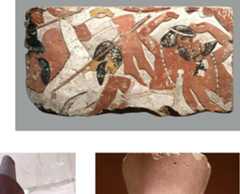
Interestingly, Rise focuses only on the depictions of the subjugated Kushites while ignoring extensive, similar imagery of the “sand dwellers”-peoples from the Near East, despised by the Egyptians. The depictions of Egyptians smiting Asiatic enemies and images of bound, subjugated Asiatic prisoners are abundant (e.g., Figs. 2, 3). Scenes from Abu Simbel depict the battle of Kadesh where Ramses slaughters the Hittites and crushes them under chariot wheels. The conquest and colonization of the Canaanites by Thutmose III in the Eighteenth Dynasty are depicted in a similar manner (Fig. 4).
Smith (2018c) points out how Egyptians depict foreigners in official contexts negatively, as barbarians and even as animals. He demonstrates how all the
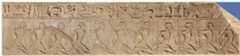
Fig. 2 West Asiatic prisoners of Ramses II at Abu Simbel, Upper Egypt (images courtesy of Wikimedia Commons)
Egyptians’ neighbors were portrayed in this manner without regard to race or ethnicity. He describes how in ancient Egyptian celebratory texts and imagery, they portray themselves as the positive ethnic self, juxtaposed with the portrayal of a negative ethnic other as a means of legitimizing the power and authority of their kings. Yet, in more conventional, everyday writing (supported by archaeological evidence), this polarized ideological dynamic breaks down, revealing more positive and complimentary intercultural and ethnic interactions. The same “hated” groups could be viewed favorably in a different context, a dimension that these documentaries did not explore.
Over several millennia, the relationship between Egypt and Kush ranged from being hated enemies to periods of intensive cultural exchange, trade, and integration. Both documentaries choose to highlight the former. During the Eleventh Dynasty, for example, the Kushite wives of pharaoh Mentuhotep II are depicted with dark skin (as is Mentuhotep II; Figs. 5, 6) and are named in the accompanying texts as “king’s wives,” “sole ornament,” and “priestesses of Hathor” (Ashby, 2018). Bernal (2001) points out that the rulers of the Eleventh dynasty had ruled the Theban nome or district in the south of Upper Egypt before they became pharaohs of Egypt. He further describes how these nomarchs or local rulers had close relations with Nubia and comments on the
Fig. 3 Ramses II slays an enemy while he tramples on another in the battle of Kadesh in 1274 BC. Temple of Ramses II at Abu Simbel (Wikipedia Commons)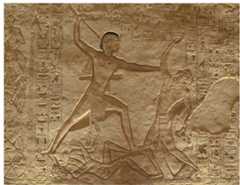
Fig. 4 A fragment of a painted limestone relief from around 1400 BC from Thebes, Egypt, depicting slaughtered Canaanites (Source: Metropolitan Museum of Art, Open Access)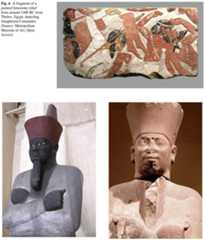
Fig. 6 Nebhepetre Mentuhotep II, Eleventh Dynasty (Metropolitan Museum of Art, New York)
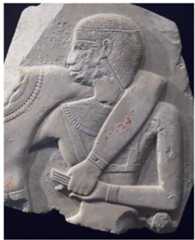
Fig. 7 Relief of Queen Kemsit from Deir el-Bahri, wife of Pharaoh Mentuhotep, Eleventh Dynasty (Staatliche Museum Ägyptischer Kunst in Munich, Germany)
depiction of Mentuhotep II’s wives with dark skin (Figs. 7, 8).
The Twelfth Dynasty founders also originated from the south. In the Prophecies of Neferty as they relate to Amenemhat I, founder of the Twelfth Dynasty, “Then a king will come from the south, Ameny,…son of a woman of Ta-Seti (Kush)”
(Lichtheim, 1975). Wildung (2018b) comments on how Egyptian sculpture and relief since protodynastic times are full of Nubian facial types. He specifically mentions the statues of pharaohs Khufu, Mentuhotep II, and Sesostris I (whose grandmother was from Ta-Seti [Kush], Sesostris = Senusret/Senwosret), showing clear Nubian features (Figs. 9, 10, 11). So why are these pharaohs and others, who share facial phenotypes with Kushites, the so-called Black Pharaohs, not mentioned in the documentaries? Wildung (2018b) also discusses the Nubian influence on Egyptian art in the form of the dominant role of women in Pharaonic art. He places this in the context of the role of women in Nubia, where the Neolithic statuettes from Kadruka and the figurines of the A-group and C-group are all female.
Both the Kushites and the Egyptians recognize Jebel Barkal in Kush as a significant spiritual place, yet the documentaries prioritize the Egyptian perspective. Rise attributes to Kushites the identification of the pinnacle as a phallic symbol while crediting the Egyptians with recognizing this pinnacle as the standing Osiris or a rearing cobra associated with kingship (22:00). The documentary claims, “For 300 years, the Egyptians occupied Kush and imposed upon them the cult of Amun” (26:00). This is unlikely because Kush had long worshipped a ram god before Egyptian military conquest. Gabolde (2018) explores this by reviewing a passage from stelae erected by Pharaoh Thutmose III at Jebel Barkal. The translated passage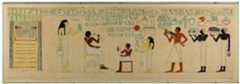
Fig. 8 Scene from Sarcophagus of Ashayet, wife of Mentuhotep, Eleventh dynasty, seated (Cairo Museum, Egypt)
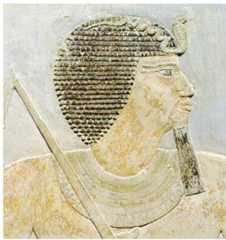
Fig. 9 Pharaoh Amenemhat 1 (Twelfth Dynasty), relief from his tomb et al.-Lisht, Egypt (Metropolitan Museum of Art, New York)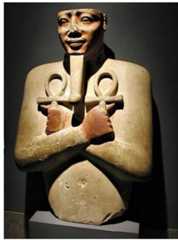
Fig. 10 Osiride pillar statue of pharaoh Senusret I (Twelfth Dynasty) at the Museum of Luxor, Egypt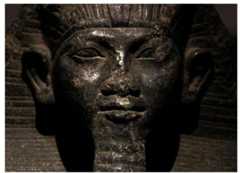
Fig. 11 Head of a statue of Senusret II (Twelfth Dynasty) from Karnak, Egypt, in Ny Carlsberg Glyptotek, Copenhagen, Denmark
reads: “[…Speech of] My [Majesty (?):] Listen people of the South who are in the pure mountain which was called among the (local) population ‘Thrones of the Two Lands’ (nswt-Tzwy’) (even) before it was known (of us).” Gabolde (2018) argues that this “passage seems to mean that in naming the mountain of Djebel Barkal - most likely already a sacred mountain - ‘nswt-Tzyvy’, the Egyptians had adopted almost the same form as the one used by the Kushites in their own language.” Continuing with this theme of Egyptians incorporating Kushite spiritual philosophy, Gabolde writes that the Egyptians incorporated another Nubian spiritual element into their religion, namely, the ram. He further presents evidence of the earliest representation of the ram with Amun in Kerma. Smith (2018b) suggests that during the New Kingdom, the incorporation of theological and iconographic elements from Nubia, including the adoption of the ram manifestation and other Kushite features of the cult of Amun, facilitated the integration of Nubia into the Egyptian world. This exchange had an unintended consequence, serving later to legitimize the Kushite rule of Egypt.
In Lost Kingdom, Geoff Emberling describes how the Egyptians viewed the outcropping from the mountain at Jebel Barkal as the Uraeus on the pharaoh’s crown. This symbol of Egyptian kingship would make Jebel Barkal an appropriate location for temples dedicated to the worship of Amun. As such, they were justified to rule both Egypt and Kush. The documentary goes on to say that the Kushites adopted
the worship of Amun at Jebel Barkal during the early Napatan kingdom. It argues that the Kushites aimed “to beat them at their own game,” that through the supremacy of Amun, the Kushites were justified to serve as the legitimate rulers of Egypt as well as Kush (52:54). This argument fails to consider the possibility that the Kushites may have originally worshipped Amun, and the Egyptians may have borrowed the deity from the Kushites.
Altogether, the above observations invalidate the assertions that Egyptians reviled the Kushites as subordinate, barbarian tribal people, a key message of both documentaries. In their summary of the evolving perspectives on Egypt-Nubia relations, Whitmore et al. (2019) critically examine the traditional view of Egypt-Nubia interactions as a dominant core-subordinate periphery dynamic. Such a static view has not considered any valuable contribution of the Nubians to the relationship and has often followed a model where Egyptian domination was linked to strict labor demands and harsh living conditions, akin to European models of colonialism in Africa, the Caribbean, and elsewhere. However, they point to the growing number of scholars who are uncovering evidence that highlights the complexity of these relationships. They emphasize interactions where indigenous Nubian customs and traditions were maintained with limited interference for some segments of the population. In contrast, Nubian elites and others were more integrated into Egyptian colonial and political structure. They present abundant archaeological and biological evidence from sites such as Tombos in Nubia that support more nuanced interactions between Egyptian colonialists and Nubians, referred to as “entanglements.” This is in opposition to models that require widespread assimilation or exploitation and oppression of the indigenous population.
Interestingly, Lost Kingdom offers this entanglement model for rethinking the ancient Egypt-Nubia relationships. Referring to cultural entanglements between the Egyptians and Kushites after the conquest of Kush around 1450 BC, the producers state, “Cultural entanglements may hold the true nature of the Kushite people during Egyptian rule. Were they simply an inferior race reduced to slavery and oppressed by their masters? Not according to some startling new evidence uncovered at Egypt’s administrative capital in Kush” (40:35). The documentary cites new archaeological finds showing the blending
of Egyptian and Kushite cultural elements across different levels of society at the site of Amara West. The situation at Amara West appears very similar to what Whitmore et al. (2019) described above for Tombos. So while this documentary encouragingly seeks to re-define Egyptian-Kush relations, they seem unable to abandon a language that invokes master-slave relationships.
From Rise, we hear, “Psamtek (II) had a score to settle; a Kushite ruler had killed his great grandfather” (46:46). This led to an attempt to remove any evidence of Kushite rule in Egypt. At the beginning of Rise, the producers emphasize that the Kushites were erased from history by the Egyptians and virtually forgotten, and this was due to the color of their skin (1:32). Again, there is no justification provided for racializing this interpretation. Lost Kingdom similarly focuses on the destruction of Kushite statues but does not racialize the events. But these actions are not at all unique in Egyptian history. For example, in the Eighteenth dynasty, after the death of pharaoh Hatshepsut, successor Thutmose III sought to erase her name and figure from royal monuments. Her image and name were chiseled away from stone reliefs, and her name was replaced with Thutmose I and Thutmose II. Statues from her monuments were smashed, and in some instances, the Uraeus of the cobras from all her granite sphinxes and seated figures were removed (Arnold, 2005; Dorman, 2005; Roth, 2005). This is the same process depicted in the documentary for the Kushite statues around nine hundred years later. In Rise (47:37), the narrator notes that the Kushite dynasty is omitted from the list of ancient Egyptian dynasties at the modern Cairo museum. The producers attempt to link this blatant exclusion to the removal of the evidence of Kushite rule by Psamtek II, twenty-five centuries earlier. This is beyond irresponsible; there is no association.
As mentioned in the introduction of this article, presentism in historical interpretations results in distortions. The separation of Egypt from Africa, beginning nearly two centuries ago, resulted from Egyptologists,
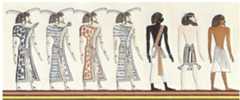
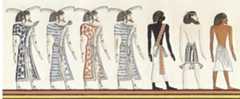
Fig. 12 Scene from the tomb of Seti I, Valley of the Kings, Egypt (from the right: an Egyptian, Asiatic, Kushite, and Libyans)
historians, and anthropologists interpreting archaeological finds and physical remains through a prism blurred by the racism of the time. These views have persisted to this day, despite overwhelming evidence that refutes them. Senegalese polymath, Cheikh Anta Diop, was the first African scholar to systematically lay out a comprehensive challenge to the racist Eurocentric thought about ancient Egypt (Diop, 1967, 1974). In the 1980s, Afrocentrism emerged as a challenge to Eurocentric perspectives in the USA. It seeks to correct centuries of false theories that proclaim black racial inferiority and acknowledge the rich contributions of Africans to the world’s civilizations (Asante, 2007). Inspired by Diop’s work, Afrocentrism promotes traditional African systems of thought, cosmology, and social systems. Many African Americans and other blacks throughout the African diaspora embraced Afrocentrism. Through that lens, both Kush and Egypt are considered African civilizations established by black populations.
The rise of the “Black Pharaohs” narrative could be seen as pushback against the Afrocentric view, attempting to restore ancient Egypt as a white civilization but acknowledging that there were some “Black Pharaohs.” These documentaries saturate viewers’ minds with the unrelenting refrain of “the Black Pharaohs” as the Kushites, distracting from the genuinely transformative research being conducted by the featured archaeologists. Could these documentaries have been a response to an earlier
documentary that affirms the African character of Egypt and Nubia (https://www.youtube.com/ watch?v=ZxFlVqWWZ30)? Presentism manifests in the separation of Egypt from its African identity. This initiative appears in the February 2008 issue of National Geographic magazine in an article entitled “The Black Pharaohs, Conquerors of Ancient Egypt.” The heading reads “An ignored chapter in history tells of a time when kings from deep in AFRICA conquered ancient EGYPT” (emphasis as presented in the article). While paving the way for the documentaries to follow, the article makes one clear distinction: it emphasizes that the ancients did not associate dark skin with inferiority.
The ancient Egyptians acknowledged physical differences between themselves and their neighbors. However, unlike the Europeans throughout the modern era, they did not establish any hierarchy of peoples or associate any inherent value of people based on their physical differences. The imagery from the wall in the tomb of Seti I depicts an Egyptian view of different “nationalities” or population groupsEgyptian, Asiatic, Kushite, and Libyan (Fig. 12). The three African groups share a similar hair texture (in different styles), and the Egyptian and Kushite are both brown-skinned, albeit in different shades. The ancient Egyptians would not have seen the pharaohs of the Twenty-Fifth Dynasty as the “Black Pharaohs.” Over the previous 2000 years, there had been many pharaohs with similar phenotypic traits.
Adams, W. (1977). Nubia: Corridor to Africa. Princeton University Press.
Arnold, D. (2005). The destruction of the statues of Hatshepsut from Deir El-Bahri. In C. H. Roerhig (Ed.), Hatshepsut: From queen to pharaoh (pp. 270-276). Yale University Press.
Asante, M. (2007). An Afrocentric manifesto: Toward an African Renaissance. Wiley Publishers.
Ashby, S. (2018). Dancing for Hathor: Nubian women in Egyptian cultic life. Dotawo, 5(2), 67-72.
Batrawi, A. M. (1935). Report on human remains. Service des Antiquitiques des Egypte.
Bernal, M. (1987). Black Athena (Vol. 1). Rutgers University Press.
Bernal, M. (2001). Black Athena writes back: Martin Bernal responds to his critics. Duke University Press.
Berry, A. C. (1967). Genetical change in ancient Egypt. Man, 2(4), 551-568.
Buzon, M. (2006). Biological and ethnic identity in New Kingdom Nubia. Current Anthropology, 47, 683-95.
Crawford, K. W. (1994). The racial identity of Ancient Egyptians based on the analysis of physical remains. In I. V. Sertima (Ed.), Egypt: Child of Africa (pp. 55-74). Transaction Publishers.
Diop, C. A. (1967). Antériorité des civilisations nègres: Mythe ou vérité historique? Présence Africaine.
Diop, C. A. (1974). The African origin of civilization: Myth or reality [Antériorité des civilisations nègres: mythe ou vérité historique?] Translated by Mercer Cook. Lawrence Hill.
Dorman, P. F. (2005). The destruction of Hatshepsut’s memory: The proscription of Hatshepsut. In C. H. Roerhig (Ed.), Hatshepsut, From Queen to Pharaoh (pp. 267-269). Yale University Press.
Ehret, C. (2002). The civilizations of Africa: A history to 1800. University of Virginia Press.
Emberling, G. (2014). Pastoral states: Toward a comparative archaeology of early Kush. In S. M. Puglisi (Ed.), Origini: Prehistory and protohistory of ancient civilizations. Gangemi Editore International Publishing.
Gabolde, L. (2018). Insight into the perception of royal and divine powers among Kushites and Egyptians. In M. Honegger (Ed.), Nubian Archaeology in the XXIst century (pp. 91-104). Peeters Publishers.
Gatto, M. C. (2011). The Nubian pastoral culture as link between Egypt and Africa: A view from the archaeological record. In K. Exell (Ed.), Egypt in its African Context. Proceedings of the conference held at The Manchester Museum, University of Manchester, 2-4 October 2009 (pp. 21-29). BAR International Series 2204. Archaeopress.
Godde, K. (2009). An examination of Nubian and Egyptian biological distances: Support for biological diffusion or evidence of in situ development? Homo, 60, 389-404.
Godde, K. (2020). A biological perspective on the relationship between Egypt, Nubia and the Near East during the Predynastic period. In N. Kuch (Ed.), Egypt at its Origins 6: Proceedings of the Sixth International Conference “Origin
of the State. Predynastic and Early Dynastic Egypt”. Peeters. Vienna
Gourdine, J.-P., Keita, S., Gourdine, J.-L., & Anselin, A. (2018). Ancient Egyptian genomes from Northern Egypt: Further discussion. OSF Preprints: https://osf.io/ecwf3/.
Harris, J., & Weeks, K. (1973). X-raying the pharaohs. Charles Scribner’s Sons.
Hunt, L. (2019). The problem with presentism is that it blurs our understanding of the past. In S. Cherenfant (Ed.), Presentism: Reexamining historical figures through today’s lens (pp. 12-16). Greenhaven Publishing LLC.
Irish, J. D. (2006). Who were the ancient Egyptians? Dental affinities among Neolithic through post-dynastic peoples. American Journal of Physical Anthropology, 123,.
Irish, J. D. (2008). A dental assessment of biological affinity between inhabitants of Gebel Ramlah and R12 Neolithic sites. In Z. Sulgostowska & A. J. Tomaszawski (Eds.), Man-millennia-environment: Studies in honor of Professor Romuald Schild (pp. 45-52). Polish Academy of Sciences.
Keita, S. (1990). Studies of ancient crania from Northern Africa. American Journal of Physical Anthropology, 83,.
Keita, S. (1992). Further studies of crania from ancient North Africa: An analysis of crania from first dynasty Egyptian tombs, using multiple discriminant functions. American Journal of Physical Anthropology, 87, 245-254.
Keita, S. (1996). Analysis of Nagada predynastic crania. A brief report. In L. Krzyzaniak, K. Kroeper, & M. Kobusiewicz (Eds.), Interregional contacts in the later prehistory of Northeastern Africa, Studies in African Archaeology (pp. 203-213). Poznan Archaeological Museum.
Keita, S. (2004). Exploring Northeast African metric craniofacial variation at the individual level: A comparative study using principal components analysis. American Journal of Human Biology, 16, 679-689.
Lichtheim, M. (1975). Ancient Egyptian literature, vol. 1: The Old and Middle Kingdoms. University of California Press.
Minor, E. (2018). Decolonizing Reisner: A case study of a classic Kerma female burial for reinterpreting early Nubia archaeological collections through digital archival resources. In M. Honnegger (Ed.), Nubian archaeology in the XXIst century (pp. 251-260). Peeters Publishers.
Mokhtar, G. (1981). Introduction. In G. Mokhtar (Ed.), General history of Africa II: Ancient civilizations of Africa (pp. 1-26). UNESCO and University of California Press.
Pereira, L., Alshamali, F., & Andreassen, R. (2011). PopAffiliator: Online calculator for individual affiliation to a major population group based on 17 autosomal short tandem repeat genotype profile. International Journal of Legal Medicine, 125, 629-636.
Ramsey, J. D. (2004). Petrie and the intriguing idiosyncrasies of racism. Bulletin of the History of Archaeology, 14(2),.
Roth, A. M. (2005). Erasing a reign. In C. H. Roerhig (Ed.), Hatshepsut: From queen to pharaoh (pp. 277-284). Yale University Press.
Sanders, E. R. (1969). The Hamitic hypothesis: Its origin and functions in time perspective. Journal of African History,.
Schuenemann, V., Peltzer, A., et al. (2017). Ancient Egyptians mummy genomes suggest an increase of Sub-Saharan African ancestry in post-Roman periods. Nature Communications, 8, 15694.
Seligman, C.G., (1930) Races of Africa. Oxford University Press.
Smith, E. (1909). Anatomical report: Egyptian Survey Department. Archeological Survey of Nubia Bulletin, 3, 21-27.
Smith, E. (1914). The archaeological survey of Nubia. Nature, 2317(93), 85-86.
Smith, E. (1915). The influence of racial admixture in Ancient Egypt. The Eugenics Review, 7(3), 163-183.
Smith, S. T. (2018a). Gift of the Nile? Climate change, the origins of Egyptian civilization and its interactions within Northeast Africa. In T. Bacs (Ed.), Across the Mediterranean - Along the Nile (pp. 325-346). Archaeoligua Foundation.
Smith, S. T. (2018b). Colonial entanglements, immigration, acculturation and hybridity of New Kingdom Nubia (Tombos). In M. Honegger (Ed.), Nubian archaeology in the XXIst Century (pp. 71-90). Peeters Publishers.
Smith, S. T. (2018c). Ethnicity: Construction of self and other in Ancient Egypt. Journal of Egyptian History, 2,.
Wengrow, D. D., Dee, M., Foster, S., Stevenson, A., & Bronk Ramsey, C. (2014). Cultural convergence in the Neolithic of the Nile valley: A prehistoric perspective of Egypt’s place in Africa. Antiquity, 88, 95-111.
Whitmore, K. M., Buzon, M., & Smith, S. T. (2019). Living on the border: Health and identity during Egypt’s colonization of Nubia in the New Kingdom Period. In C. I. Tica & D. L. Martin (Eds.), Bioarchaeology of frontiers and borderlands (pp. 135-159). University Press of Florida.
Wildung, D. (2018a) Afrikanisches in Agyptischen Kunst?. (African in Egyptian Art). In E. Pischikova, J. P. Budka, & K. Griffin (Eds.), Thebes in the first millennium B.C.: Art and archaeology of the Kushite period and beyond. Golden House Publications.
Wildung, D. (2018b). About the autonomy of the arts of ancient Sudan. In M. Honegger (Ed.), Nubian archaeology in the XXIst Century (pp. 105-112). Peeters Publishers.
Zambrana, R. (2016). Hegel, history and race. In N. Zack (Ed.), Oxford handbook of philosophy and race (pp. 251-260). Oxford University Press.
Publisher’s Note Springer Nature remains neutral with regard to jurisdictional claims in published maps and institutional affiliations.
AI
The paper reveals that historical racism impacted Egyptology's foundation, leading to biased interpretations of ancient dynamics between Egyptians and Nubians.
Recent archaeological studies indicate that Egypt and Kush shared a cultural kinship, contradicting narratives of domination and cultural inferiority.
Craniometric and non-metric studies indicate significant genetic similarities, suggesting close relationships between ancient Nubians and Egyptians over millennia.
By 2014, with documentaries like Rise of the Black Pharaohs, narratives began to emerge emphasizing Nubian civilization’s historical importance.
The article argues that presentism imposes contemporary racial frameworks over historical contexts, distorting our understanding of ancient societies.
The process of epistemological de-colonization of the historiography and archaeology of ancient Egypt and Nubia has begun unfolding only in the last two decades. It is still set in the context of descriptive disciplinary history with little reflection on and criticism of background theories and methods. As a consequence, some of the old approaches and concepts live on in the discipline. Utilizing the concepts of “thought collective” and “thought style” (sensu Ludwik Fleck) this paper analyzes previous works on ancient Egypt and Nubia written in the colonial discourse. Three key ideas run like threads through these works: 1. scientific racism, 2. socio-cultural evolution, and 3. colonial and imperial discourse. In this paper the emphasis will be put on scientific racism, its development, and its remnants in the archaeology and historiography of Egypt and Nubia.
Journal of Ancient Egyptian Interconnections, 2022
Nineteenth-century ideas of race and racial hierarchy found their way into the theoretical and conceptual orientations of early Egyptology and the interpretations of the Egyptian and Nubian archaeological materials. Consequently, African American and Caribbean scholars developed counternarratives to resist these interpretations as well as restore the ancient Nile Valley to its place in African history. These counternarratives and the epistemological approaches to Egyptian and Nubian history developed within their segregated institutional spaces were largely ignored by mainstream Egyptologists and Africanists. One result of efforts to exclude their ideas from mainstream discourse is the conceptual and disciplinary separation between Egyptology and African Studies that current scholarship is now working to resolve.
Religions, 2021
In this essay, I consider how the racial politics of Ridley Scott’s whitewashing of ancient Egypt in Exodus: Gods and Kings intersects with the Hamitic Hypothesis, a racial theory that asserts Black people’s inherent inferiority to other races and that civilization is the unique possession of the White race. First, I outline the historical development of the Hamitic Hypothesis. Then, I highlight instances in which some of the most respected White intellectuals from the late-seventeenth through the mid-twentieth century deploy the hypothesis in assertions that the ancient Egyptians were a race of dark-skinned Caucasians. By focusing on this detail, I demonstrate that prominent White scholars’ arguments in favor of their racial kinship with ancient Egyptians were frequently burdened with the insecure admission that these ancient Egyptian Caucasians sometimes resembled Negroes in certain respects—most frequently noted being skin color. In the concluding section of this essay, I use Sco...
From 712 BC until c.670 Kush and Egypt were united in a single Nile Valley empire stretching from the Delta to Khartoum. Possibly only under Thutmose III was the territorial extent of the Egyptian empire comparable. Egypt, under Kushite rule (the so-called “Black Pharaohs” of the 25th Dynasty), was one of two great superpower rivals in the eastern Mediterranean – the other being Assyria. Over a 45-year period, these two empires jockeyed for power until Assyria finally prevailed. Phoenicia’s hegemony over Mediterranean trade was being challenged by the emergent Greeks, but neither was a military superpower. The huge empires of Persia and Rome were centuries away. Beyond the region, even as far as India, China or the Americas, no truly unified power held sway over vast international territories anywhere. It is therefore suggested that Kush-Egypt and Assyria were probably the two most powerful nations on Earth. Furthermore, for part of that period - by certain criteria at least - it could be argued that Kush-Egypt was the more powerful of the two. The conclusion of this argument is that, for a few decades perhaps, a Nubian ruled over the greatest political entity on the planet, yet this is virtually invisible to history. This paper establishes its basic premise by reviewing the status of Kush-Egypt, primarily in relation to Assyria, but also to the world at large, then goes on to analyse how historians and archaeologists have treated – or in many cases ignored – this episode in Kushite-Egyptian history. It is concluded that racism and misguided bigotry, originating mainly in the 19th Century, have partly led to an otherwise inexplicable depreciation of the significance of the 25th Dynasty’s role in history. Furthermore, this legacy has inevitably produced ongoing impacts that form a historiographical continuum up to the present day. Ignorance, indifference and inertia are embedded in the inherited approach and hence often perpetuated unknowingly. As a result, a profoundly significant period in Nubian history has been diminished and obscured almost to the point that it constitutes a lacuna in the historical record.
all the subdisciplines into which Egyptology is divided, history (and history writing) has long had to suffer the status of poor cousin. While other Egyptologists bring to the field of enquiry up-to-date interests and techniques from such trendy pursuits as economics, linguistics, anthropology, literary theory, art history, or even the applied sciences, the historian has seldom updated his attempts by examining and learning from the ongoing debate among so-called "professional" historians. It may be too late in any case: if the post-modern endists' are correct, and history is at an end1 after the "down-and-up" of the last 250 years,2 Egyptological historians may find themselves left to chew over yesterday's irrelevancies, using a mode of discourse which is obsolete and even dangerous. 3 We also labor in a vineyard in a part of the world which is under a cloud in some quarters. Since the 1960s sub-Mediterranean or 'African' history has suffered the indignity of a condescending, if not downright demeaning, attitude on the part of European historians. H. R. Trevor-Roper in 1965 characterized the history of Africa as nothing more than "the unrewarding gyrations of barbarous tribes in picturesque but irrelevant quarters of the globe."4 Others have pointed to the lack of a "sense" of history-in an Hellenic tradition, of course-among African communities, or to the paucity of written sources. The oral nature of historical tradition and transmission,5 it is argued, undermine attempts to write serious history, thus leaving the breach to be filled by more suitable investigators, say, anthropologists.
Journal of Black Studies, 2013

 Keith W Crawford