

…
23 pages


AI
This research examines the historical accounts of the Visayan raiders, referred to as the Pi-sho-ye, who conducted maritime raids along the Fukien coast of China between 1174-1190 AD. It explores the potential identity of the raiders, discussing theories that connect them to the Visayan people of the Philippines, while addressing the confusion regarding their geographical origins as noted in Chinese historical texts. The study emphasizes the need for further investigation through archaeological and ethnographic means to establish clearer links and validate the connections proposed.
AI
Antiquity
The most westerly Pacific island chain, running from Taiwan southwards through the Philippines, has long been central in debates about the origins and early migrations of Austronesian-speaking peoples from the Asian mainland into the islands of Southeast Asia and Oceania. Focusing on the Cagayan Valley of northern Luzon in the Philippines, the authors combine new and published radiocarbon dates to underpin a revised culture-historical synthesis. The results speak to the initial contacts and long-term relationships between Indigenous hunter-gatherers and immigrant Neolithic farmers, and the question of how the early speakers of Malayo-Polynesian languages spread into and through the Philippines.
While Philippine scholars on the Visayas have made great efforts to incorporate their subject into the regional history of Southeast Asia, there has been comparatively less work done to accomplish this from the other side. Consequently, these regional histories typically only give passing mention to the Visayan Islands in discussions of broader processes such as Indianization and Islamization. This paper seeks to address the existence of this gap in scholarship and narrow it by analyzing movement of trade goods and religious ideas from the west into Philippine ports, and asserting connections between early modern Visayan societies and kingdoms of Southeast Asia, particularly in the islands.
Journal of Austronesian Studies, 2005
Radiocarbon dating results from the Batanes archaeological project (2002-2004) are analysed and compared with similar data from northern Luzon. It is argued that the reef-shell and pottery residue ages are not as reliable as dates on charcoal, and that the latter show a relatively late colonization of the Batanes, beginning about 800 BC on charcoal ages. The two successive early phases originally proposed, Sunget and Naidi, are amalgamated into a single early period. As early neolithic sites in northern Luzon are significantly older, beginning about 1700 BC on charcoal dates, early neolithic movement from Taiwan might have bypassed the Batanes. Early Batanes material culture exhibits similarities with types and assemblages in both Taiwan and northern Luzon, and linguistic data cannot determine whether the conservative Batanic languages reflect colonisation earlier than settlement of Luzon, or isolation in the Batanes. Consideration of the geography of island Southeast Asia and of the general pattern of late Holocene island colonization does not offer support to simple steppingstone models of neolithic dispersal. At least two phases of dispersal, one earlier from the southwest, and one later from the northeast, can be hypothesized. Their potential existence raises questions about the nature and interaction of late Holocene populations in the region, suggesting that neolithic cultural inventories may have been more partitioned, and relations more reticulate, than is sometimes envisaged. As expansion of farming is relatively poorly documented, its common demographic impact probably does not account for rapid neolithic expansion. The evolution of maritime technology and climatic change, especially around 2000 BC, suggest alternative avenues for further investigation of late Holocene movements in island Southeast Asia.
Antiquity , 2022
The most westerly Pacific island chain, running from Taiwan southwards through the Philippines, has long been central in debates about the origins and early migrations of Austronesian-speaking peoples from the Asian mainland into the islands of Southeast Asia and Oceania. Focusing on the Cagayan Valley of northern Luzon in the Philippines, the authors combine new and published radiocarbon dates to underpin a revised culture-historical synthesis. The results speak to the initial contacts and long-term relationships between Indigenous hunter-gatherers and immigrant Neolithic farmers, and the question of how the early speakers of Malayo-Polynesian languages spread into and through the Philippines.
歷史臺灣:國立臺灣歷史博物館館刊, 2019
Between 1724 and 1726, François Valentyn published Oud en Nieuw Oost-Indien, an encyclopedia-like 5-volume set collection about the Dutch expansion in Asia. Taiwanese readers must be familiar with the section about Formosa in the Fourth Boek, Fourth Deel, for this section was incorporated and translated to English in William Campbell’s Formosa under the Dutch (1903). However, Campbell did not faithfully copy Valentyn´s Formosan ethnography, but he replaced it with Georgius Candidius’ “Discours ende Cort verhael, van't Eylant Formosa” (1628). By a comparison between Candidius’ and Valentyn’s ethnography, I found that the Formosan ethnography in ’t verwaerloosde Formosa (1675) is the bridge between Candidius and Valentyn. Valentyn compiled his Formosan ethnography largely from abridging the one of C. E. S. Nevertheless, in the description of Formosan religious practices, Valentyn neglected the account of C. E. S. but relied on Candidius’ sensational report. Valentyn’s editorial selection clearly demonstrated his strong personal opinions and chauvinism. Keywords: François Valentyn (1666-1727), Oud en Nieuw Oost-Indien, Textual Criticism, Formosan Ethnography, VOC Knowledge Network This document is the English translation of the Author’s Chinese paper published as: 簡宏逸,〈細考法蘭斯瓦‧貓蘭實叮(François Valentyn)的福爾摩沙民族誌:史源、傳承、個人意見〉,《歷史臺灣》17卷,2019,頁65-88。(https://www.academia.edu/39788456/)
GeoJournal, 2018
The paper revisits the notion of openness or passive receptiveness of Island Southeast Asia to trading and raiding in light of historical geographic data on the northern Philippines that indicate the presence of garrison or ijang complexes that were equipped with prepositioned cannons or lantakas that operated in tandem with an early warning system facilitated by indigenous fast craft vessels. The paper utilizes primary and secondary sixteenth-century historical records with information about the potential location of these Ijangs with lantakas in some cases using incidental intelligence. Some examples are also provided wherein Ijangs in subsequent centuries when the archipelago became a colony started to be reconfigured as fortified Churches oriented towards defense from attacks originating not only from the sea but also from the mountain interiors. Remote Sensing was done using data from high resolution WorldView3 and WorldView2 satellites (DigitalGlobe Foundation) as well as ArcGIS Online World Imagery (Esri, DigitalGlobe, GeoEye, i-cubed, USDA FSA, USGS, AEX, Getmapping, Aerogrid, IGN, IGP, swisstopo, and the GIS User Community). Keywords Historical geography Á Spanish contact Philippines Á Ijangs Á Historical archaeology Á Remote sensing Á Lantakas Introduction 1 Traditional Southeast Asian geography has tended to swing towards the ecological school (anthropogeography) (Haggett 1966: 12), which looked at how geography interacts, or at its extreme, influences culture. The role of water and its association to openness is one example of this traditional ecological approach. The argument is that Southeast Asia is 'open' as afforded by the rivers, seas and oceans of the region (see discussions in Boomgard 2007). Furthermore, it is argued that in the context of archipelagic seaborne trade, 'openness' along with diversity are defining characteristics of Southeast Asia (Reid 1993: 3). The suggestion of openness, implies a putative passive-receptiveness of the people as they succumb to trade as well as militaristic raids. In a similar vein,
Chinese records usually say the Formosan aborigines are not used to sail in the sea, but this description contradicts to the image about the Austronesian peoples. Based on historical and archaeological evidence from multiple languages, this study offers a counter argument. Basay, a Formosan tribe in northern Taiwan, was able to do a long-distant trade. The Basay exported gold nuggets, deer skin, and venison to the Chinese coast. The return was probably iron and clothes. Since the late sixteenth century, foreign merchants joined the trade with higher efficiency, i.e., larger ships. The Chinese came first, and then the Spanish and the Dutch. Basay was also the first tribe to contact with these foreign merchants, but they carefully maintained intra-island routes. When the Qing Empire conquered Taiwan, the Basay village in Tamsui seemed to associate with Chinese middlemen for the privilege to export rice from Taipei to Xiamen and revived the aboriginal trade route to the Chinese coast. This association accompanied with the advancement of technology, Chinese junks, and changed their life style. However, when the government suspended the export of Taiwanese rice to control price in 1754, the Basay in Tamsui lost their old trade and disappeared in history.
Journal of the Economic and Social History of the Orient, 2006
This article considers the impact on southern Fujian of the trade with and migration to the Spanish Philippines by examining the links of the Chinese there with their native places, particularly in the half century after the resumption of Chinese maritime trade in 1684. To understand the local history of Minnan, it is necessary to look both at the extensive network of Minnanese in Southeast Asia (Nanyang) and China, and at the important social and economic distinctions between Zhangzhou and Quanzhou prefectures in Fujian. Cet article fait l'analyse des eff ets sur le sud du Fujian (Minnan) du commerce avec et la migration aux Philippines en examinant les liens des Chinois là avec leur pays natal, particulièrement pendant les cinquant ans suivant la reprise du commerce maritime chinois en 1684. Pour comprendre l'histoire locale du Minnan il faut examiner à la fois le réseau étendu des naturels du Minnan qui se trouvaient en l'Asie du sud-est (Nanyang) et en Chine, et les ...
Genetic data for traditional Taiwanese (Formosan) agriculture is essential for tracing the origins on the East Asian mainland of the Austronesian language family, whose homeland is generally placed in Taiwan. Three main models for the origins of the Taiwanese Neolithic have been proposed: origins in coastal north China (Shandong); in coastal central China (Yangtze Valley), and in coastal south China. A combination of linguistic and agricultural evidence helps resolve this controversial issue. Results: We report on botanically informed linguistic fieldwork of the agricultural vocabulary of Formosan aborigines, which converges with earlier findings in archaeology, genetics and historical linguistics to assign a lesser role for rice than was earlier thought, and a more important one for the millets. We next present the results of an investigation of domestication genes in a collection of traditional rice landraces maintained by the Formosan aborigines over a hundred years ago. The genes controlling awn length, shattering, caryopsis color, plant and panicle shapes contain the same mutated sequences as modern rice varieties everywhere else in the world, arguing against an independent domestication in south China or Taiwan. Early and traditional Formosan agriculture was based on foxtail millet, broomcorn millet and rice. We trace this suite of cereals to northeastern China in the period 6000–5000 BCE and argue, following earlier proposals, that the precursors of the Austronesians, expanded south along the coast from Shandong after c. 5000 BCE to reach northwest Taiwan in the second half of the 4th millennium BCE. This expansion introduced to Taiwan a mixed farming, fishing and intertidal foraging subsistence strategy; domesticated foxtail millet, broomcorn millet and japonica rice; a belief in the sacredness of foxtail millet; ritual ablation of the upper incisors in adolescents of both sexes; domesticated dogs; and a technological package including inter alia houses, nautical technology, and loom weaving.
Journal of Maritime Archaeology, 2025
The Sulu Archipelago, nestled between Mindanao and Borneo, has been a melting pot of people and cultures for thousands of years. Major sociopolitical changes marked its history, attracting groups of people or forcing drastic dispersals. Today, the islands host various ethnolinguistic groups, including Sama-Badjaw and Tausug-speaking communities. We surveyed the literature from multiple disciplines-linguistics, anthropology, archaeology, history, and genetics-to shed light on past movements and the emergence of ethnicities in the region. Three factors drive ethnogenesis in the Sulu Archipelago: niche or economic specialization, social hierarchies, and assimilation. Economic specialization initially fostered differentiation among groups inhabiting reef and island ecosystems. The most extreme adaptive strategy was boat-nomadism, whose origin was tied to the evolving sociopolitical order. With the rise of the Sultanate of Sulu, differences in rank and religion were articulated along ethnic lines. The Tausug assumed formal dominance over the surrounding populace, whereas the Sama Dilaut were relegated to society's periphery. The mid-eighteenth century saw the integration of Sulu within the global trading network which created a labor-driven economy focused on procuring local products. During this period, the Sama Bangingi emerged as specialized maritime raiders who used captive peoples from parts of the Philippines and Southeast Asia. Following the end of foreign imperial control, the peoples of Sulu found themselves subsumed within the modern Philippine state. Social change continues as the Sama Dilaut integrate into the broader Sama milieu, and the rest of the Sulu Archipelago into Filipino society.

Loading Preview
Sorry, preview is currently unavailable. You can download the paper by clicking the button above.
AI
The study reveals that linguistic, archaeological, and historical data suggest a strong tradition of raiding among Filipino groups, particularly the Visayans, during the period 1174-1190.
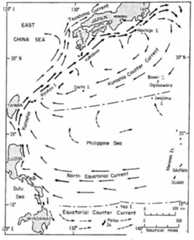
Research indicates that the Visayan raiders likely used the Kuroshio Current and favorable winds to reach the China coast, maximizing their travel efficiency during certain months.
The analysis concludes that the balangay, capable of sailing close to the wind, was the most likely vessel utilized by Visayan raiders, despite observations of bamboo rafts.
The demand for iron for tools and weapons drove Visayans to raid, as access to trade routes provided limited supplies, particularly for communities distanced from higher trading centers.
Eyewitness accounts suggest that the raiders, possibly identified as the Pi-sho-ye, hailed from Ibabao, an area notable for its history of maritime raiding in pre-Hispanic times.
2009
Location of the site in Lubang Municipality…………………………….. 4.4 Floodplain and lowland areas in Lubang Island……………………. 4.5 Wall Ruins on the North side of the fortification……………………. 6.1 Wall ruins on the northwest side of the fortification…………….. 6.2 MV Conchita at the Port of Tilik……………………………………………………. 6.3 Local Farmers at work………………………………………………………………………. 6.4 Local informant and his Ming Dynasty Jarlet………………………….. 6.5 Local informant and his Ming Dynasty plate and brownware jarlet ………………………………………………………….
The current model of proto-Malayo-Polynesian (PMP) holds that a unitary language was spoken in the Luzon Straits roughly four thousand years ago and that this diversified into all the extra-Formosan languages and was responsible for the Neolithic settlement of Island Southeast Asia (ISEA) and Oceania. The paper suggests that this is supported by neither the linguistics, the archaeology nor the distribution of material culture. Archaeology of ISEA after 4000 BP points to near simultaneous settlement in a wide variety of sites, while analysis of individual lexical items points to geographically biased distributions, suggesting they were selectively carried to different regions. Examples of material culture items associated exclusively with Austronesian culture are given, which again show strong geographical biases. This points to a rather different model of time and place, here called the ‘boiling pot’ which assumes the Luzon Strait was an centre of innovative maritime technology and the starting point for voyages in canoes with multi-ethnic crews, establishing pioneer routes across the entire region and reconnecting with the non-Sinitic cultures of the mainland. This would then see PMP as a network of related subgroups, which can never fully reconstitute a unitary PMP, because no such entity existed.
In: Musica Jornal 8, pp. 2-103. (Note: this is the manuscript version with different page numbering), 2022
This is the revised and considerably extended version of a paper published in 2012. This version is from June 2022. The paper deals with the claim of some people that boat lutes could once be found all over the Philippines, including Luzon and the Visayan Islands. Trying to find evidence for or against this claim, the paper examines early Spanish colonial sources as well as recently collected data from this area. As a result, we can state that the name "kudyapi" refers to boat lutes only in a few areas of the Visayas and Luzon, while in other areas it often refers to small lutes with coconut bodies that are definitely no boat lutes. The first page of the original printed publication from 2012 can be found here: http://journals.upd.edu.ph/index.php/musika/article/viewFile/3433/3170"
This dissertation is primarily focused on the mechanisms employed by the South Fujianese, one the most prominent regional sub-groups in China, to embed themselves, and reshape local ecologies in three early modern Southeast Asian port cities—Hội An, Batavia, and Manila, during the period 1550 to 1850. The operations of native-place associations, land purchases, and temple (kelenteng) construction, along with annual ritual and the economic interdependence created through daily supplies, could all become key embedding mechanisms. The South Fujianese adapted broadly with their different embedding mechanisms, politically, economically, socially, and militarily, to their host societies. They contributed much to the rise of Hội An as a port, and in this area the operations of native-place associations and land purchases were two prominent and effective mechanisms. Through these two mechanisms, the migrants finally turned the host society into a permanant home. The South Fujianese in Batavia under the agent system partially transplanted themselves as a small society. Within that community, they had the chance to develop their legal and annual practices, and avoided most severe conflicts with the powers in their host society. By practicing different rites, and emphasizing different festivals as well as common celebrations, or overlapping ritual practices on important days, different kelenteng actually worked together to “transplant” a “traditional” Chinese belief system and ritual structures. The mechanism that the South Fujianese developed in Manila, expressed in the supply of basic daily utilities and currency exchanges that maintained a concentrated market, was not effective enough in that the South Fujianese were easily suspected and, in turn, viewed as aggressive and intractable groups. Only after a stronger mechanism was nourished did the relations between the South Fujianese and the Spaniards escape the cycle of massacre and rebuilding. This process can be characterized as “structural reproduction.” This dissertation provides an historical explanation of the presence of Chinese immigrants in early modern Southeast Asia, and attempts to reach a more comprehensive understanding of Southeast Asian history through adding the spectrum of immigrants.
China and Asia
This special issue of China & Asia: A Journal in Historical Studies showcases recent works by five Filipino scholars that examine aspects of the history of the Chinese in the Philippines from the early modern to the contemporary period. The first paper in the issue is written by Tina S. Clemente, who interrogates why Chinese traders from the sixteenth to the eighteenth century were generally successful in their business activities in the Philippines. She argues that favorable economic conditions in the colony, the mutually beneficial relations between Spanish authorities and Chinese traders, and the opportunities in providing goods and services were some of the major factors that contributed to the success of Chinese traders during the period under study. Her study contributes to the growing literature that challenges the intrinsic traits of the Chinese as the determining element for this cultural minority's economic success. The nineteenth century was a crucial period for the Philippine Chinese. Chinese traders became highly important in the development of various industries. Randy M. Madrid uses archival materials, foreign accounts, and consular reports to examine the significant roles the Chinese played in the economic life of Iloilo province, an important trading center in western Visayas, during the nineteenth century. Tracing the development of the textile industry in Iloilo, Madrid argues that Chinese fiber and textile merchants and traders were the primary actors that paved the way for the province's commercial progress, specifically during the period between the late eighteenth century and the 1870s. The textile industry, however, declined in the latter part of the century when European capitalists and entrepreneurs who could not compete with the Chinese entered into and revolutionized sugar production in the province.
Linguistic reconstructions of the PAN root *kayaw by researchers such as Liao, Blust, and Dempwolff demonstrate an Austronesian raiding complex that incorporates lowland and highland peoples in what is both a display of masculinity and engine of economic transformation. Exploiting this system in its culturally particularist variations gives a man (often a datu or chief) access to a wide range of resources to increase his personal prowess, including heirloom goods, human heads, and captives. While this institution historically presented a clear threat to women, who were frequently targeted for capture as wives and slaves, female voices were not silent in pushing back against male violence through stories of powerful shamans, transvestites, and goddesses. This paper seeks to first explore foundational literature on *kayaw as a Southeast Asian economic and political behavior and also to contextualize these case studies through the Visayan sugidanon epic chant tradition. As these poems were historically chanted by women, they provide a uniquely feminine lens through which raiding can be analyzed. This second part of the analysis also investigates how non-binary individuals like effeminate men ( bakla or asog) could attain prowess through female and male means. The goal of doing so is to assert female/feminine agency in the creation of intangible cultural heritage as both oral history and culture vehicle in an early modern Philippine society.
Archaeologies of Early Modern Spanish Colonialism, edited by S. Montón, María Cruz Berrocal, A. Ruiz, 2016
This chapter presents the theoretical framework and scientific questions behind recent archaeological investigations undertaken in the hitherto relatively under-researched Spanish colony in Taiwan, founded in the seventeenth century. Despite its potential role in subsequent global developments, this historical episode has been downplayed in mainstream literature on early modern colonialism. My emphasis is not so much on building a thorough presentation of the archaeological findings obtained (in progress), but on summarizing the main results while creating a narrative about the possibilities and constraints of archaeological research on colonialism in the Asia–Pacific region.
1987
This article consists of three parts. First it recounts the accidental landing of some Chinese traders from Java at Sarangani Island and what happened to them afterwards. Secondly, it gives an impression of the role played by the Chinese in Maguindanao society during the period of consolidation of the Maguindanao Sultanate. Lastly, in the Appendix four letters are translated which were found by a Dutch interrogation team after they captured a Chinese trading vessel which was on its way from Maguindanao to Java. The research is primarily based on the archival documents of the Dutch United East India Company.'
In 2010, a small group of uninhabited rocky island territory located in the East China Sea northeast of Taiwan, 102 nautical miles away from Jilong 雞籠 and 230 nautical miles away from Naha 那霸, the capital of Okinawa, formerly the Ryūkyū琉球 Islands, has become the focus of a heated debate in East Asia. The resentments about these Diaoyu 釣魚 Islands, referred to as Senkaku 尖閣 Island Group in Japan, continue up to date. The island group is claimed by Japan, China, and Taiwan to be part of their national territory. Especially the proclamation of the Japa-nese government to purchase the islands from its private owner enormously heated up the international debate. This article discusses entries on these islands in traditional Chinese sources and why they appear on maps or in travel accounts. the article is part of a whole issue of Crossroads that discusses the recent political debate about the islands.

 Efren B Isorena